




About this worksheet
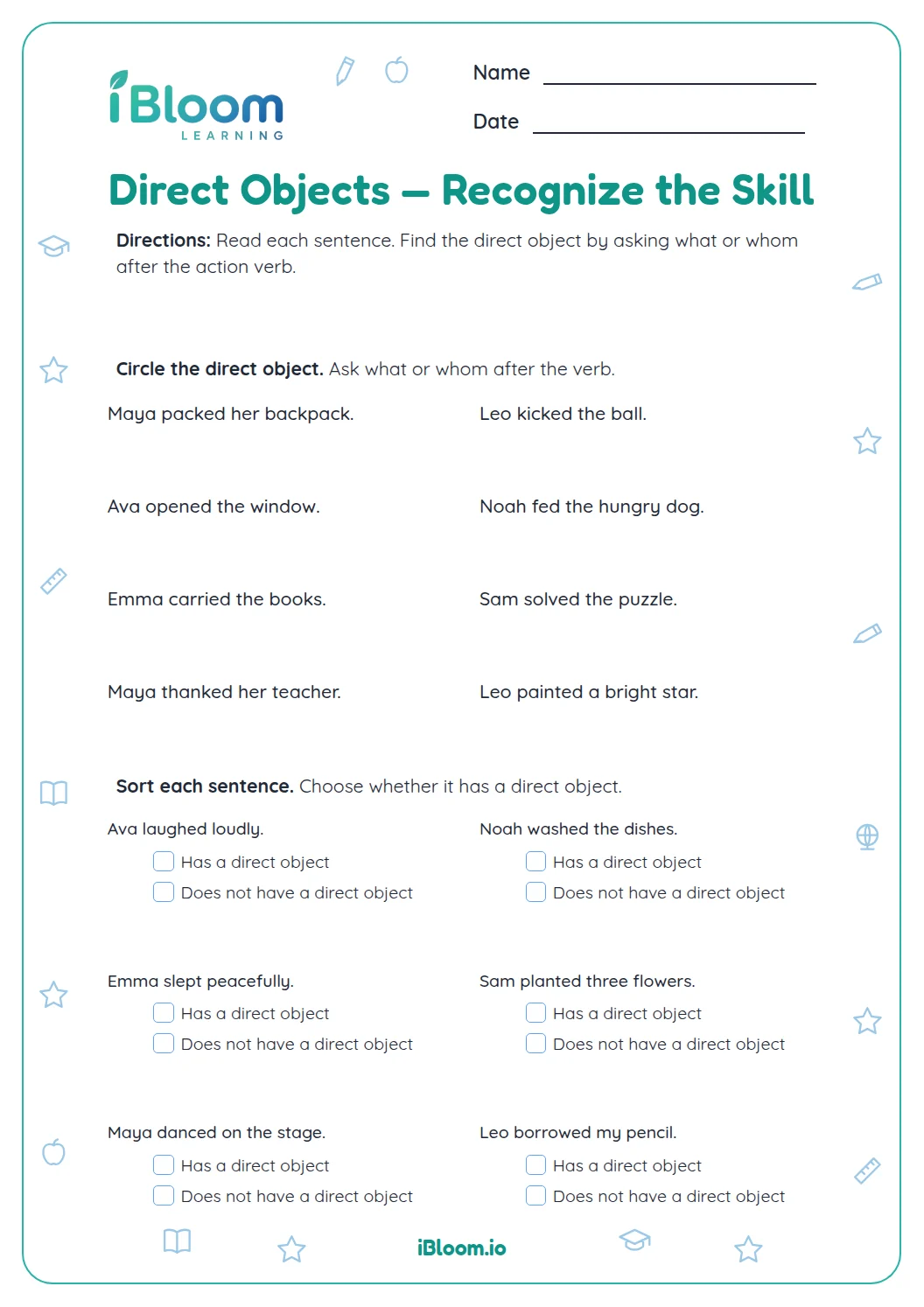
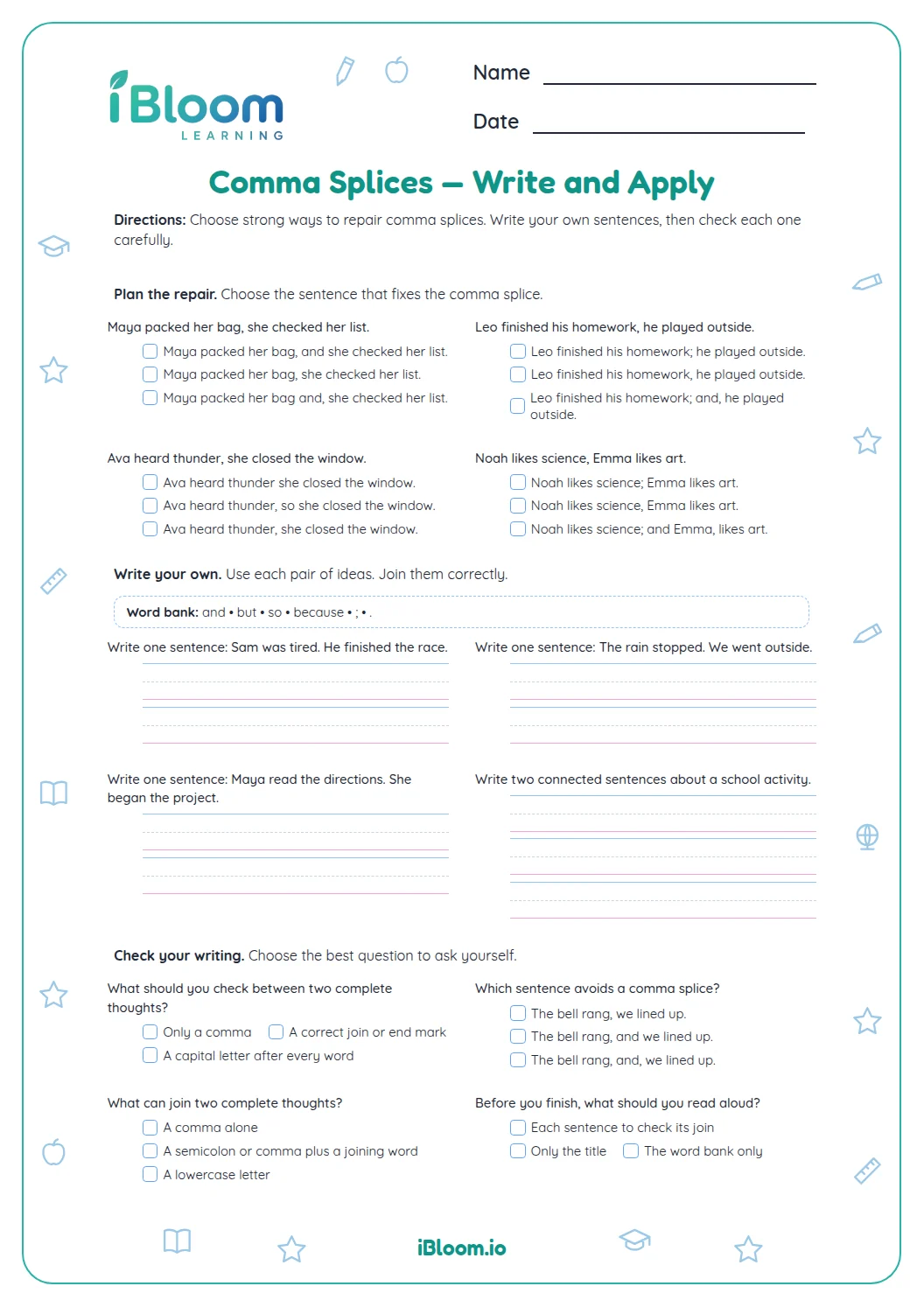
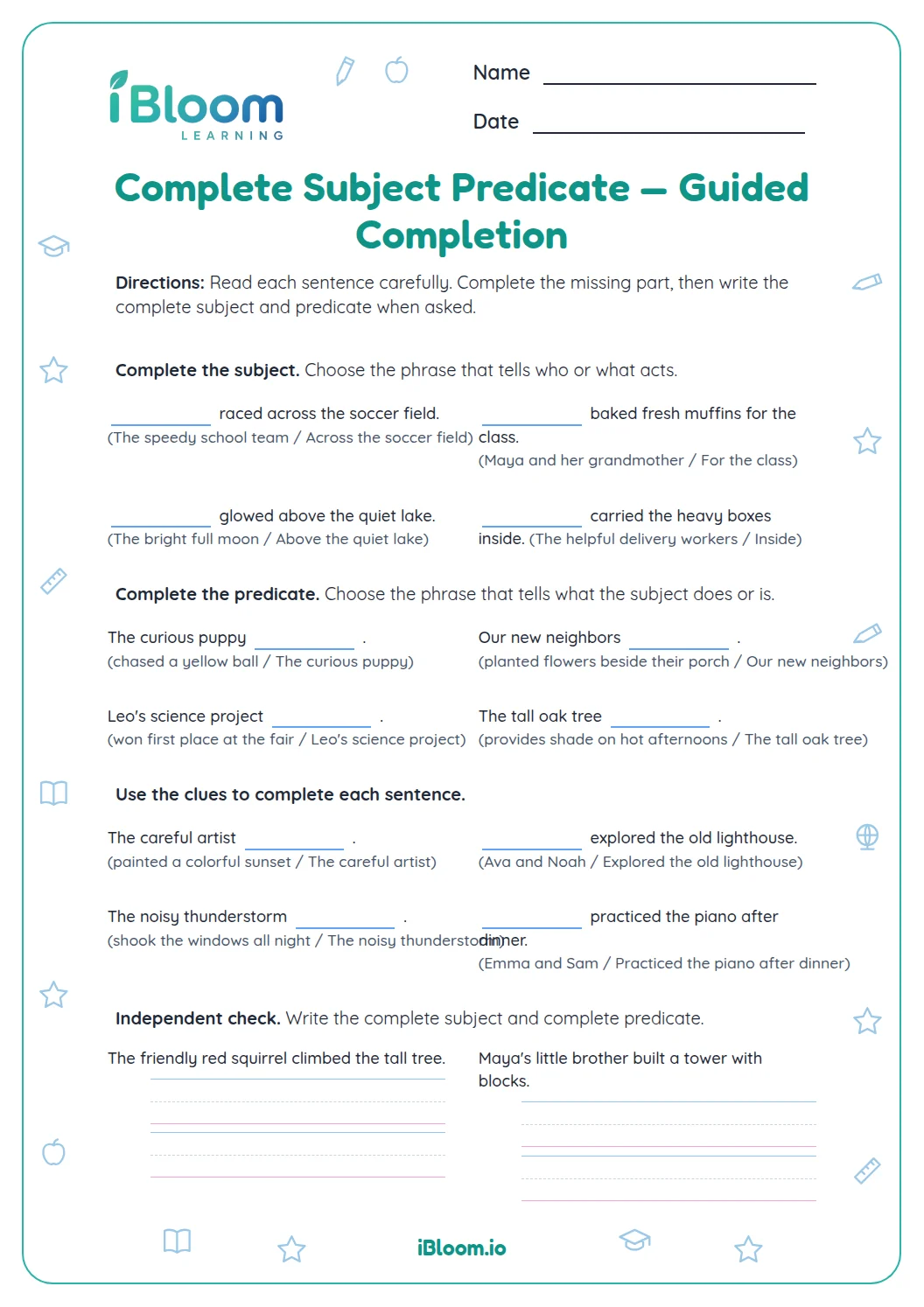
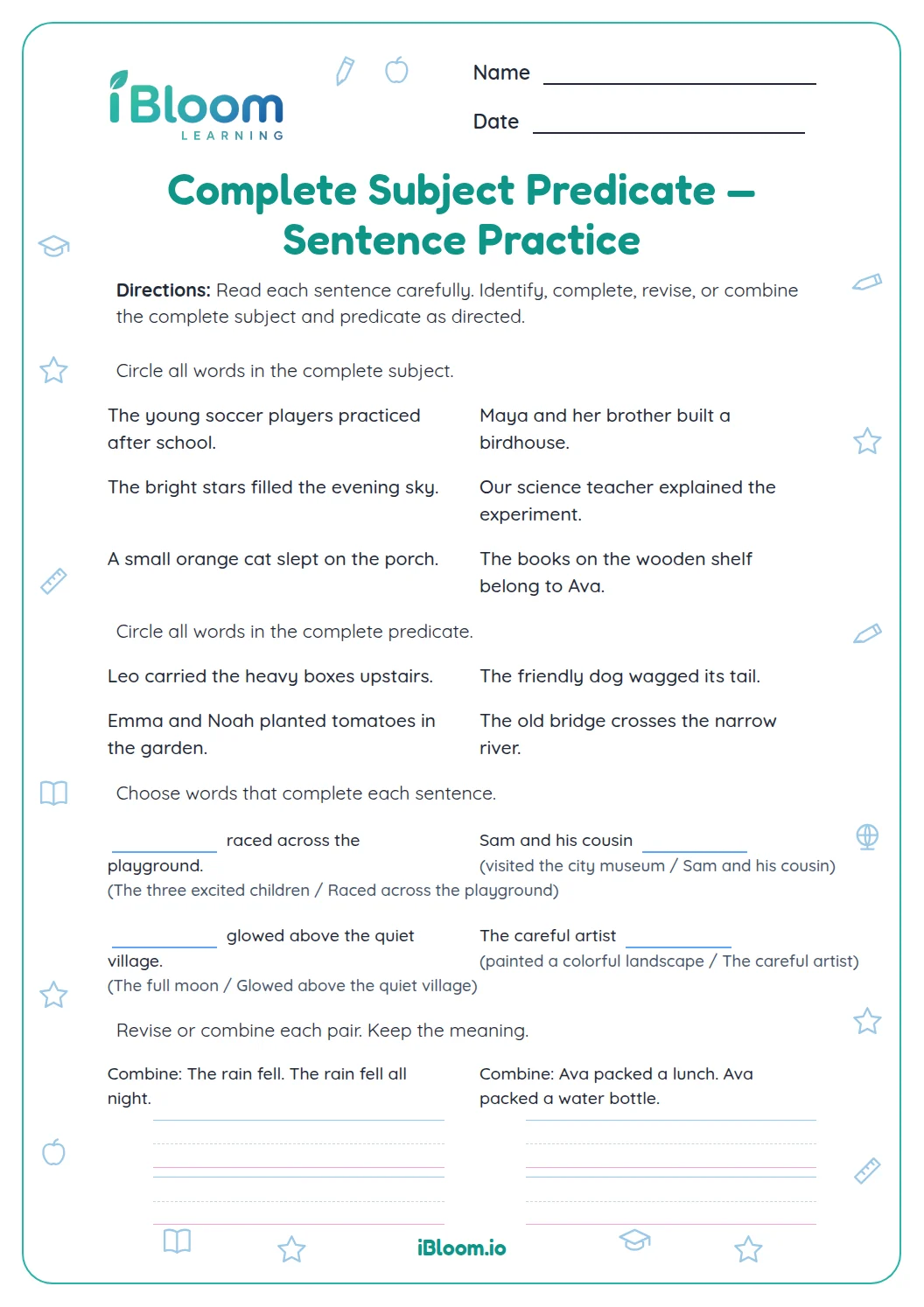
This free printable Grade 5 worksheet practices direct objects through 16 carefully varied questions. Learners work from clear examples toward independent practice, then use the separate answer key to check their thinking. It is designed for the skill and grade named on the sheet.
Aligned to L.5.1
How do you find a direct object?
Find the action verb, then ask what or whom receives that action. In “Maya carried the basket,” carried is the action and basket receives it.
Question 1 uses that sentence. The direct object is basket.
- 1Maya carried the basket.
- 2Verb: carried. Ask “carried what?”
- 3Direct object: basket.
How do you complete a sentence?
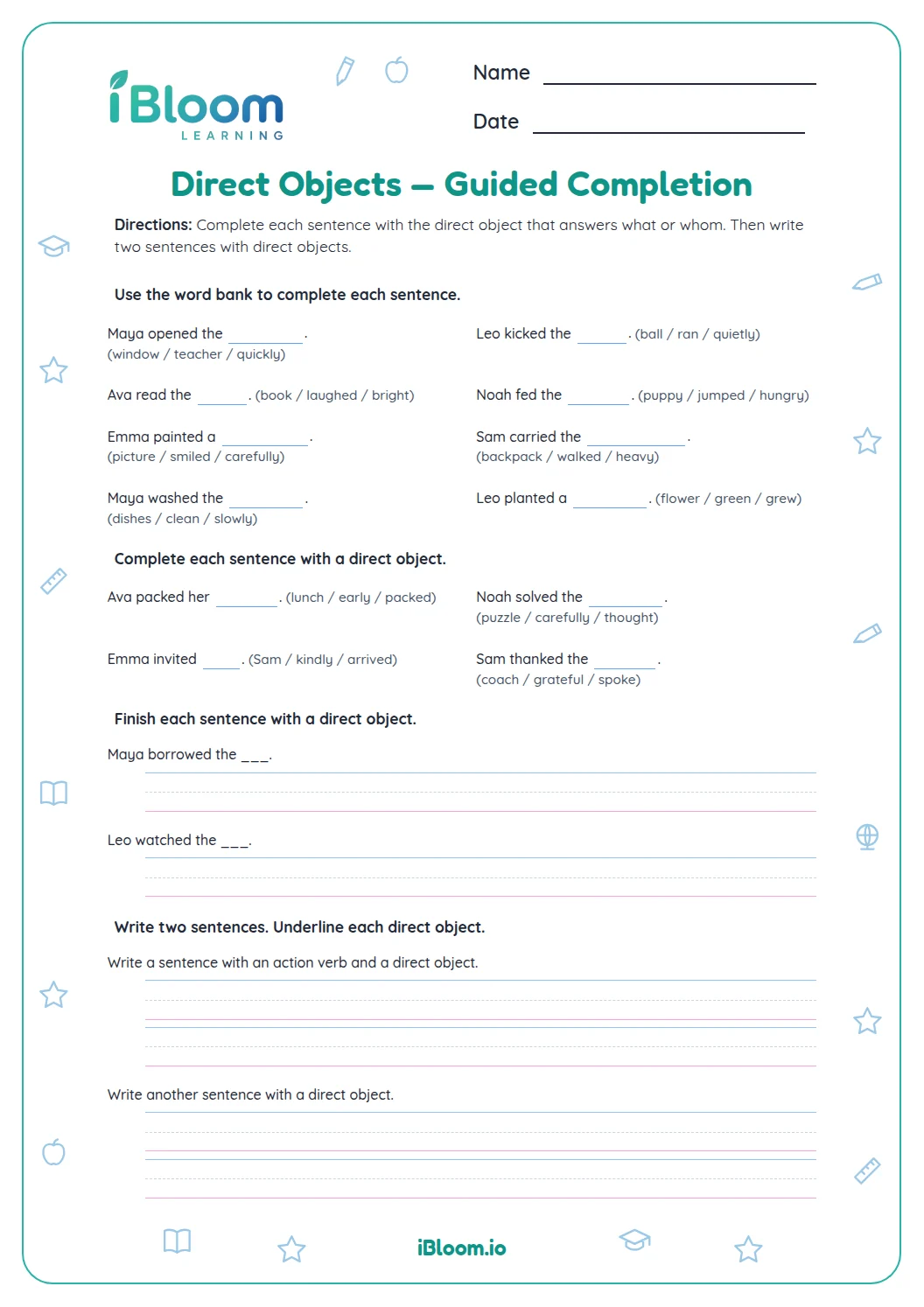
Choose a noun that makes sense as the receiver of the action. The other choice in each pair is an action word, so it cannot serve as the direct object in that sentence.
How do direct objects work in combined sentences?
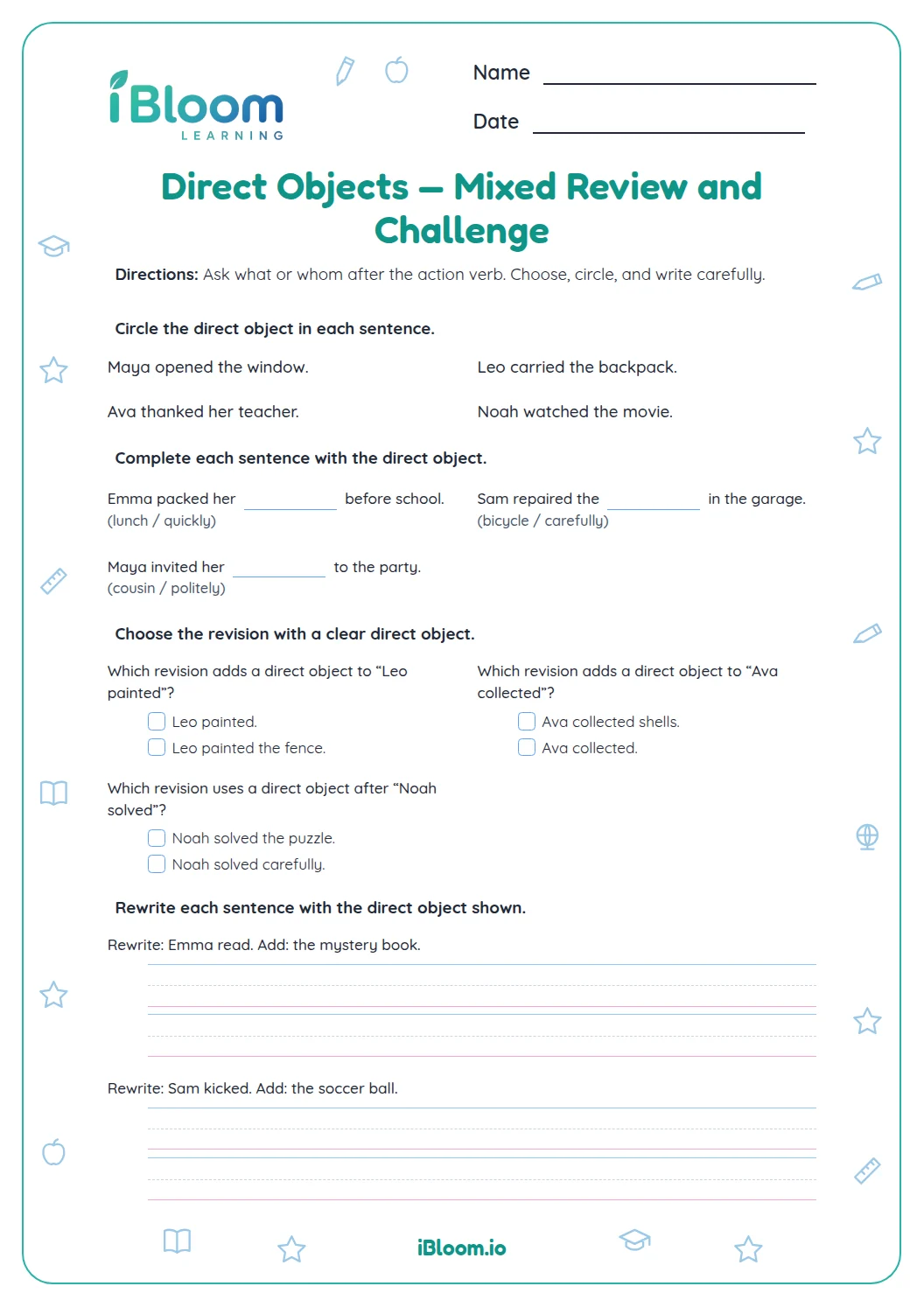
The last six items combine two related sentences. Keep the shared object clear, and name the direct object in your response.
How to use this worksheet
- 1Read the direction for the first part before starting.
- 2Work one item at a time and mark the clue that matters.
- 3For a missed item, explain the rule or relationship in your own words.
- 4Check the answer key after completing a part.
- 5Try one corrected item again without looking at the key.
Common mistakes and quick fixes
The mistake
Choosing the subject instead of the object.
The fix
Ask what or whom the verb acts on.
The mistake
Choosing the verb as the object.
The fix
Find the action first, then identify the noun receiving it.
The mistake
Removing the object when combining sentences.
The fix
Keep the object named or use a clear pronoun for it.
The page practices the following standard.
This sheet identifies the noun or pronoun receiving a verb’s action.
On this sheet:
Show the official wordingHide the official wording
Demonstrate command of the conventions of standard English grammar and usage when writing or speaking.
What to practice next
Make more practice
Further reading
Questions parents and teachers ask
What skill does this worksheet practice?
This Grade 5 worksheet practices direct objects by asking learners to identify them in sentences, choose objects that complete sentences, and keep objects clear when combining related sentences. Each part uses a different response format and answer space for applying the grammar skill.
How many questions are included?
There are 18 questions: six sentence identifications, six sentence completions, and six sentence-combining items. The key identifies each object and gives sample combined sentences for checking written responses and sentence clarity. The parts move from recognition to applying the skill in a new sentence.
Is an answer key included?
Yes. A separate answer key is included with the printable pages. Have the learner complete a section first, then compare responses and discuss any item that needs another look. This keeps practice and checking easy to do at home or in class.
How should I help if an answer is incorrect?
Ask the learner to point to the clue or step they used. Then revisit the relevant rule, solve a similar example together, and let the learner correct the original item independently. A short explanation helps reveal whether the idea is clear.
Can this be used for independent practice?
The first two parts use sentence choices that learners can complete independently. In the final part, they combine each pair and name the direct object, then compare their work with a sample in the answer key. An adult can review a response afterward.