




About this worksheet
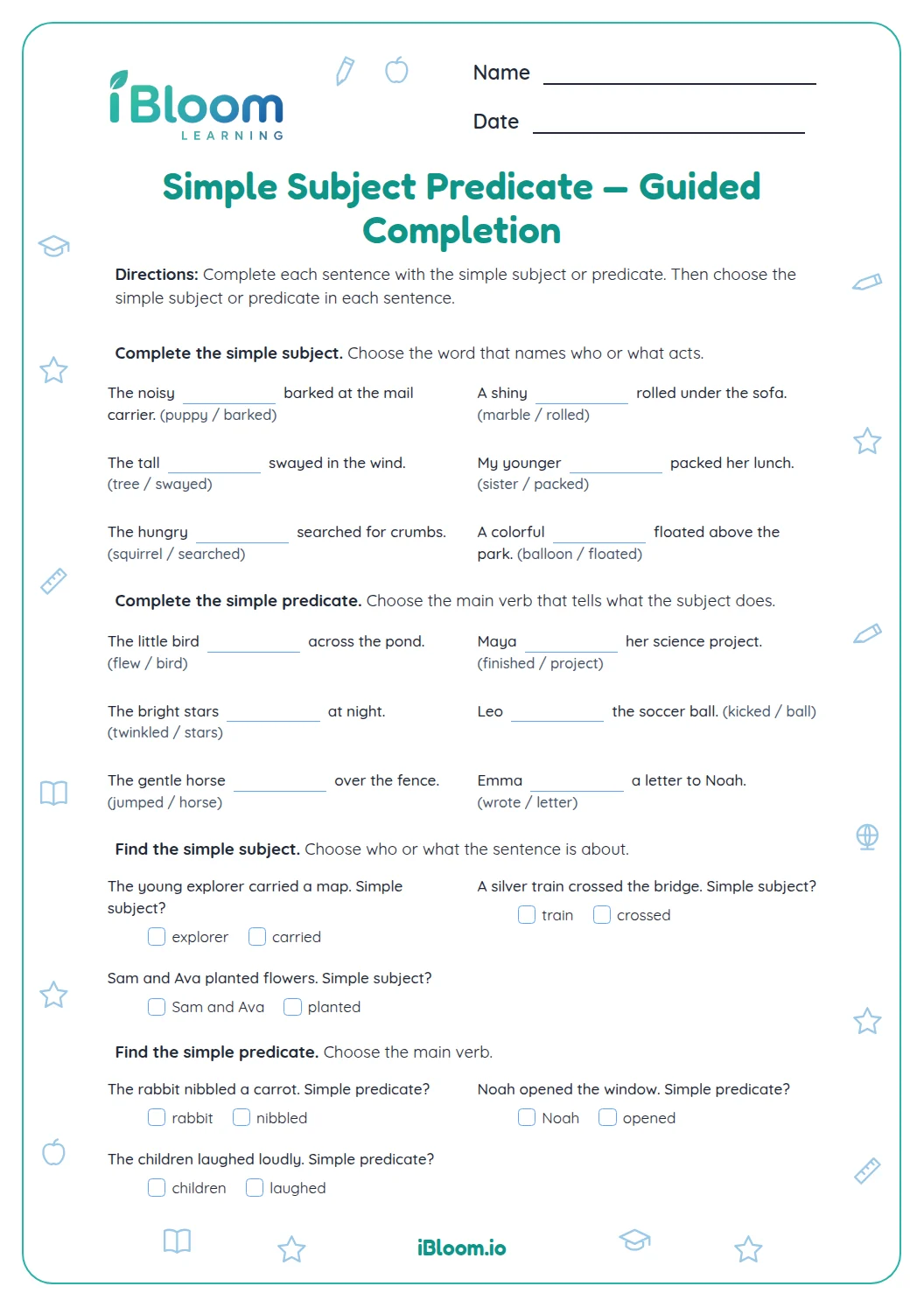
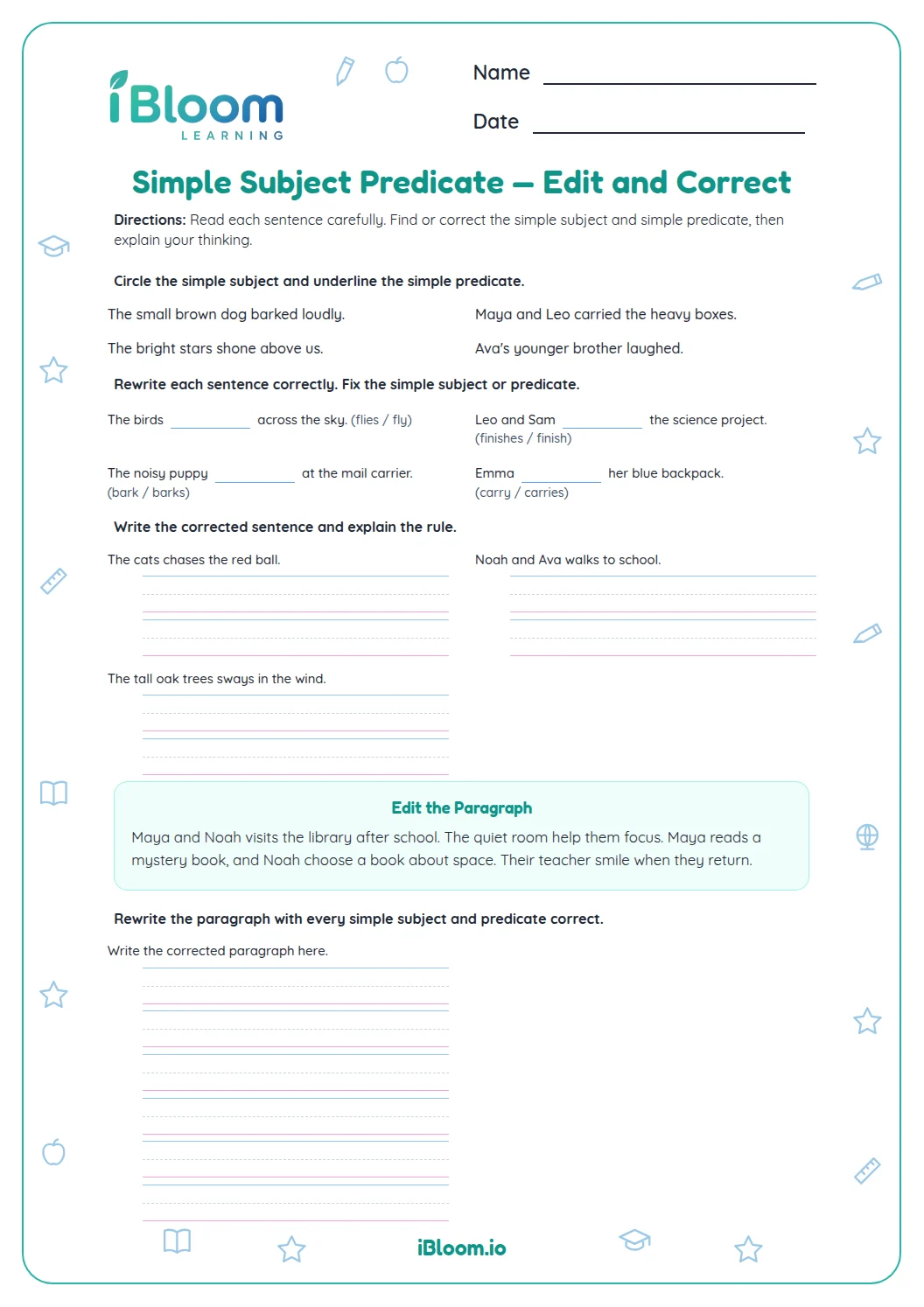
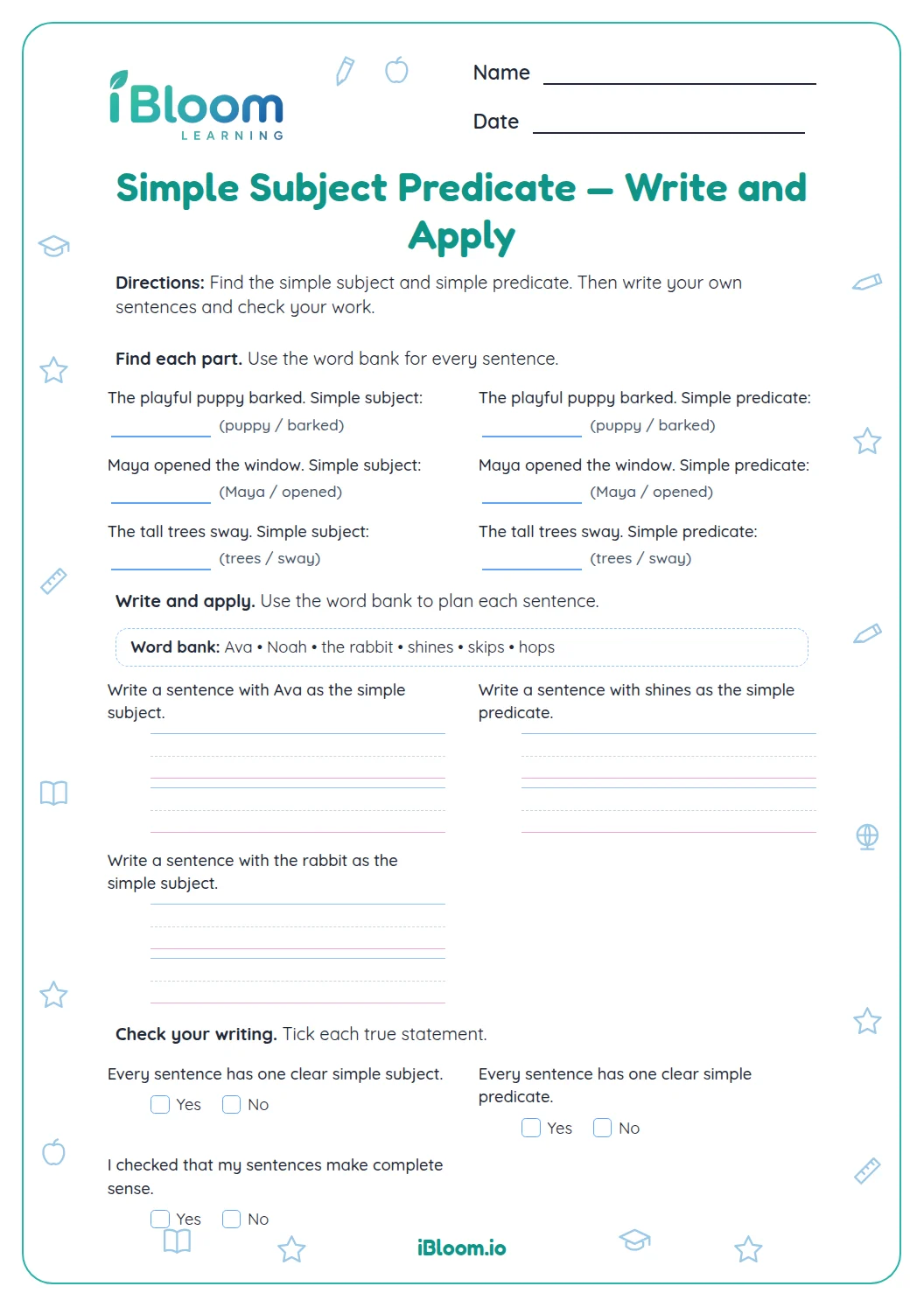
This free Grade 5 sentence worksheet asks students to find the core of a complete sentence. In the first part, they identify the simple subject; in the second, they identify the simple predicate, or verb. Sentences include introductory phrases and extra describing words, helping learners focus on the sentence’s main noun and verb. A separate answer key gives sample labels. The practice aligns with Common Core L.5.1.
Aligned to L.5.1
What is the simple subject?
The simple subject is the main noun or pronoun the sentence is about. It can appear after other words: in “Near the gate, a sleepy dog waited,” dog is the simple subject.
- 1A basket of clean towels stood by the door.
- 2The sentence is about the basket, so basket is the simple subject.
What is the simple predicate?
The simple predicate is the verb that tells what the subject does or is. In “The parade moved slowly down Main Street,” moved is the simple predicate; slowly and down Main Street add information.
How can students find the sentence core?
Set aside introductory phrases and descriptive words, then ask who or what the sentence is about and what that subject does. This helps separate the core from details without dropping them from the full sentence.
How to use this worksheet
- 1Read the whole sentence once.
- 2Ask who or what the sentence is about to locate the subject.
- 3Ignore introductory phrases and phrases that begin with words such as of, near, or during.
- 4Ask what the subject does or is to locate the predicate.
- 5Check the answer key and notice which words add details around the core.
Common mistakes and quick fixes
The mistake
Choosing “bridge” instead of “team” in “A hiking team crossed the bridge.”
The fix
Ask who crossed. The sentence is about one team; bridge is part of the predicate.
The mistake
Including “over the park” in the simple predicate of “The bright kite soared over the park.”
The fix
The simple predicate is “soared.” The phrase “over the park” adds where information.
The mistake
Missing the subject after an introductory phrase in “Near the gate, the dog waited.”
The fix
Look after the comma and ask who waited. The simple subject is “dog.”
Common Core alignment
Use standard English grammar and usage when writing or speaking.
On this sheet: Students identify the core subject or predicate in complete sentences as a grammar convention.
Show the official wordingHide the official wording
Demonstrate command of the conventions of standard English grammar and usage when writing or speaking.
What to practice next
Make more practice
Further reading
Questions parents and teachers ask
What is a simple subject?
The simple subject is the main noun or pronoun that the sentence is about. It may have describing words around it, but the simple subject is the core noun. In “a sleepy dog waited,” dog is the simple subject named in Part A.
What is a simple predicate?
The simple predicate is the verb that tells what the subject does or is. In “The parade moved slowly,” the simple predicate is moved. Slowly adds information about the action, but it is not the verb at the center of the sentence.
How is the worksheet organized?
The 14 questions are split by skill: questions 1–8 ask for simple subjects, and questions 9–14 ask for simple predicates. The answer key gives a concise label for each sentence so students can check the core noun or verb they identified.
Why do some sentences start with a phrase?
Introductory phrases add information about time or place, but they are not the main subject. In “Near the gate, the dog waited,” the sentence is still about the dog. Look past the opening phrase to find the noun that the rest of the sentence describes.
Should students write a complete subject or predicate?
This worksheet asks for the simple subject or the verb that forms the simple predicate. The key shows the core word for each item. If a student includes extra words, ask which noun names the sentence topic or which verb tells what that noun does.
What can students do after this worksheet?
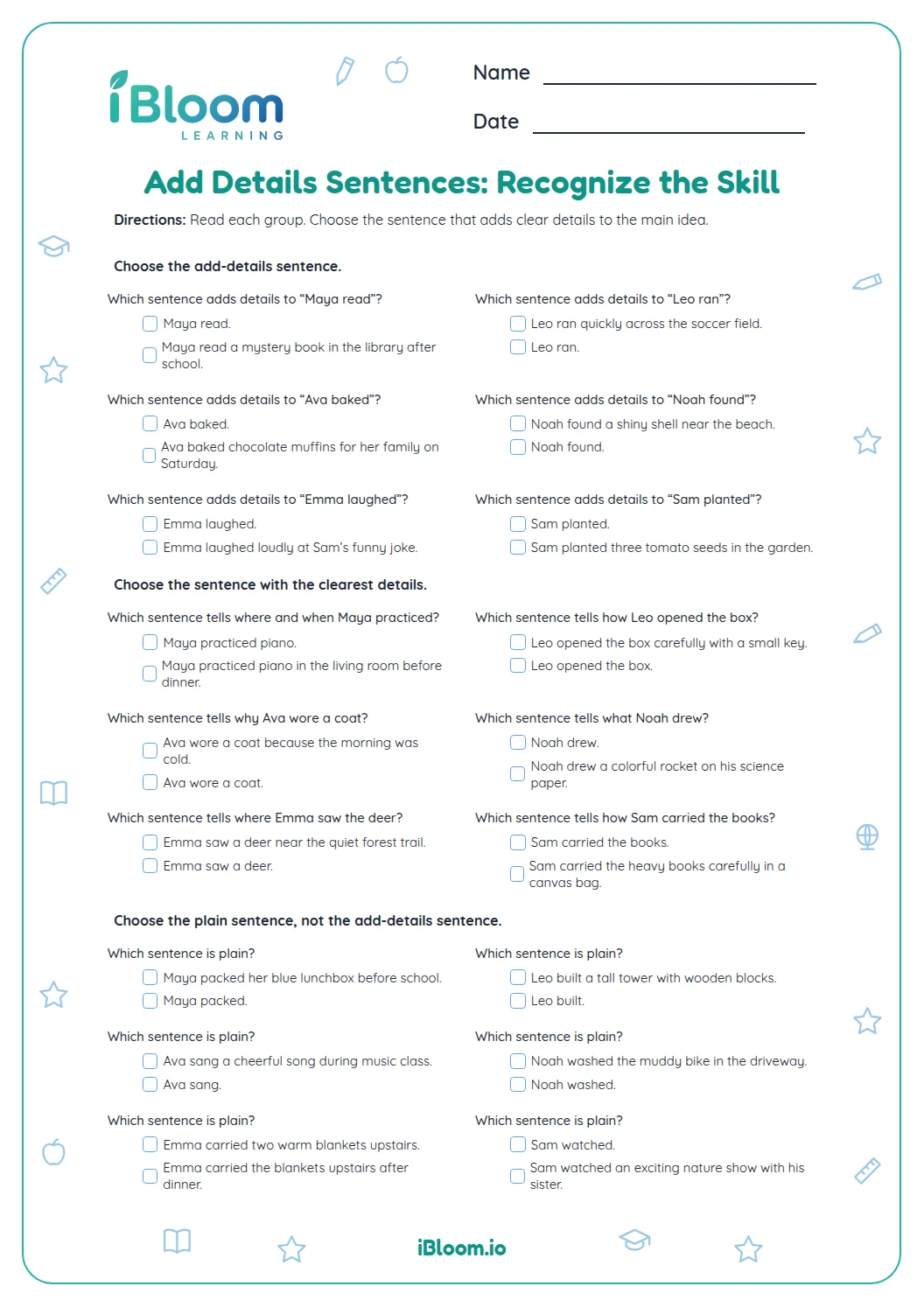
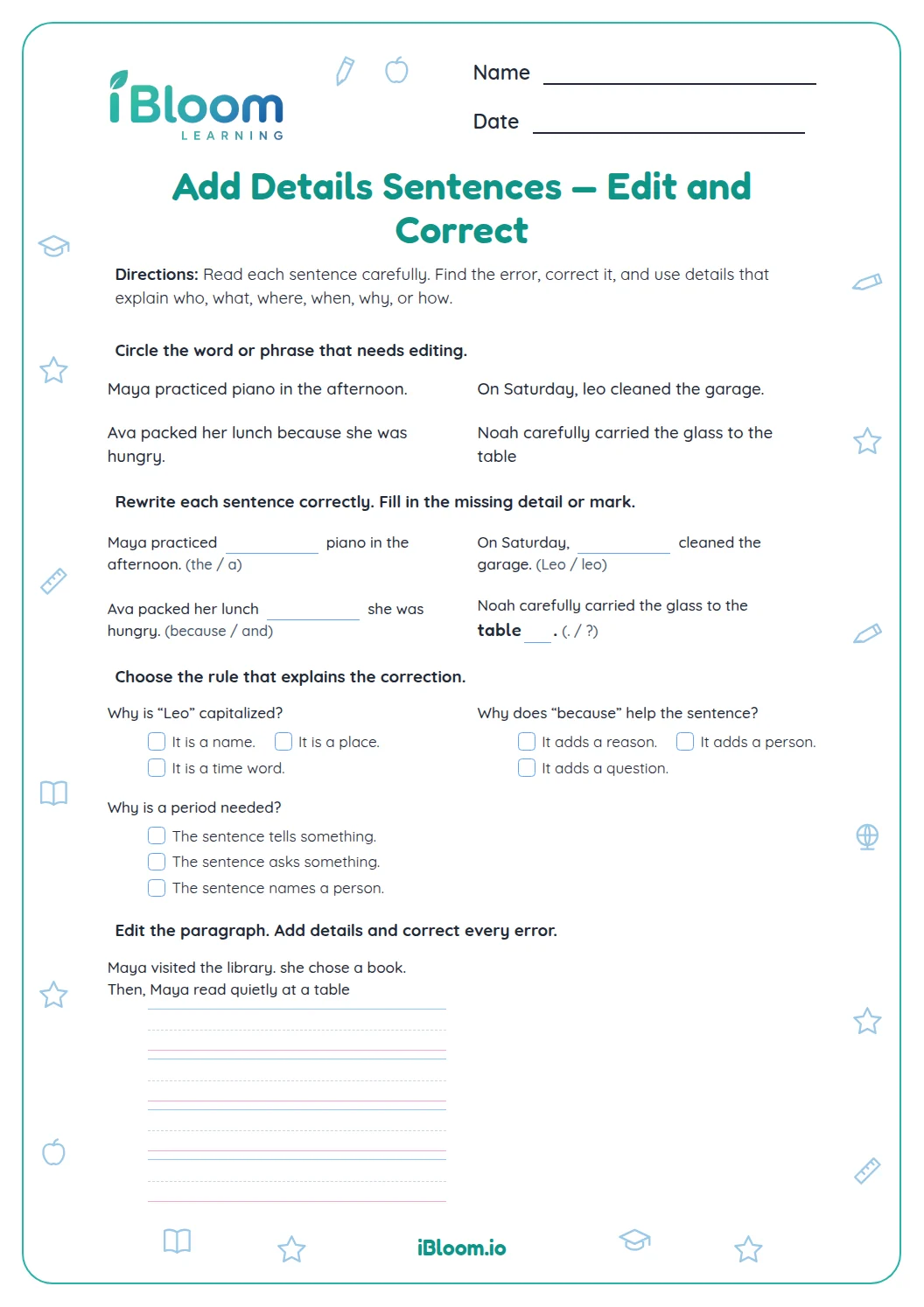
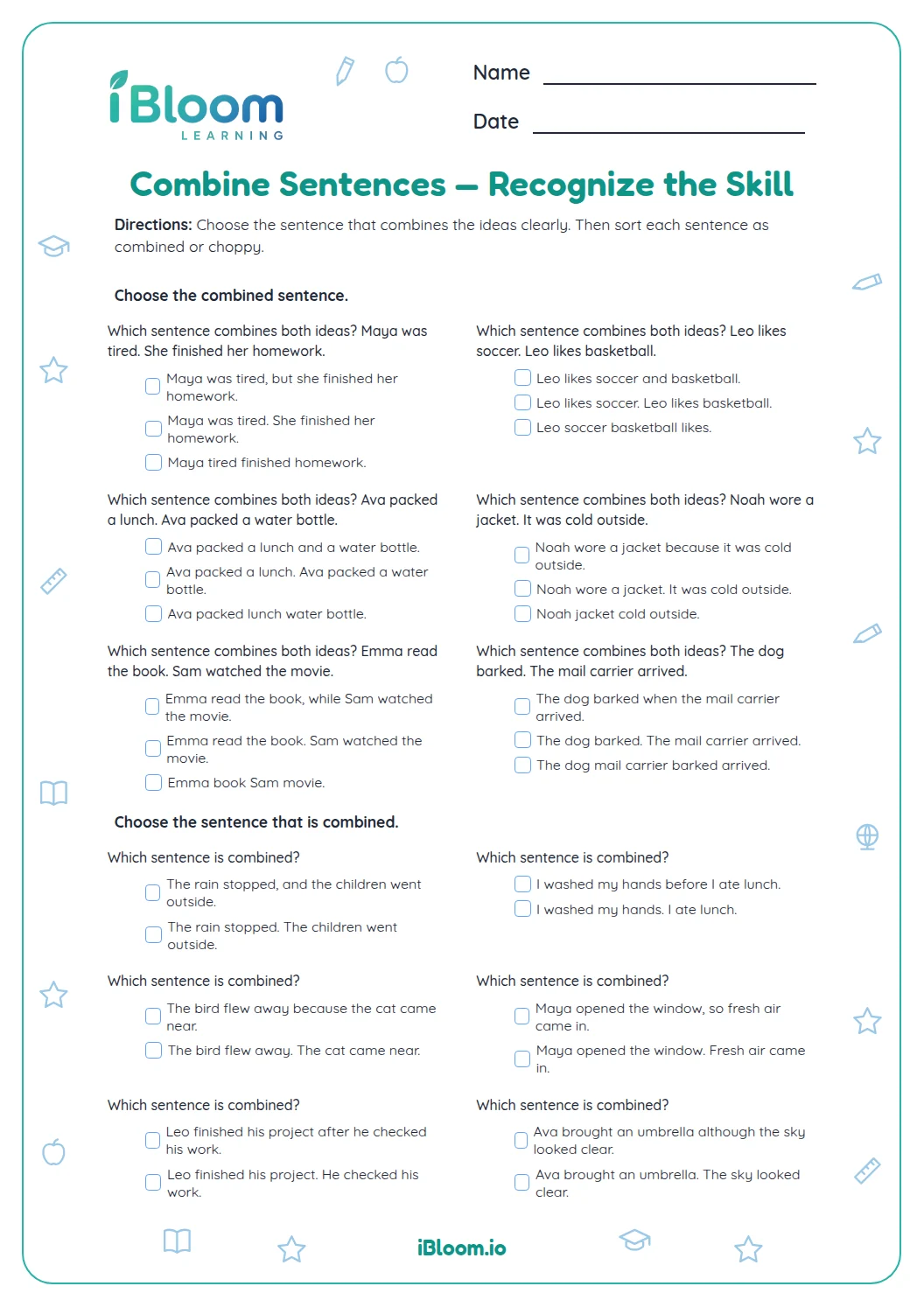
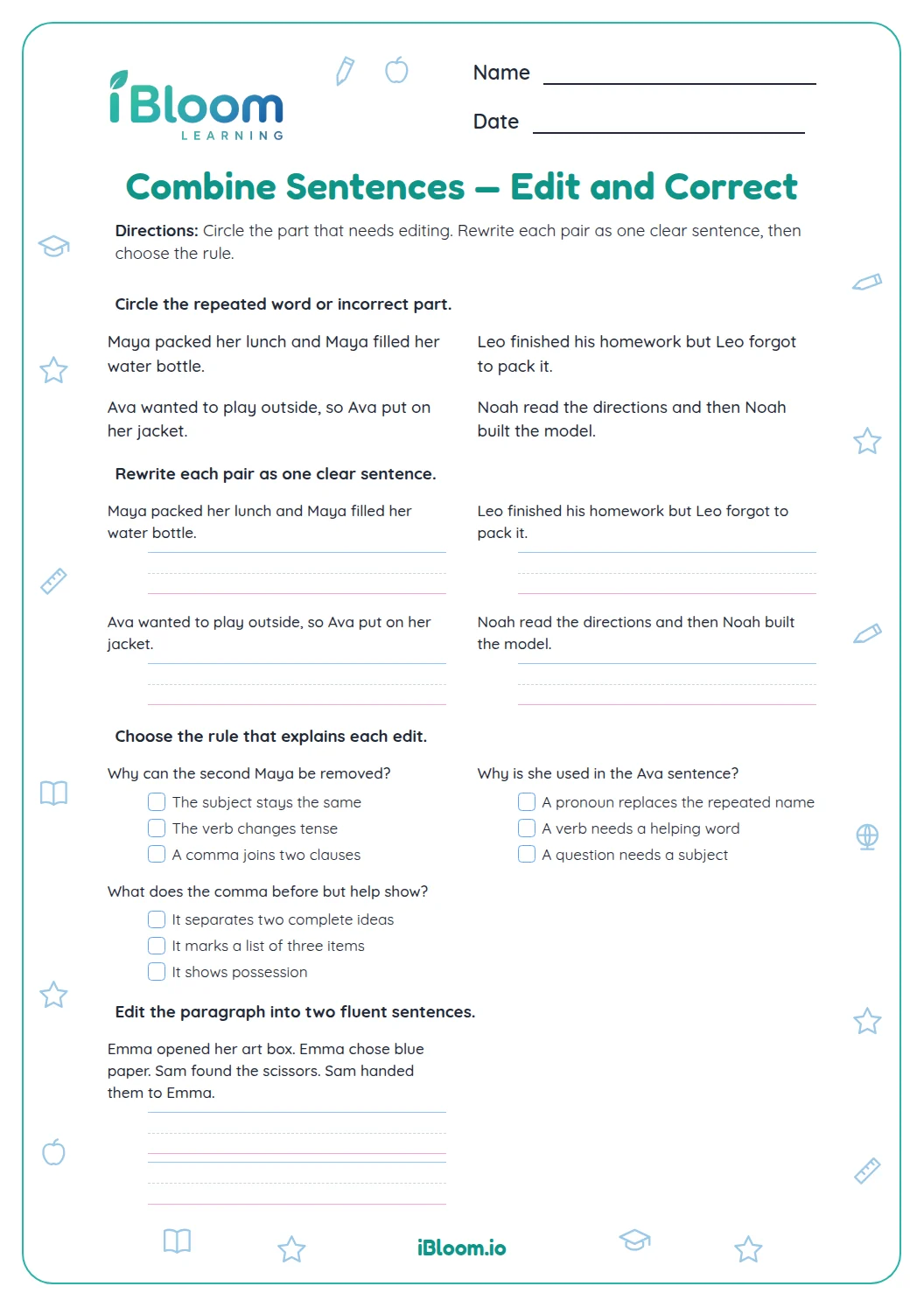
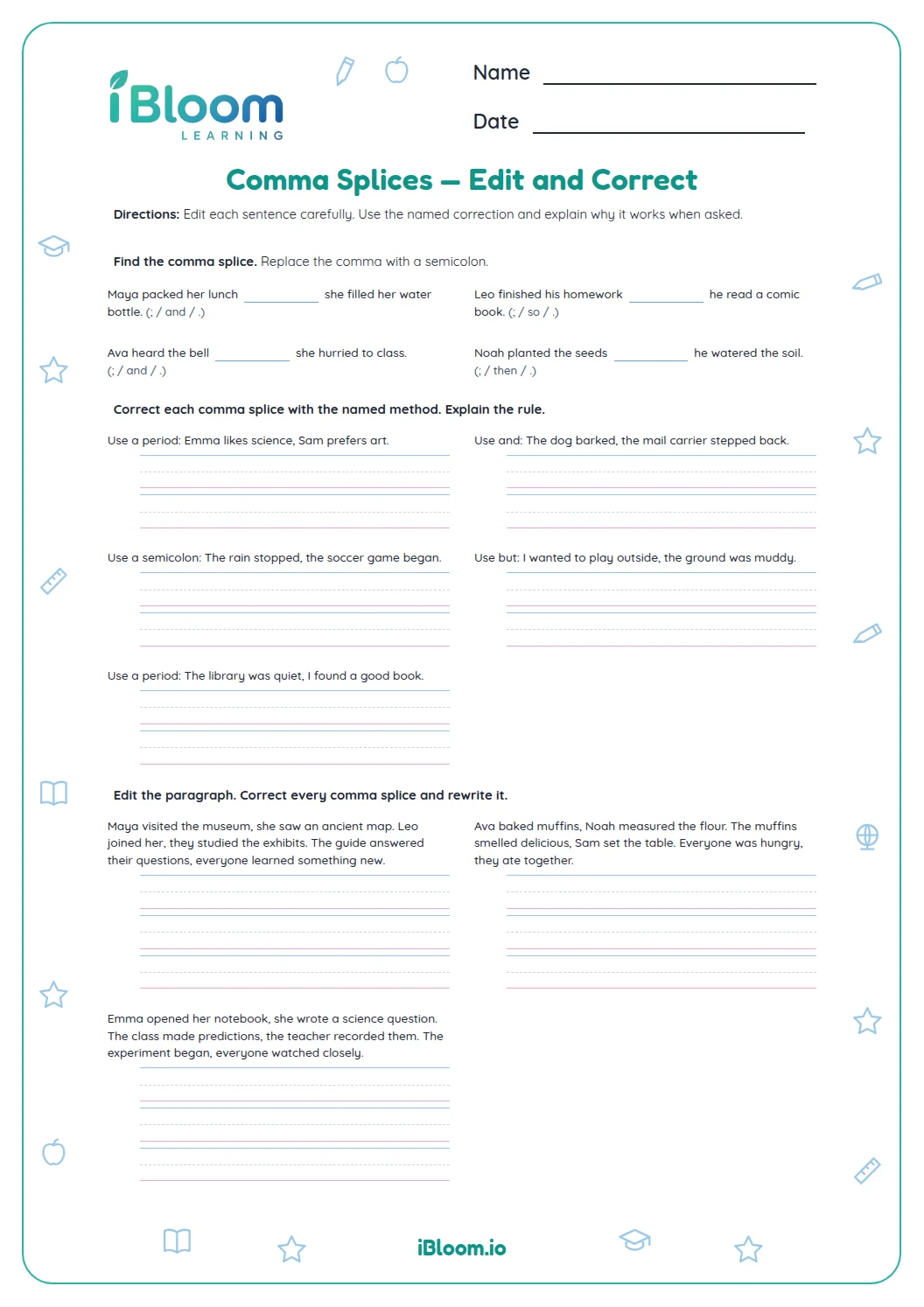
After identifying sentence cores, students can practice adding details, combining sentences, or writing varied sentences. Those activities build on the same understanding of how a sentence is organized. The related worksheets linked below let students apply the core in longer writing.