





About this worksheet
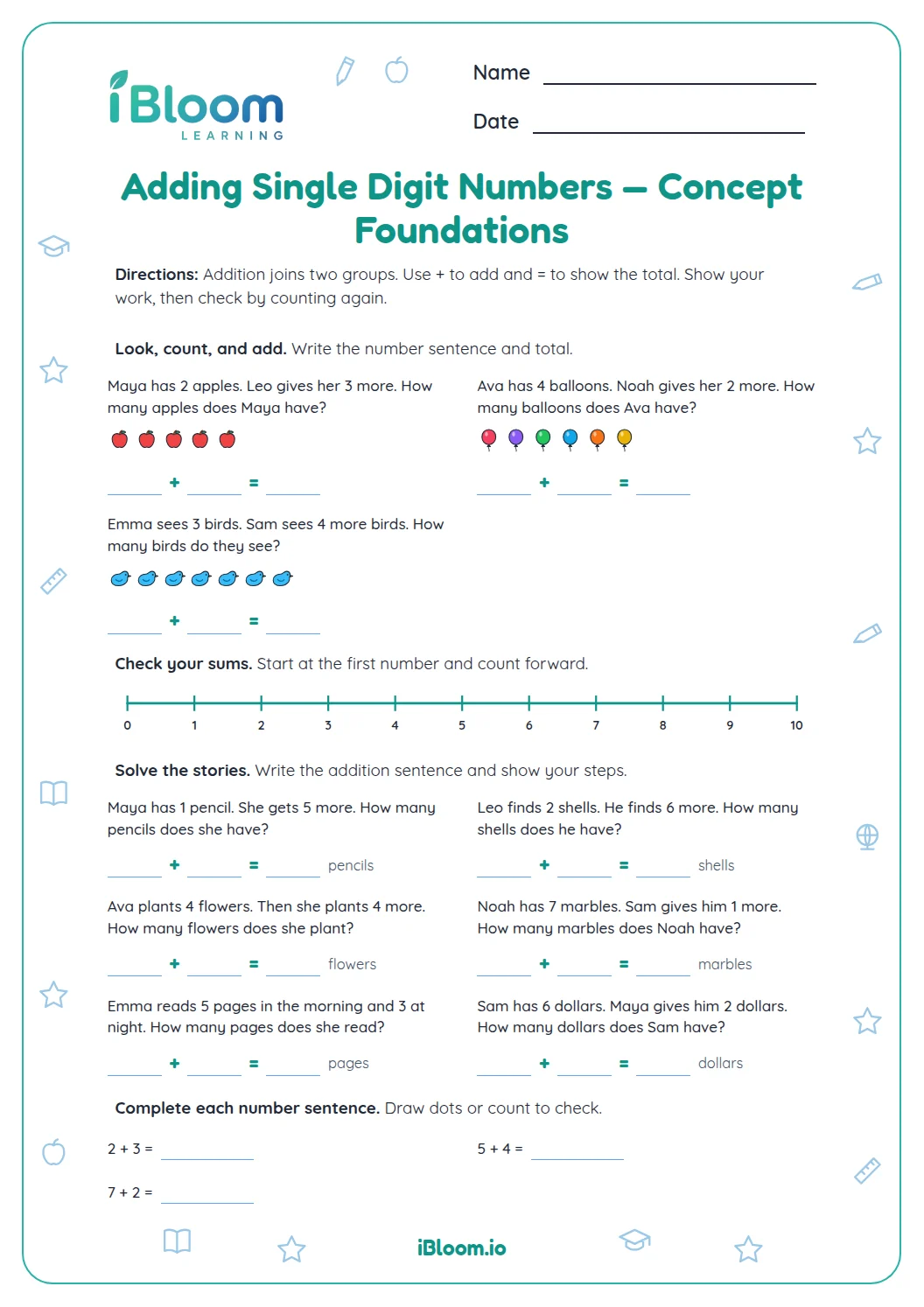
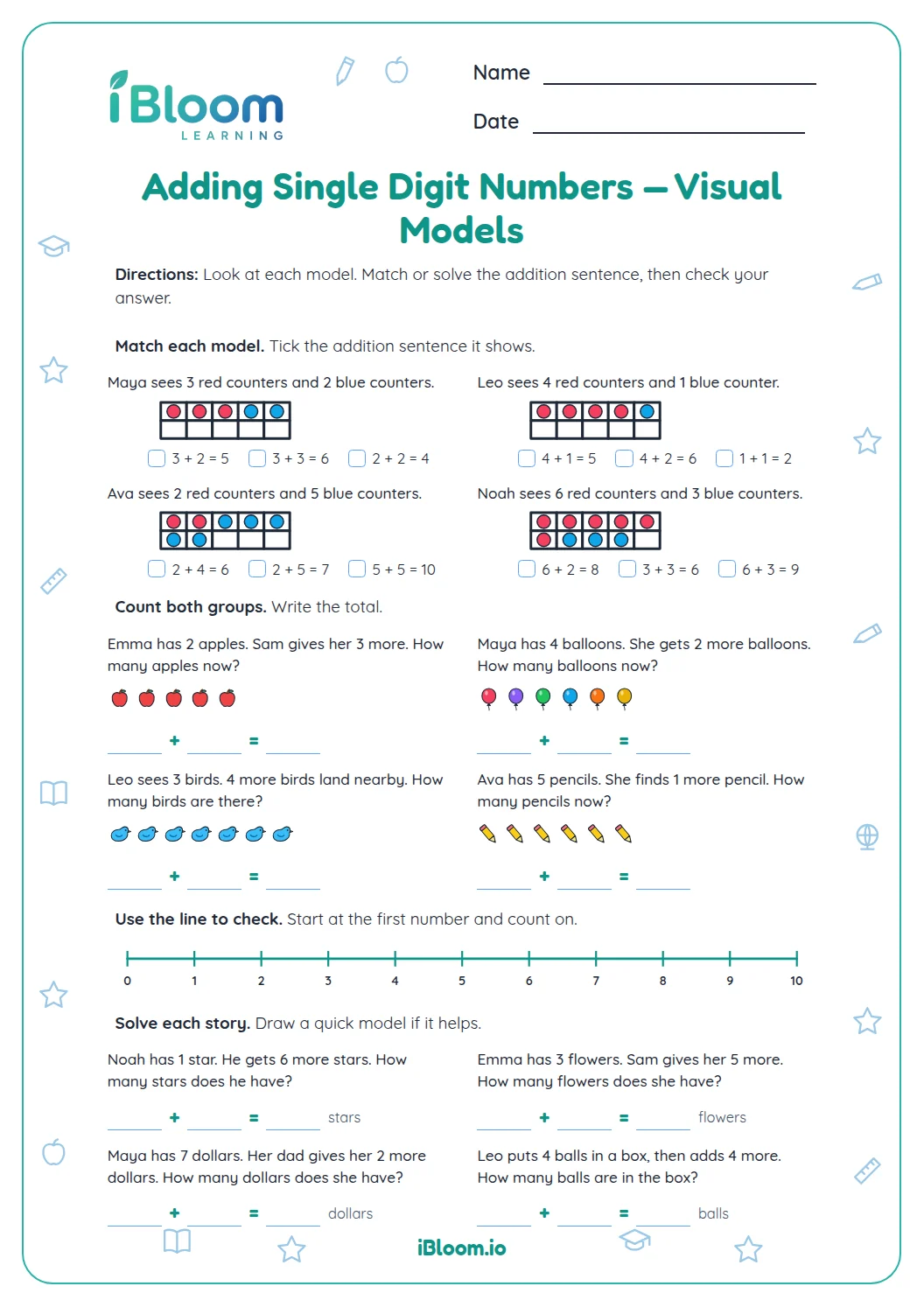
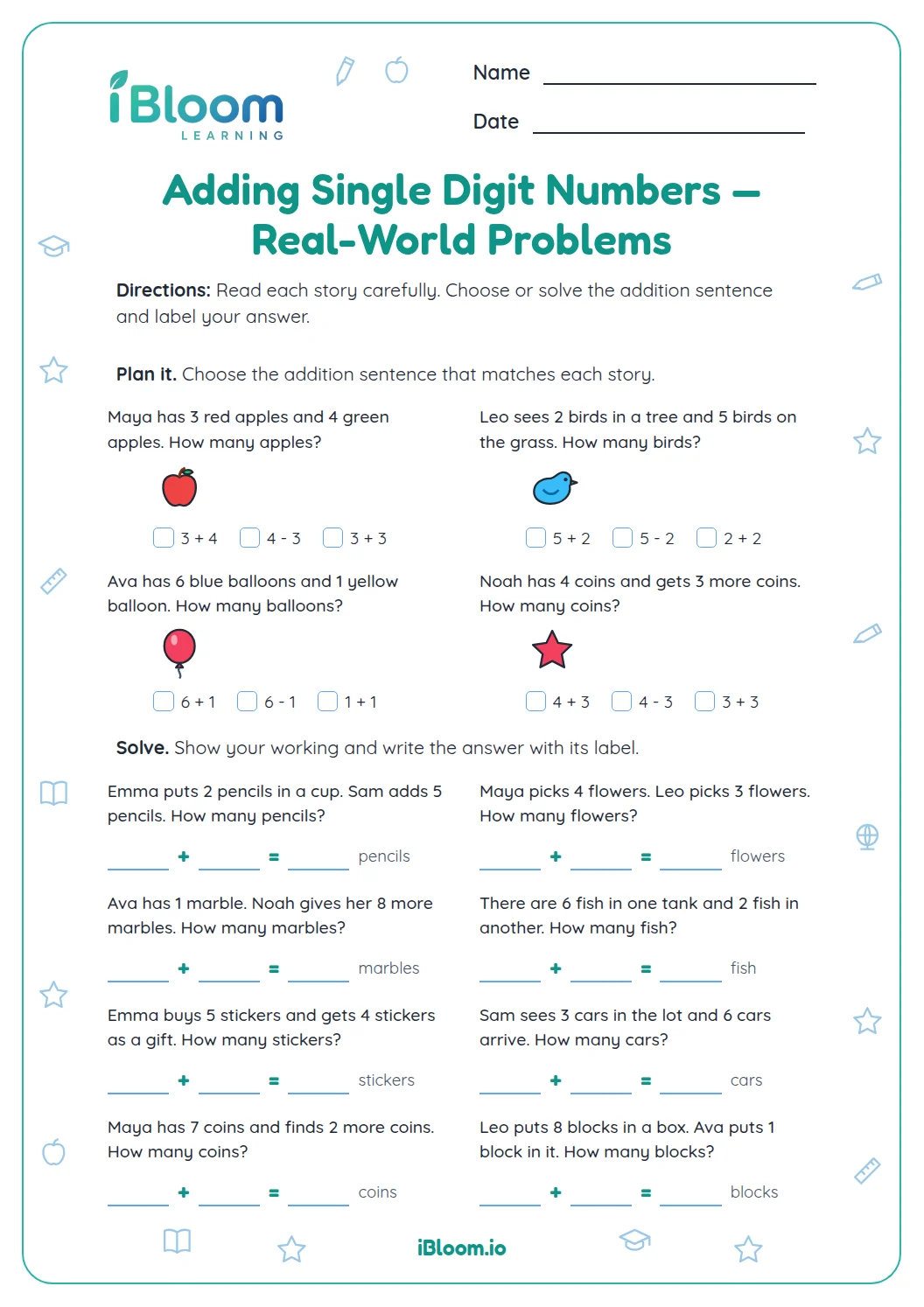
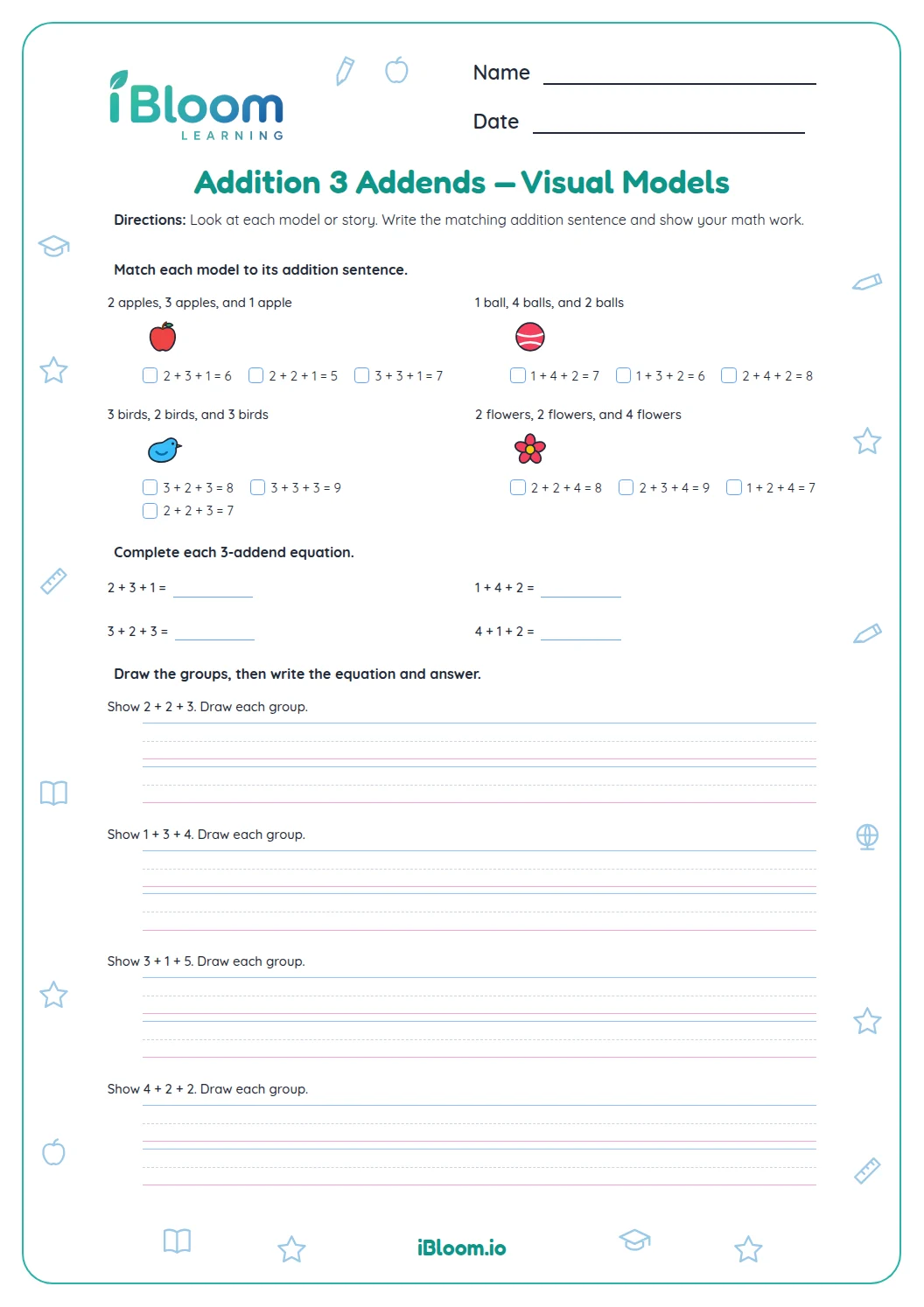
This Grade 1 reasoning challenge gives students 14 questions about adding single-digit numbers within 20. Students identify a counting error, check a sum, complete addition facts, solve short stories, and compare strategies. The mix moves from explaining a sum to applying addition in familiar situations. The printable includes two worksheet pages and a two-page answer key, aligned to Common Core 1.OA.A.1.
Aligned to 1.OA.A.1
How can counting on check an addition fact?
Start with one addend and count on the other addend. For 3 + 4, say 4, then count five, six, seven. The sum is 7; the starting number is not counted again.
Part A asks students to spot a counting slip and choose a useful check.
- 1Maya says 3 + 4 = 6.
- 2Start at 3 and count four more: 4, 5, 6, 7.
- 3The correct sum is 7; Maya stopped one count too soon.
How do addition facts and stories show a total?
Part B asks students to complete addition facts and find totals in four short stories. Identify both groups, then count on or use a known fact to find how many there are altogether.
How can students compare addition strategies?
Part C asks students to notice that switching addends keeps the same sum and to complete a make-ten plan. The answer key shows the correct choice or total for each question.
How can you use this worksheet?
- 1Read each question and say what is being added.
- 2For a counting question, start at one addend and count on the other.
- 3Use subtraction to check an addition fact when asked.
- 4For a story, identify both groups before finding the total.
- 5Compare the answer with the key and explain the strategy.
Common mistakes and quick fixes
The mistake
Counting the starting addend as the first count-on number.
The fix
Say the starting number, then count the next number as one.
The mistake
Stopping one number too soon when counting on.
The fix
Use a finger for each count in the second addend.
The mistake
Adding only one group in a story problem.
The fix
Point to both groups and ask how many there are altogether.
Common Core alignment
This practice connects the worksheet tasks to the stated Common Core skill.
Solve addition stories within 20 with an equation for the unknown total.
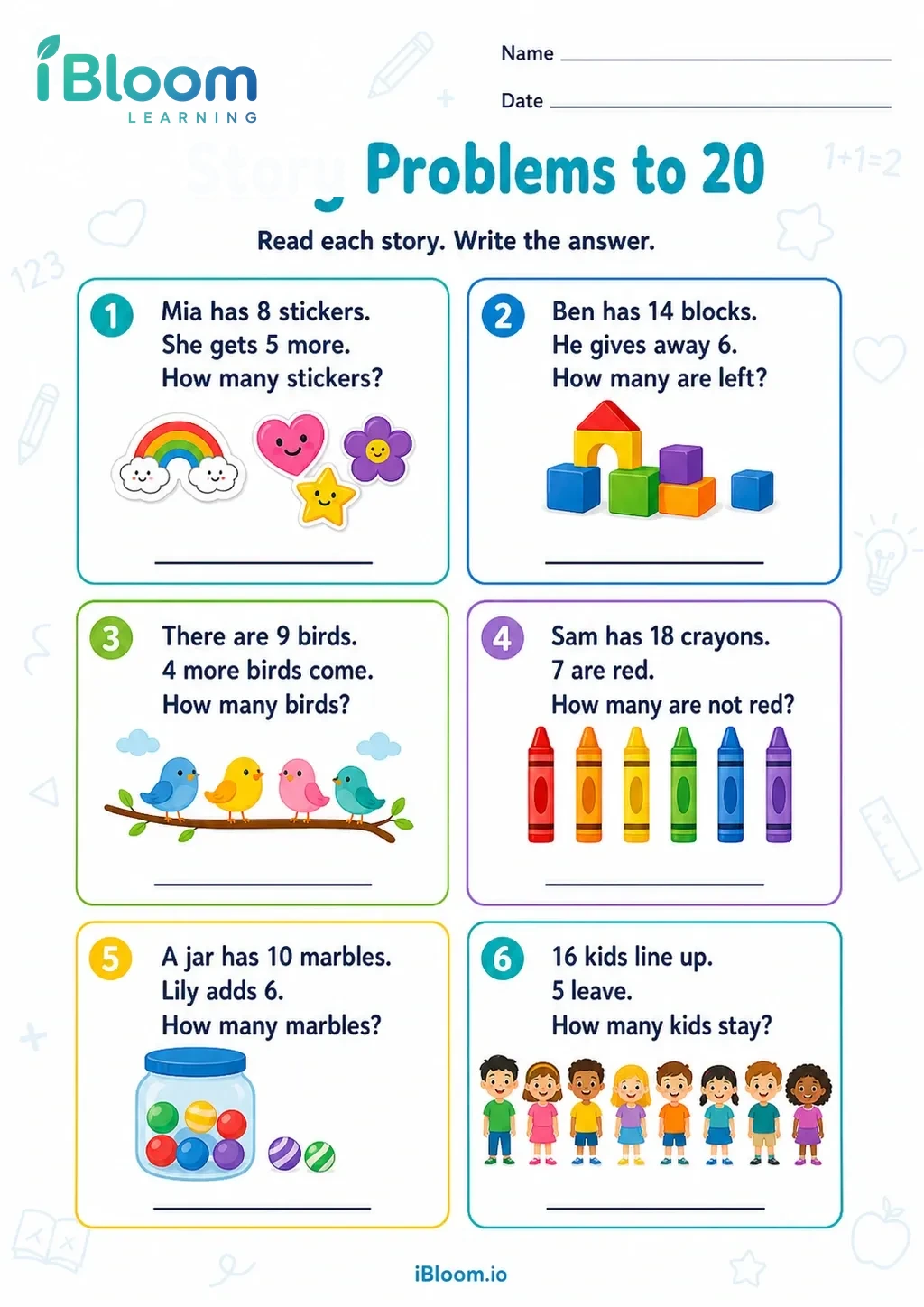
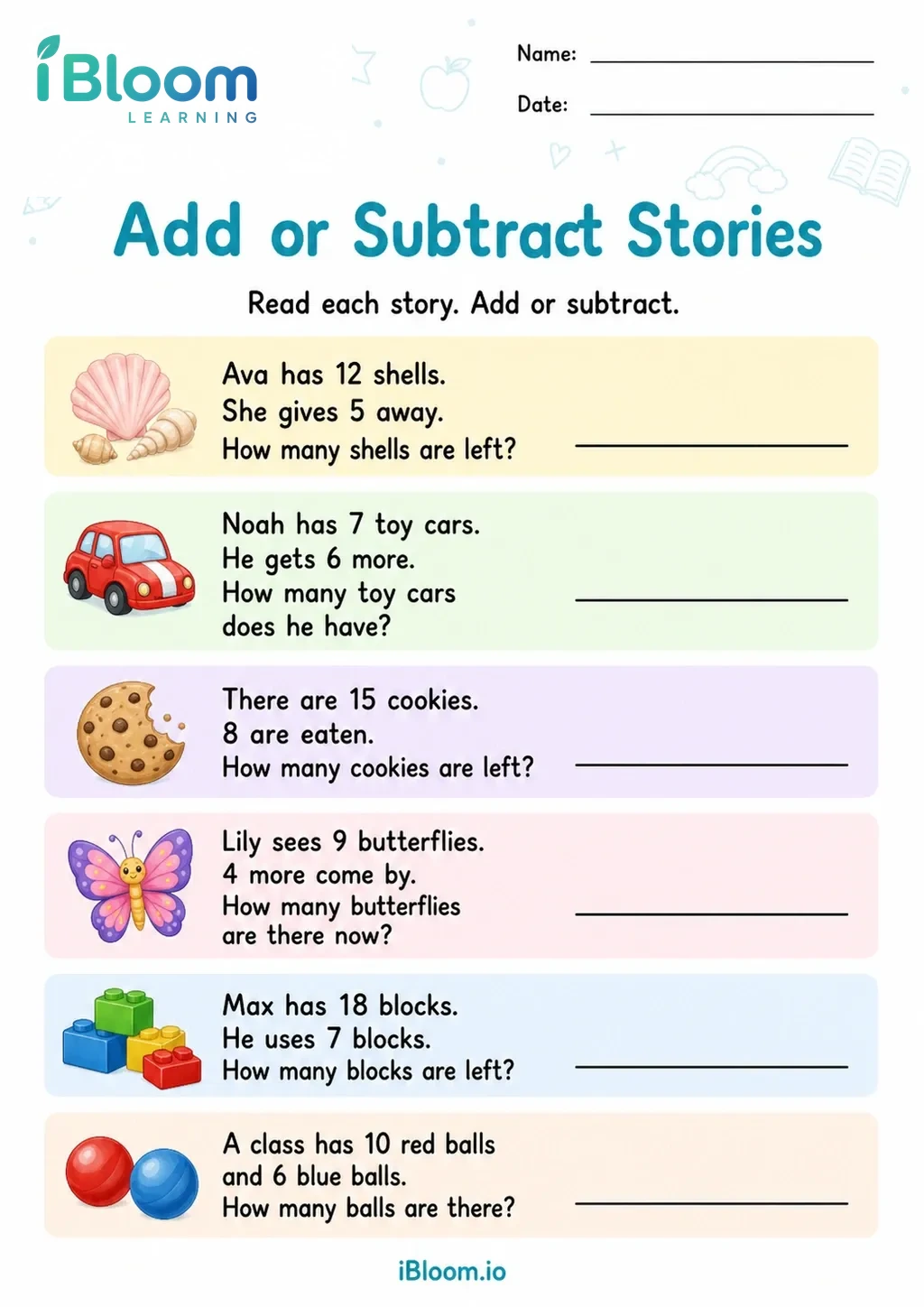
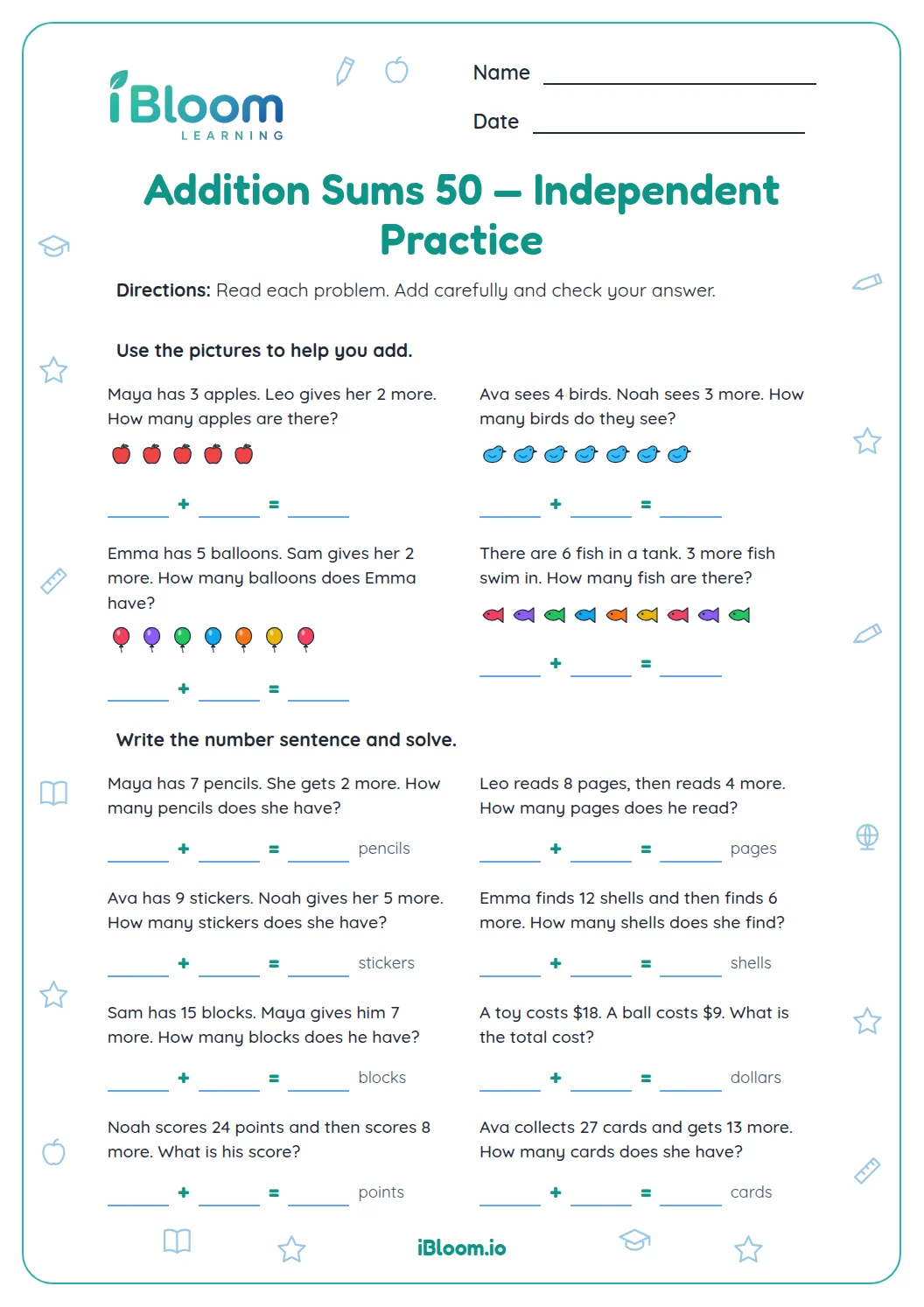
On this sheet: Students solve put-together and add-to stories using drawings and equations.
Show the official wordingHide the official wording
Use addition and subtraction within 20 to solve word problems involving situations of adding to, taking from, putting together, taking apart, and comparing, with unknowns in all positions, e.g., by using objects, drawings, and equations with a symbol for the unknown number to represent the problem.
What to practice next
Make more practice
Further reading
Questions parents and teachers ask
What does the reasoning part ask students to do?
Students explain a counting error, select a useful check, complete addition facts, solve short stories, and compare strategies. These tasks ask them to think about how a sum is found as well as state the total. The key gives each correct choice or response.
How does counting on work?
Start with one addend and count forward by the other addend. For 5 + 2, say 5, then count 6 and 7. The last number said is the sum. Do not count the starting addend as one of the additional steps.
How can subtraction check an addition fact?
Subtract one addend from the sum. If 5 + 2 = 7, then 7 − 2 should equal 5. The remaining addend confirms the sum. This worksheet asks students to recognize a valid check and to notice when a count stops too early.
What strategies appear in the questions?
The worksheet uses counting on, a subtraction check, equal sums when addends switch, and a make-ten plan. For 8 + 7, students can split 7 into 2 and 5, add 2 to reach 10, then add 5. The last blank practices that split.
How many questions and pages are included?
There are 14 questions across two worksheet pages, followed by two pages of answer key. The parts include four reasoning choices, four addition facts, four short addition stories, and two final reasoning prompts. Every addend is a single-digit number, and totals stay within 20.