
About this worksheet
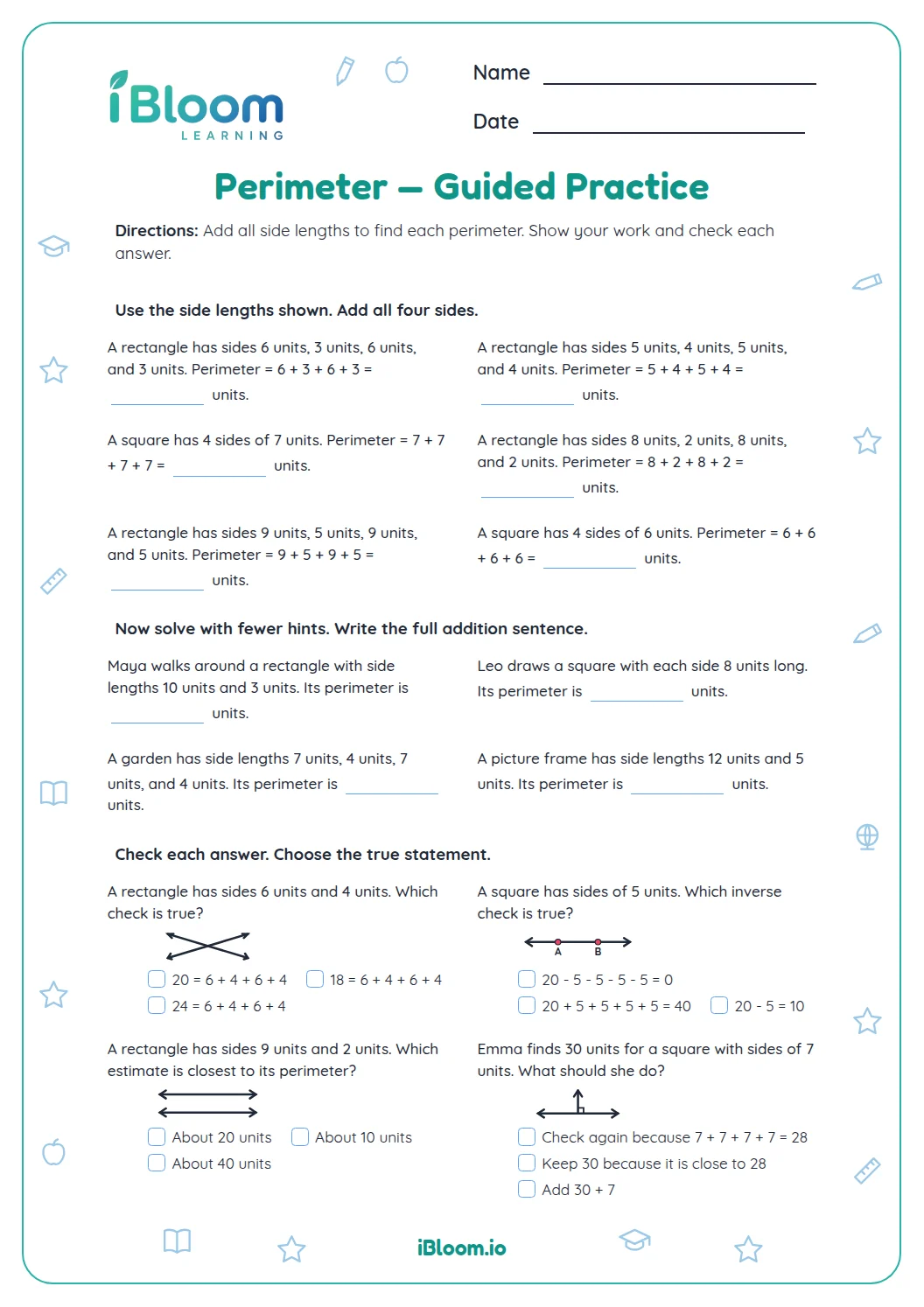
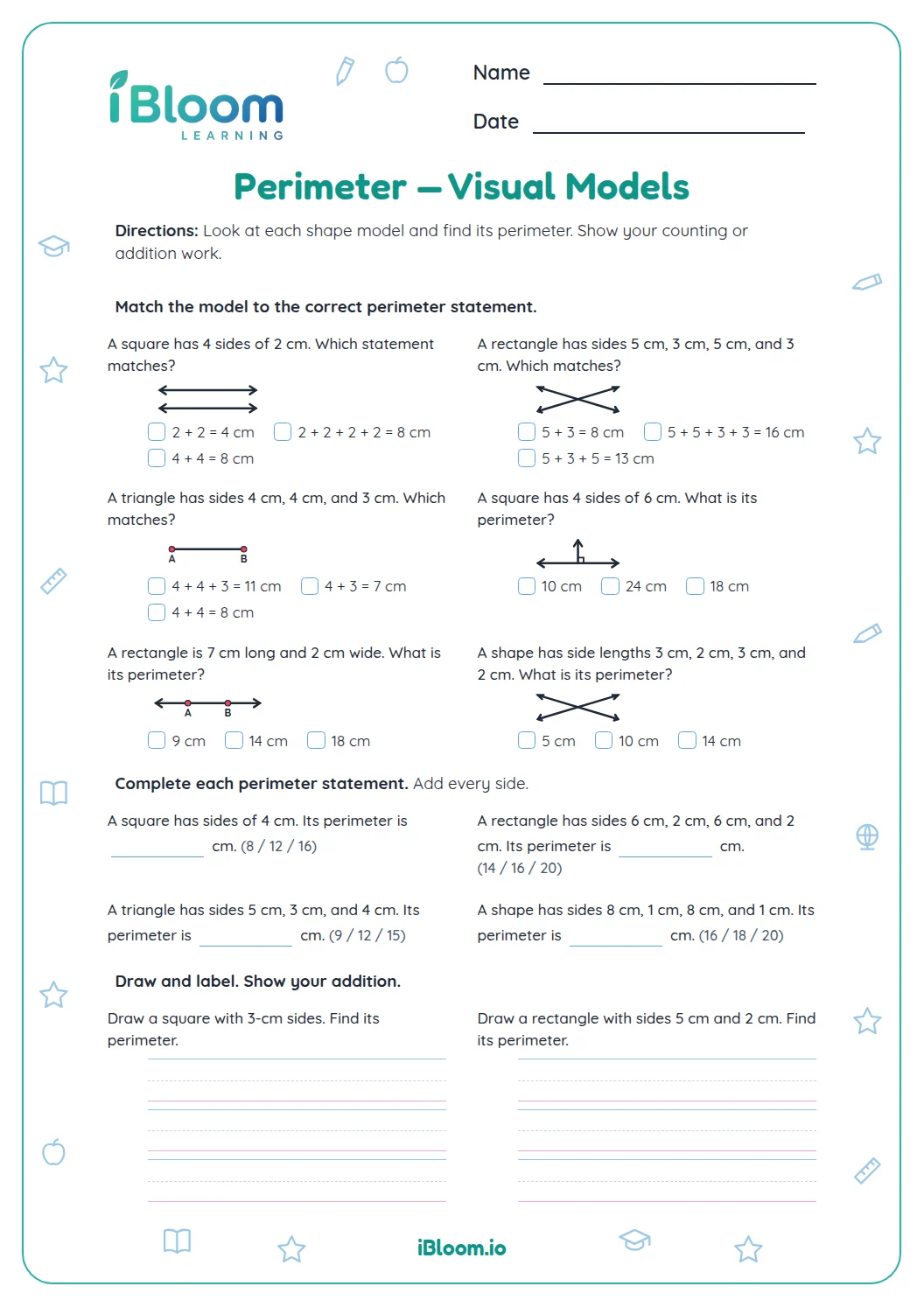
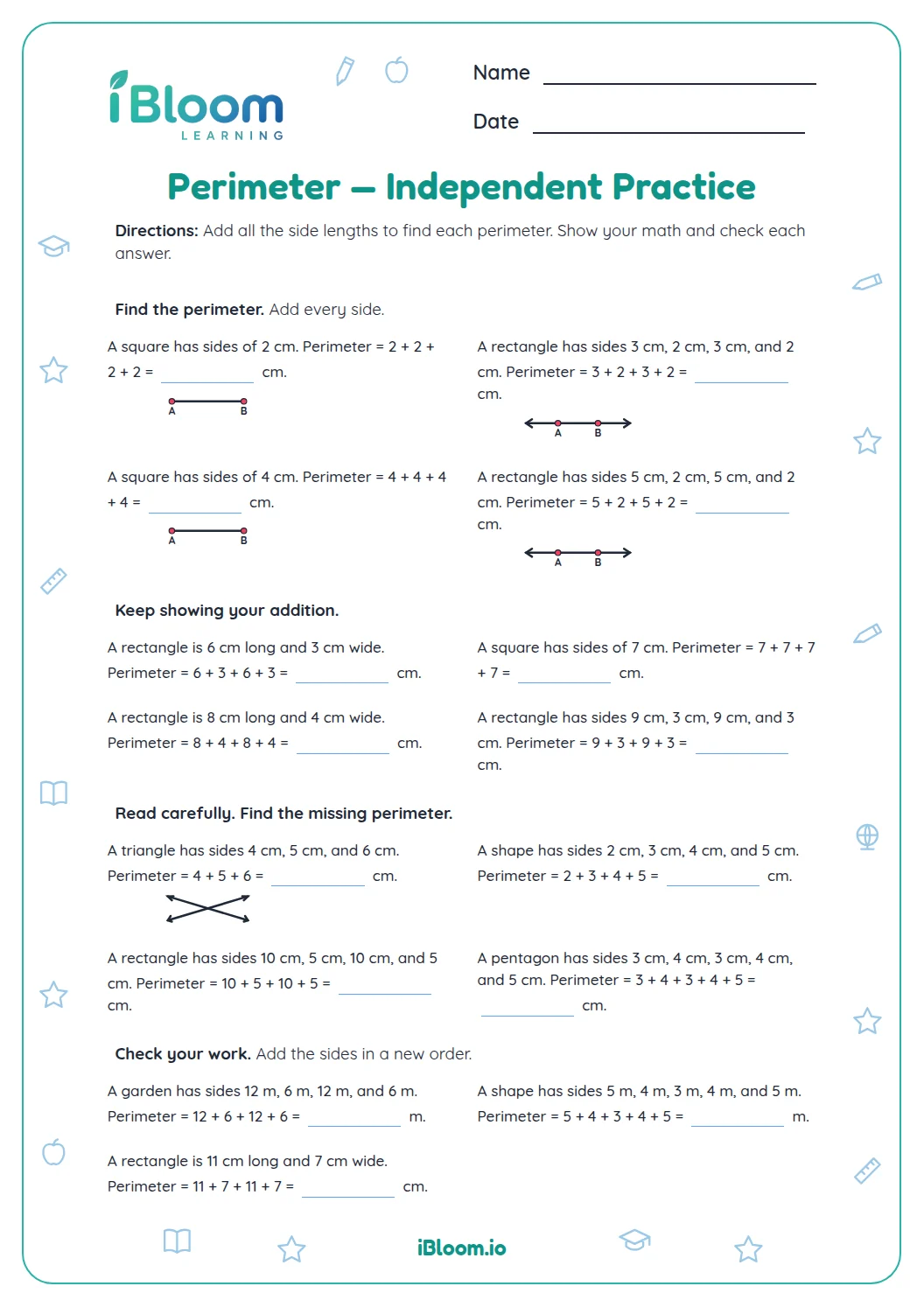
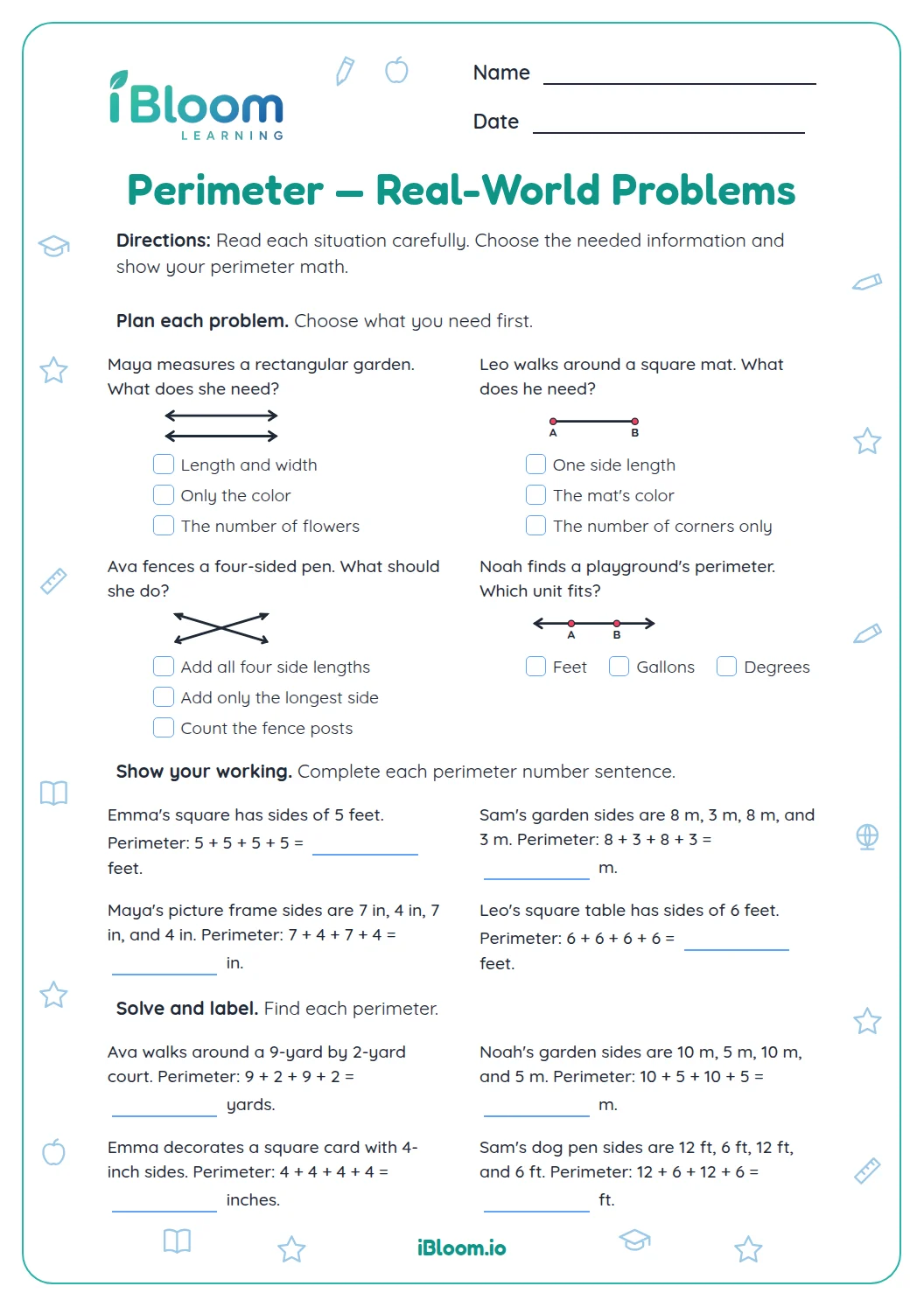
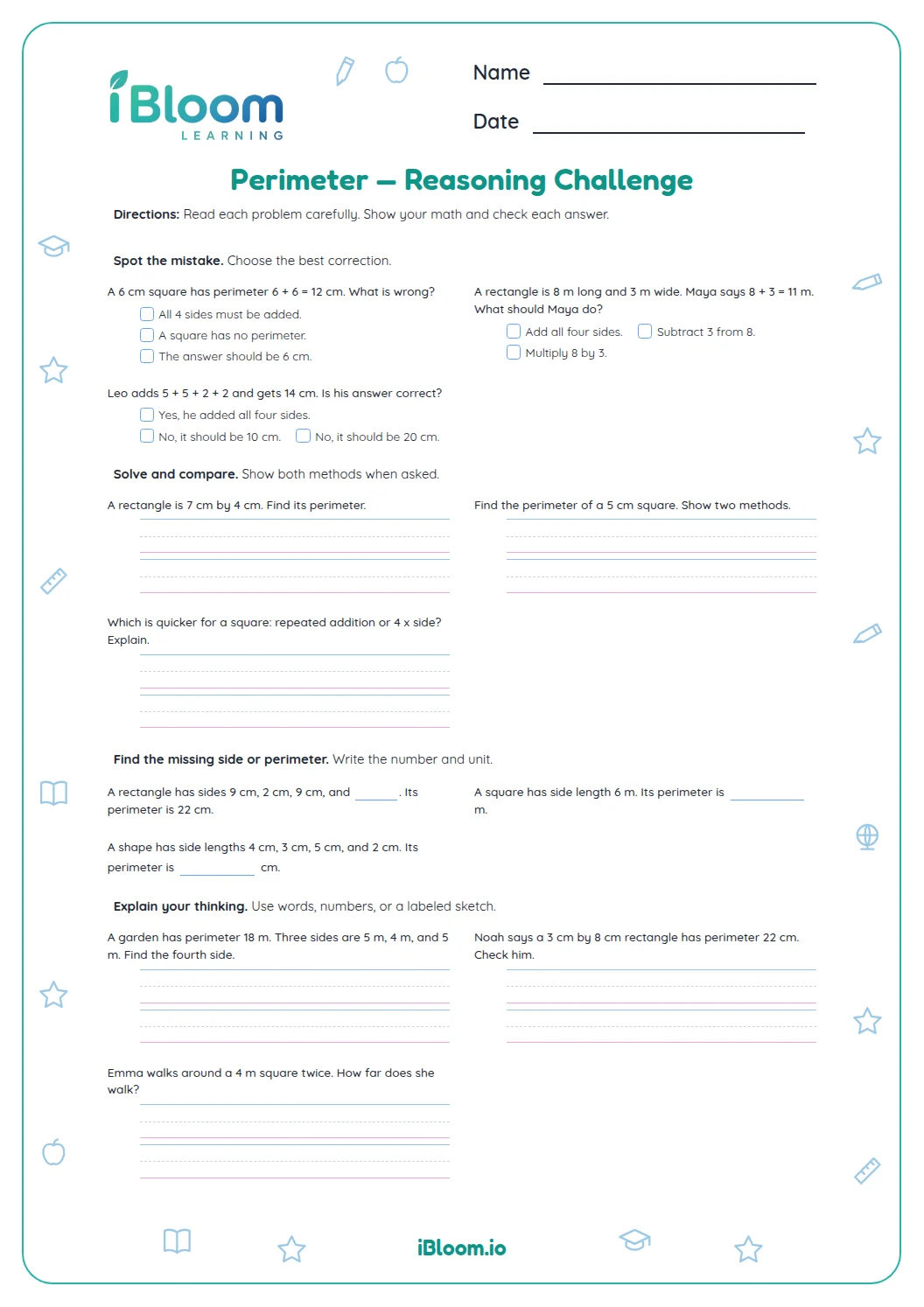
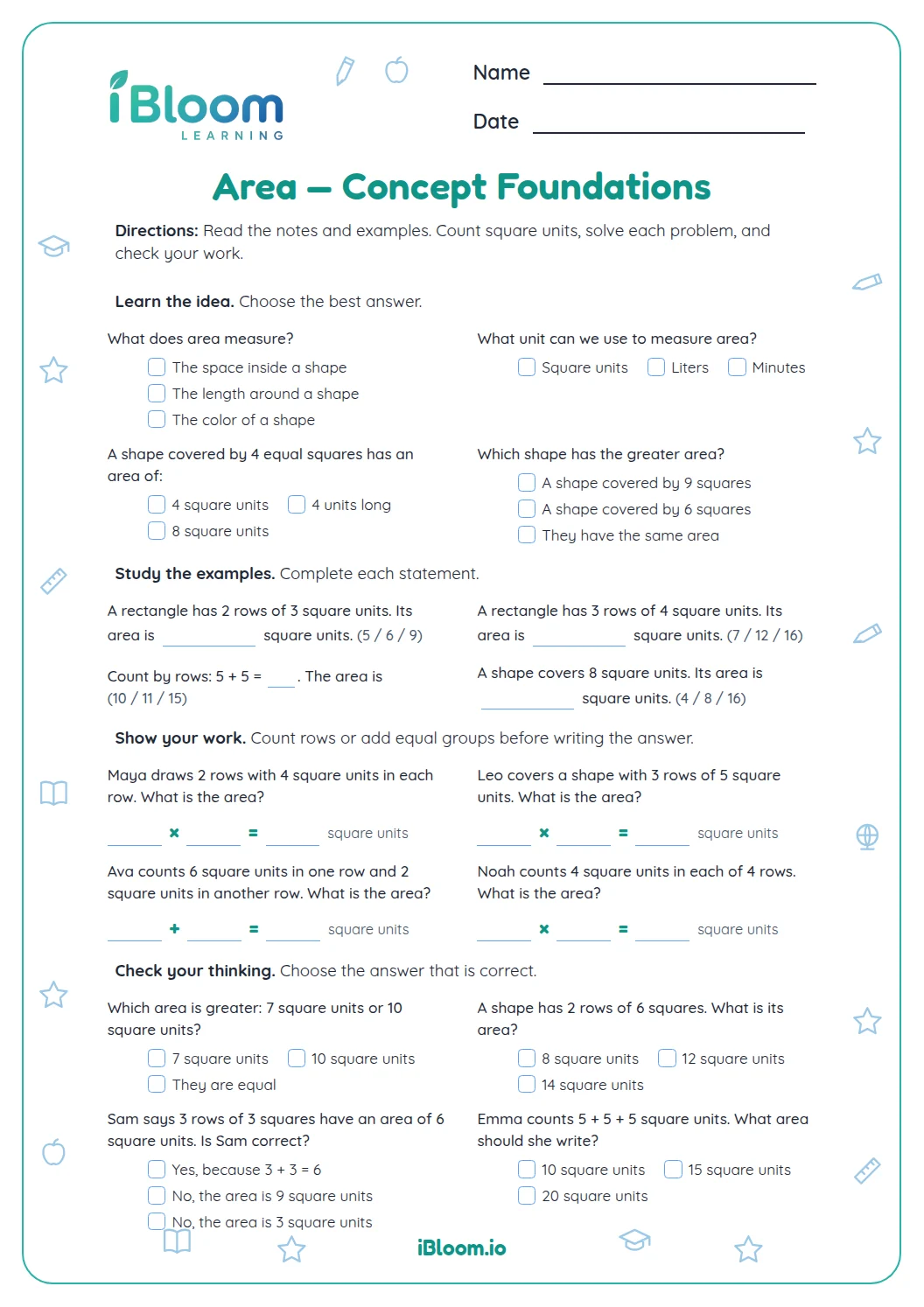
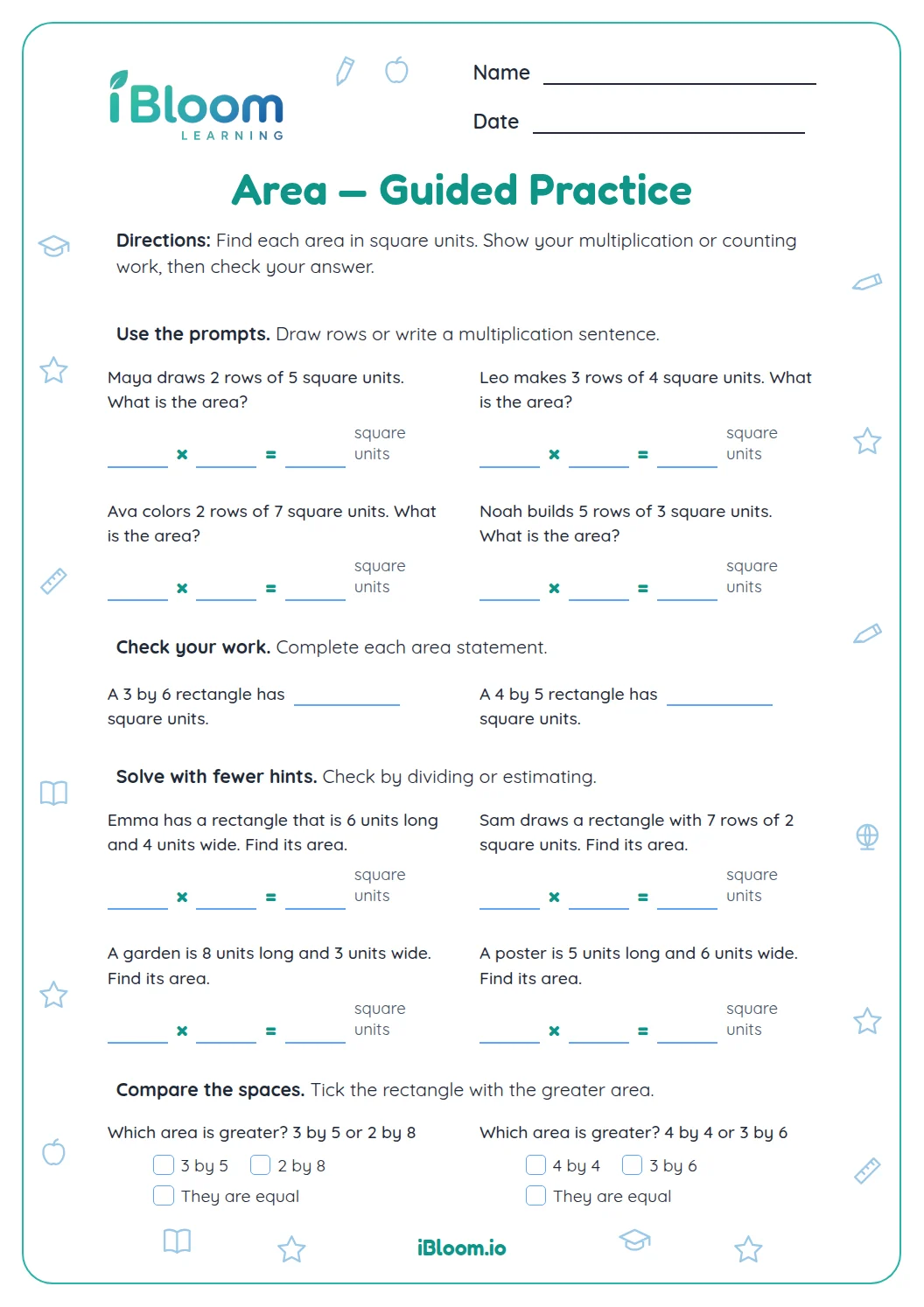
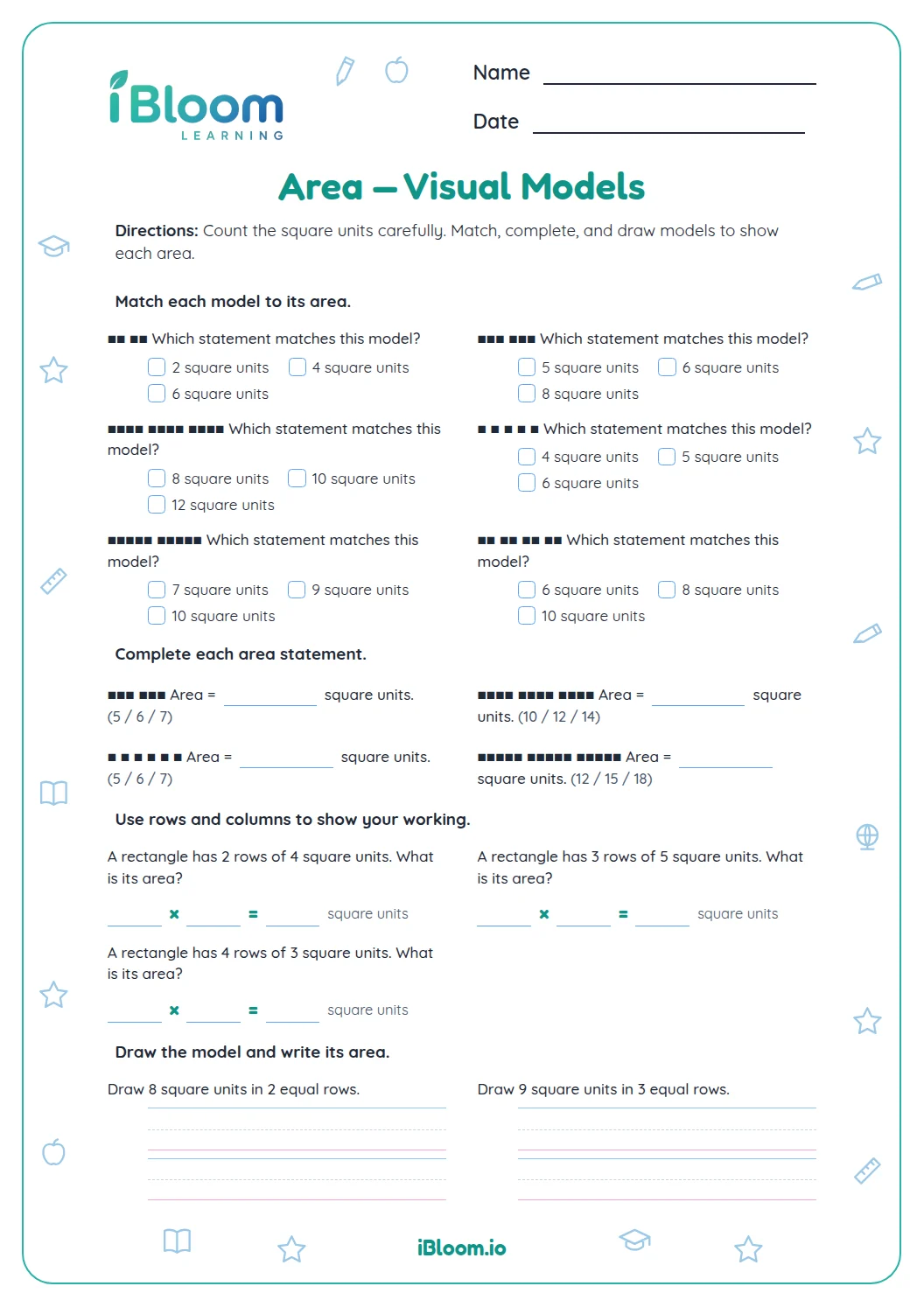
This Grade 2 printable introduces perimeter with a shaded unit-grid rectangle, concept choices, and side-length sums. Learners practice identifying the boundary, distinguishing perimeter from area, choosing a length unit, and adding side lengths for familiar shapes. The separate key lists all 14 answers.
Aligned to 3.MD.D.8
What does perimeter measure?
Perimeter is the total distance along a flat shape’s boundary. Count each outside unit edge once or add the side lengths; the inside space is area, a different measurement.
How can you count a perimeter?
For question 1, count the exposed unit edges around the shaded 2-by-1 rectangle. The two long sides contribute two units each, and the short sides contribute one each: 2 + 2 + 1 + 1 = 6 units.
- 1Count the outside edges only.
- 2Add 2 + 2 + 1 + 1.
- 3The perimeter is 6 units.
How do side lengths make a perimeter?
Add every side length, including repeated lengths. A square with four 3-inch sides has perimeter 3 + 3 + 3 + 3 = 12 inches. Keep the unit in the answer.
What is in the practice set?
The 14 questions include a grid count, concept and unit choices, and short perimeter calculations for squares, rectangles, and a triangle. The answer key is separate.
How to find perimeter
- 1Trace the outside boundary.
- 2Count each outside unit edge once, or note every side length.
- 3Add all side lengths.
- 4Write the correct unit with the total.
- 5Check that no side was skipped or counted twice.
Common perimeter slips
The mistake
Adding only two sides of a rectangle.
The fix
Include all four sides, including the matching opposite sides.
The mistake
Counting inside grid edges.
The fix
Follow only the outside boundary.
The mistake
Writing a perimeter without its unit.
The fix
Copy the unit from the side lengths, such as inches or centimeters.
Curriculum alignment
Find polygon perimeters by counting units or adding side lengths.
On this sheet:
Show the official wordingHide the official wording
Solve real world and mathematical problems involving perimeters of polygons, including finding the perimeter given the side lengths, finding an unknown side length, and exhibiting rectangles with the same perimeter and different areas or with the same area and different perimeters.
What to practice next
Make more practice
Further reading
Questions parents and teachers ask
What does perimeter measure?
Perimeter is the distance around the outside of a flat shape. A learner can count each unit edge around a grid rectangle or add all side lengths. The space inside the shape is its area, so perimeter and area describe different measurements.
How do you find the perimeter of a rectangle?
Add the lengths of all four sides. A rectangle with sides of 5 feet and 2 feet has two sides of each length, so add 5 + 2 + 5 + 2 to get 14 feet. Counting the boundary is another way to check.
What units can be used for perimeter?
Perimeter uses linear units because it measures length around a shape. Examples include inches, feet, centimeters, and meters. Units such as liters measure capacity, while degrees measure angles, so those are not appropriate for a small perimeter. Choose a unit that matches the sides.
How does this worksheet build the perimeter idea?
Learners count outside unit edges on a grid rectangle, identify what perimeter measures, select a length unit, and add side lengths in several square and rectangle problems. The page closes with another definition check. The key shows each total with its matching unit.