



About this worksheet
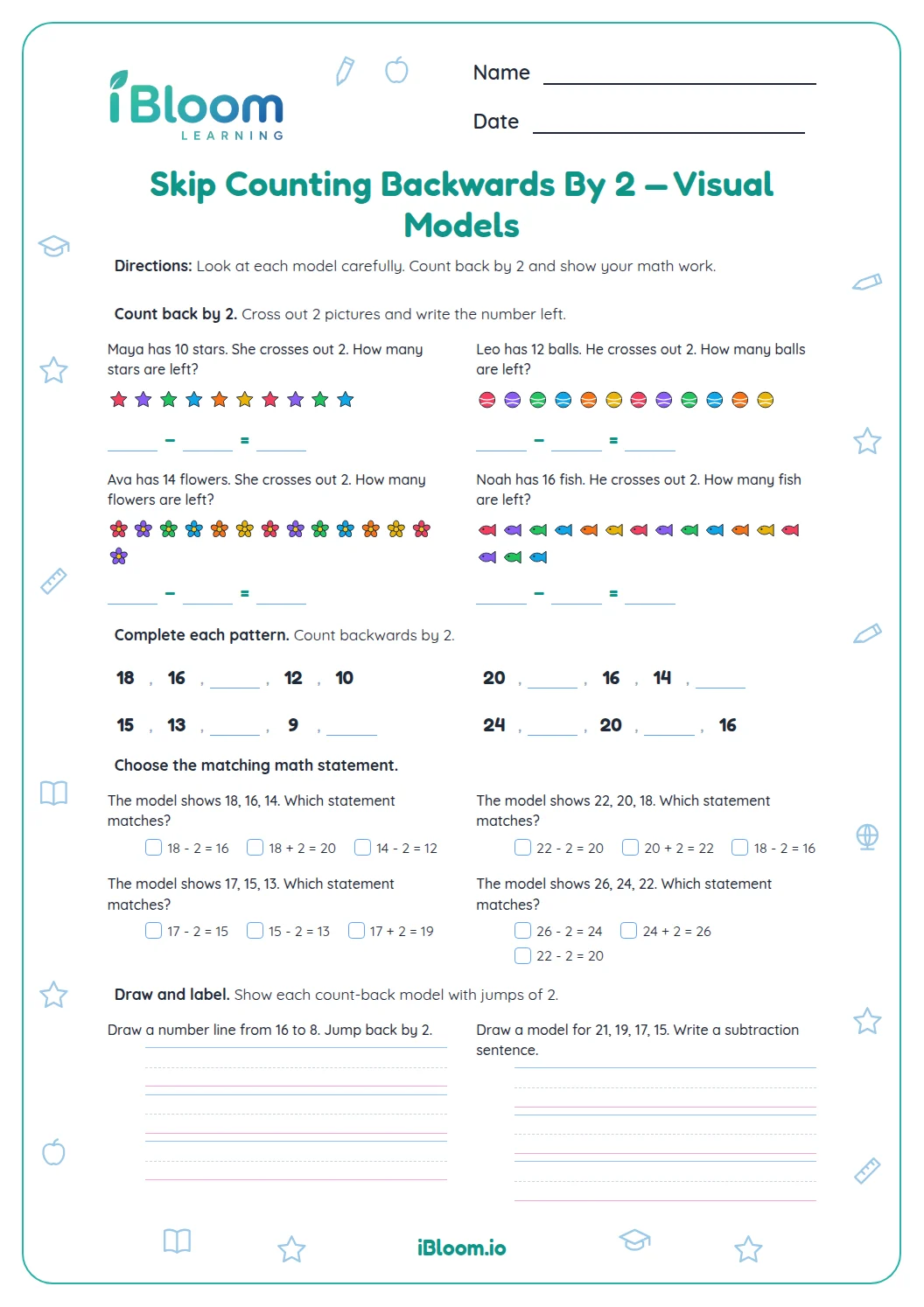
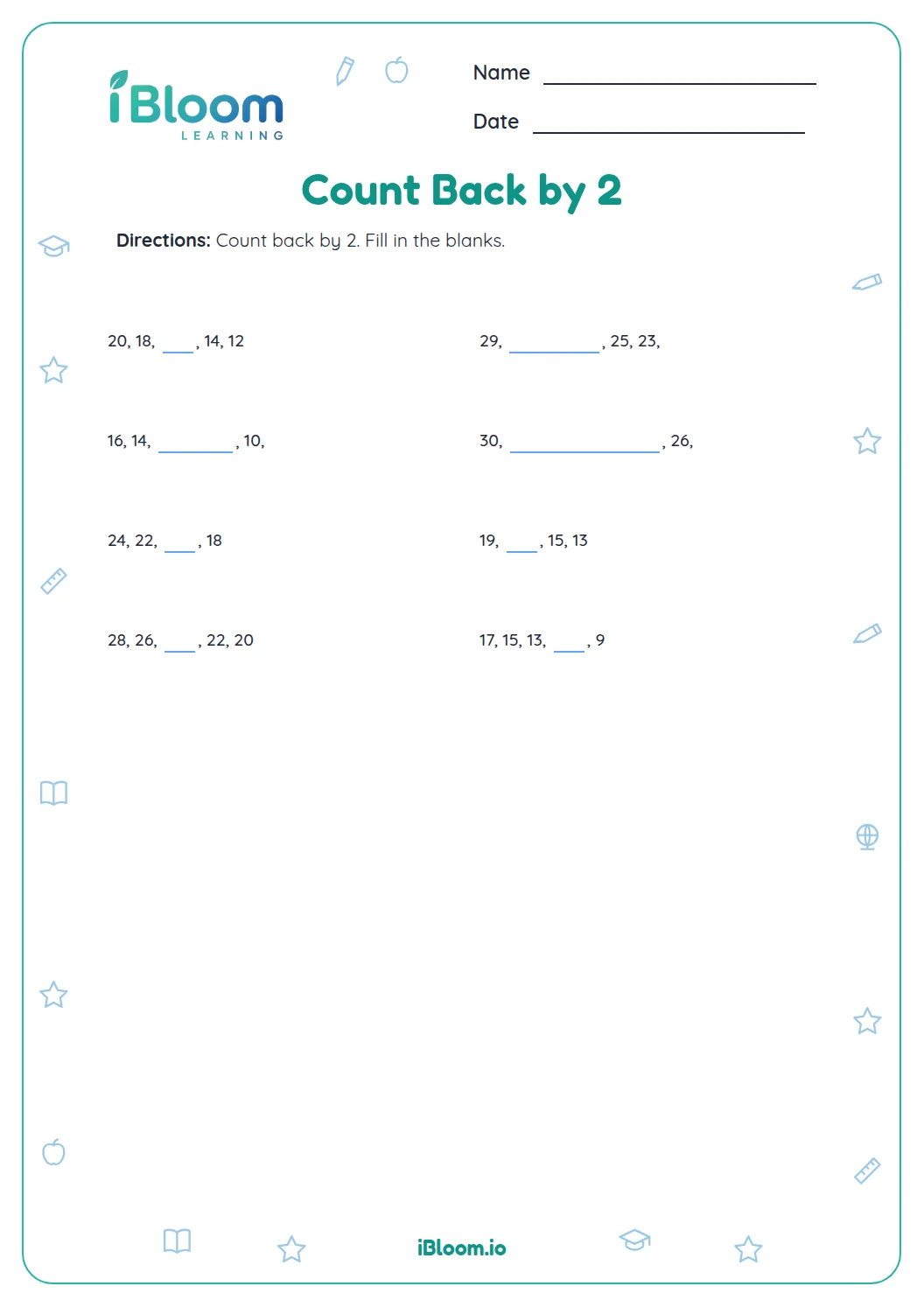
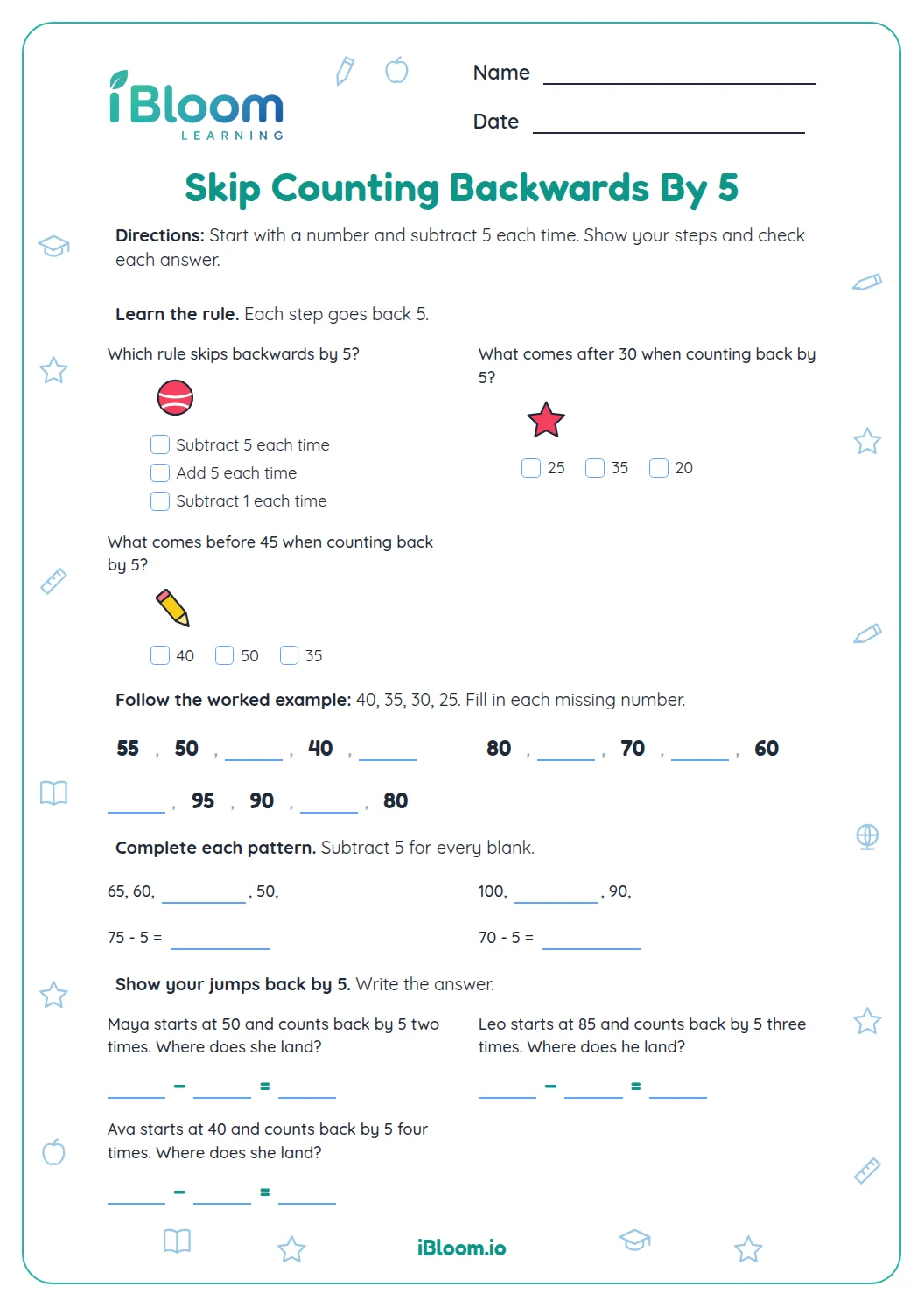
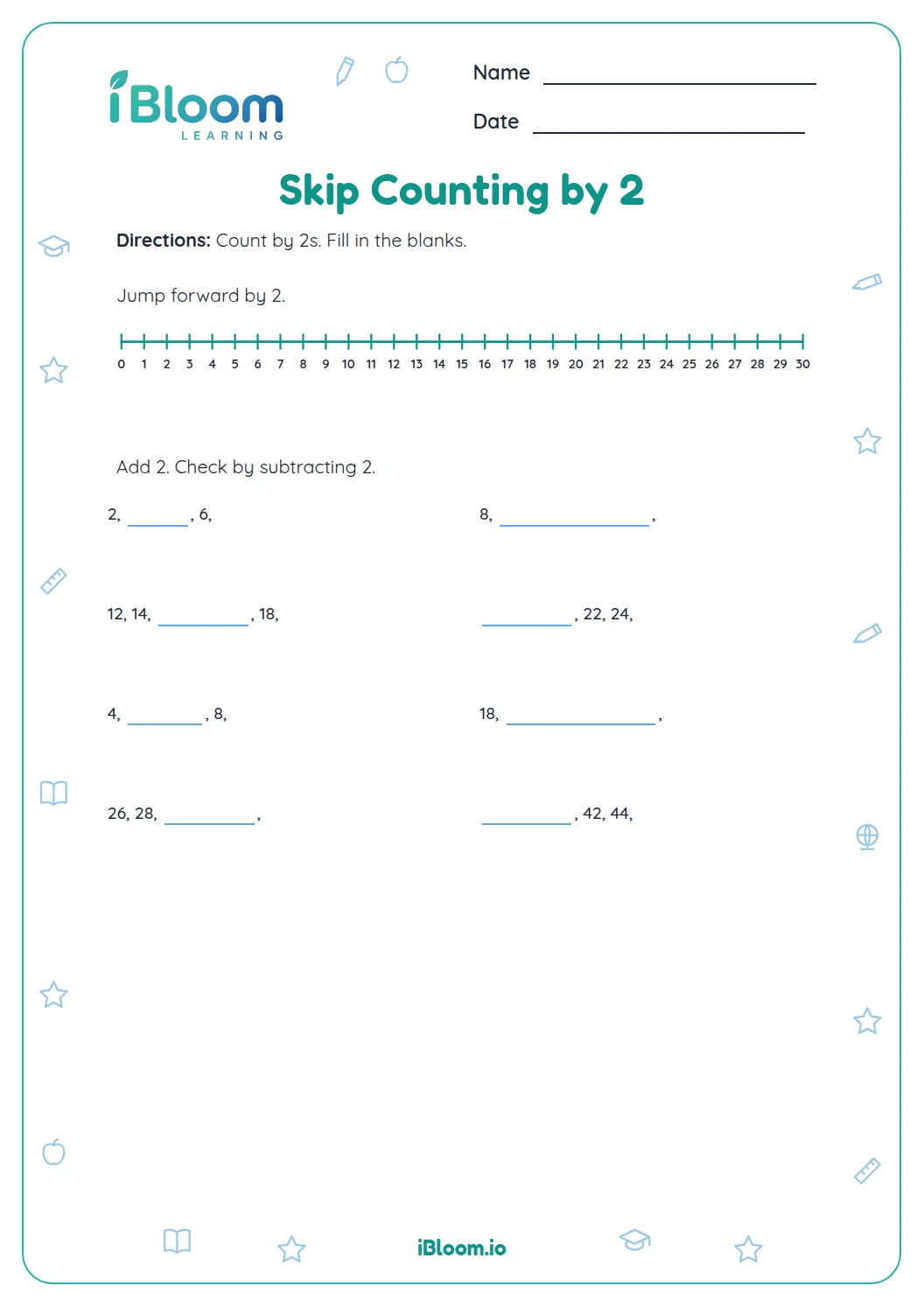
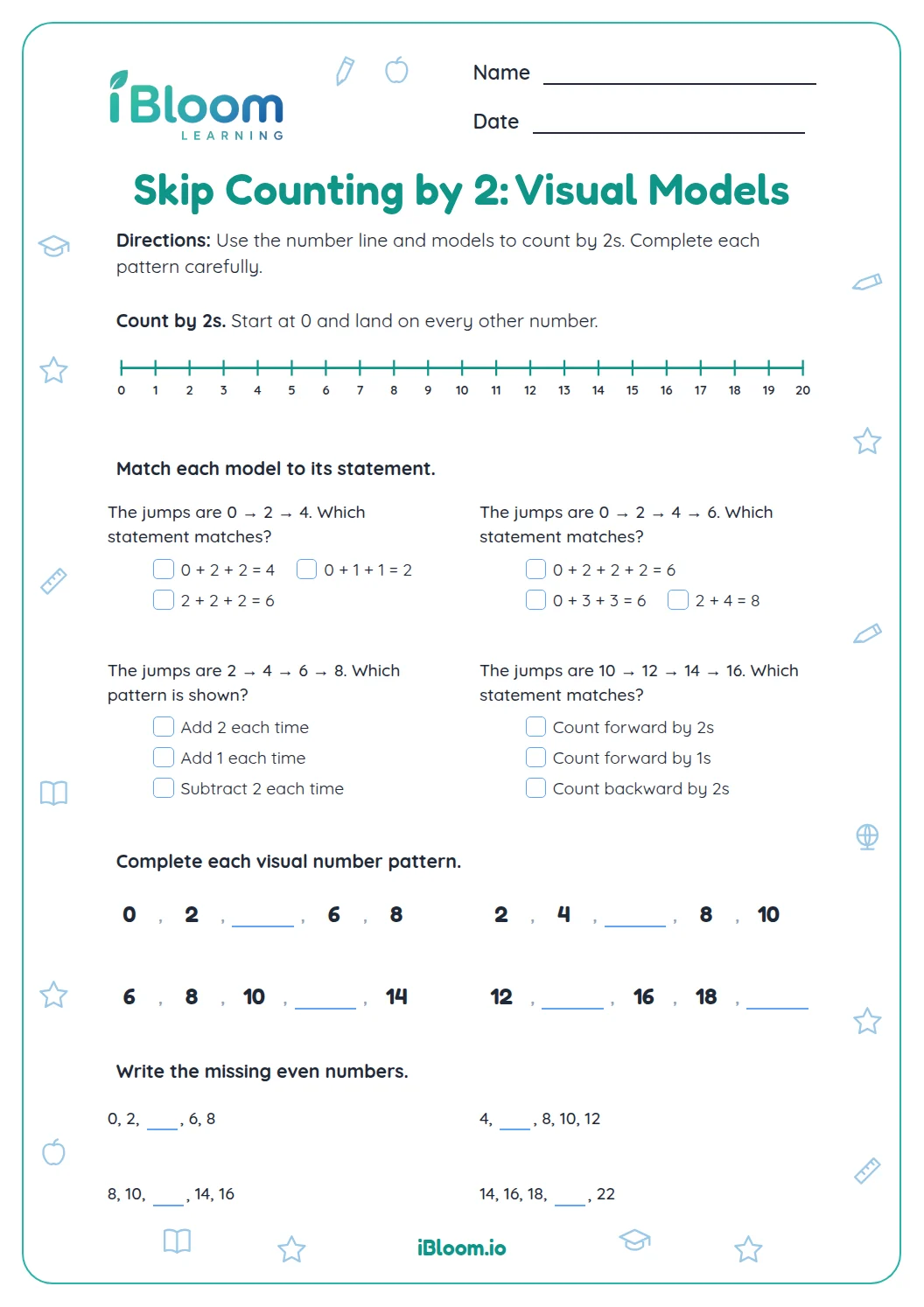
This Grade 2 worksheet keeps the old page’s reasoning approach: inspect a claimed pattern, choose a correction, complete sequences, and work out missing information. The 15 questions use backward steps of 2, including steps across a multiple of ten. A separate answer key gives each correction and sequence term. Students can check each neighboring pair by subtracting 2.
How do you spot a broken backward pattern?
Compare one neighboring pair at a time. In 24, 22, 20, 19, the first two jumps subtract 2, but 20 to 19 subtracts only 1. Change the final value to 18 to keep the same rule.
- 124, 22, 20, 19
- 224 to 22 is −2; 22 to 20 is −2.
- 320 to 19 is −1, so change 19 to 18.
How do you fill a missing term?
Keep subtracting 2 from left to right. If the blank comes before a known term, count forward by 2 from the known term to find what came just before it.
What does the last part ask students to reason about?
Students find a starting value, identify a missing number, correct a pattern, and write two subtraction steps. These items connect the sequence rule to an explanation and number sentences.
How to use this worksheet
- 1Read the first known number and follow the direction of the count.
- 2Check the difference between every pair of known neighbors.
- 3Fill a blank with a number that keeps each step at 2.
- 4For an unknown starting value, count forward from the first shown number.
- 5Reread the complete sequence to check the rule.
Common mistakes and quick fixes
The mistake
Subtracting 1 when crossing a ten.
The fix
Write out the two neighboring numbers and check their difference.
The mistake
Continuing from the wrong end of a sequence.
The fix
Use the known terms on both sides of the blank, when available.
The mistake
Changing a number that already fits.
The fix
Check every jump before choosing which term needs correction.
What to practice next
Make more practice
Questions parents and teachers ask
What does this worksheet practice?
It practices counting backward by 2 through 15 questions in three parts: five pattern checks, six missing-term sequences, and four reasoning responses. The sequence values stay within 1,000. Students check each step rather than assuming that any decreasing list follows the rule.
Do all the patterns start with an even number?
No. The questions use both even and odd starting values, so the parity stays consistent within each sequence: even numbers remain even, and odd numbers remain odd. In either case, the next term is exactly 2 less than the current term.
How can a child find the number before a shown term?
If the pattern counts backward by 2, the number immediately before a known term is 2 greater. For example, if the sequence shows 26, 24, the missing term before 26 is 28. Then check the remaining steps in order.
What does the answer key include?
The key gives the correction for each pattern check, the missing sequence terms in order, and the values or sample number sentences for the reasoning questions. Question 15 accepts an equivalent pair of subtraction sentences that starts at 32 and takes two jumps of 2.
How should students check a completed sequence?
Subtract each term from the one before it. Every difference should be 2. A list can look like it is going downward and still contain a mistake, such as a step of 1 or 3, so checking every pair is more reliable than checking only the endpoints.