
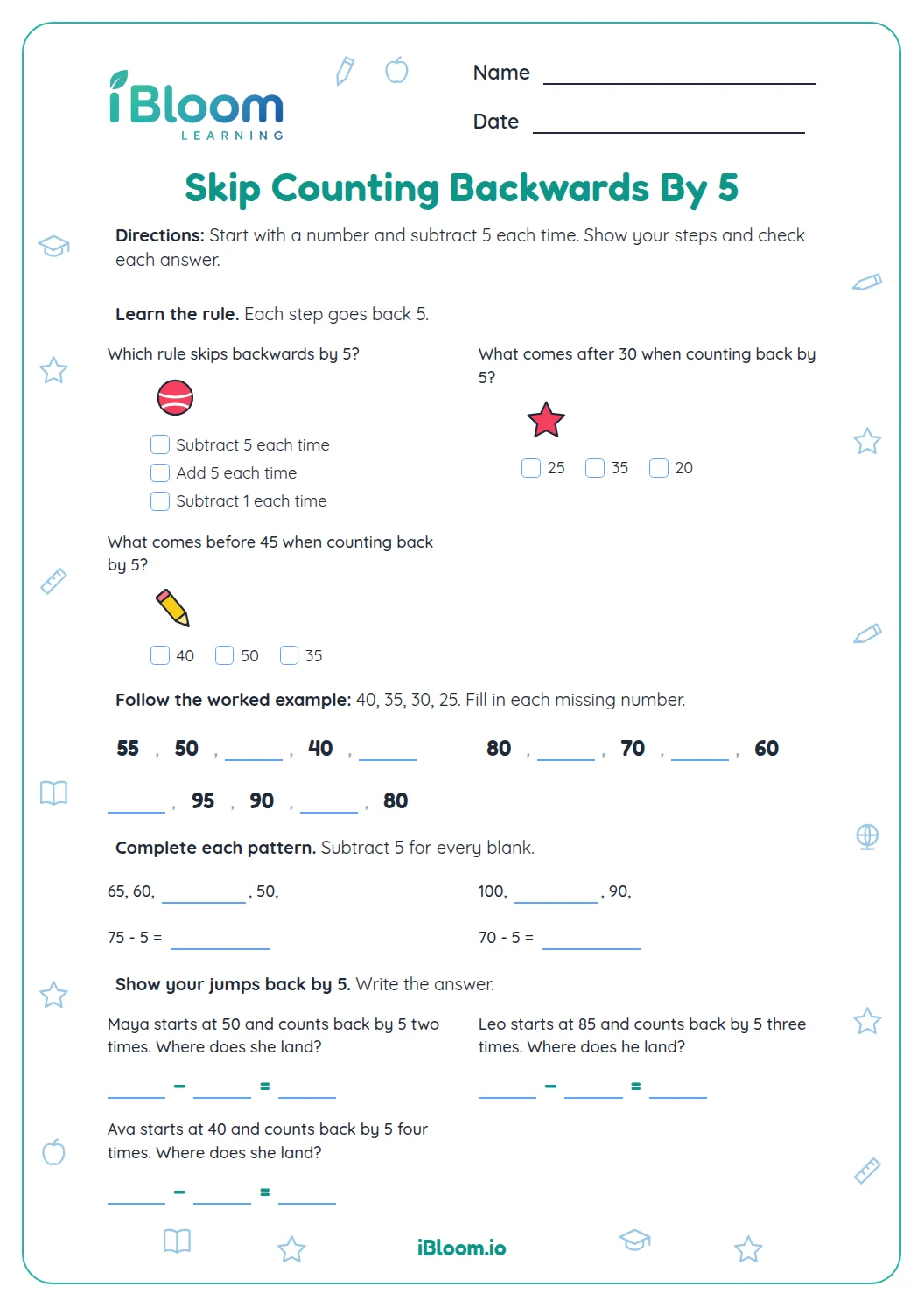


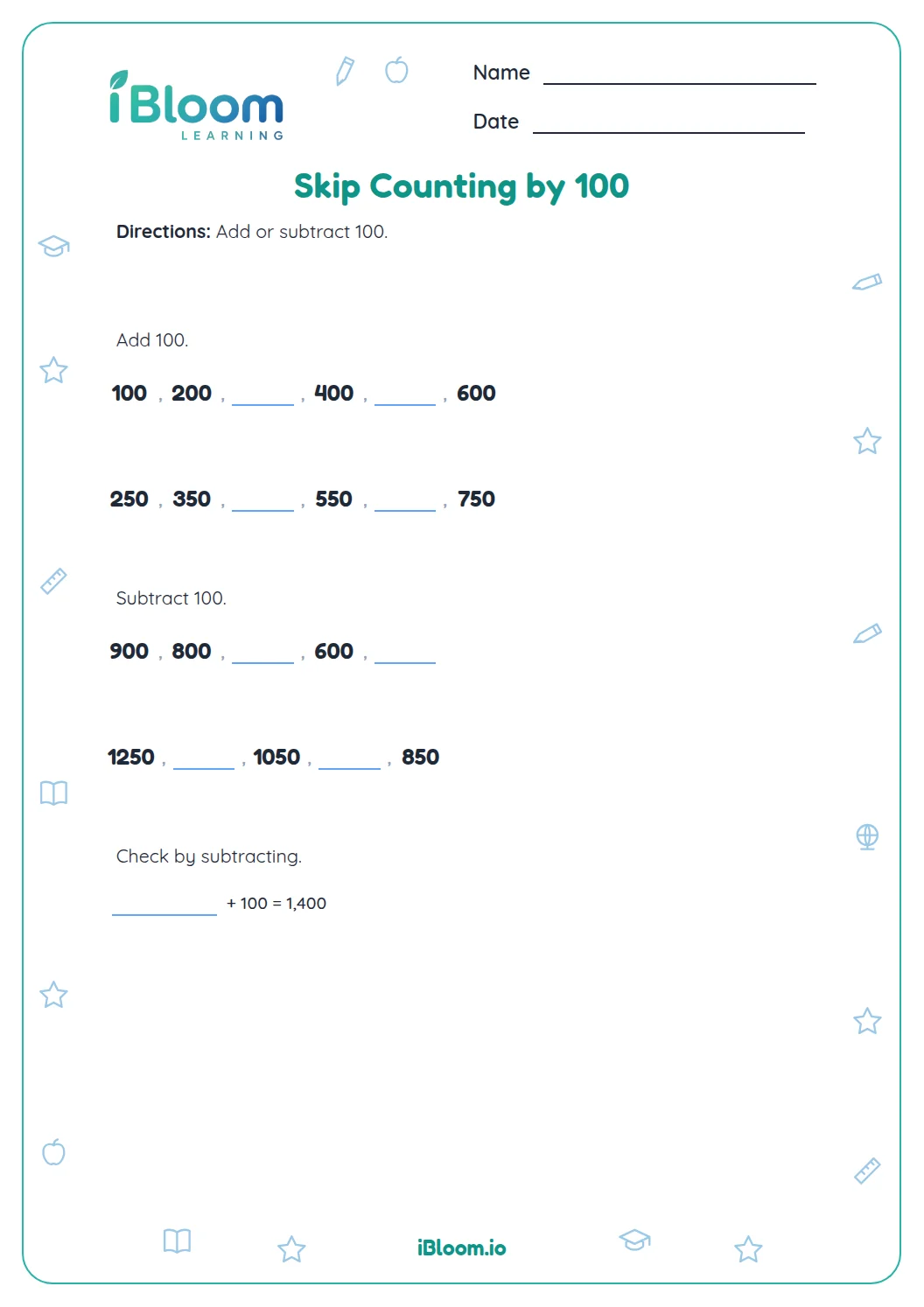
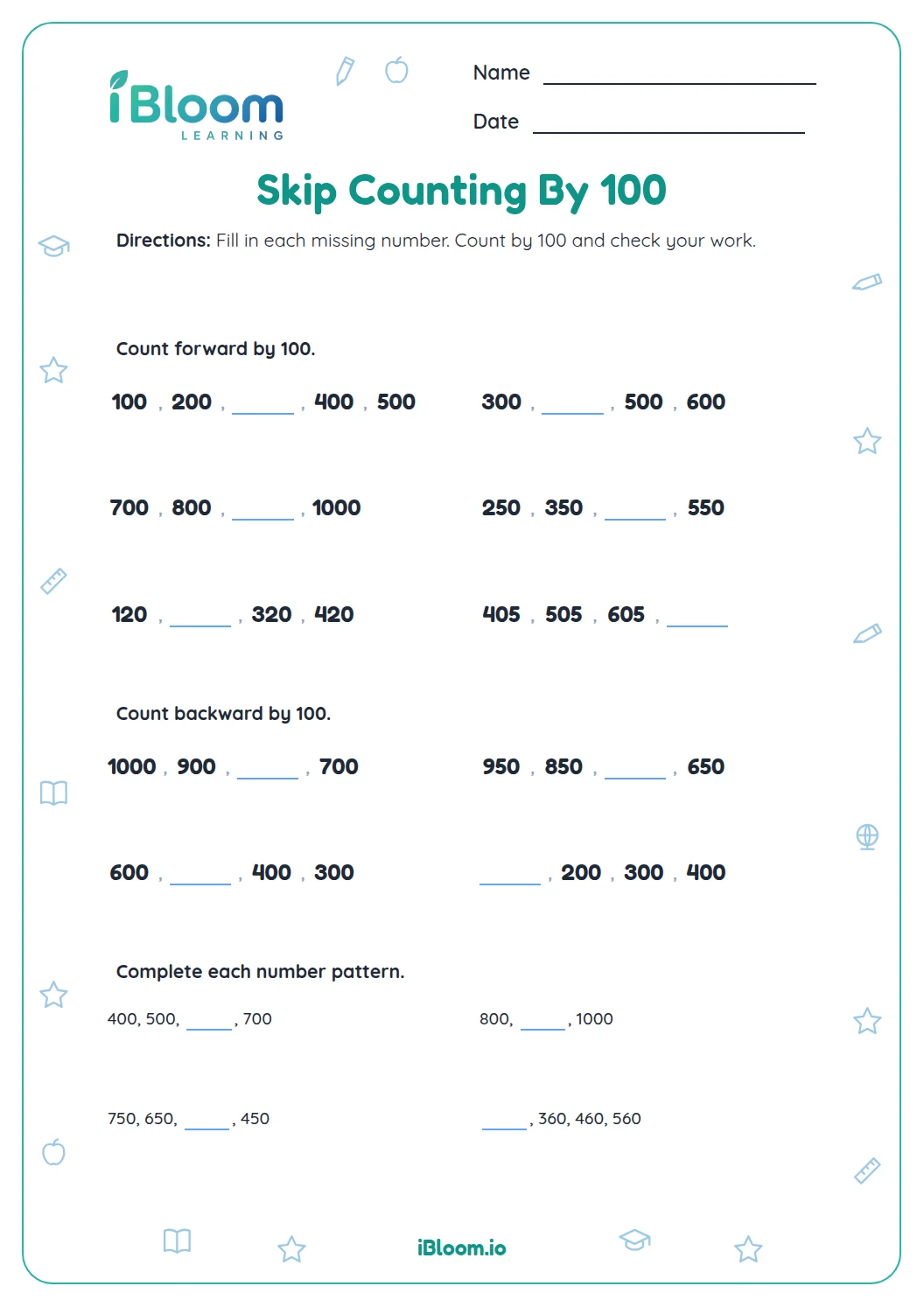
About this worksheet
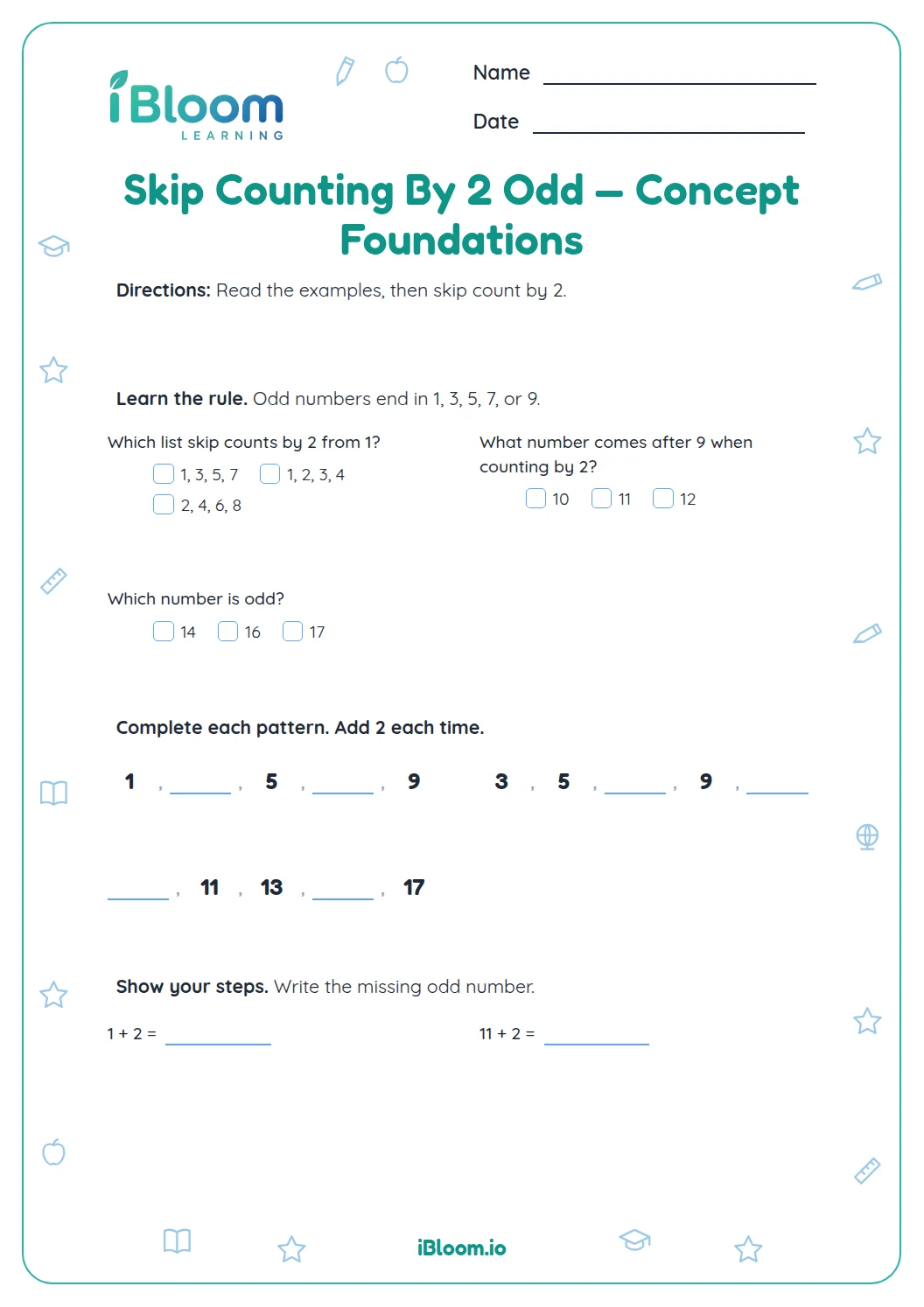
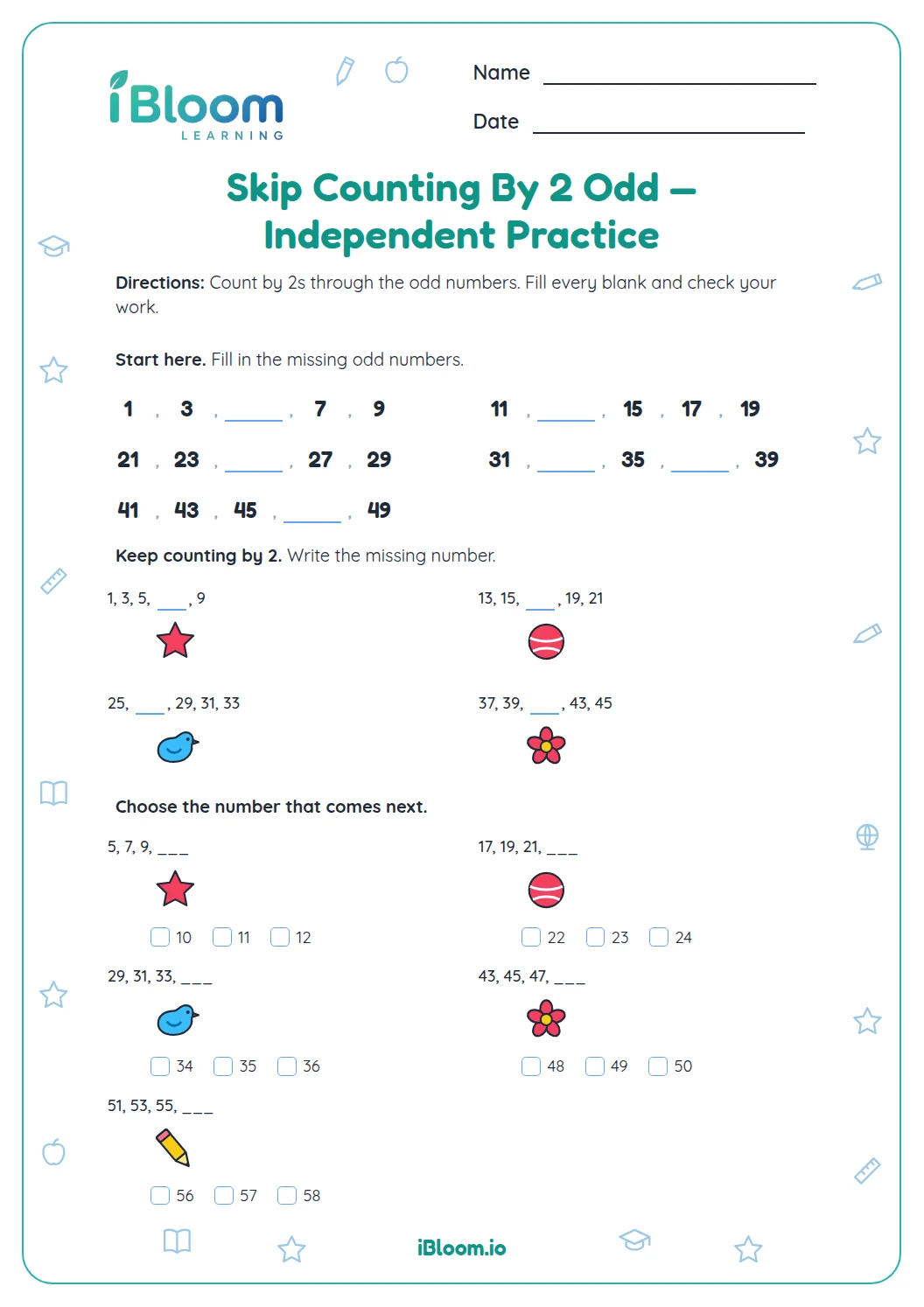
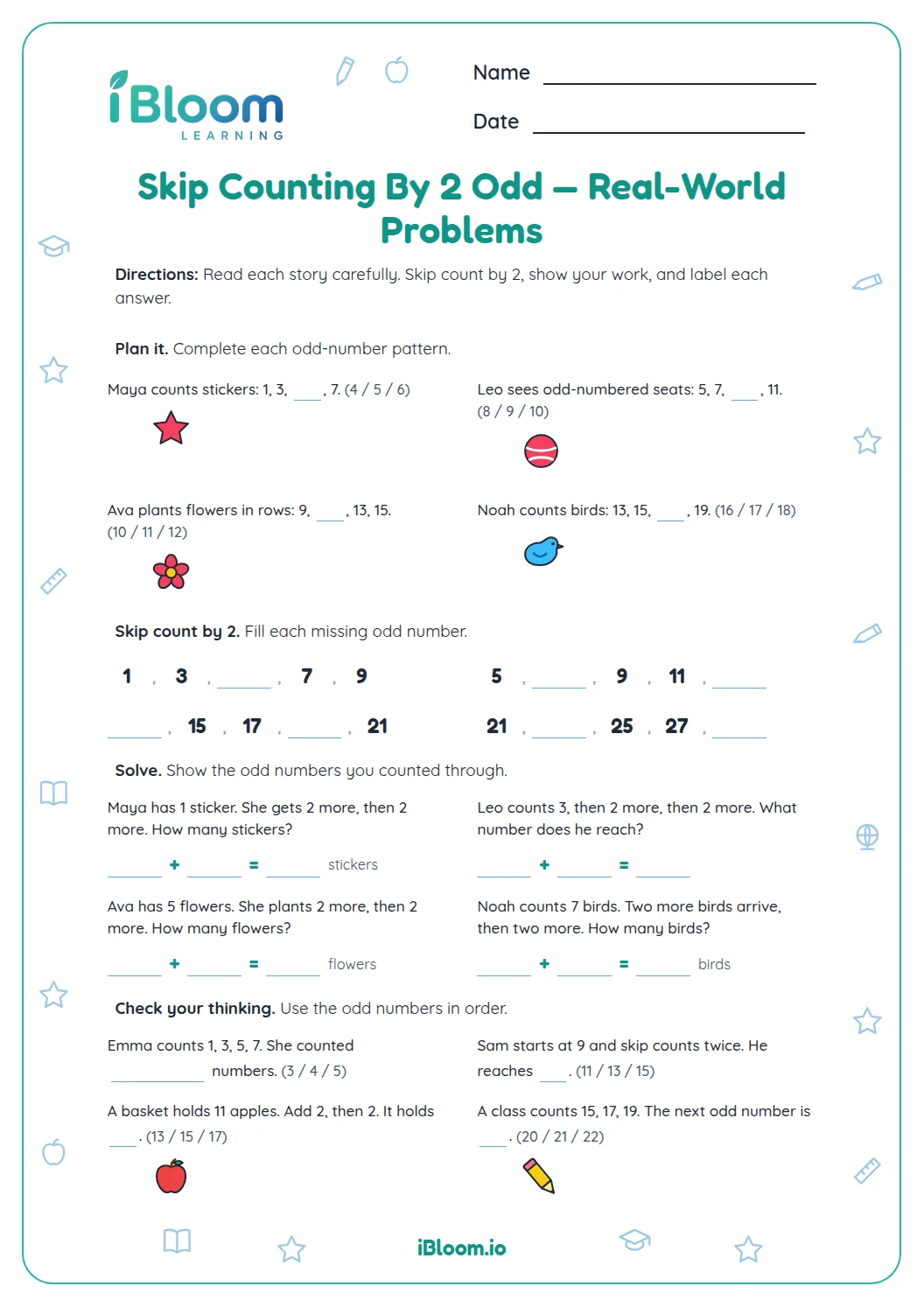
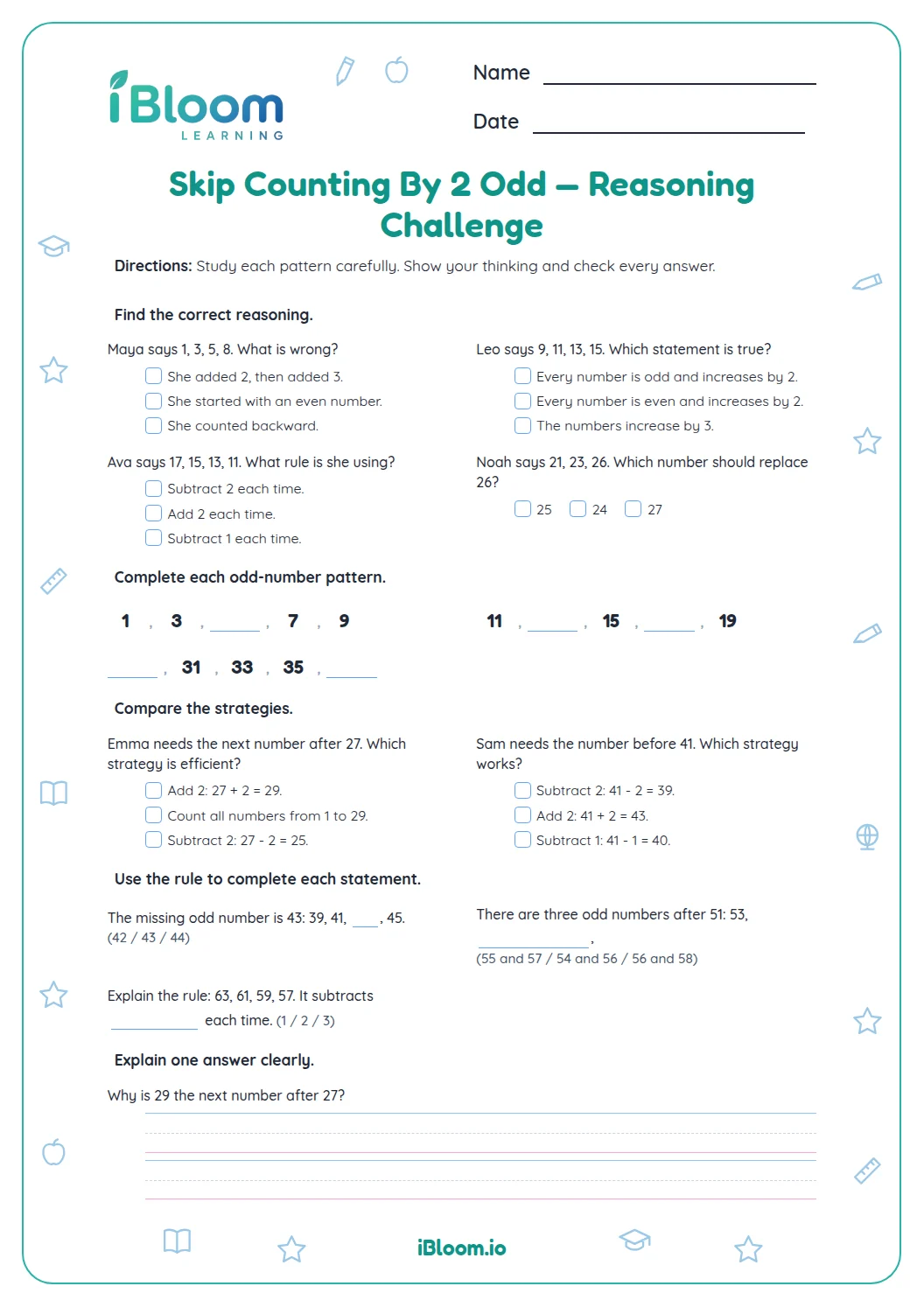
This Grade 2 printable practices counting forward by twos through odd numbers. Students fill gaps in short sequences, continue counts from different starting numbers, and use jumps of two to solve applied questions. It includes 15 questions in two parts and a separate answer key.
What does this worksheet practice?
The sequence questions use odd numbers that rise by two each time. In Part A, a count of 3, 5, ___, 9 is completed with 7. Part B starts at larger odd numbers and asks students to extend the pattern or count several jumps.
Encourage students to say each number in the pattern before choosing.
- Part A: continue short counts by twos
- Part B: apply the pattern to larger numbers and jumps
- 15 questions with an answer key
How should students approach each question?
Starting at an odd number, add two to reach the next odd number. For five jumps from 141, count 143, 145, 147, 149, 151. The endpoint is 151.
How can families use the page?
Complete one part at a time and pause to review any answer that needs another look.
How to use this worksheet
- 1Find the starting odd number.
- 2Say or write the next odd number by adding two.
- 3For jump questions, count one number for each jump.
- 4Check your answer with the separate key.
Common mistakes and quick fixes
The mistake
Adding one instead of two.
The fix
Skip the even number and name the next odd number.
The mistake
Counting the starting number as a jump.
The fix
The first jump lands two numbers after the start.
The mistake
Stopping one odd number too early.
The fix
Mark each jump until you reach the requested count.
What to practice next
Make more practice
Questions parents and teachers ask
What skill does this page practice?
Students practice skip counting by 2 through odd numbers. They complete sequences such as 3, 5, 7 and use the same pattern to count from larger odd numbers, including five jumps from 141. Saying each number aloud can help keep track of the two-step pattern.
How many questions are included?
The worksheet has 15 questions in two parts. Part A continues short odd-number patterns; Part B applies the same skip-counting rule to larger numbers, counts from a new starting point, and jump questions. The answer key provides the response for each item.
Is an answer key included?
Yes. A separate answer key lists a response for every question on the worksheet. Students can finish a part before checking it, or an adult can use the key to review the completed page together and discuss any tricky items.
How long should students spend on it?
About 20 minutes is a useful estimate for 15 questions. Students can say each sequence aloud or mark each jump on scrap paper before choosing an answer. The later questions use larger numbers, so pausing to track each jump can help.
Can a student complete it independently?
The directions are written so students can follow each part one step at a time. A family member or teacher may introduce the skill first, then let the student work. The answer key helps an adult review responses afterward.