


About this worksheet
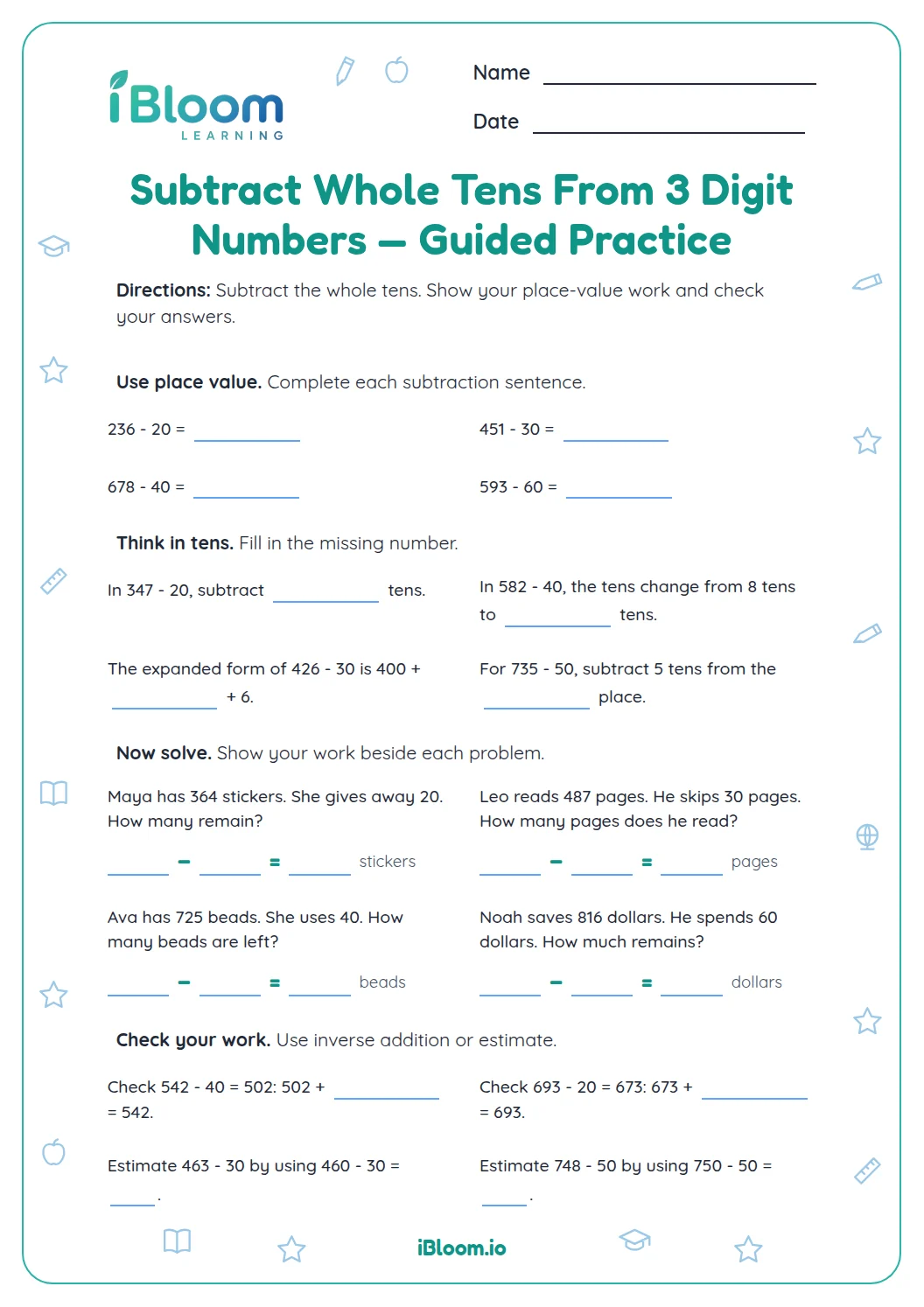
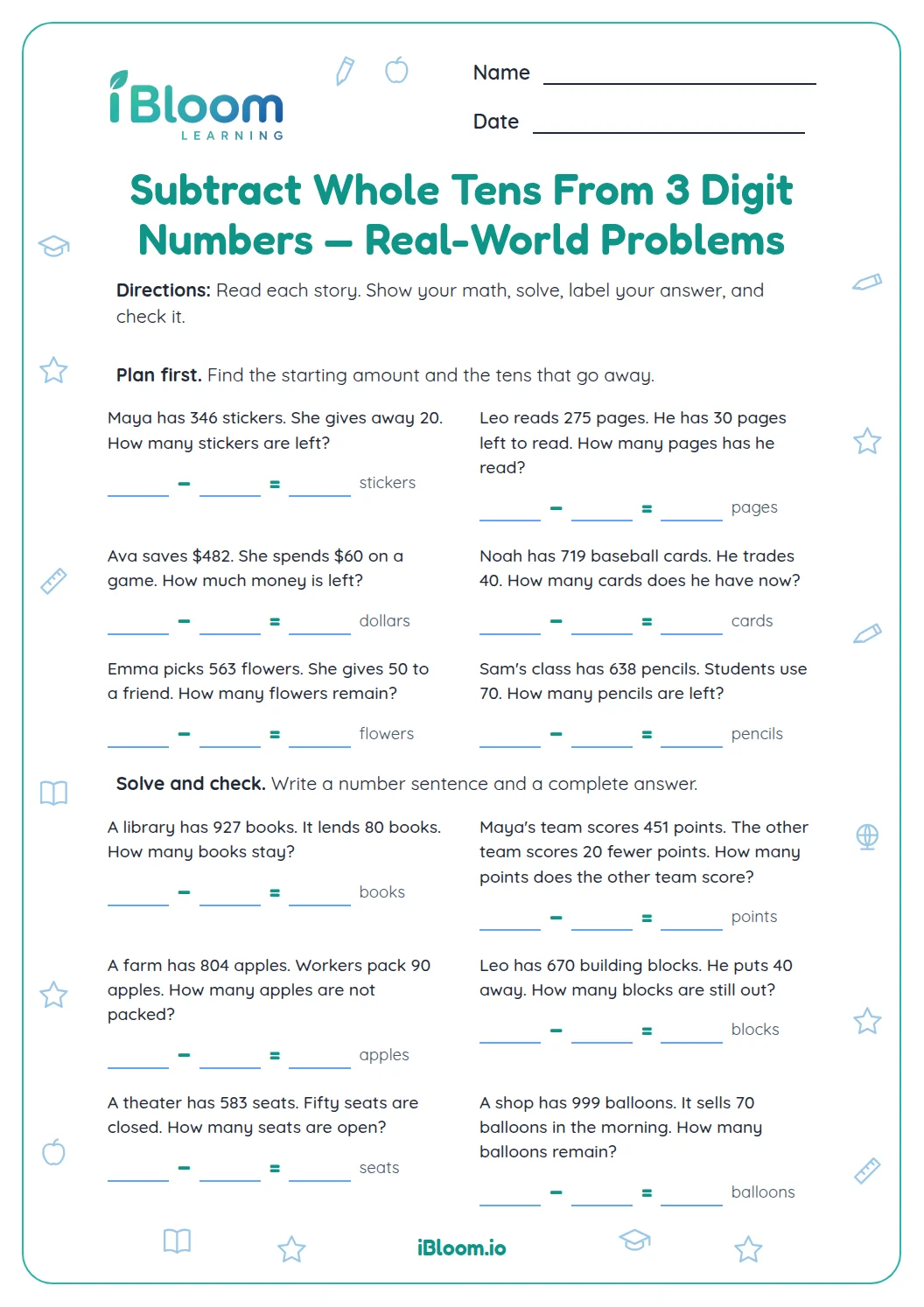
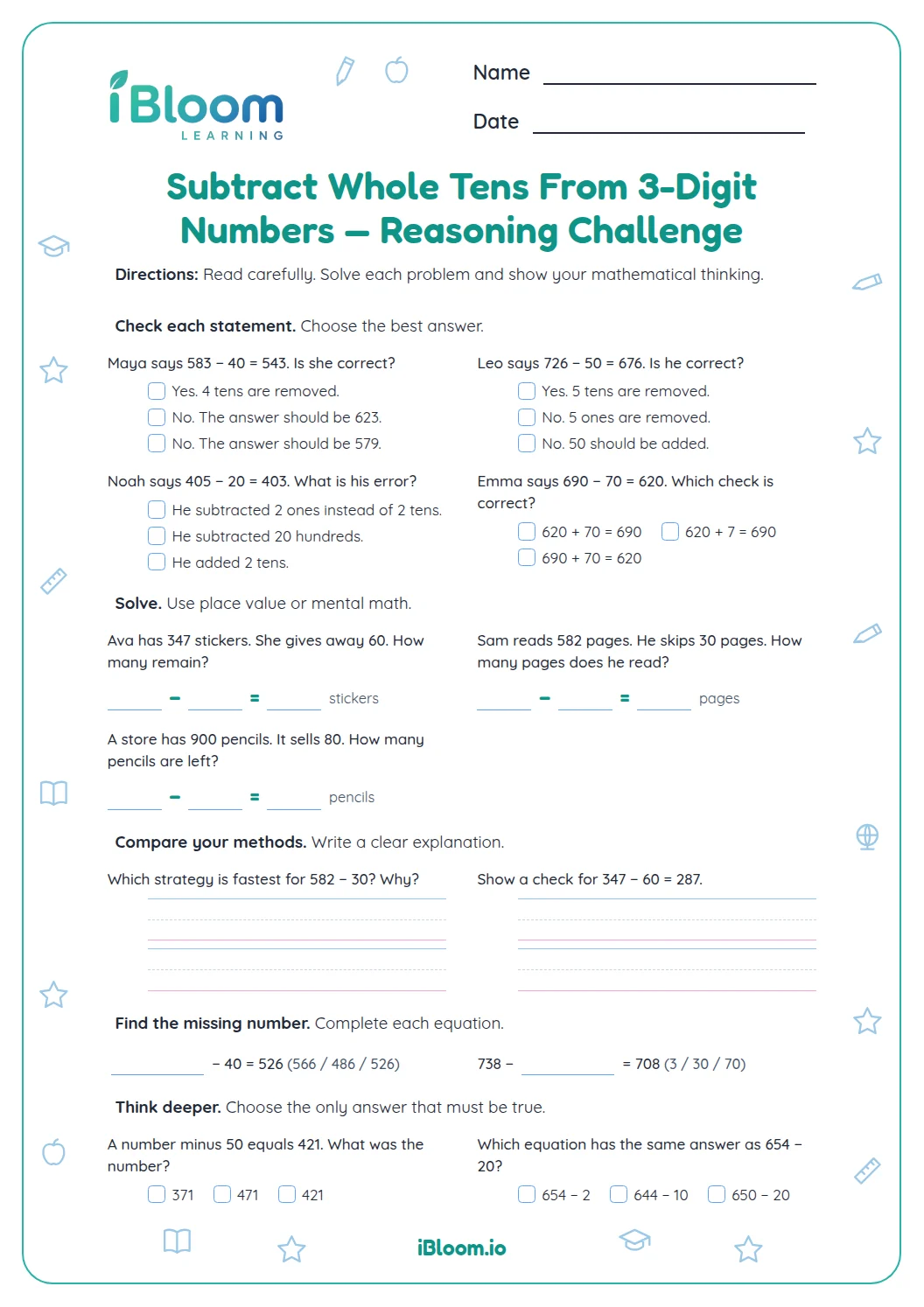
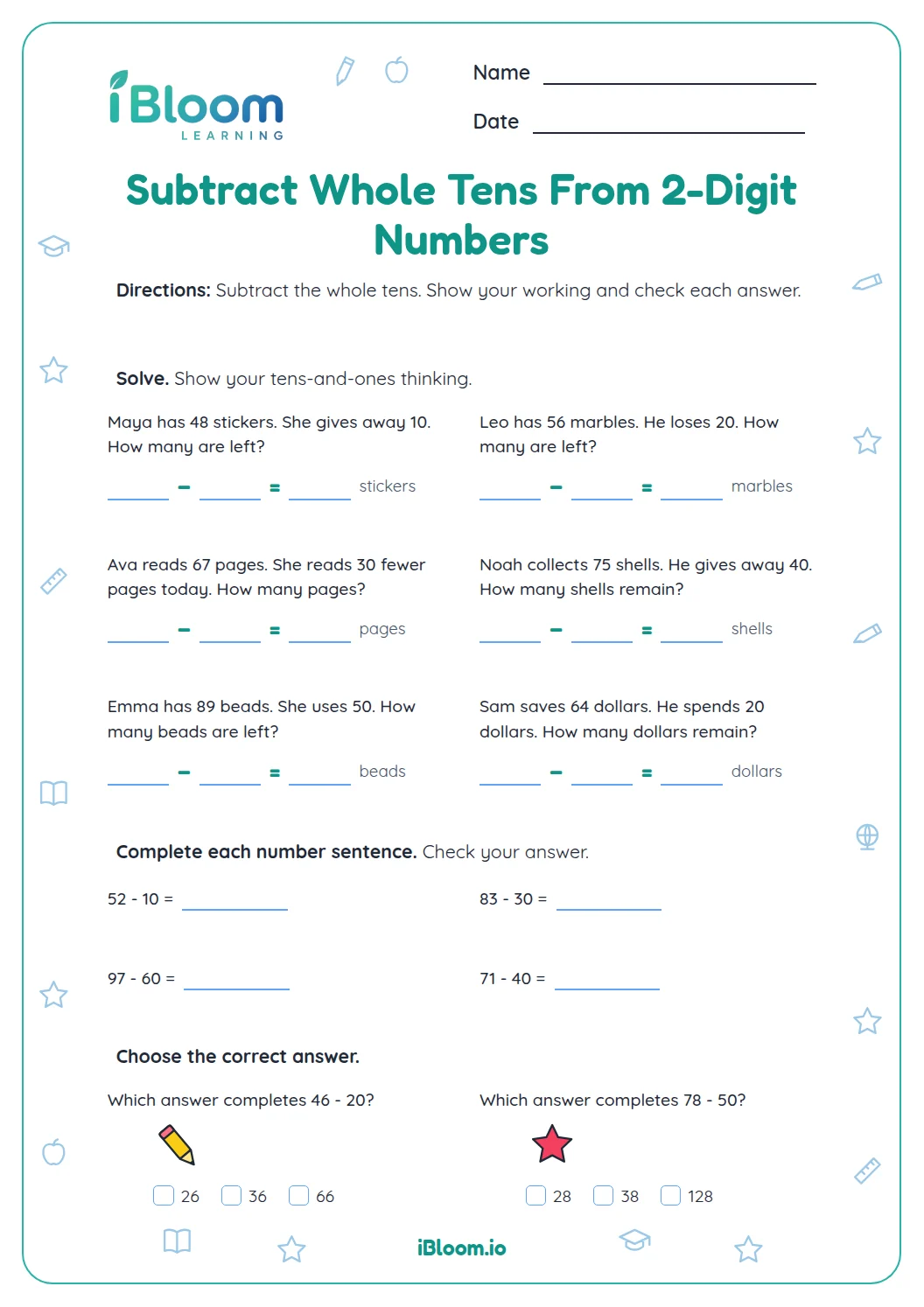
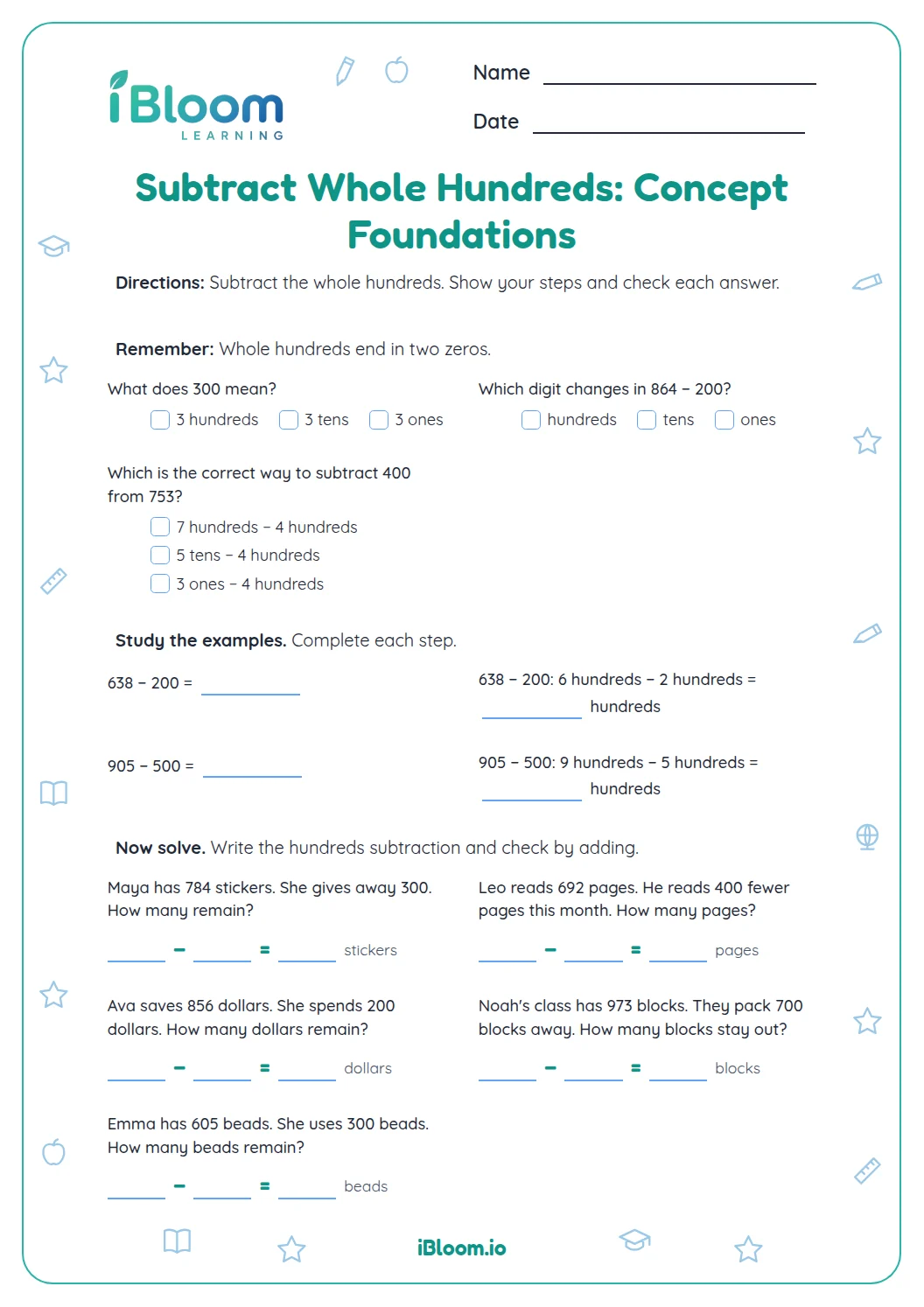
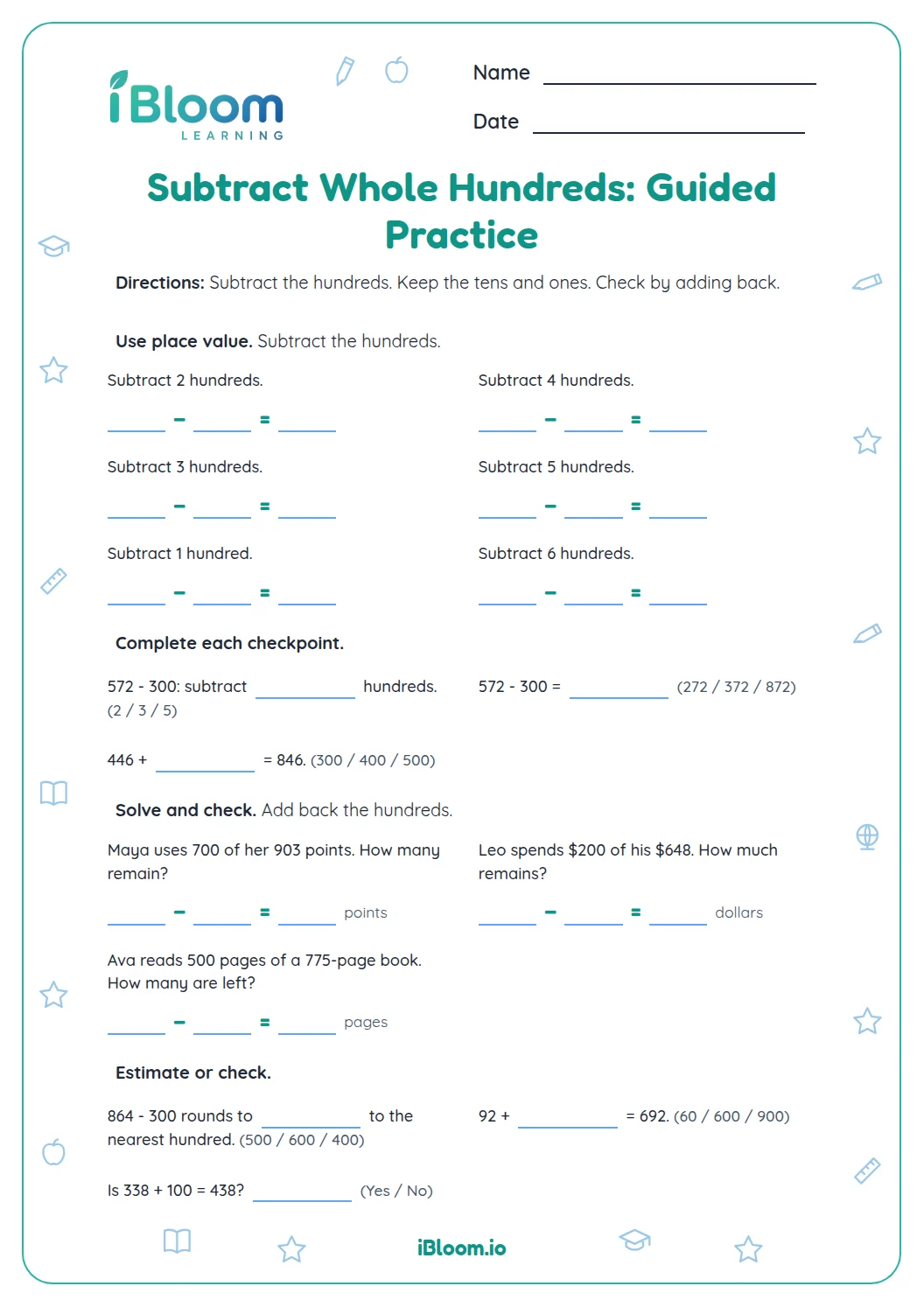
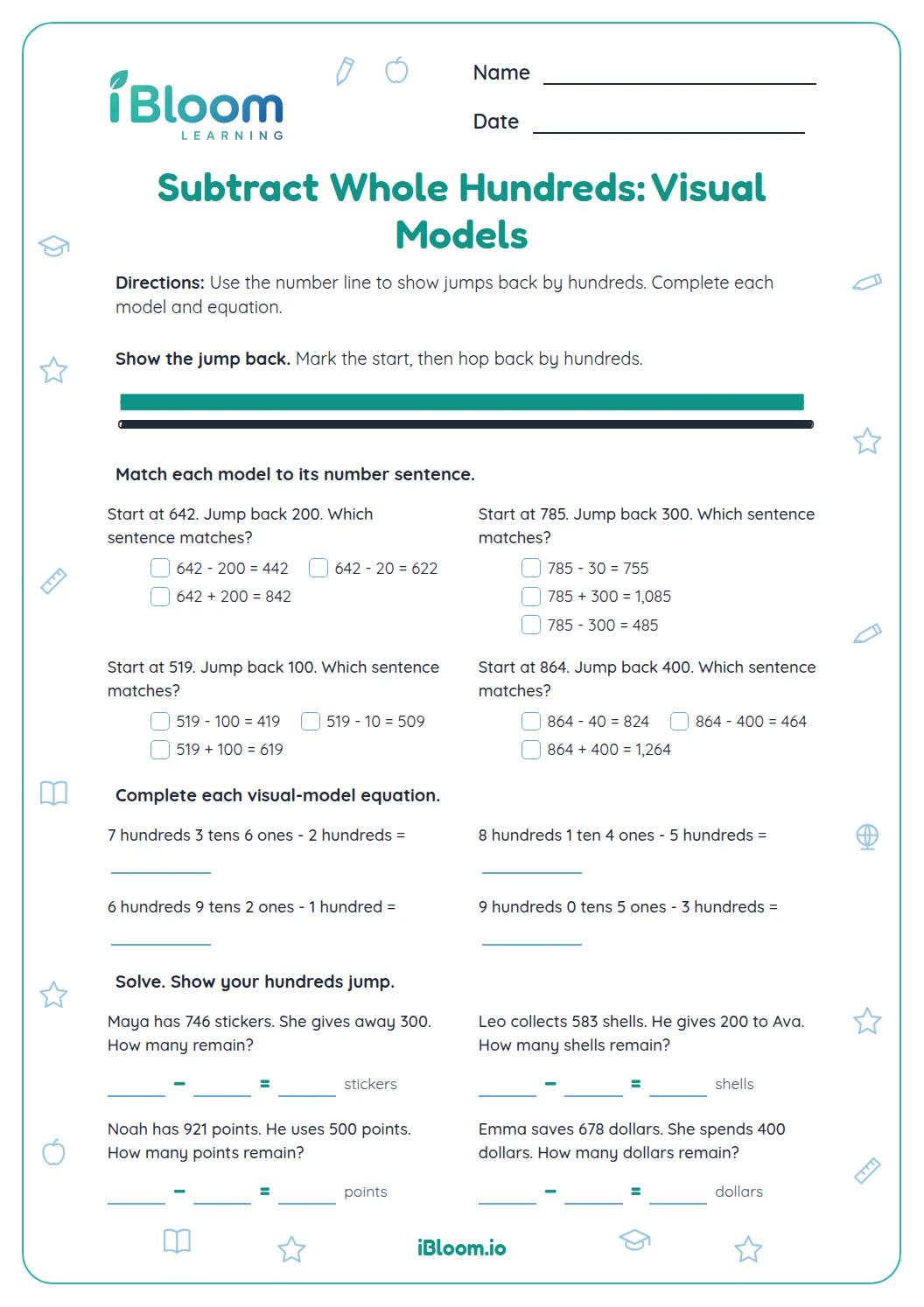
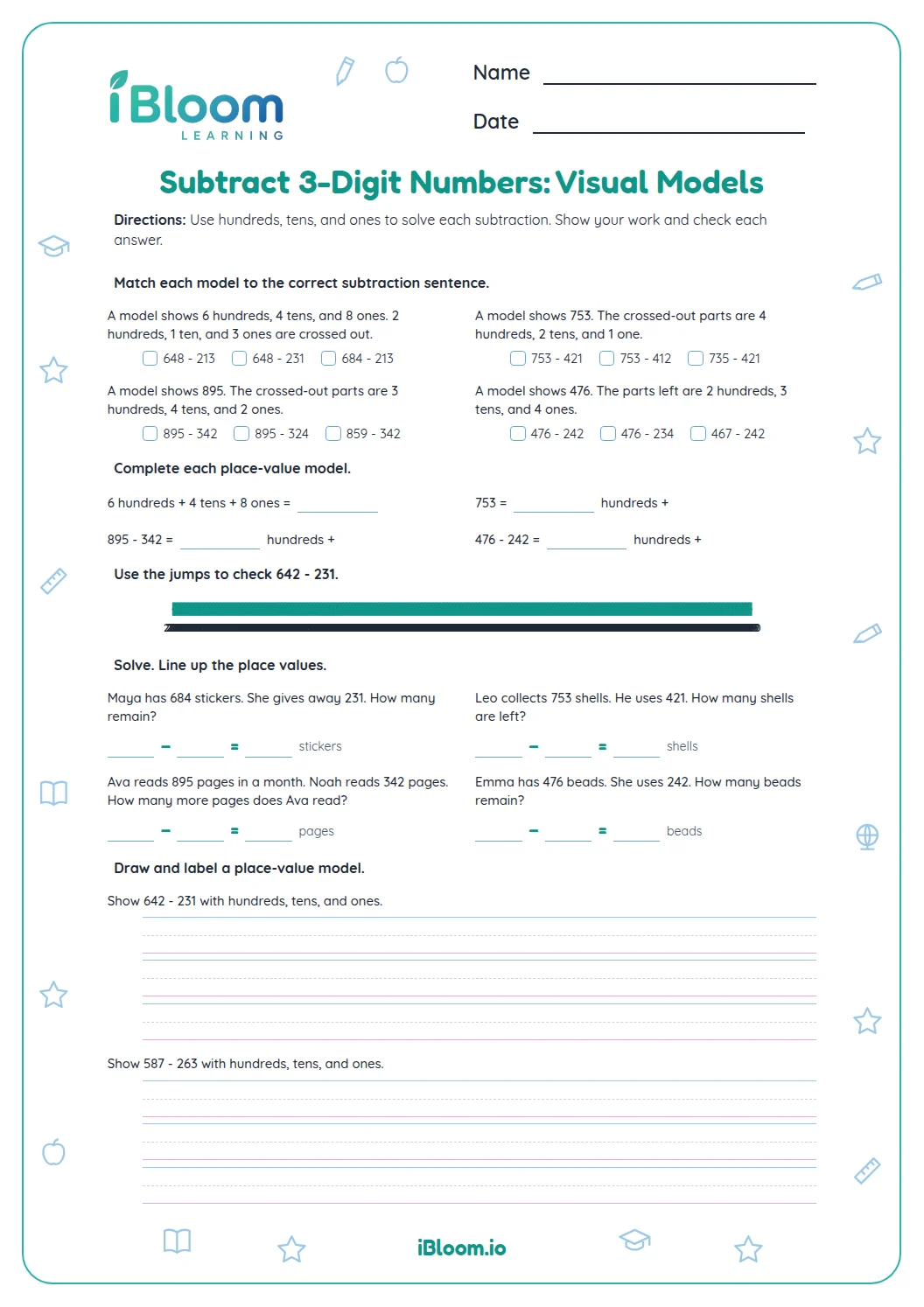
This free Grade 2 worksheet teaches subtraction of whole tens from three-digit numbers. Students first identify which place changes, then solve eight differences and four short stories. Numbers stay within 1,000, and a separate answer key supports checking. The practice connects place-value reasoning with written subtraction in CCSS 2.NBT.B.7.
Aligned to 2.NBT.B.7
Which place changes when you subtract tens?
Subtracting 40 means removing four tens. In 356 − 40, the tens digit changes while the hundreds and ones remain the same. The first four questions help students name that change before calculating.
- 1356 − 40 removes 4 tens.
- 2The tens place changes; the hundreds and ones stay the same.
How can students check each difference?
Subtract the tens, then check by adding the amount removed back to the difference. For example, 420 − 30 = 390; adding 30 to 390 returns 420. The stories use the same relationship with books, beads, cans, apples, and tickets.
How to use this worksheet
- 1Read the place-value choices in Part A before solving.
- 2For each difference, identify how many tens are being removed.
- 3In a story, find the starting amount and the amount taken away.
- 4Write the subtraction equation in the story space.
- 5Check by adding the amount removed to your answer.
Common mistakes and quick fixes
The mistake
Subtracting 30 from the ones digit.
The fix
Thirty is three tens, so change the tens place; leave the ones digit unchanged.
The mistake
Changing the hundreds digit when subtracting a number of tens.
The fix
Check which place the subtracted amount names. Subtracting 50 removes five tens.
The mistake
Reporting how many were taken away instead of how many remain.
The fix
Write the starting amount minus the amount removed, then answer what remains.
Common Core alignment
This worksheet gives focused practice with the named skill at the listed grade level.
Subtract three-digit numbers using place-value strategies.
On this sheet: Students identify the tens place change, subtract tens from three-digit numbers, and solve subtraction stories.
Show the official wordingHide the official wording
Add and subtract within 1000, using concrete models or drawings and strategies based on place value, properties of operations, and/or the relationship between addition and subtraction; relate the strategy to a written method. Understand that in adding or subtracting three-digit numbers, one adds or subtracts hundreds and hundreds, tens and tens, ones and ones; and sometimes it is necessary to compose or decompose tens or hundreds.
What to practice next
Make more practice
Further reading
Questions parents and teachers ask
What does this worksheet teach?
It teaches students to subtract multiples of ten from three-digit numbers. Four opening questions highlight place value, six number sentences provide computation practice, and four short stories ask students to use subtraction in context. A separate key makes it easy to check the work.
How can a student check a subtraction answer?
Add the amount subtracted back to the difference. For 420 − 30 = 390, adding 30 to 390 returns 420. The story problems can also be checked by making sure the answer is less than the starting amount by exactly the number removed.
Does the page include regrouping?
The problems subtract whole tens, so the ones digit stays the same and the tens are removed from the tens place. Students should still attend to place value when the starting number has a zero in one place, as in 903 − 20.
What is on the answer key?
The key gives the four place-value choices, six differences, and answers to all five stories. Students can compare each equation with the subtraction described in its prompt. It is a separate page, so the practice sheet stays clear for written work.
How can I use the page for guided practice?
Work through the first place-value question together and say “four tens” aloud for 40. Then let the student try a difference and explain which digit changed. The final stories provide a chance to connect the number sentences to familiar situations.