





About this worksheet
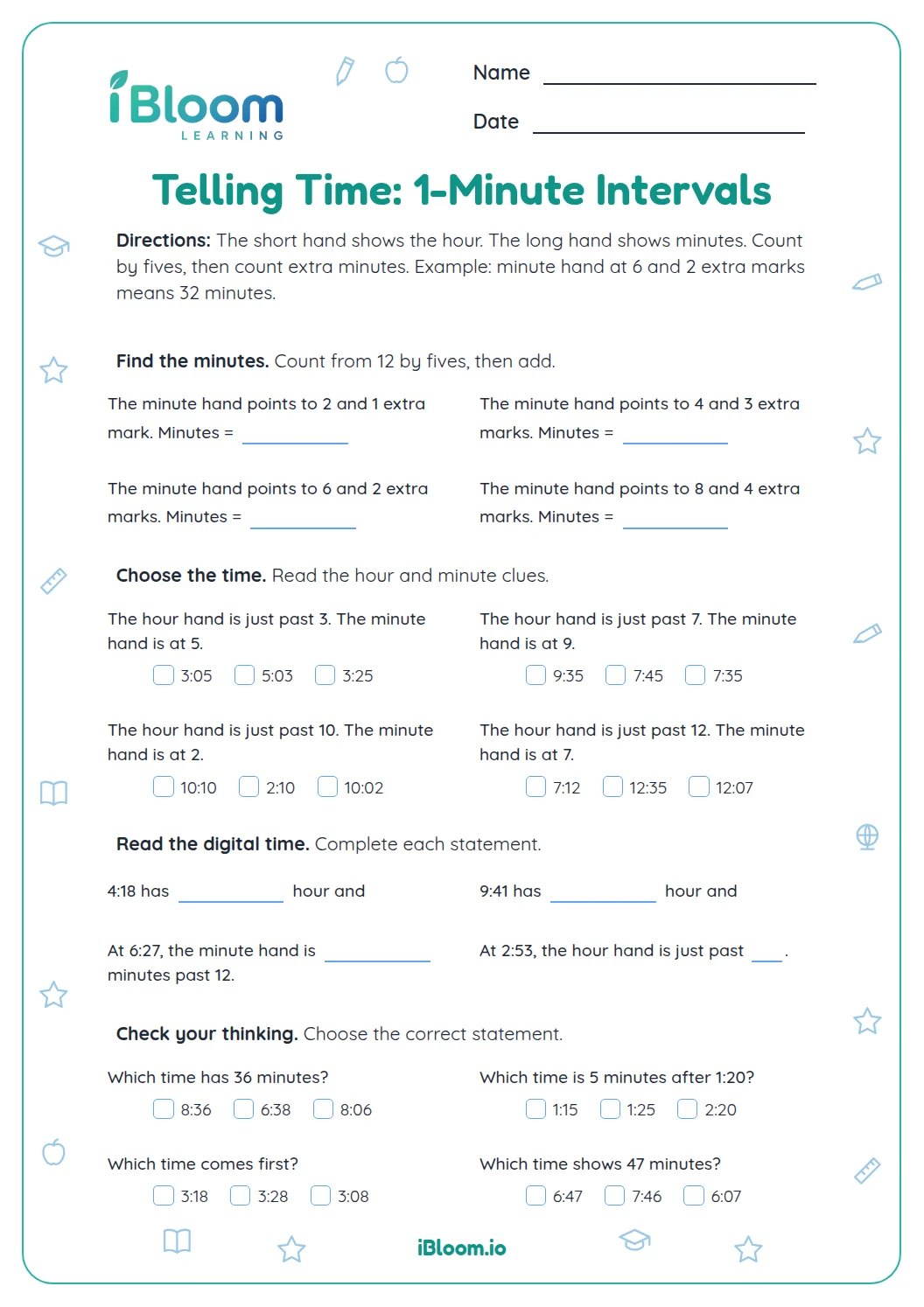
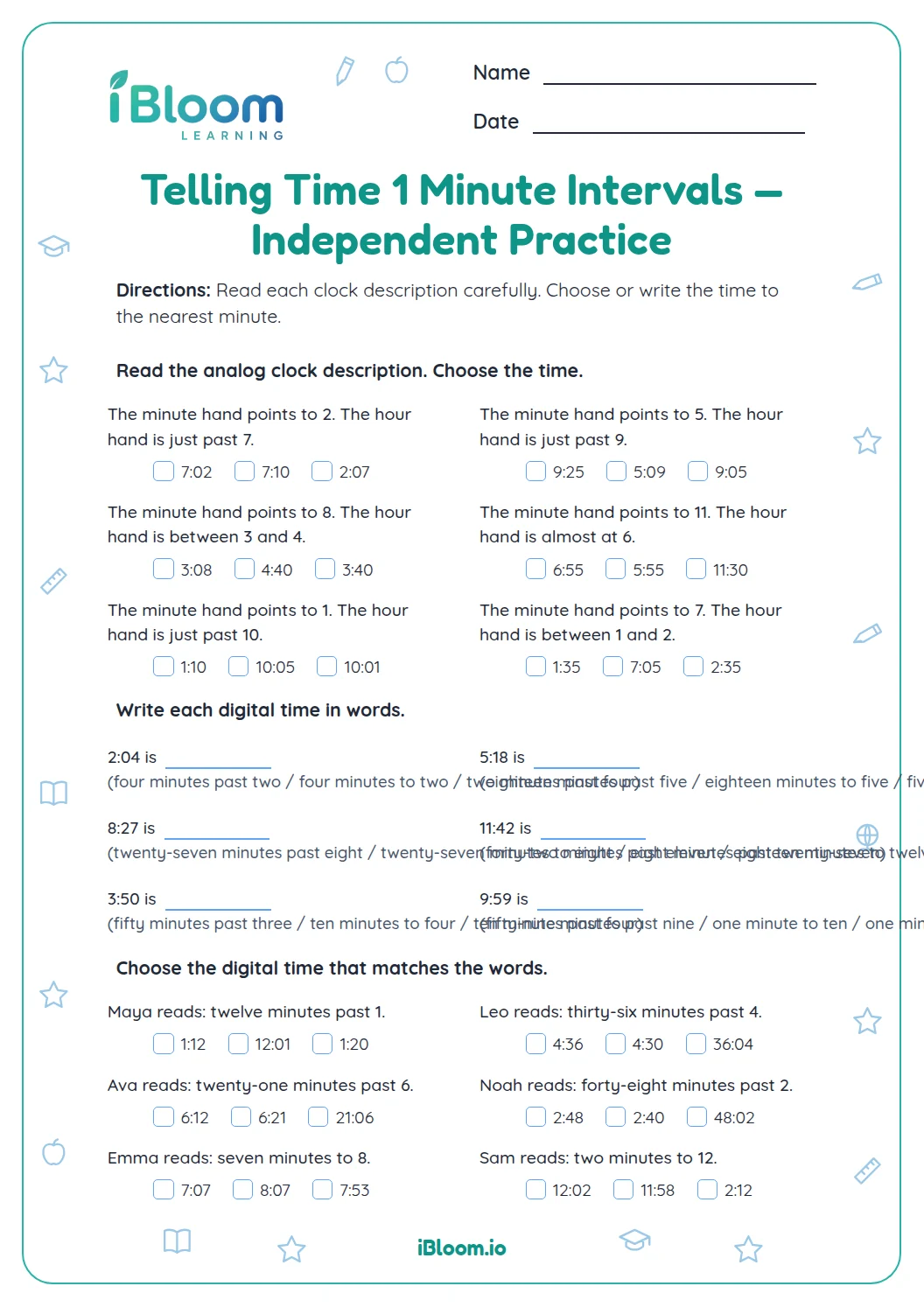
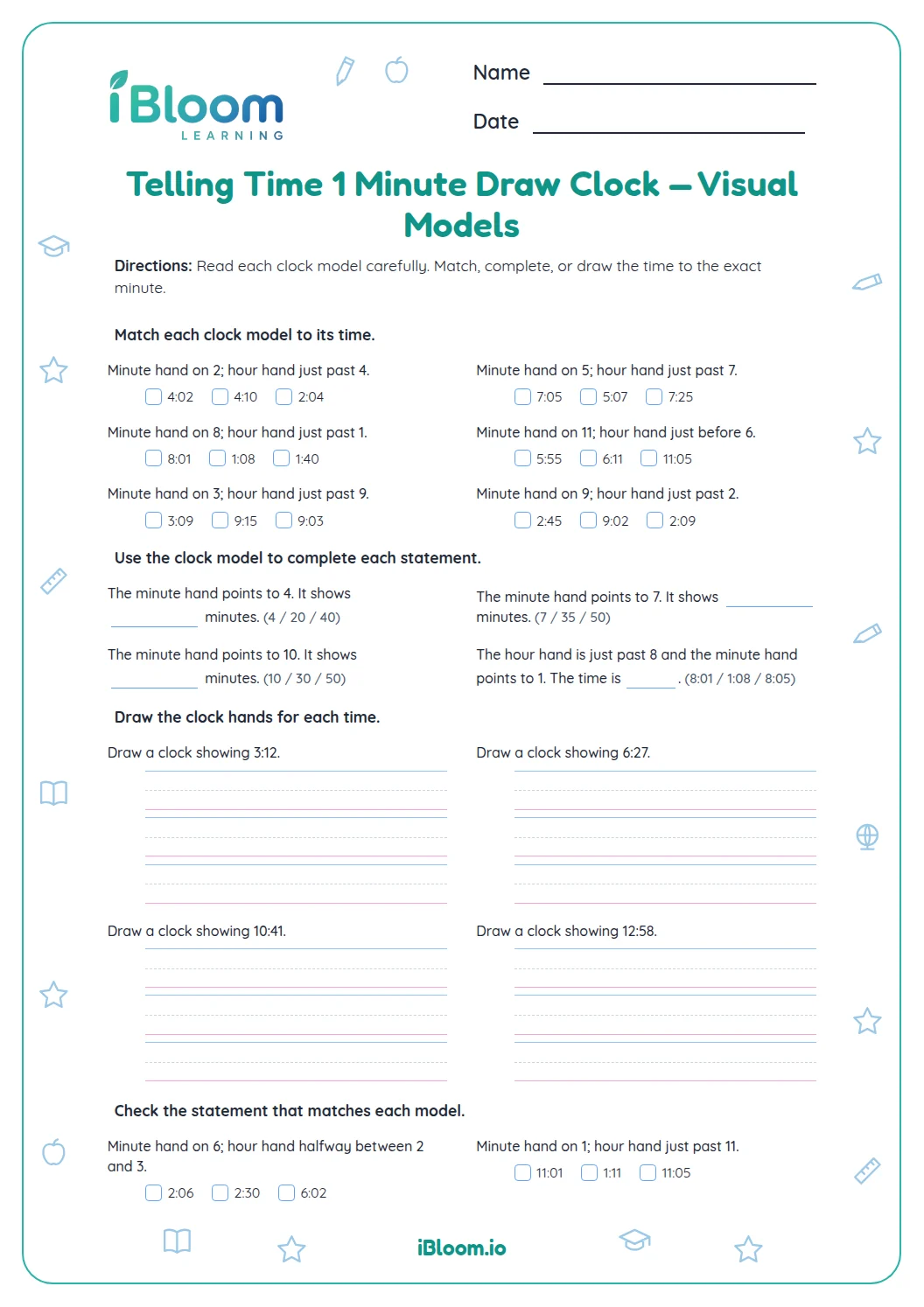
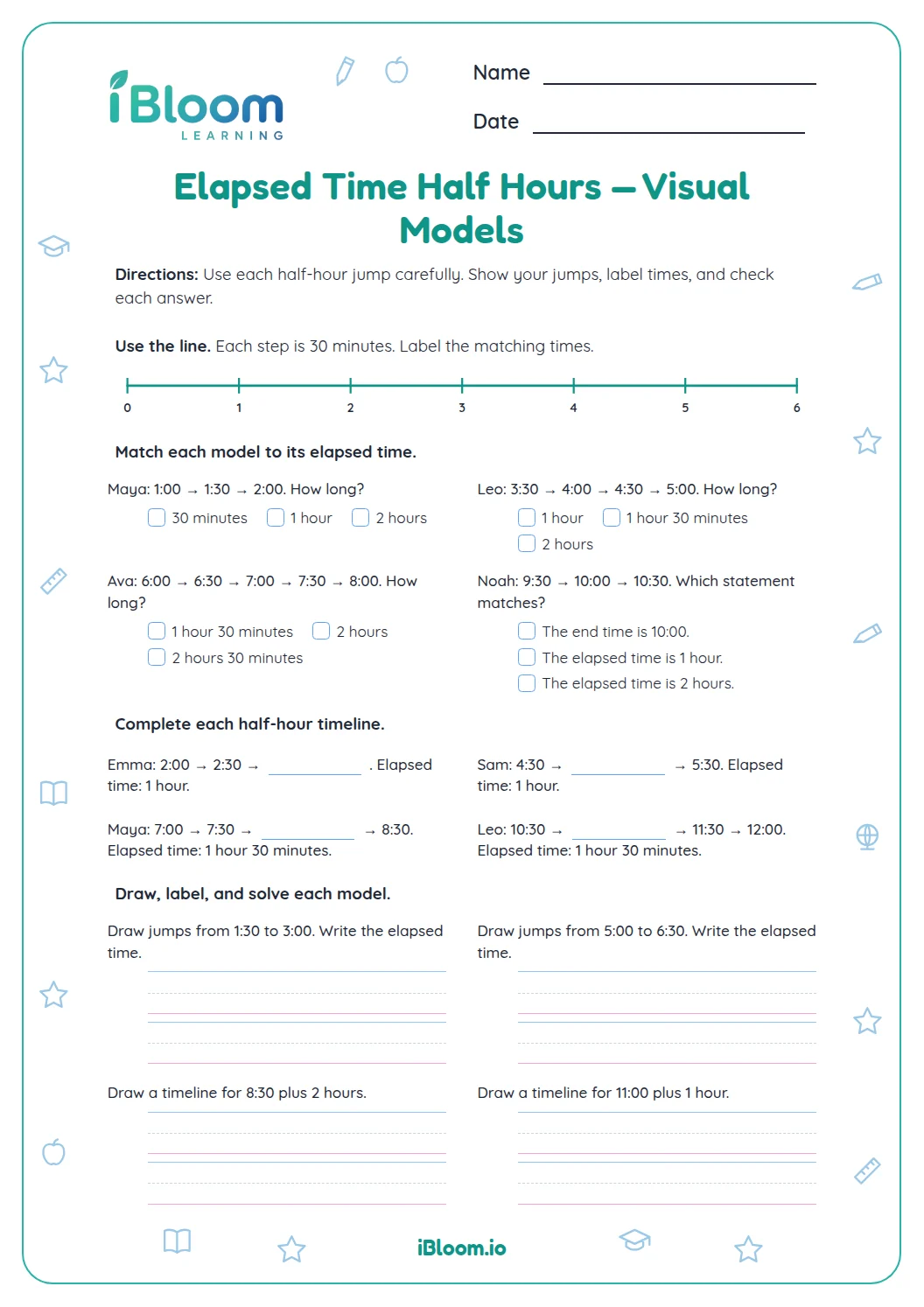
Eight analog clock faces build exact-minute reading practice. Six compact questions then ask learners to reason about one-minute changes, including crossing an hour. All 14 items practice precise minute reading and fit Grade 3 expectations named by the title.
Aligned to 3.MD.A.1
How do you read an analog clock to the minute?
Eight analog clock faces build exact-minute reading practice. Six compact questions then ask learners to reason about one-minute changes, including crossing an hour. All 14 items practice precise minute reading and fit Grade 3 expectations named by the title.
- 1The short hand is past 2.
- 2Count 17 small marks from 12.
- 3Write 2:17.
What happens when the minute hand moves one tick?
Eight analog clock faces build exact-minute reading practice. Six compact questions then ask learners to reason about one-minute changes, including crossing an hour. All 14 items practice precise minute reading and fit Grade 3 expectations named by the title.
What practice is on the page?
Eight analog clock faces build exact-minute reading practice. Six compact questions then ask learners to reason about one-minute changes, including crossing an hour. All 14 items practice precise minute reading and fit Grade 3 expectations named by the title.
- Part A reads six clocks.
- Part B chooses between two written times.
- Part C fills two minute-change blanks.
- Part D answers six minute-reasoning questions, including hour changes.
How to use this worksheet
- 1Review the short and long hands before starting.
- 2Count clock marks aloud in groups of five, then count on by ones.
- 3Complete Part A and say each time aloud.
- 4For Part B, compare the minute number as well as the hour.
- 5Use a number line from 0 to 60 for Part C if a minute change feels tricky.
Common clock-reading slips
The mistake
Reading the minute hand in groups of five only.
The fix
Count the small marks one by one after the nearest group of five.
The mistake
Writing the hour that the short hand is approaching.
The fix
Use the hour the short hand has already passed.
The mistake
Keeping the hour the same at 2:59 plus one minute.
The fix
Move to 3:00 when the minute count reaches 60.
Common Core alignment
The rebuilt 14-item sheet consists entirely of analog clock-reading questions, each with its own clock face. Its title explicitly names exact-minute reading, a Grade 3 skill; clear clock visuals make every answer readable and verifiable.
Tell and write time to the nearest minute and measure time intervals in minutes.
On this sheet: All 14 items read analog clocks to the exact minute, the skill named in the title.
Show the official wordingHide the official wording
Tell and write time to the nearest minute and measure time intervals in minutes.
What to practice next
Make more practice
Further reading
Questions parents and teachers ask
How do children read the minute hand?
This printable includes fourteen questions across the worksheet, followed by a separate answer key. Learners can complete each item independently, then use the key to check their work and revisit any response that needs correction before practicing again.
Why does the hour change at 2:59?
This printable includes fourteen questions across the worksheet, followed by a separate answer key. Learners can complete each item independently, then use the key to check their work and revisit any response that needs correction before practicing again.
Does this sheet use analog clocks?
This printable includes fourteen questions across the worksheet, followed by a separate answer key. Learners can complete each item independently, then use the key to check their work and revisit any response that needs correction before practicing again.
What is the answer to the clock with the minute hand at 6?
This printable includes fourteen questions across the worksheet, followed by a separate answer key. Learners can complete each item independently, then use the key to check their work and revisit any response that needs correction before practicing again.
Is an answer key included?
This printable includes fourteen questions across the worksheet, followed by a separate answer key. Learners can complete each item independently, then use the key to check their work and revisit any response that needs correction before practicing again.