
About this worksheet
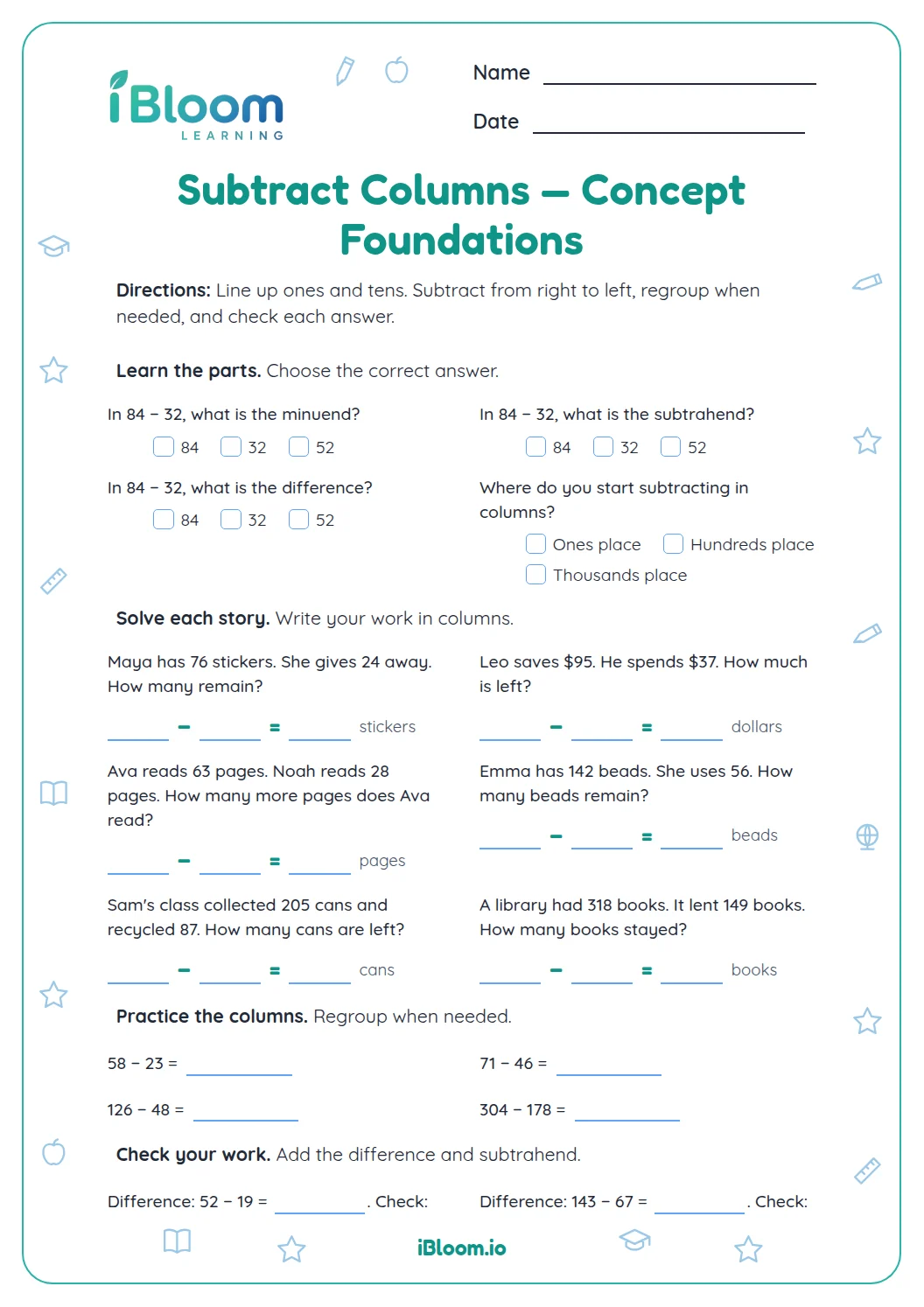
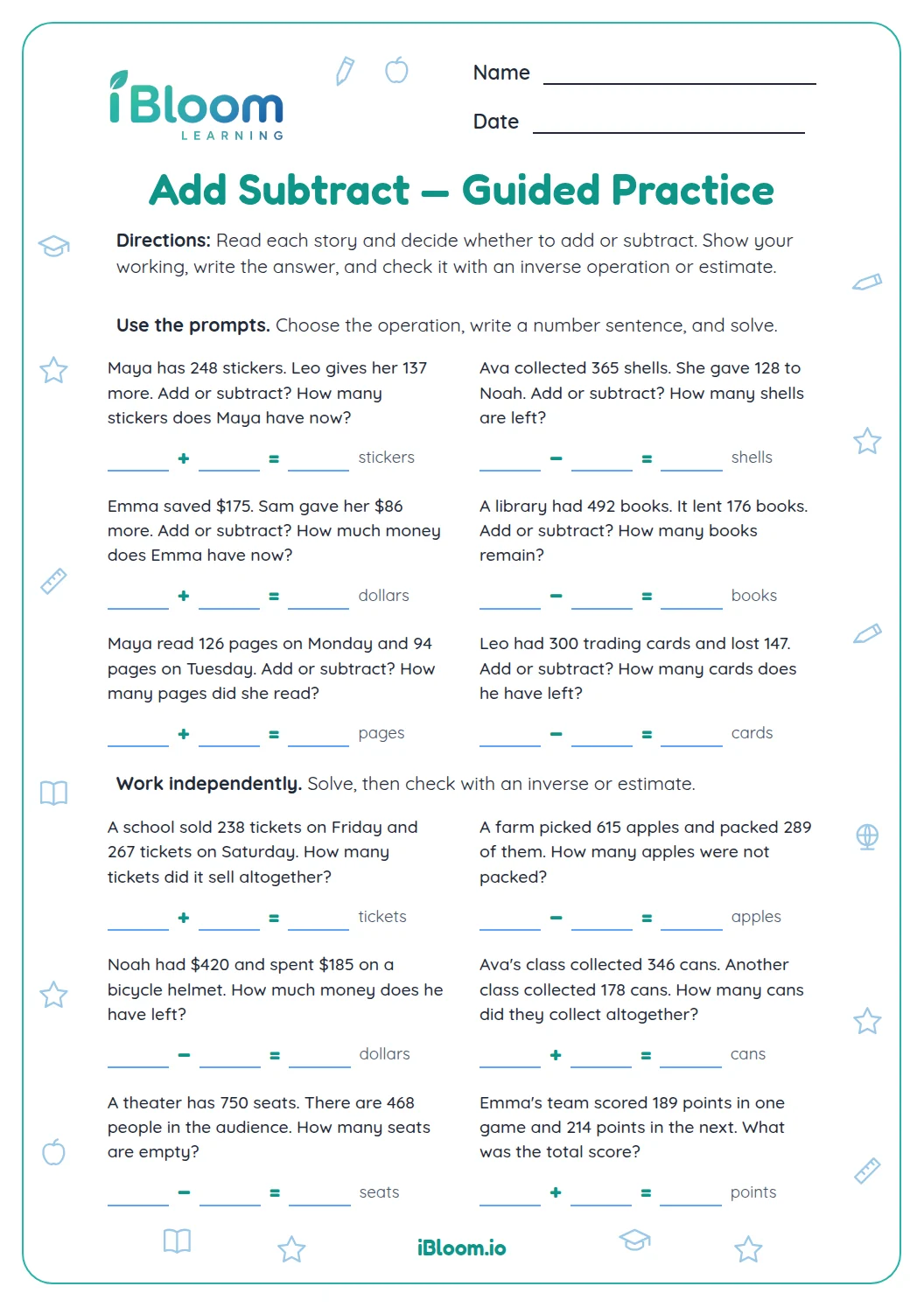
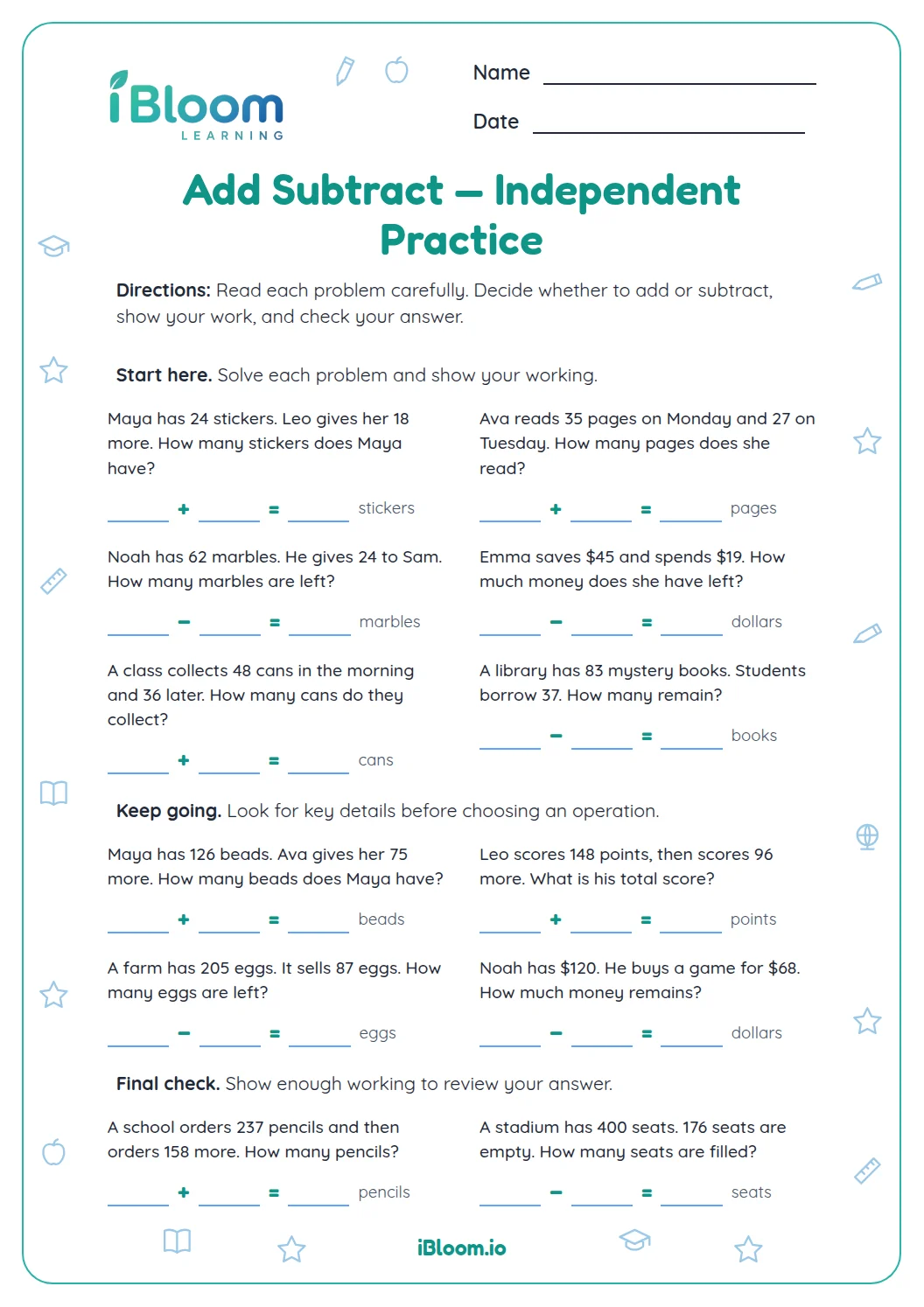
This Grade 3 printable has 16 real-world subtraction problems with three-digit numbers within 1,000. Students identify the starting amount and the amount taken away or the difference requested, write a subtraction equation, and work in the open space. A separate answer key lists each result with its unit.
Aligned to 3.NBT.A.2
What subtraction skills do the stories practice?
All 16 prompts describe a quantity that decreases or ask for the difference between two amounts. The first eight use familiar settings; the next eight include larger quantities and require the learner to identify the subtraction relationship in the story.
How can you solve one story problem?
In Question 1, the library starts with 642 books and 178 are checked out. Write 642 − 178 in the open space, regroup in the ones and tens as needed, and find 464 books remaining.
- 1Question 1: 642 books; 178 checked out
- 2Equation: 642 − 178 = 464
- 3Answer: 464 books
How do the two parts build practice?
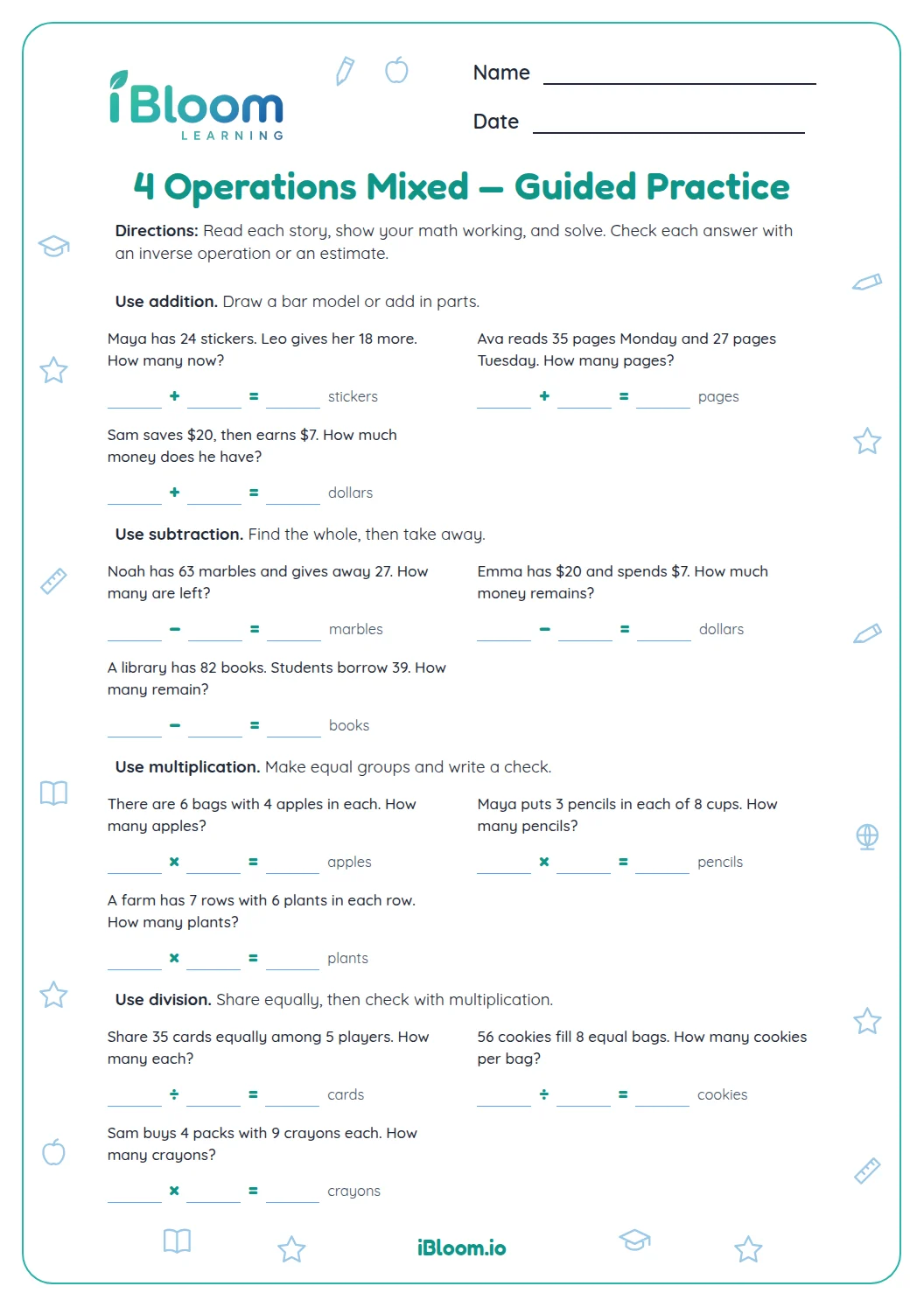
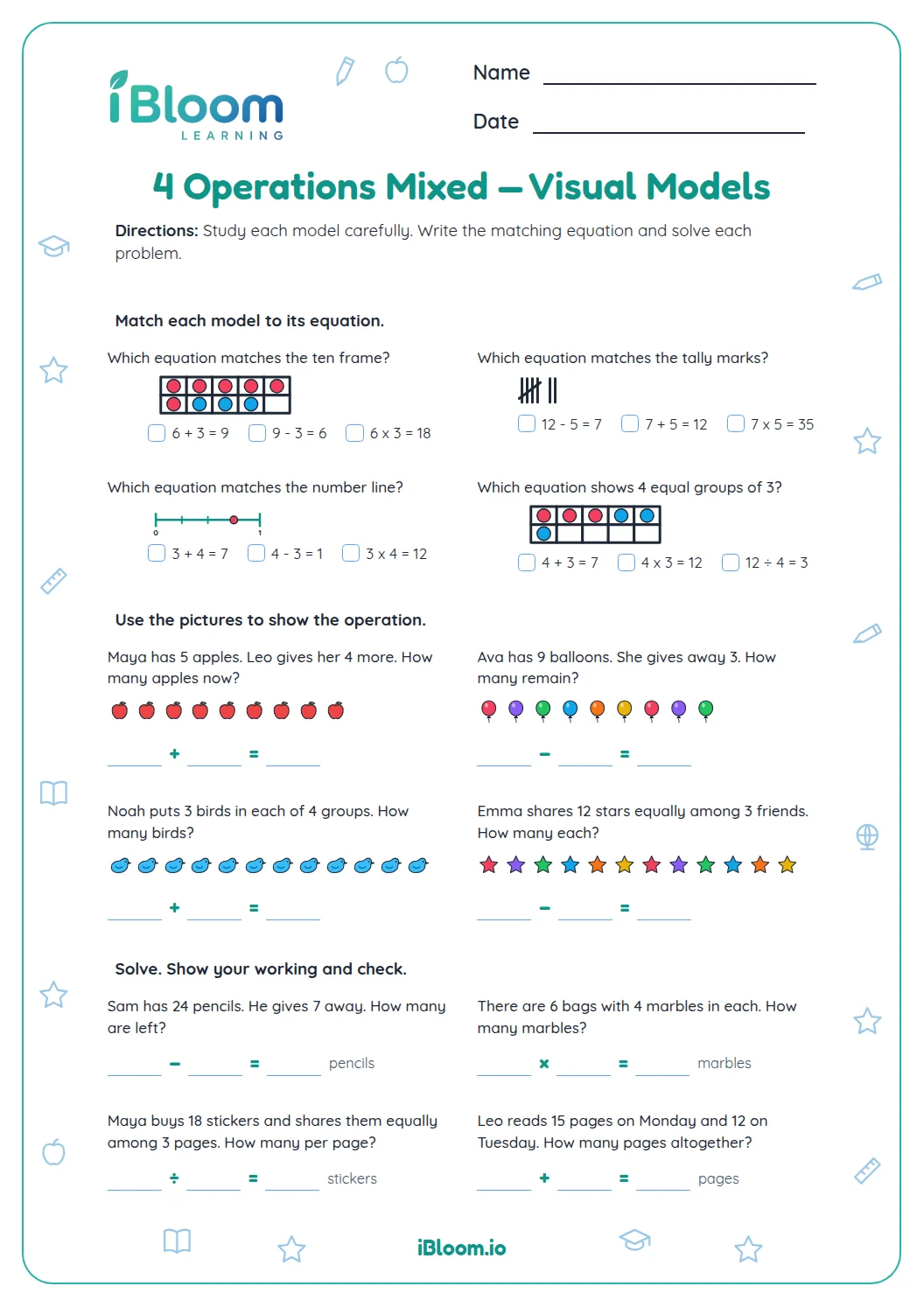
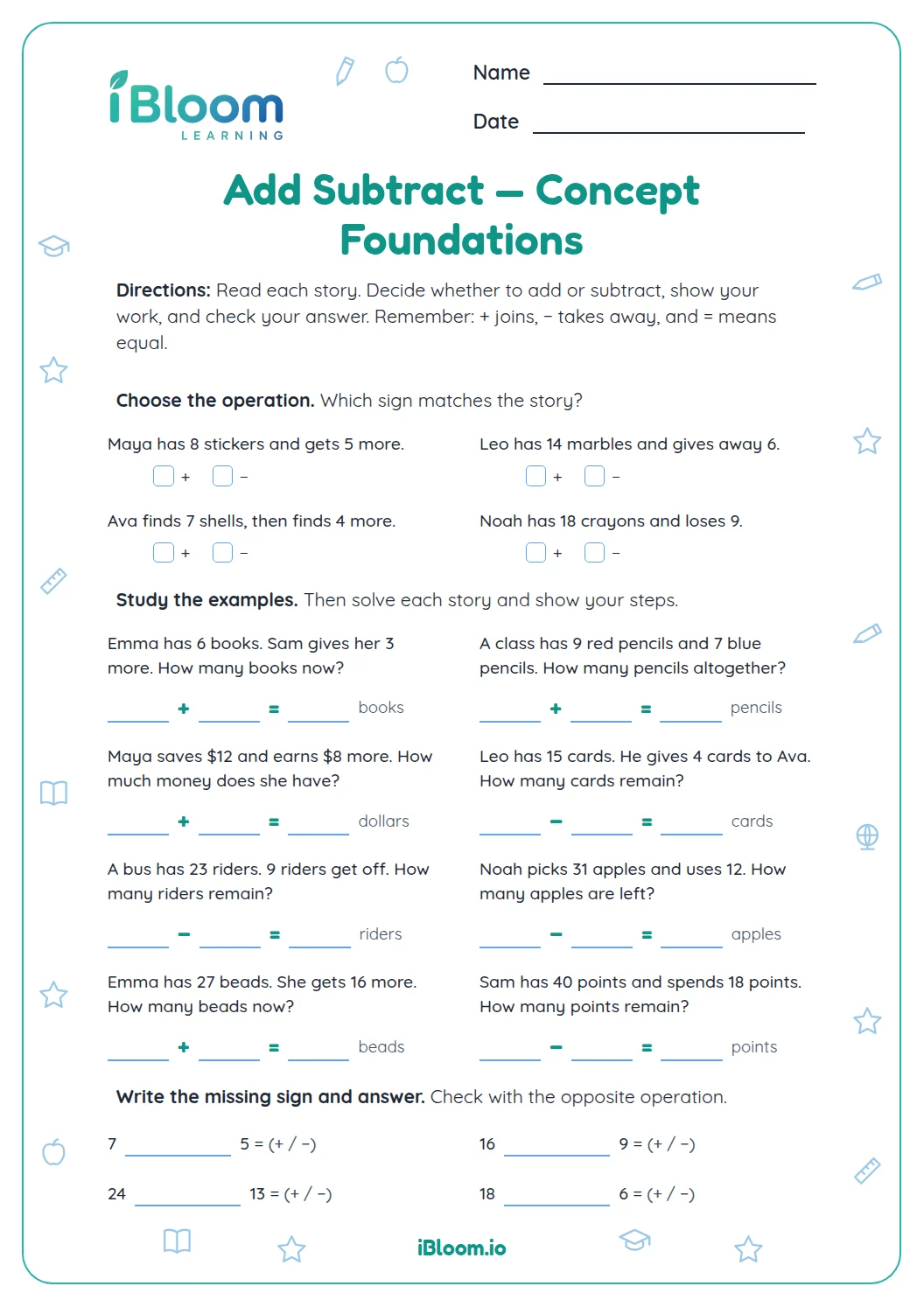
The first part establishes the subtraction structure in short stories. The second part asks students to apply the same operation to more varied settings, including comparing amounts and finding how many more are needed.
How should I check the answers?
Check both the equation and the result, then make sure the unit matches the story. A correct number labeled with the wrong object or measurement does not fully answer the question.
How to use this worksheet
- 1Read the story and identify the starting amount.
- 2Underline the amount removed or the two amounts being compared.
- 3Write a subtraction equation in the order that matches the story.
- 4Subtract by place value, regrouping when needed.
- 5Add the answer to the amount removed to check the starting total, then label the unit.
Common mistakes and quick fixes
The mistake
Subtracting the smaller digit from the larger in every column.
The fix
Regroup from the next place when the top digit is too small.
The mistake
Reversing the amounts in a “how many more” question.
The fix
Subtract the smaller total from the larger total to find the difference.
The mistake
Leaving off the unit in the answer.
The fix
Name the same object or measurement used in the question.
Common Core alignment
Students subtract within 1,000 using place-value strategies and equations.
Subtract within 1,000 to solve real-world problems.
On this sheet: Students subtract within 1,000 in stories and label each answer with its unit.
Show the official wordingHide the official wording
Fluently add and subtract within 1000 using strategies and algorithms based on place value, properties of operations, and/or the relationship between addition and subtraction.
What to practice next
Make more practice
Further reading
Questions parents and teachers ask
What operation does every problem use?
Each of the 16 stories is solved with subtraction. Some describe an amount being removed, while others ask how many more one group has or how many are needed. Students write an equation, work through the subtraction, and label the answer with the story’s unit.
Are the numbers suitable for Grade 3 practice?
There are 16 questions in two parts. The three-page worksheet is followed by a separate three-page answer key. Each problem has room to record the subtraction and result, so students can show how they reached the answer. Show each regrouping step.
How many questions and pages are included?
There are 16 questions in two parts. The three-page worksheet is followed by a separate three-page answer key. Each problem has room to record the subtraction and result, so students can show how they reached the answer. Show the equation and regrouping.
How do I help with a “how many more” story?
First identify which amount is larger and which is smaller. Subtract the smaller amount from the larger one to find the difference. For example, comparing 905 Saturday visitors with 579 Sunday visitors gives 326 more visitors on Saturday.
What should students include in each response?
Students should show a subtraction equation, compute the difference, and include the unit named in the story. The key gives the expected result and unit. Review a regrouping step if the answer is off by one place or if the equation uses the amounts in the wrong order.