


About this worksheet
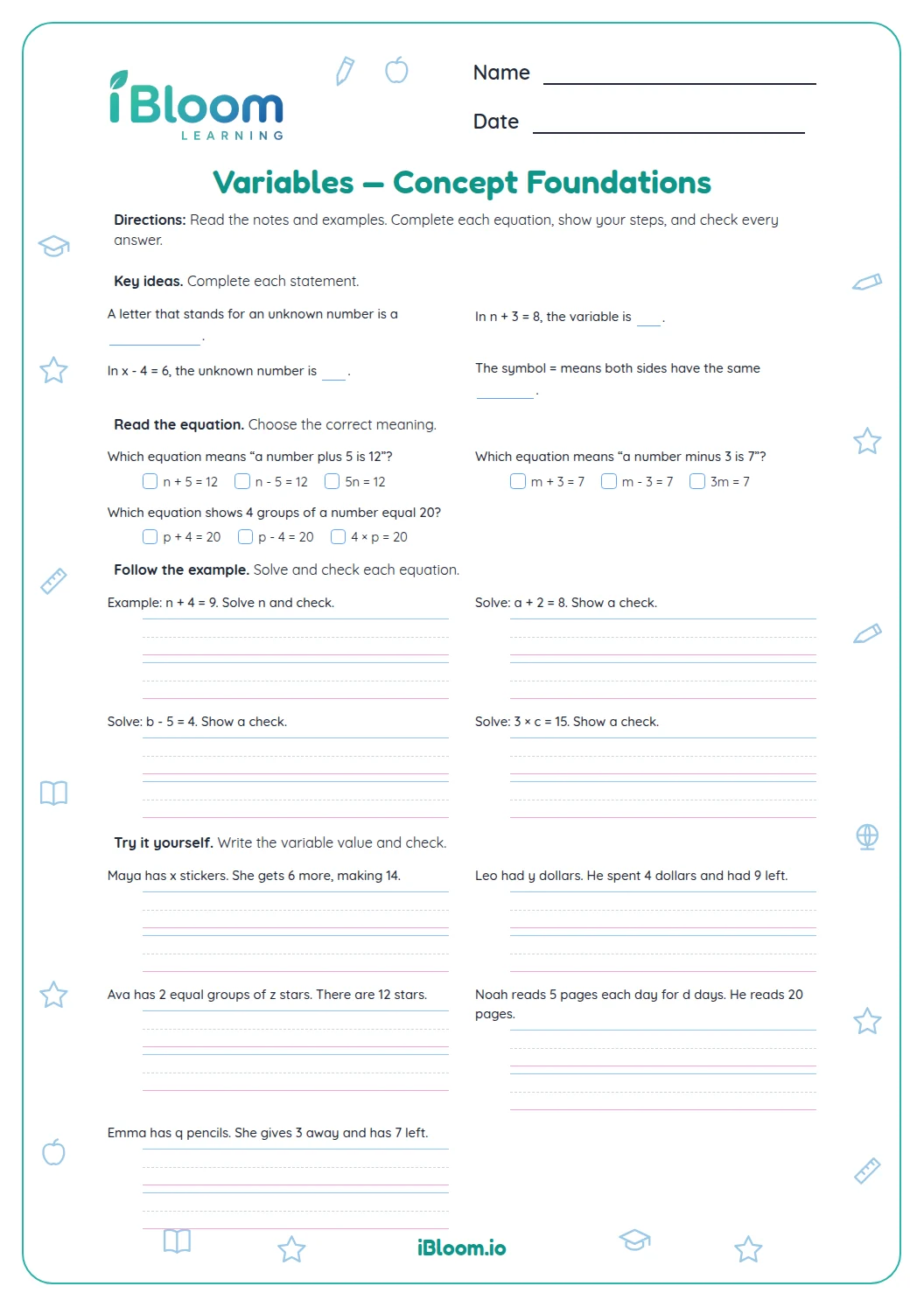
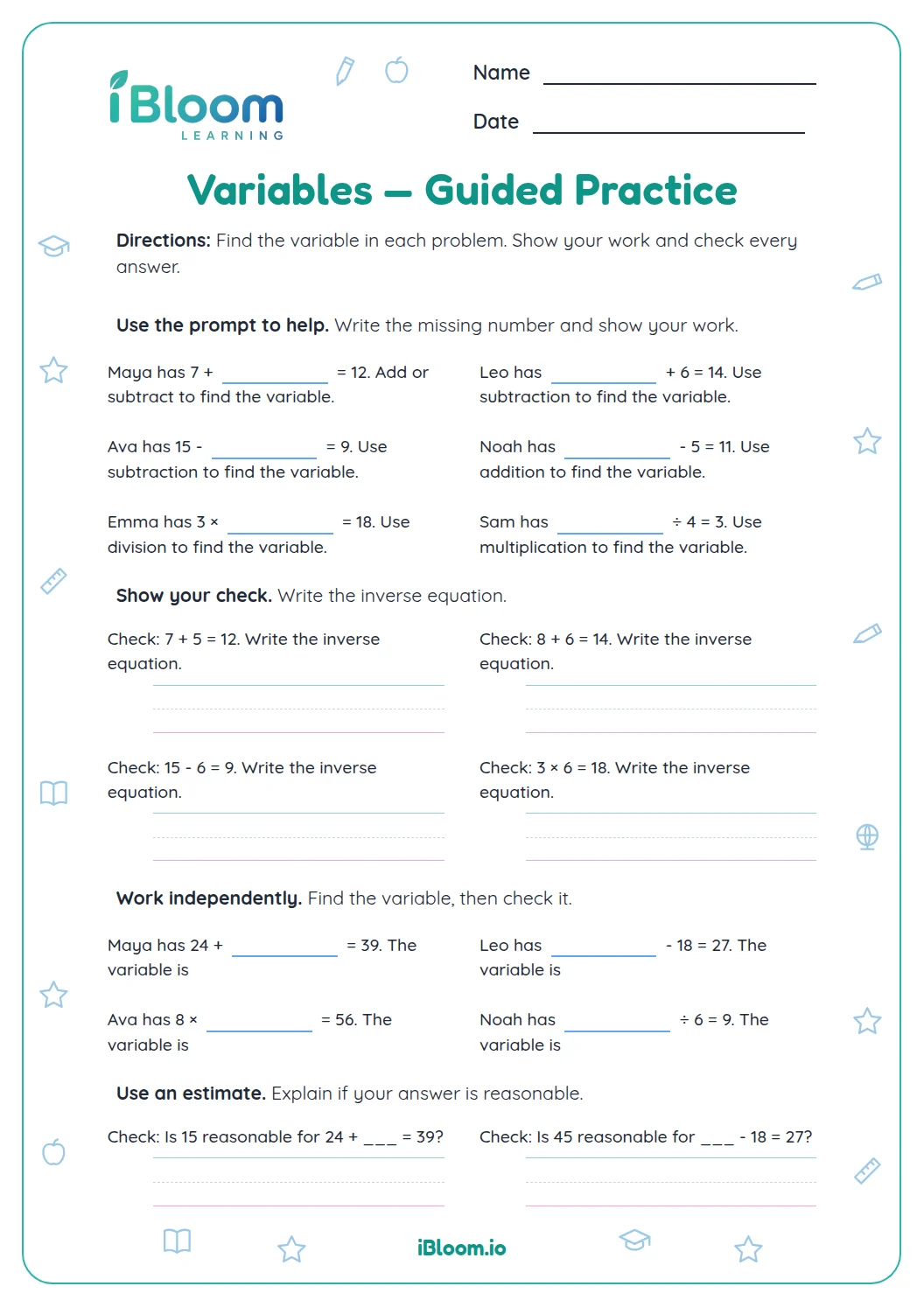
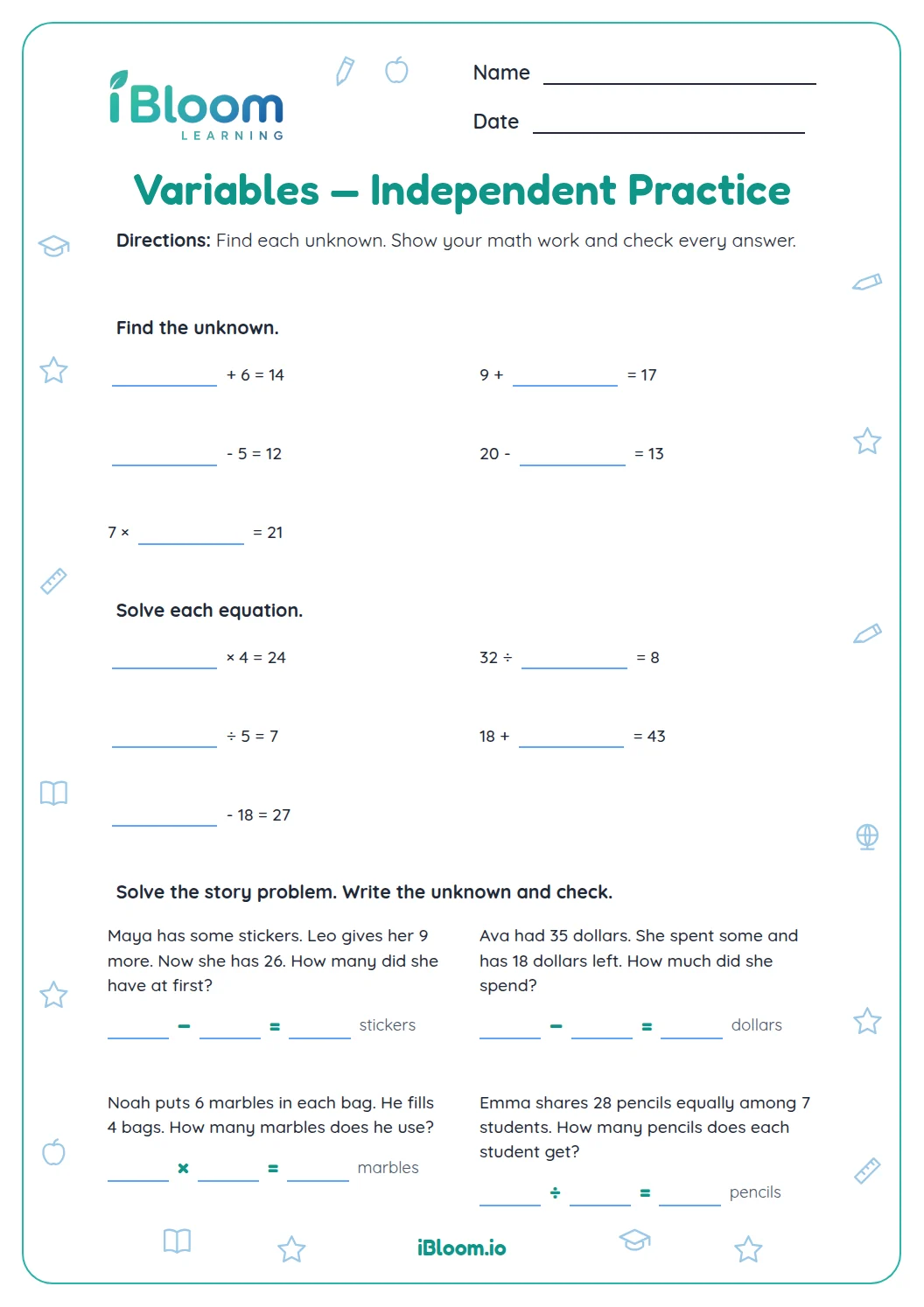
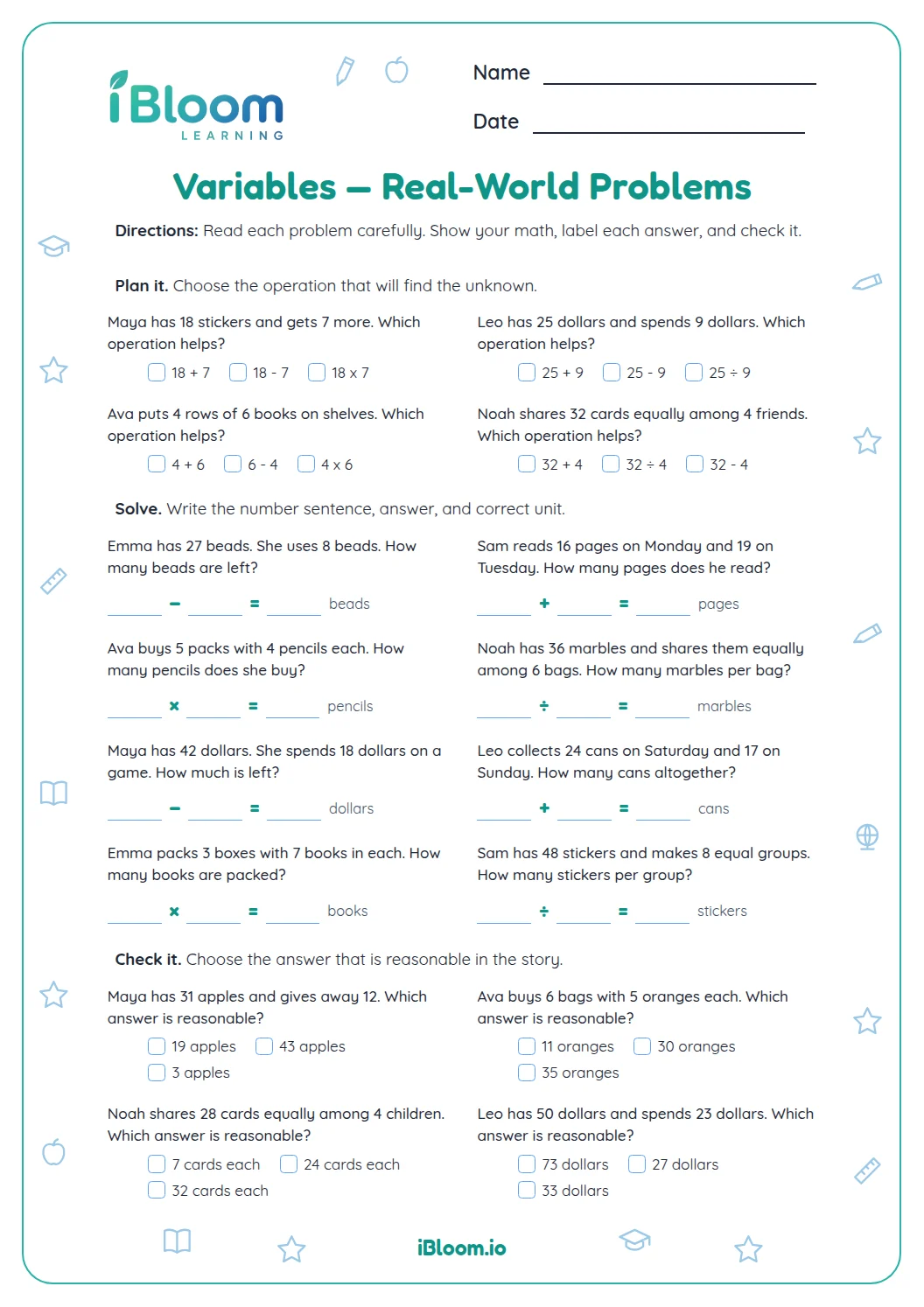
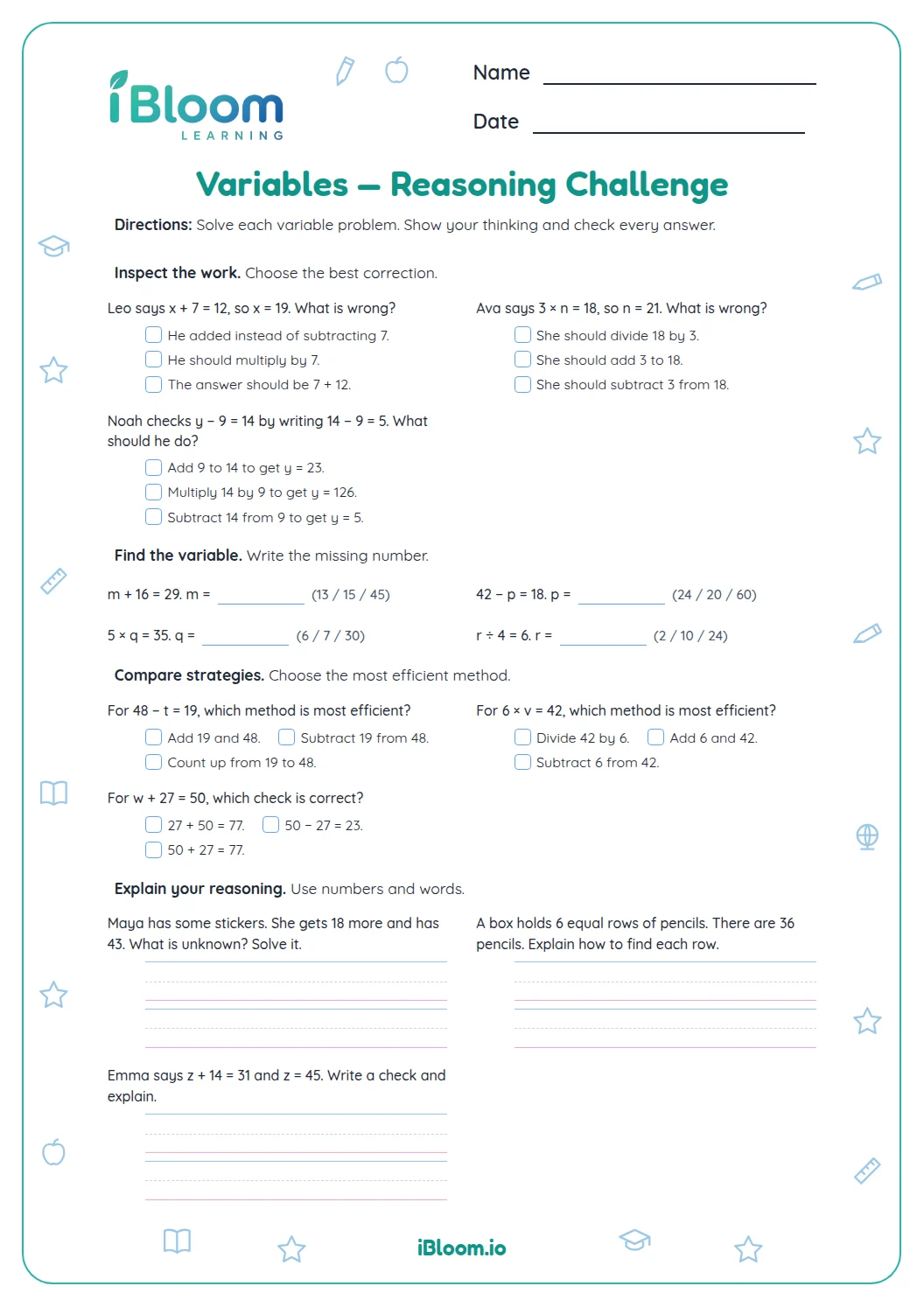
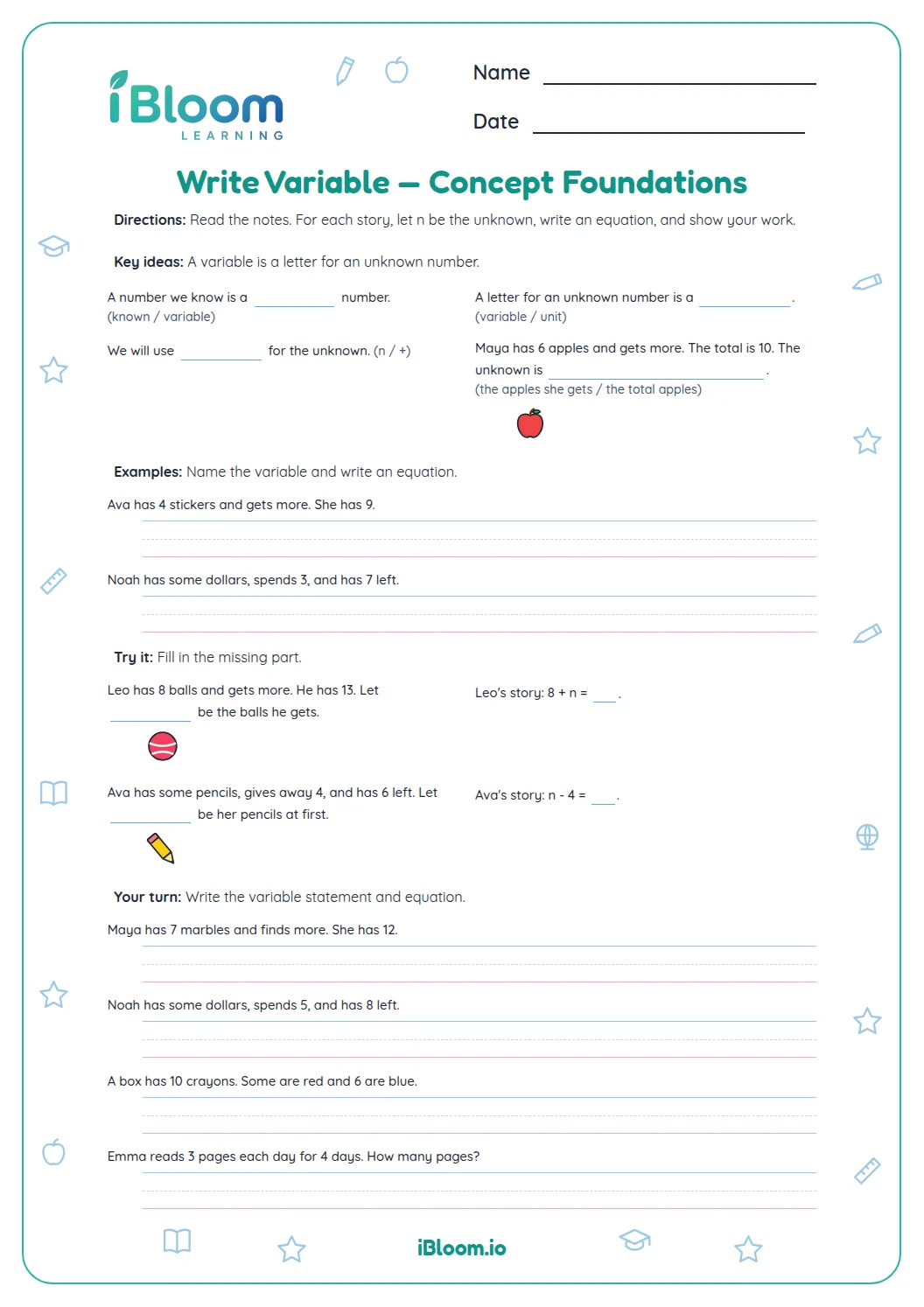
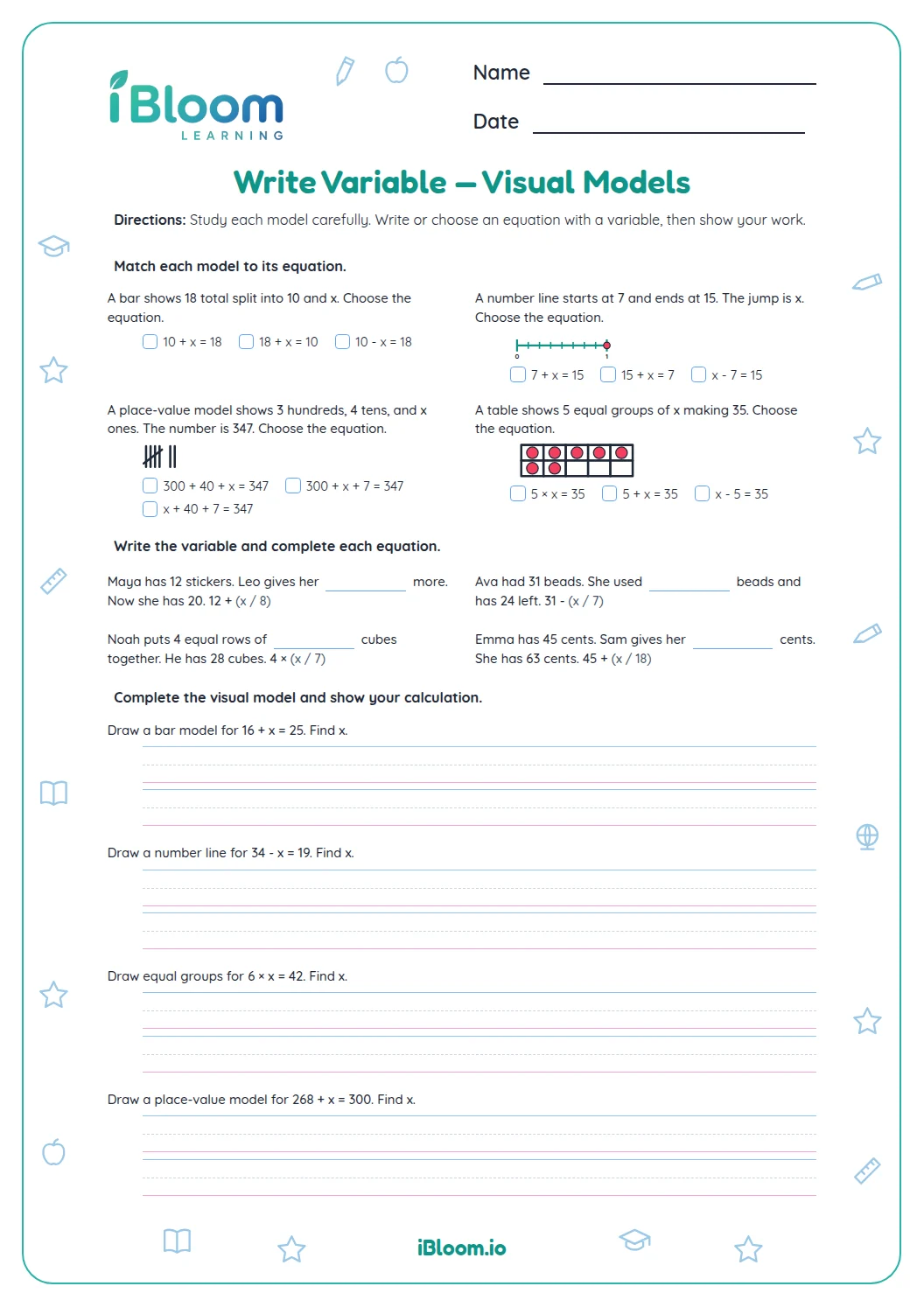
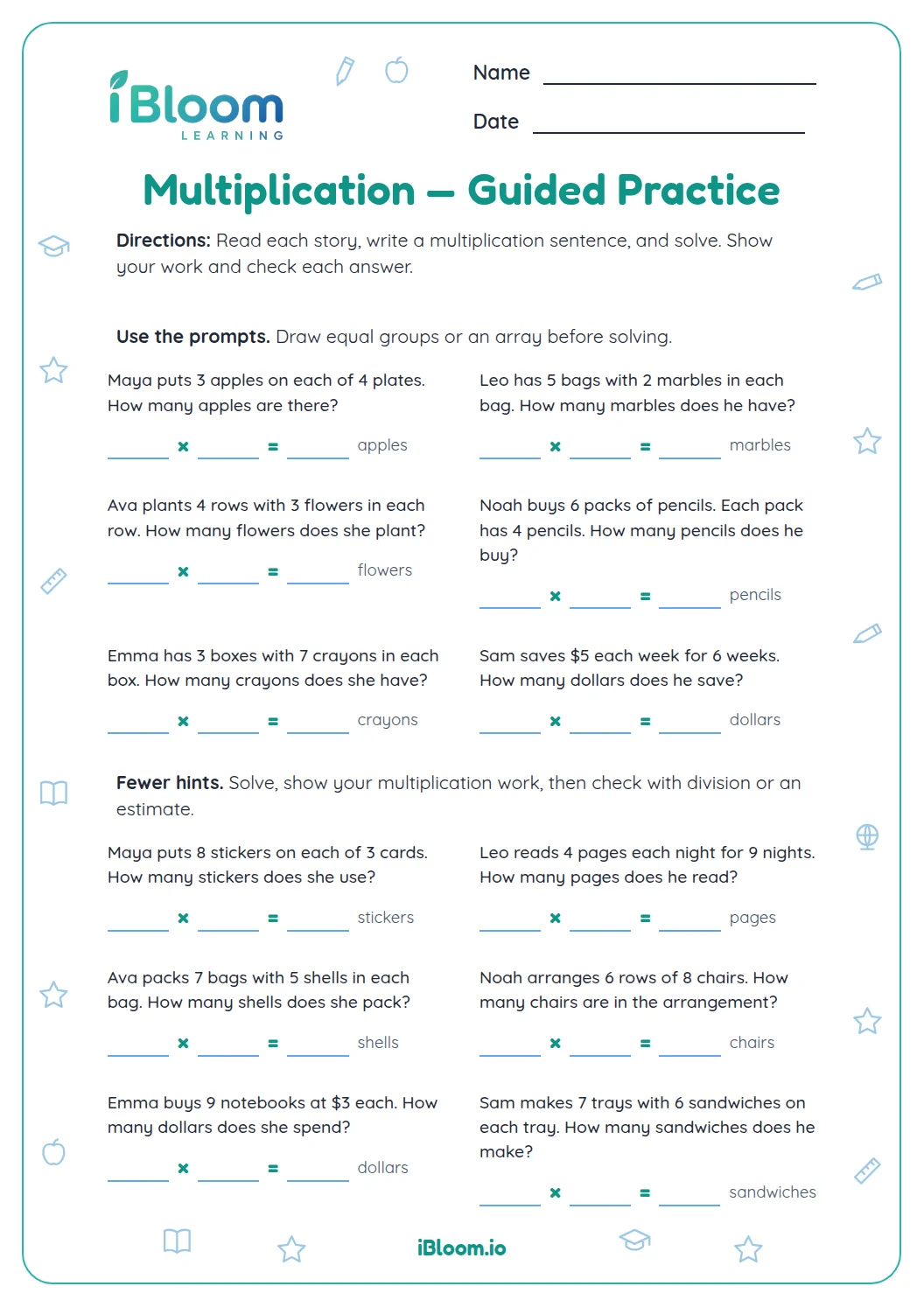
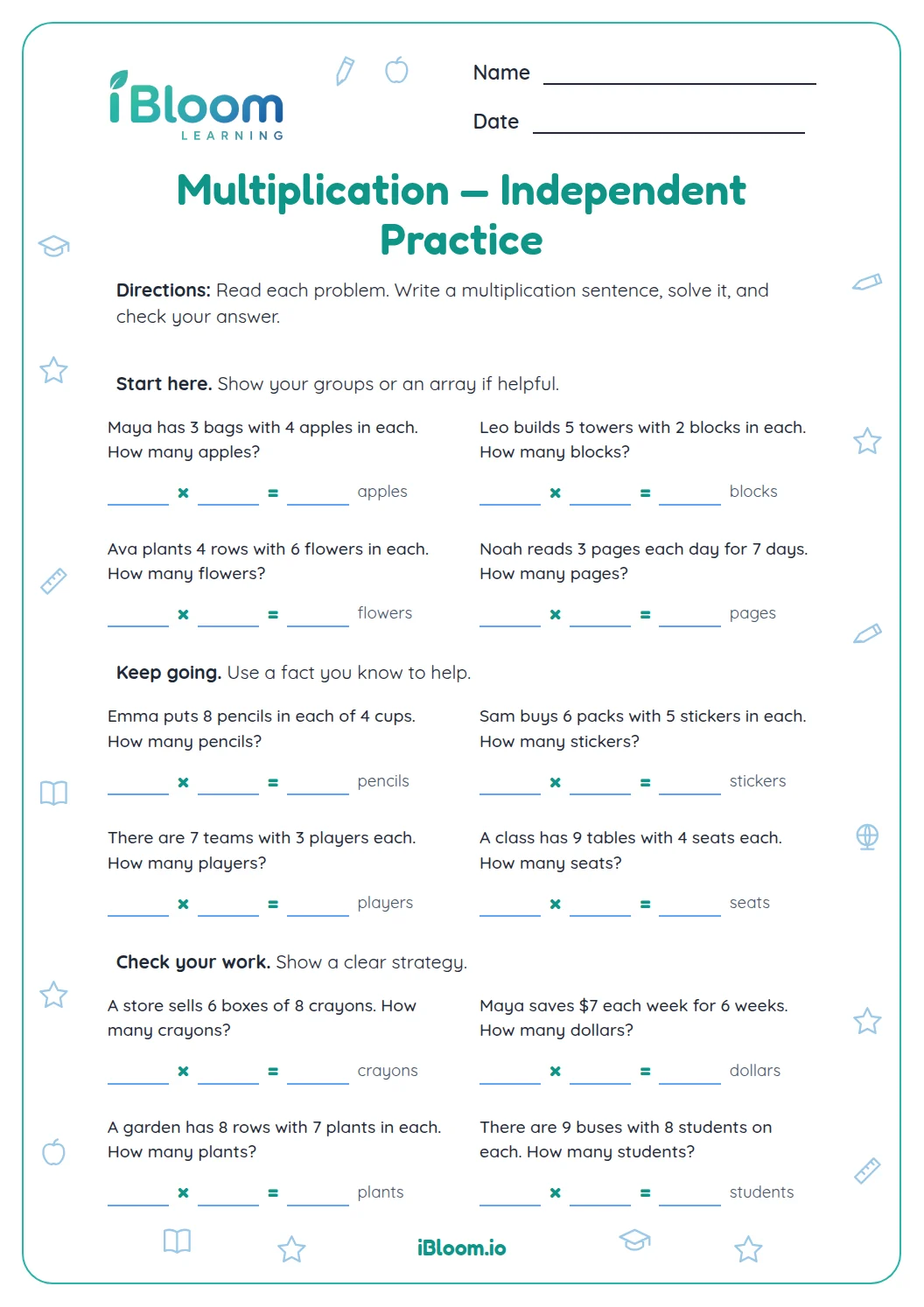
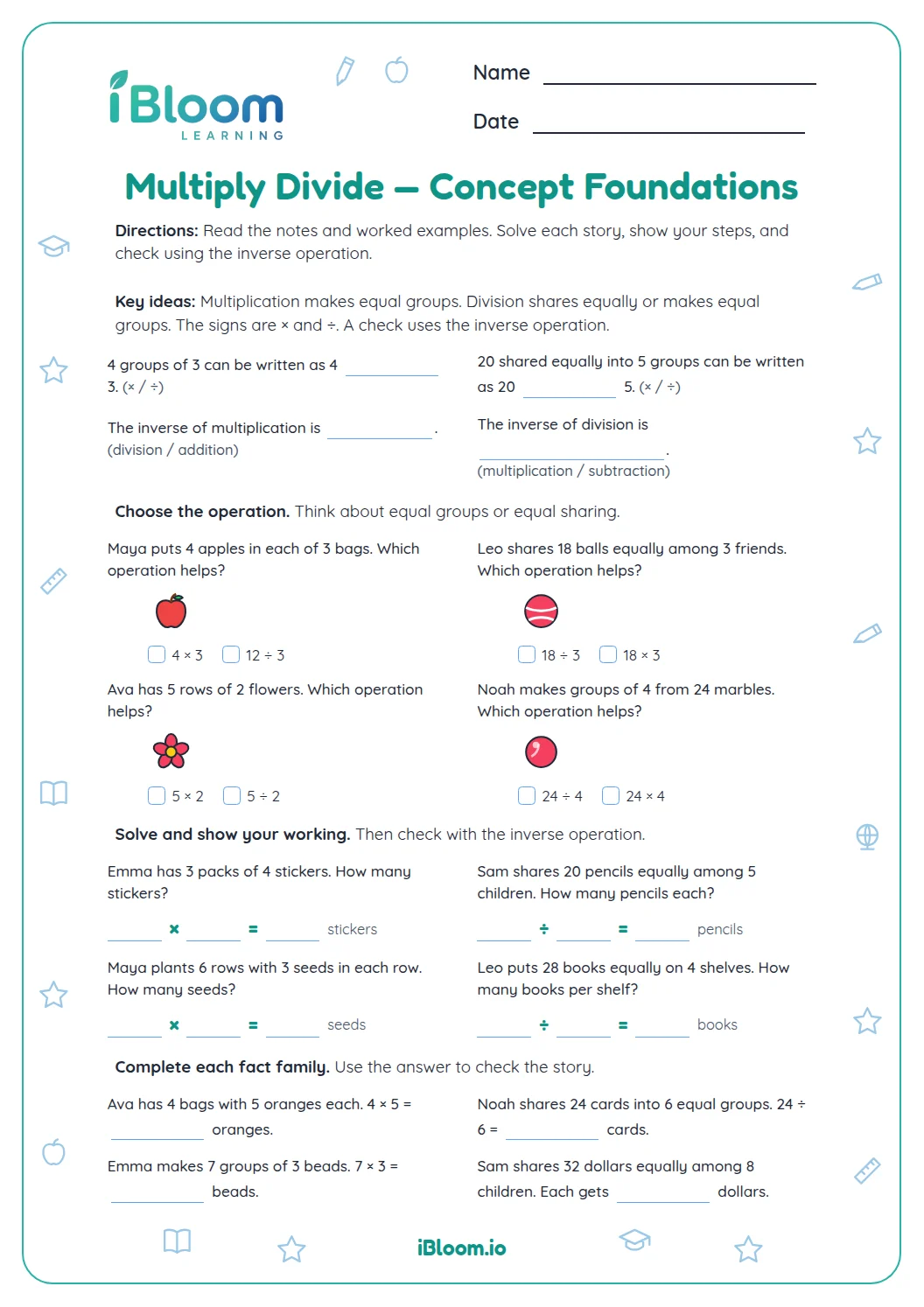
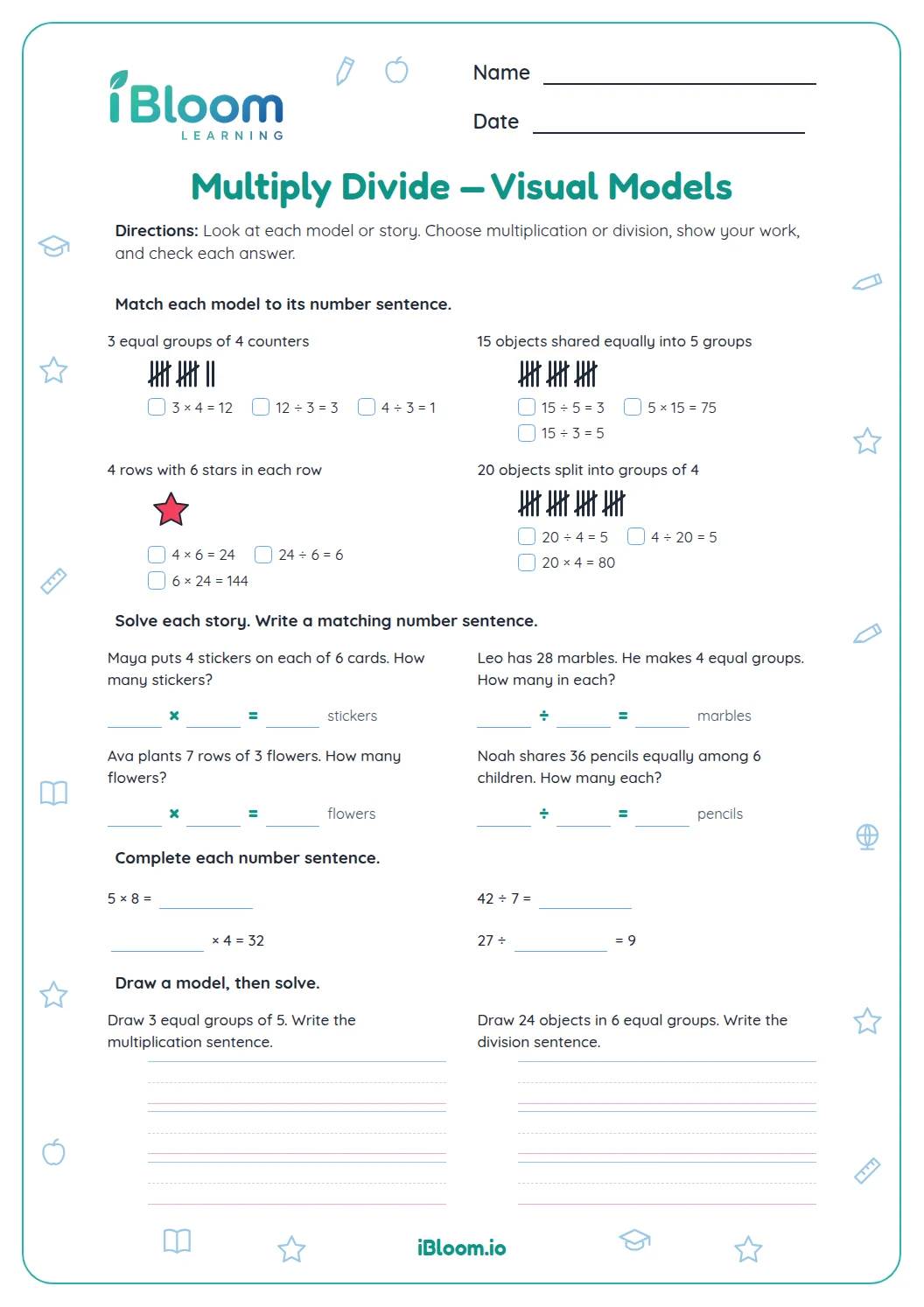
This free printable Grade 3 math worksheet helps students solve word problems with unknown factors and quotients. Sixteen short stories use equal groups of familiar objects, and each question includes an array model to make the groups visible. Students decide what the blank represents, count or calculate the missing number, and check the relationship between the factors and total. A complete key lists the answers. The page practices CCSS 3.OA.A.4, finding an unknown whole number in a multiplication or division equation.
Aligned to 3.OA.A.4
How does an array show a missing factor?
Rows and columns show equal groups. If the total and number of rows are known, count the objects in one row to find the missing factor.
- 1Three equal rows contain 18 apples. 3 × ___ = 18, so the missing factor is 6.
- 2Count six apples in each row to check.
How can division find the size of each group?
Division splits a total into equal groups. The array makes the group count and group size easy to see together.
What should the unknown number represent?
Read the story for what is missing: groups, objects in each group, or the total. Match that quantity to the blank in the equation.
How to use this worksheet
- 1Identify the total and the equal groups in the story.
- 2Look at the array rows and columns.
- 3Decide what the blank represents.
- 4Count or calculate the missing factor or quotient.
- 5Check that multiplying the factors gives the total.
Common mistakes and quick fixes
The mistake
Giving the number of groups when the question asks for objects in each group.
The fix
Name the blank in words before solving it.
The mistake
Using subtraction for equal groups.
The fix
Check whether the story describes equal groups, then use multiplication or division.
The mistake
Writing the total as the missing factor.
The fix
Use the array dimensions to identify the group size and number of groups.
Common Core alignment
Equal-group arrays help make unknown factors and quotients visible.
Find an unknown whole number in a multiplication or division equation.
On this sheet: Each story asks students to find a missing factor or quotient using equal groups.
Show the official wordingHide the official wording
Determine the unknown whole number in a multiplication or division equation relating three whole numbers.
What to practice next
Make more practice
Further reading
Questions parents and teachers ask
What does this worksheet practice?
The 14 Grade 3 problems ask students to find an unknown factor or quotient. Eight equal-group situations use arrays; six number sentences ask for a missing whole number. The key gives the number and, for the story items, its matching unit.
How do the arrays help?
Each array arranges its total into equal rows and columns. The first item shows 3 rows and 4 columns, modeling 12 apples split into 3 equal rows of 4. Students can count a row or use division to find the number in each row.
How can a student solve a missing-factor equation?
Think of the unknown as the number of equal groups or the amount in each group. In 5 × ___ = 30, divide 30 into five equal groups to find 6. Multiplication and division can check the result.
What is included in the answer key?
The key lists all 14 answers. For the array stories, it includes units such as apples per row or boxes, so the response answers the question that was asked. The six equation answers are the missing whole numbers.
Why are there both arrays and equations?
The first part connects equal groups to an array. The second practices the same unknown-factor and quotient relationships in number sentences, helping students recognize the structure without a picture on every item. Students can use division to check a missing factor.