
About this worksheet
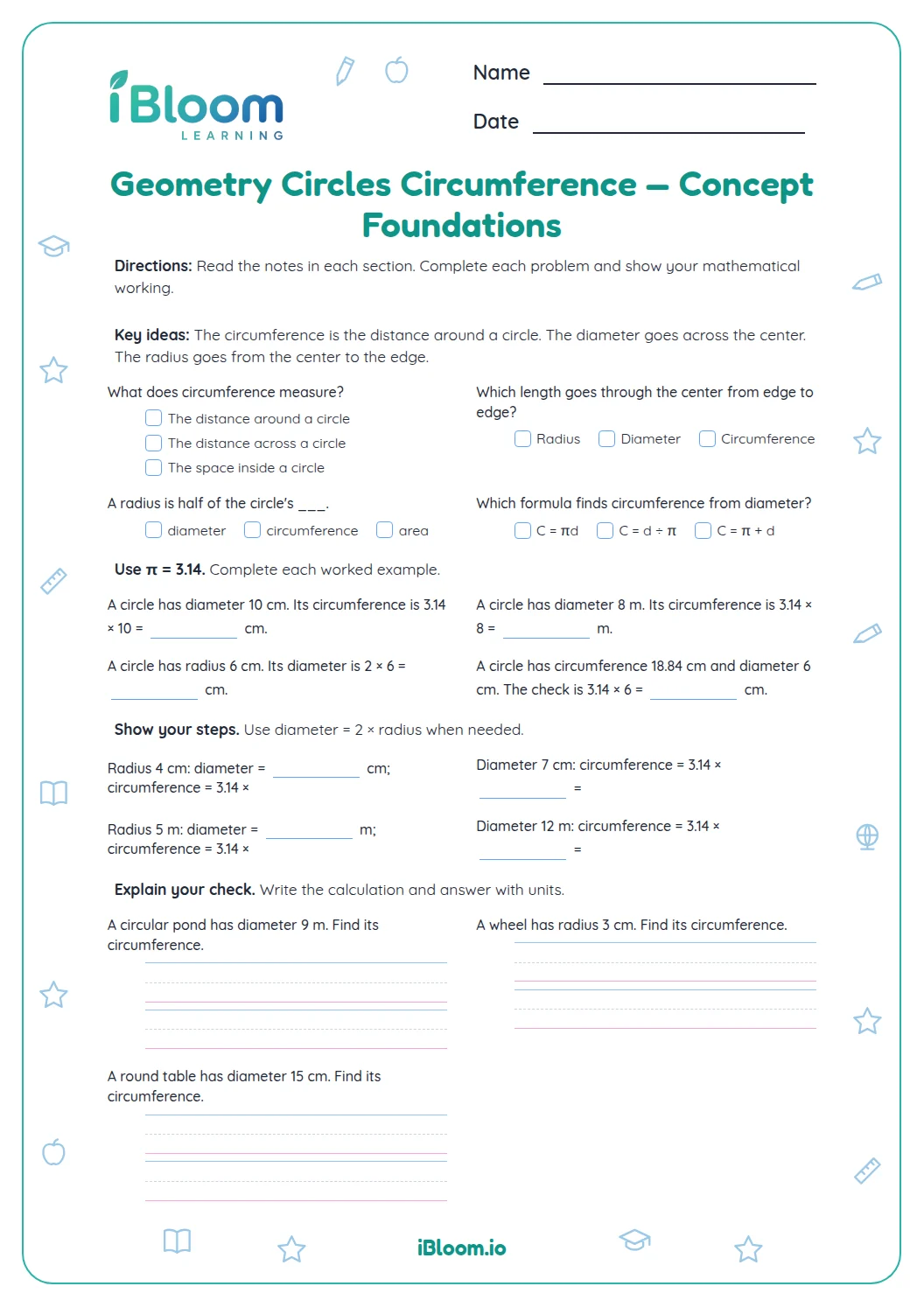
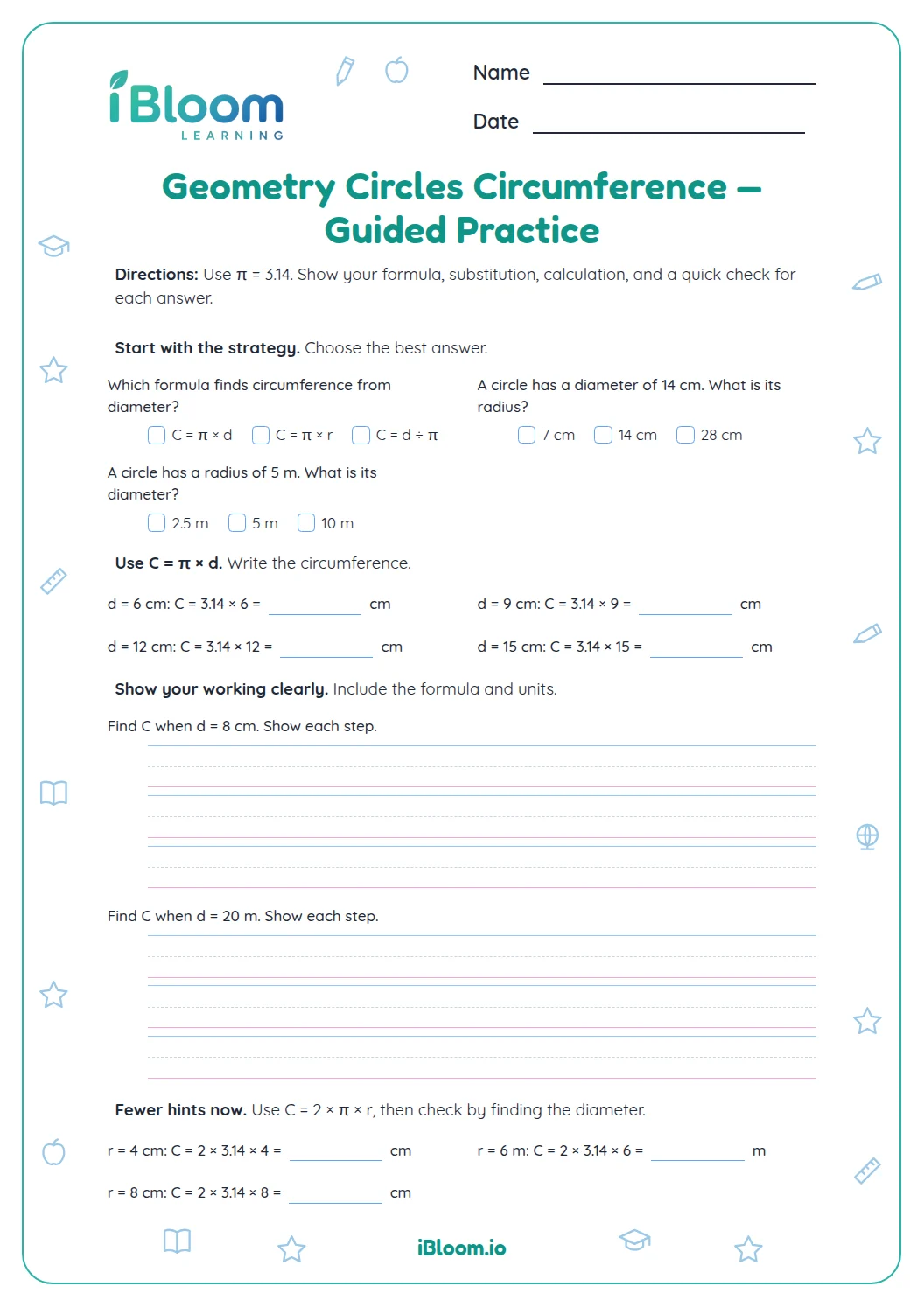
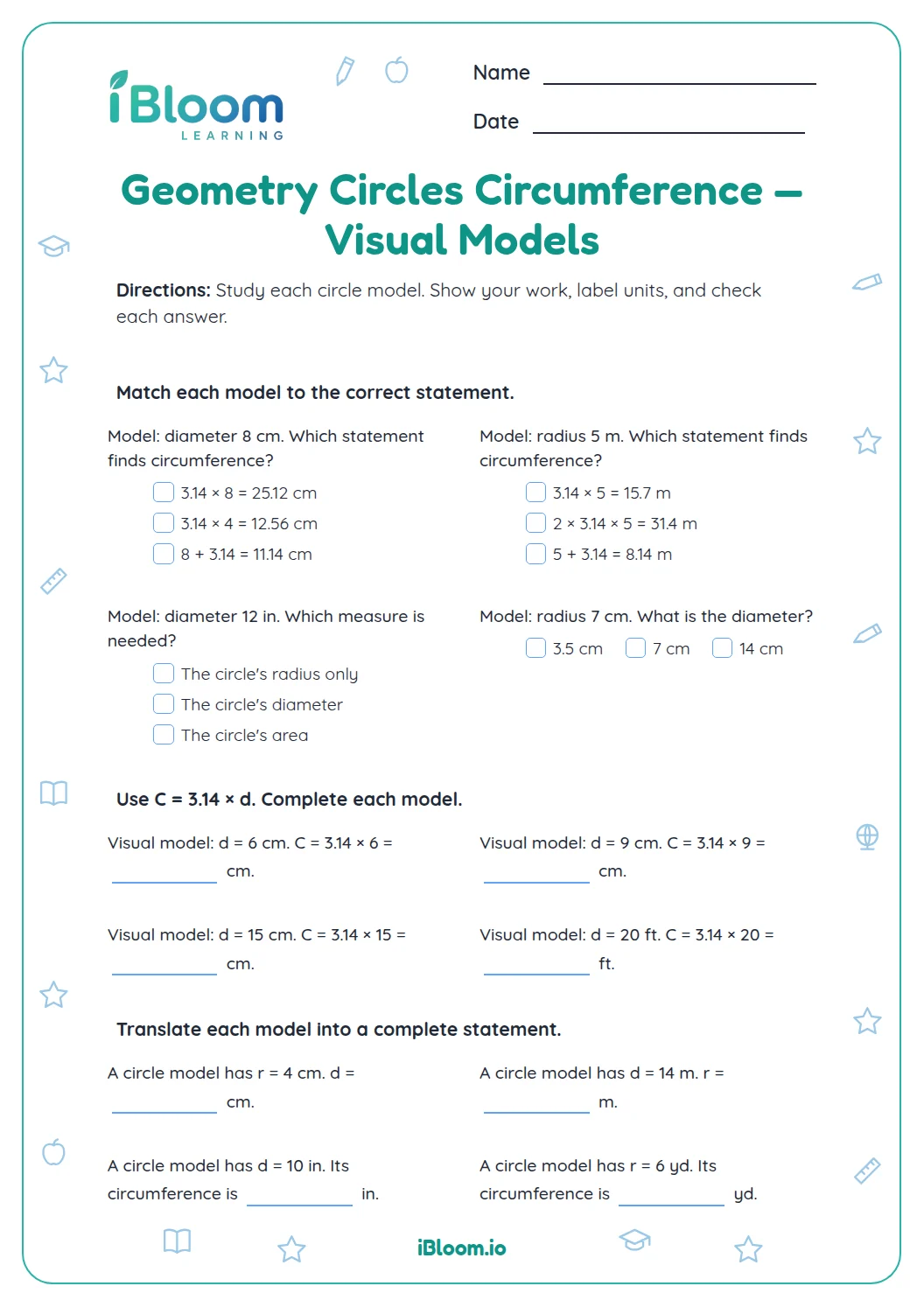
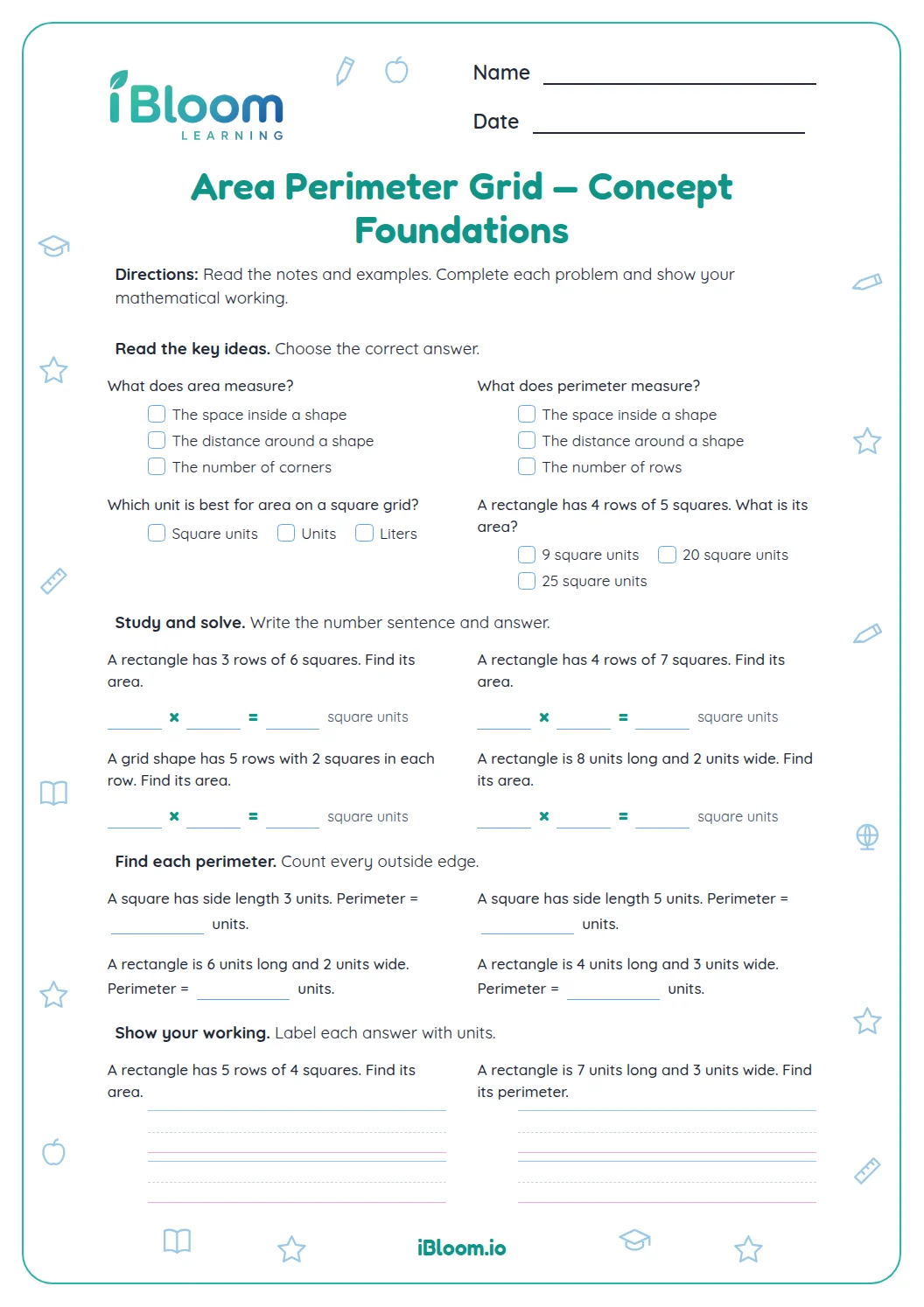
This free printable Grade 4 worksheet offers 14 questions about circle radius, diameter, and circumference. Children double or halve lengths to move between radius and diameter, then estimate circumference as about three diameters and explain their reasoning. A separate answer key gives the calculations and units.
How do radius and diameter relate?
Apply measurement formulas and reason about lengths in circle contexts.
A radius of 4 cm spans twice to make the diameter: 2 × 4 = 8 cm.
- 1Radius = 4 cm
- 2Diameter = 2 × radius
- 32 × 4 = 8 cm
How do you estimate circumference?
Circumference is the distance around a circle. For a Grade 4 estimate, use about three times the diameter.
- 1Diameter = 4 cm
- 2About 3 × 4 = 12
- 3Circumference is about 12 cm
What should you check?
In question 9, halve 9 cm to find radius 4.5 cm.
How to use this worksheet
- 1Read the complete prompt before answering.
- 2Identify the information the question gives.
- 3Choose an operation or strategy that fits.
- 4Write a clear answer with units when needed.
- 5Check the result against the story or data.
Common mistakes and fixes
The mistake
Treating the radius as the full distance across.
The fix
Return to the quantities in the prompt and label each one.
The mistake
Multiplying by radius instead of diameter.
The fix
Check the relationship the question asks about before calculating.
The mistake
Leaving off or changing the unit.
The fix
Reread the final question and verify the answer addresses it.
What to practice next
Make more practice
Questions parents and teachers ask
What is the relation between radius and diameter?
The radius measures from the center to the circle edge. Diameter goes across through the center, so it spans two radii. In question 1, a 4 cm radius means an 8 cm diameter. Children can use this relationship in either direction.
How can you estimate circumference?
Circumference is the distance around a circle. For the estimates on this sheet, multiply the diameter by about 3. For a diameter of 4 cm, 3 × 4 gives about 12 cm. The word “about” signals that this is an estimate.
Why must you identify the given length?
A radius and diameter are different lengths. Using radius directly in a diameter-based circumference calculation makes the result about half the expected size. First identify the given measurement and then decide whether it must be doubled or halved.
Does the worksheet include an answer key?
Yes. A separate answer-key page gives the radius, diameter, estimate or comparison requested in every item, with units included in measured answers. The explanations also note the relationship used so learners can review their reasoning. A brief explanation can help learners understand each result.
How can a circumference answer be checked?
Check that the estimate is close to three times the diameter and that it uses the same length unit. A circumference should be a little more than three diameters in an exact calculation, so the three-times estimate is a reasonable nearby whole-number estimate.