


About this worksheet
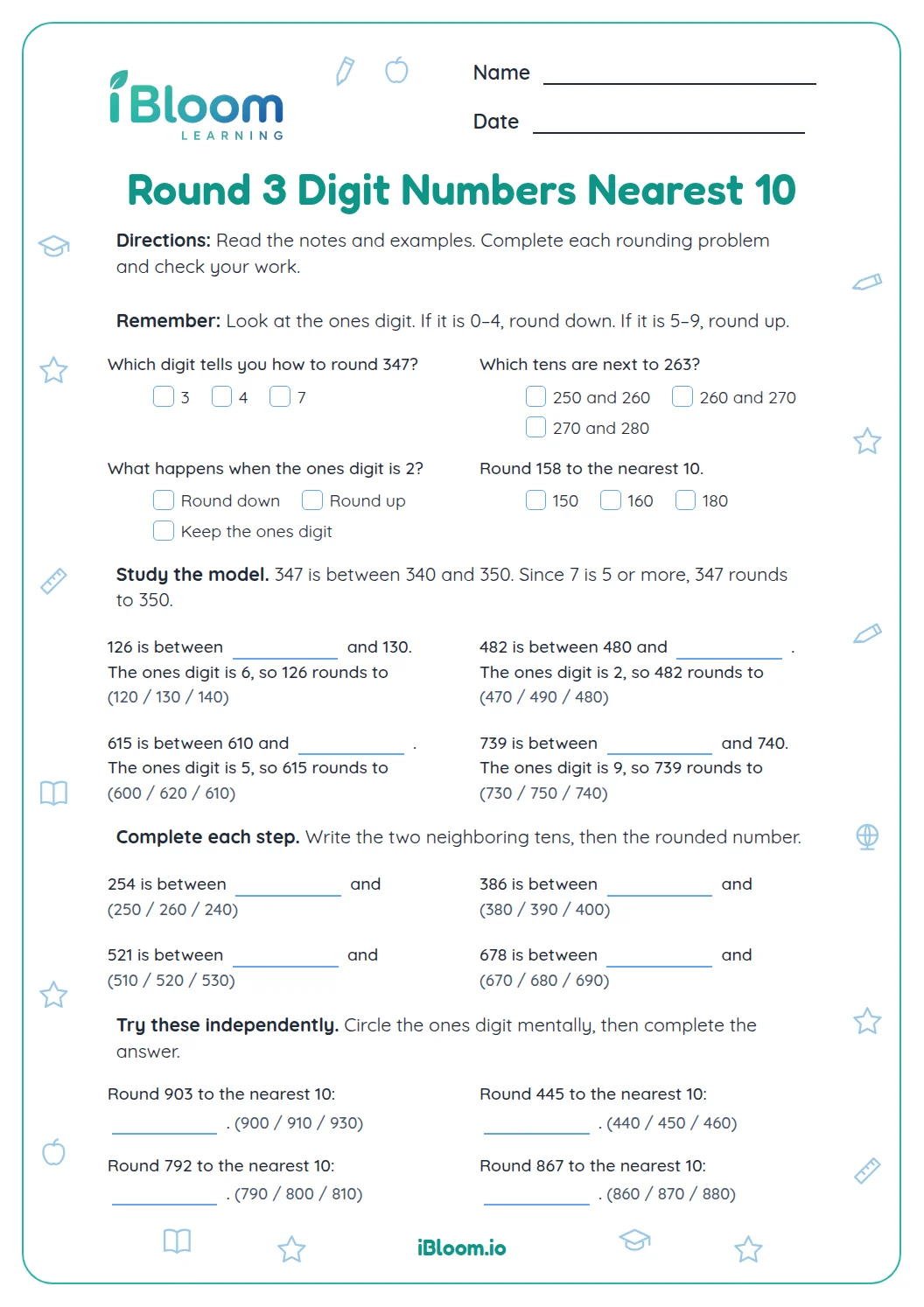
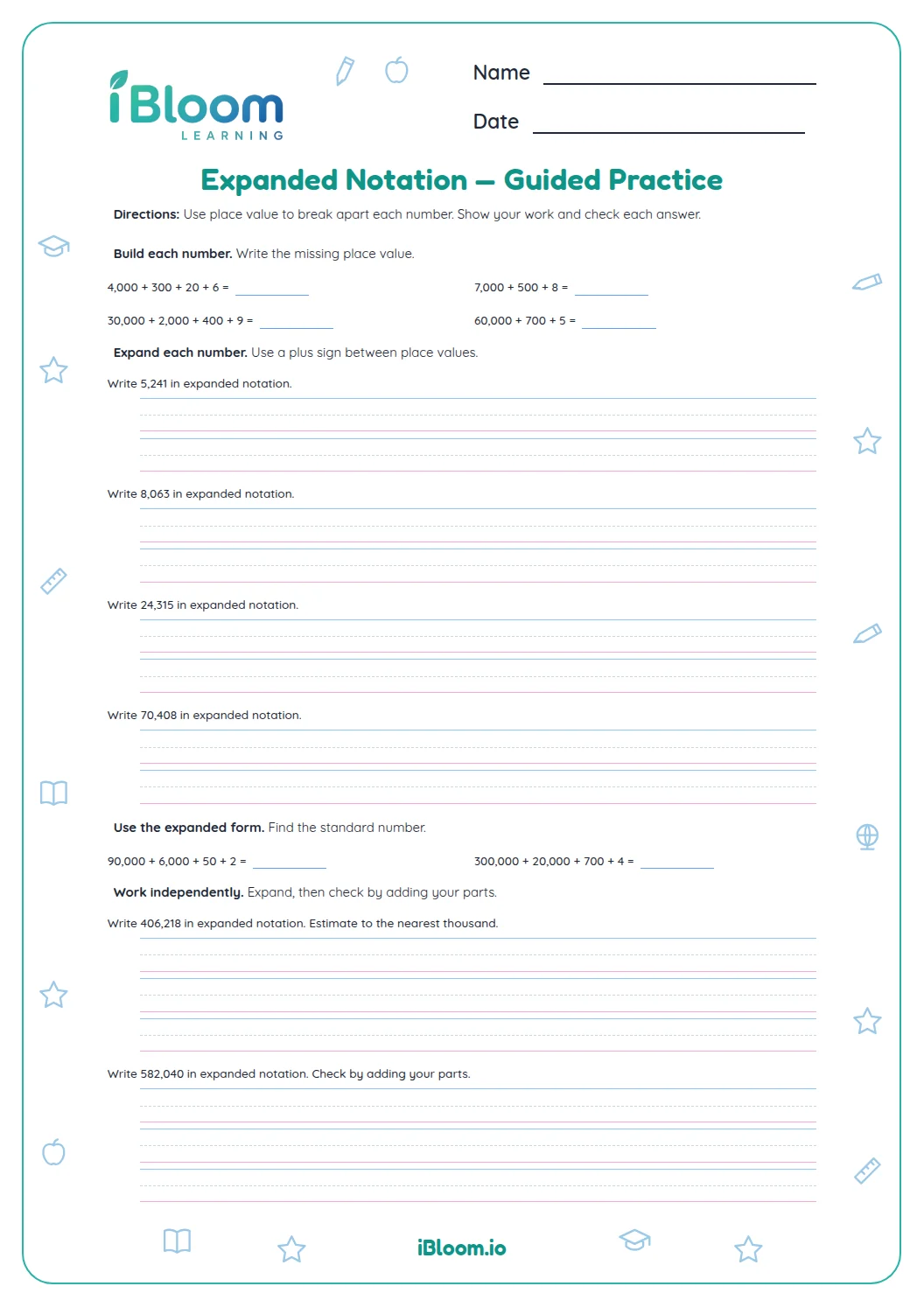
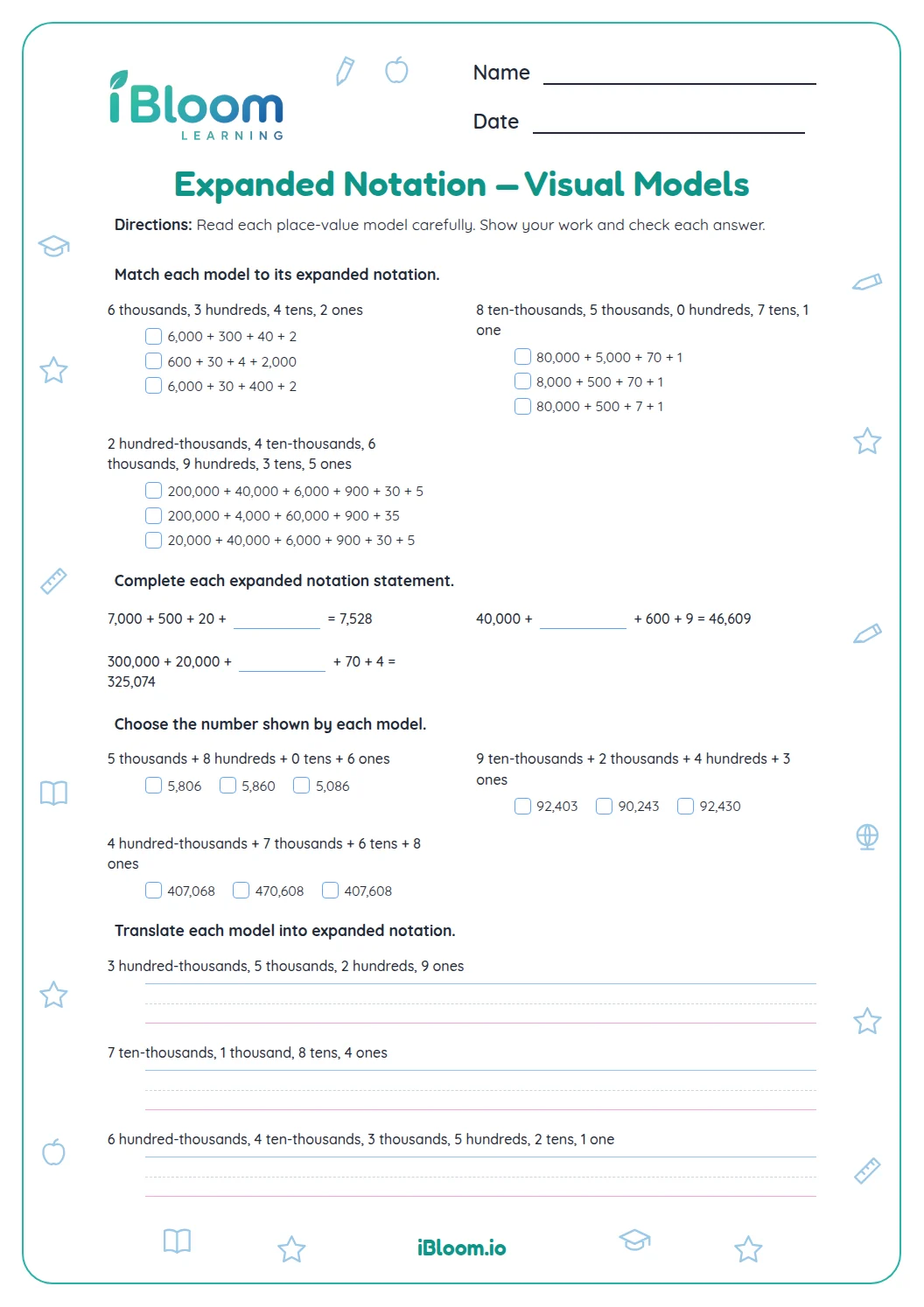
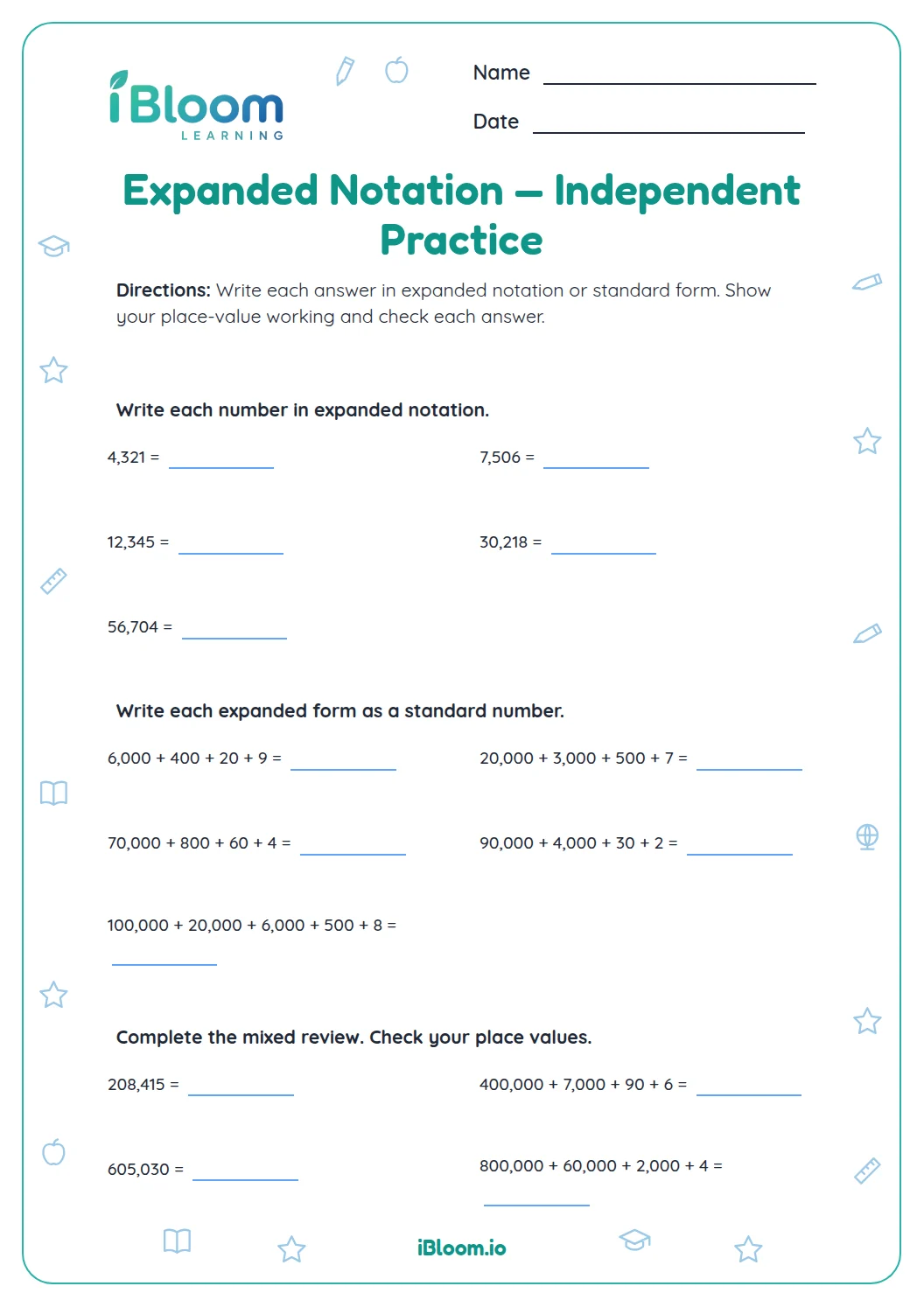
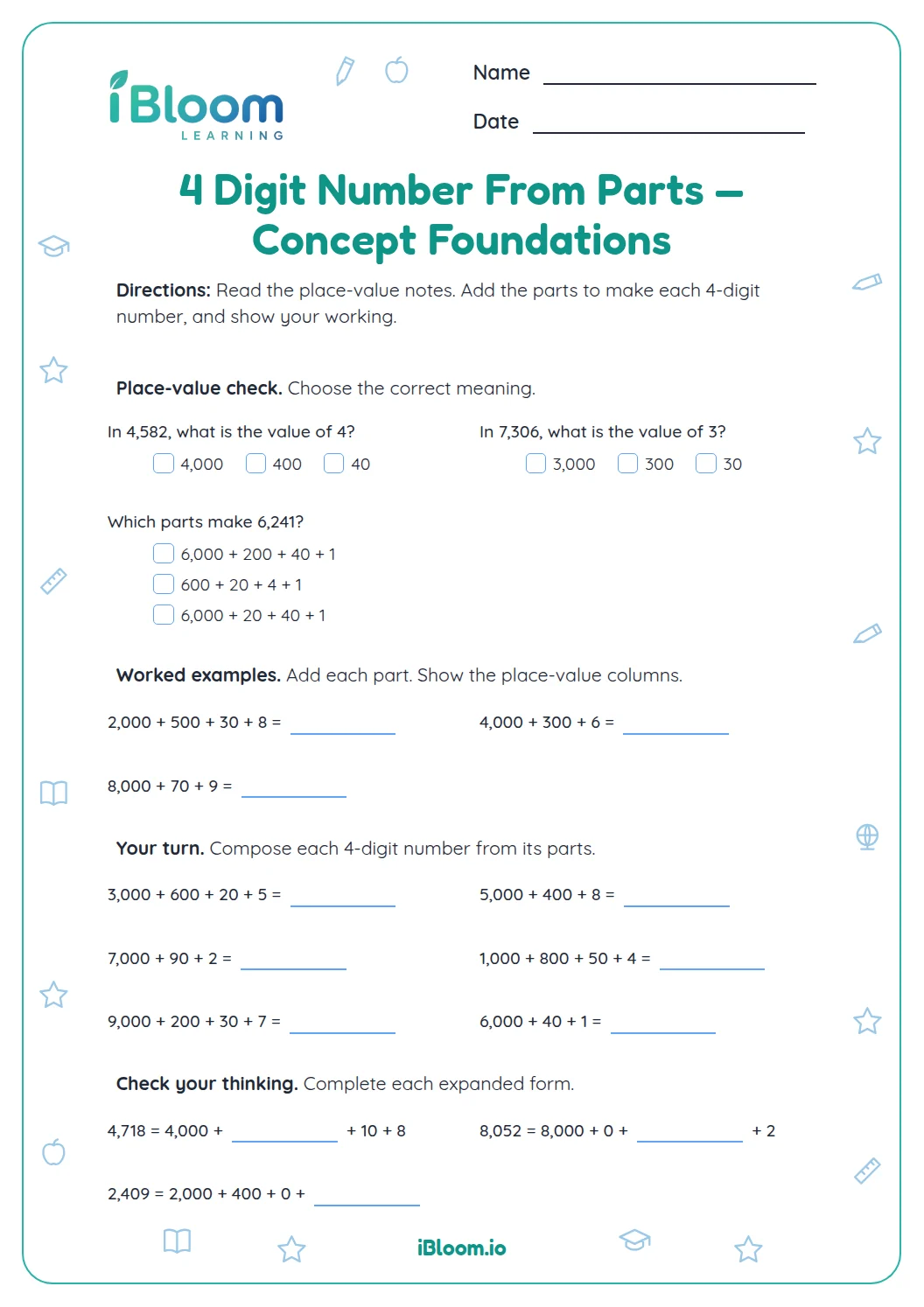
This free Grade 4 worksheet gives guided practice rounding three-digit whole numbers to the nearest ten. Learners inspect the ones digit, decide which neighboring ten is closer, and apply the usual midpoint rule when the ones digit is 5. The 16 questions move from basic rounding to midpoint cases and independent practice. A separate answer key supports checking each result.
Aligned to 4.NBT.A.3
How do you round a three-digit number to a ten?
Find the ones digit and compare the number with the tens just below and above it. For example, 142 lies between 140 and 150. Its ones digit is 2, so it rounds to 140.
- 1142 is between 140 and 150.
- 2The ones digit is 2, so round down.
- 3142 rounded to the nearest ten is 140.
What happens when the ones digit is 5?
A number ending in 5 is halfway between two tens. This worksheet uses the standard rule: round the midpoint up to the next ten. For example, 715 rounds to 720. A number ending in 0 is already a multiple of ten.
- Part A: round examples with different ones digits.
- Part B: check midpoint cases and additional values.
- Part C: round independently and review your choice.
How can you check a rounded answer?
Name the two neighboring tens and decide which is closer. At a midpoint, the higher ten is the answer. This check catches errors such as changing only the ones digit when the number is close to the next ten.
How to use this worksheet
- 1Read the number and identify its ones digit.
- 2Name the two tens on either side of the number.
- 3If the ones digit is 0–4, choose the lower ten.
- 4If the ones digit is 5–9, choose the higher ten.
- 5Check midpoint examples by confirming they round up.
- 6Compare each answer with the answer key.
Mistakes to watch for
The mistake
Looking at the tens digit instead of the ones digit.
The fix
Circle the ones digit before choosing a neighboring ten.
The mistake
Rounding a number ending in 5 down.
The fix
Use the midpoint rule and round up to the next ten.
The mistake
Changing the ones digit but forgetting the tens place may increase.
The fix
Write the full nearest ten, such as 999 → 1,000.
Curriculum alignment
The questions give learners practice with the listed standard.
Use place value to round multi-digit whole numbers to a chosen place.
On this sheet: Learners use the ones digit to round three-digit numbers to the nearest ten.
Show the official wordingHide the official wording
Use place value understanding to round multi-digit whole numbers to any place.
What to practice next
Make more practice
Further reading
Questions parents and teachers ask
What rounding rule does this worksheet use?
It uses the usual nearest-ten rule: ones digits 0 through 4 round down, and ones digits 5 through 9 round up. A number ending in 5 is halfway between two tens, so it rounds to the higher ten. The examples include midpoint cases.
How many problems are included?
The worksheet contains 16 rounding questions in three parts, with two worksheet pages and two answer-key pages. The sequence begins with guided examples, includes halfway values, and ends with independent practice. Each item asks for the nearest ten, with clear steps from supported to independent practice.
Why can 999 round to 1,000?
The nearest tens around 999 are 990 and 1,000. Since 999 is closer to 1,000, that is the rounded result. Rounding can change the hundreds digit when the number is just below the next hundred, so write the complete nearest ten.
Is rounding a number ending in 5 always up on this sheet?
Yes. The worksheet follows the common classroom rule for rounding whole numbers: when the ones digit is 5, round to the next higher ten. For example, 715 rounds to 720. The midpoint section gives extra practice with this decision in context.
What standard is listed for the worksheet?
The page lists CCSS 4.NBT.A.3, which asks students to use place-value understanding to round multi-digit whole numbers to any place. These questions focus that practice on three-digit numbers and the nearest ten. The key lets learners check each rounded value.