

About this worksheet
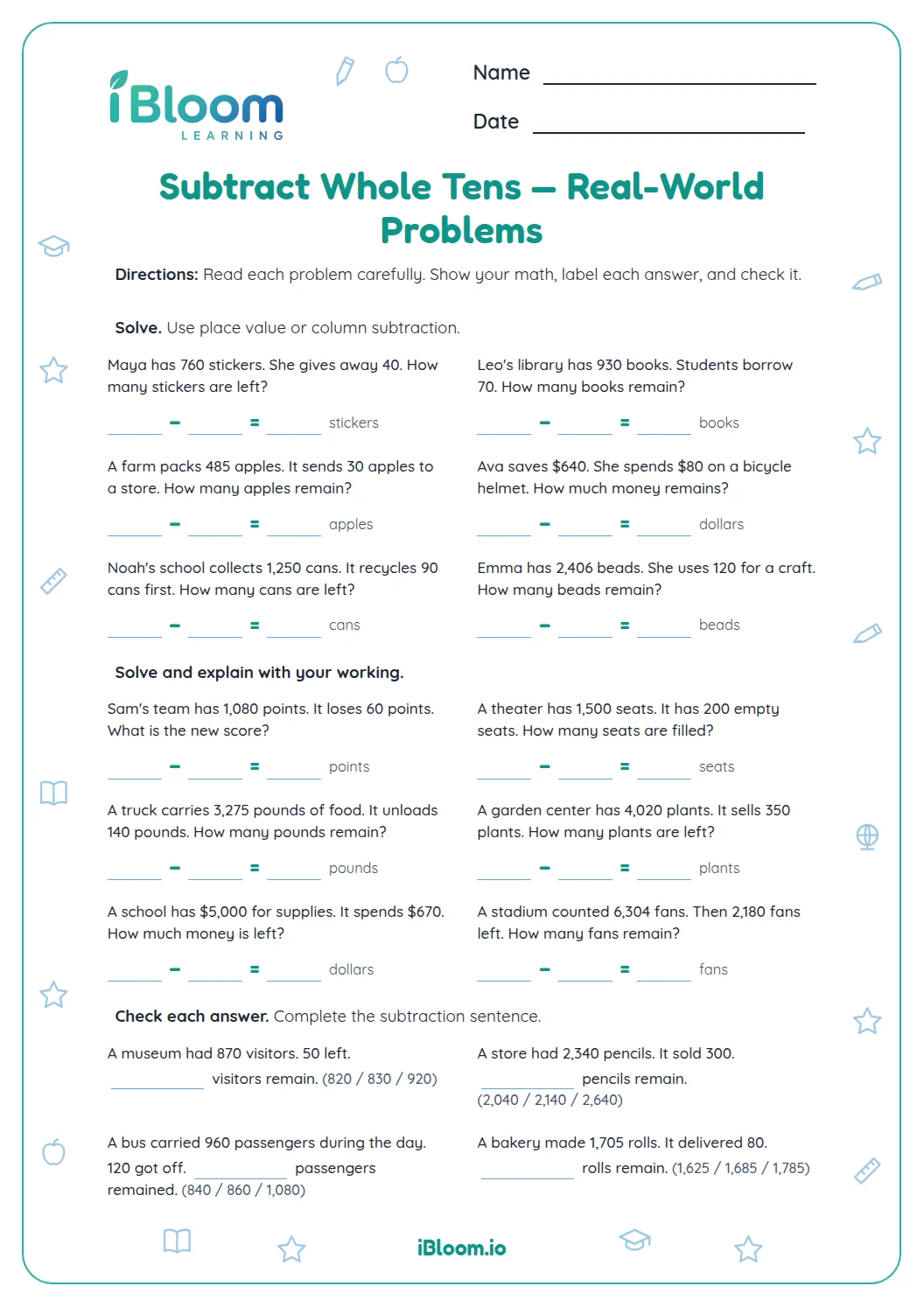
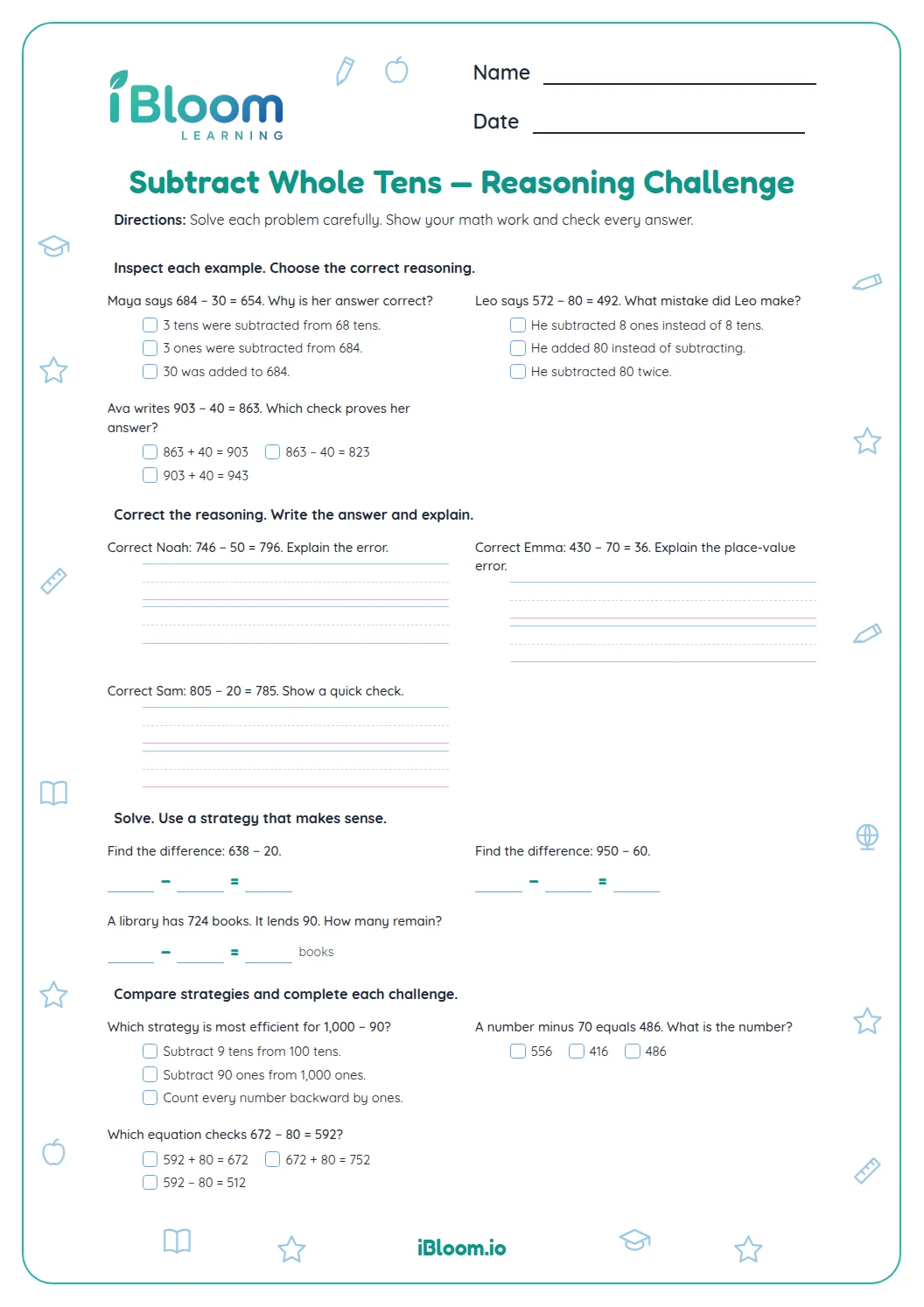
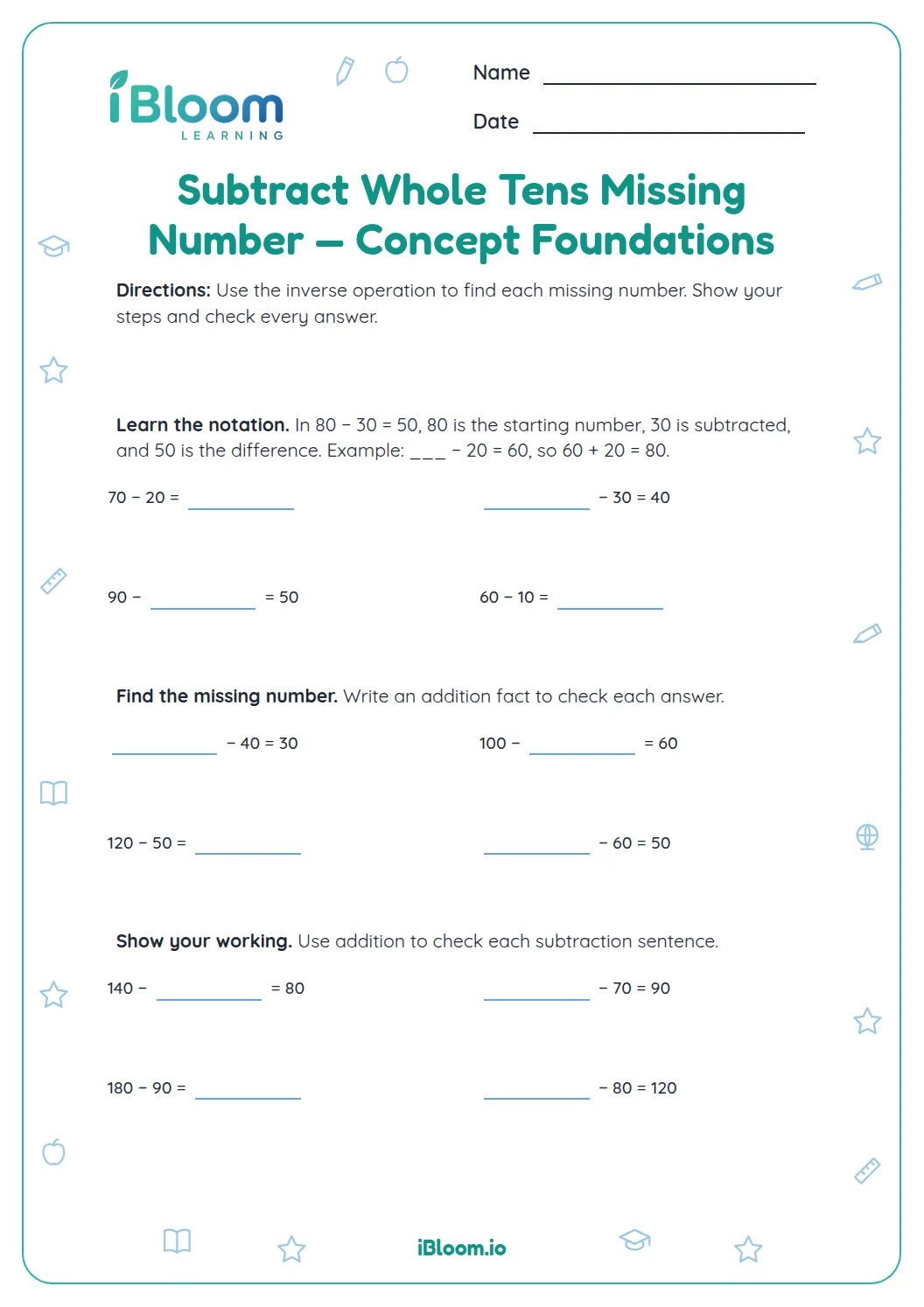
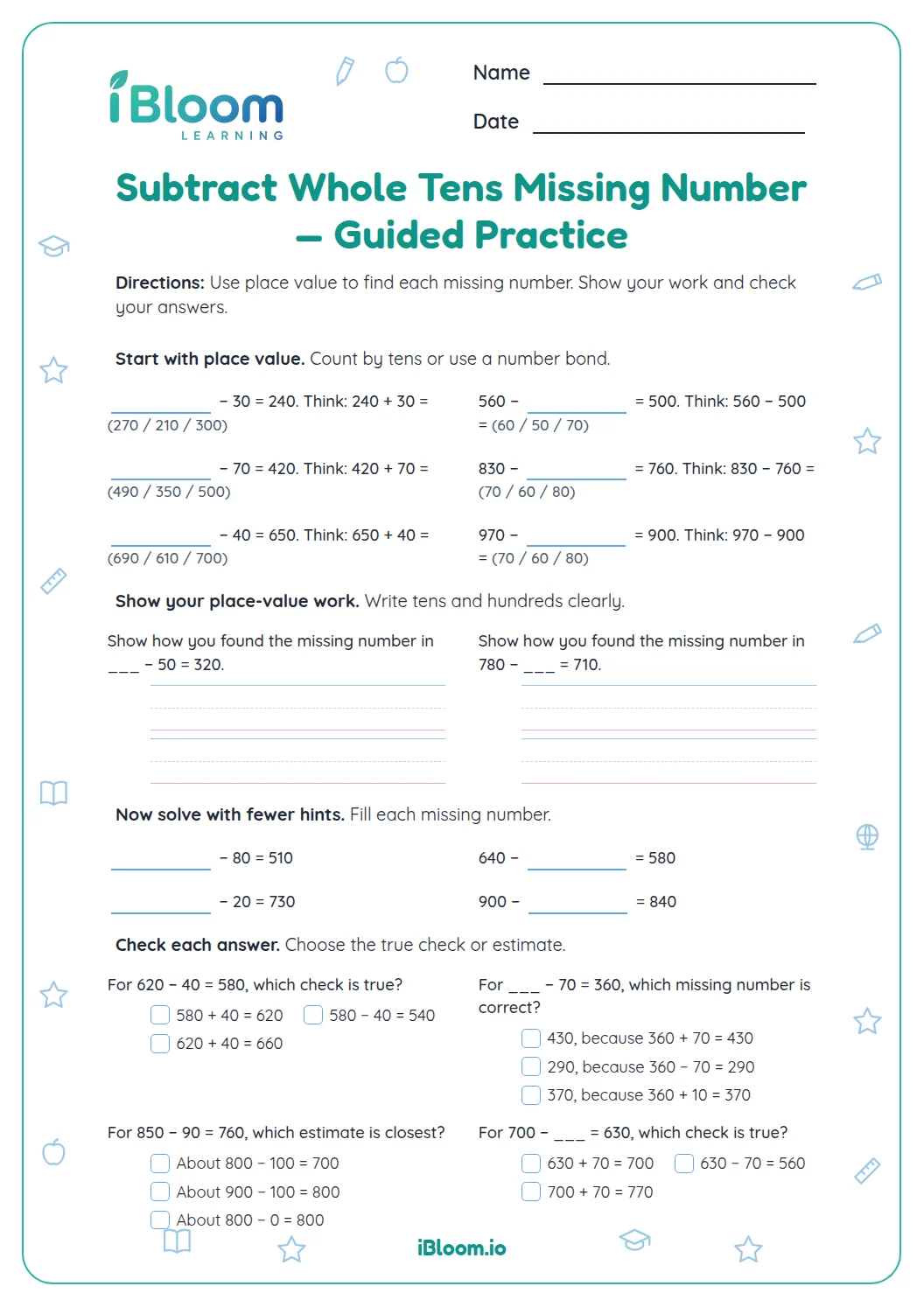
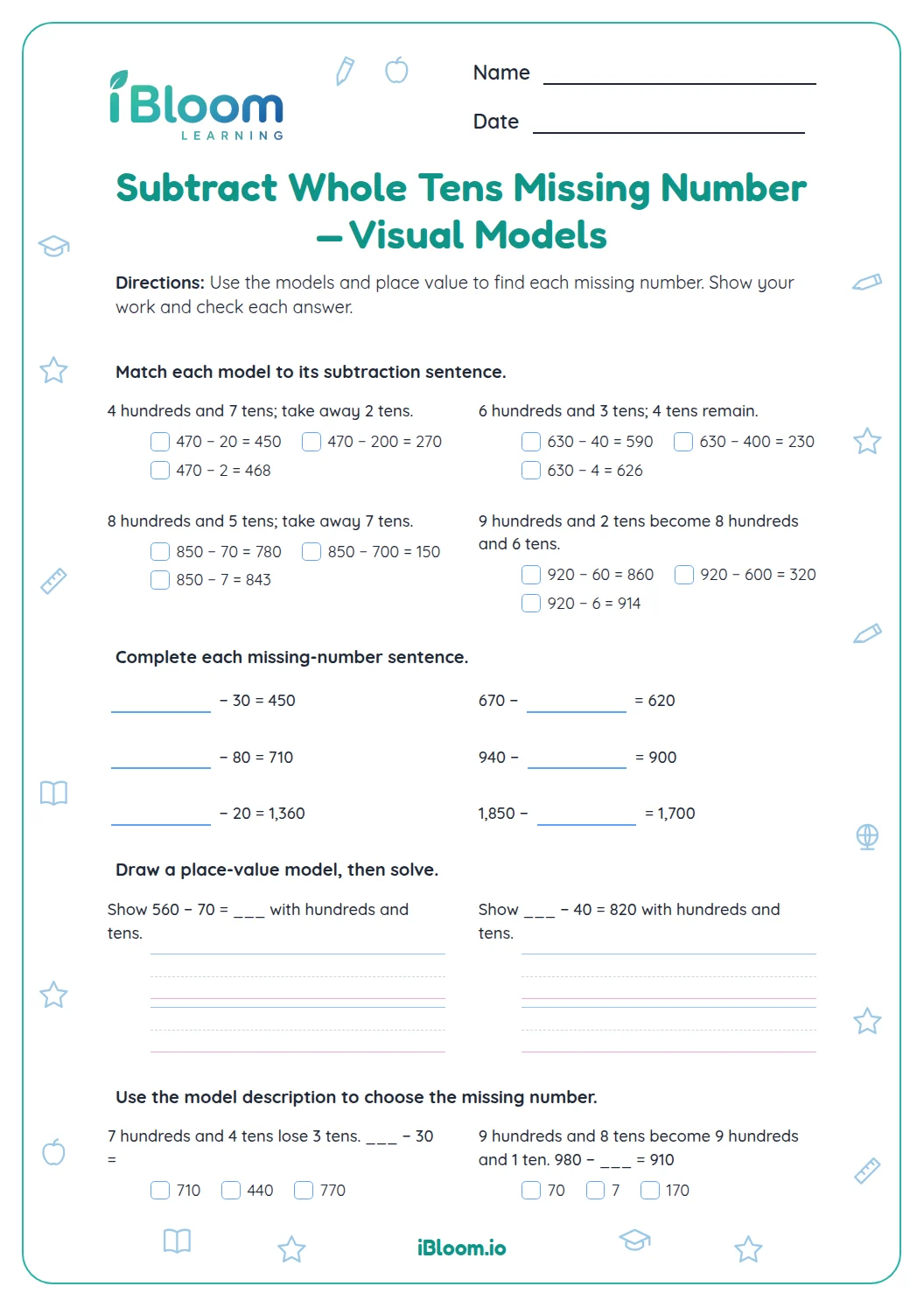
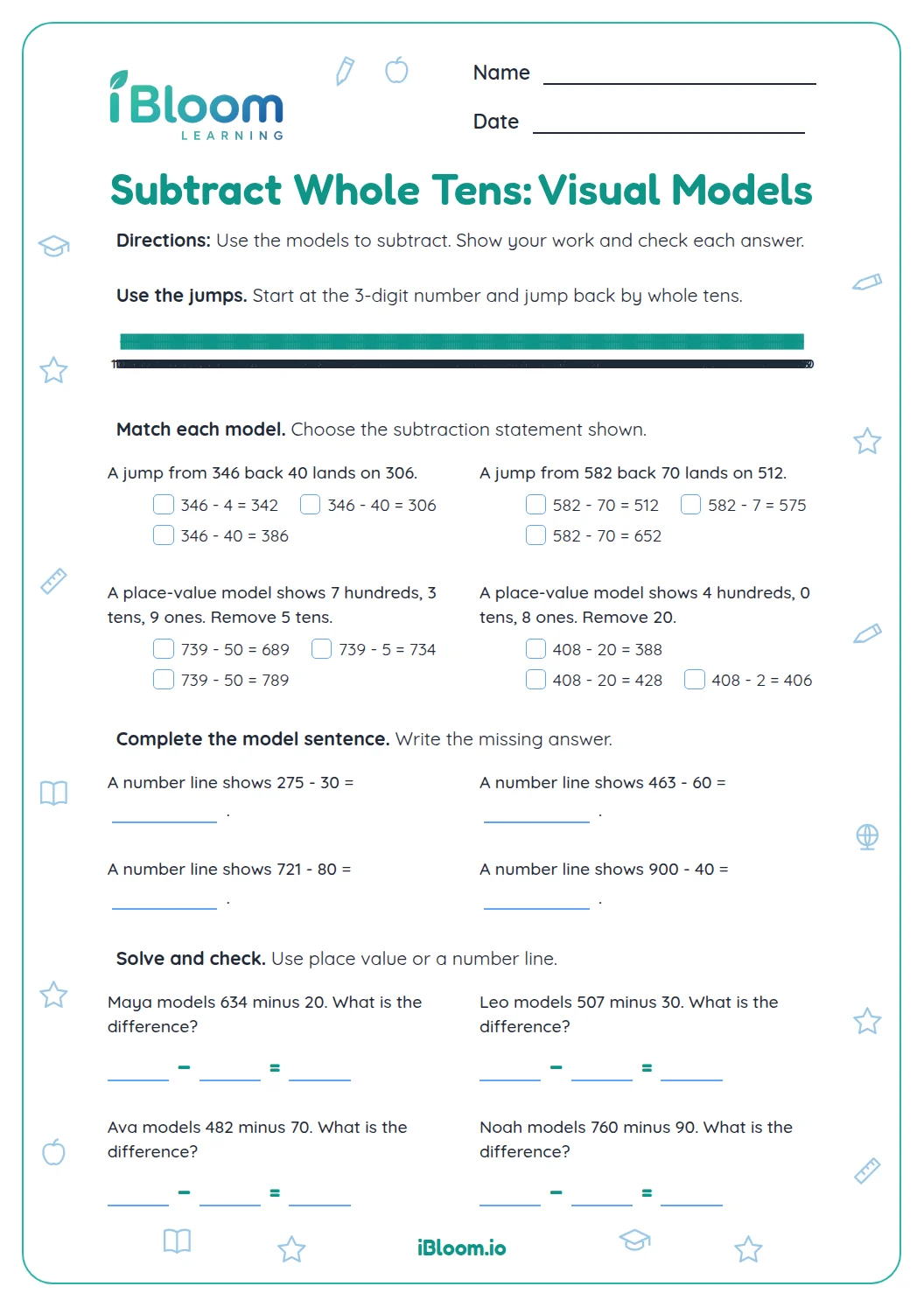
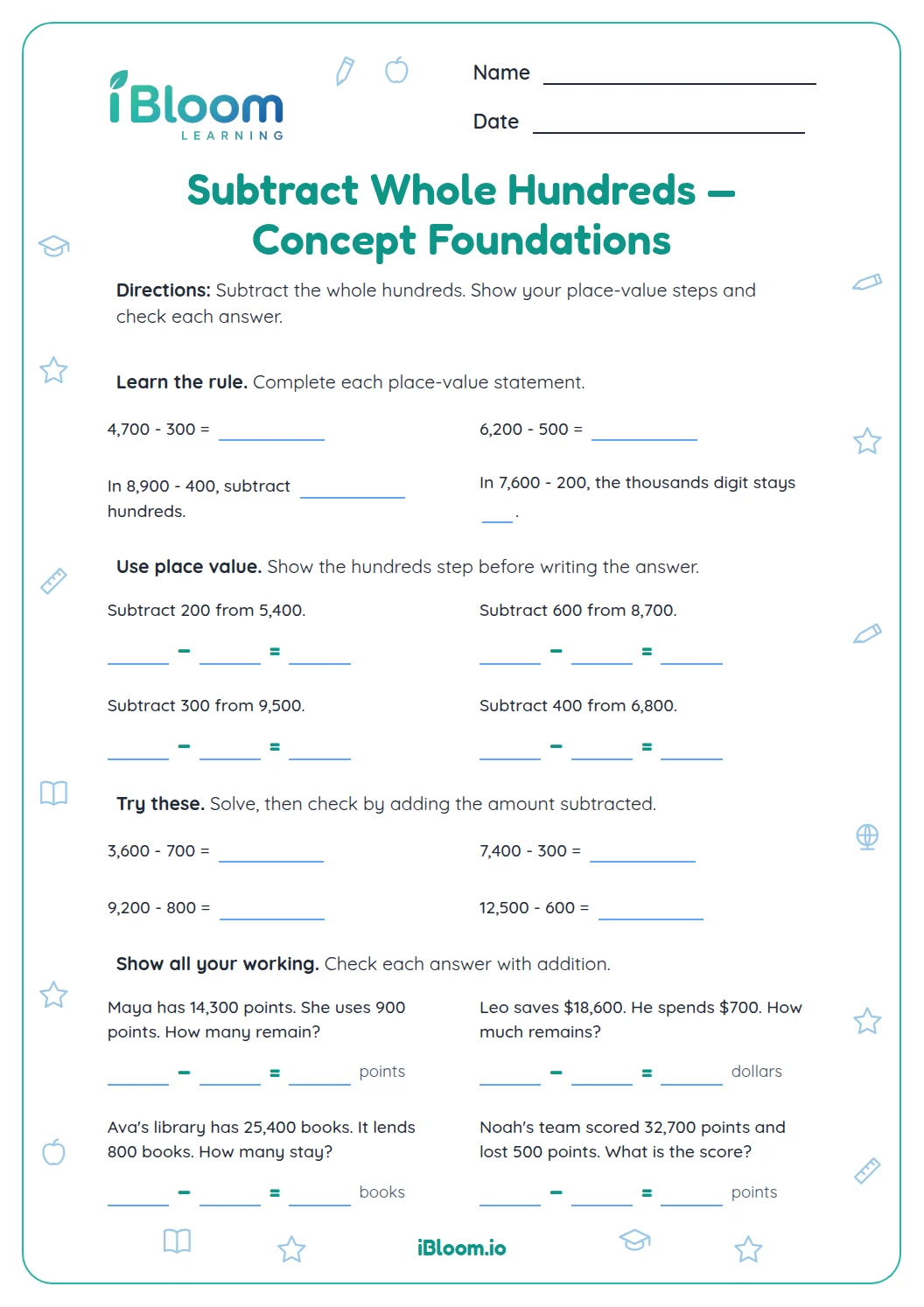
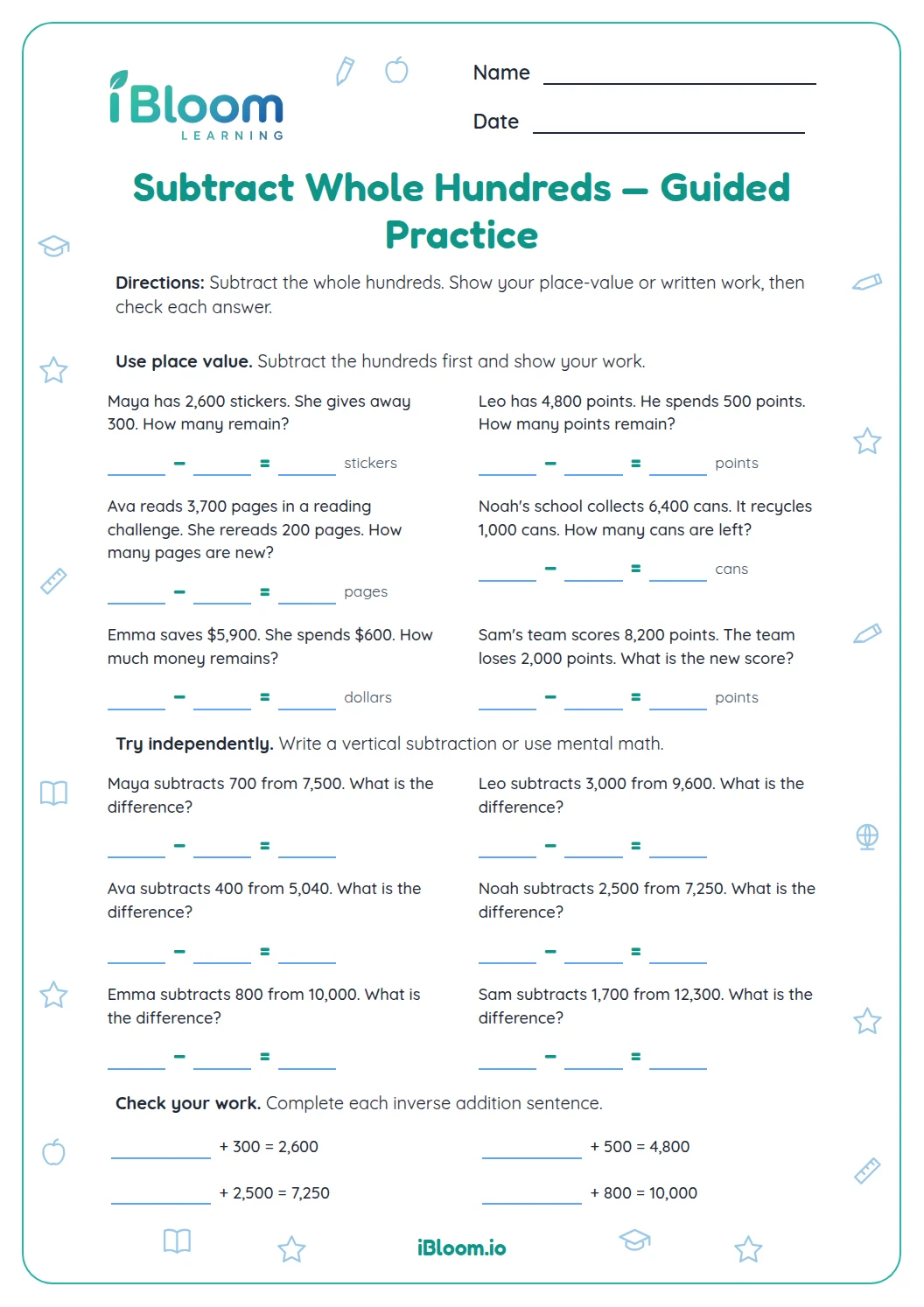
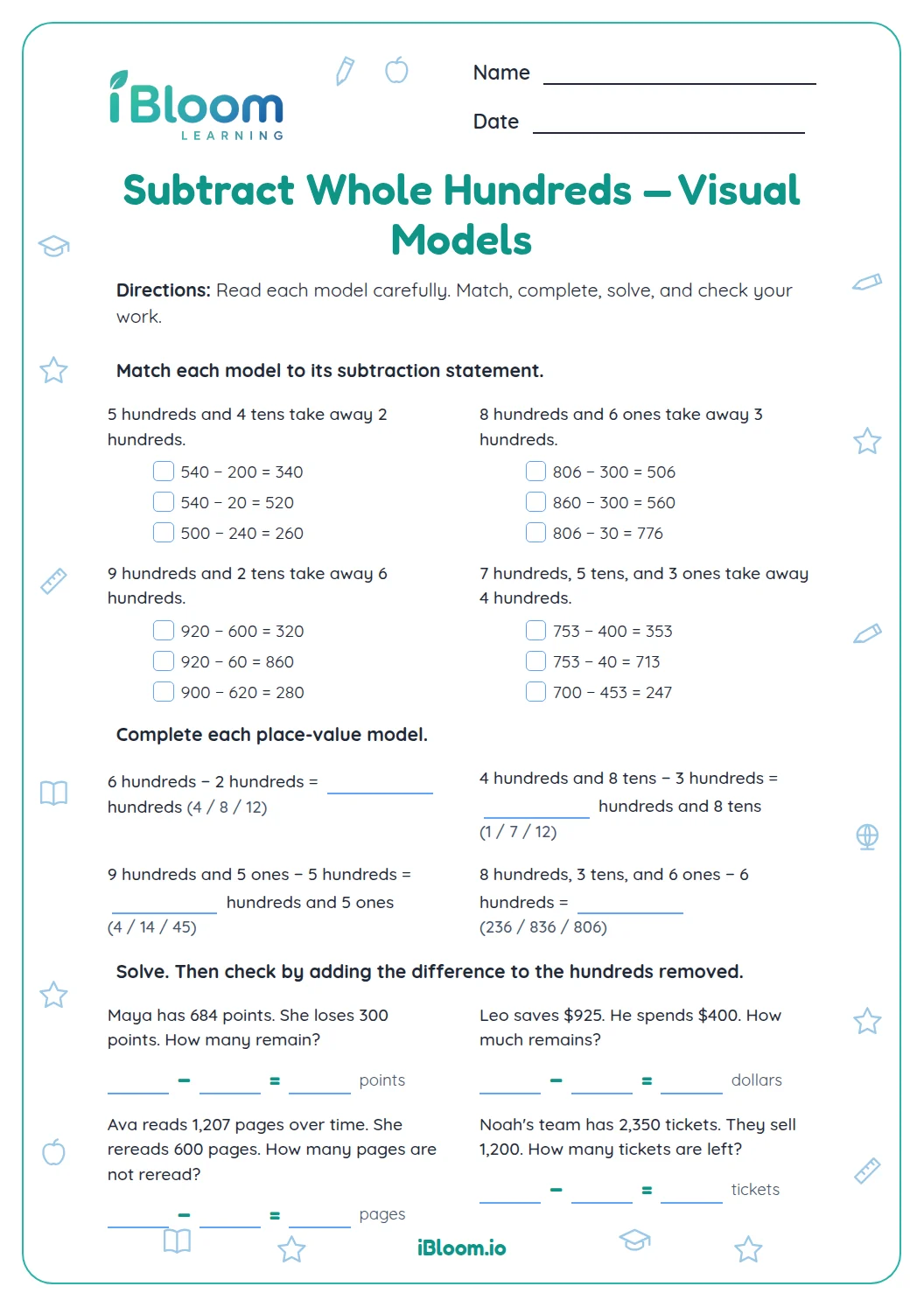
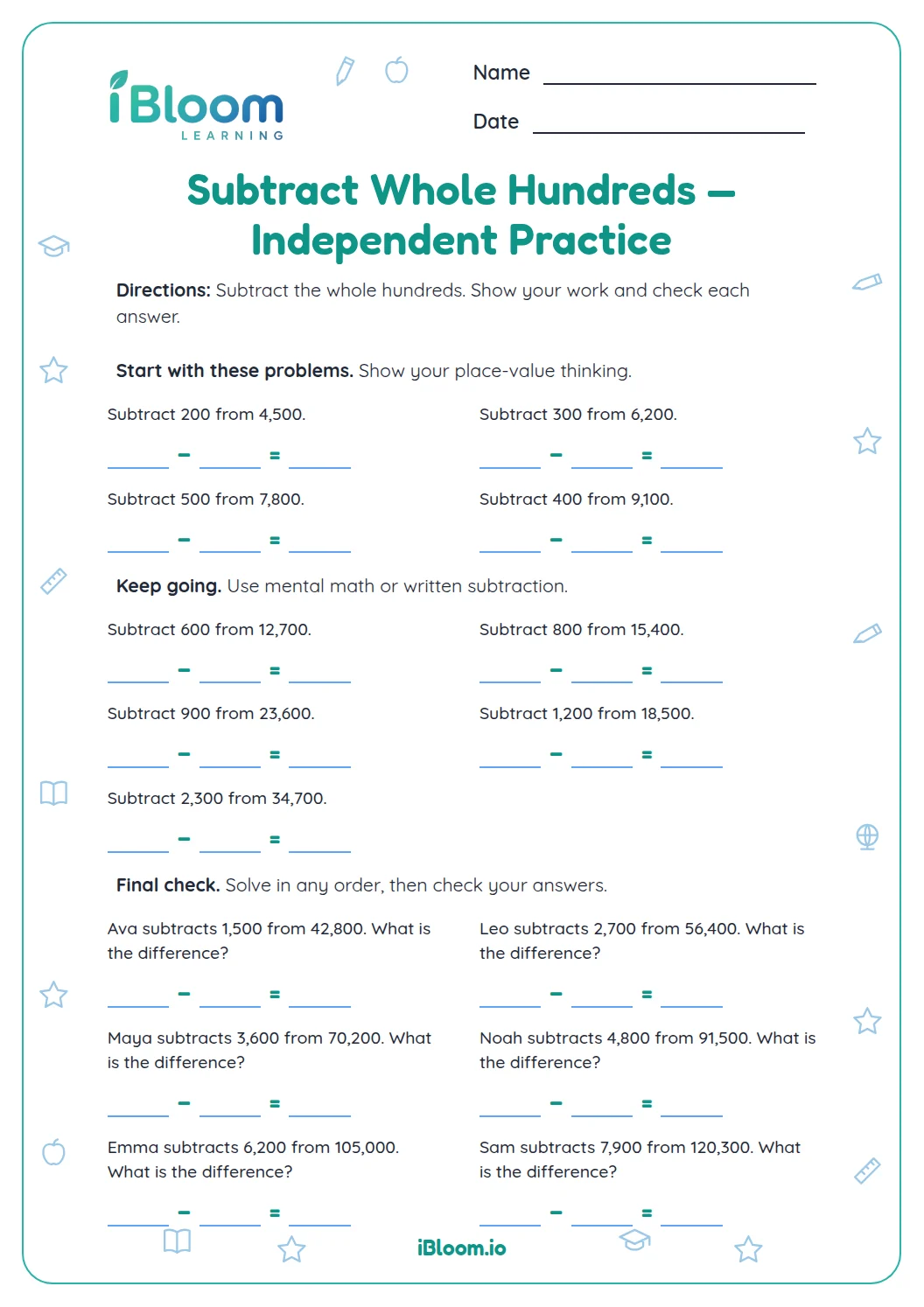
This Grade 4 worksheet builds the place-value idea behind subtracting whole tens. Students identify how many tens are removed, follow worked tens steps, solve larger differences, and check by adding back. The short contexts use stickers, savings, reading, and points.
What changes when you subtract whole tens?
Subtracting 40 removes four groups of ten. In 580 − 20, the tens decrease by two while the hundreds and ones stay put. Questions 1–4 focus on noticing that place-value change.
- 1640 − 30 removes 3 tens from 64 tens.
- 264 tens − 3 tens = 61 tens, so the difference is 610.
How can you show the tens you subtract?
Write the starting number, the amount removed, and the difference as a number sentence. The sticker and savings problems use the same step as the direct calculations.
How can you check a subtraction answer?
Add the tens back to the difference. If the sum returns to the starting number, the subtraction is consistent. For example, 835 + 70 = 905 checks question 11.
How to use this worksheet
- 1Read the part heading and direction before starting.
- 2For the first four items, name the tens or digit that changes.
- 3Write a subtraction number sentence for each story problem.
- 4For questions 11–14, add the tens back to check your difference.
- 5Use the answer key to find the step that needs another look.
Common mistakes and quick fixes
The mistake
Subtracting 4 instead of 40
The fix
Read the subtracted amount and count its tens. 40 means four tens.
The mistake
Changing the ones digit when subtracting tens
The fix
Keep the ones place unchanged when no ones are being removed.
The mistake
Stopping after subtracting without checking
The fix
Add the tens back and see whether you reach the starting amount.
What to practice next
Make more practice
Questions parents and teachers ask
What does subtracting whole tens mean?
It means taking away groups of ten, such as subtracting 30 as three tens. On this sheet, students notice which place changes, calculate differences, and check by adding the tens back. The first items make the tens visible before the larger problems.
How can I explain 640 minus 30?
Think of 640 as 64 tens. Taking away 3 tens leaves 61 tens, which is 610. The same idea works in the worksheet’s sticker and savings situations: find the number of tens removed, then keep the other place values in position.
Does the worksheet include word problems?
Yes. Four short situations use stickers, savings, reading pages, and points. Students translate each situation into subtraction, find what remains or compare an amount, and use the answer key to check the result. The familiar contexts give the place-value practice a practical purpose.
How does the answer key help?
The answer key gives each answer for all 14 questions. In the final part, students can verify a difference by adding the subtracted tens back and checking that the starting number returns. This connects the subtraction step to the inverse addition operation.
Why does the worksheet begin with tens facts?
The first items connect a whole-ten subtraction to the number of tens being removed. Once students see that 40 is four tens, they can apply the same idea to larger numbers and story problems. The final questions add a check by reversing the subtraction.