

About this worksheet
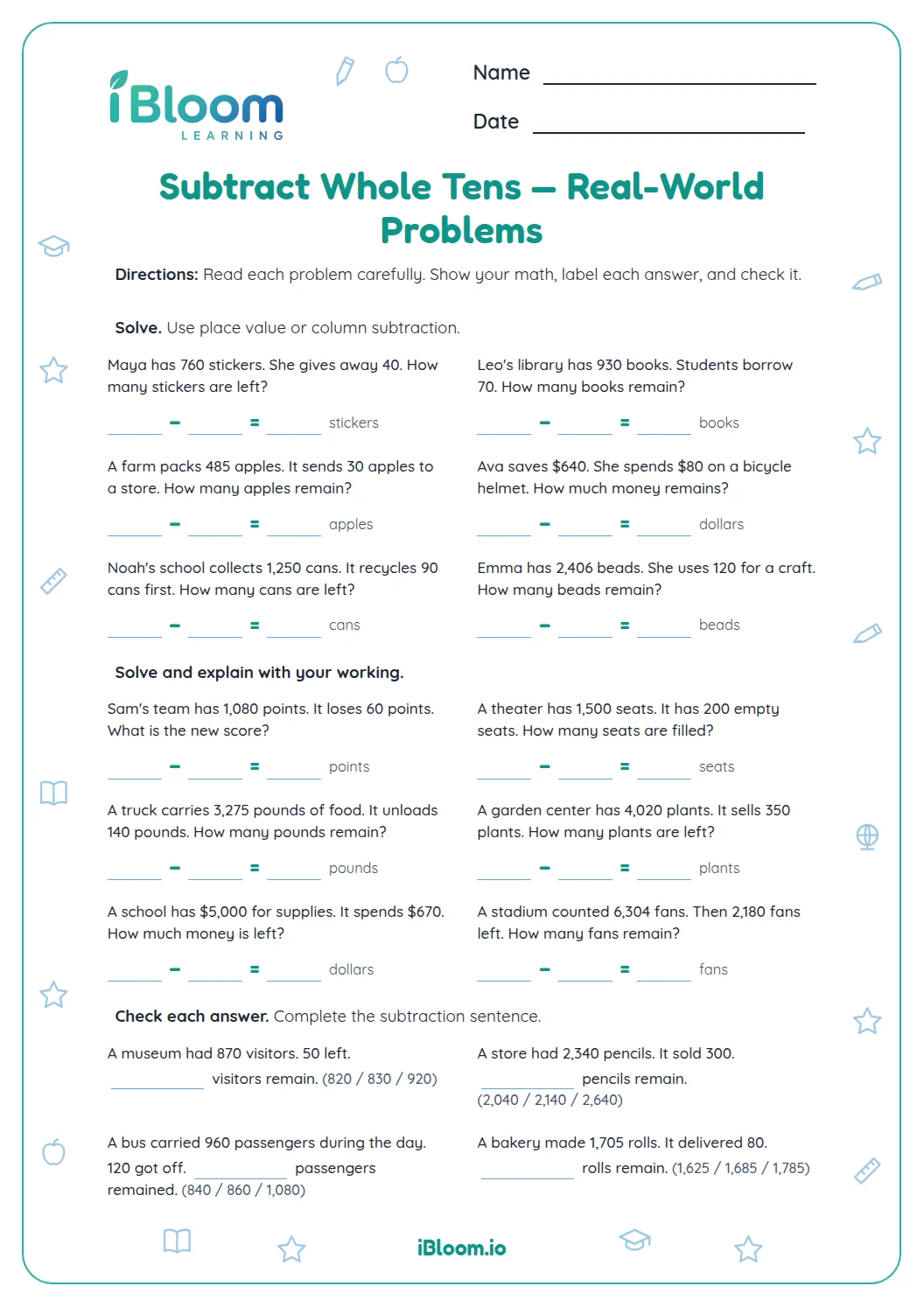
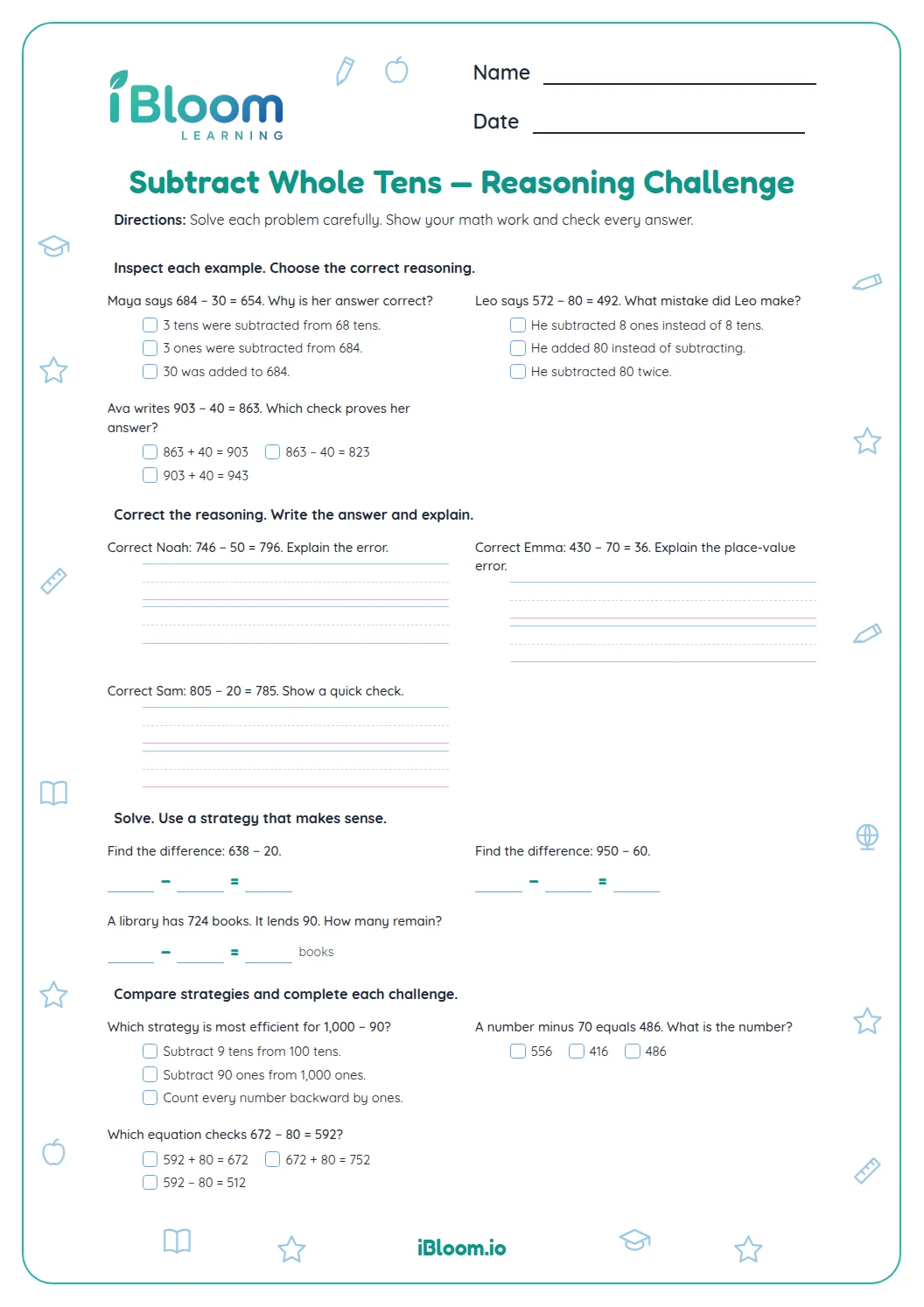
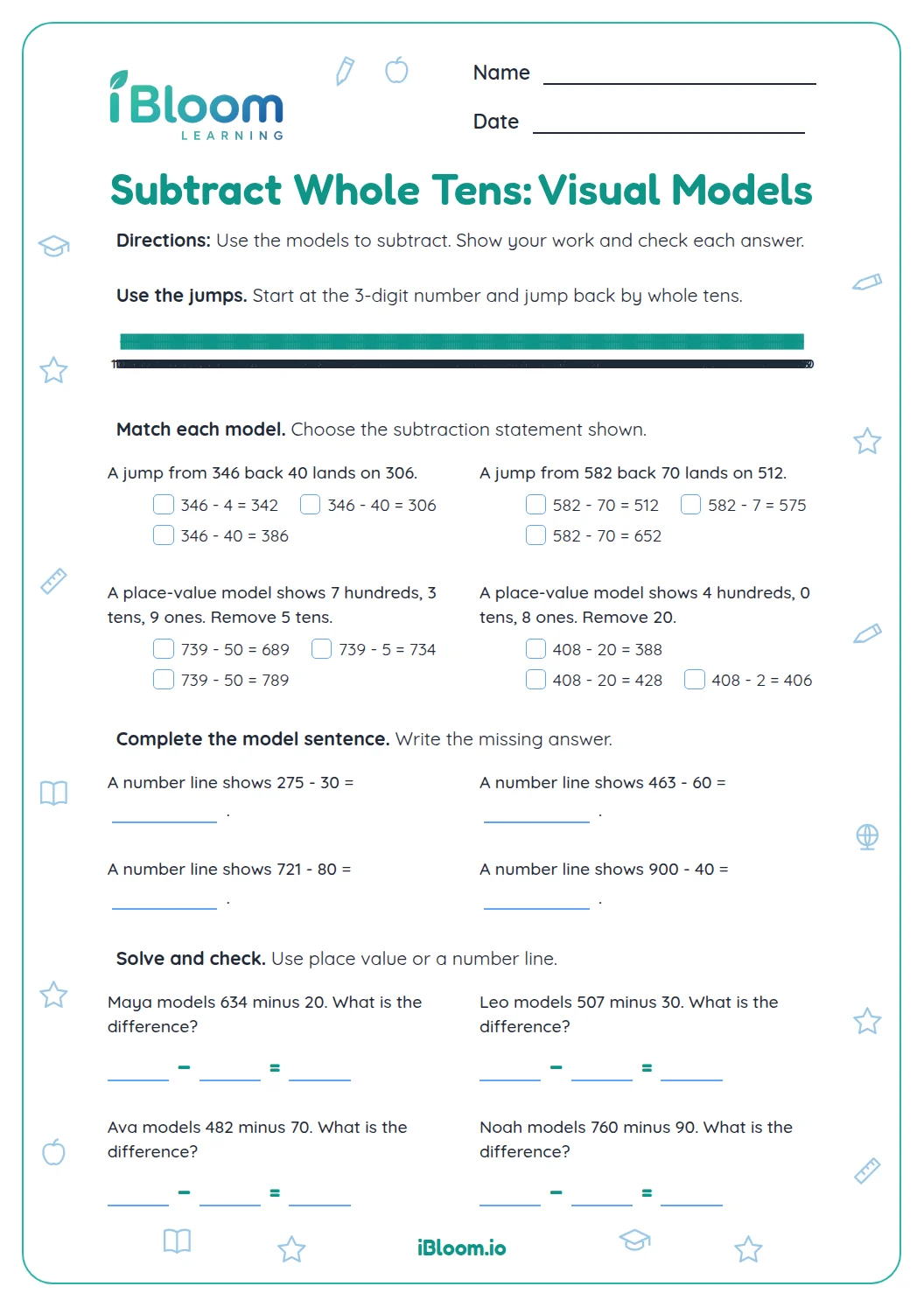
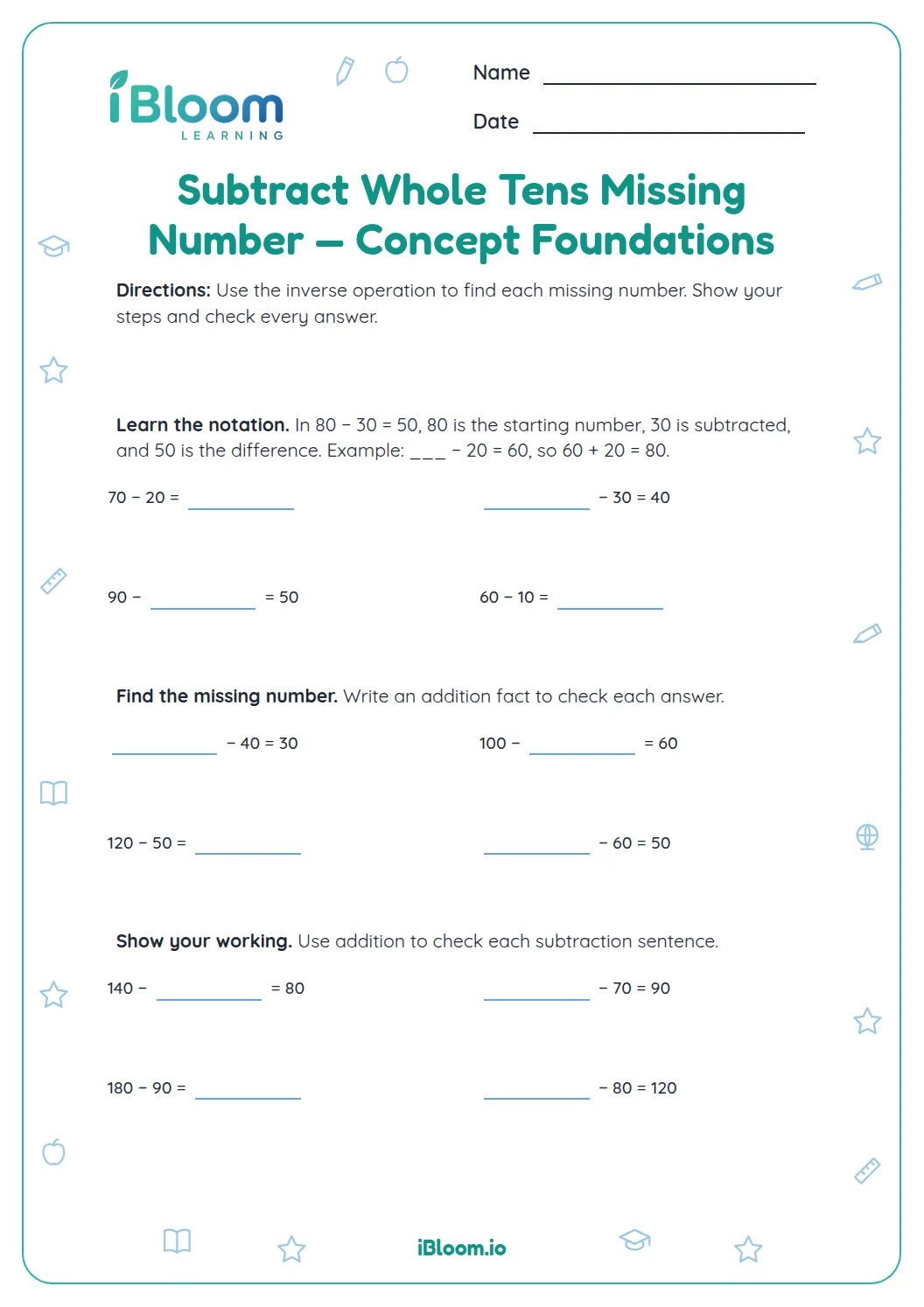
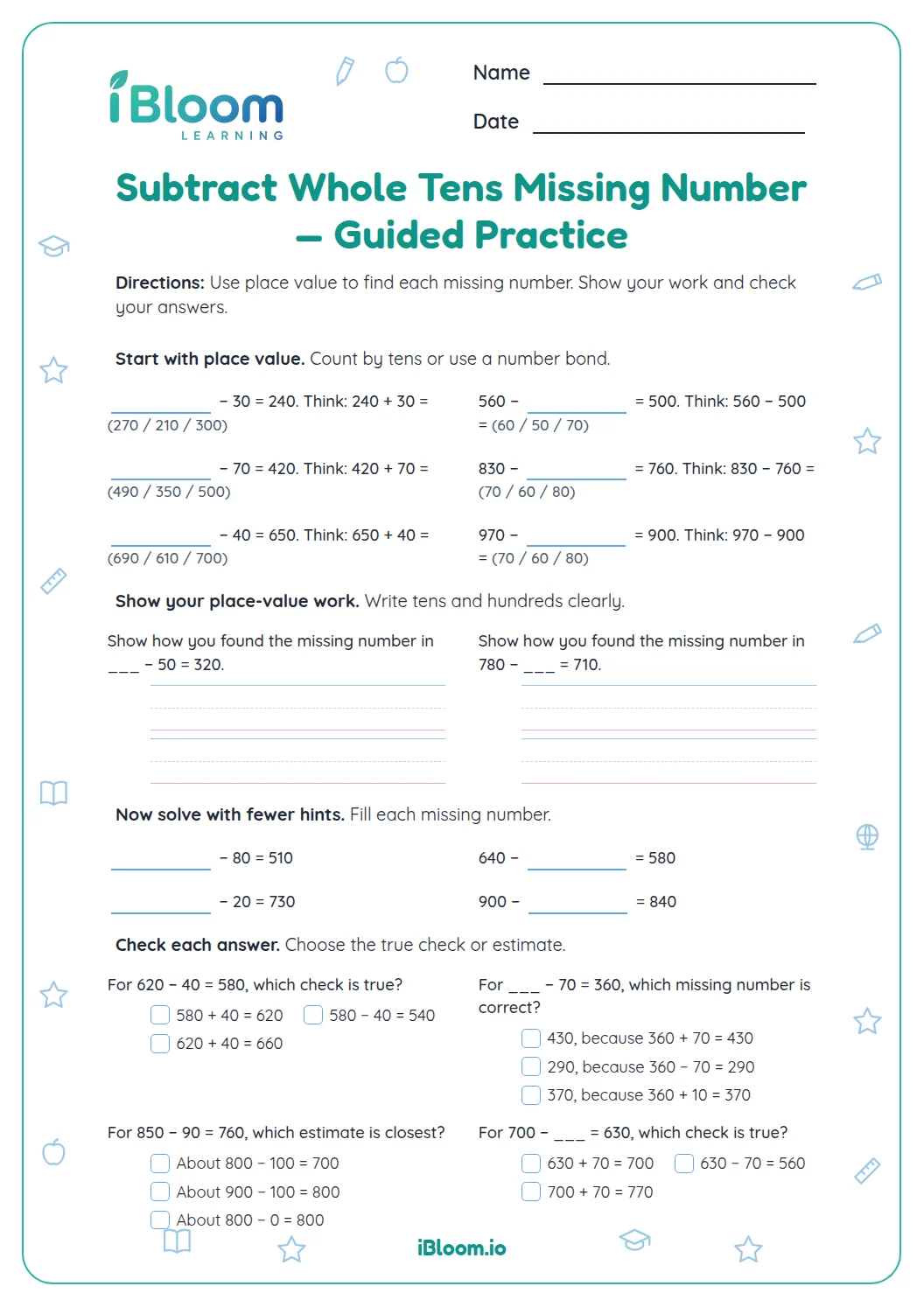
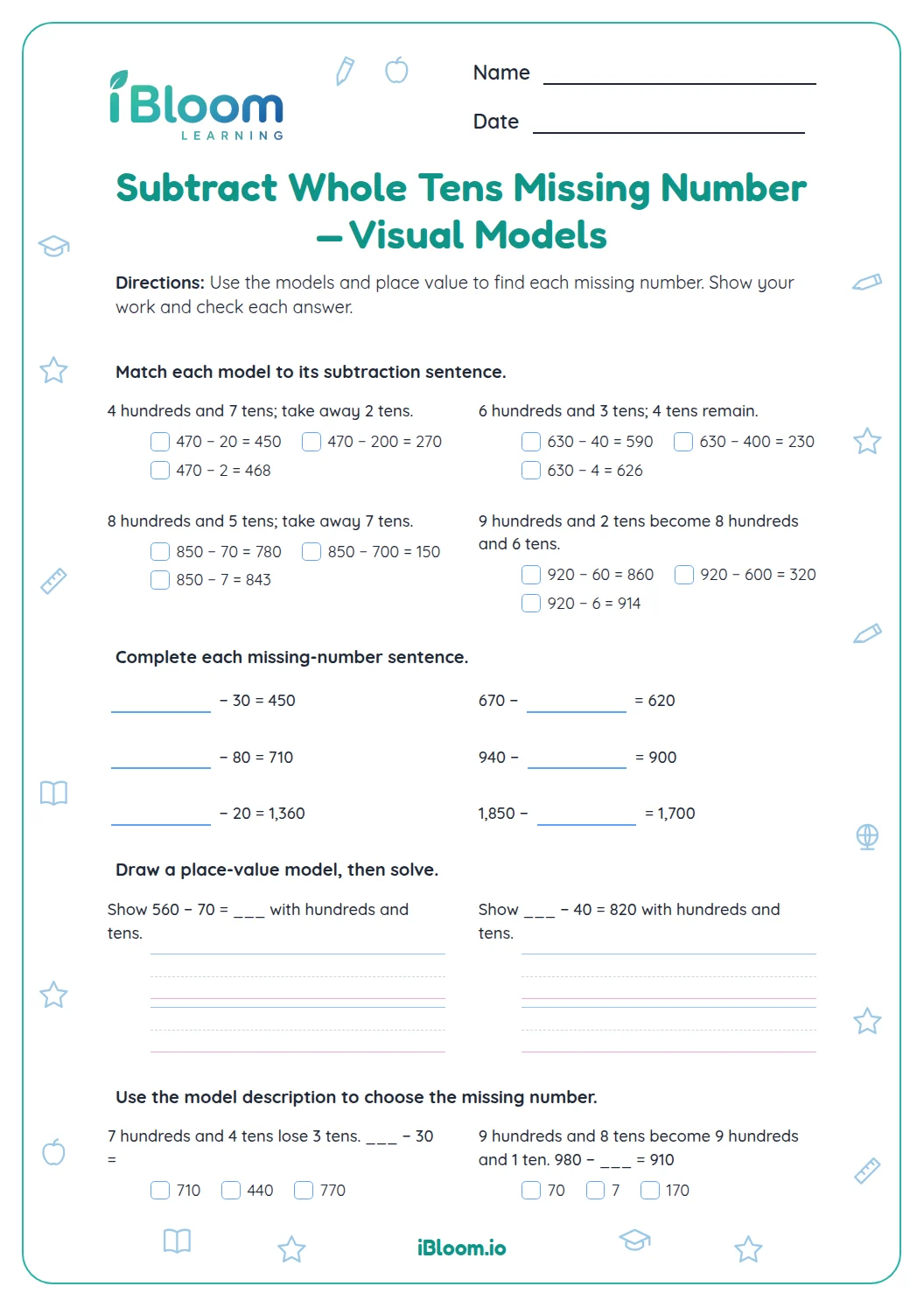
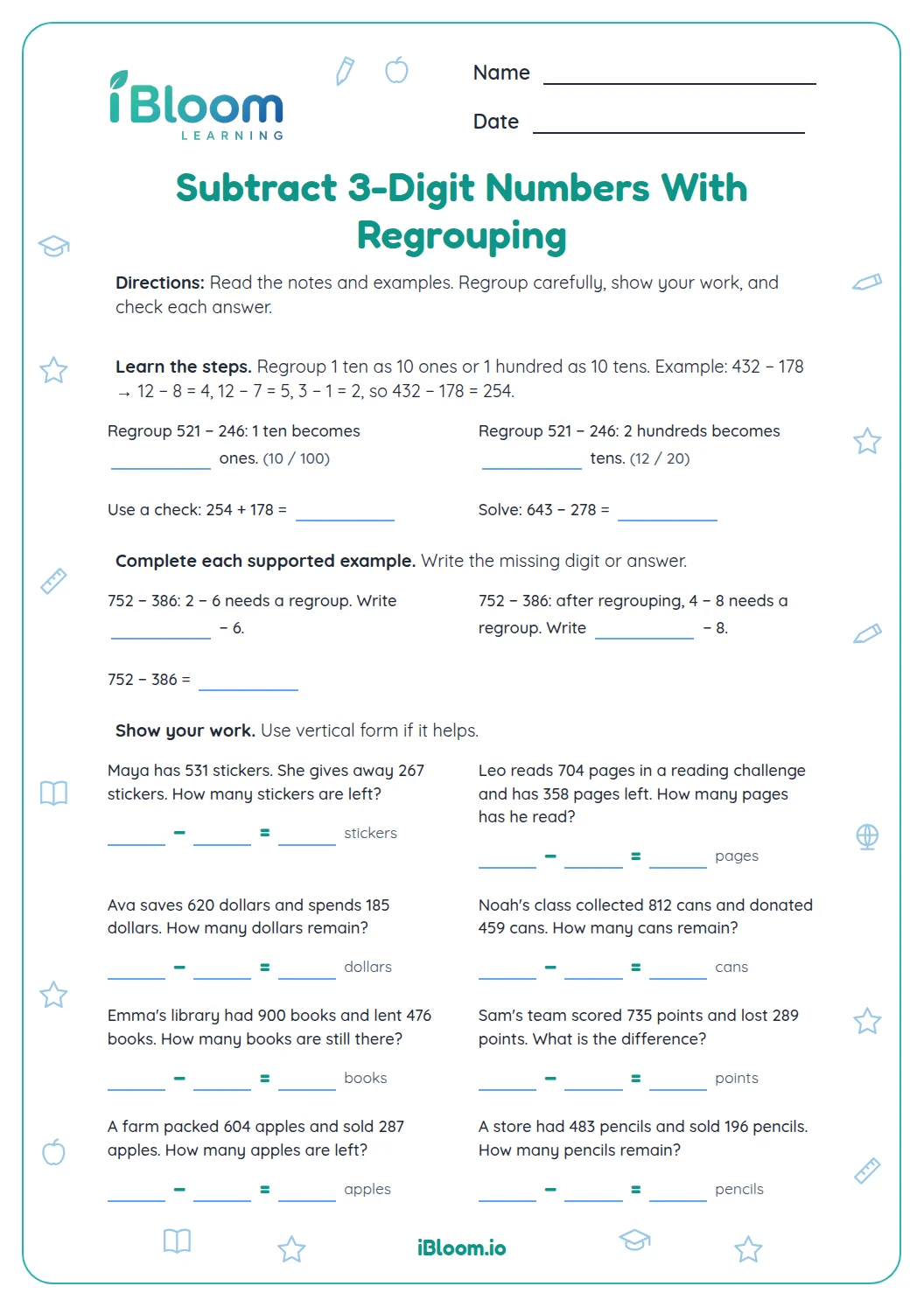
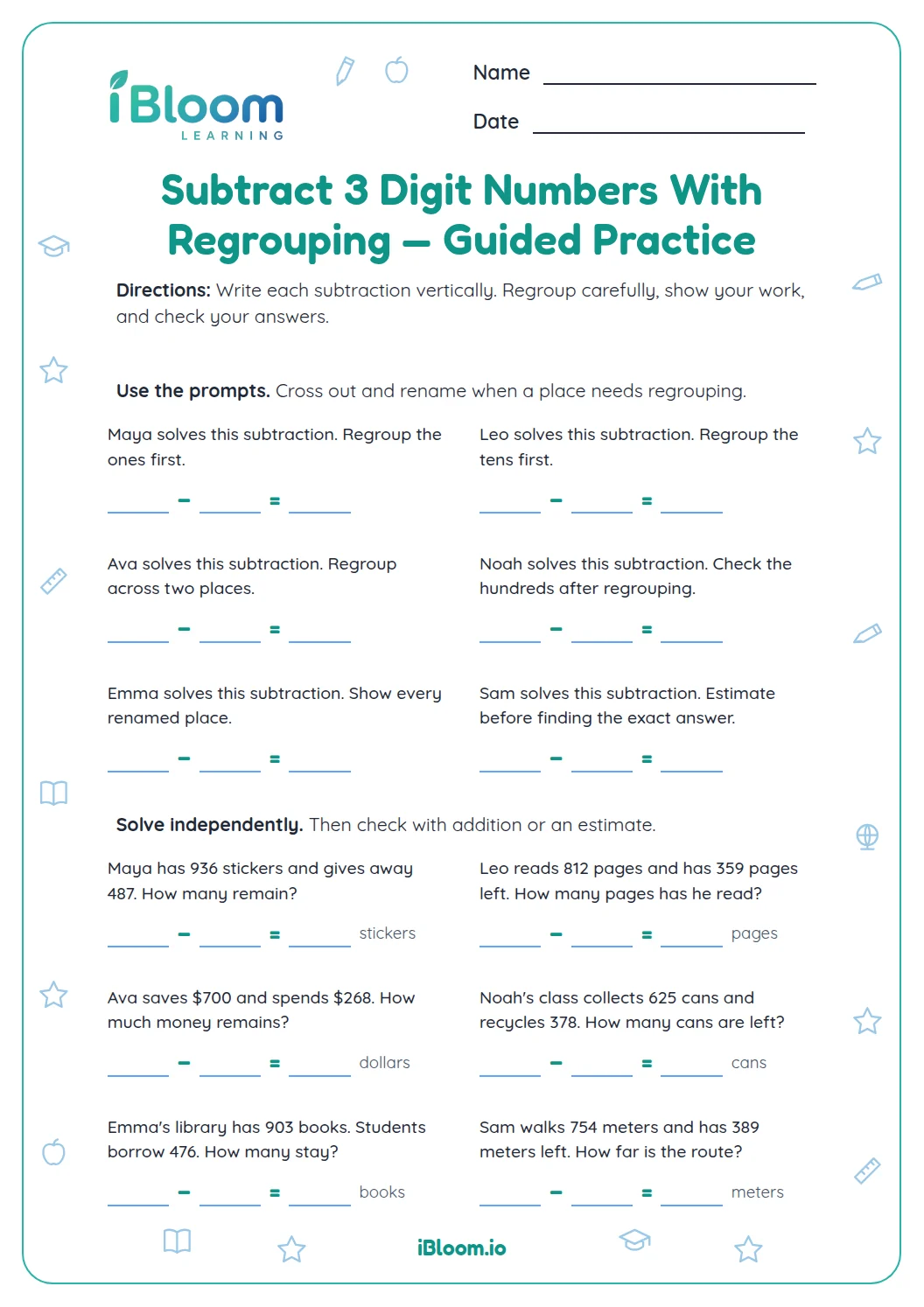
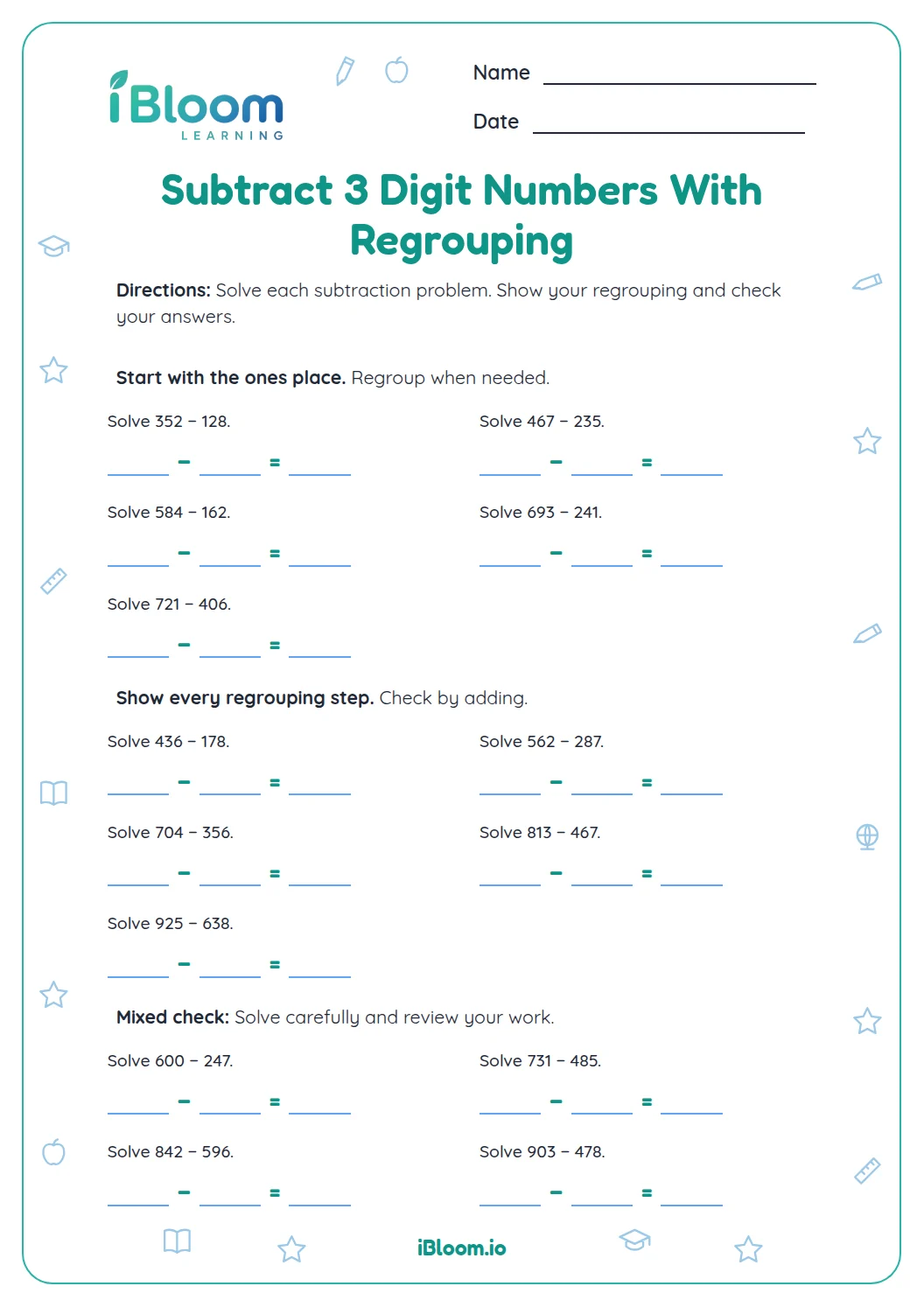
This Grade 4 worksheet provides 20 independent problems subtracting whole tens from three- and four-digit numbers. Students practice place-value subtraction, regroup when needed, and finish with two brief situations that use the same skill. The separate answer key gives a way to check each result. This work supports fluency with multi-digit subtraction in CCSS 4.NBT.B.4.
Aligned to 4.NBT.B.4
How should students handle regrouping?
Try 473 − 190. There are 7 tens but 9 tens must be subtracted, so regroup 1 hundred as 10 tens before subtracting.
- 1473 − 190 = 283
- 2Regroup 1 hundred as 10 tens, then subtract by place.
- 3Check: 283 + 190 = 473.
- Part A builds fluency with whole-tens equations.
- Part B adds problems that require careful regrouping.
- Part C applies subtraction in two short situations.
How can students check their work?
Use the answer key after the student has tried each item. Ask them to point to the value, observation, or place-value step that supports a response.
How should I use the answer key?
Print the worksheet pages for practice and keep the key separate for checking. Review any missed item by finding the step that needs correction.
How to use this worksheet
- 1Read the starting number and the tens being subtracted.
- 2Subtract the ones, tens, and hundreds by place value.
- 3Regroup a hundred as 10 tens when needed.
- 4Write the difference clearly.
- 5Add the subtracted number back to check.
Common mistakes and quick fixes
The mistake
Subtracting the smaller digit from the larger digit in each column.
The fix
Regroup and subtract in the order shown by the equation.
The mistake
Forgetting that 190 is 1 hundred and 9 tens.
The fix
Decompose the number by place value before subtracting.
The mistake
Checking by subtracting a second time.
The fix
Use the inverse operation: difference + amount subtracted = starting number.
Curriculum alignment
Use place value and the standard algorithm to subtract multi-digit whole numbers.
On this sheet: Students subtract multiples of ten from three- and four-digit numbers, including regrouping.
Show the official wordingHide the official wording
Fluently add and subtract multi-digit whole numbers using the standard algorithm.
What to practice next
Make more practice
Further reading
Questions parents and teachers ask
What skill does the subtraction sheet practice?
Students subtract whole tens from three- and four-digit numbers. Several problems require regrouping across place values, and two short situations ask students to apply the same subtraction skill. The difference is the amount left after taking away the stated multiple of ten.
How many questions are included?
There are 20 questions: 18 number sentences followed by two short application problems. The problems progress from direct subtraction to regrouping and then using subtraction in context. The later items use larger numbers and more regrouping across place values.
How can students check subtraction?
Add the difference to the number that was subtracted. The sum should equal the starting number; for example, after 684 − 230 = 454, check that 454 + 230 = 684. For 684 − 230, adding 230 to 454 returns to the starting number, 684.
Why can subtracting whole tens still require regrouping?
A subtraction such as 473 − 190 requires regrouping because there are not enough tens to subtract 9 tens from 7 tens. Rename one hundred as ten tens, then subtract by place value. Regroup one hundred as ten tens, then subtract 9 tens from the regrouped tens.
Is an answer key provided?
Yes. The separate key gives the numerical answer for each equation and application problem. Students can compare their work, then use addition to verify any answer that does not match. The same check works in a story problem: add the amount moved back.