
About this worksheet
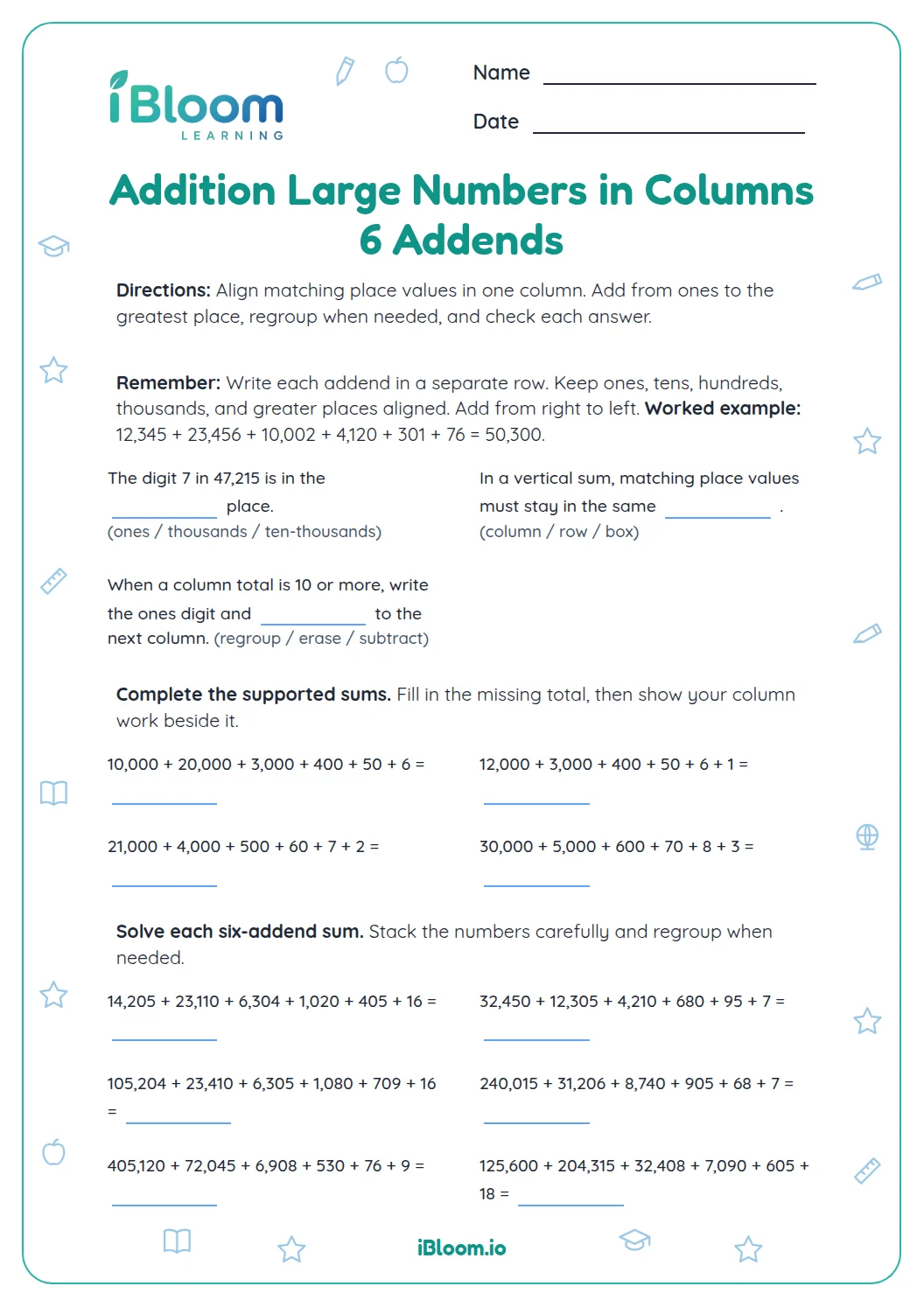
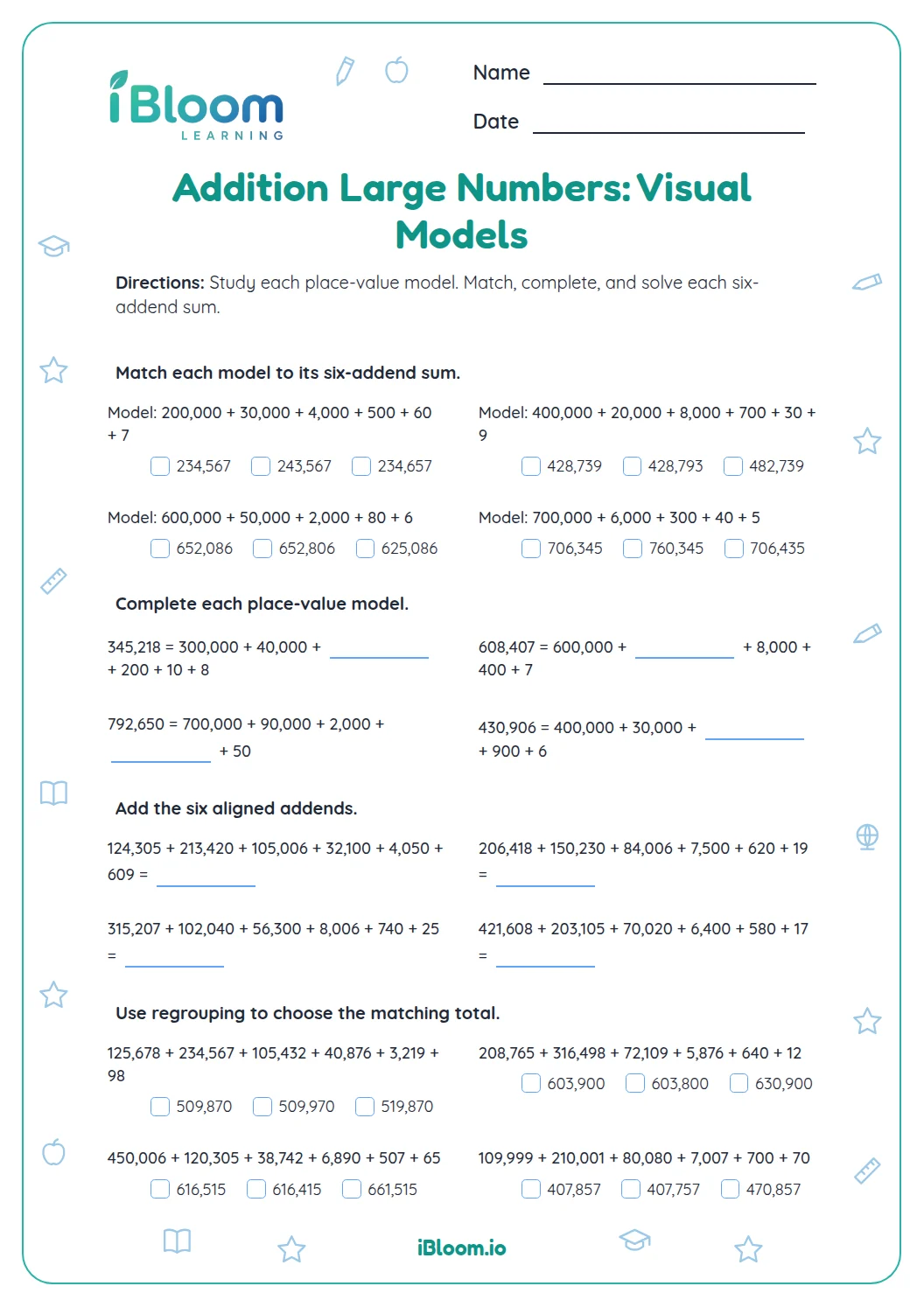
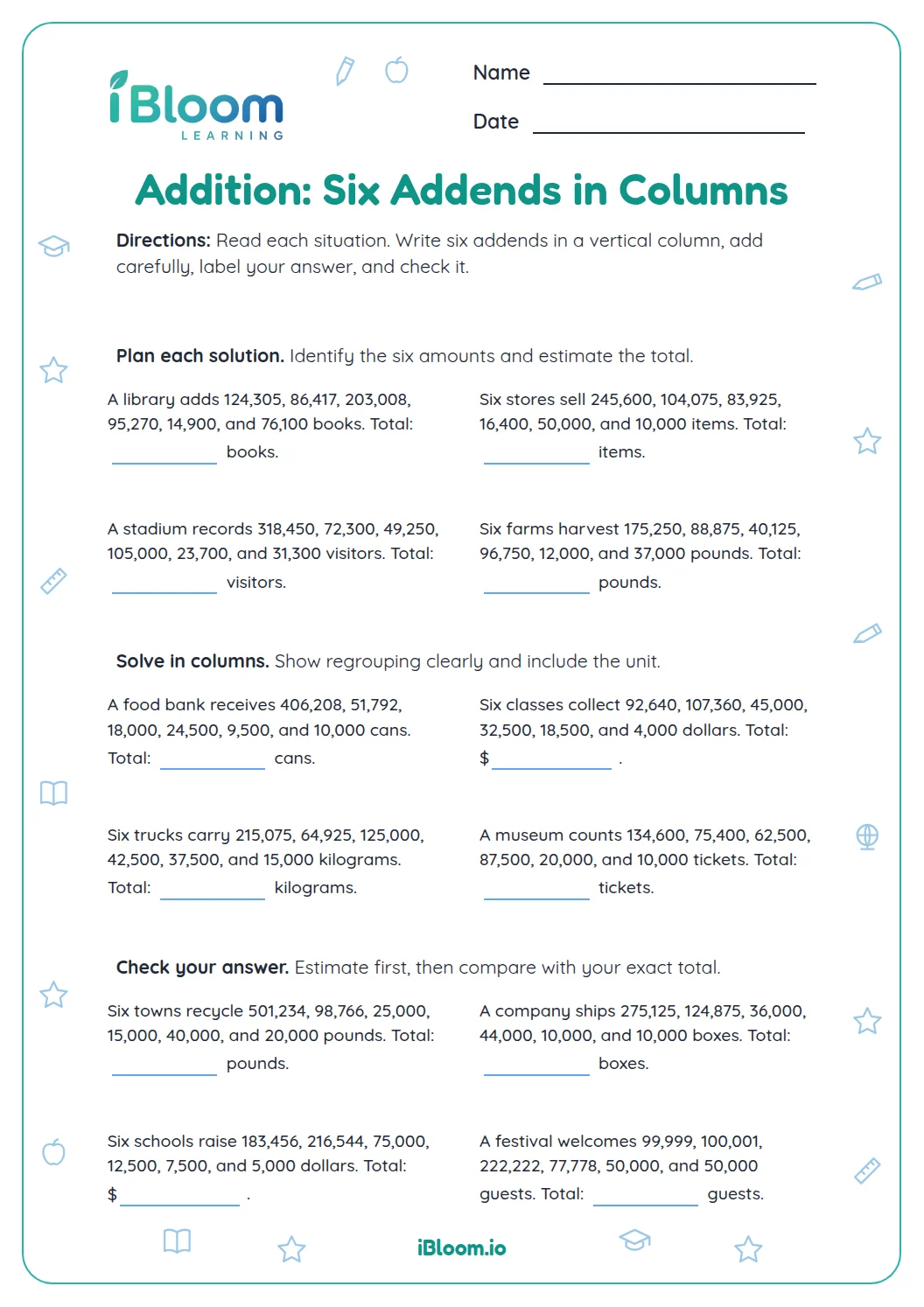
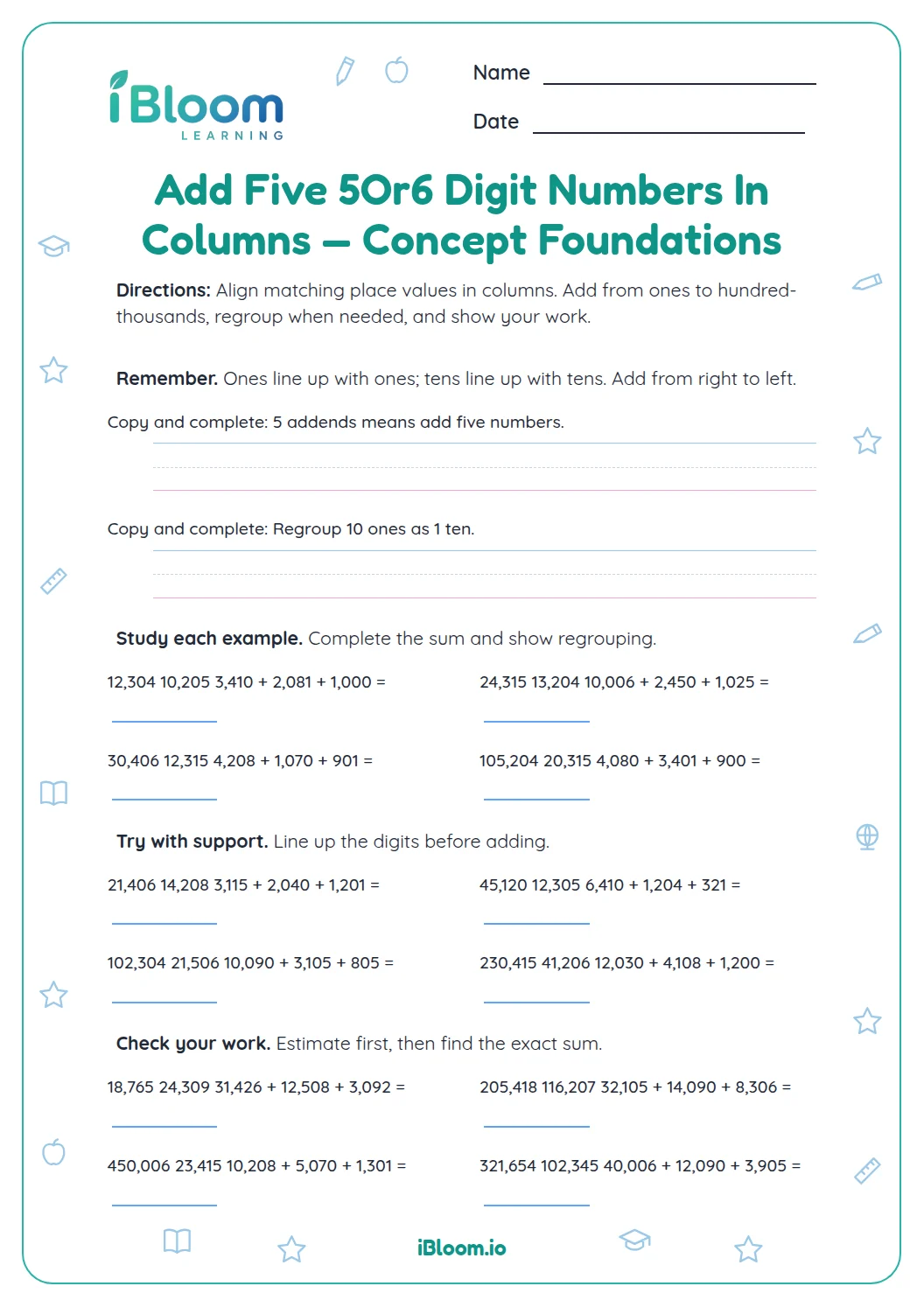
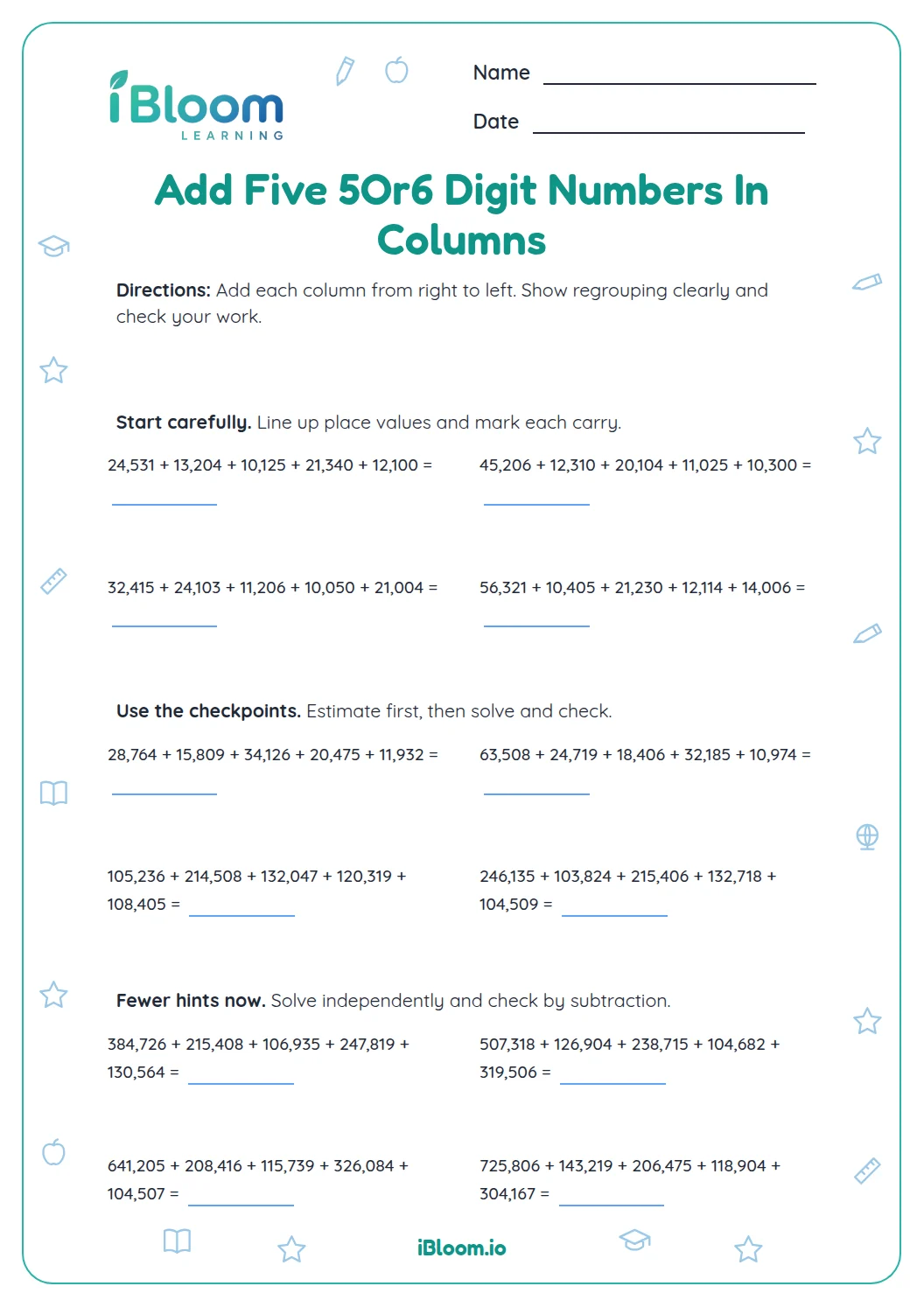
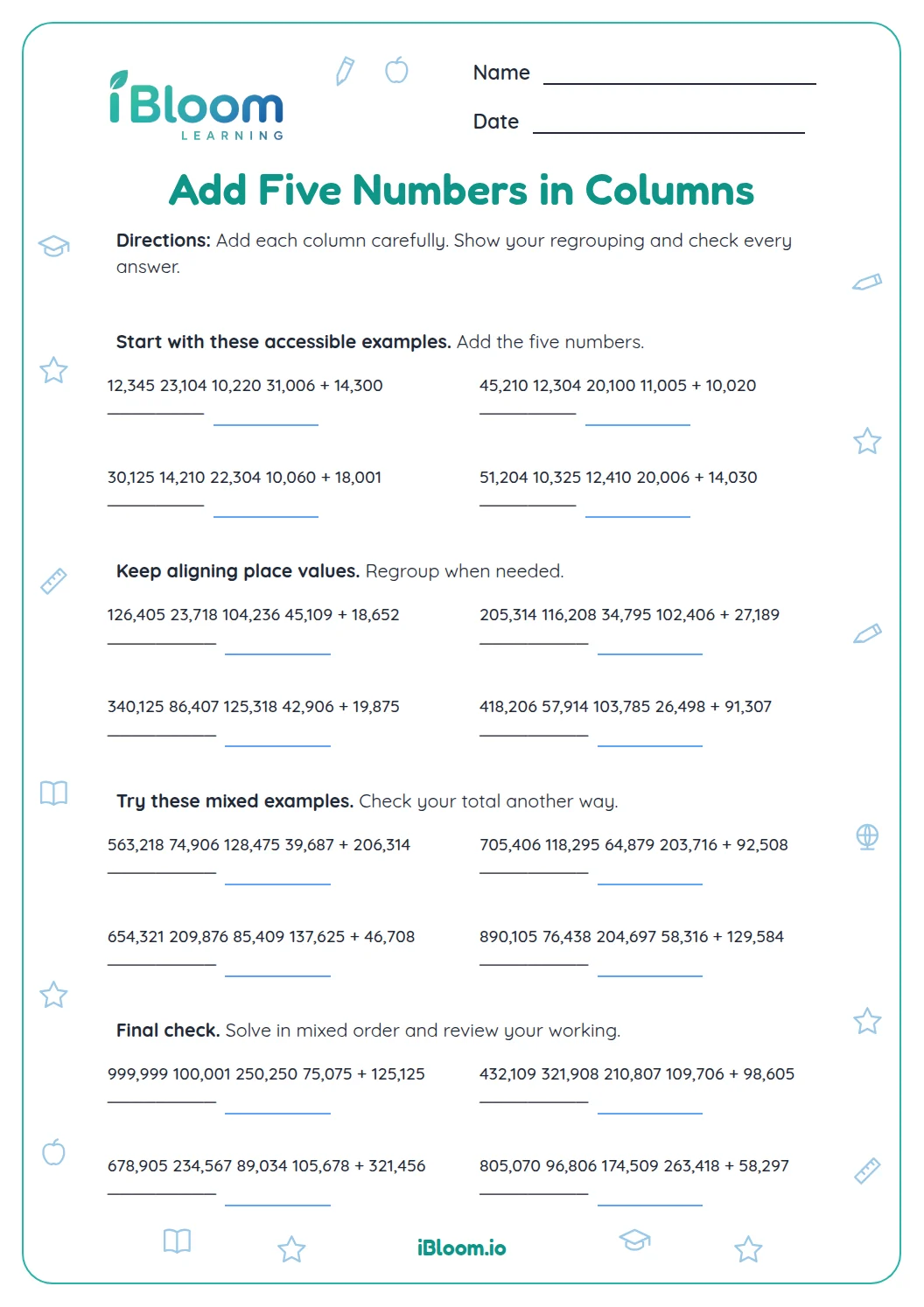
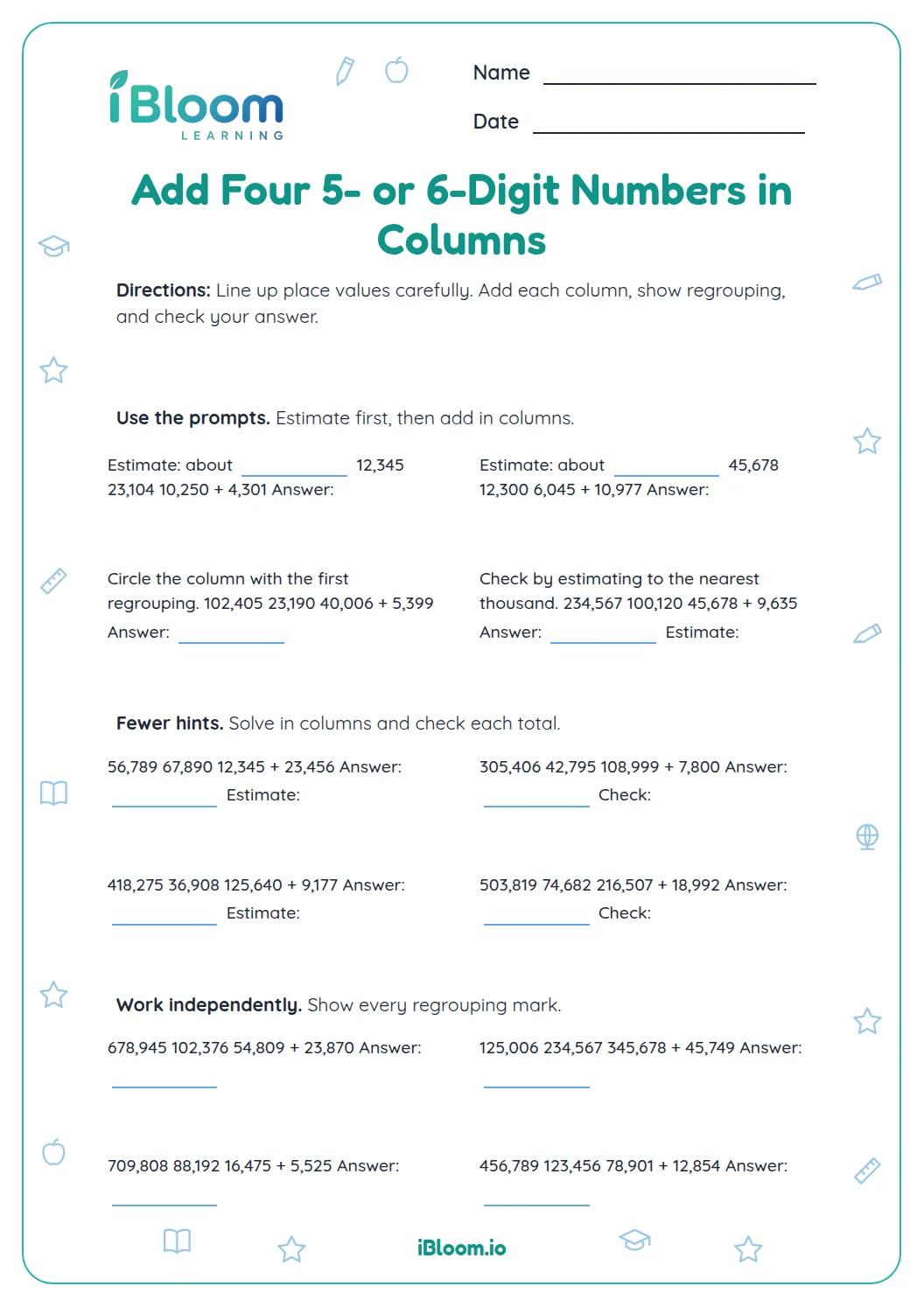
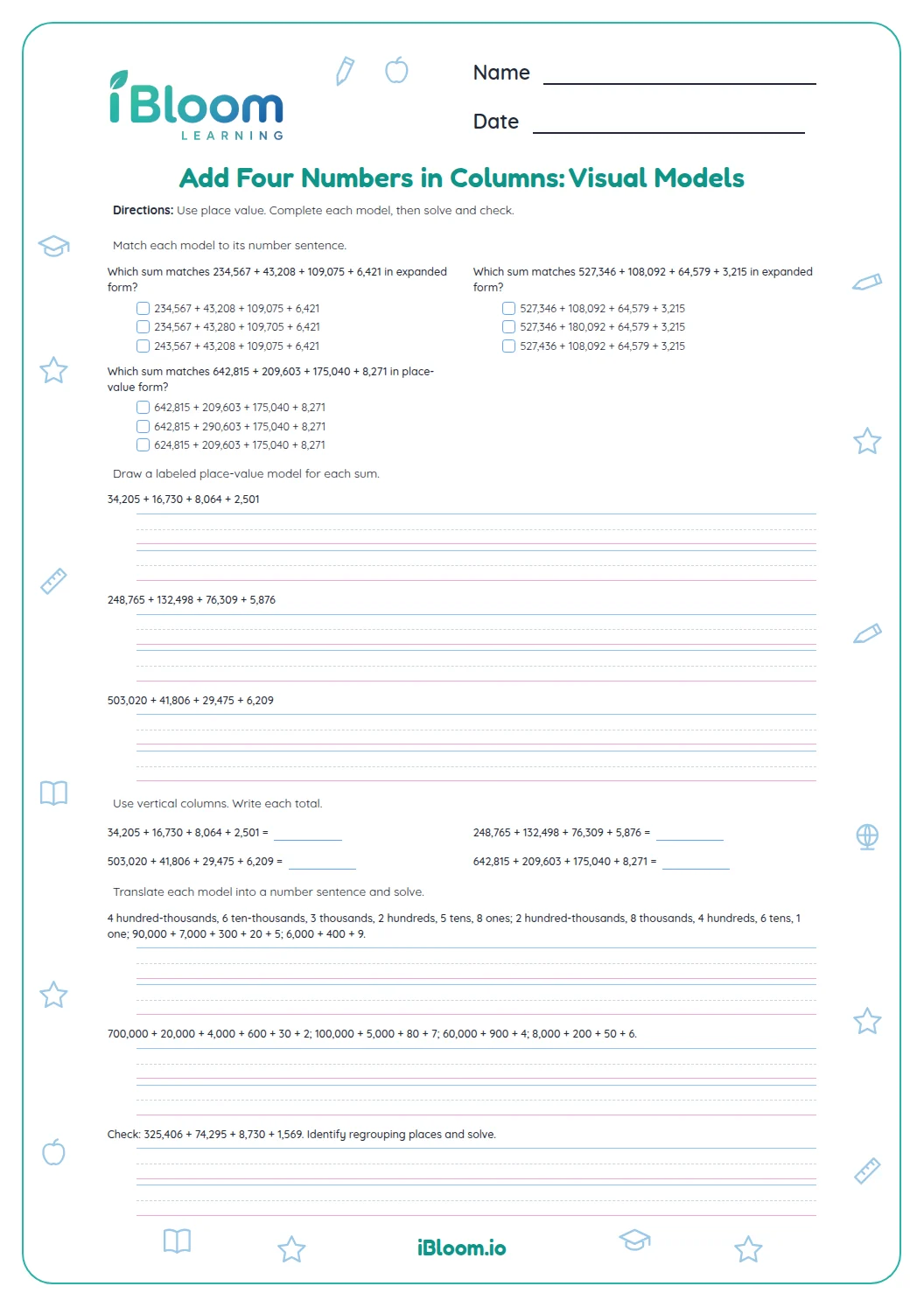
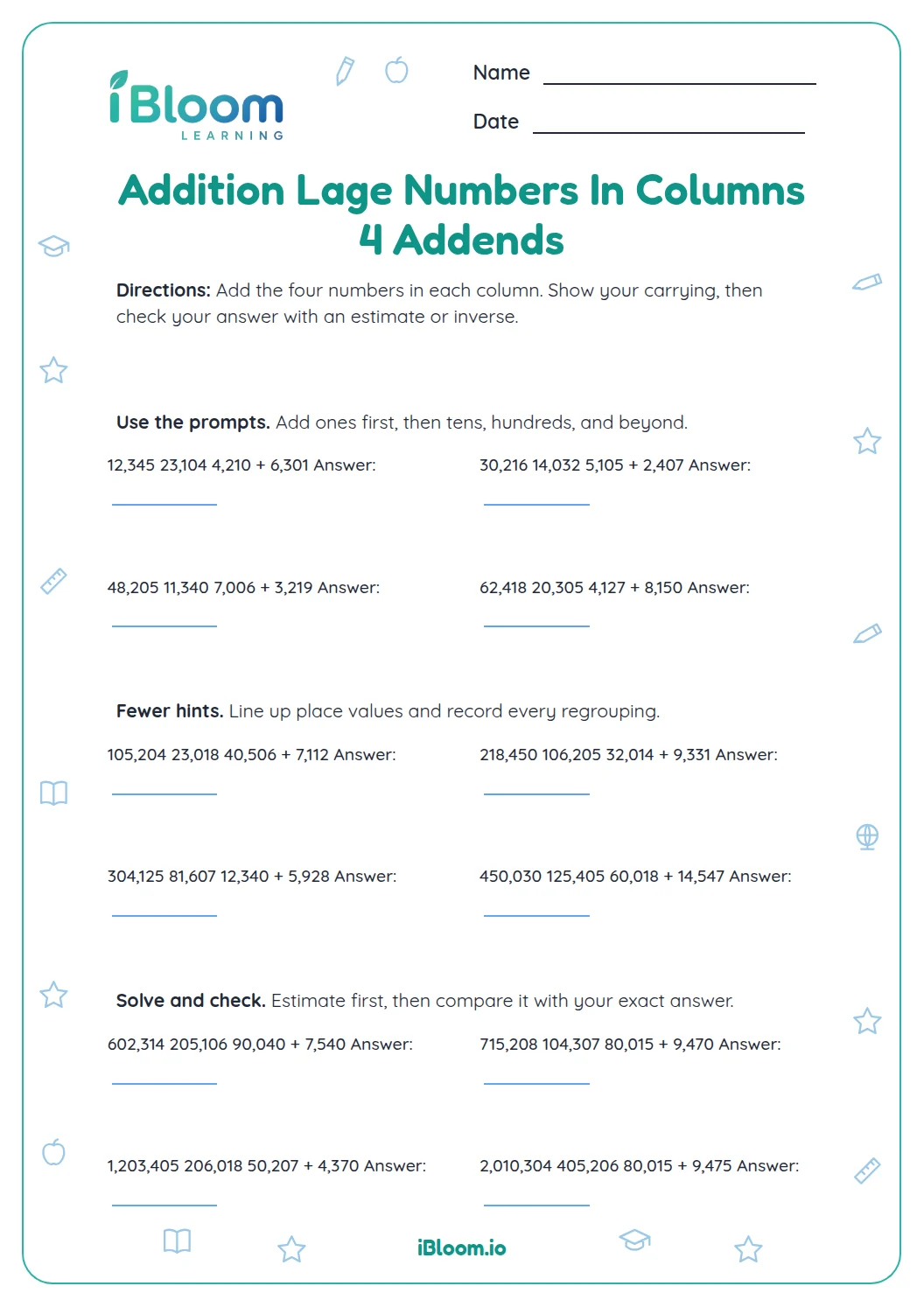
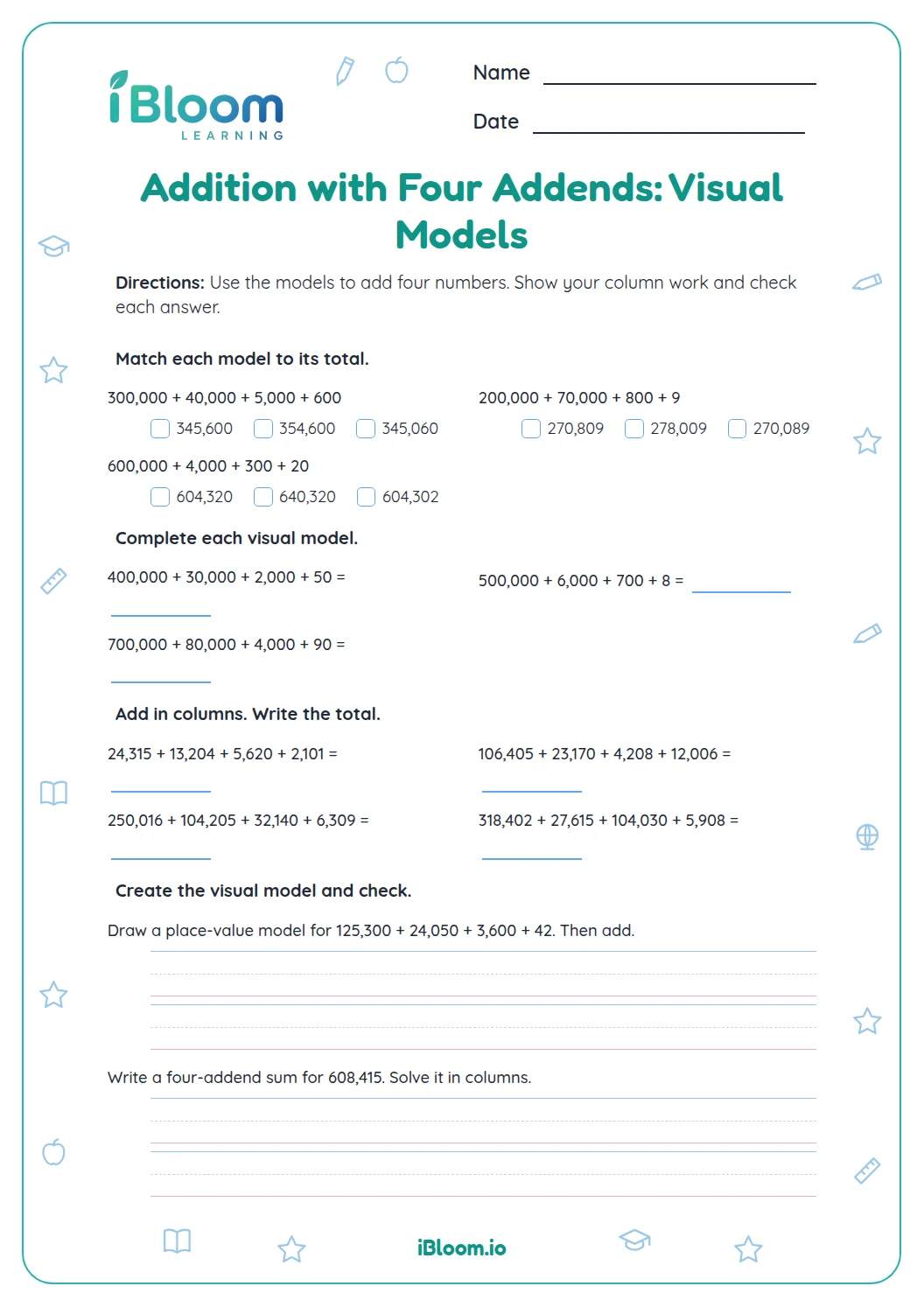
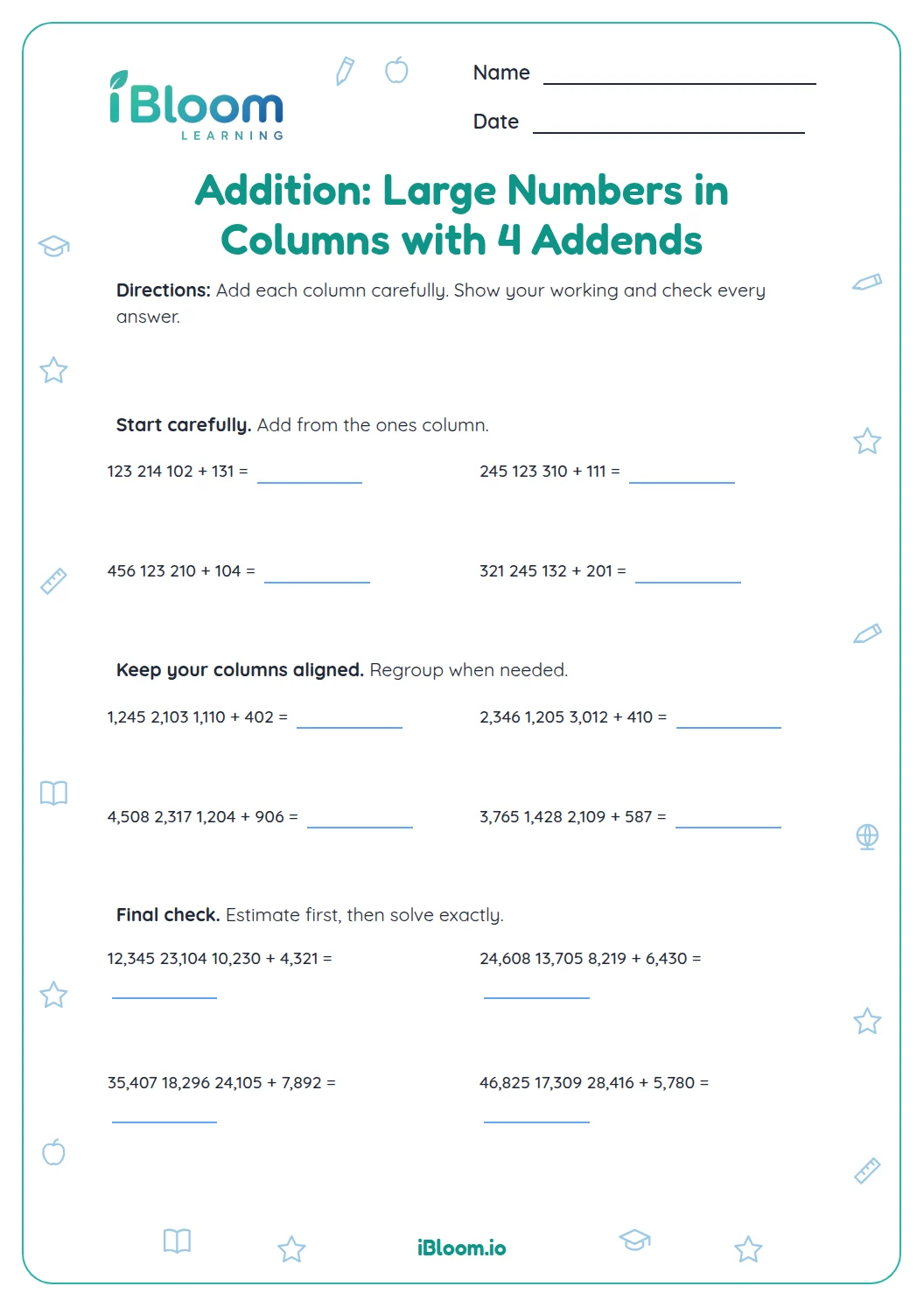
This Grade 5 guided practice sheet has 15 addition problems, each with six five-digit addends. Students use scrap paper to align ones through ten-thousands, regroup as needed, and estimate selected sums to check whether an answer is reasonable. The answer key gives the exact total for each problem.
Aligned to 4.NBT.B.4
How should six addends be lined up?
Line up ones with ones, tens with tens, and each larger place with its match on scrap paper. Add one column at a time and carry regrouped tens to the next place.
- 123,456 + 12,003 + 45,007 + 32,100 + 9,080 + 7,654
- 2On scrap paper, align each addend by place value before adding.
How can an estimate help check the exact sum?
Round the addends to a convenient place, add those rounded values, and compare the estimate with the exact total. A large difference can point to a missed addend or a place-value slip.
What should students check in each column?
Check that all six addends were included, the digits were aligned, and each carried value was added into the next column. Then compare the exact sum with an estimate.
How to use this worksheet
- 1Read the direction for each part before starting.
- 2Work through addition problems in order and write enough steps to check the result.
- 3Compare each response with the answer key and redo any missed item.
- 4Ask the learner to explain one strategy aloud.
Common mistakes and quick fixes
The mistake
Rushing past a sign or key detail in a addition problem.
The fix
Read the prompt again, identify the needed addition step, and check the result.
The mistake
Using a correct method but making a small computation error in addition.
The fix
Read the prompt again, identify the needed addition step, and check the result.
The mistake
Writing an answer without checking it against the original question.
The fix
Read the prompt again, identify the needed addition step, and check the result.
Common Core alignment
Students use place value and the standard algorithm to add multi-digit whole numbers.
Add multi-digit whole numbers using aligned place values and regrouping.
On this sheet: Each problem practices multi-digit addition with regrouping using the standard algorithm.
Show the official wordingHide the official wording
Fluently add and subtract multi-digit whole numbers using the standard algorithm.
What to practice next
Make more practice
Further reading
Questions parents and teachers ask
Why align numbers in columns?
Align ones with ones, tens with tens, and each larger place with its match. This matters when adding six numbers because several columns may need regrouping. If digits drift into neighboring columns, the written sum represents different place values than the original addends.
How does regrouping work when adding several addends?
Add the digits in one place-value column. If the total is ten or more, write the ones digit in that column and carry the tens to the next column. Include that carried value when adding the next place.
How can an estimate check a total?
Round each addend to a nearby thousand or ten thousand, add the rounded values, then compare that estimate with the exact sum. The estimate should be close enough to catch a misplaced digit or a missed addend. It does not replace checking each column.
Are all the problems made from six addends?
Yes. Each of the 15 problems contains six large whole numbers. Students set the numbers in aligned columns on scrap paper, complete the addition, and record the exact total. The answer key provides each total so learners can check their regrouping.
Which skill does the cited standard describe?
The cited Common Core standard describes adding and subtracting multi-digit whole numbers with the standard algorithm. This sheet practices addition with six addends per problem, including regrouping and estimating selected sums. It is written for Grade 5 learners and offers extended practice with the algorithm.
What should students do after checking an answer?
Choose one sum and explain where regrouping occurred. For another check, estimate the total or add the numbers in a different order; the total should stay the same. Changing the order can make the calculation easier while preserving the sum.