
About this worksheet
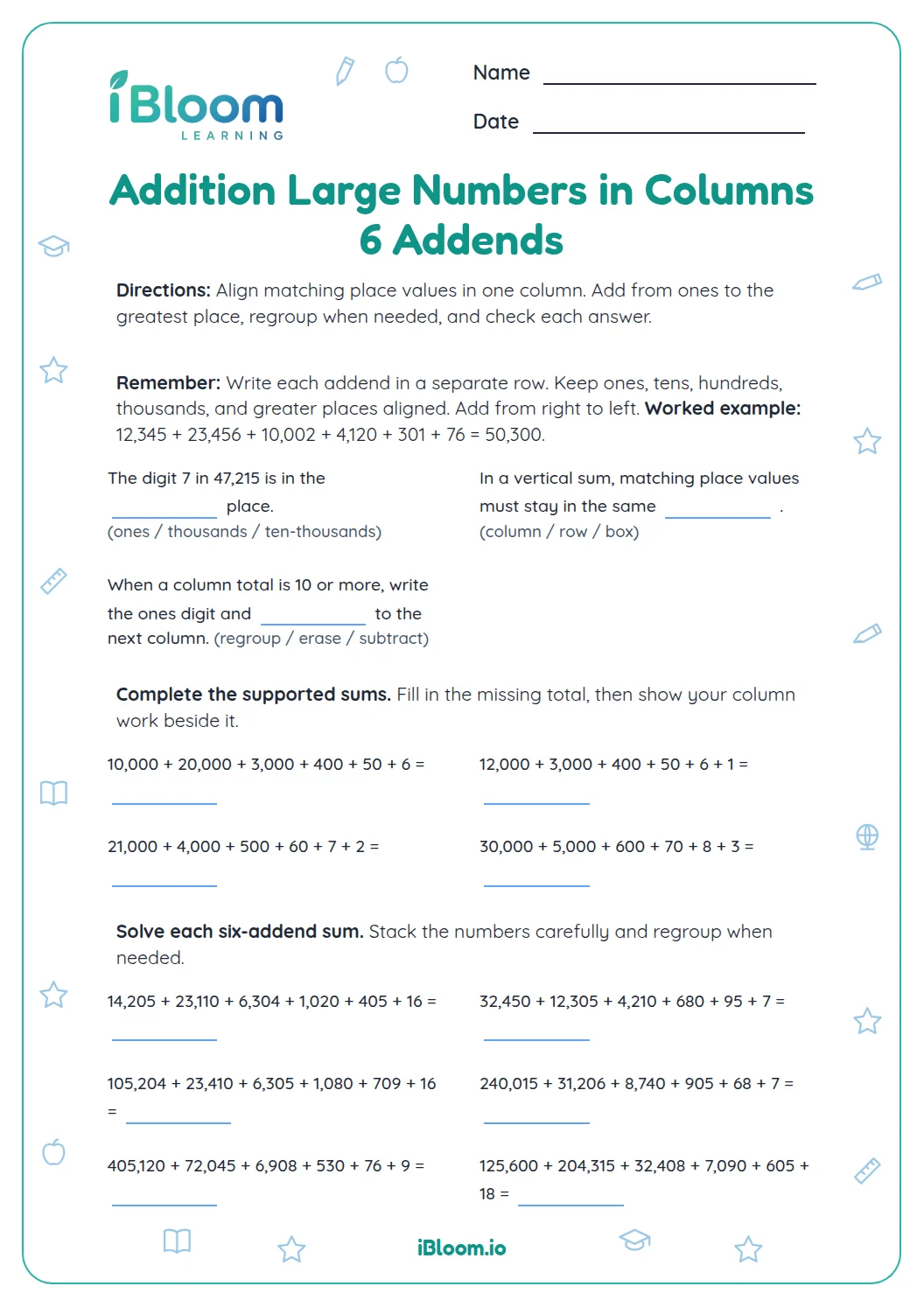
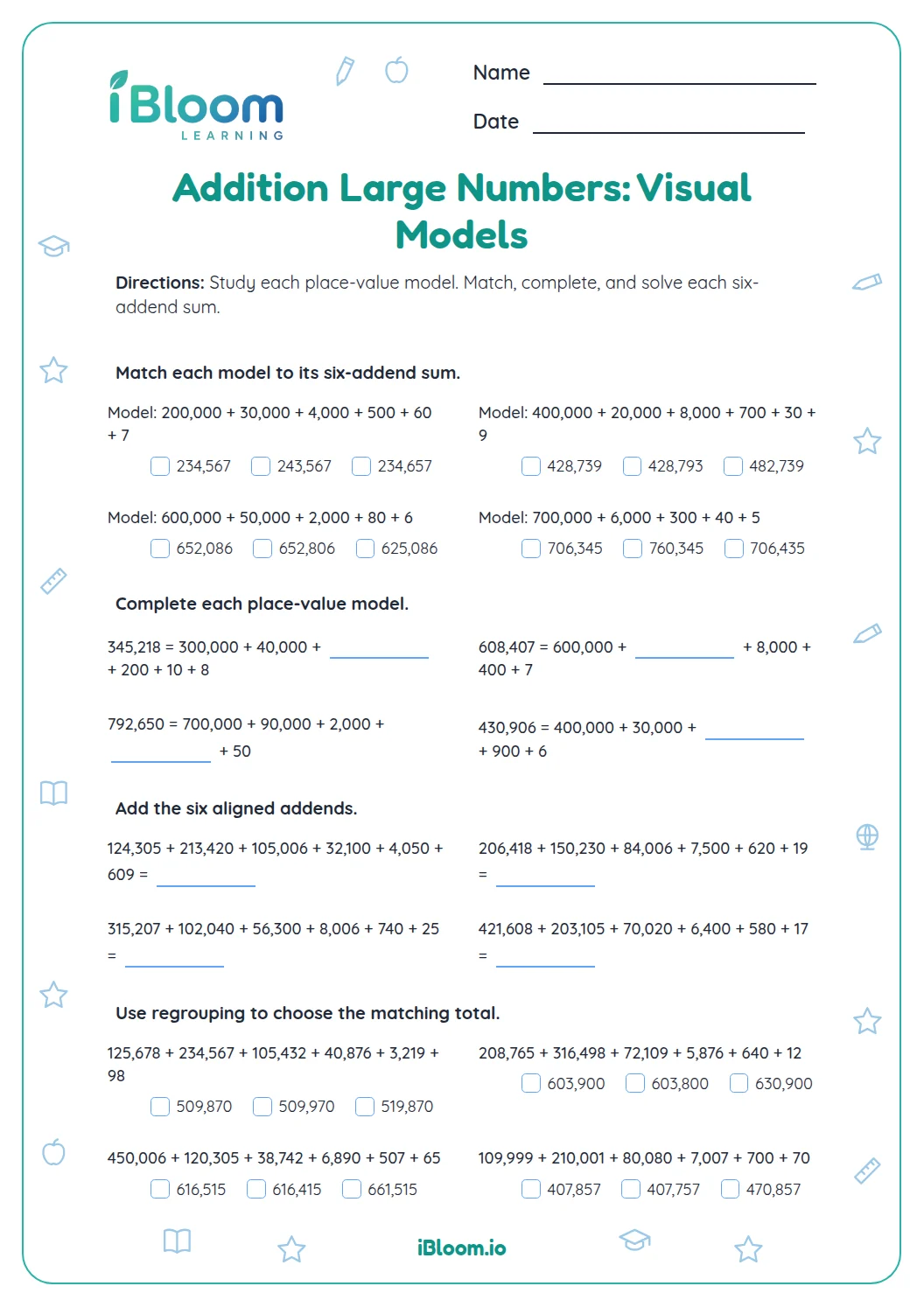
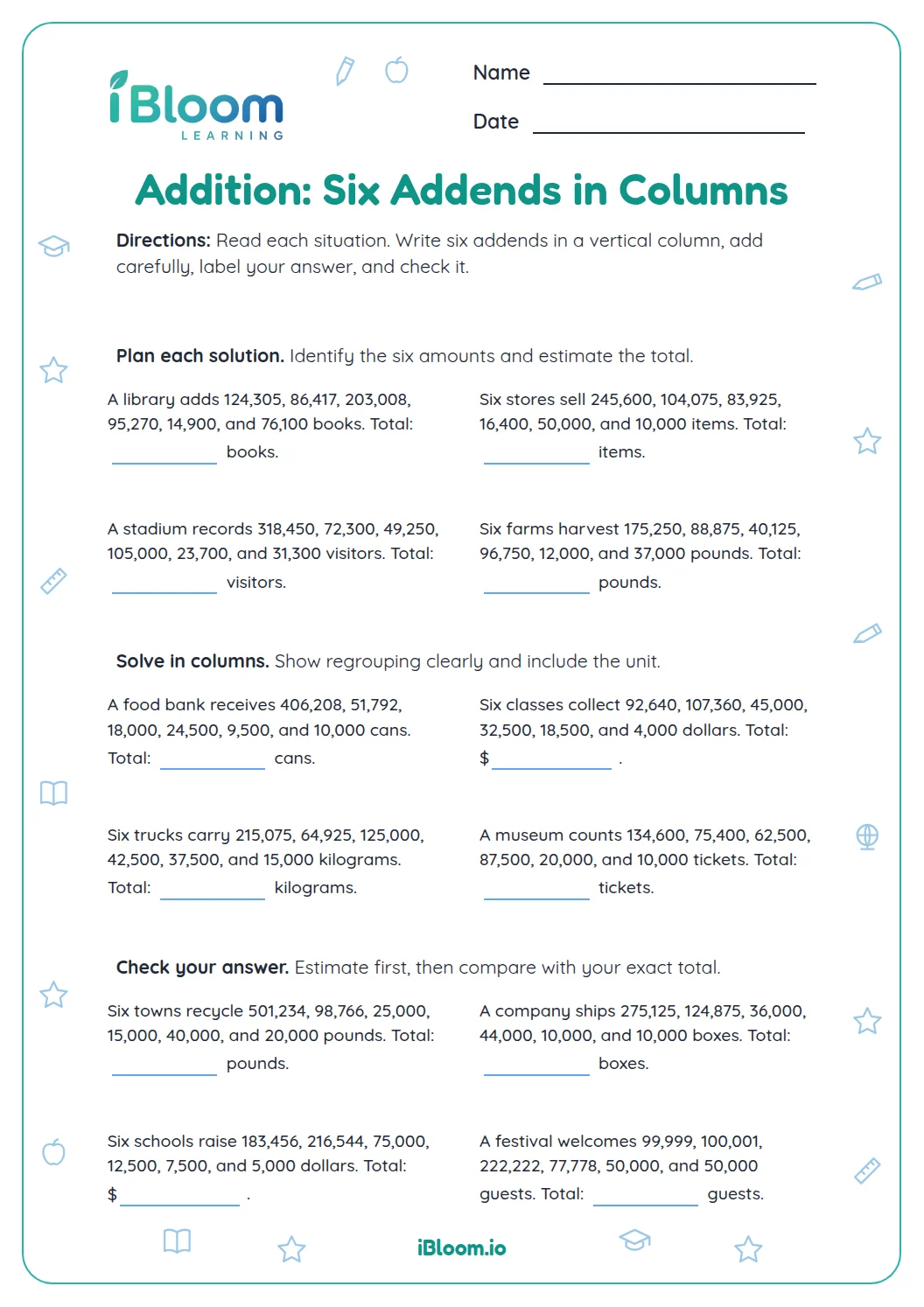
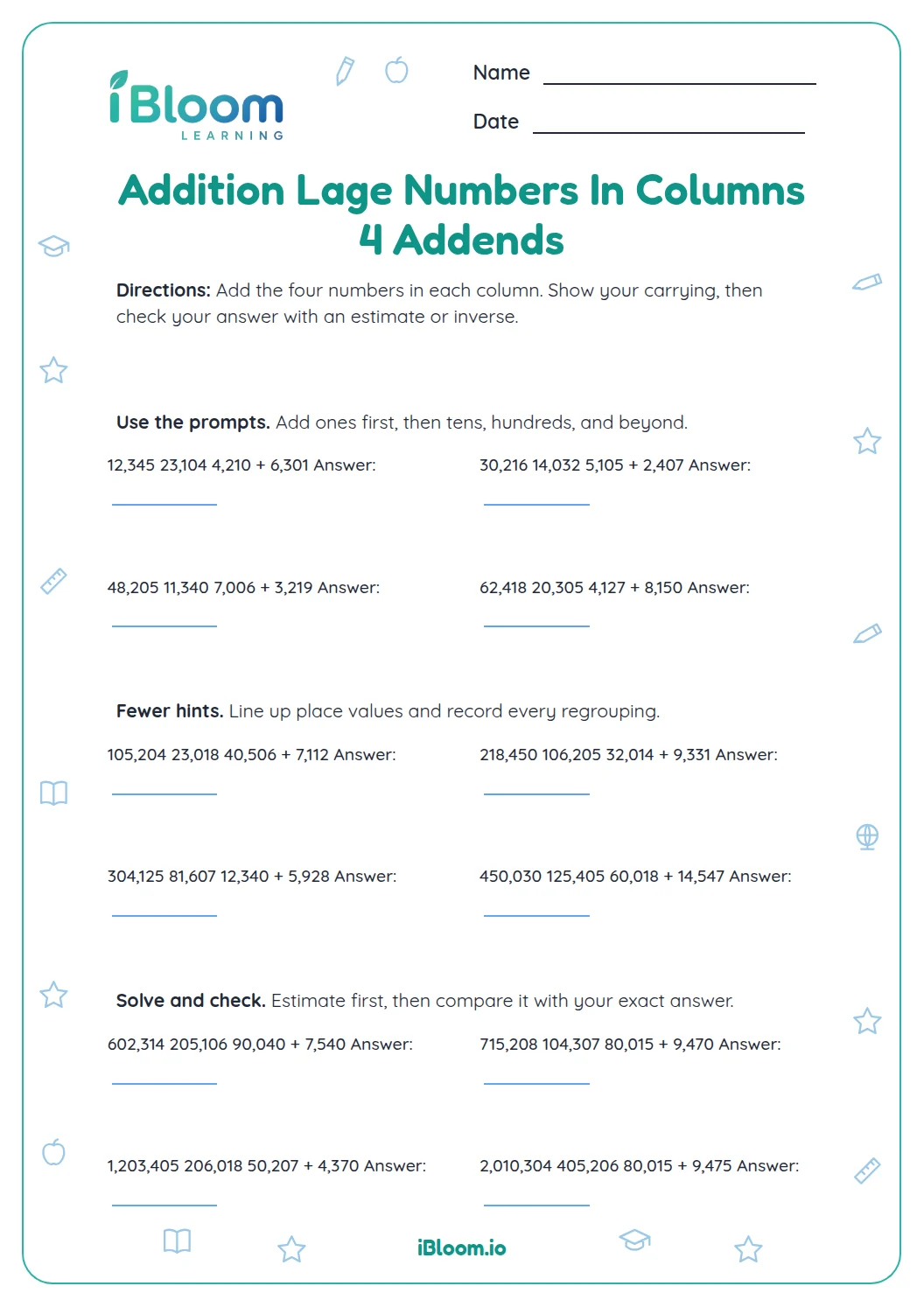
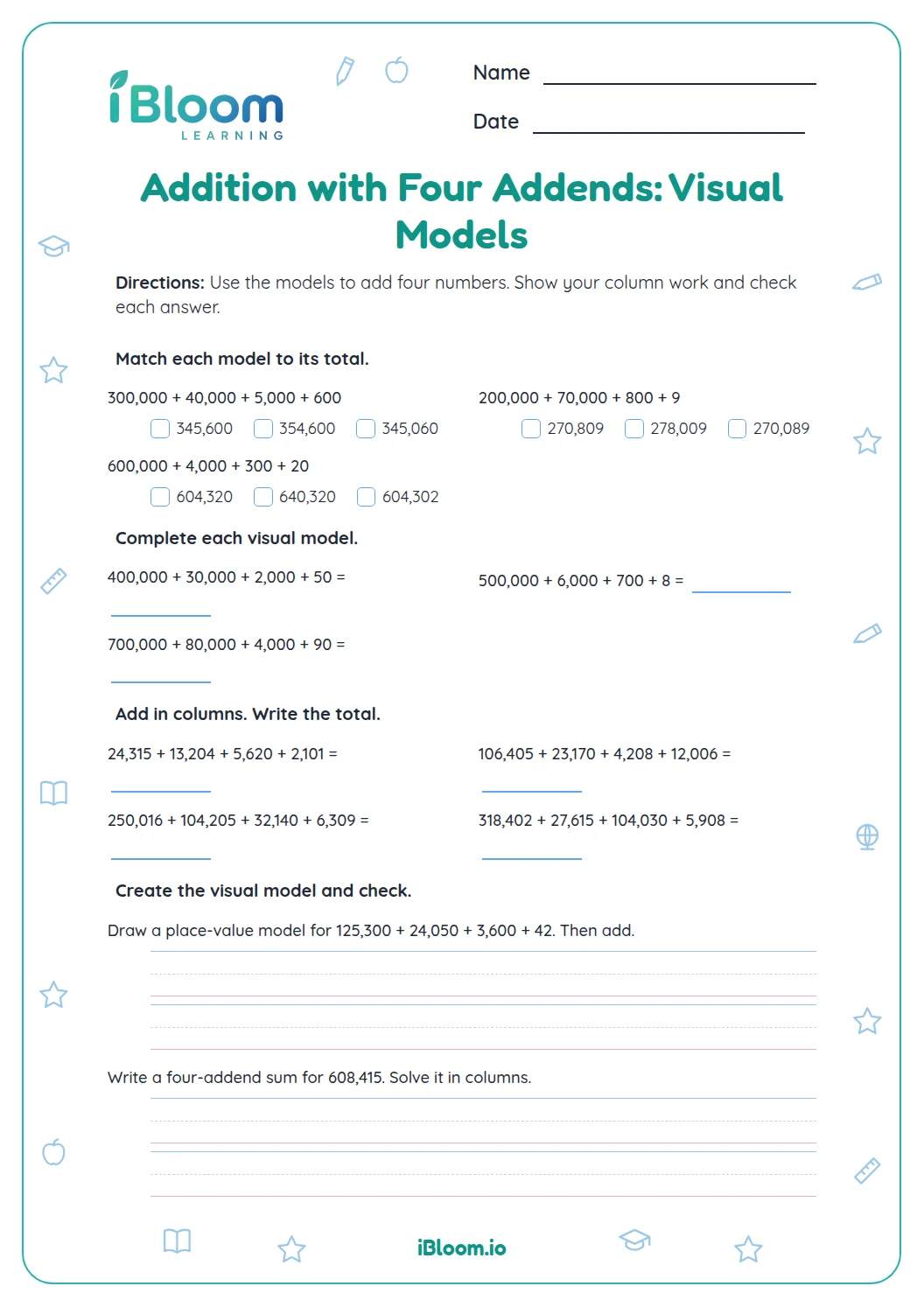
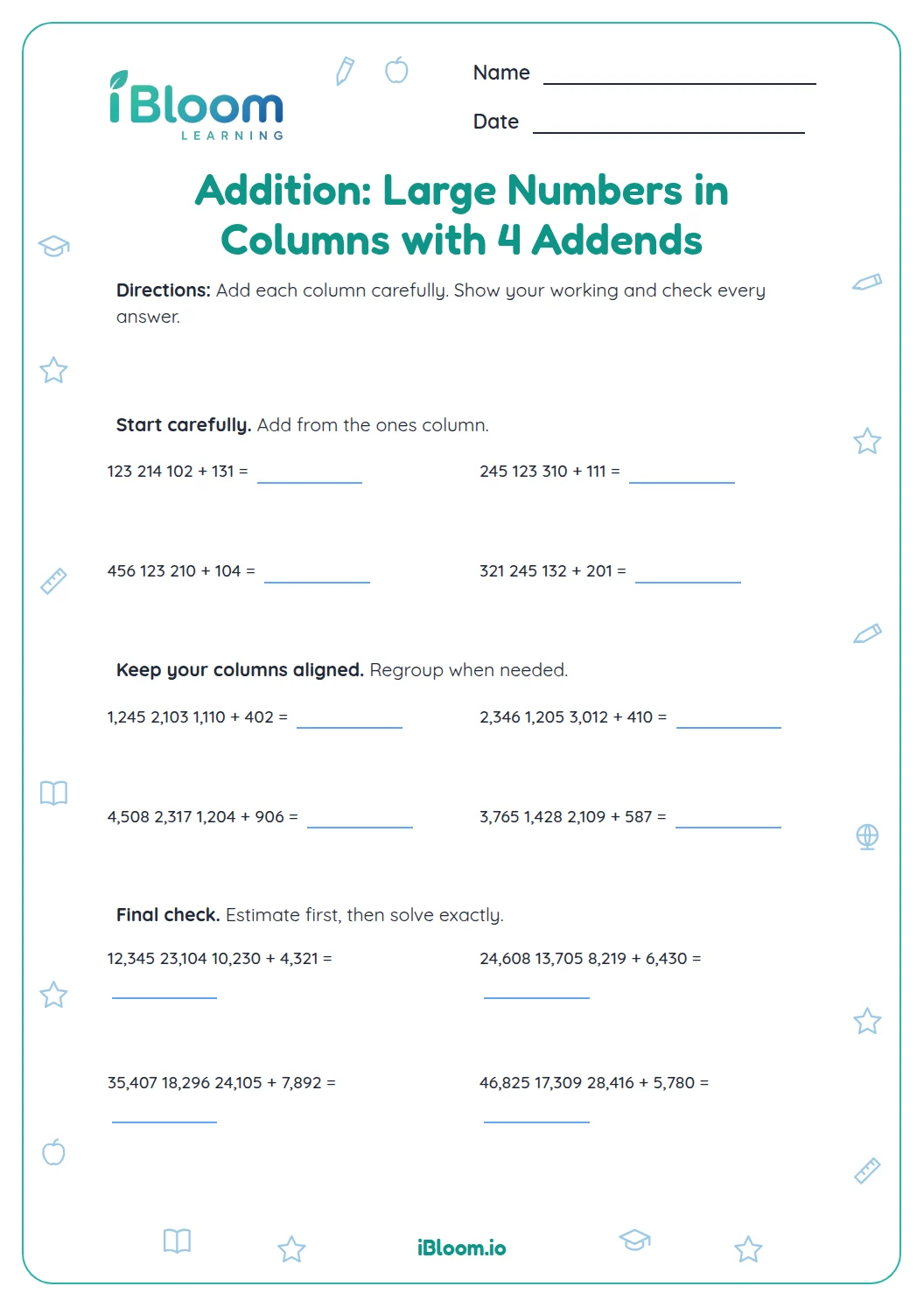
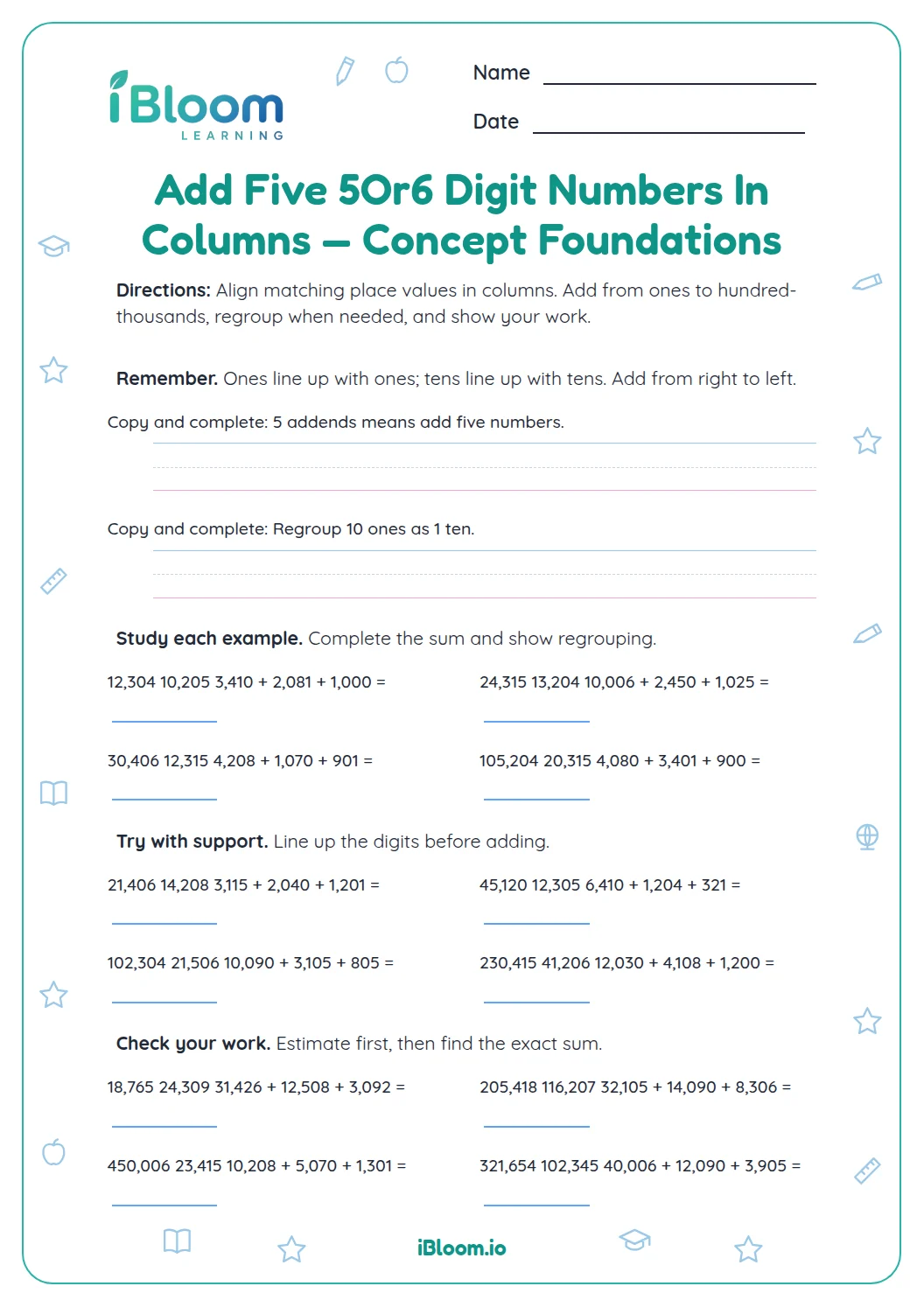
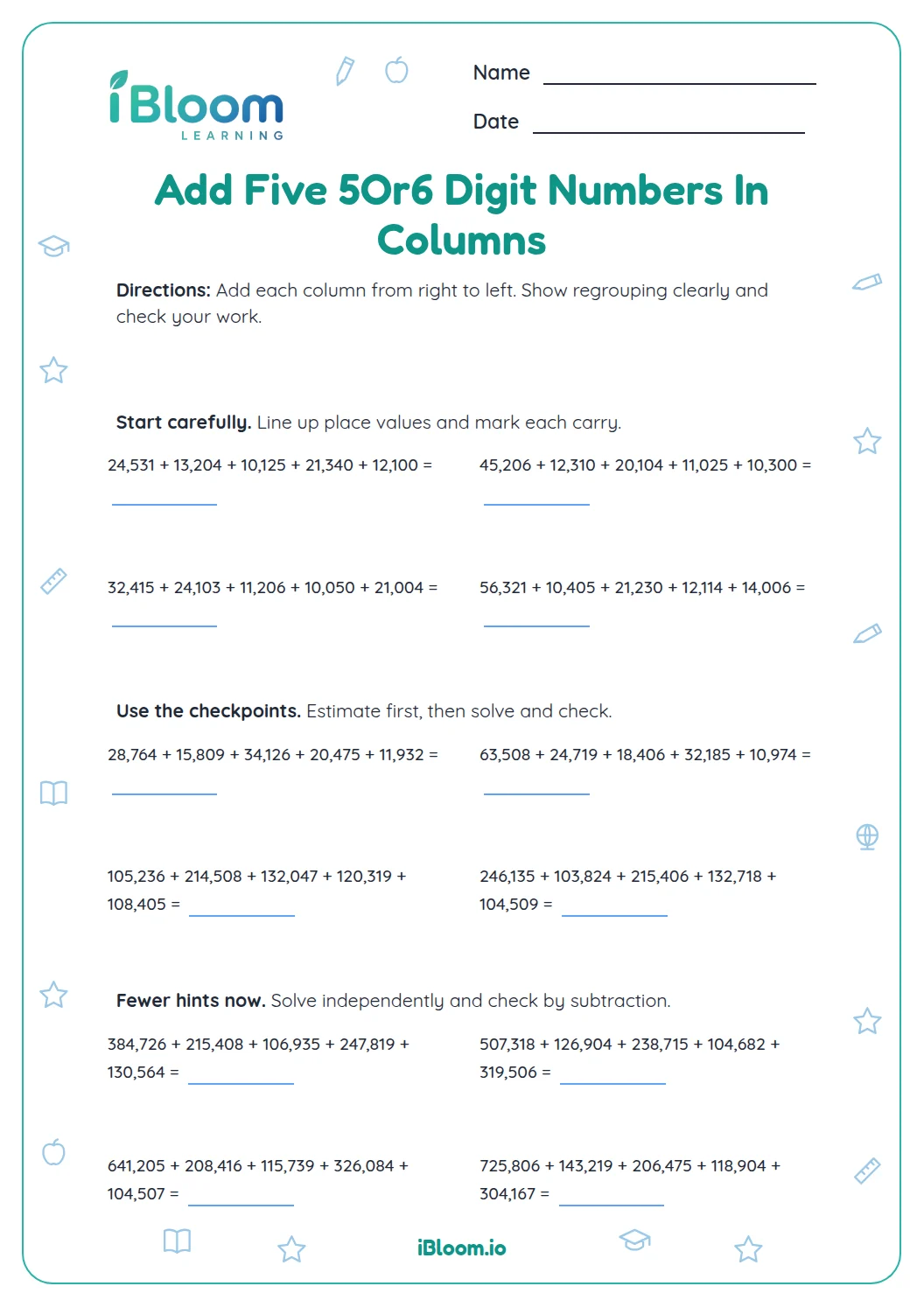
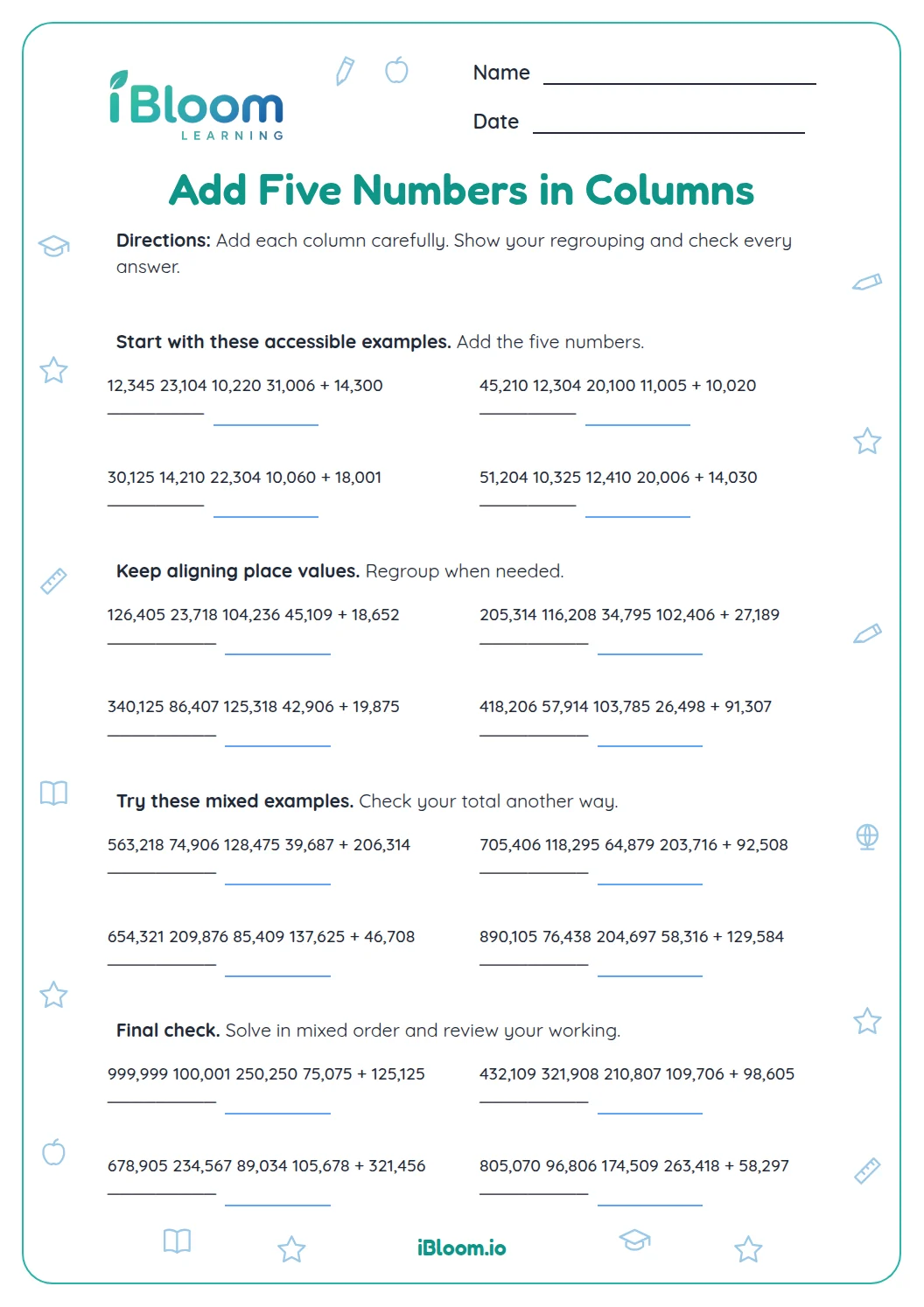
This printable Grade 5 worksheet gives students 14 independent problems, each with six five-digit whole-number addends. Students line up place values, add from the ones column, and regroup as needed. The answer key lists each sum. The standard-algorithm work connects to CCSS 4.NBT.B.4.
Aligned to 4.NBT.B.4
How do you add six large numbers in columns?
Copy each addend into the working grid so the ones digits line up, then align tens, hundreds, thousands, and ten-thousands. Add one column at a time from right to left, regrouping when a column totals ten or more. Carry the regrouped amount into the next column.
For six addends, keep a clear running total in each column. Check the final sum by adding the six numbers again in a different grouping.
- 118,432 + 27,615 + 13,847 + 20,596 + 31,608 + 14,725 = 126,823.
How do you keep place values aligned?
The ones digits belong in one column, tens in the next, then hundreds, thousands, and ten-thousands. Commas can help you group digits, but the digits still need to line up in the written work. Check the answer’s size: six addends near 20,000 should total well above 100,000.
How to use this worksheet
- 1Write each number so matching place values share a column.
- 2Add the ones column and record any regrouping above the next column.
- 3Continue through tens, hundreds, thousands, and ten-thousands.
- 4Check the size of the total before checking the answer key.
- 5For a second check, group the addends differently and recompute.
Common mistakes and quick fixes
The mistake
Misaligning digits
The fix
Start from the right and place every ones digit in the same column.
The mistake
Dropping a regrouped ten
The fix
Write the carried amount above the next place and include it in that column’s total.
The mistake
Stopping before all six addends are included
The fix
Count the six numbers in the problem before adding, then recount them during a check.
Common Core alignment
The page builds fluency with multi-digit addition using the standard algorithm.
Use the standard algorithm to add multi-digit whole numbers fluently.
On this sheet: Each problem asks students to add six multi-digit whole numbers by aligning place values and using the standard algorithm.
Show the official wordingHide the official wording
Fluently add and subtract multi-digit whole numbers using the standard algorithm.
What to practice next
Make more practice
Further reading
Questions parents and teachers ask
How many addends are in each problem?
Each of the 14 problems has six addends, and every addend is a five-digit number. Students align ones through ten-thousands before adding. The answer key lists one sum for each problem across three key pages, so the answers can be checked after finishing.
What is the main place-value step?
Line up the rightmost digits so all ones are together, then align tens, hundreds, thousands, and ten-thousands. Add each column from right to left and carry any regrouped amount into the next column. Recheck that the digits stayed in the same place-value columns.
How can students check a six-addend sum?
First estimate whether the result is a sensible size. Then add the six numbers again, perhaps grouping them in a different order. Finally, compare the total with the separate answer key and revisit any column where a carried value may have been missed.
Why does this worksheet use column layout?
Column layout makes place value visible during multi-digit addition. It gives students room to keep digits aligned and record regrouping. Every item asks for six addends, matching the independent practice focus. The displayed addends use five digits throughout the page.
How long should the worksheet take?
The guide suggests about 25 minutes for 14 six-addend problems. Time varies with how much written work a student shows and whether each sum is checked. Clear alignment and accurate regrouping are useful goals while working through the page.