
About this worksheet
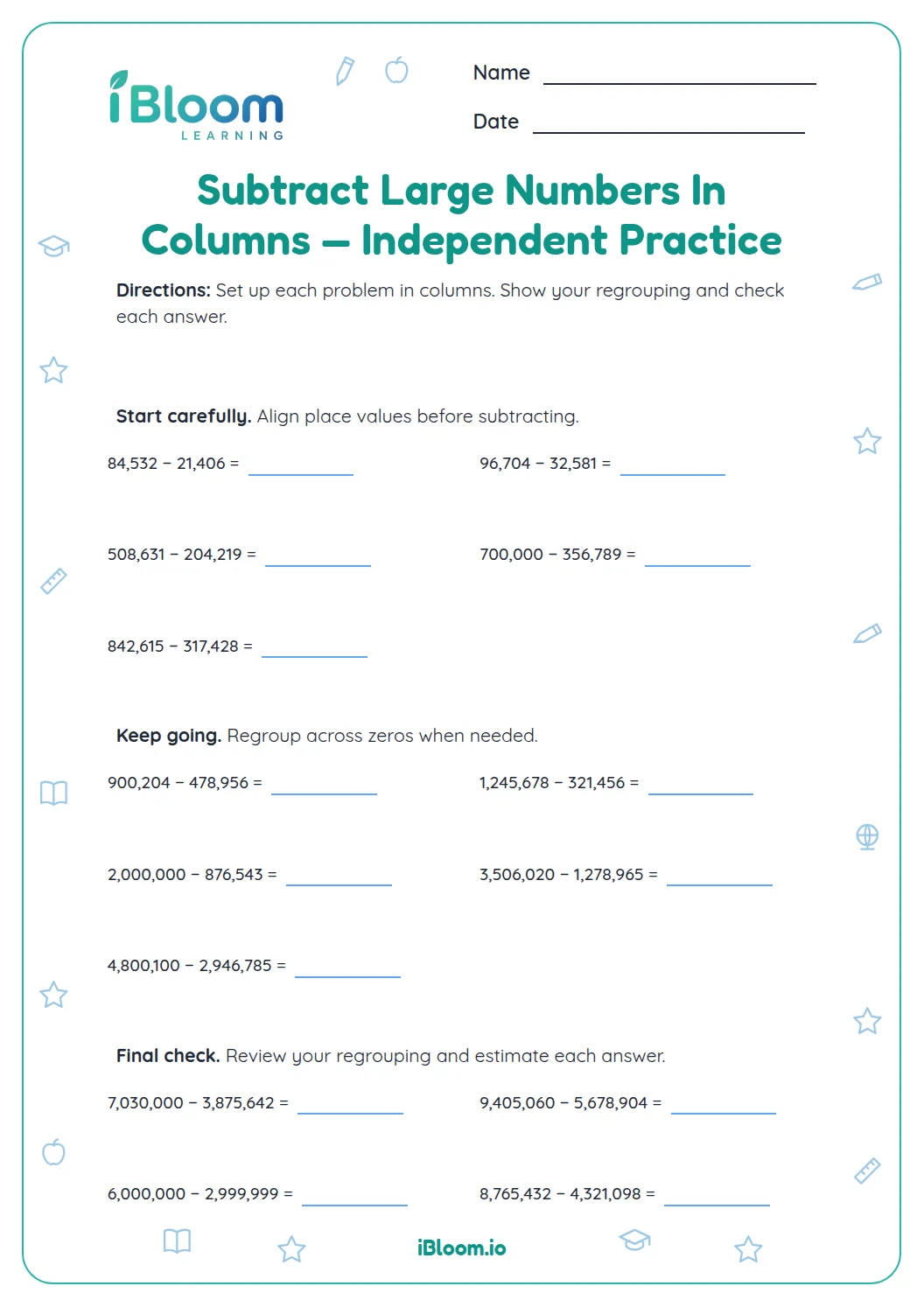
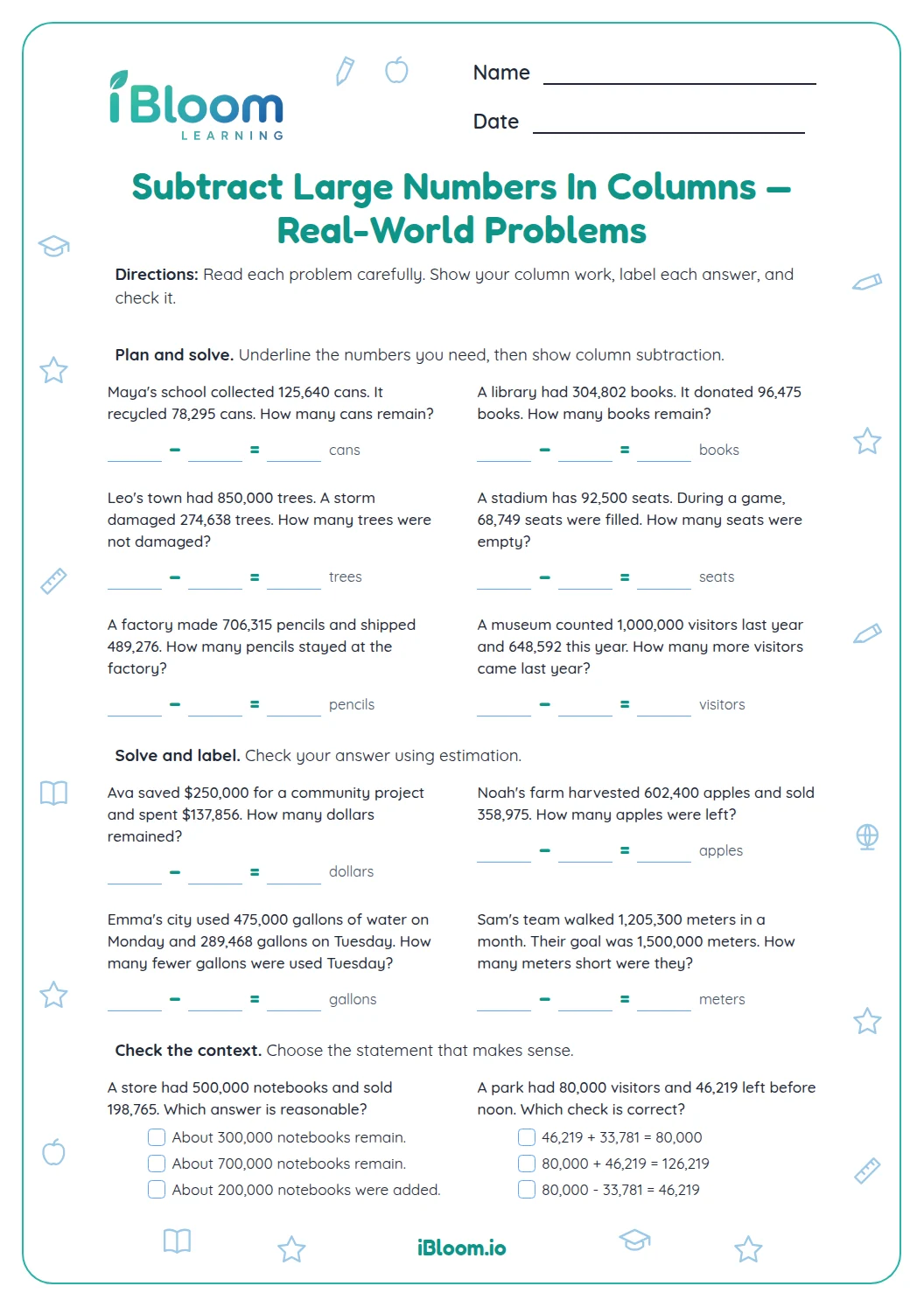
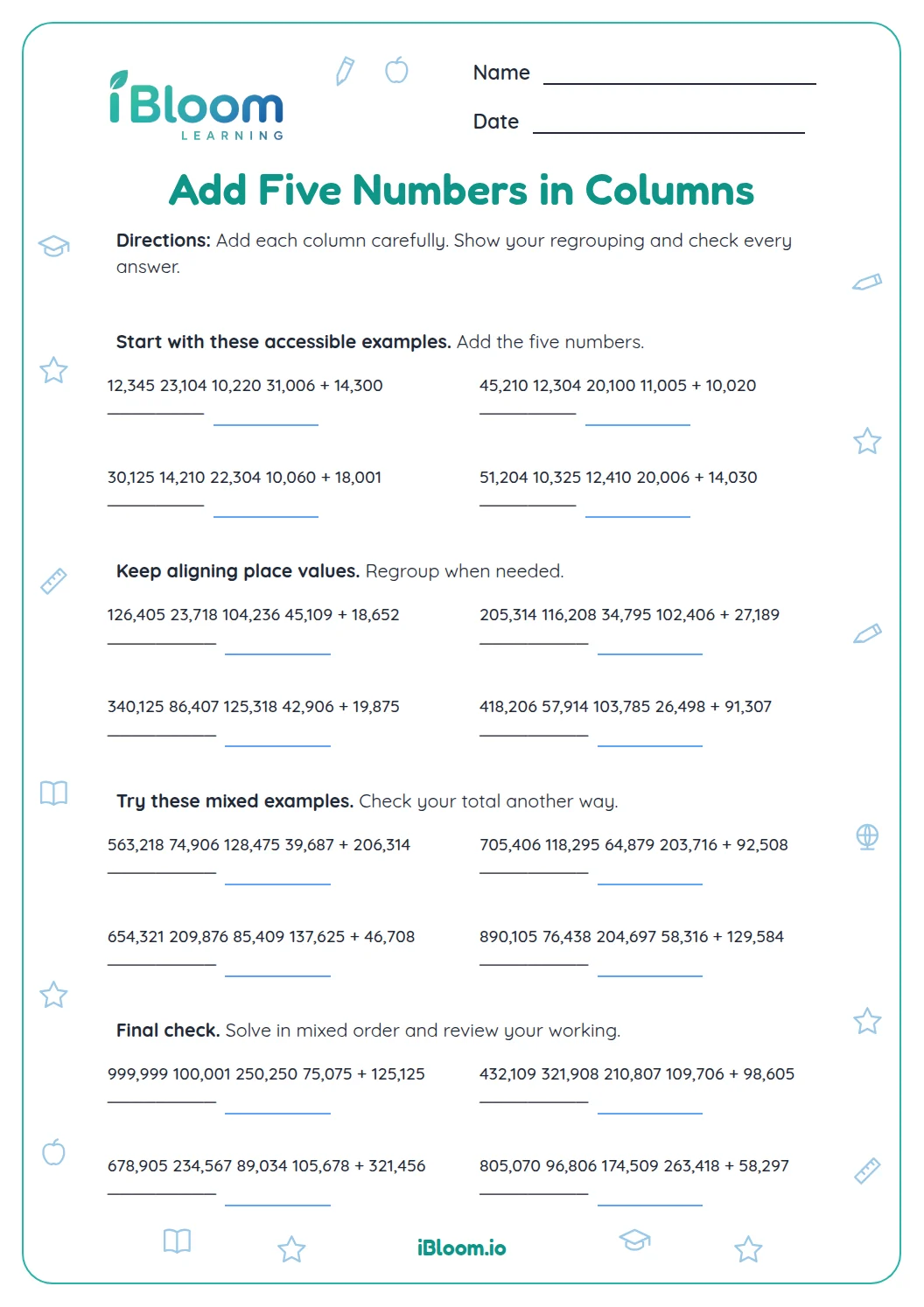
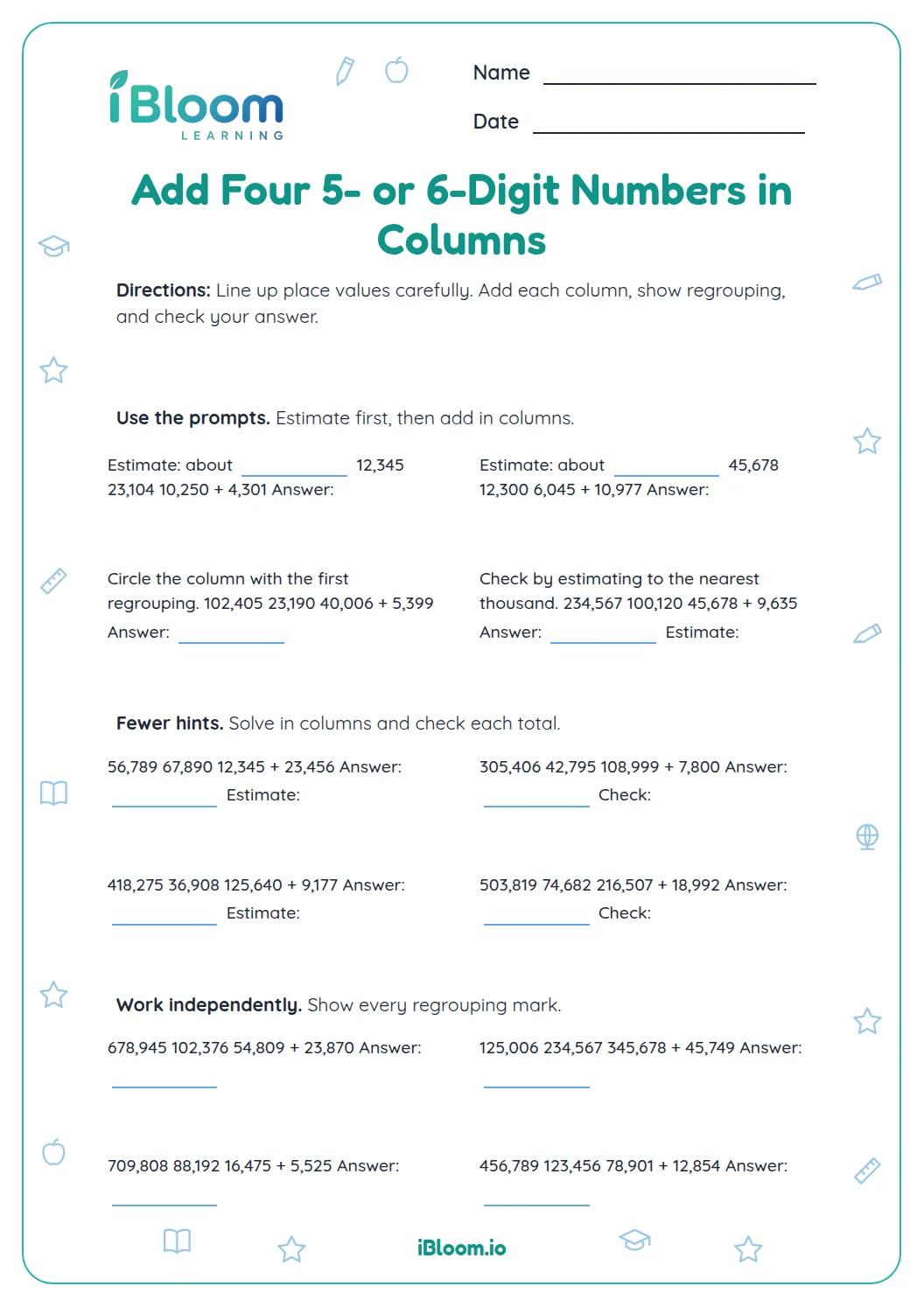
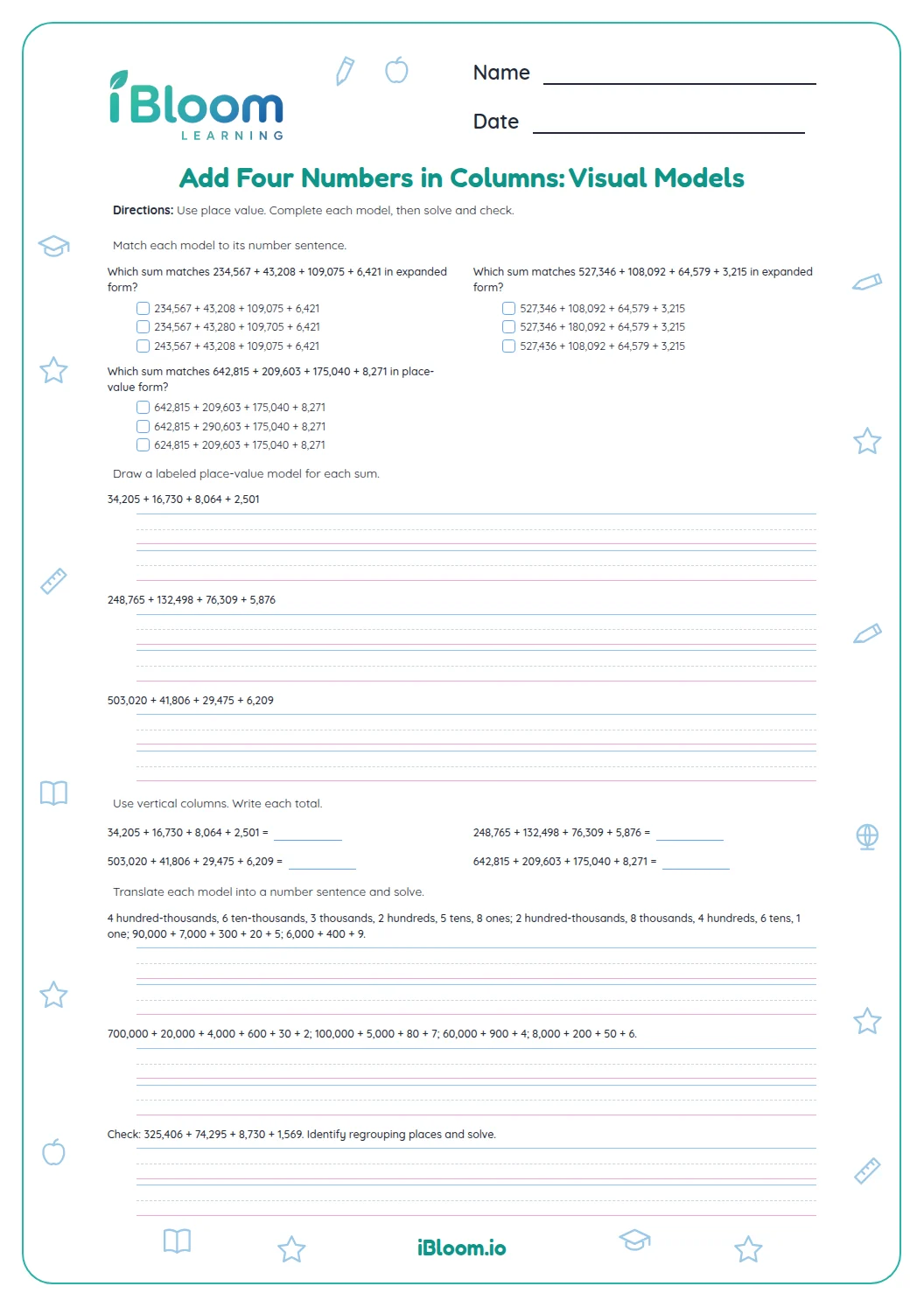
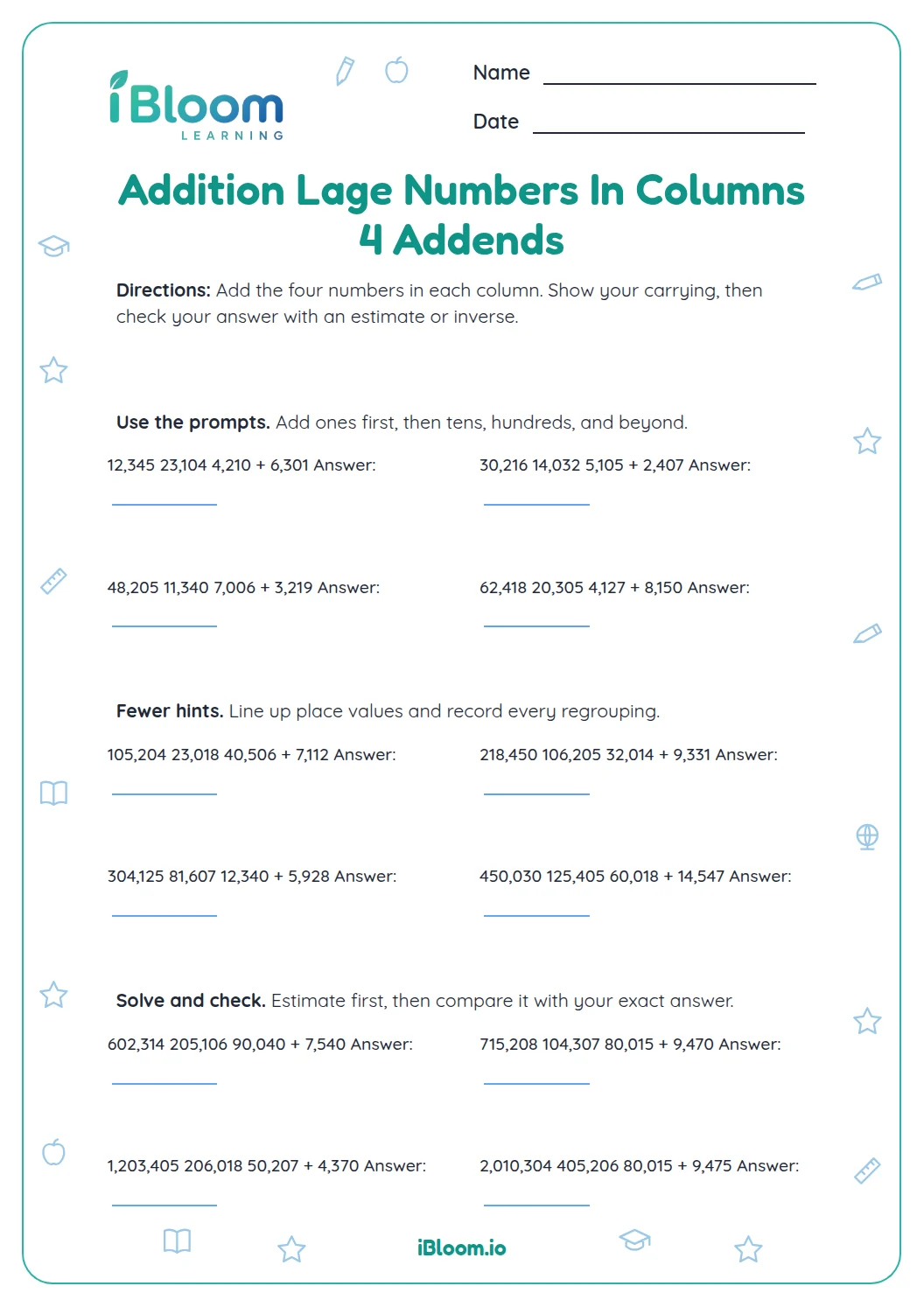
This Grade 5 printable gives learners 14 five-digit subtraction problems. Eight problems are grouped under two aligned place-value models, which show where each digit belongs as learners regroup and subtract. The other six use compact subtraction prompts. A separate answer key lists every difference. The practice aligns with CCSS 4.NBT.B.4.
Aligned to 4.NBT.B.4
How does a place-value model help?
The table keeps each digit in its place-value column. In 84,362 − 27,548, the digits line up as ten-thousands, thousands, hundreds, tens, and ones before regrouping.
How do you subtract when regrouping?
When a top digit is too small, regroup from the next place to the left. Keep track of the changed digit before continuing.
- 184,362 − 27,548
- 2Regroup across the hundreds and tens places.
- 3The difference is 56,814.
- 4Check: 56,814 + 27,548 = 84,362.
What is included in the practice?
All 14 questions use five-digit numbers. Four problems in each part appear in paired rows under place-value headings. The six remaining items use compact subtraction prompts. The two models show where digits belong for regrouping and column subtraction.
How can you check a difference?
Add the difference to the number subtracted. The sum should equal the starting number. Also check that each digit stayed in its correct place-value column.
How to subtract in columns
- 1Read the place-value headings and align each digit.
- 2Start with the ones column and compare the top and bottom digits.
- 3Regroup from the next nonzero place when needed.
- 4Subtract one column at a time, recording changed digits.
- 5Add the difference to the subtrahend to check the starting number.
Common mistakes and quick fixes
The mistake
Subtracting digits that are in different place-value columns.
The fix
Use the table headings to align ones, tens, hundreds, thousands, and ten-thousands.
The mistake
Regrouping from a zero without changing the intervening places.
The fix
Move left to the first nonzero digit, then pass one ten through each zero.
The mistake
Forgetting that regrouping changes the digit to the left.
The fix
Reduce that digit by one before subtracting in the next column.
Common Core alignment
This worksheet practices the named skill through focused examples aligned with 4.NBT.B.4.
Subtract multi-digit whole numbers with the standard algorithm.
On this sheet: The questions use column subtraction with regrouping across multi-digit whole numbers.
Show the official wordingHide the official wording
Fluently add and subtract multi-digit whole numbers using the standard algorithm.
What to practice next
Make more practice
Further reading
Questions parents and teachers ask
How does the table support column subtraction?
The two place-value models show the digits under their headings for eight questions, so those operands line up by place. Learners can regroup and subtract in columns, then record the difference. The other six items use compact subtraction prompts.
What does regrouping across zero mean?
If a digit is too small, regroup from the next nonzero place to the left. Each place passed through becomes one ten, and the digit borrowed from decreases by one. Track every change before subtracting in the next column, especially across zeros.
How many problems are on the sheet?
There are 14 five-digit subtraction questions across two worksheet pages, followed by a separate answer key. Two groups of four use aligned place-value models, and six more questions provide compact column-subtraction practice for extra fluency. Each model keeps its pairs in order.
How can a learner check an answer?
Add the difference to the number subtracted. The sum should match the starting number. If it does not, check regrouping and confirm that each digit stayed in its correct place-value column before trying again. Addition reverses subtraction and provides a quick check.
Does every question have room for working?
The two models provide visible place-value columns for eight paired subtractions. Six additional items use compact prompts. Learners can make regrouping marks in the model cells and record each difference on its answer line, using scratch paper for extra written steps.