


About this worksheet
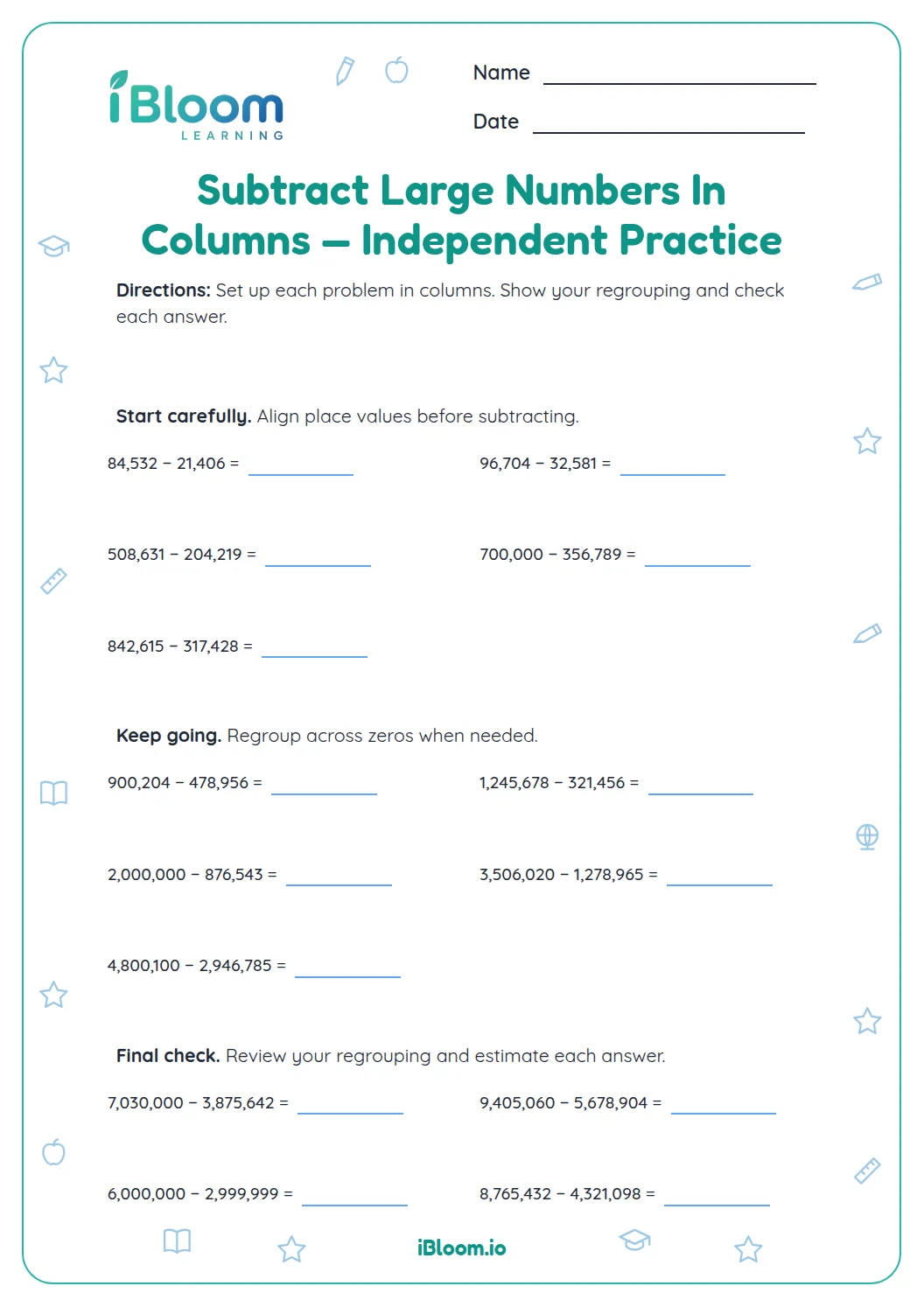
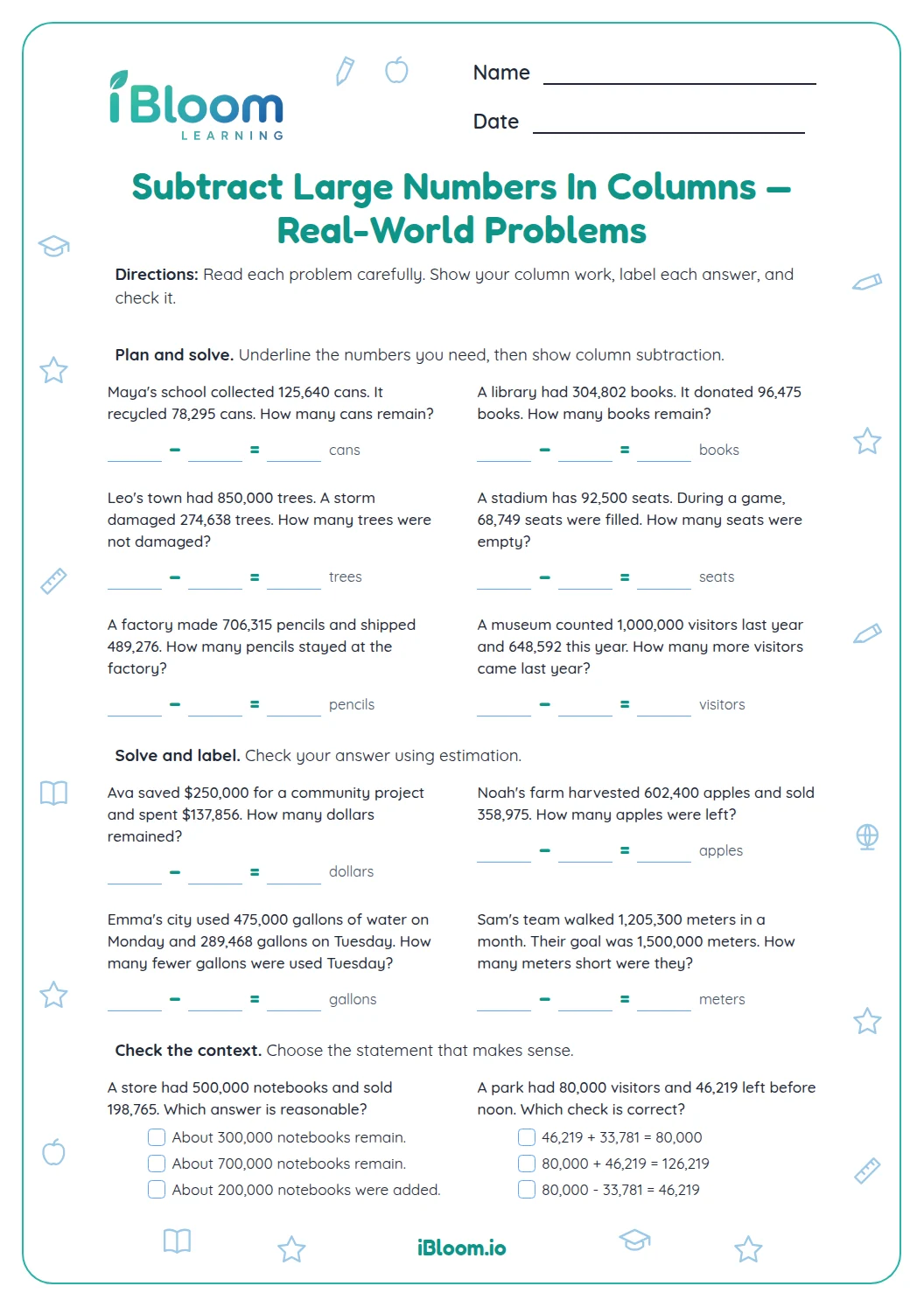
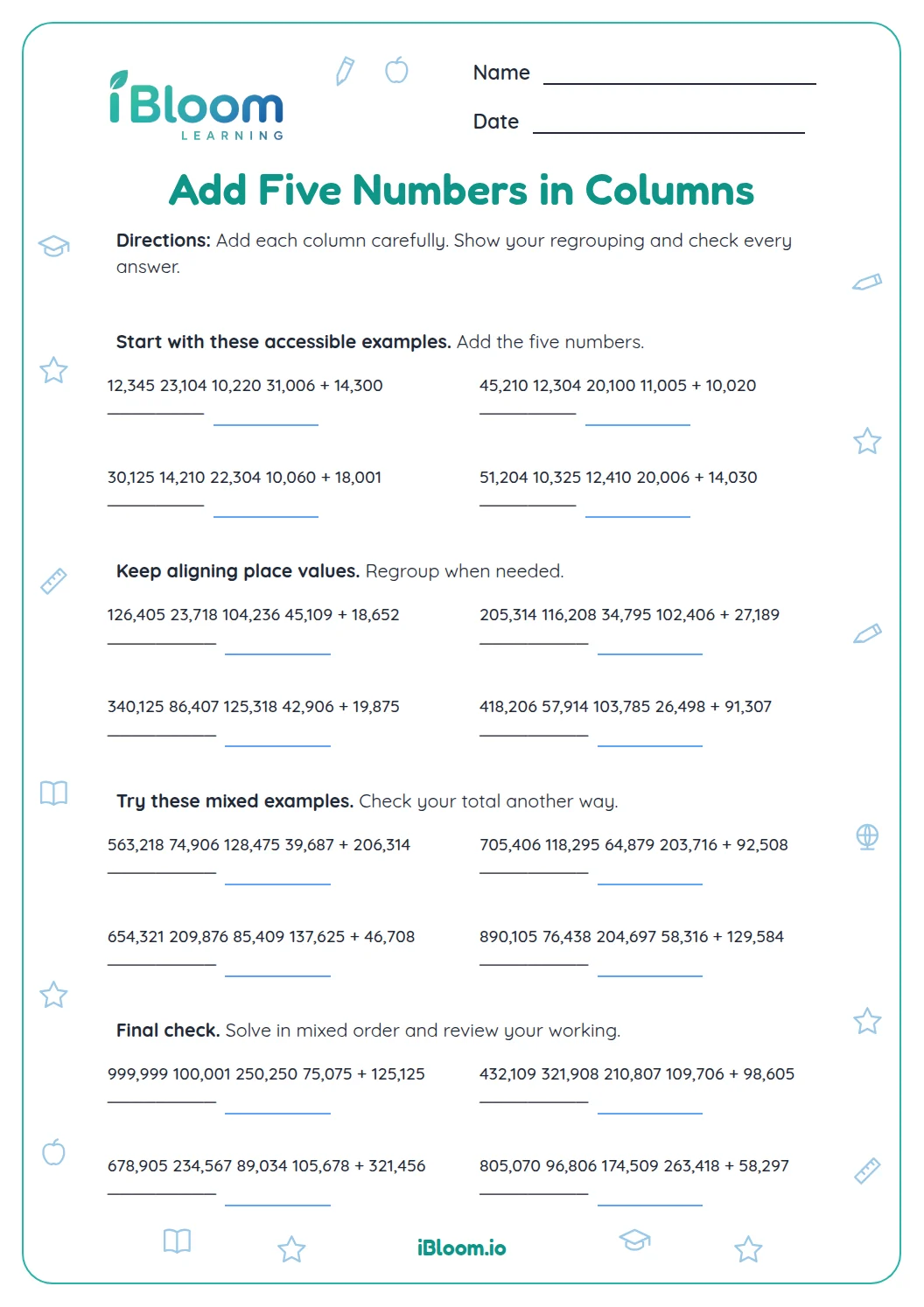
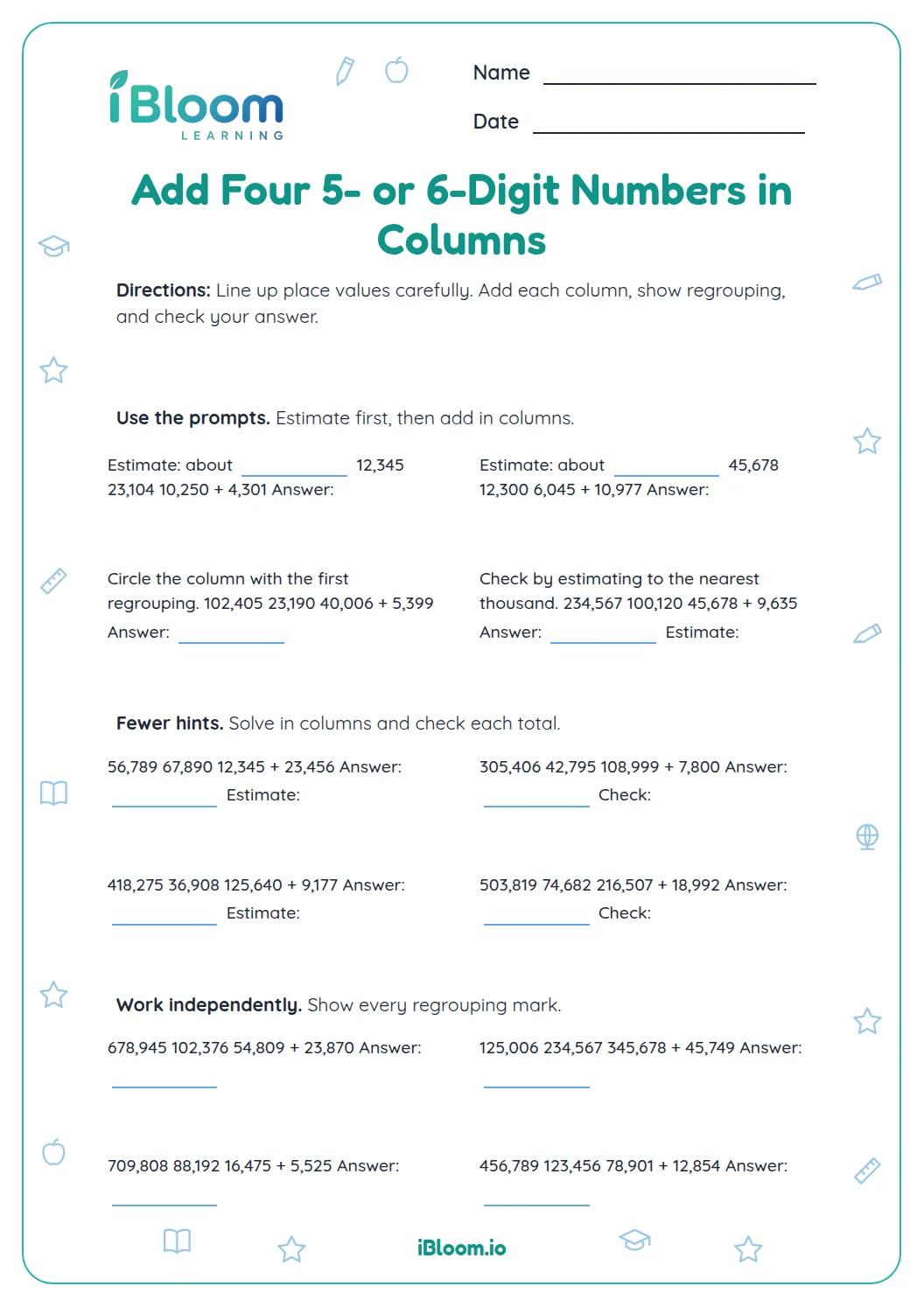
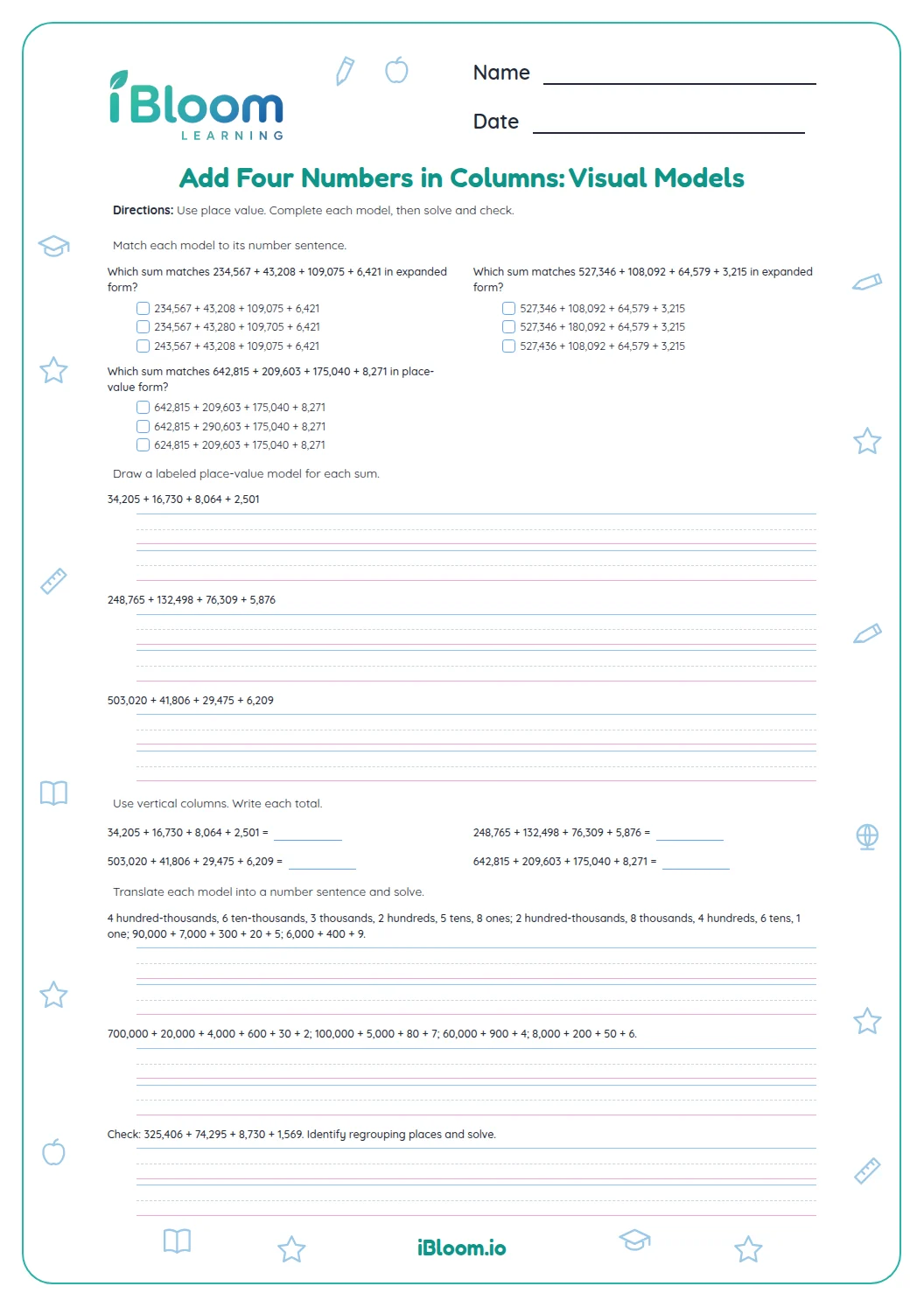
This free printable Grade 5 worksheet helps learners practice subtracting large whole numbers in columns. It contains 14 questions in 2 parts, with two worksheet pages and a separate two-page answer key. Regroup across zeros, subtract by place value, then check by addition. It practices Common Core 4.NBT.B.4 through the questions on this sheet.
Aligned to 4.NBT.B.4
How can a learner work through subtracting large whole numbers in columns?
Start by identifying what each question asks, then use its picture, number sentence, or context as a clue. Regroup across zeros, subtract by place value, then check by addition.
Have the learner show or say one step before checking the answer. That makes the method visible and helps pinpoint where a sign, place value, or word part changed.
- 1864,205 − 317,468 = 546,737
- 2Subtract ones through hundred-thousands, regrouping across zero places as needed.
- 3Check: 546,737 + 317,468 = 864,205.
What appears in each part of the worksheet?
The 14 questions move from direct practice to another way of applying the skill. Each group has its own direction so learners can focus on one task at a time.
- Subtract carefully
- Compare and reason
How can families check the work?
Use the separate answer key after the learner finishes each group. For a missed item, return to the clue in the prompt and solve it again. Regroup across zeros, subtract by place value, then check by addition.
How to use this worksheet
- 1Read the directions and name the skill: subtracting large whole numbers in columns.
- 2Complete the first group together, saying the reasoning aloud.
- 3Let the learner try the next questions independently and show a step when helpful.
- 4Check answers with the separate key after finishing a group.
- 5For a missed item, find the clue or calculation step that changes the answer, then solve it again.
Common mistakes and quick fixes
The mistake
Subtracting before aligning digits
The fix
Line up ones with ones and keep each place-value column straight before subtracting.
The mistake
Losing a regrouped value across zeros
The fix
Mark each trade above the digits, then check the answer by adding the subtrahend back.
The mistake
Choosing a comparison sign from the first number only
The fix
Find or reason about both values before selecting >, <, or =.
Common Core alignment
Fluently subtract multi-digit whole numbers using the standard algorithm.
On this sheet: The column problems require regrouping and subtraction of multi-digit whole numbers.
Show the official wordingHide the official wording
Fluently add and subtract multi-digit whole numbers using the standard algorithm.
What to practice next
Make more practice
Further reading
Questions parents and teachers ask
What does this worksheet ask students to do?
Students solve large subtraction problems, compare differences, find missing values, and check statements. The 14 questions are arranged in two parts across two worksheet pages, with a separate two-page answer key for checking the calculations. The prompts include column subtraction and reasoning, so learners practice both accurate computation and choosing a sensible check.
How can students check a subtraction answer?
Add the difference to the number being subtracted. For question 1, 546,737 + 317,468 returns 864,205, the starting number. If the sum is off, check each place value and any regrouping step. This is especially useful when regrouping across zeros, because adding back can reveal a place-value slip.
What does regrouping across zeros mean here?
Some questions have zeros in places where a trade is needed. Subtracting 317,468 from 864,205 requires regrouping across zero places before subtracting those digits. Record each trade above the columns to keep place values aligned. The page also includes comparison and missing-value items, so learners explain how the numbers relate.
Can learners use a calculator?
The worksheet is designed for written column subtraction and reasoning about the result. Have learners show their regrouping first, then check with the answer key. A calculator can help an adult confirm a disputed answer after reviewing the written method.
How long should the worksheet take?
Plan for about 25 to 35 minutes for both pages, depending on how much work a learner shows. The first part focuses on subtraction; the second mixes comparisons, missing values, and checks. Completing one page at a time is also reasonable.