
About this worksheet
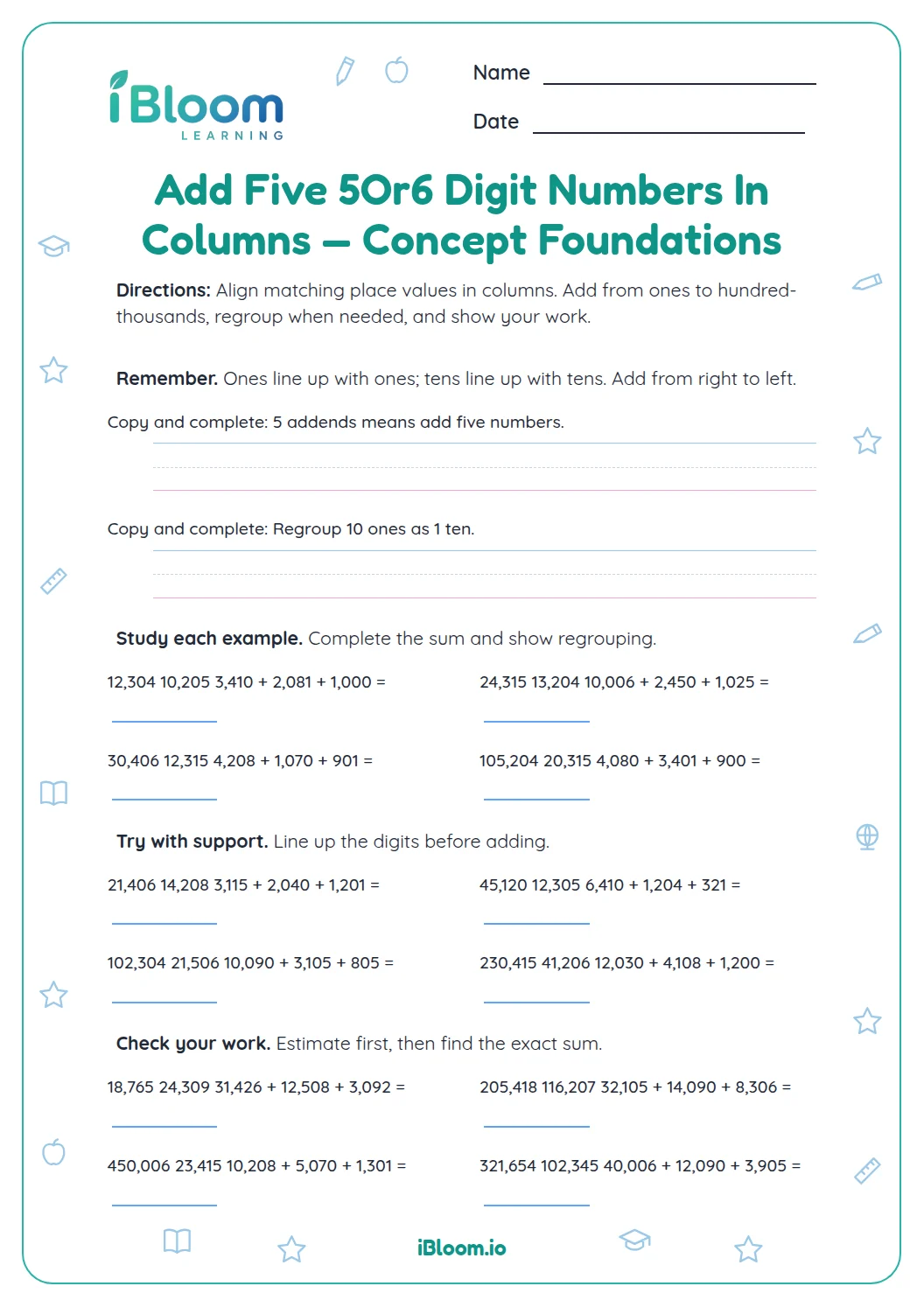
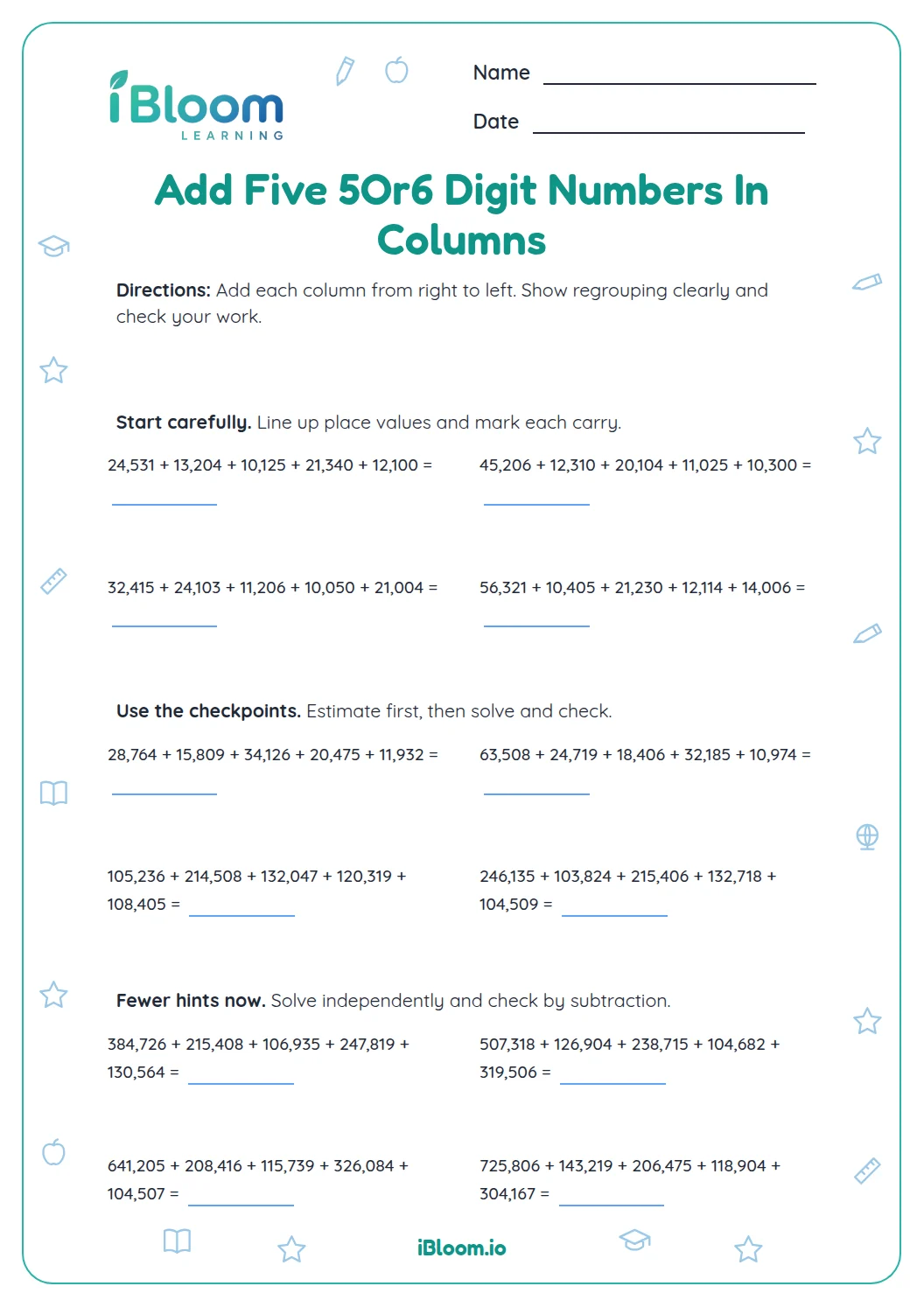
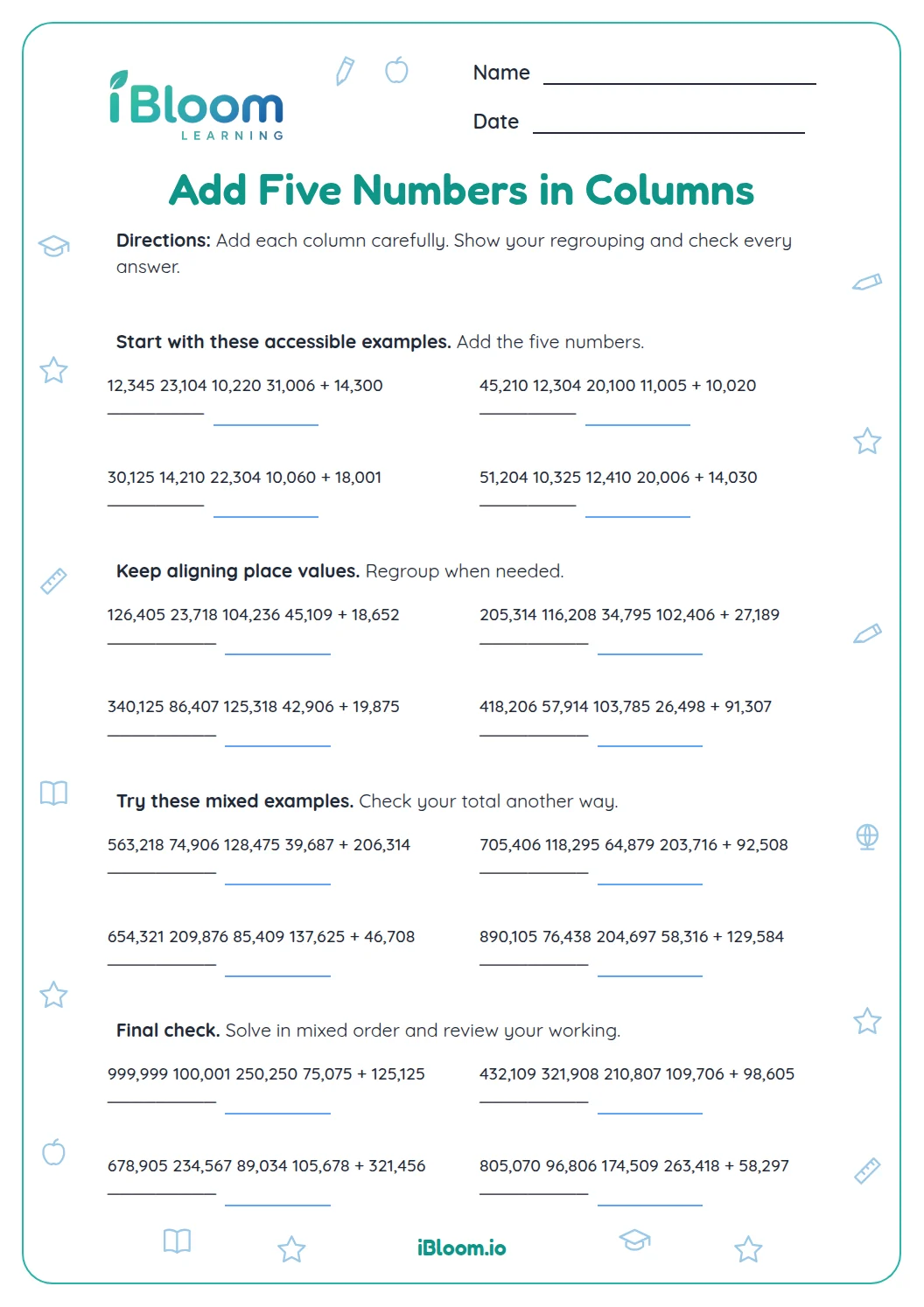
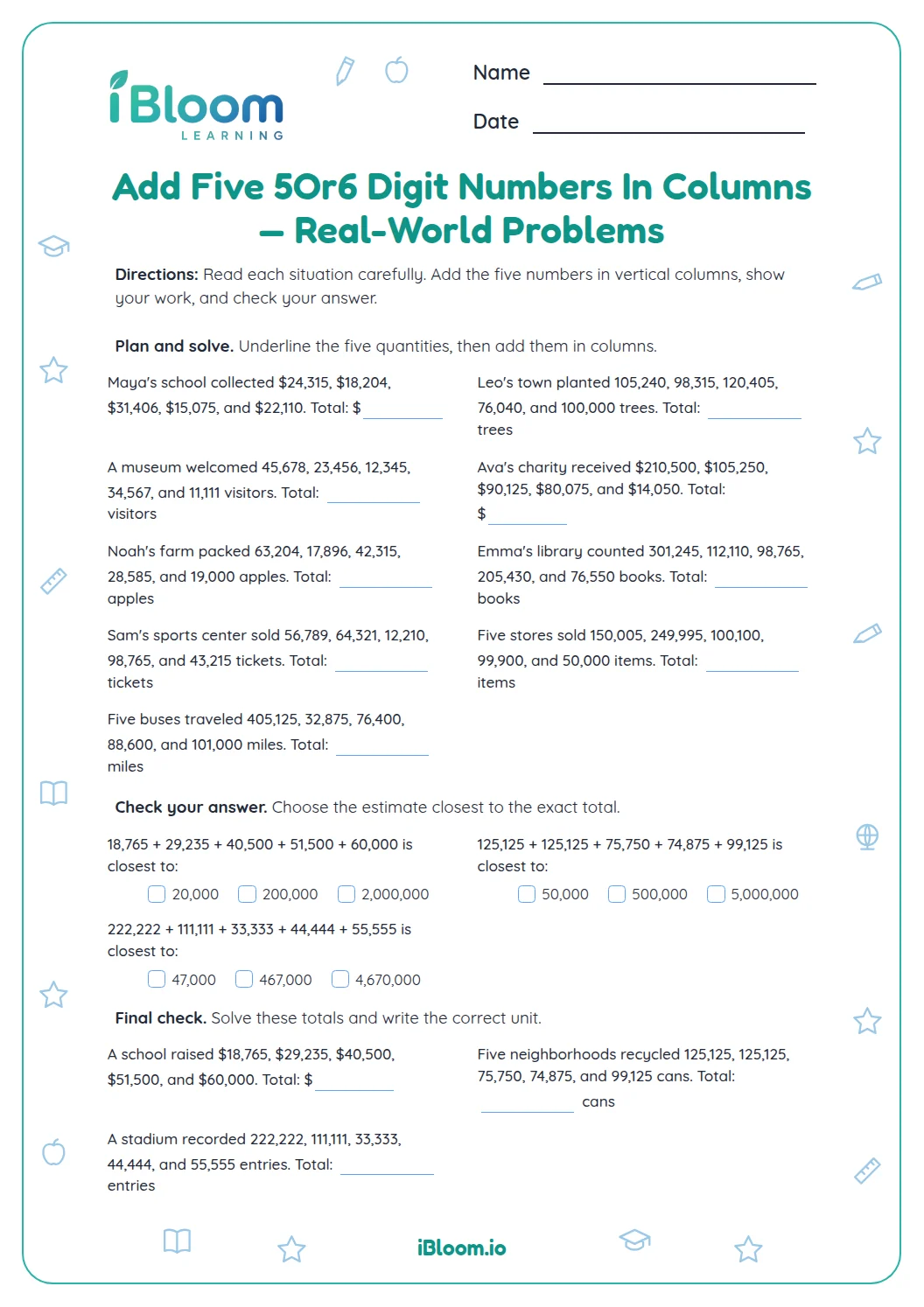
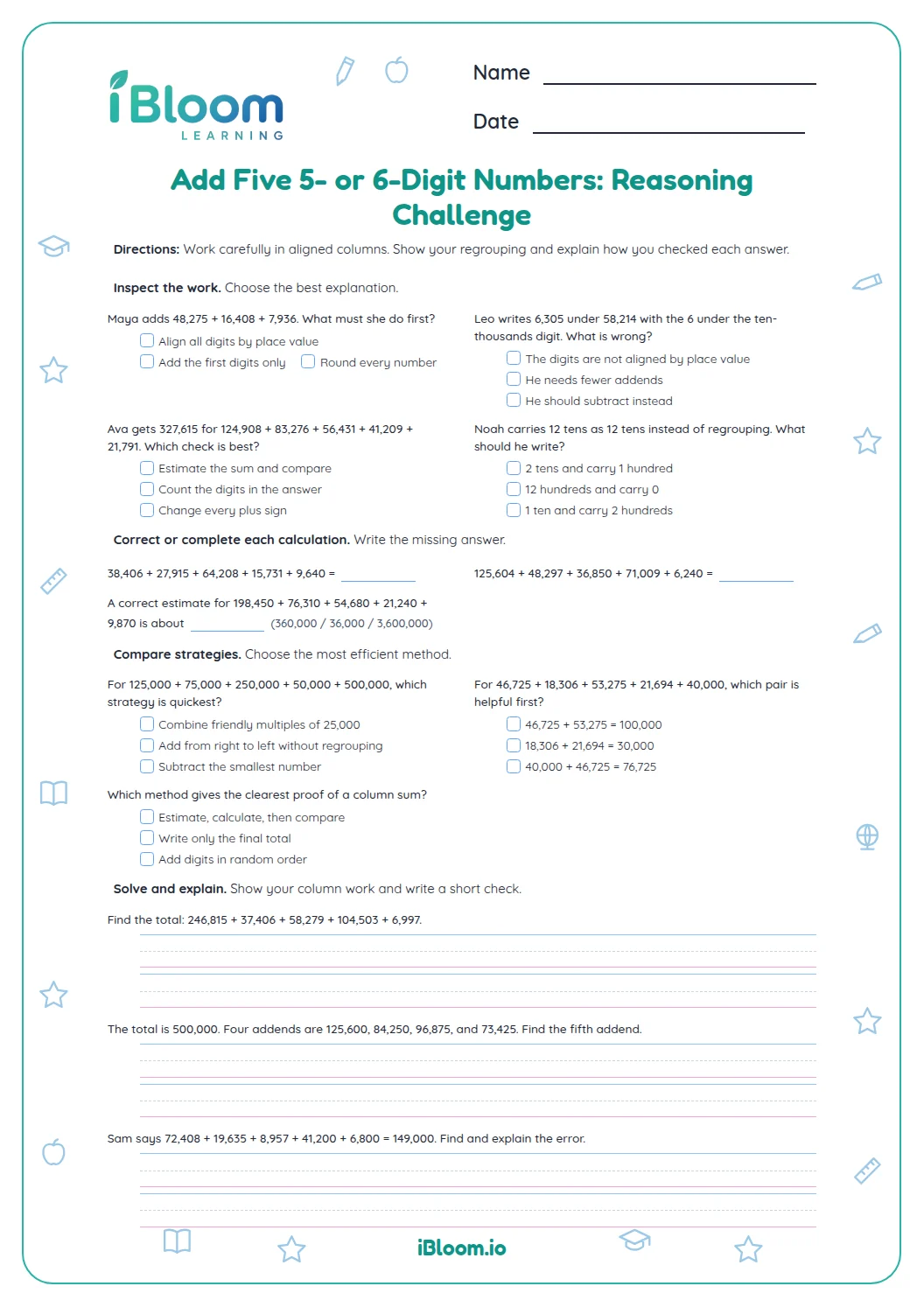
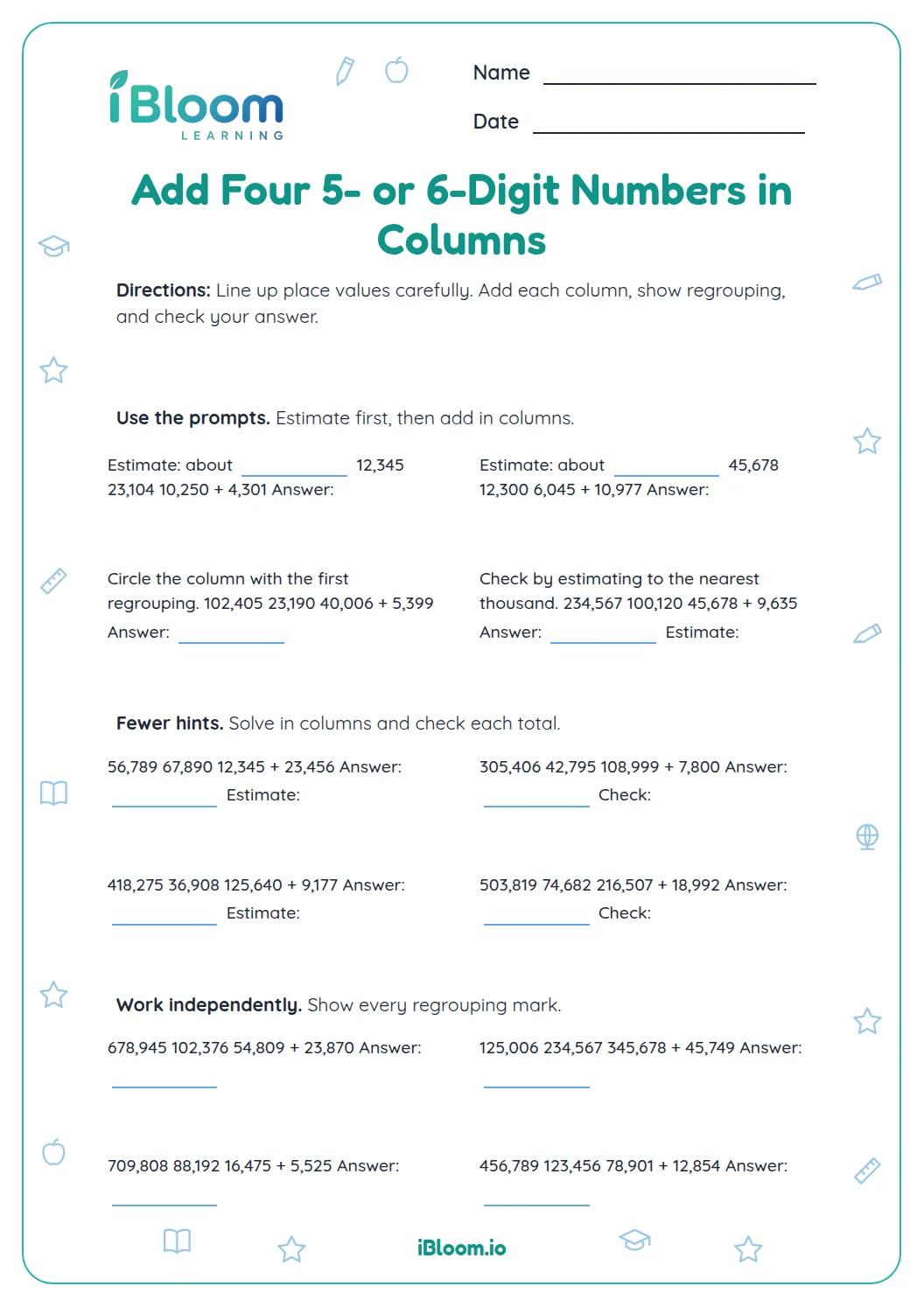
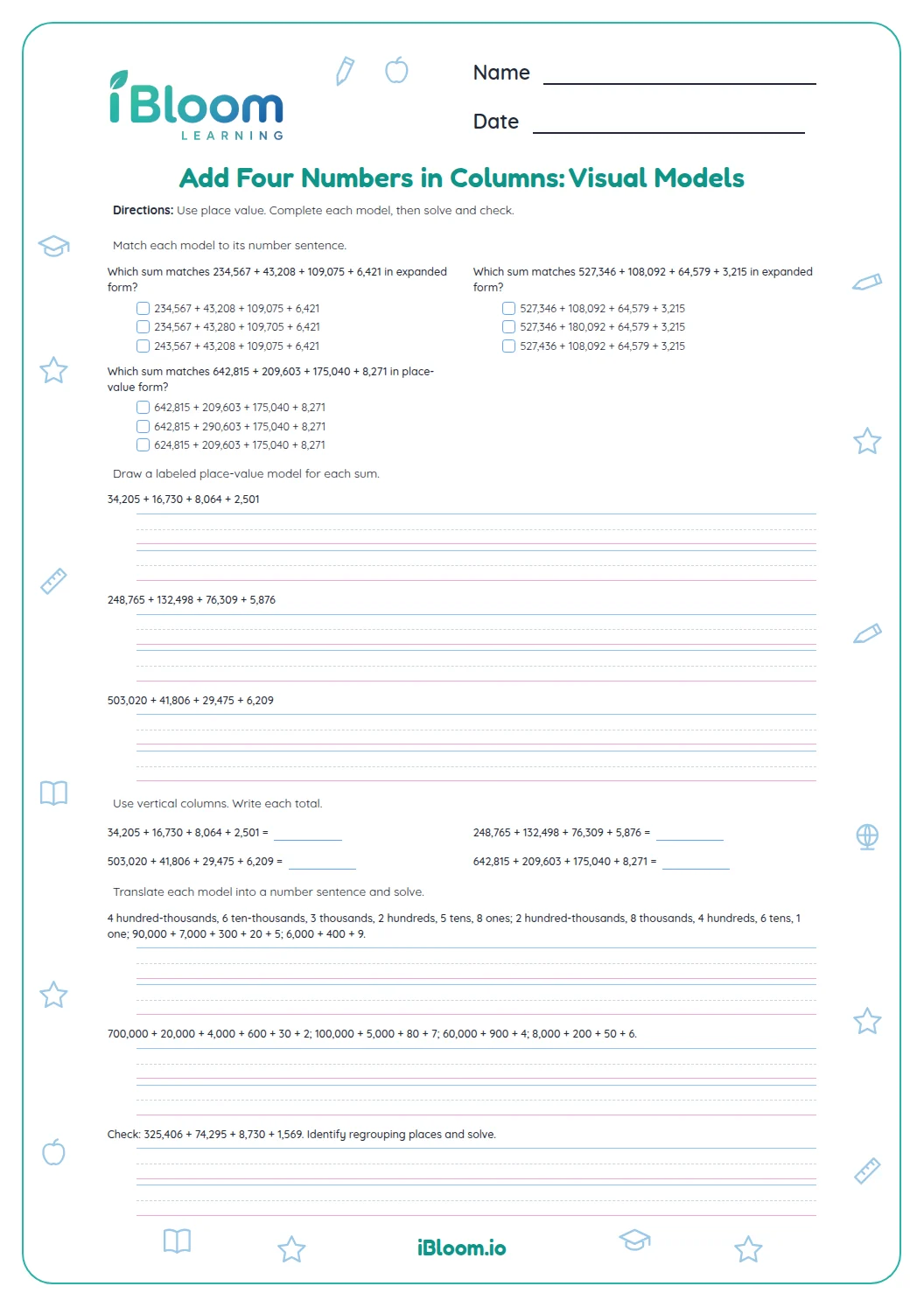
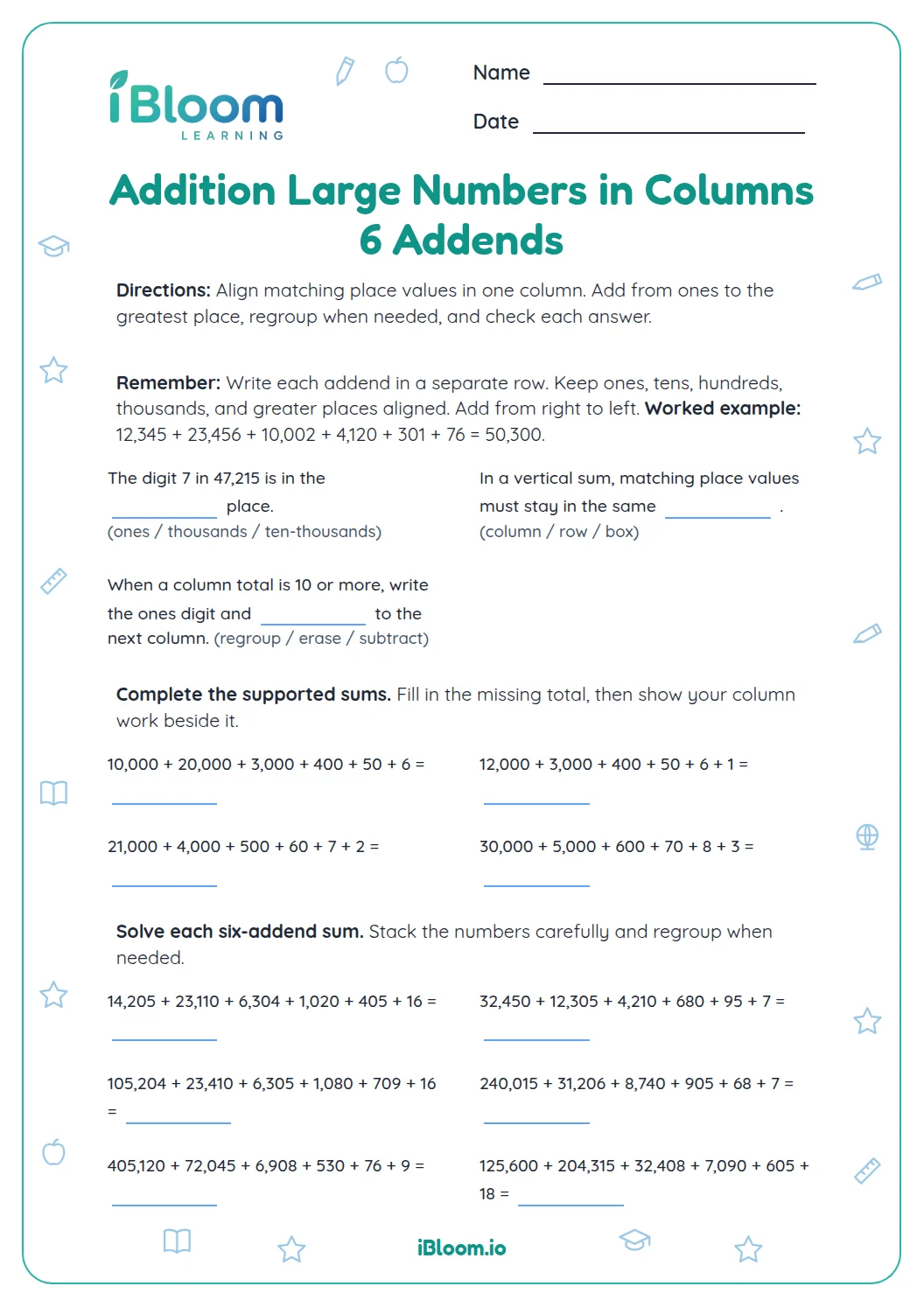
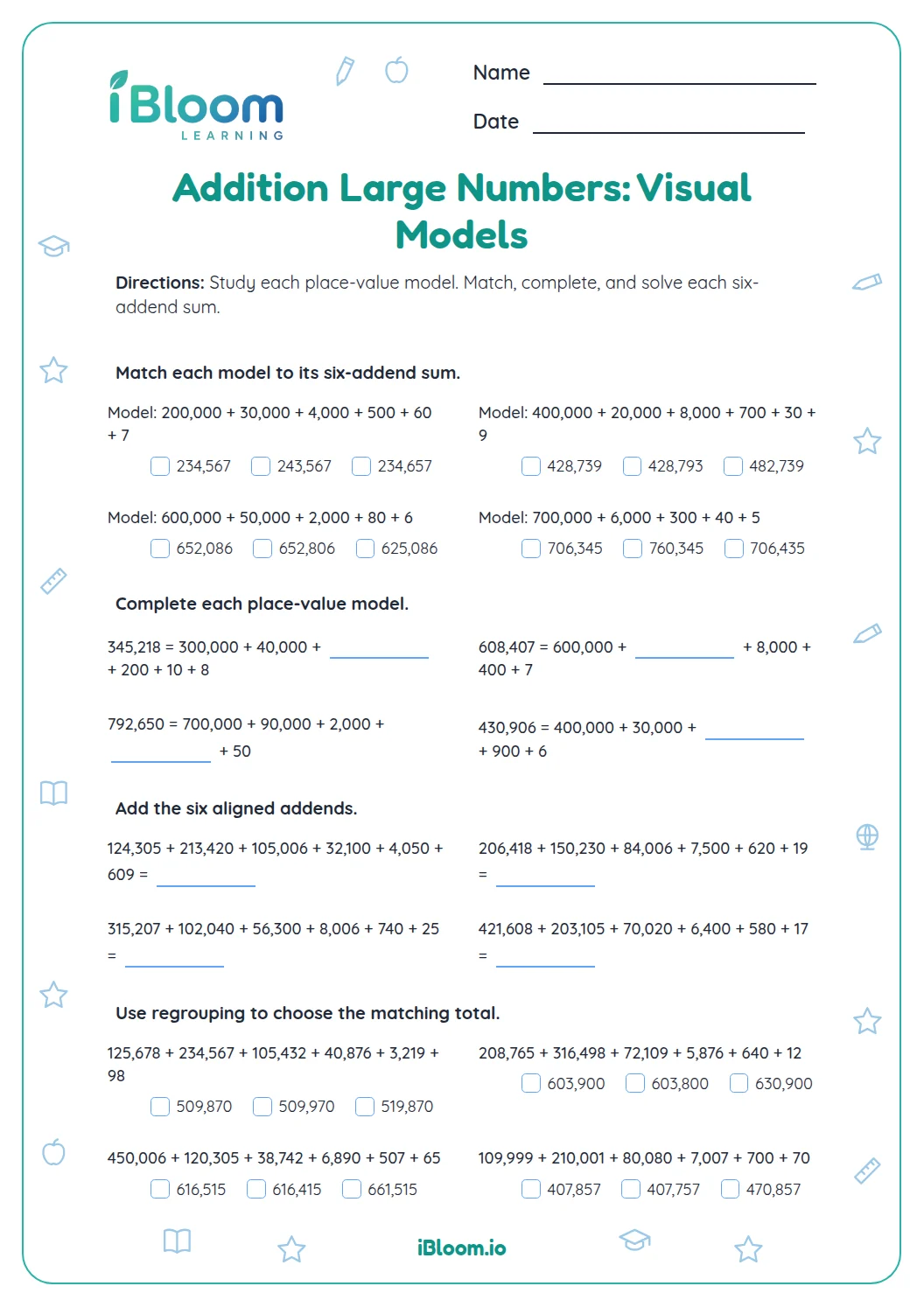
This Grade 5 printable gives learners 15 sums, each with five 5- or 6-digit addends. Place-value tables model the five-digit addends in eight questions; the remaining questions show the numbers directly. Children line up matching places, regroup when needed, and record each total in the work area. This keeps the old sheet’s place-value model approach while giving every item column work. The sums practice CCSS 4.NBT.B.4.
Aligned to 4.NBT.B.4
Why do place-value columns matter?
In a multi-addend sum, each digit must be added to digits with the same value. Aligning the ones digits at the right places tens beneath tens, hundreds beneath hundreds, and so on.
When should a learner regroup?
When a column total is ten or more, write its ones digit in the answer and carry the tens into the next column. Add that regrouped amount along with the digits already in that column.
- 112,345 + 23,016 + 14,522 + 31,008 + 20,109
- 2Align five rows by place value.
- 3Add each column from right to left.
- 4Total: 101,000
What is included in the set?
Fifteen distinct sums use five 5- or 6-digit addends. Each item is intended for column work, and a separate key gives the total.
How to use this worksheet
- 1Copy each addend into a separate row, aligning the last digits.
- 2Add the ones column and write any regrouped ten above the next place.
- 3Continue through tens, hundreds, thousands, and larger places.
- 4Add the column totals and check with a second grouping of addends.
Common mistakes and quick fixes
The mistake
Starting an addend in the wrong place-value column.
The fix
Align the ones digits at the right edge before adding; then check that every addend has a digit in the correct place.
The mistake
Dropping a regrouped value between columns.
The fix
After adding a column, write its ones digit and carry the remaining tens into the next column before continuing.
The mistake
Leaving out one of the five addends.
The fix
Count the five rows before you total, then estimate whether the sum is near the combined value of all five numbers.
Common Core alignment
This worksheet gives focused practice with the listed grade-level skill.
Add multi-digit whole numbers with the standard algorithm.
On this sheet: The problems require column addition of five multi-digit whole numbers.
Show the official wordingHide the official wording
Fluently add and subtract multi-digit whole numbers using the standard algorithm.
What to practice next
Make more practice
Further reading
Questions parents and teachers ask
How do you add five large numbers in columns?
Write each number on its own row and align digits by place value, with the ones digits at the right. Add from the ones place toward the left, recording any regrouped amount in the next column. The worksheet gives a working area for each of its 15 five-addend sums.
What does regrouping mean in a sum?
Regrouping trades ten units in one place for one unit in the next place. For example, ten ones become one ten. Add that carried ten to the digits already in the tens column; otherwise the next column total will be too small.
Why does this printable use column addition?
Each problem adds five numbers with five or six digits, so aligned columns make the place values and regrouping steps visible. The earlier expanded-form matching task was replaced by column work, which keeps the large-number addition practice clear and consistent across the sheet.
Is an answer key included?
Yes. The separate key lists the total for all 15 sums. Learners can estimate a total before calculating and compare the estimate with the final answer. They can also add the five numbers in a different order as a check, since changing the order does not change the sum.
How long should this take?
Plan for about 30 minutes for 15 sums with five addends each. The work may take longer when learners carefully write each row and track regrouping. Encourage accurate alignment and a final estimate before focusing on speed. A short break between parts can help maintain attention and patience.