
About this worksheet
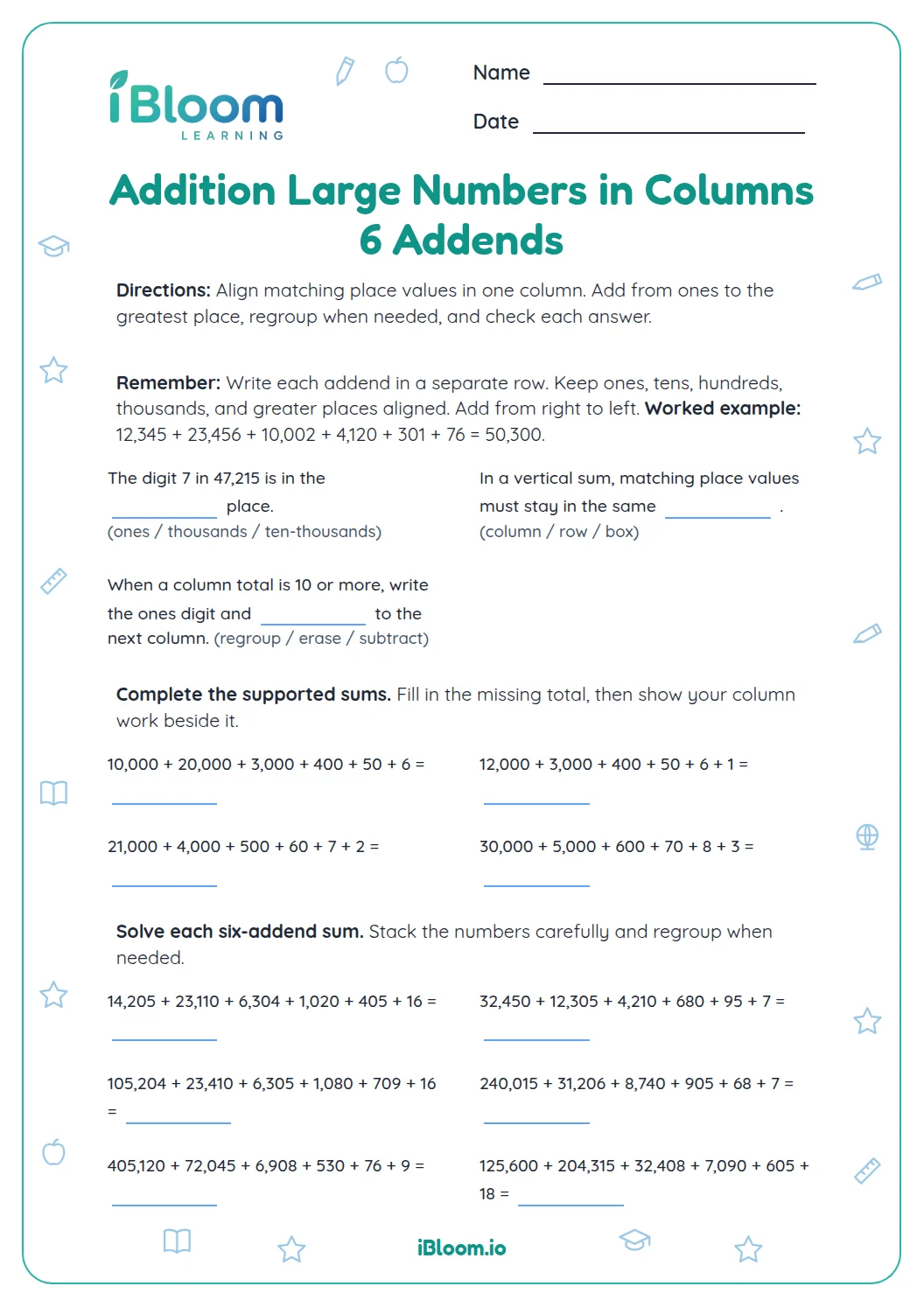
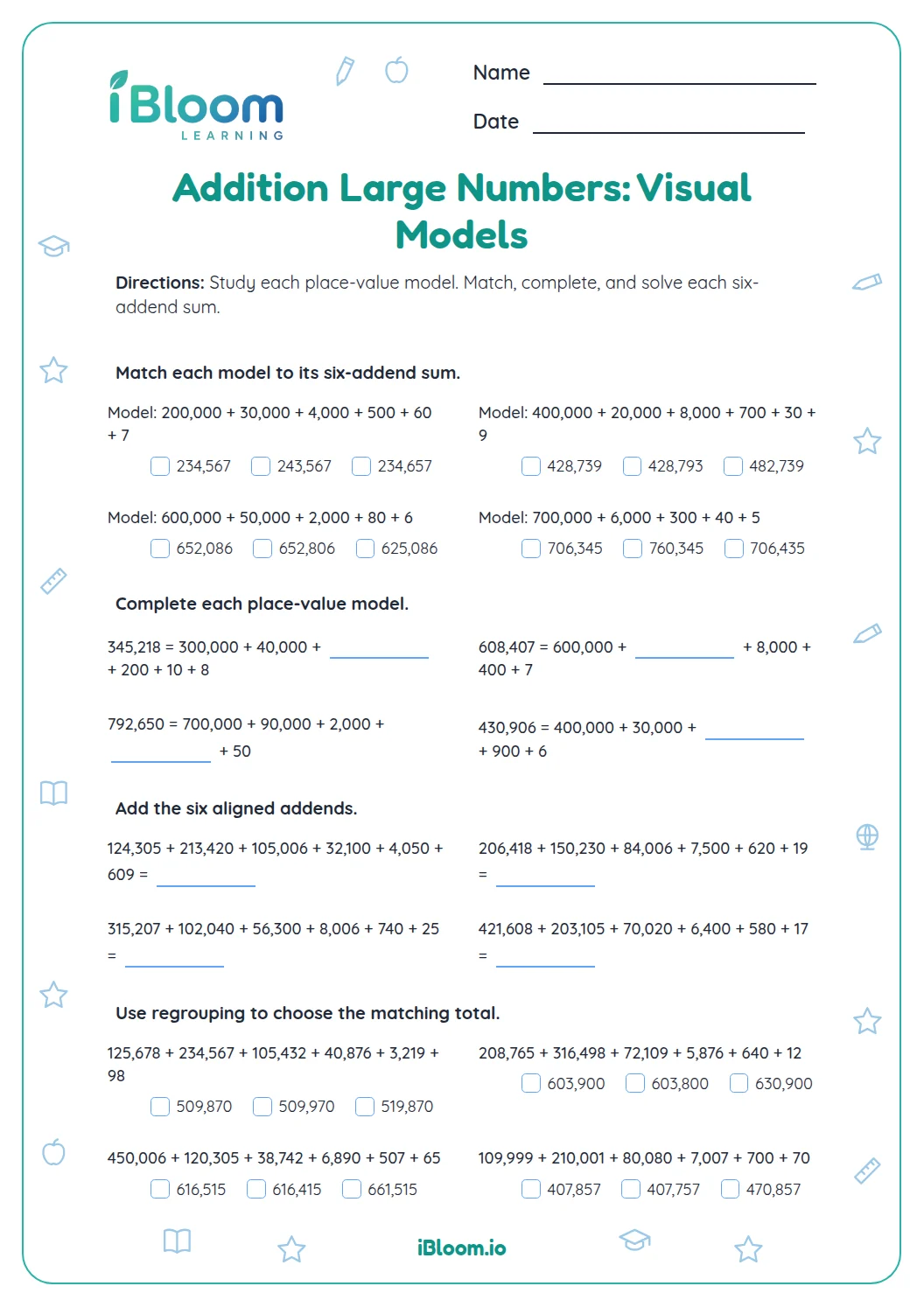
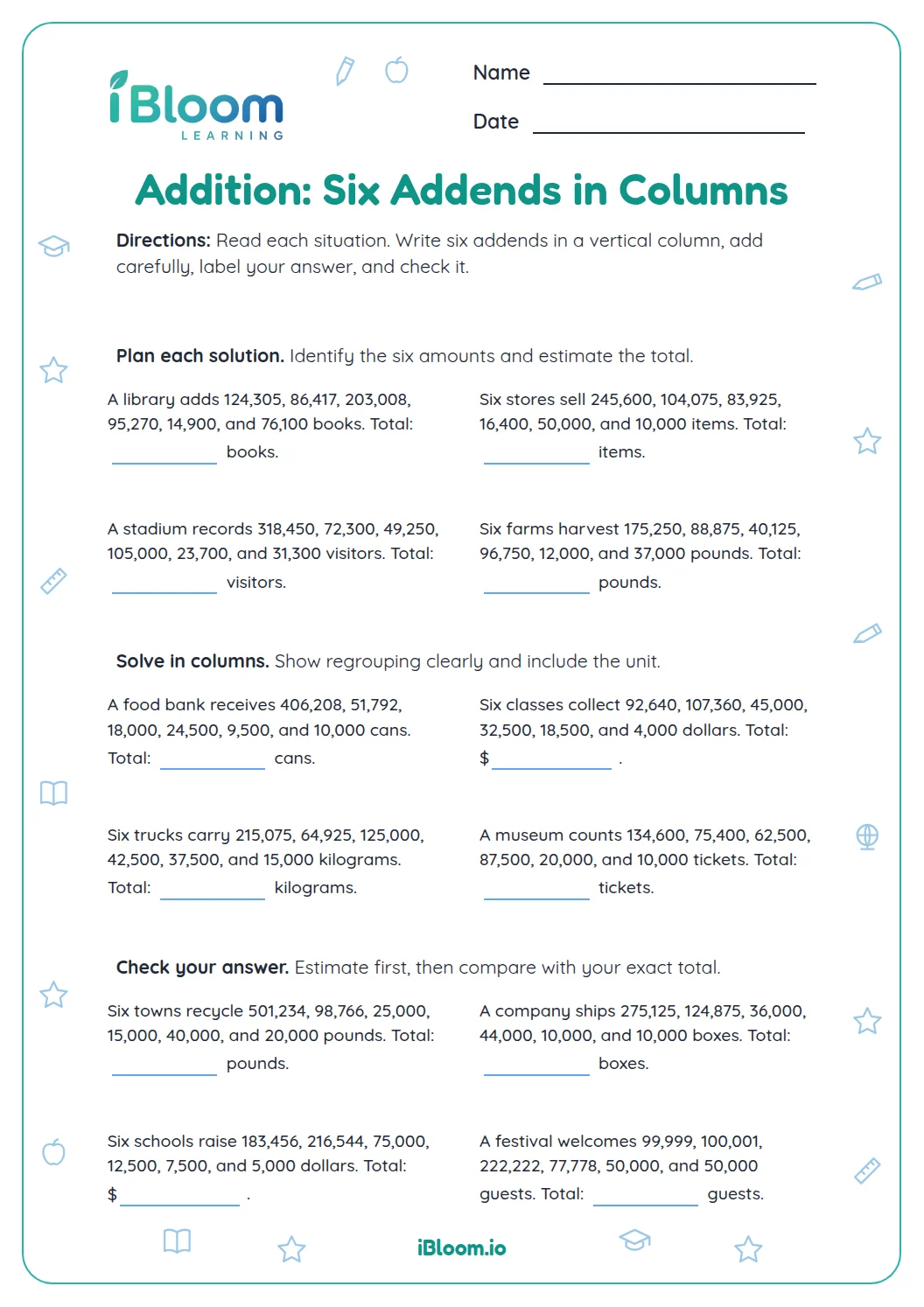
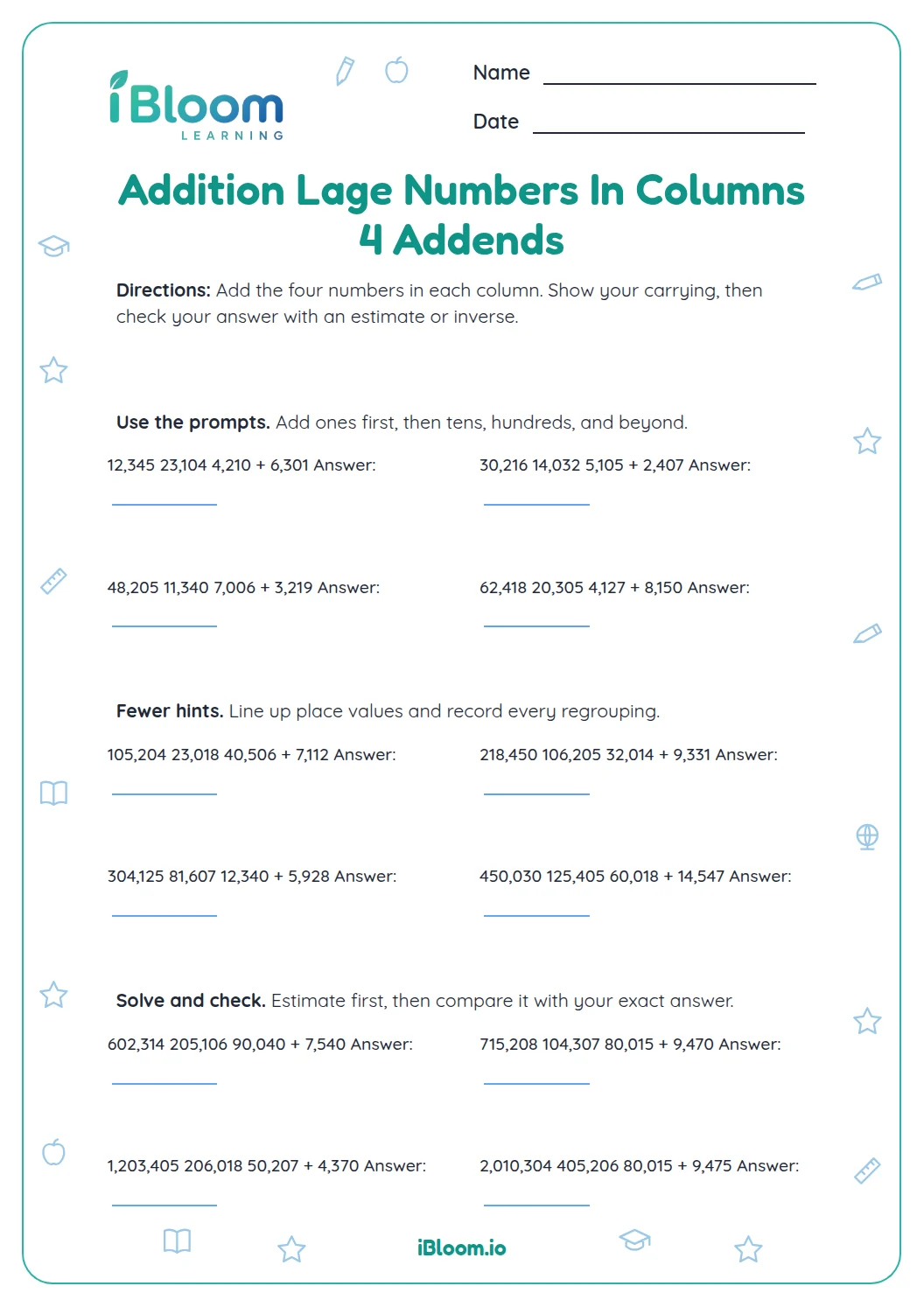
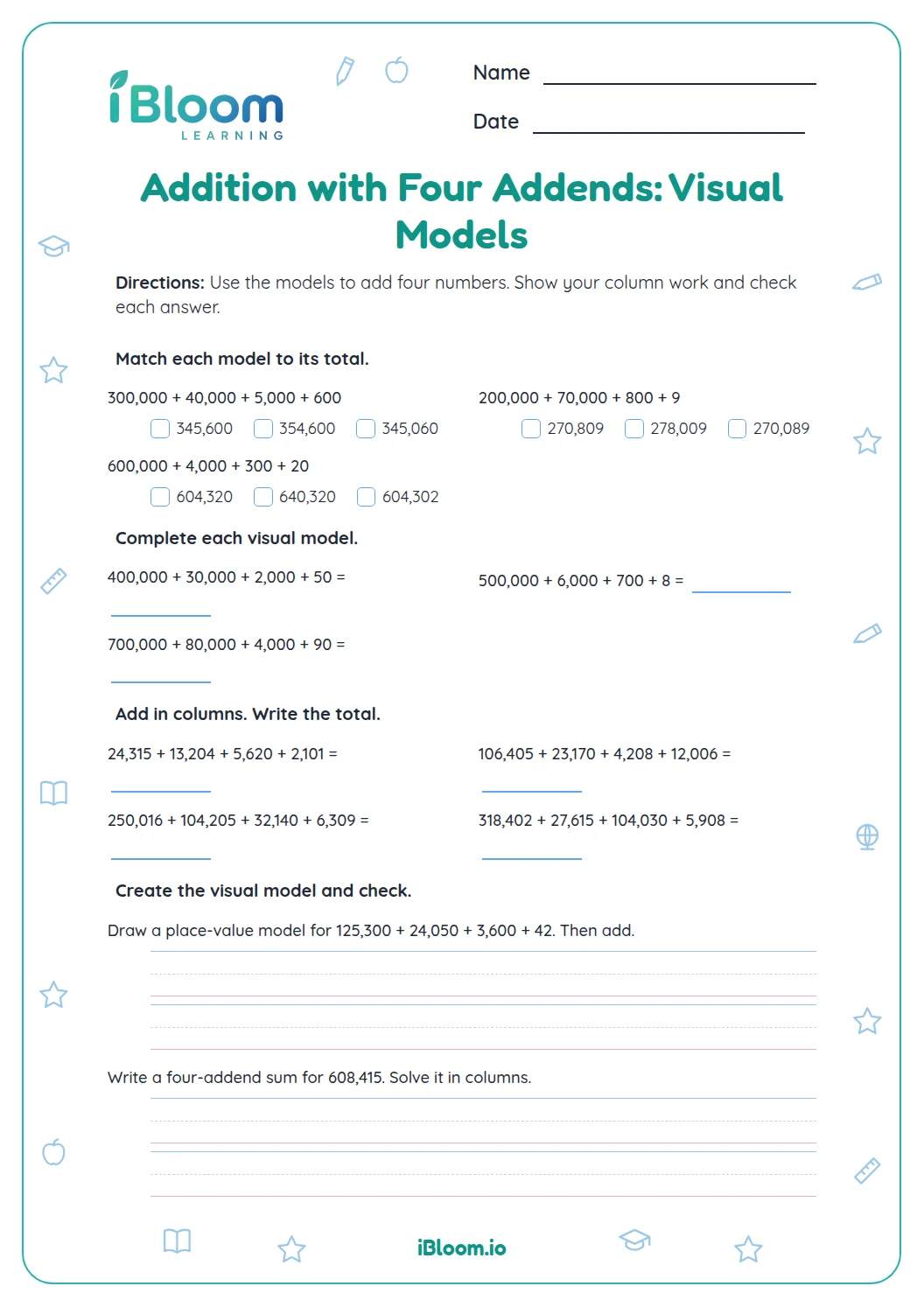
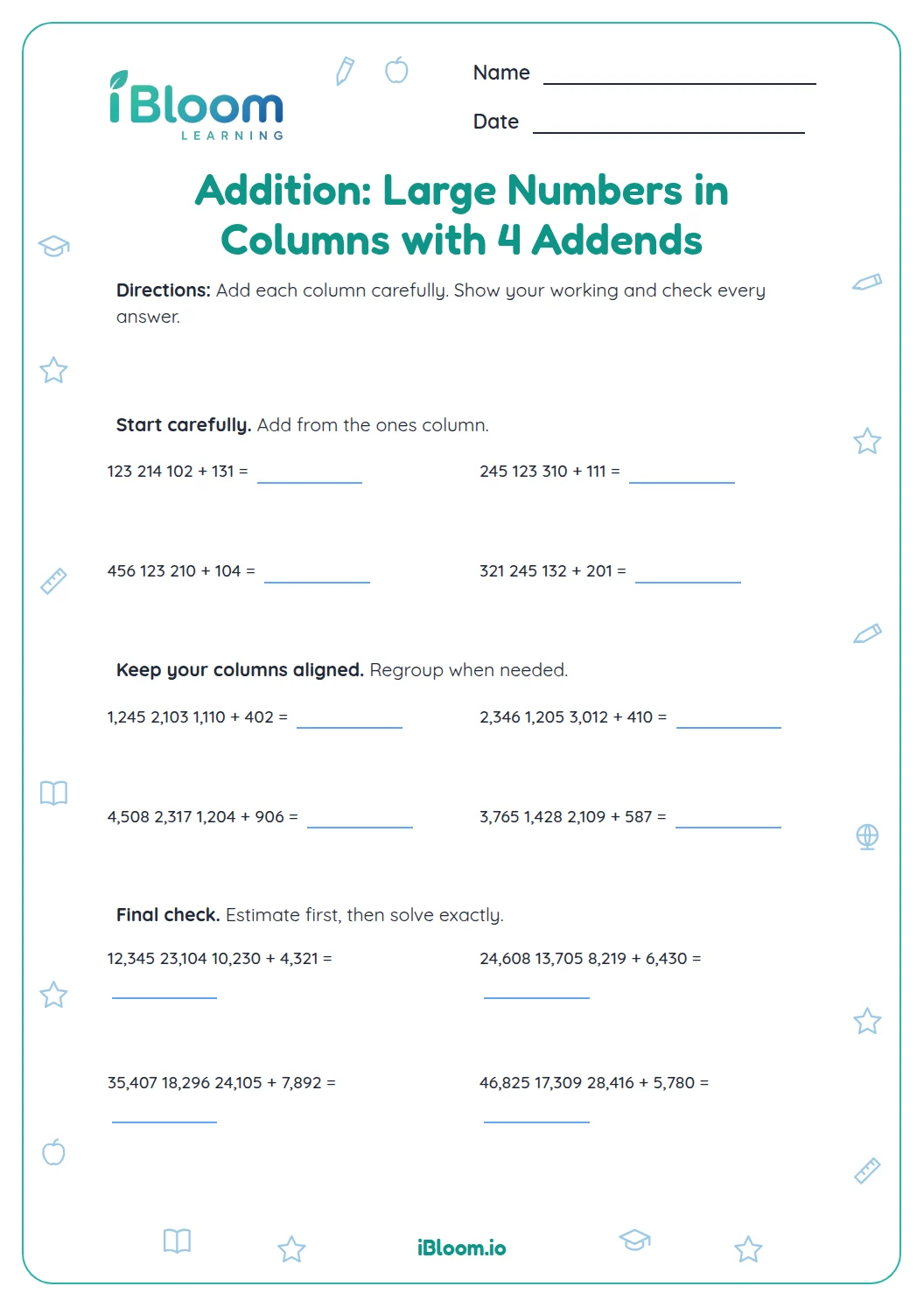
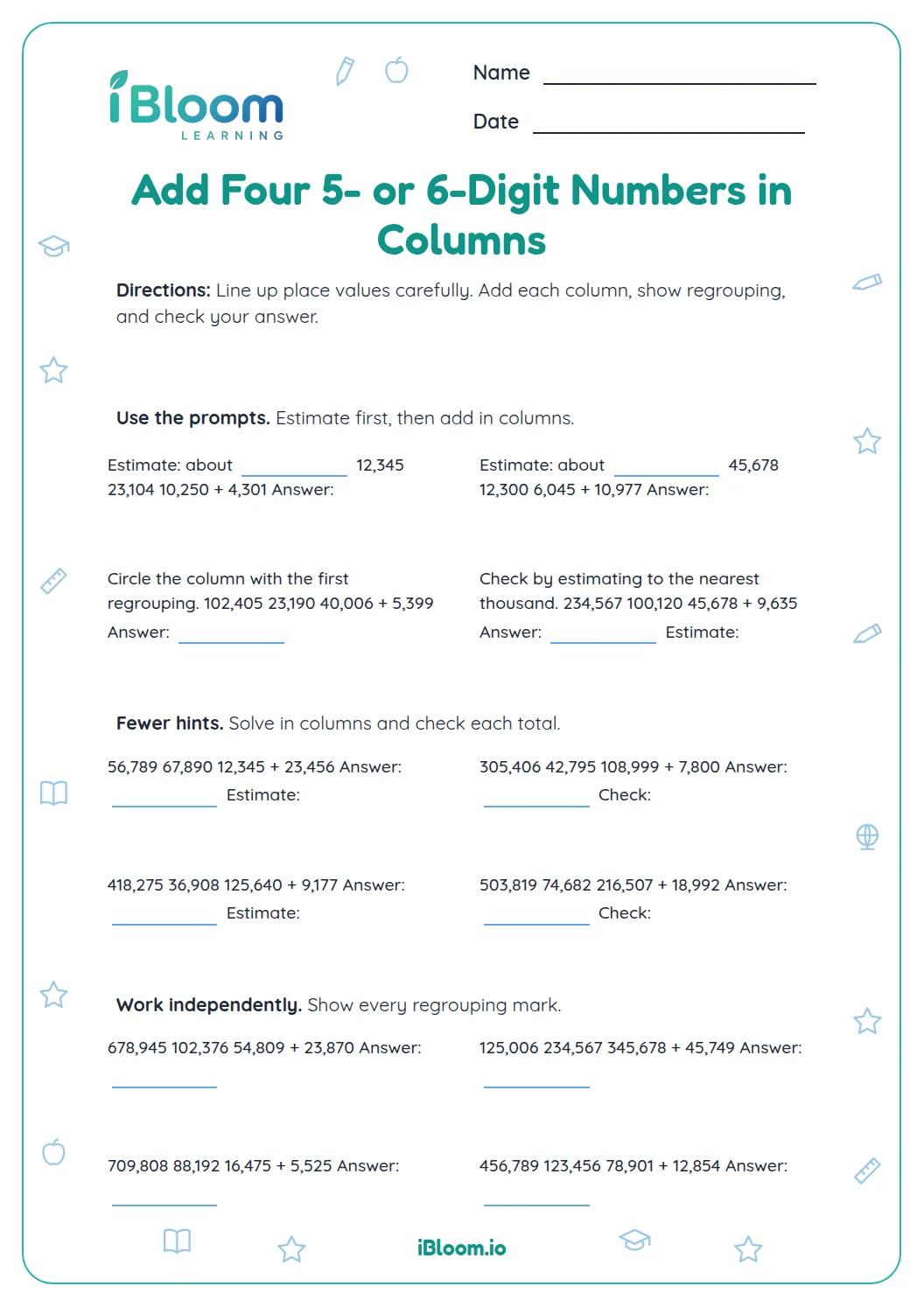
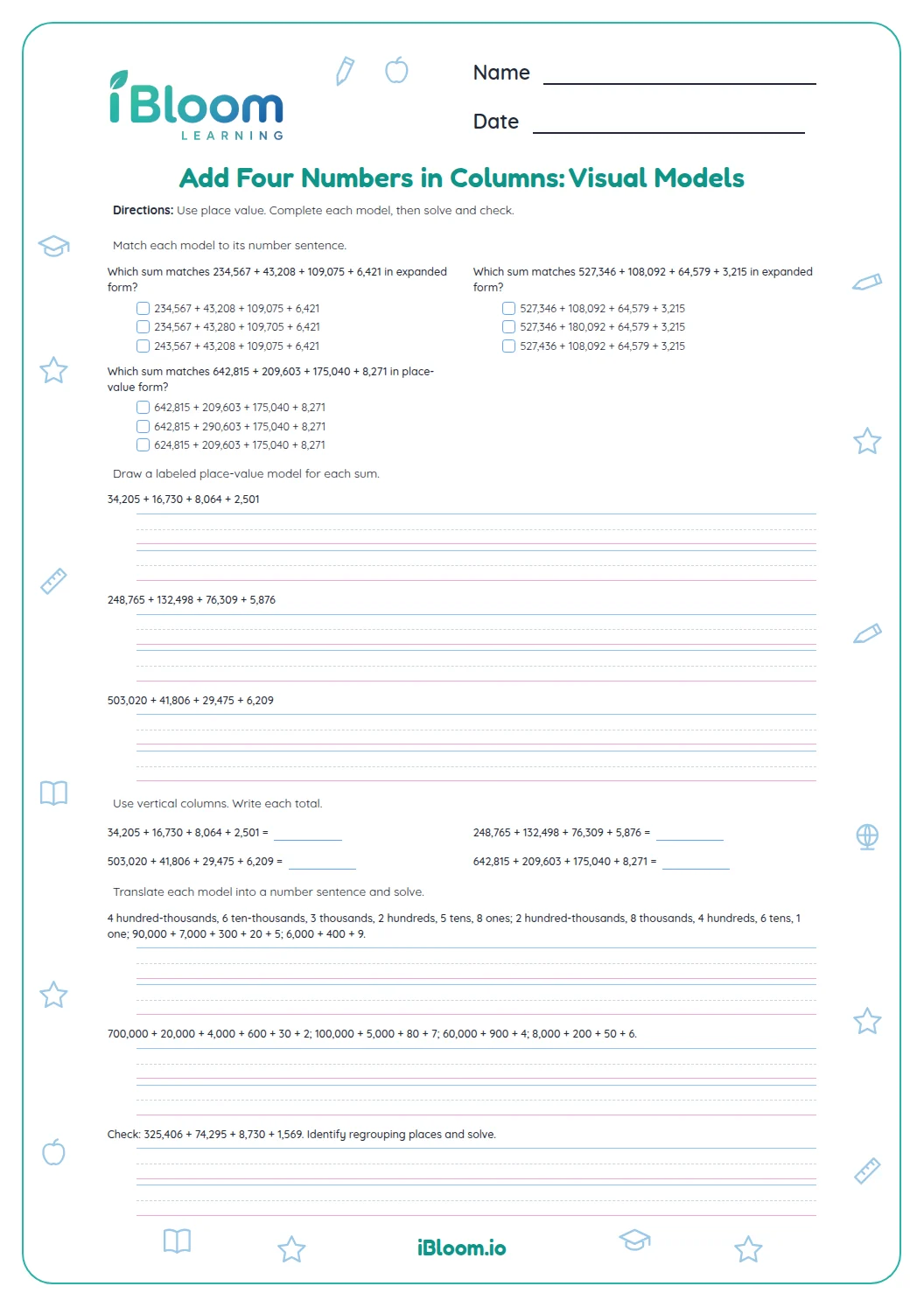
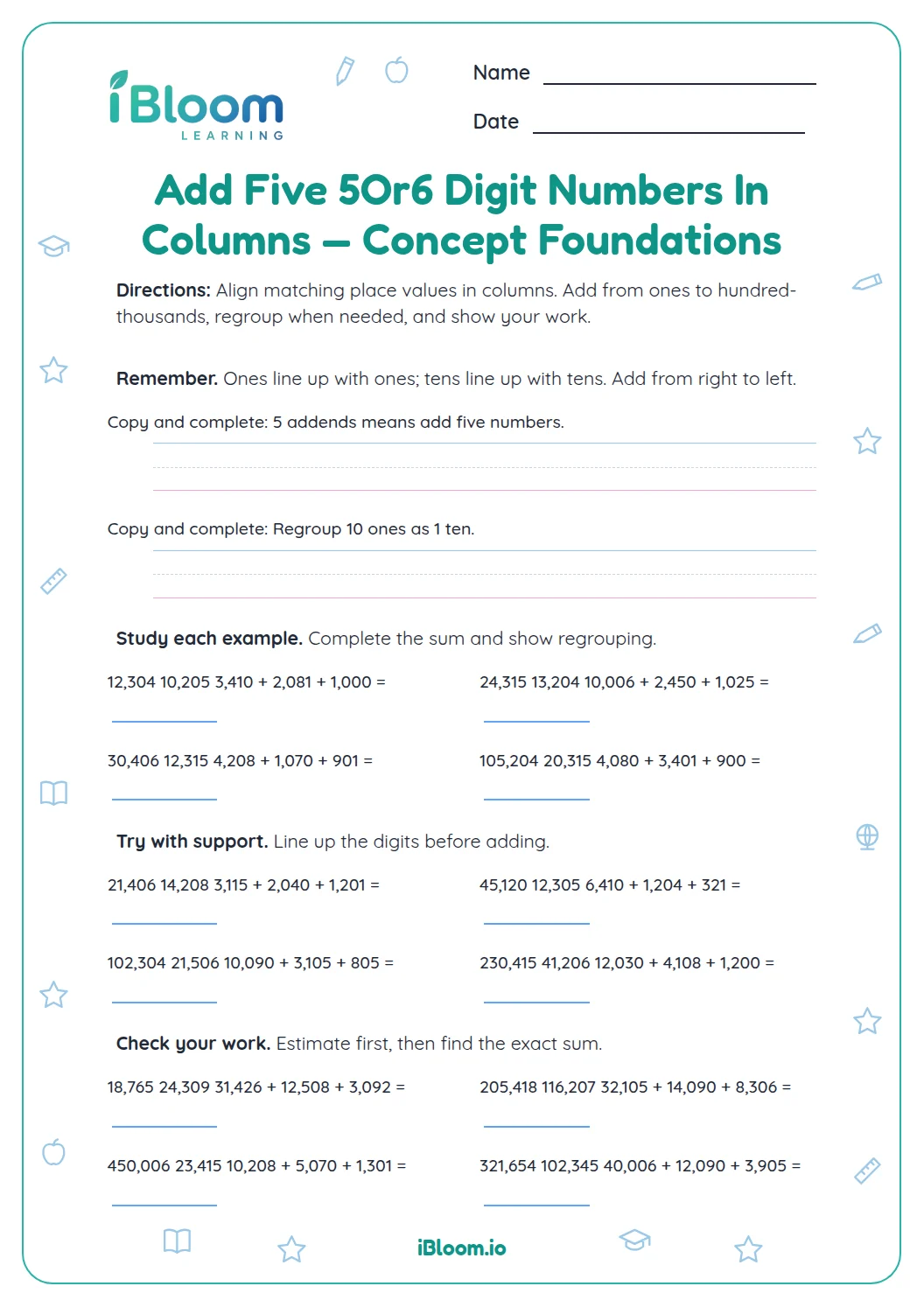
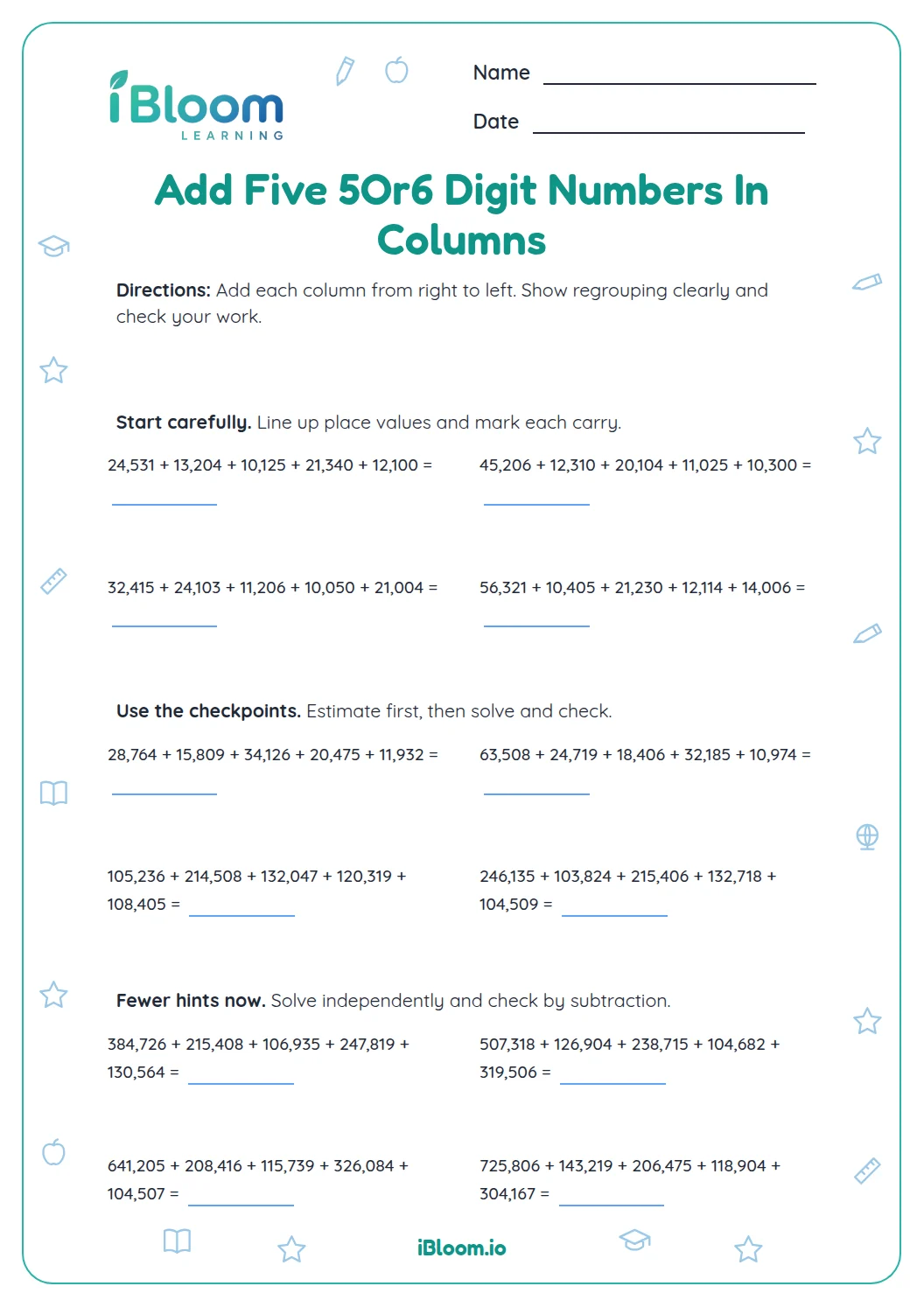
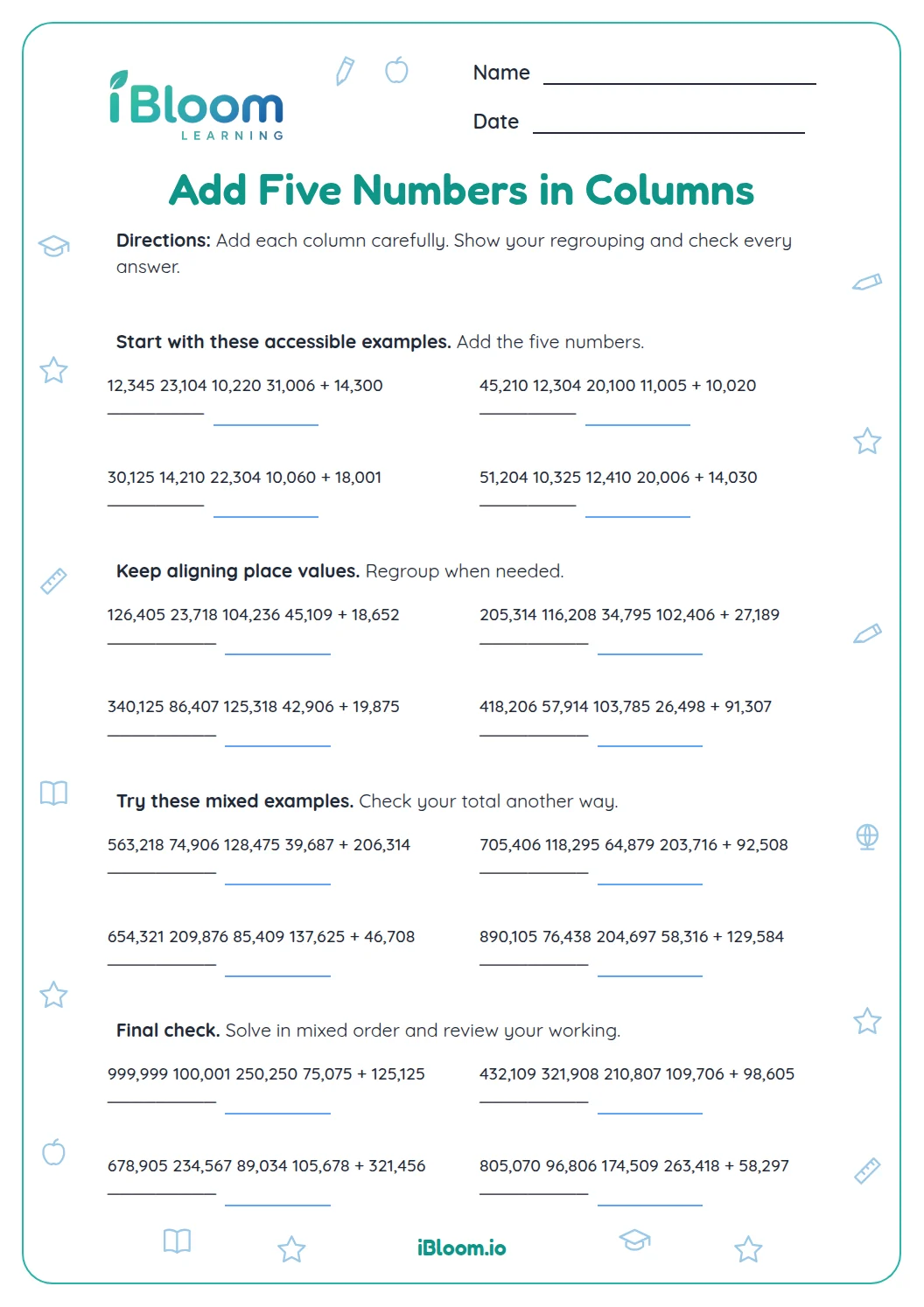
This free Grade 5 worksheet gives learners nine six-addend sums, an estimation question, a place-value method check, a missing-addend equation, and two written reasoning questions. They align digits, regroup, estimate totals, and check addition work. It practices CCSS 4.NBT.B.4, fluently adding multi-digit whole numbers with the standard algorithm. The four parts span two worksheet pages, with a separate answer key.
Aligned to 4.NBT.B.4
Why line up six addends by place value?
A column method keeps ones, tens, hundreds, and larger places together. When six numbers are added, several columns may need regrouping. Keeping every digit in its place makes those regroupings easier to track.
How can a learner check a long sum?
Add from right to left, regroup whenever a column totals ten or more, and then estimate whether the answer is reasonable. A second addition in a different order can also help find a missed addend or regrouping.
- 112,543 + 27,108 + 3,897 + 45,621 + 7,034 + 19,876
- 2Ones: 3 + 8 + 7 + 1 + 4 + 6 = 29; write 9 and carry 2 tens.
- 3Continue column by column, including each carried amount.
- 4Answer: 116,079
What reasoning will the four parts practice?
Part A has eight six-addend sums. Part B asks learners to estimate a six-addend sum and identify a sound column method. Part C has one missing-addend equation and one more sum. Part D asks learners to explain a regrouping error and describe a check for an omitted addend.
How to use this worksheet
- 1Copy each addend into a vertical column.
- 2Align ones under ones, tens under tens, and so on.
- 3Add one column at a time from right to left.
- 4Record each regrouped ten above the next column.
- 5Estimate the total, then check by adding the numbers again in a different order.
Common mistakes and quick fixes
The mistake
Starting a number in the wrong column.
The fix
Mark the ones column first and align every addend on the right.
The mistake
Forgetting a regrouped amount in the next column.
The fix
Write the carry above the next place before moving on.
The mistake
Leaving out one of the six addends.
The fix
Count the numbers in the question and tick each one after copying it.
Common Core alignment
The column sums give practice adding multi-digit whole numbers with the standard algorithm.
Fluently add multi-digit whole numbers with the standard algorithm.
On this sheet: Each sum asks learners to add six multi-digit whole numbers and explain how to check place-value work.
Show the official wordingHide the official wording
Fluently add and subtract multi-digit whole numbers using the standard algorithm.
What to practice next
Make more practice
Further reading
Questions parents and teachers ask
How many numbers are in each addition problem?
Each of the first twelve problems has six multi-digit addends. The two final questions ask learners to analyze a possible addition slip and name a way to check that all six numbers were used. The answer key lists the sums and sample reasoning, so learners can compare their own regrouping work before making a correction.
What is the best way to keep six addends organized?
Write each number in a vertical column with ones beneath ones, tens beneath tens, and each larger place aligned. Add one column at a time from the right. This gives regrouped amounts a clear place in the next column. That routine catches omissions and misaligned digits early.
What does regrouping mean in these problems?
Regrouping means trading ten units in one place for one unit in the next place. For example, ten ones become one ten. With six addends, a column can total well above ten, so learners may need to carry more than one ten into the next place.
What is a good way to check an answer?
Estimate the total first, then add the six numbers again in a different order. Also count the addends in the original problem and compare them with the written work. Question 14 asks learners to explain this count check. Rechecking also helps catch a dropped or copied digit.
Which standard is listed for this worksheet?
The page lists CCSS 4.NBT.B.4, which calls for fluent addition and subtraction of multi-digit whole numbers using the standard algorithm. The questions use that addition method with six addends and ask learners to reason about place-value errors. A teacher can connect the same method to the learner’s class examples.
How long should the worksheet take?
Plan for about 25 minutes for all fourteen questions in four parts. The twelve full sums need space for aligned work and regrouping, and the final two prompts ask for written explanations. The answer key is a separate page for checking totals and sample reasoning.