
About this worksheet
This Grade 5 printable gives students 15 real-world length problems in customary and metric units. Children convert units such as feet and inches or meters and centimeters, then use conversions to solve short situations. A separate answer key includes the results. The work practices CCSS 5.MD.A.1 through unit conversion and multi-step measurement problems.
Aligned to 5.MD.A.1
How can you convert customary lengths?
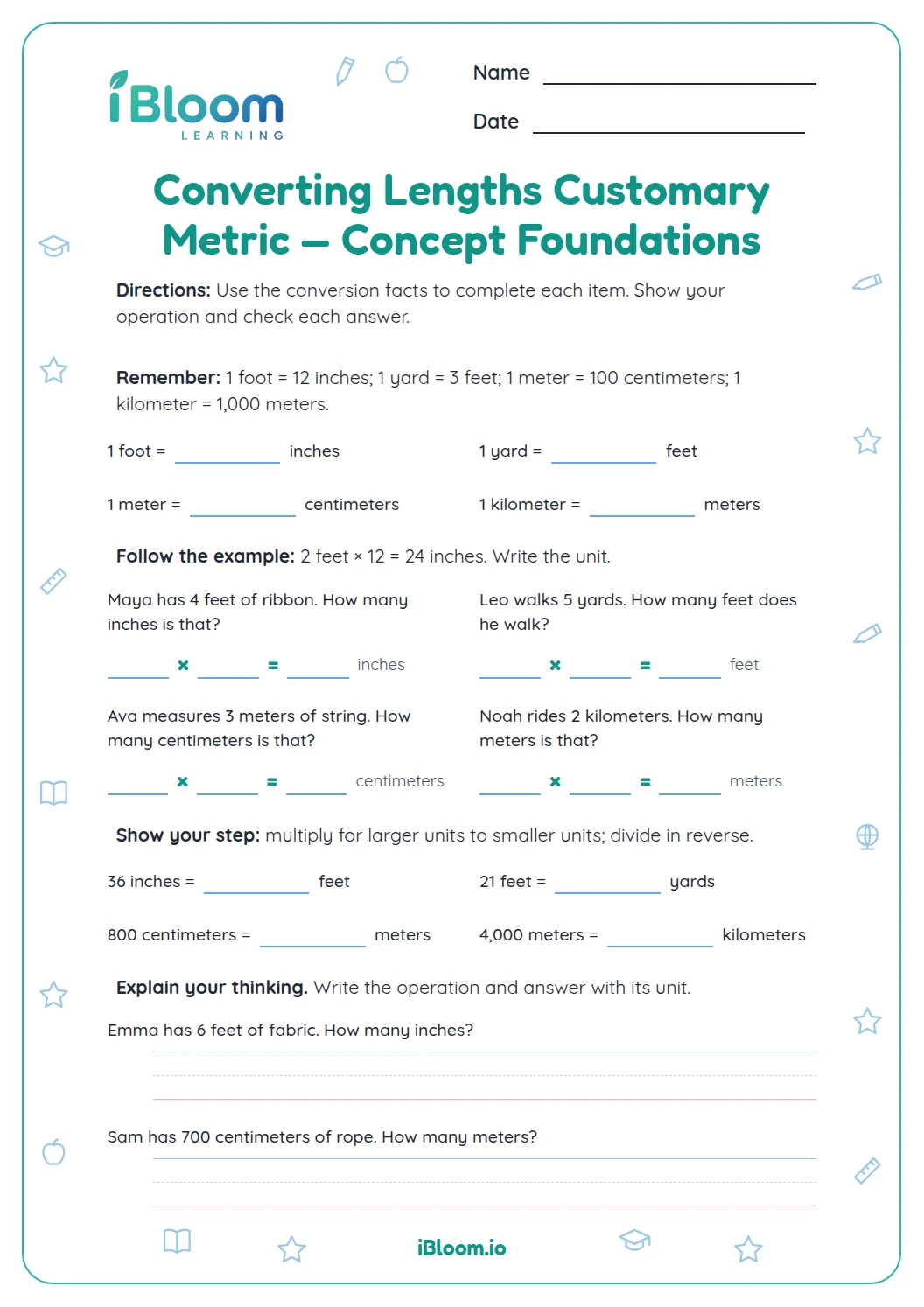
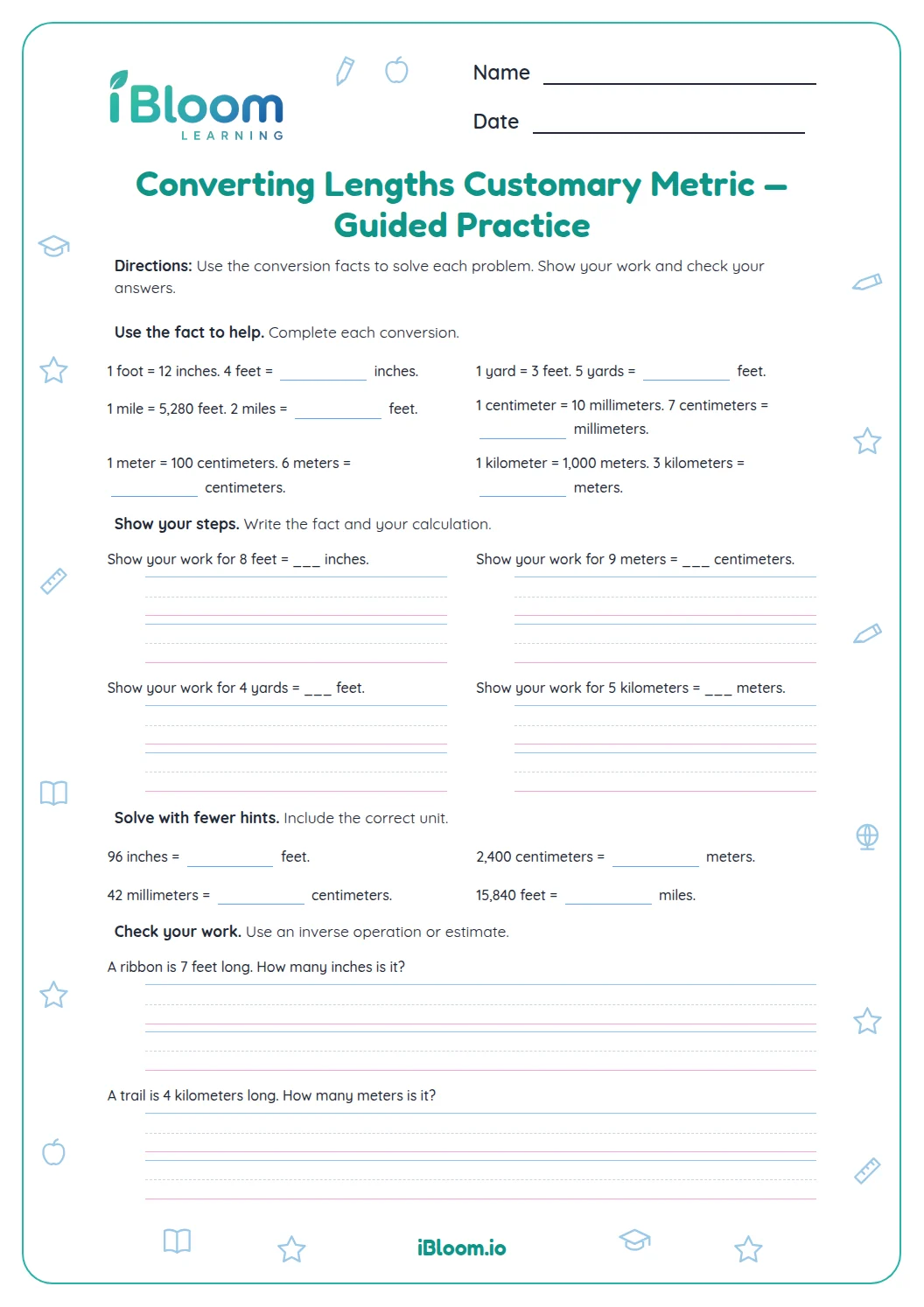
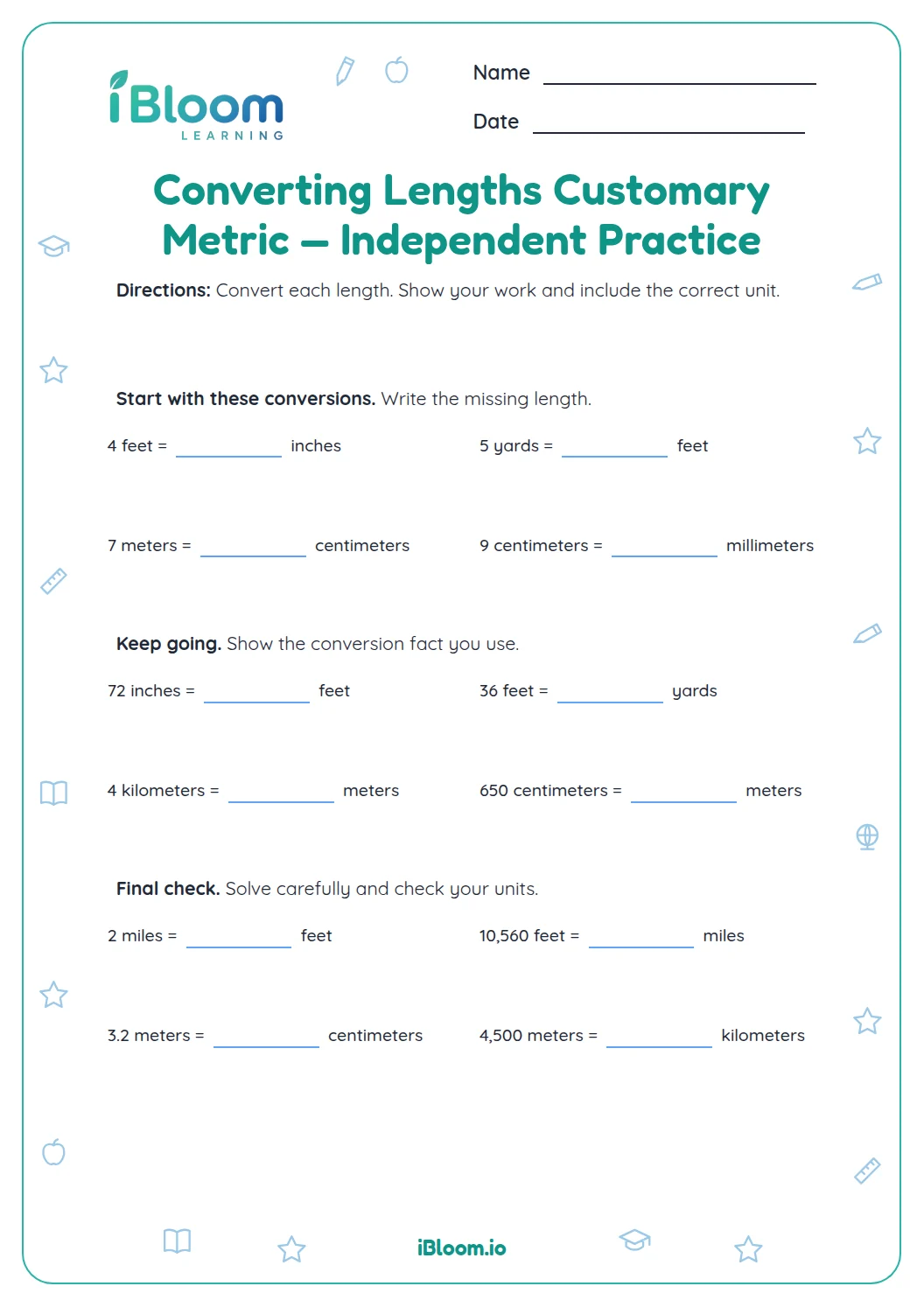
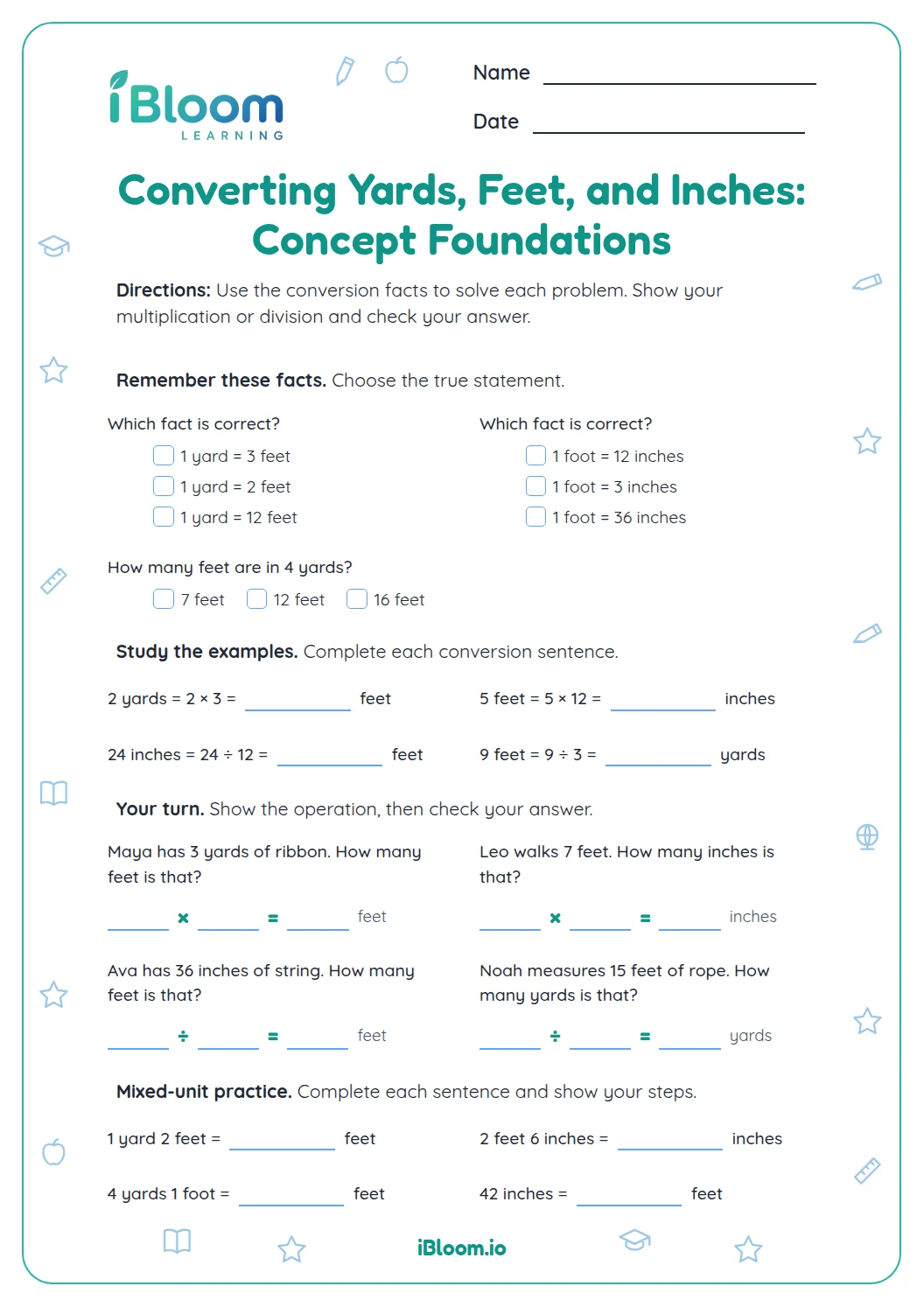
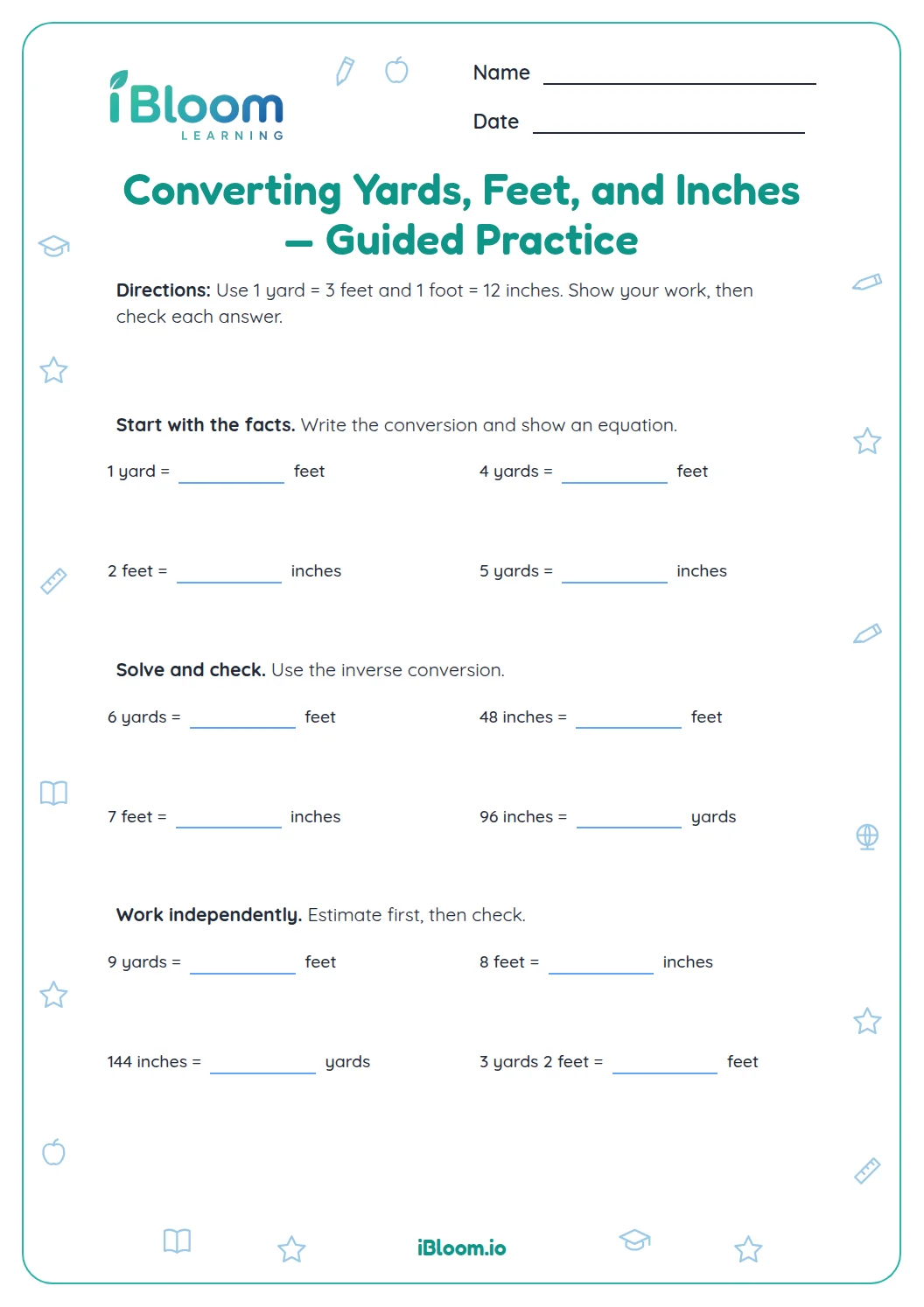
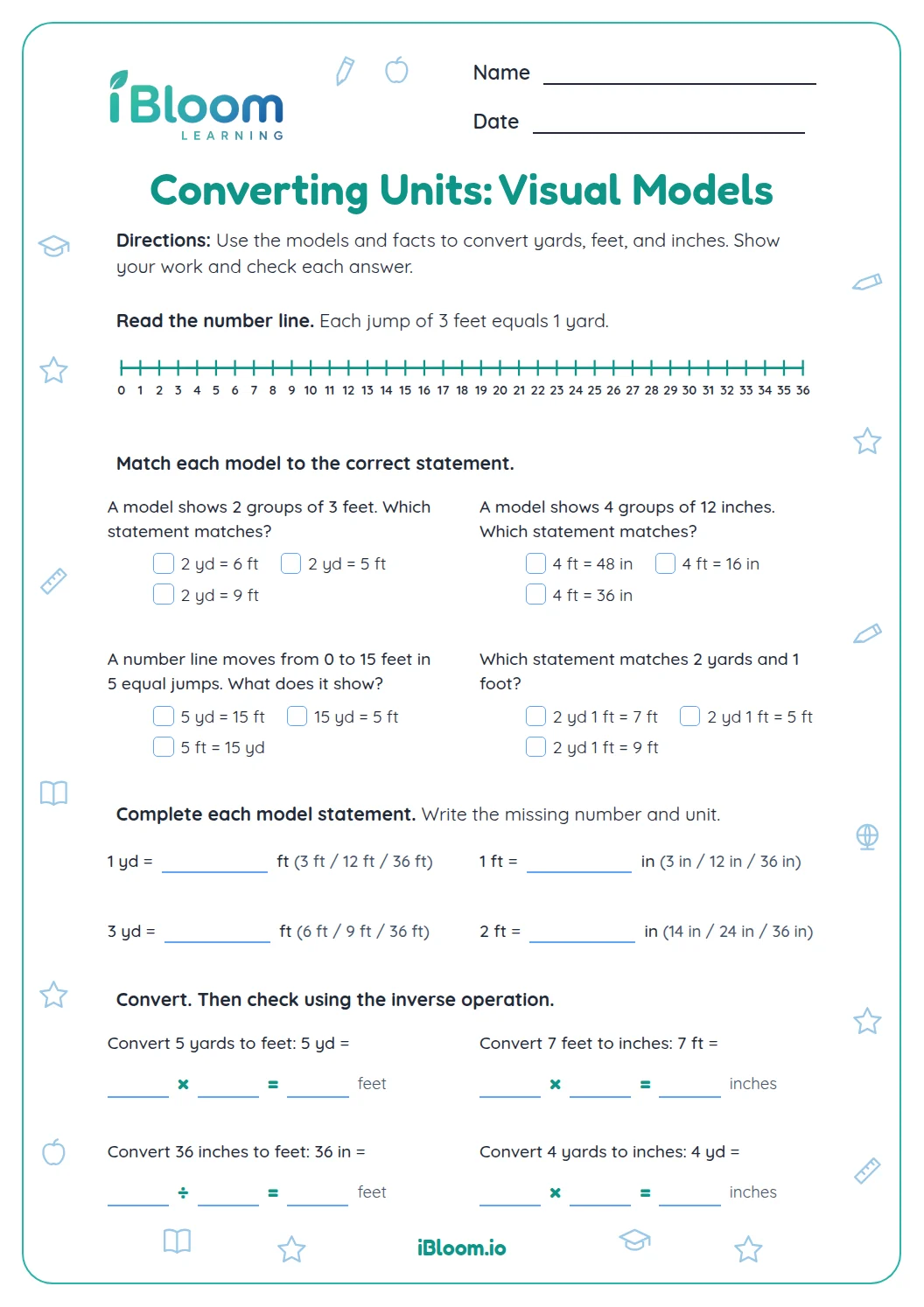
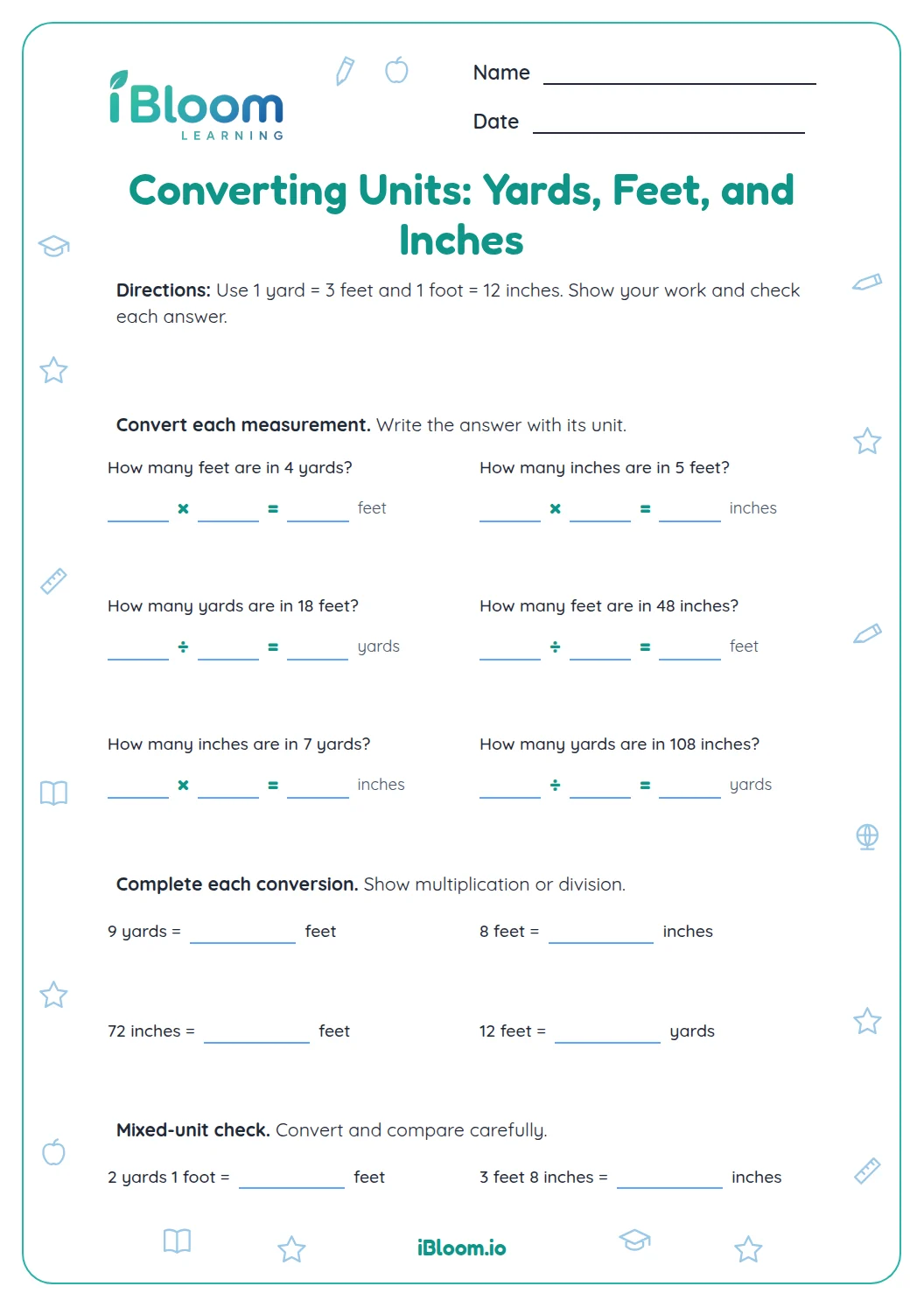
Use the relationship between units in the same customary system. Since 1 foot equals 12 inches, multiply feet by 12 to get inches. For question 1, 7 feet is 7 × 12 = 84 inches.
When converting from a smaller unit to a larger unit, divide. For example, 108 inches divided by 12 is 9 feet.
- 17 feet × 12 inches per foot
- 27 × 12 = 84
- 3The ribbon is 84 inches long.
How do metric length units relate?
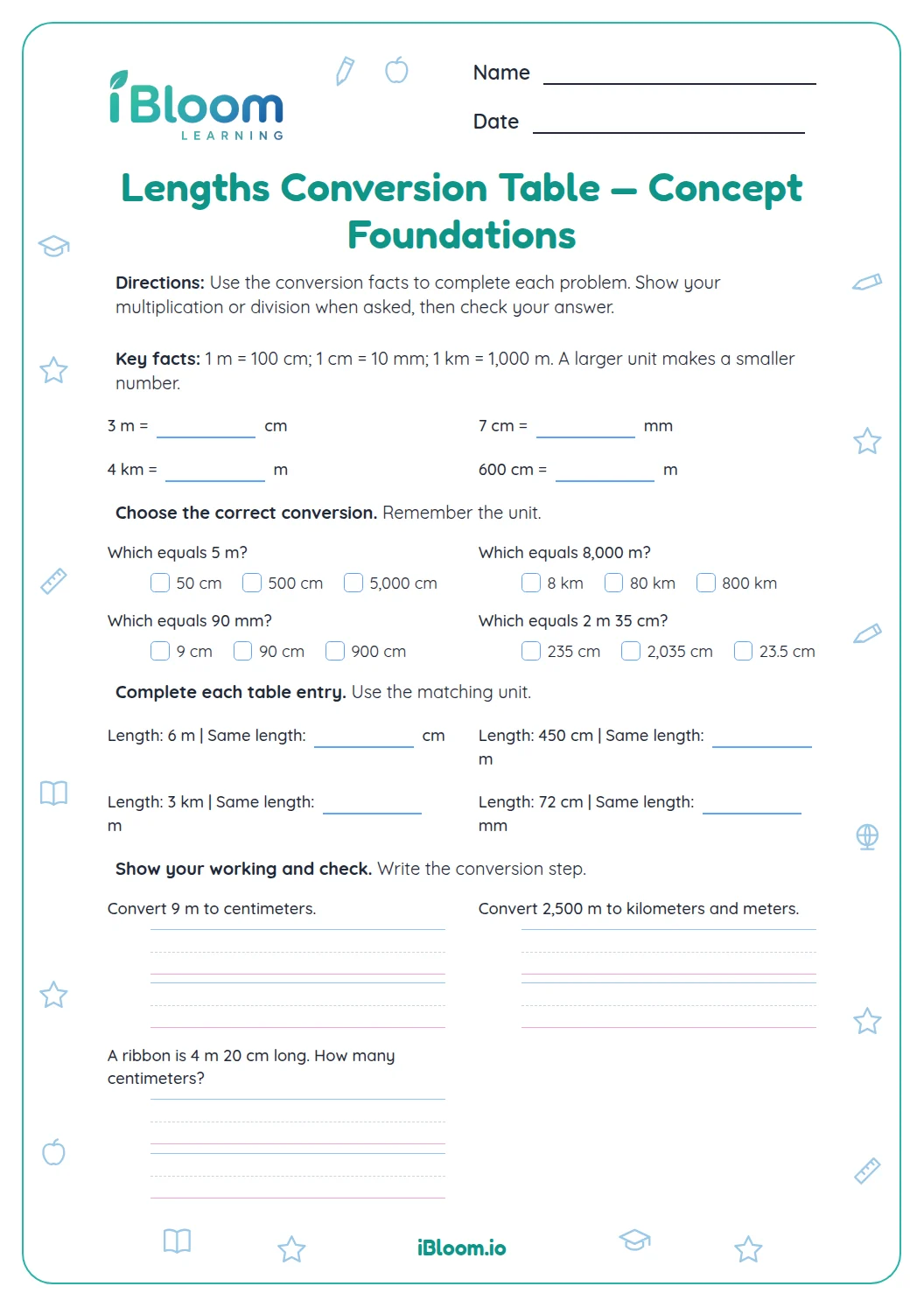
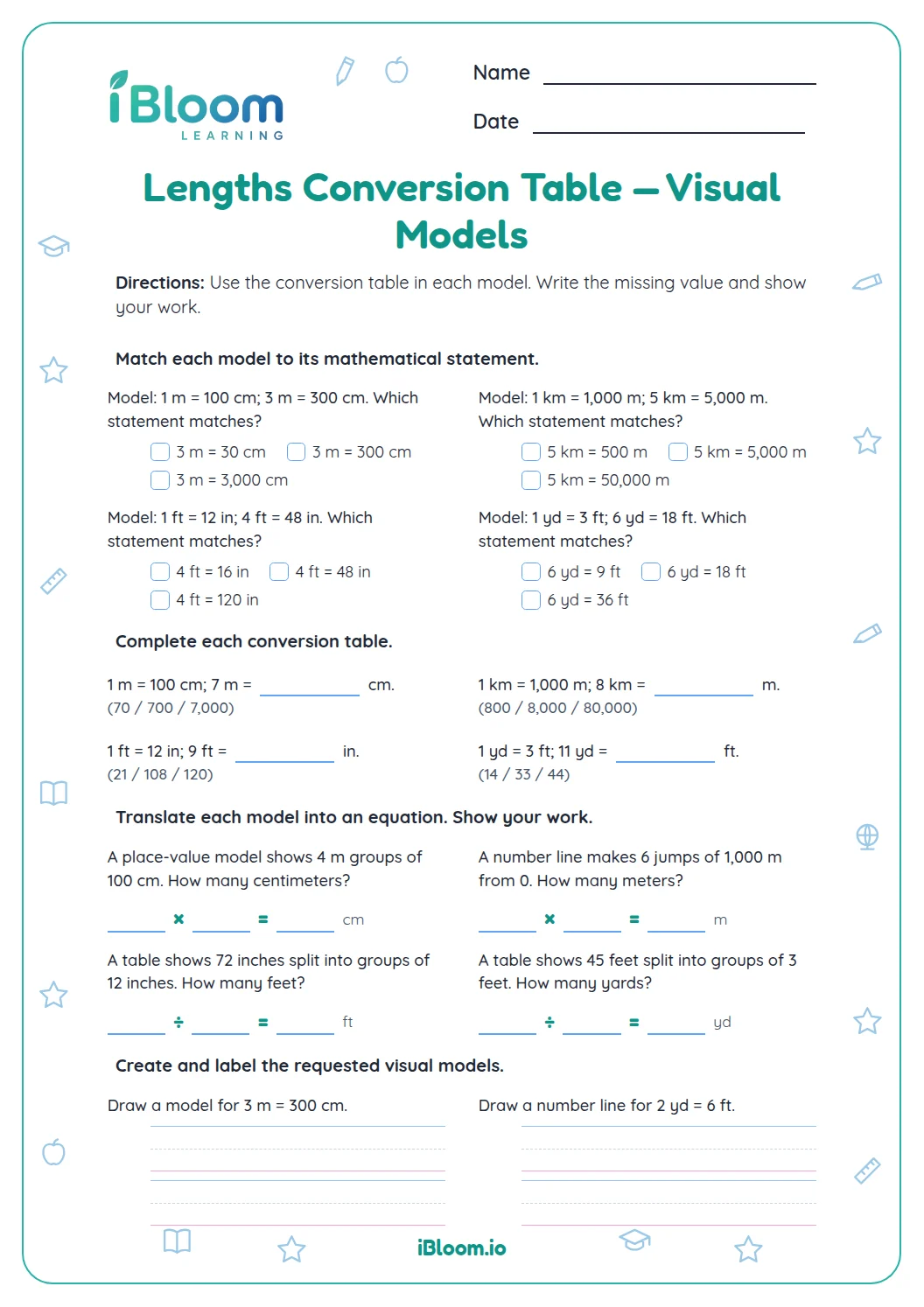
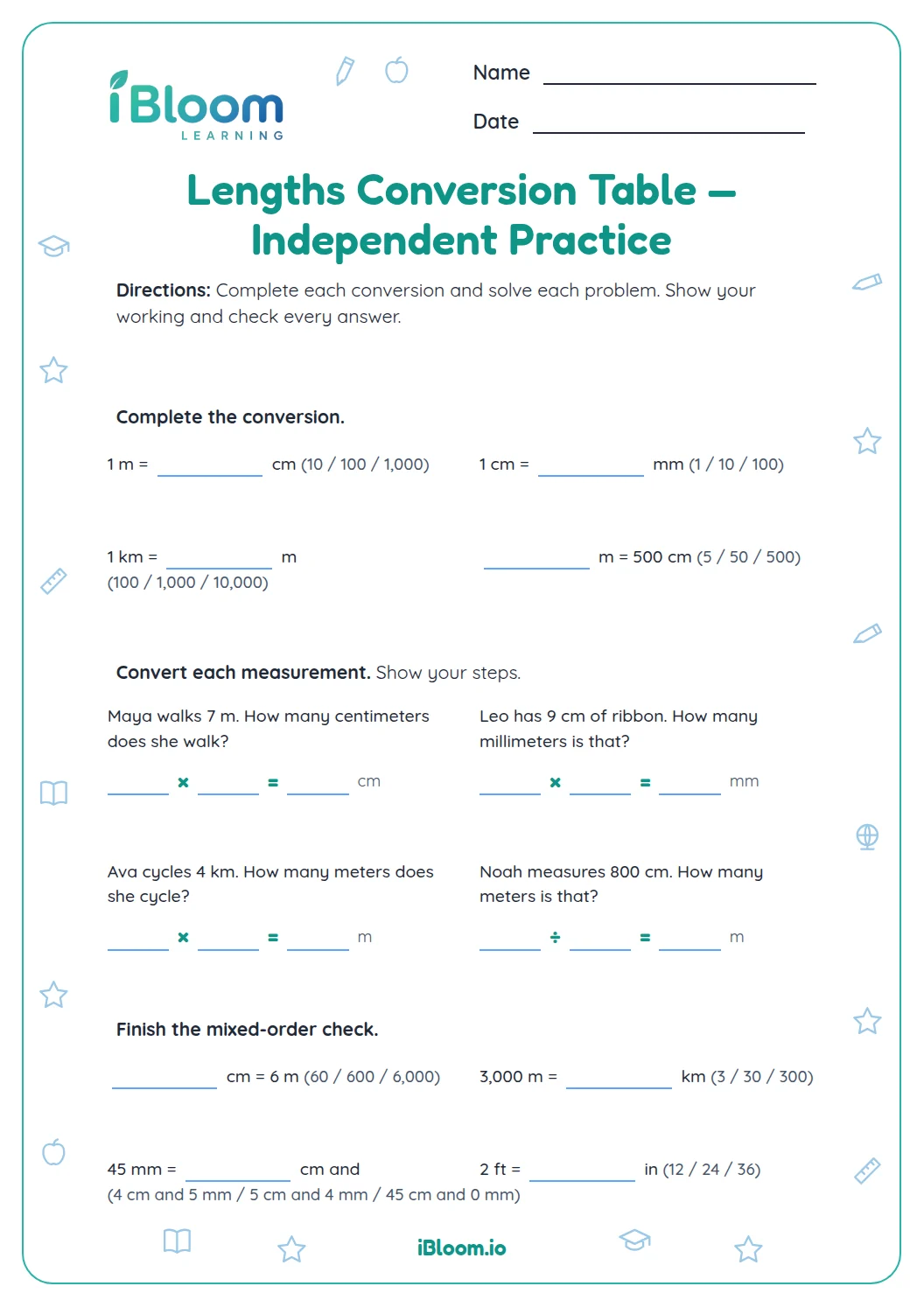
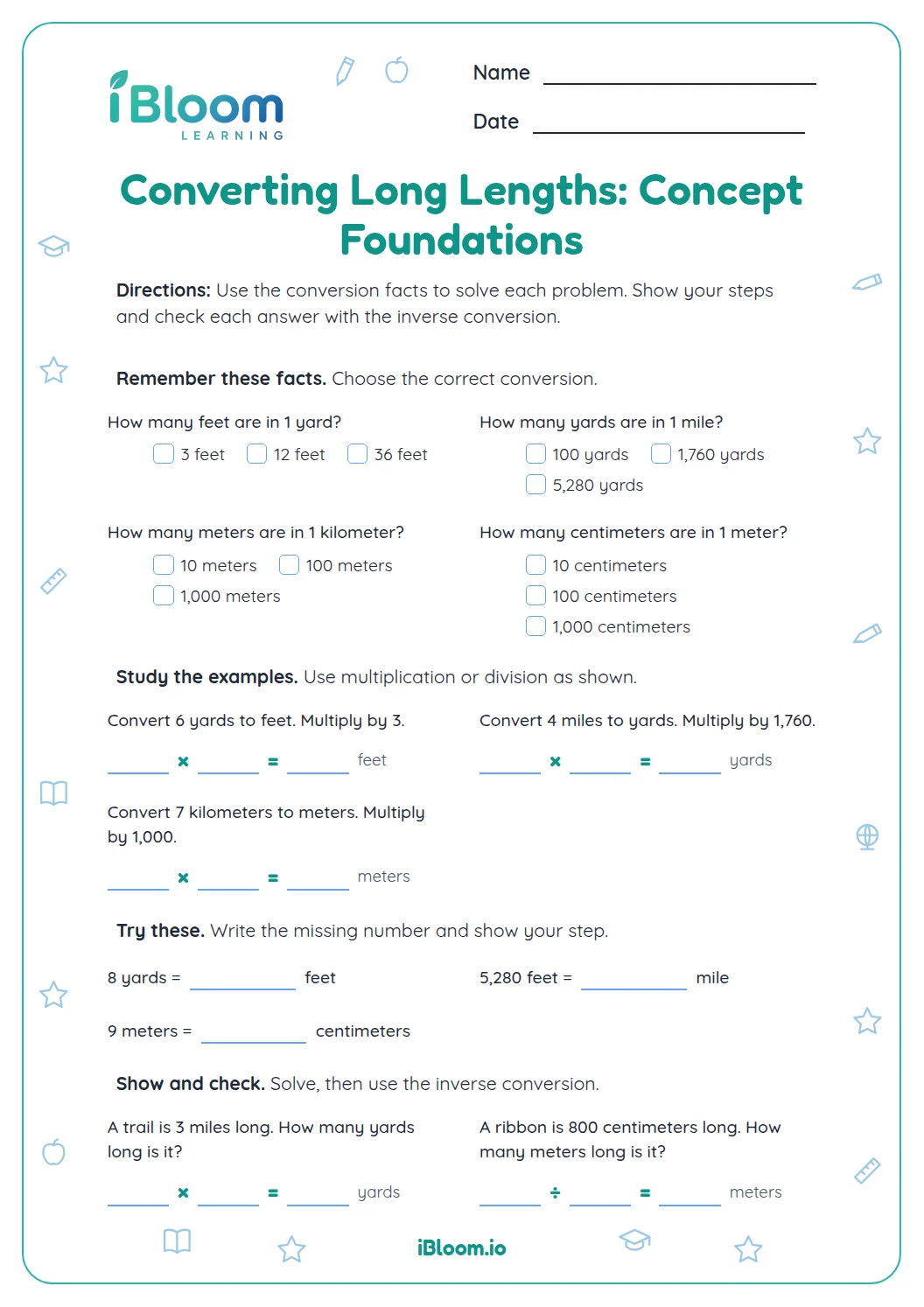
Metric length units group by tens, hundreds, or thousands. One meter equals 100 centimeters and 1,000 millimeters; one kilometer equals 1,000 meters. Use the relationship named in the story, then keep the requested unit in the answer.
What happens when a story takes more than one step?
Convert to a common unit before adding or subtracting lengths. In question 13, 1 mile is 1,760 yards. Add 1,760 yards and 2,640 yards to get 4,400 yards.
How to use this worksheet
- 1Underline the starting unit and the unit the question asks for.
- 2Recall the conversion relationship for those units.
- 3Multiply for a smaller unit or divide for a larger unit.
- 4For a multi-step story, convert before combining lengths.
- 5Write the unit with the result and check that its size makes sense.
Mistakes to watch for
The mistake
Multiplying when converting from smaller units to larger units.
The fix
Ask whether the new unit is bigger; if it is, the number of units should get smaller.
The mistake
Using 10 instead of 12 inches for each foot.
The fix
Write the exact unit relationship before calculating.
The mistake
Adding measurements before converting them to the same unit.
The fix
Convert both lengths to the requested common unit, then add or subtract.
Common Core alignment
The worksheet uses unit conversions in real-world measurement situations.
Convert standard units within one measurement system and solve real-world problems.
On this sheet: The stories use customary or metric length conversions and multi-step situations.
Show the official wordingHide the official wording
Convert among different-sized standard measurement units within a given measurement system (e.g., convert 5 cm to 0.05 m), and use these conversions in solving multi-step, real world problems.
What to practice next
Make more practice
Further reading
Questions parents and teachers ask
What customary units appear on the sheet?
The customary problems use inches, feet, yards, and miles. Students use relationships such as 12 inches in a foot, 3 feet in a yard, and 1,760 yards in a mile. Each story asks for an equivalent length or a simple result after converting.
Which metric length relationships should students know?
The metric situations use millimeters, centimeters, meters, and kilometers. They rely on 10 millimeters per centimeter, 100 centimeters per meter, 1,000 millimeters per meter, and 1,000 meters per kilometer to complete each blank. Students should keep the requested unit in view.
How should a student solve a story with two lengths?
Convert both lengths to the same unit before combining them. For example, question 13 changes one mile into 1,760 yards and then adds 2,640 yards. The hiker walks 4,400 yards altogether, with the unit stated in the answer. A written conversion step helps show why the answer is reasonable.
How many questions are included?
The sheet has 15 problems: five customary conversions, five metric conversions, and five situations that require a conversion plus another step. A separate answer key lists each result using the requested measurement unit, including the multi-step problems. Students can check the unit label as well as the number.
Which standard does this worksheet address?
The worksheet practices CCSS 5.MD.A.1: convert standard units within one measurement system and use conversions in real-world problems. Students apply customary and metric relationships in the story situations and multi-step questions. The examples use realistic length situations and clear unit relationships.