


About this worksheet
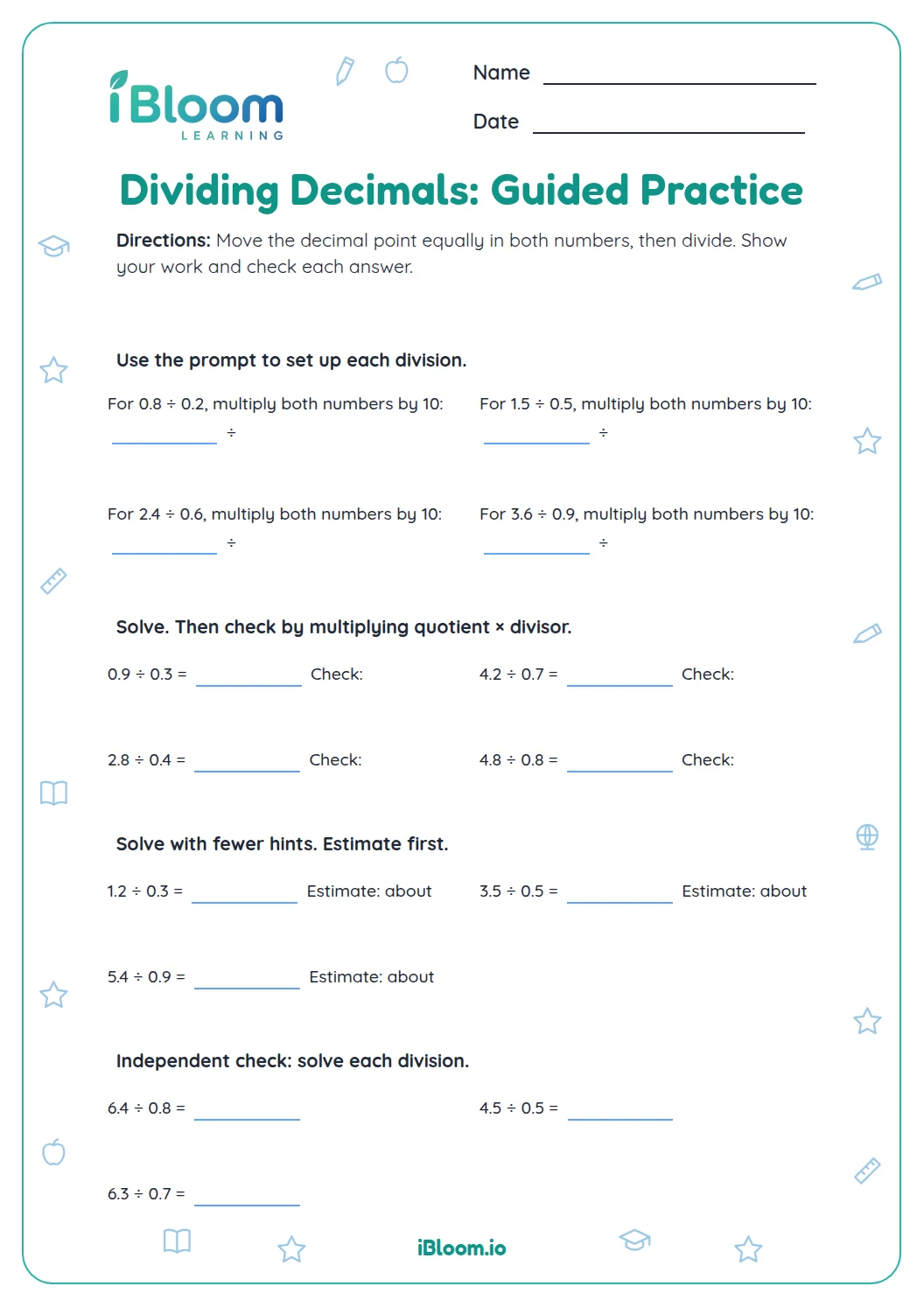
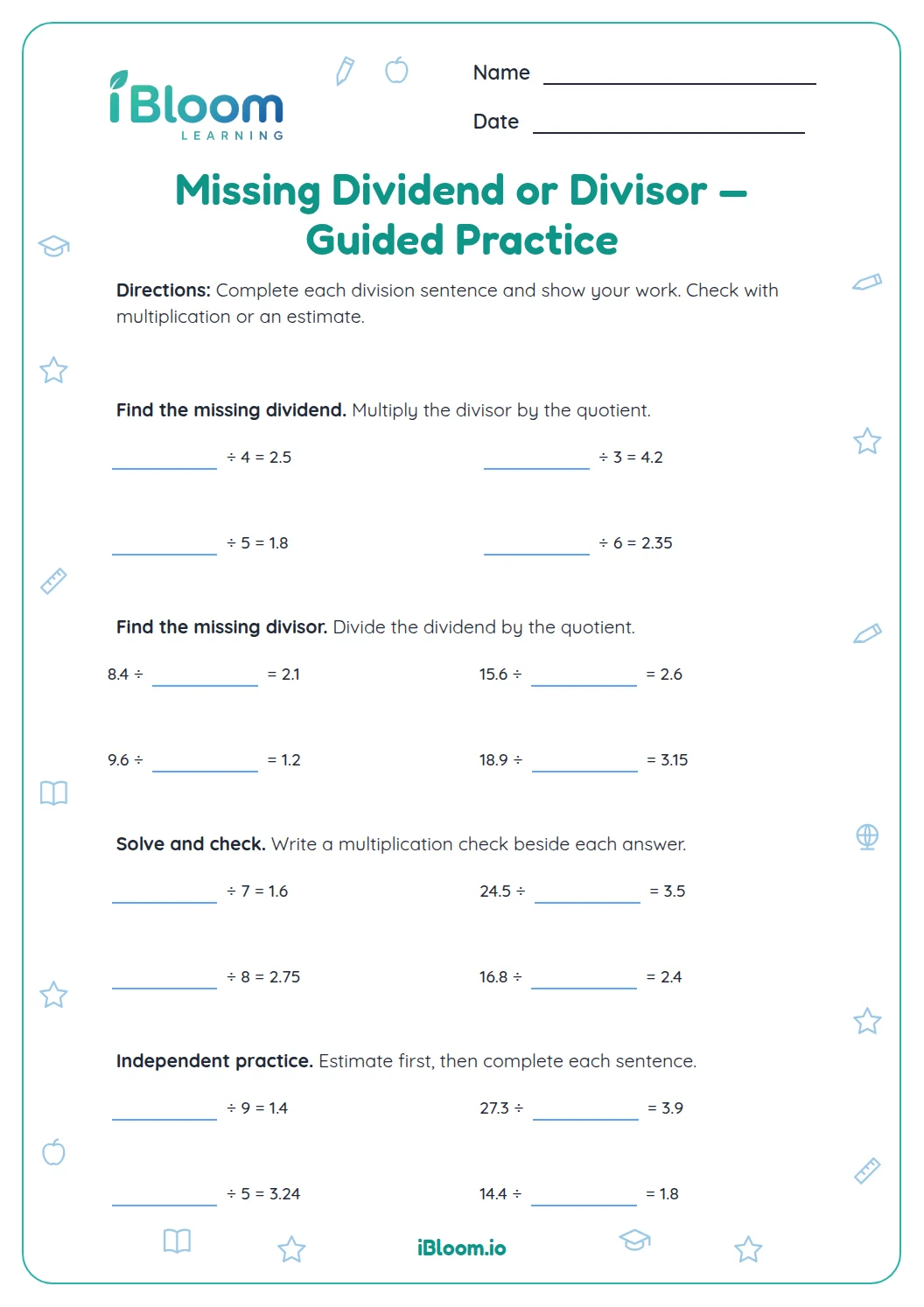
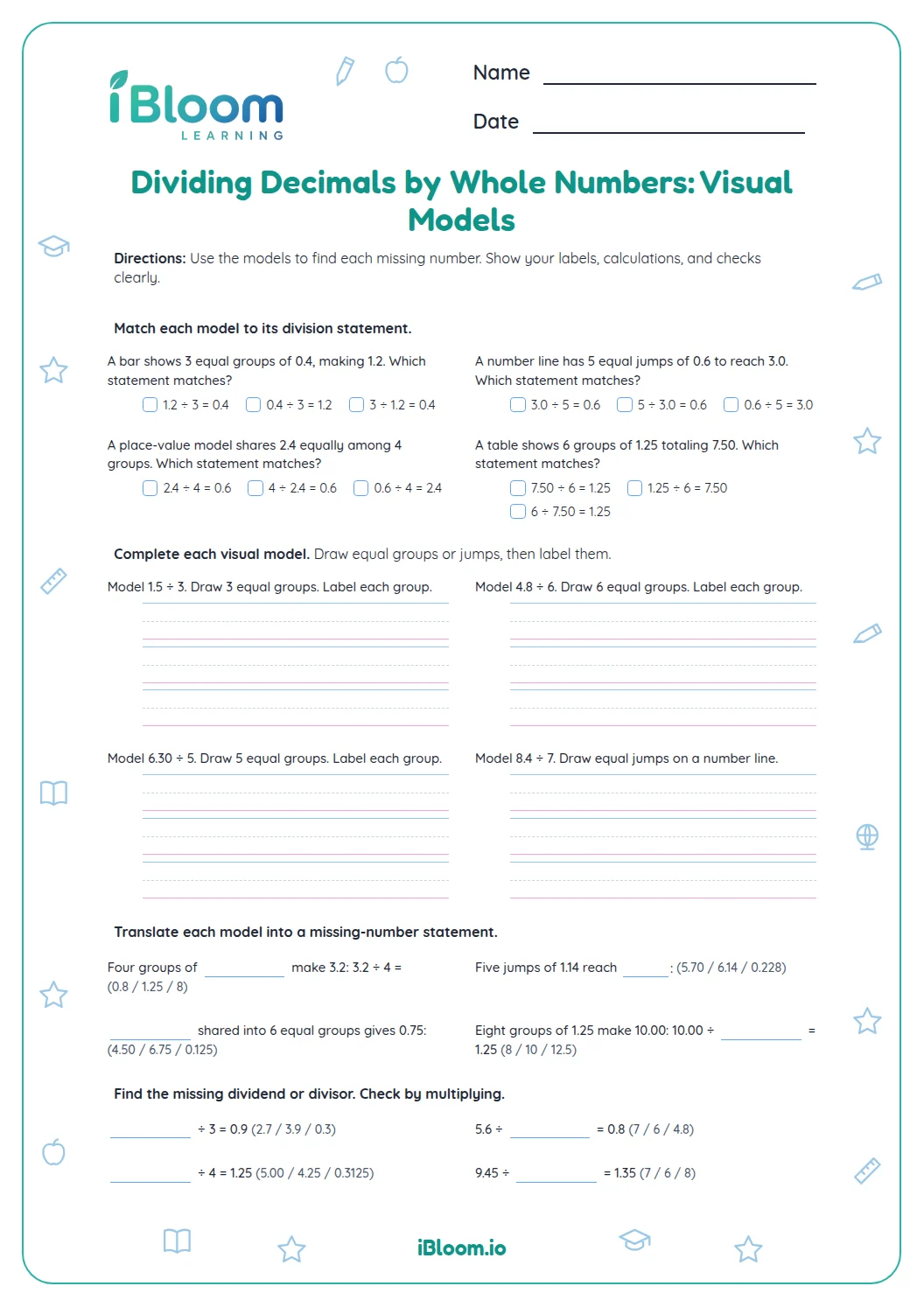
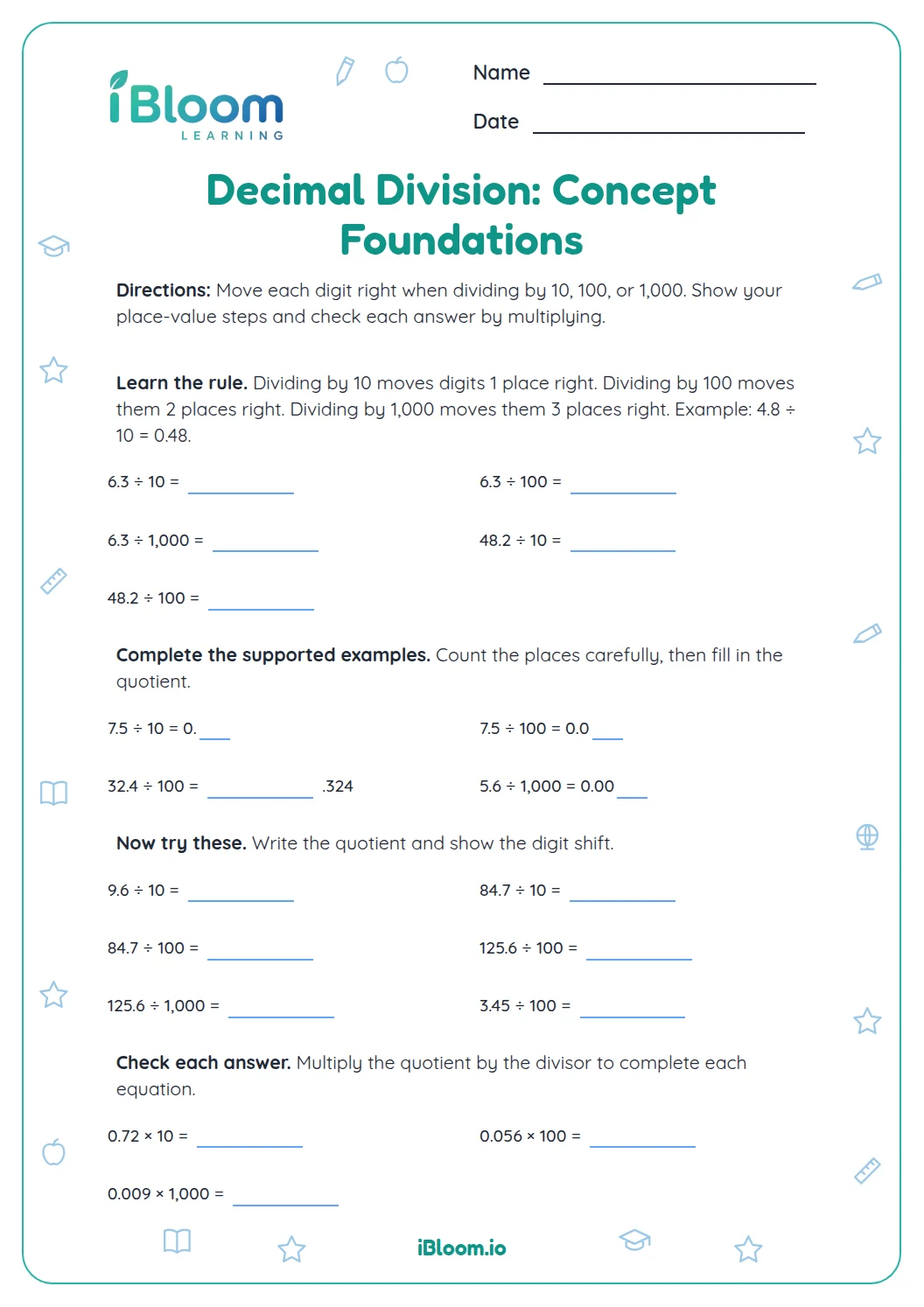
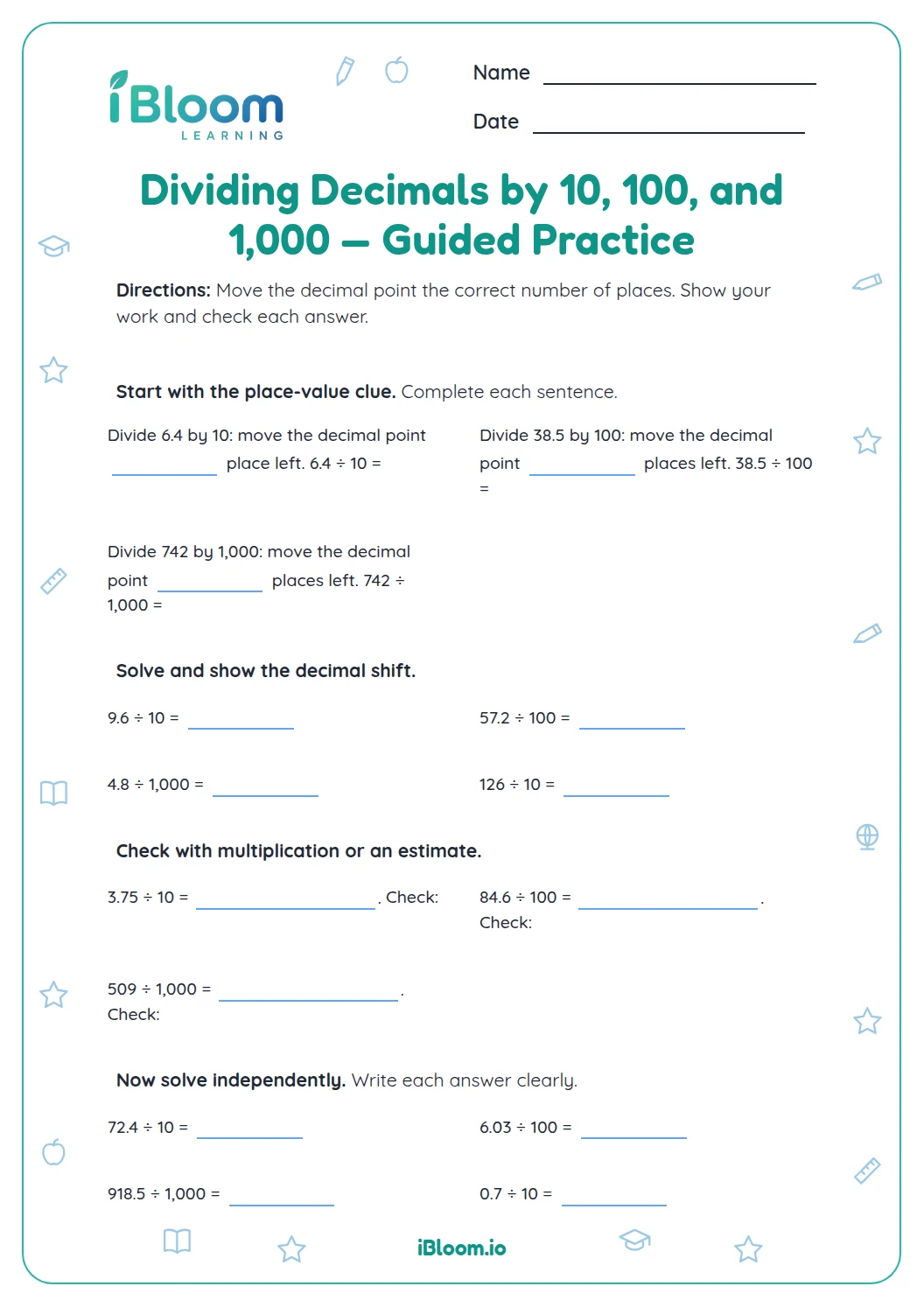
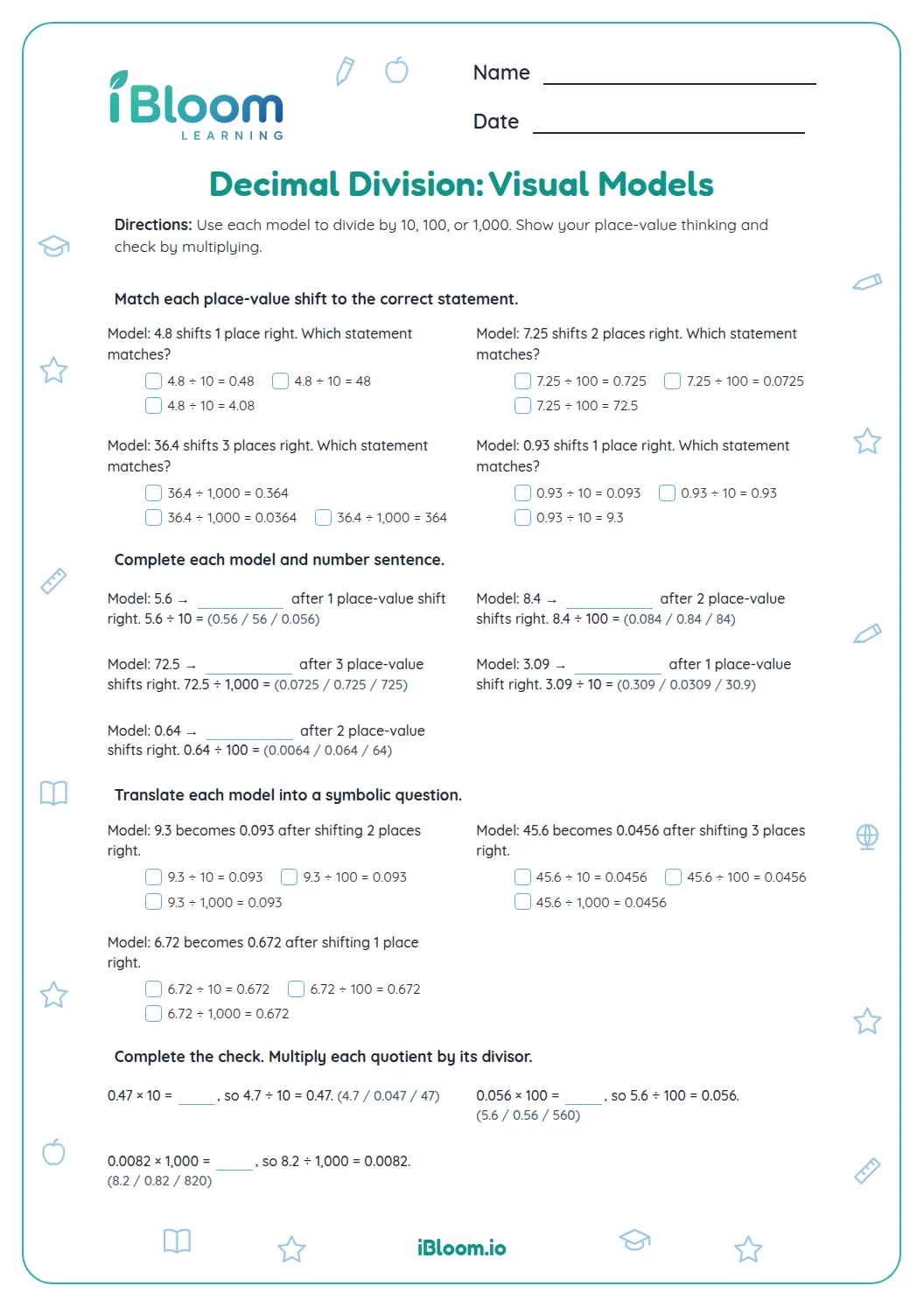
Grade 6 learners divide tenths by tenths by scaling both numbers equally, then solve measurement stories. Includes 15 questions and a separate answer key. The worked progression follows the sheet’s method: make the divisor a whole number, apply the same scale to the dividend, divide, and check with multiplication. This practices decimal division in CCSS 6.NS.B.3.
Aligned to 6.NS.B.3
What does divide 1-digit decimals by whole numbers mean?
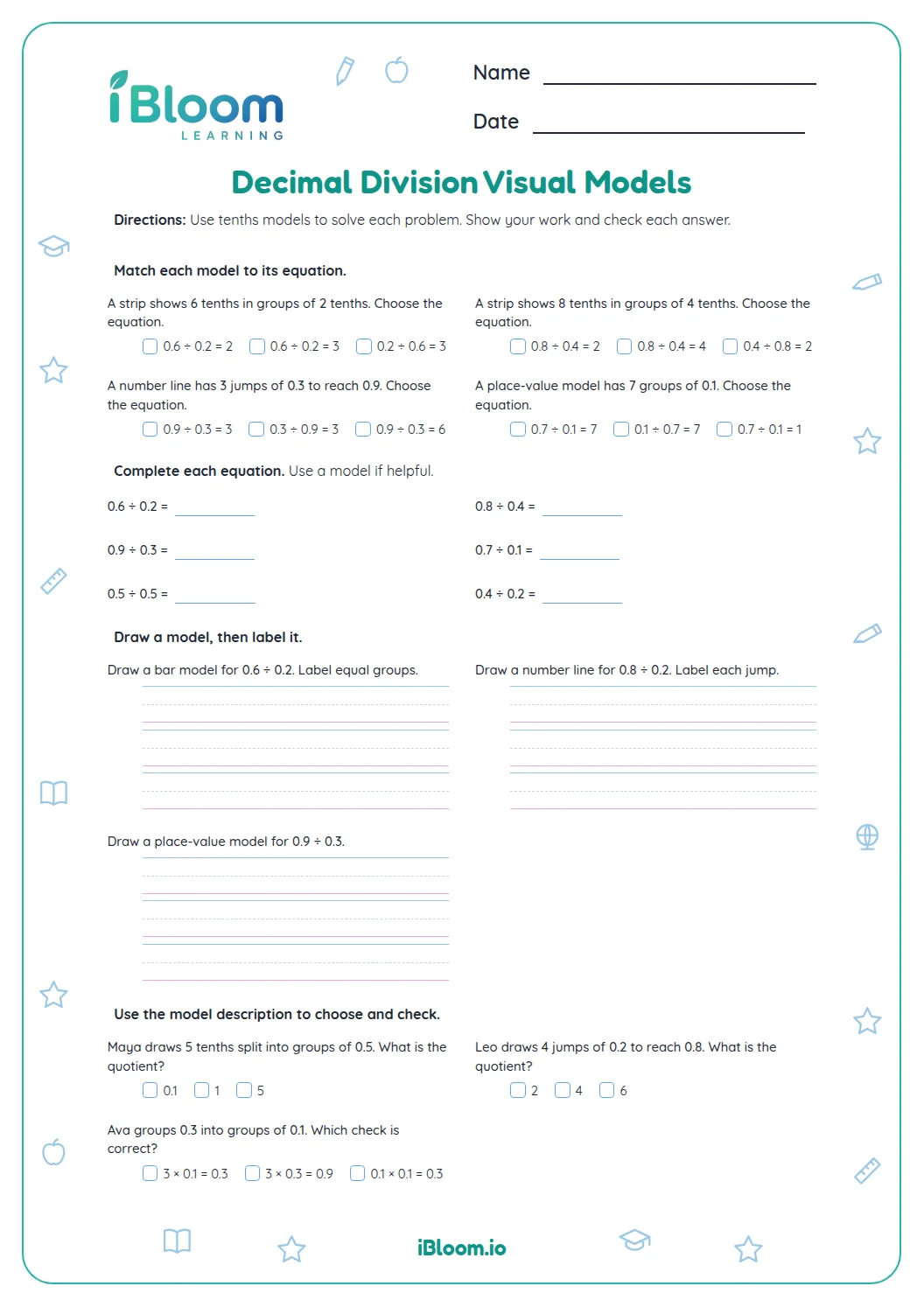
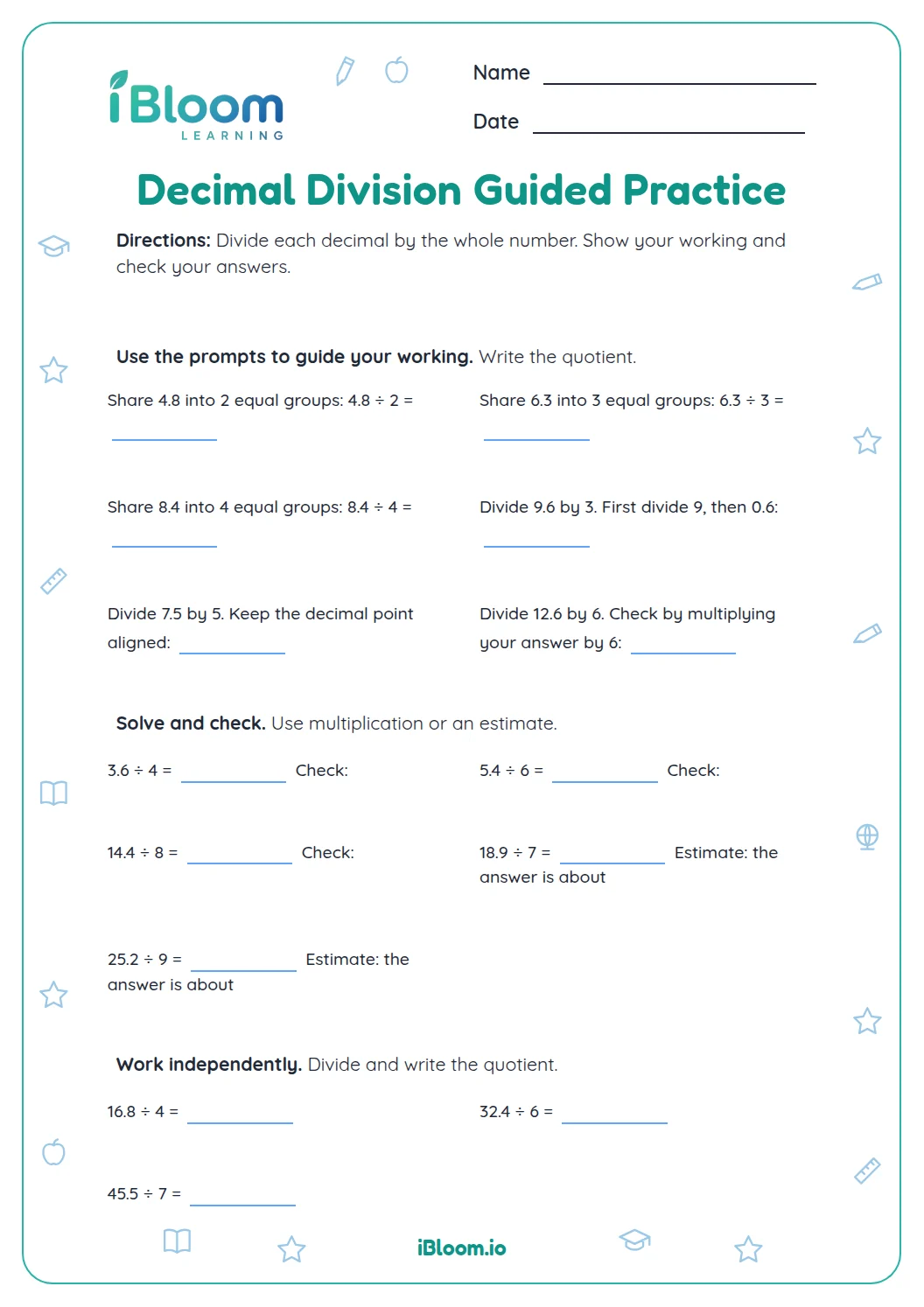
This Grade 6 practice builds decimal quotients through place-value division, then applies the method to short measurement stories. Includes 15 questions and a separate answer key.
Work through the parts in order. Each section adds a new way to use the same skill.
- 10.6 ÷ 0.2 = ___
- 2Scale both numbers by 10: 6 ÷ 2 = 3.
How is the practice organized?
There are 15 questions across three parts, followed by a separate answer key. The prompts move from recognizing the idea to using it in context.
- Part A: divide decimal numbers
- Part B: rewrite with a whole-number divisor
- Part C: solve equal-group measurement stories
How can an adult support the learner?
Read each direction aloud if needed, then ask the learner to explain one choice or step. Use the key to check the final response and revisit any item that needs another look.
How to use this worksheet
- 1Read the direction for the first part together.
- 2Model one item by thinking aloud.
- 3Let the learner complete the next items independently.
- 4Ask the learner to explain one answer.
- 5Check work with the separate answer key.
Common mistakes and quick fixes
The mistake
Rushing past an important clue in the prompt.
The fix
Underline the key word or detail before answering.
The mistake
Choosing an answer that does not fit the full question.
The fix
Reread the prompt and check that the response addresses it.
The mistake
Leaving a response unchecked.
The fix
Use the answer key and correct the work in a different color.
Common Core alignment
This worksheet practices the standard below.
Use place value and properties of operations to divide decimals accurately.
On this sheet: The problems practice dividing decimal numbers by scaling both numbers by the same power of ten.
Show the official wordingHide the official wording
Fluently add, subtract, multiply, and divide multi-digit decimals using the standard algorithm for each operation.
What to practice next
Make more practice
Further reading
Questions parents and teachers ask
What skill does this page practice?
The worksheet practices dividing a decimal by a decimal divisor, such as 0.6 ÷ 0.2. Learners make the divisor a whole number by multiplying both numbers by the same power of ten, then solve and check the quotient with multiplication.
How many questions are included?
There are 15 questions in three parts: interpreting decimal division, rewriting examples with whole-number divisors, and solving measurement stories. A separate answer key shows expected results and provides a reliable way to check each response. The same scale factor must be applied to both numbers in each division sentence.
Can an adult read the directions aloud?
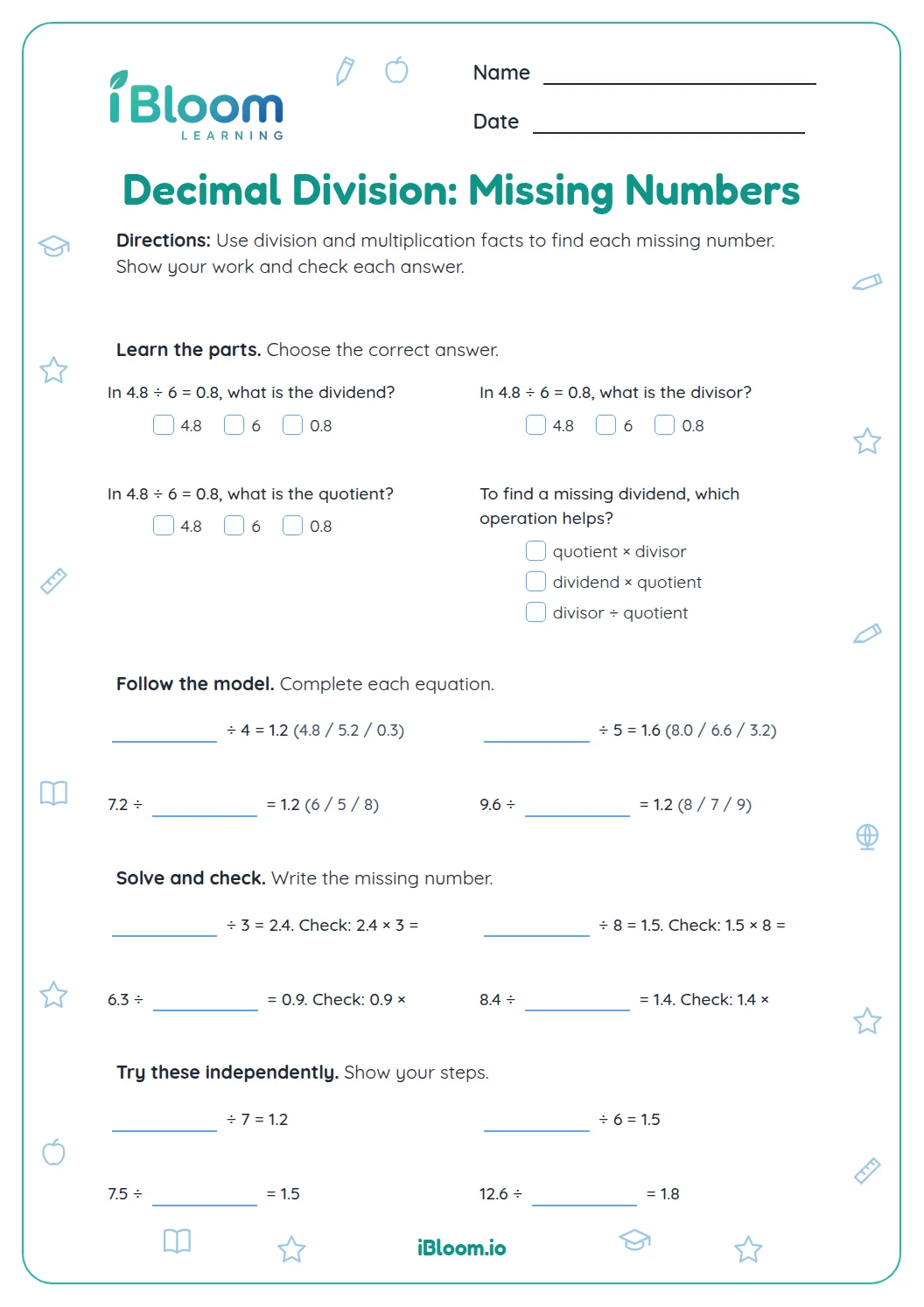
Yes. The first items help learners identify what the dividend, divisor, and quotient represent. Later prompts ask them to scale both numbers equally, divide, and use multiplication to check. Adults can model the first example, then let learners try the next one.
How should mistakes be reviewed?
When a decimal divisor is involved, shift its decimal point until it becomes a whole number. Shift the dividend the same number of places. Multiplying only one number changes the quotient, so check by multiplying the quotient by the original divisor.
Is the answer key included?
Yes. A separate answer key includes each quotient and a worked equivalent division sentence where the prompt asks learners to show the method. Use it after the learner has tried the problems, then discuss any place-value shift that needs correction.