


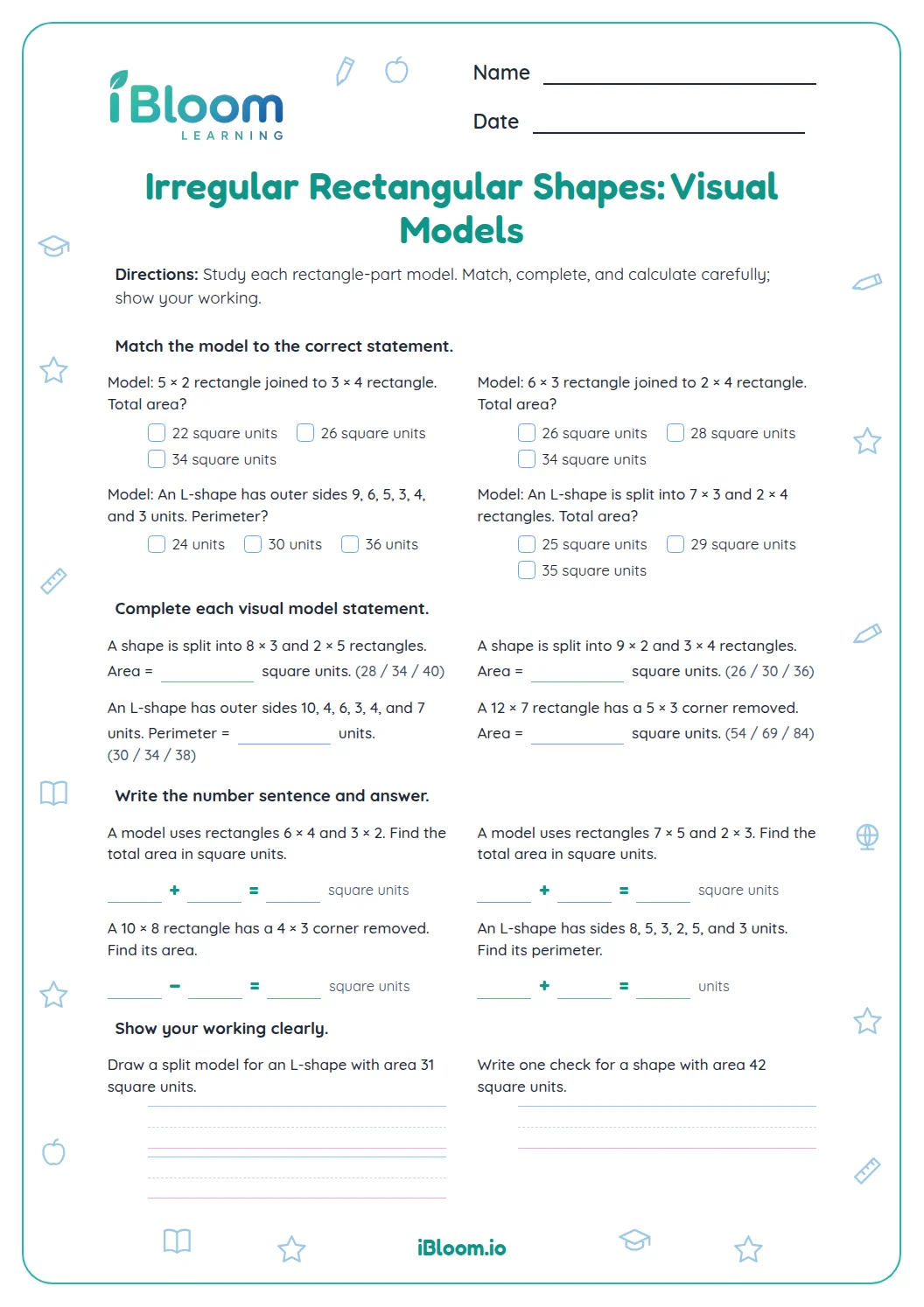
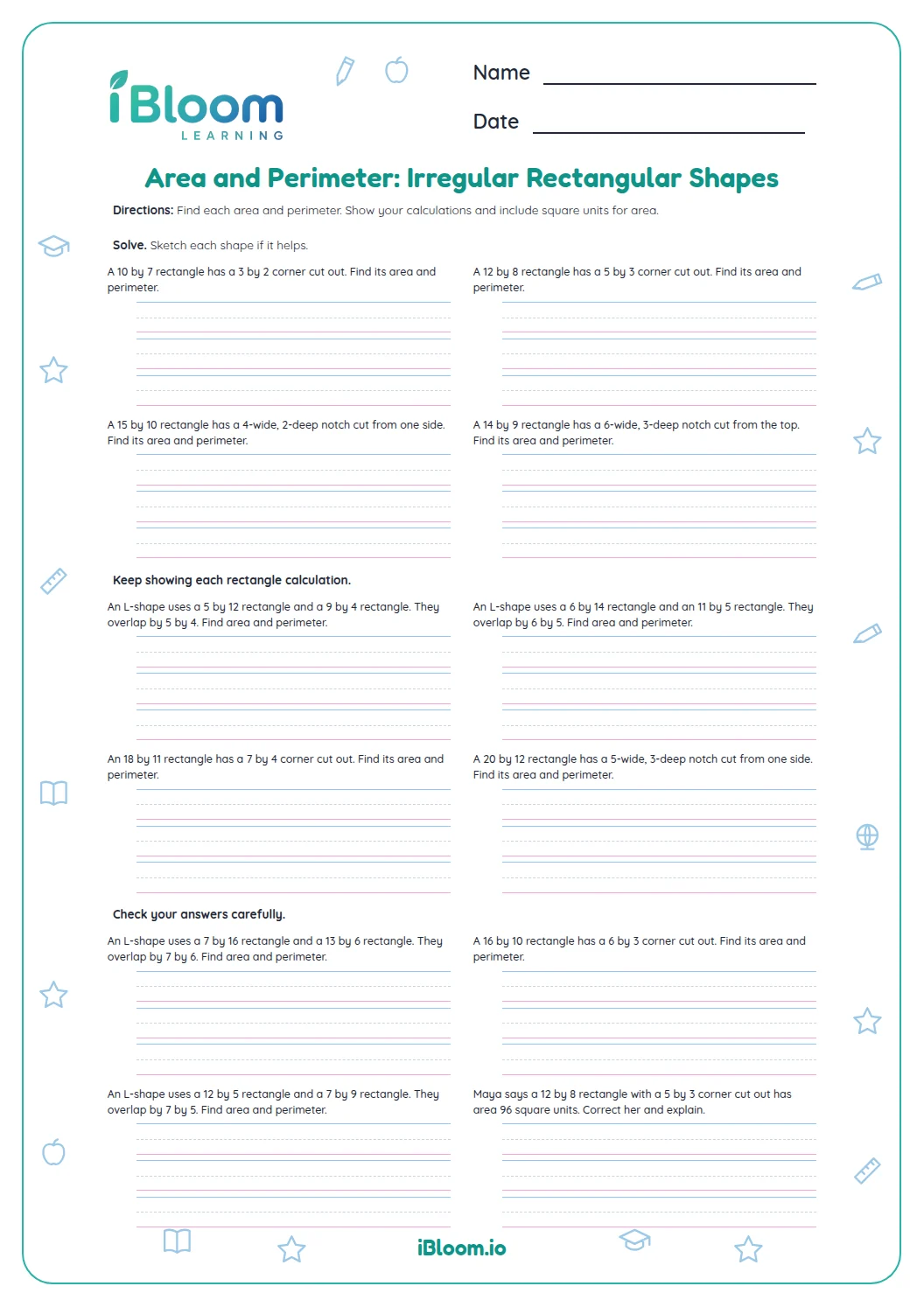
About this worksheet
Independent problems move between circumference, area, and missing circle measures. Students practice exact answers with π and decimal approximations.
Aligned to 7.G.B.4
Which formula finds circumference or area?
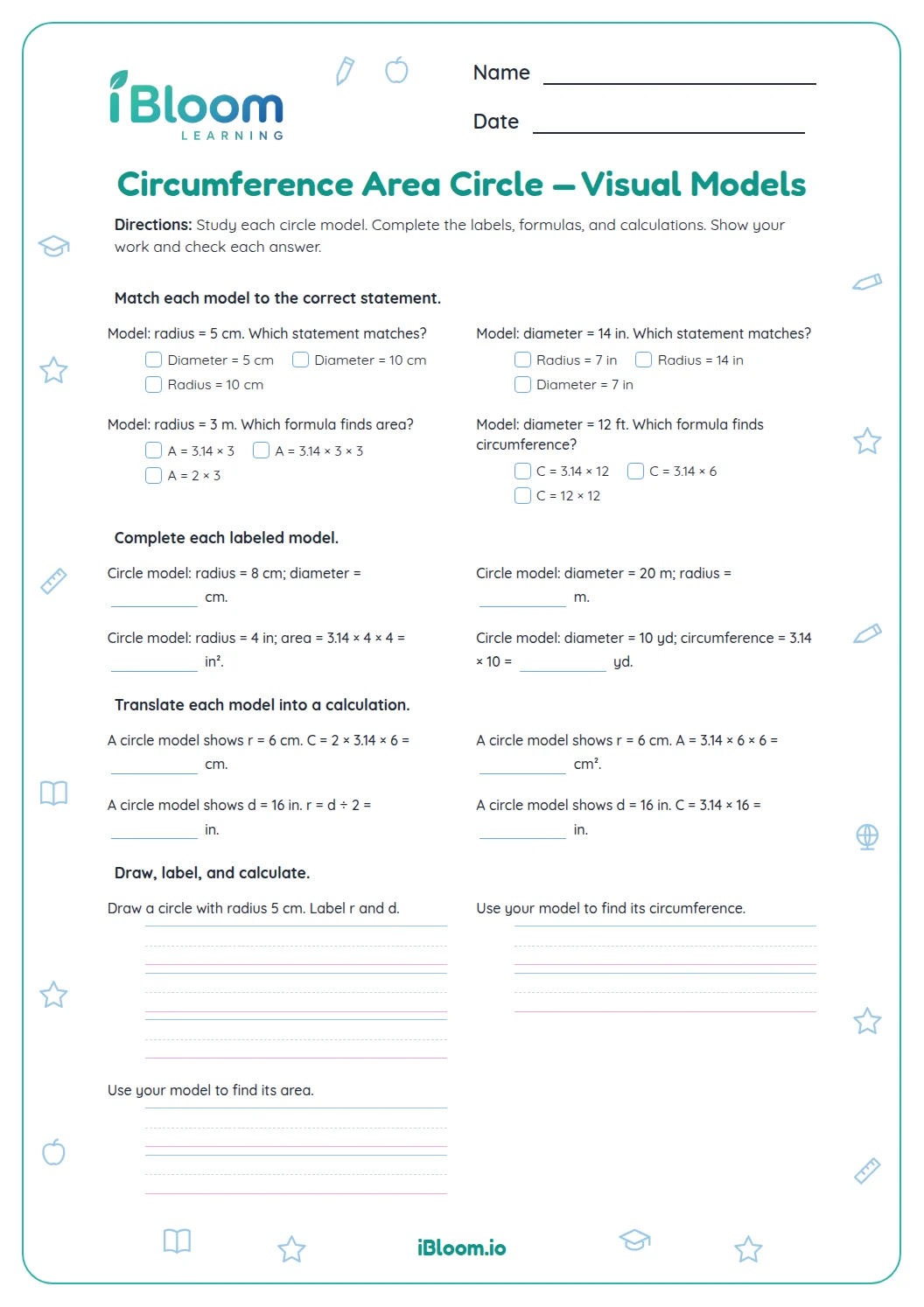
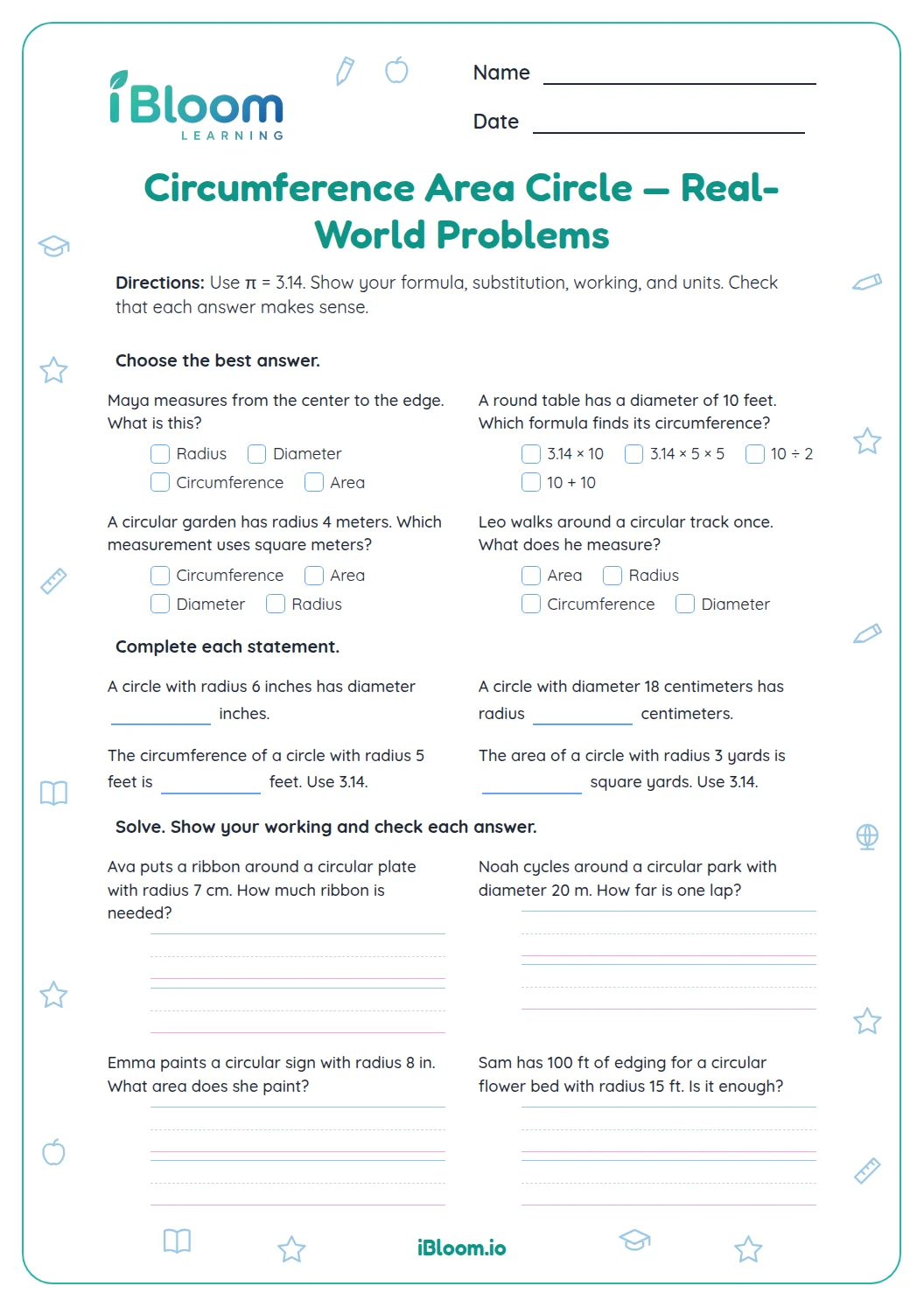
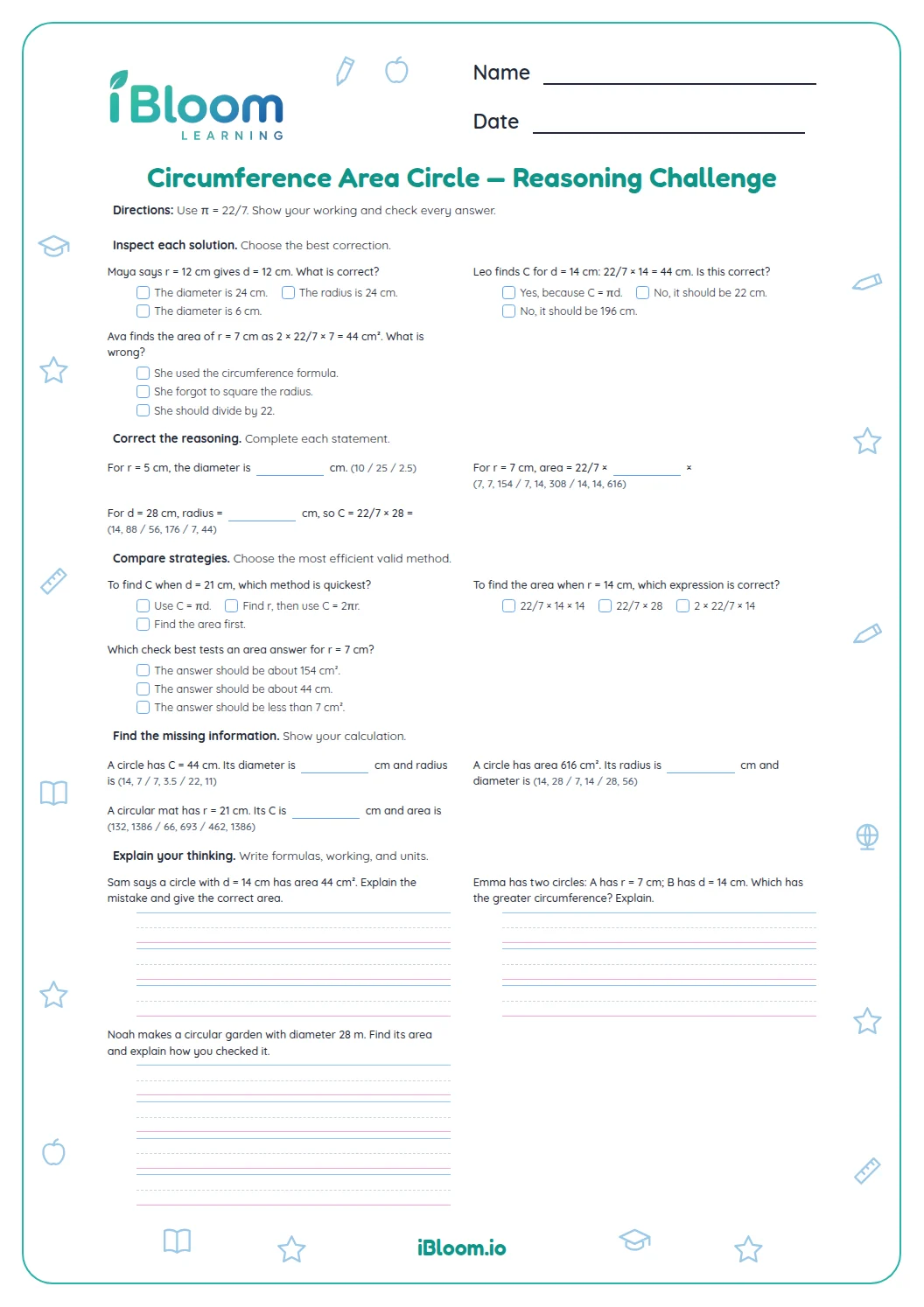
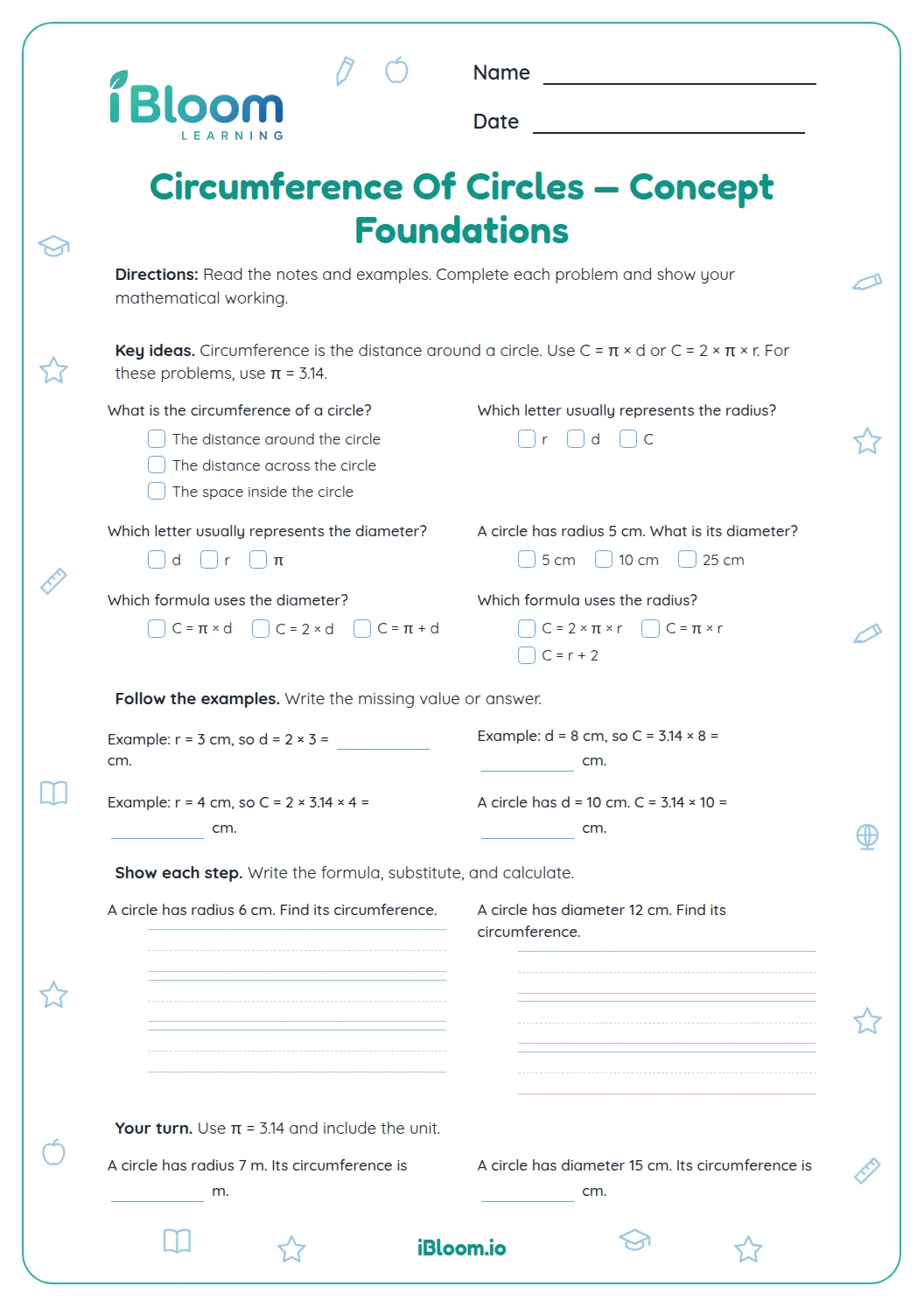
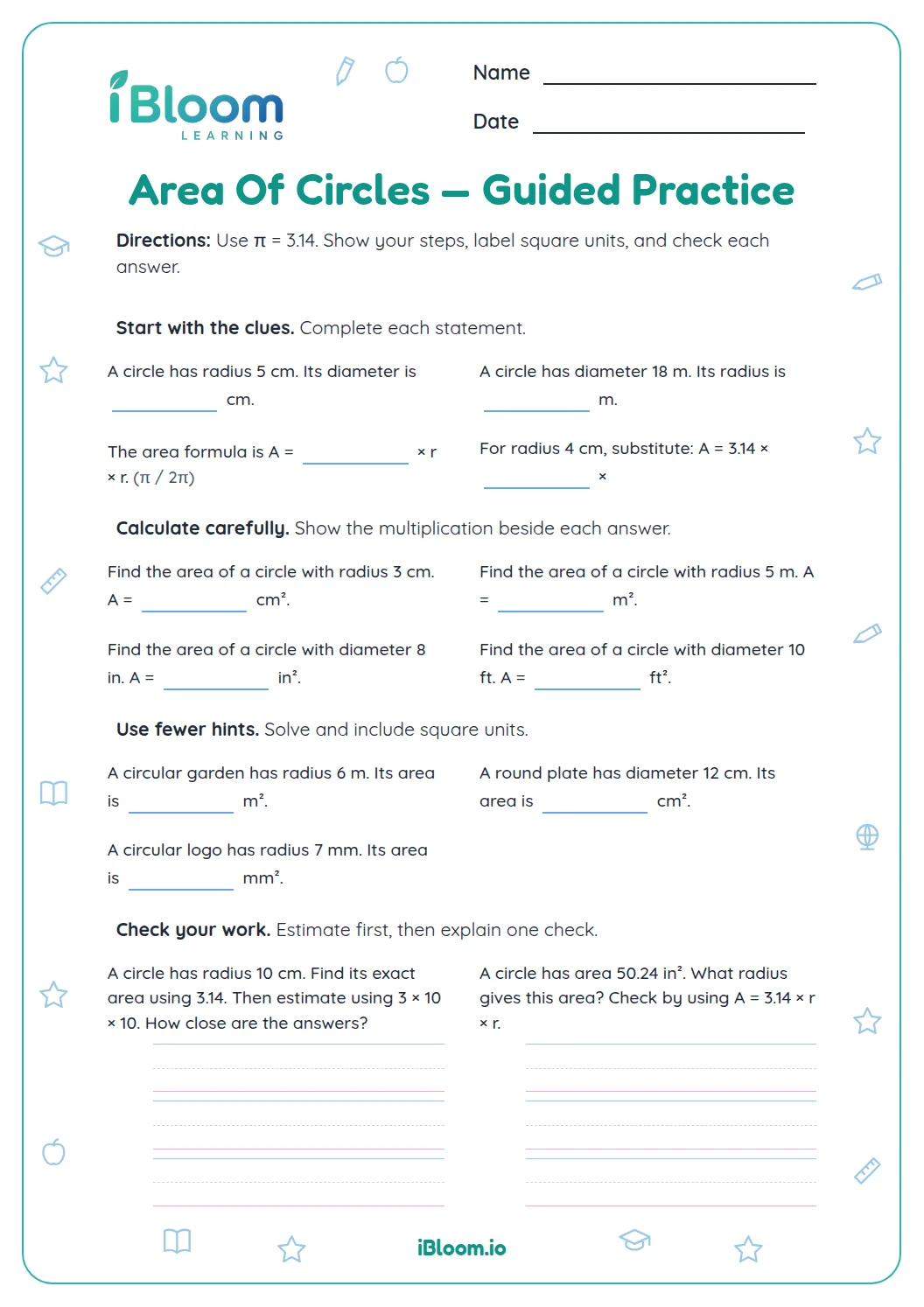
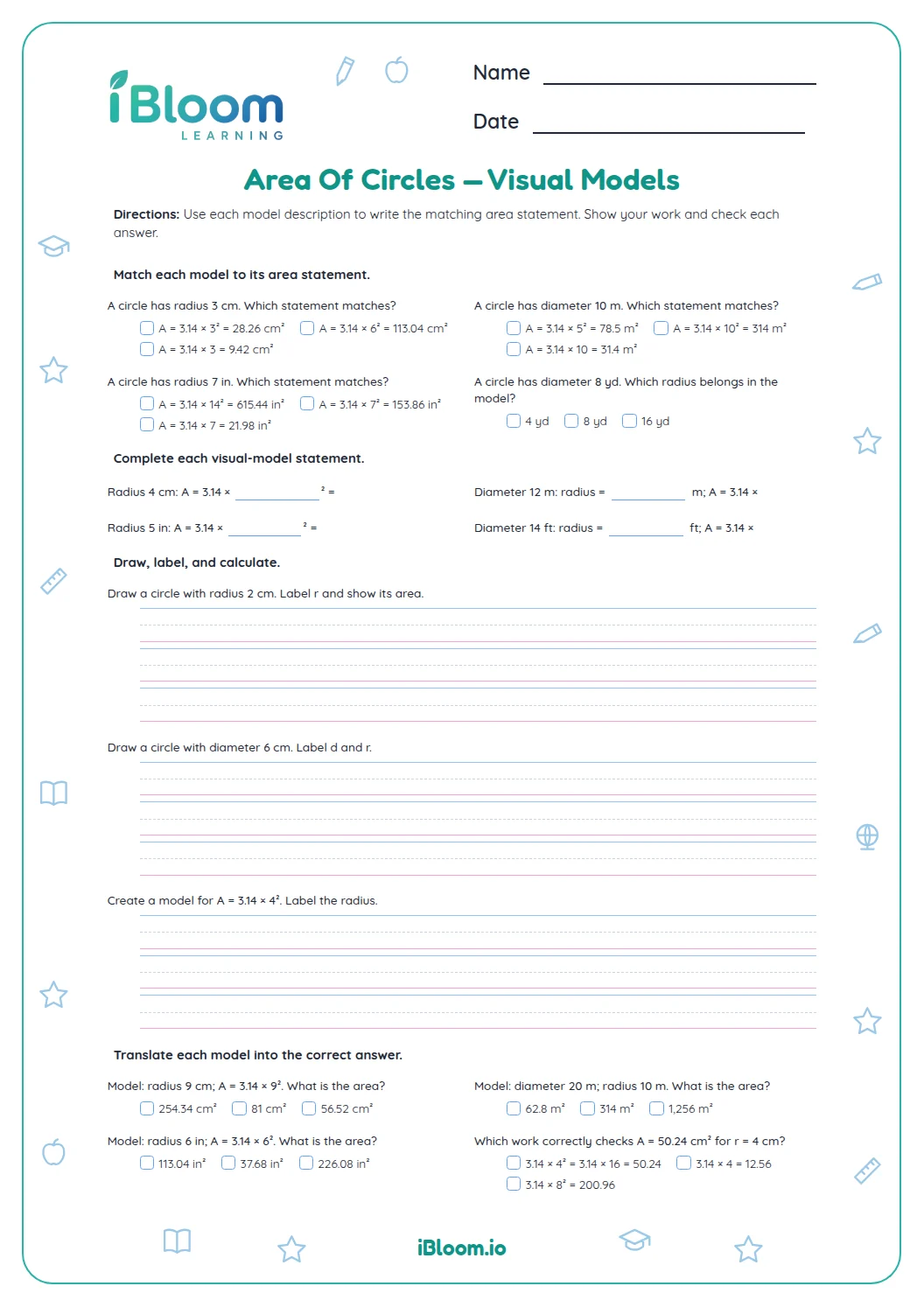
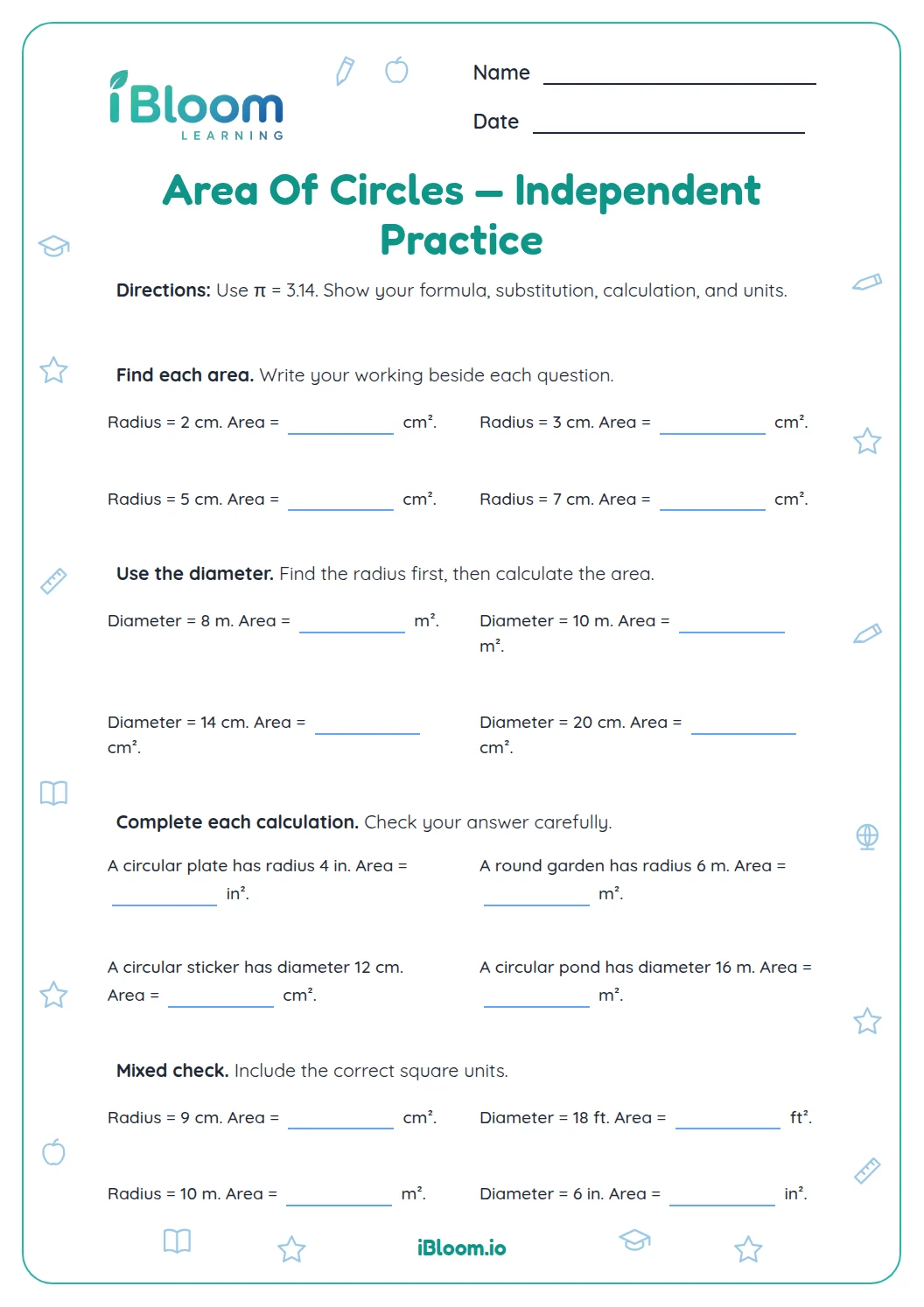
Circumference measures the distance around a circle. Use C = πd or C = 2πr. Area measures the space inside; use A = πr². The radius is half the diameter, so convert before substituting when a problem gives d and the area formula needs r.
Keep π in an exact answer when requested. For a decimal answer, multiply by 3.14 and include linear units for circumference or square units for area.
How does the practice build?
The first part finds circumference from a radius or diameter. The middle questions find area and solve for a missing measure. A final comparison asks students to reason about how changing radius affects both formulas.
- Part A: circumference and missing measures
- Part B: area and reverse problems
- Part C: compare how the measures change
How to use this worksheet
- 1Write down the formula before substituting values.
- 2Check that the final unit is linear for circumference and squared for area.
Common mistakes and quick fixes
The mistake
Using the diameter as r in A = πr².
The fix
Halve a given diameter before squaring it.
The mistake
Reporting square units for circumference.
The fix
Circumference is a length; use cm, inches, feet, or another linear unit.
Common Core alignment
This page gives focused practice with the skill named in its title.
Know and use circle circumference and area formulas.
On this sheet: The title names circle circumference and area; this worksheet practices that standard at an introductory level.
Show the official wordingHide the official wording
Know the formulas for the area and circumference of a circle and use them to solve problems; give an informal derivation of the relationship between the circumference and area of a circle.
What to practice next
Make more practice
Further reading
Questions parents and teachers ask
What is the difference between circumference and area?
Circumference is the distance around a circle, measured in linear units. Area is the space inside, measured in square units. Write the given radius or diameter beside the formula first, then check that the final unit matches the quantity. This gives students a clear way to check their reasoning and make the next practice attempt more accurate.
How do I find radius from diameter?
Divide the diameter by 2. A 12-inch diameter has a 6-inch radius. Write the given radius or diameter beside the formula first, then check that the final unit matches the quantity. This gives students a clear way to check their reasoning and make the next practice attempt more accurate.
When should I use C = πd instead of C = 2πr?
Both formulas find circumference. Use C = πd when the diameter is given, and C = 2πr when the radius is given. If a problem provides the other measure, remember that diameter is twice the radius before substituting. Write the given radius or diameter beside the formula first, then check that the final unit matches the quantity.
Why are area units squared?
Area counts square units that cover a flat surface, such as square centimeters or square feet. Circumference measures only the distance around the circle, so it uses ordinary length units. Check the unit label before you finish each response. Write the given radius or diameter beside the formula first, then check that the final unit matches the quantity.
How do exact answers with π differ from decimal answers?
An exact answer keeps π, such as 25π square centimeters. A decimal answer replaces π with an approximation such as 3.14 and gives a rounded or exact decimal. Follow the prompt’s direction and include the correct units. Write the given radius or diameter beside the formula first, then check that the final unit matches the quantity.