







About this worksheet
This free printable Grade 6 worksheet gives students focused practice with convert units of length. It moves from supported examples to independent problems and familiar applications, with 16 questions across 2 parts. The questions use age-appropriate numbers and clear contexts so students can practice the target skill and check their work with the separate answer key.
Aligned to 6.RP.A.3.d
How does the practice build converting length units to solve real-world problems?
The first part practices use a conversion relationship and include the requested unit. Each item gives a clear chance to apply the target skill.
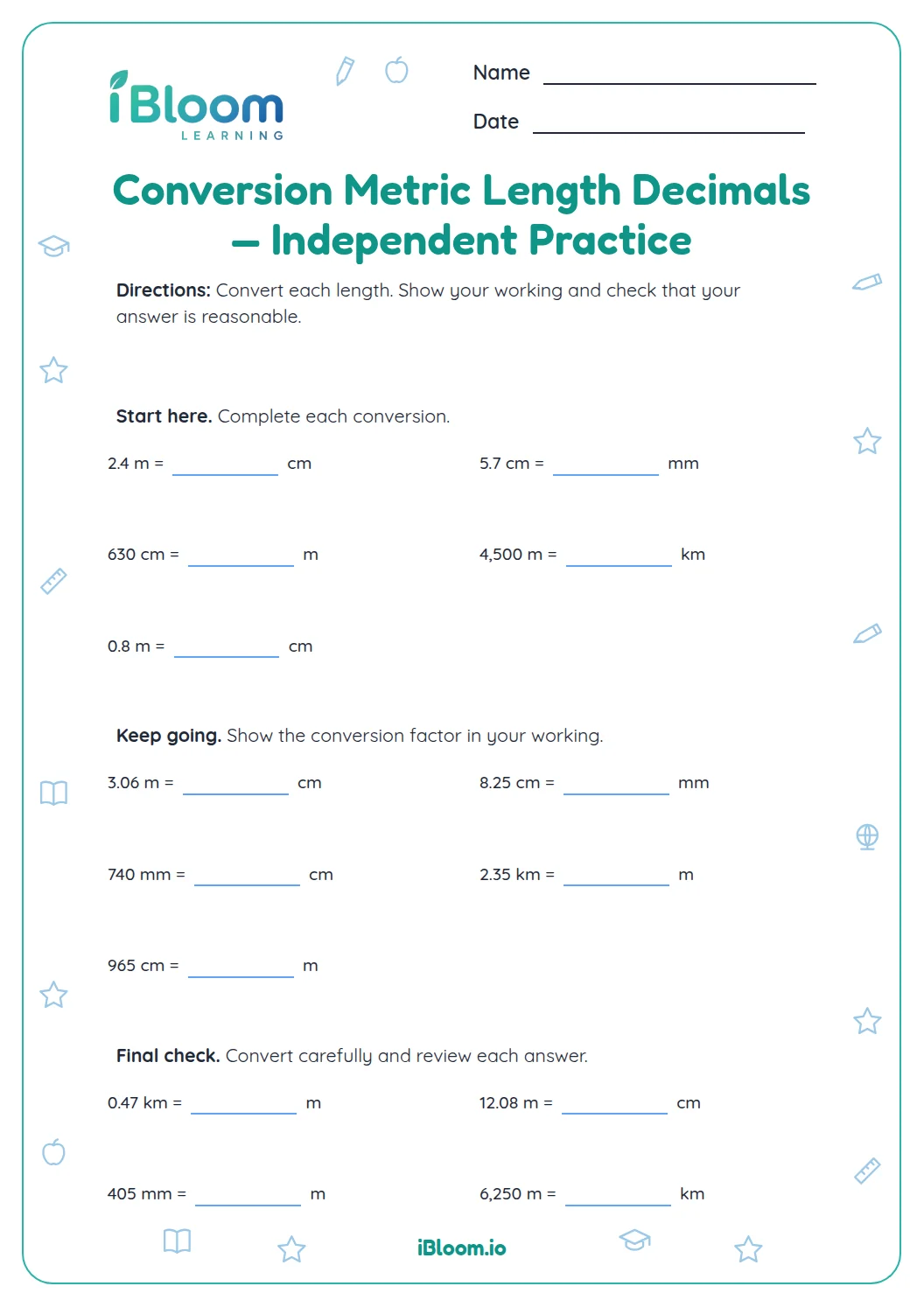
- 13.5 km = 3,500 m
- 2There are 1,000 meters in a kilometer, so multiply 3.5 by 1,000.
How do students use the skill in context?
Later items use the same skill in the situations named in each prompt. Read the units and conditions before calculating, then check that the answer fits the context.
What is included on the worksheet?
The 16 questions are grouped into 2 parts, from supported practice to independent use. The answer key is printed separately.
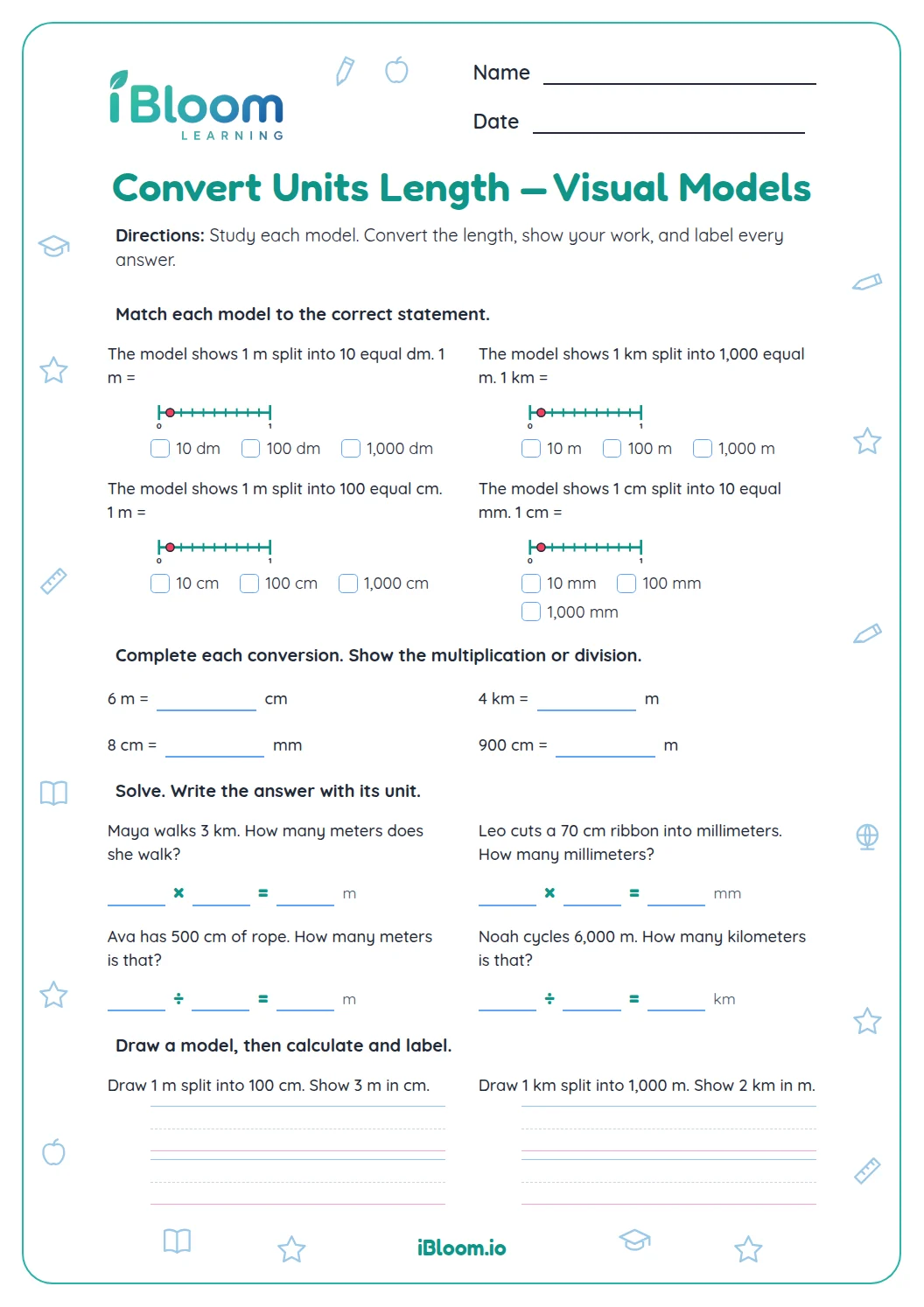
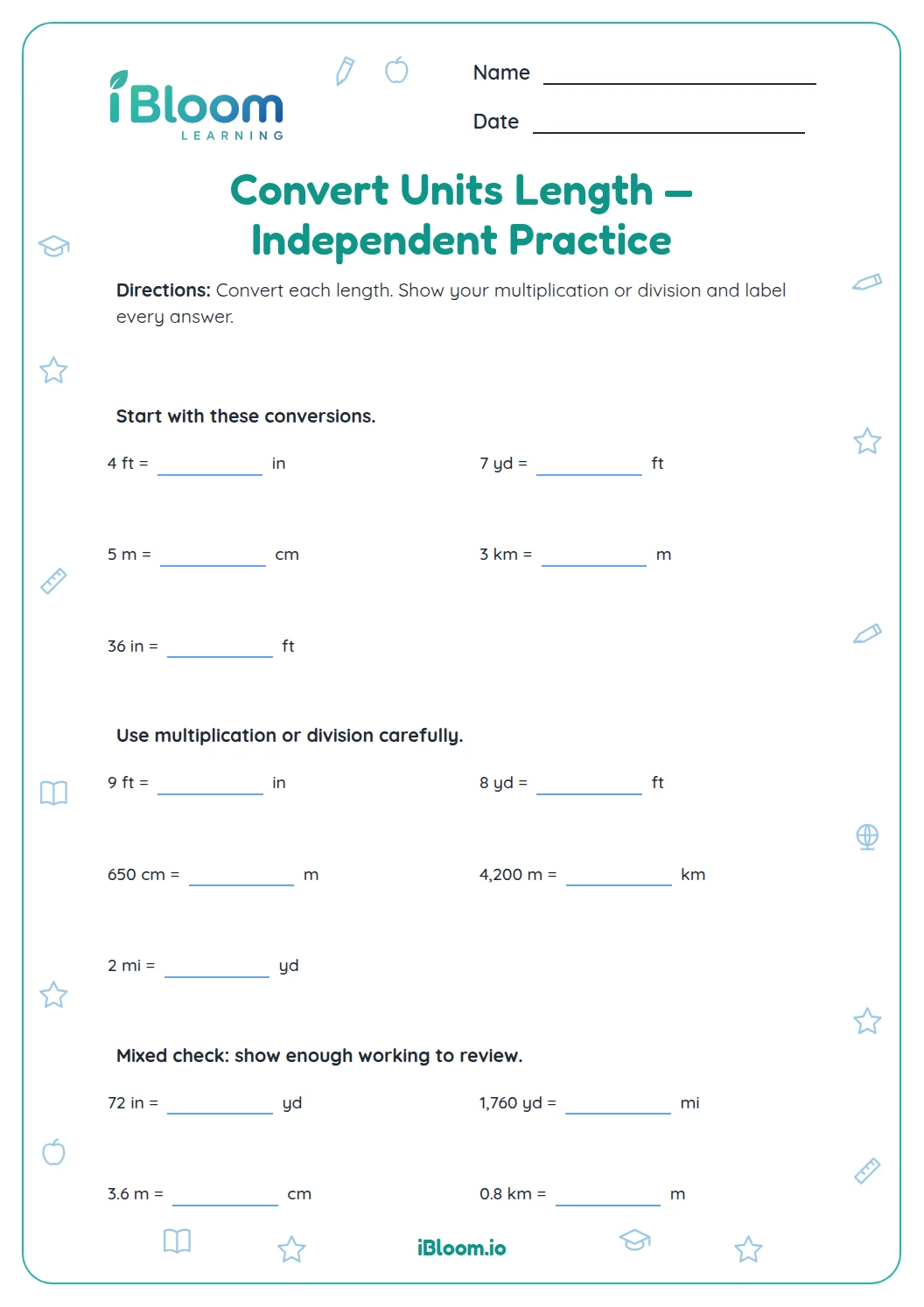
- Convert the length: 6 questions
- Solve length situations: 10 questions
How can students work through the page?
- 1Read the direction at the start of each part.
- 2Complete the first item carefully and use it to check the strategy.
- 3Solve each item, showing steps when the question provides working space.
- 4Reread the prompt and check units, symbols, and labels.
- 5Use the answer key to review any response that needs another try.
What should students check as they work?
The mistake
Rushing past an important word or unit in the prompt.
The fix
Underline what is being asked and keep the unit with the answer.
The mistake
Using a familiar procedure without checking whether it fits this item.
The fix
Pause to name the relationship or operation the question needs.
The mistake
Stopping after getting a result without checking it.
The fix
Substitute or estimate to see whether the response makes sense.
Common Core alignment
This worksheet practices converting length units to solve real-world problems through the skills described in this standard.
Use ratio reasoning to convert units and solve length problems.
On this sheet: The questions directly practice converting length units to solve real-world problems.
Show the official wordingHide the official wording
Use ratio reasoning to convert measurement units; manipulate and transform units appropriately when multiplying or dividing quantities.
What to practice next
Make more practice
Further reading
Questions parents and teachers ask
What skill does this worksheet practice?
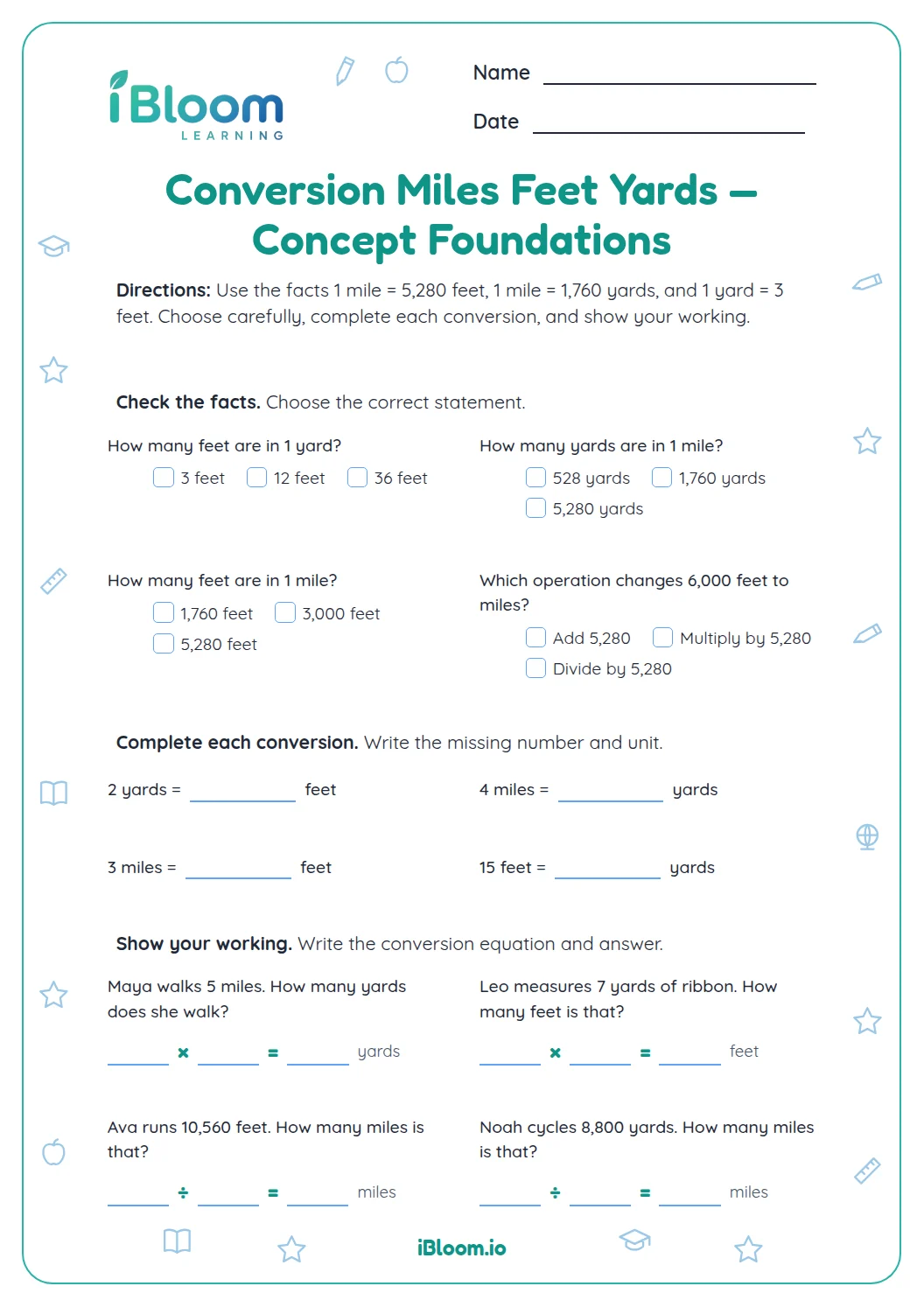
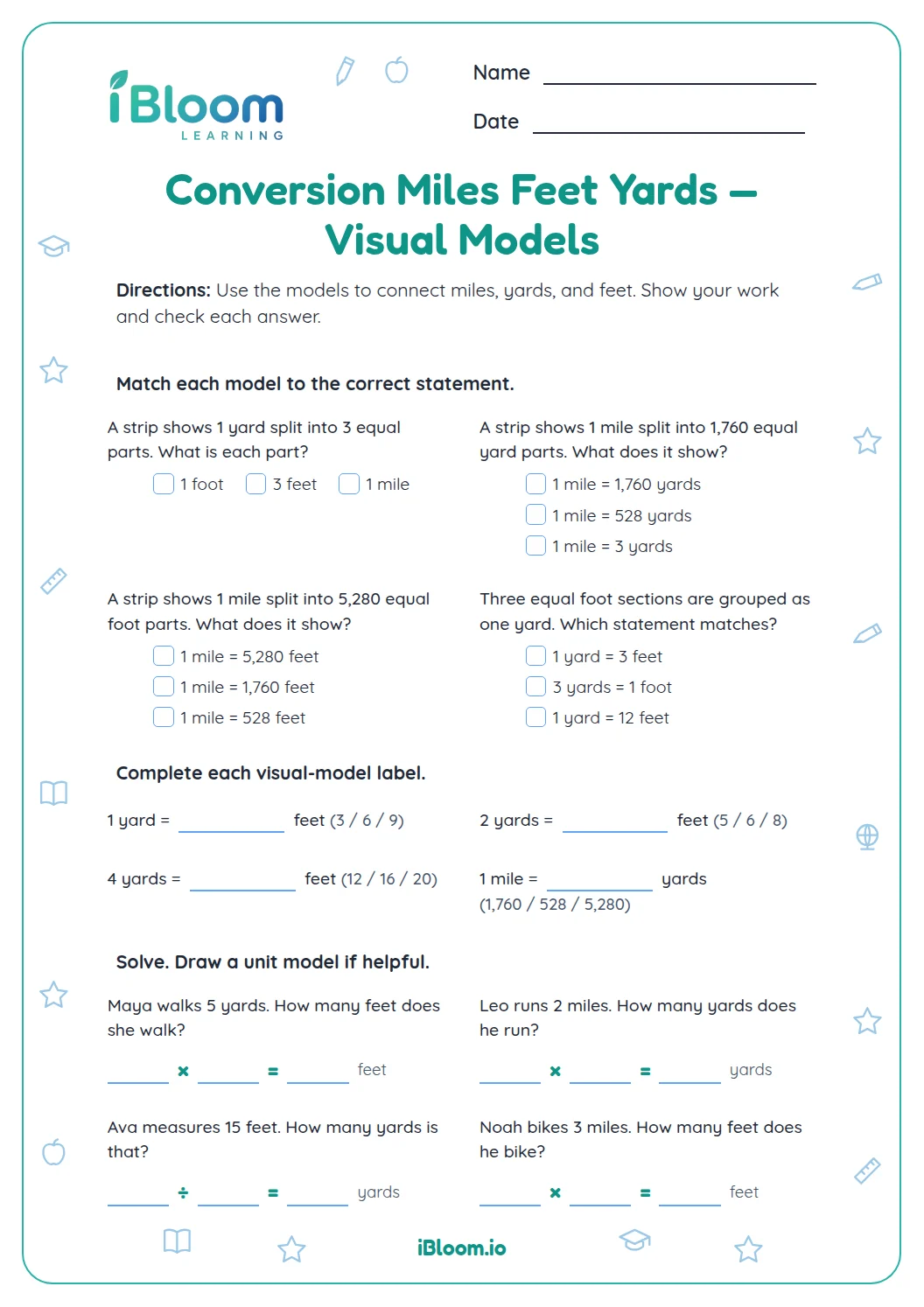
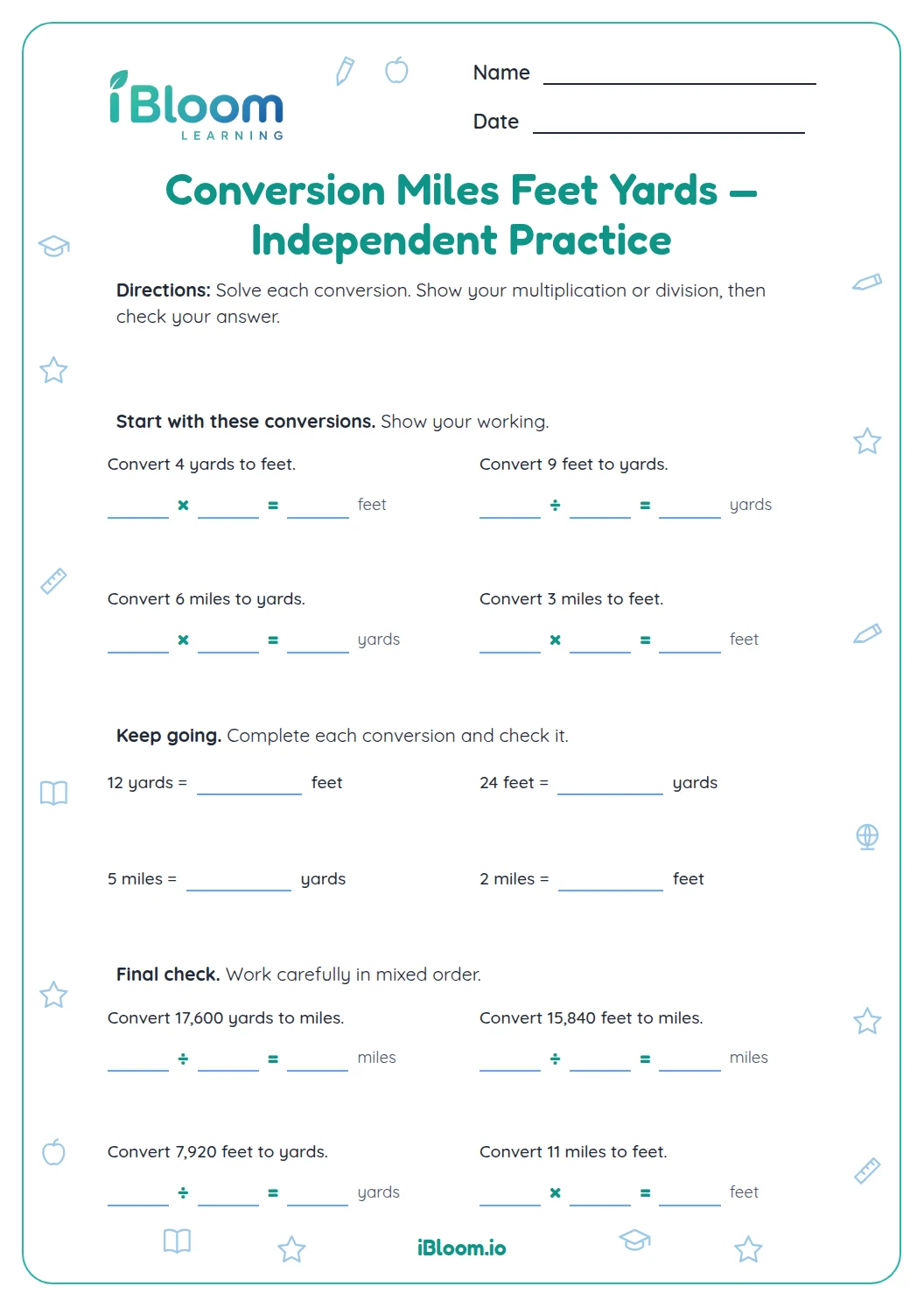
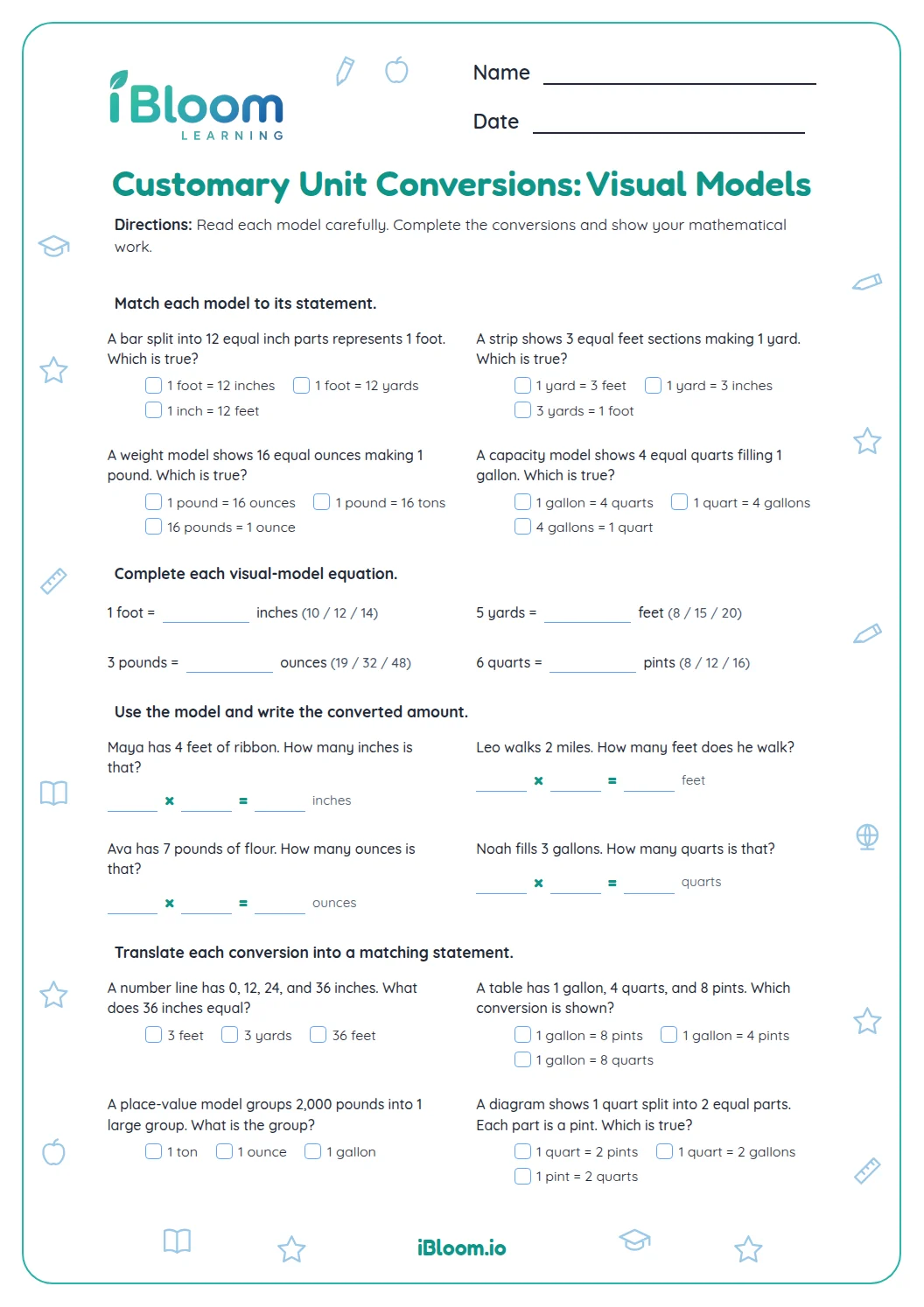
This Grade 6 worksheet practices converting metric and customary length units in short situations. Students use relationships such as 1 kilometer = 1,000 meters, 1 foot = 12 inches, and 1 mile = 5,280 feet to convert or solve a length problem.
How many questions are included?
There are 16 questions in two parts. The first six check direct conversions between meters, kilometers, centimeters, feet, inches, yards, and miles. Later items combine or divide measurements, compare route lengths, and find a perimeter after converting to a common unit.
Is an answer key included?
Yes. A separate answer key lists a response for each conversion and application. When the prompt includes the unit after the blank, the key gives the numeric value; when the prompt asks for a result in a named unit, the key identifies that unit with the answer.
How should students use the worksheet?
First choose a unit that makes the relationship easy to use. Multiply when changing to a smaller unit, such as meters to centimeters, and divide when changing to a larger unit. For combined lengths, convert to one unit before adding or subtracting.
Which conversion facts are useful here?
Useful facts include 1 kilometer = 1,000 meters, 1 meter = 100 centimeters, 1 foot = 12 inches, 1 yard = 3 feet, and 1 mile = 5,280 feet. The worksheet uses these relationships to solve direct and multi-step length questions.