




About this worksheet
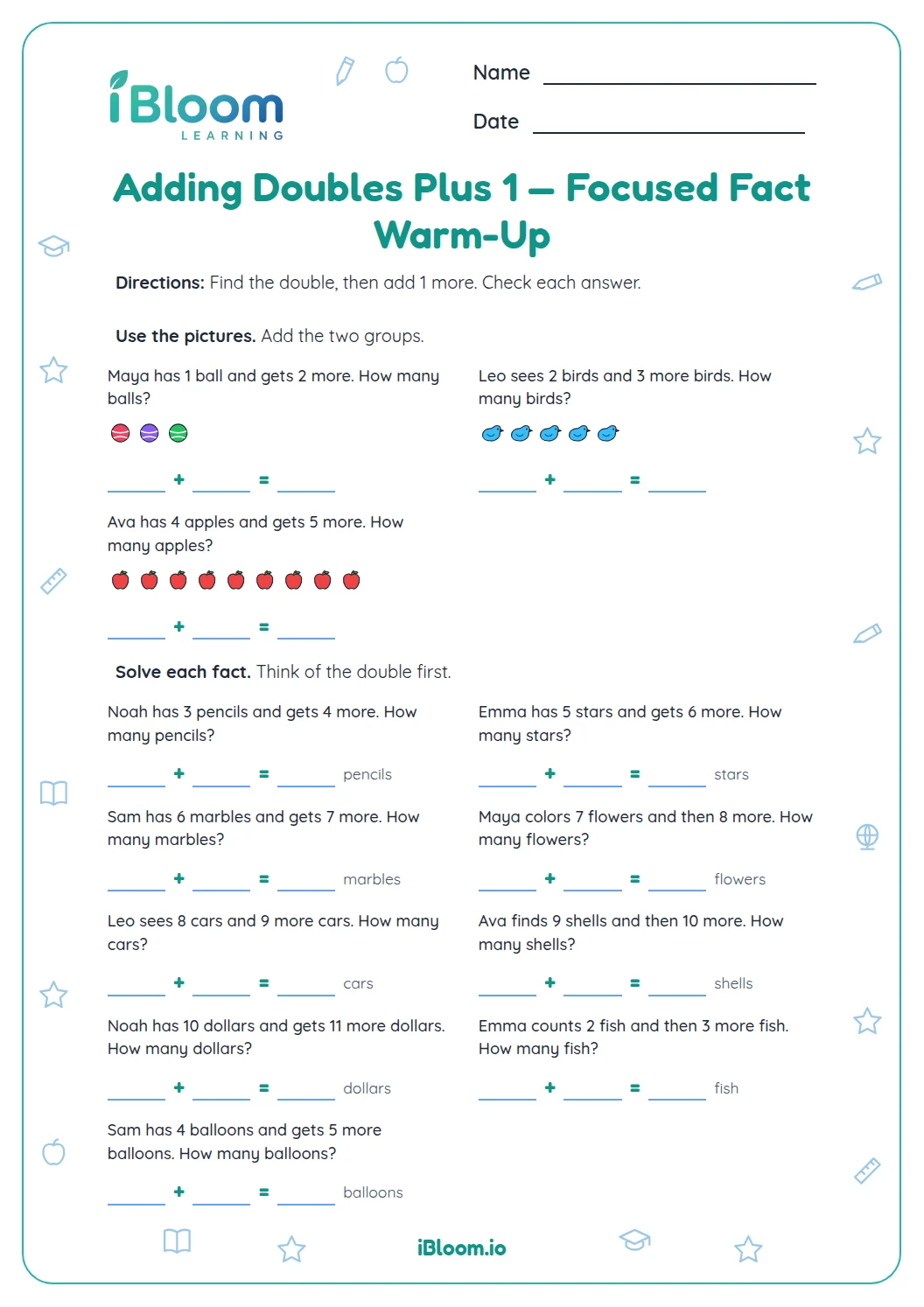
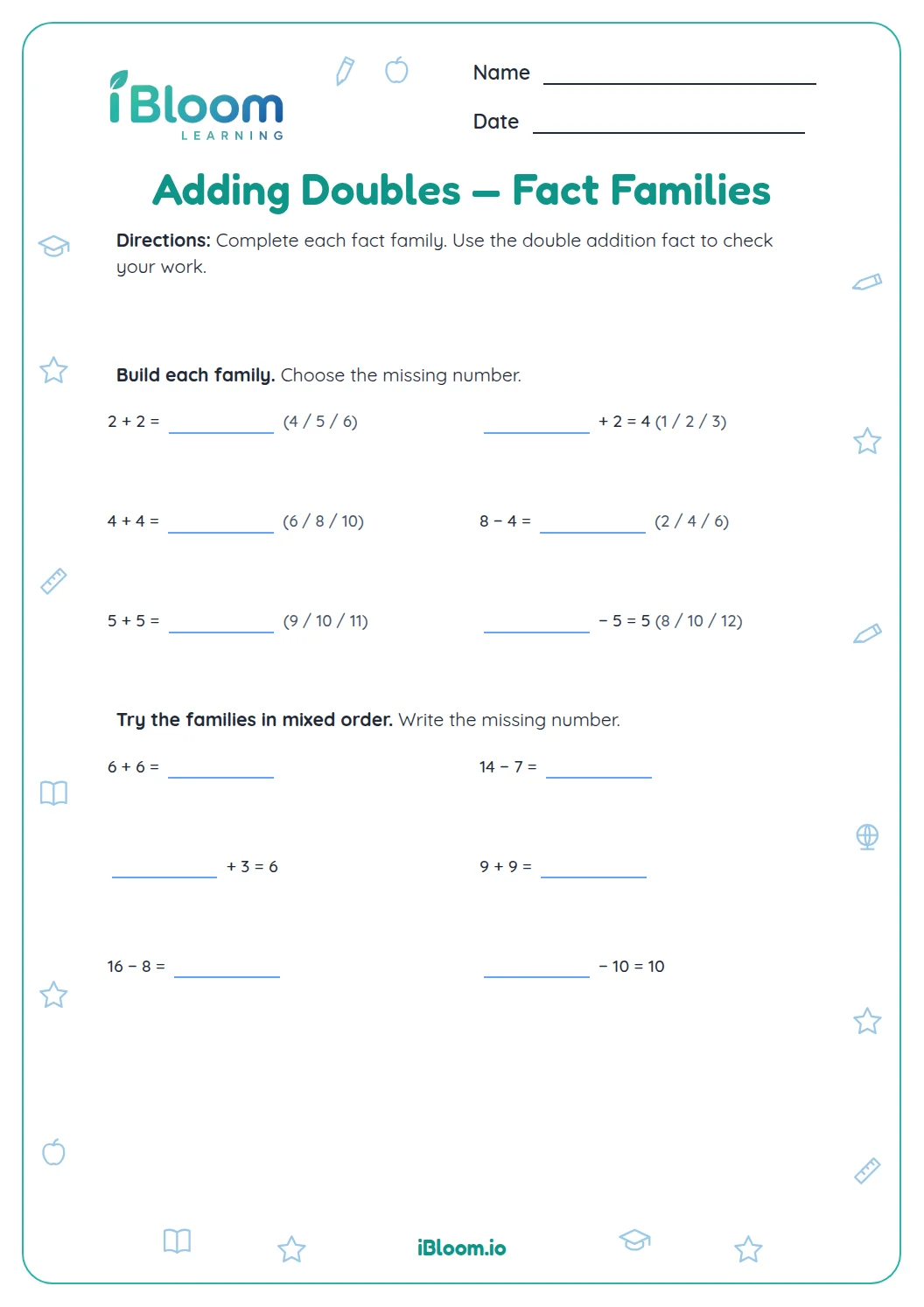
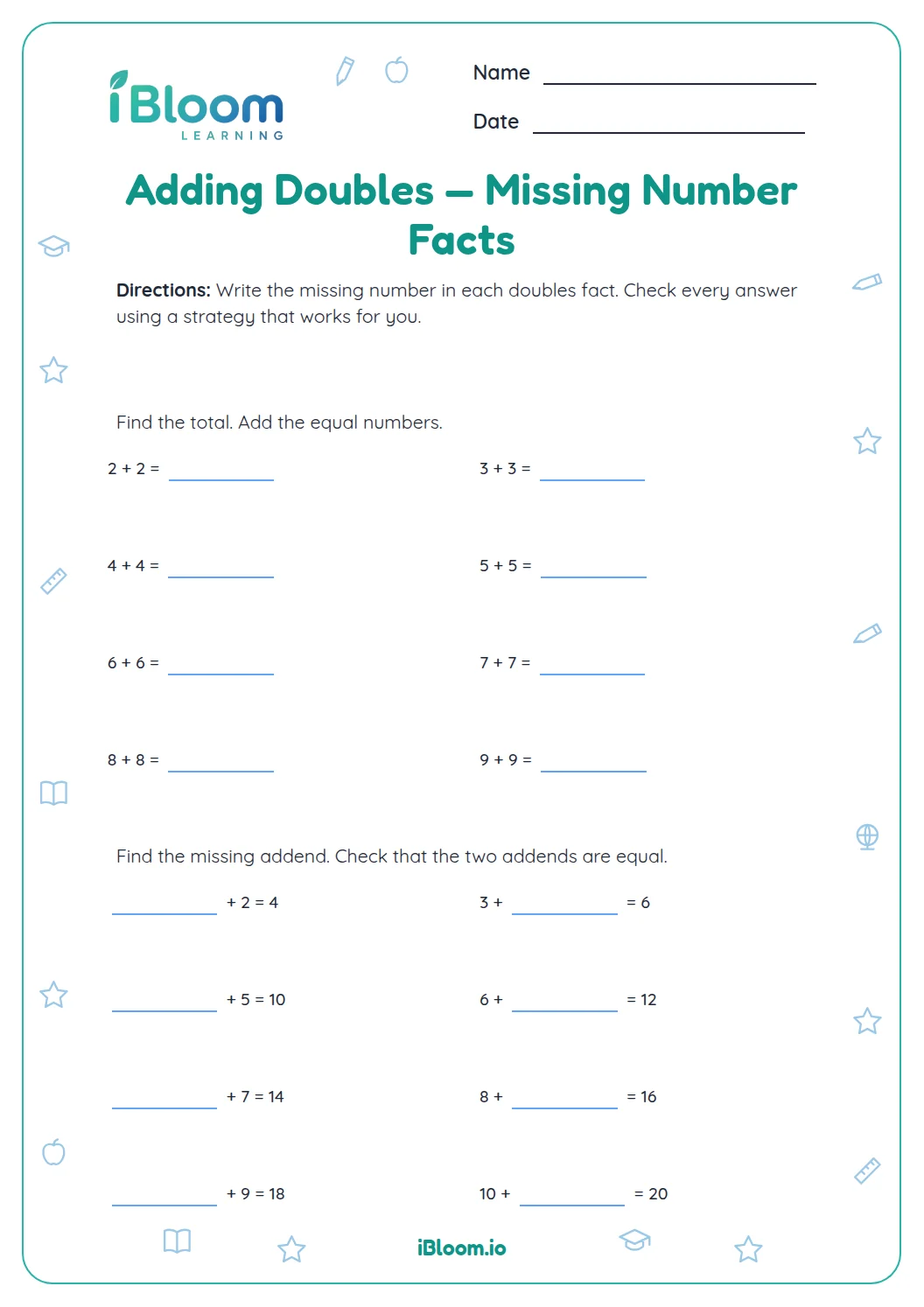
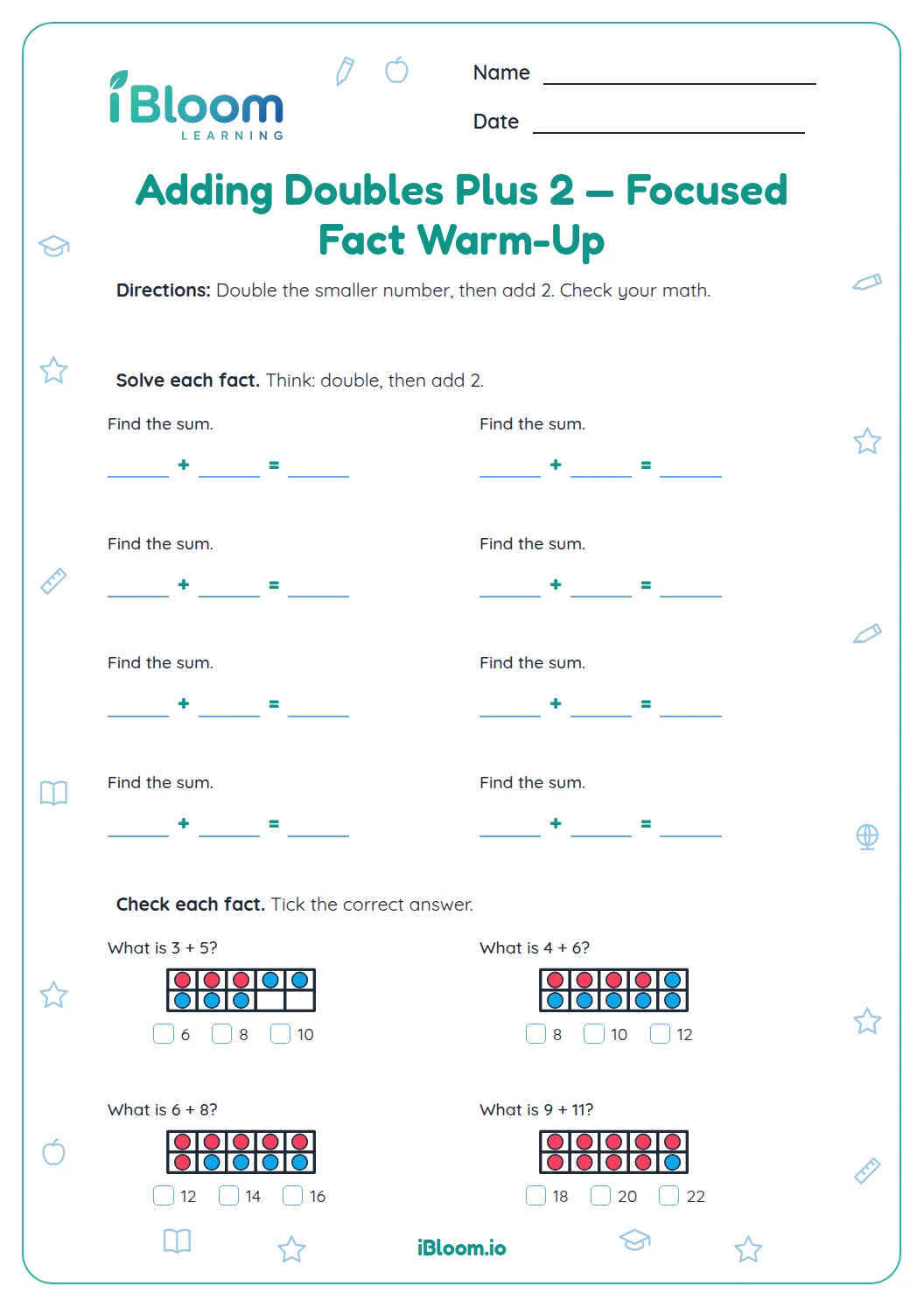
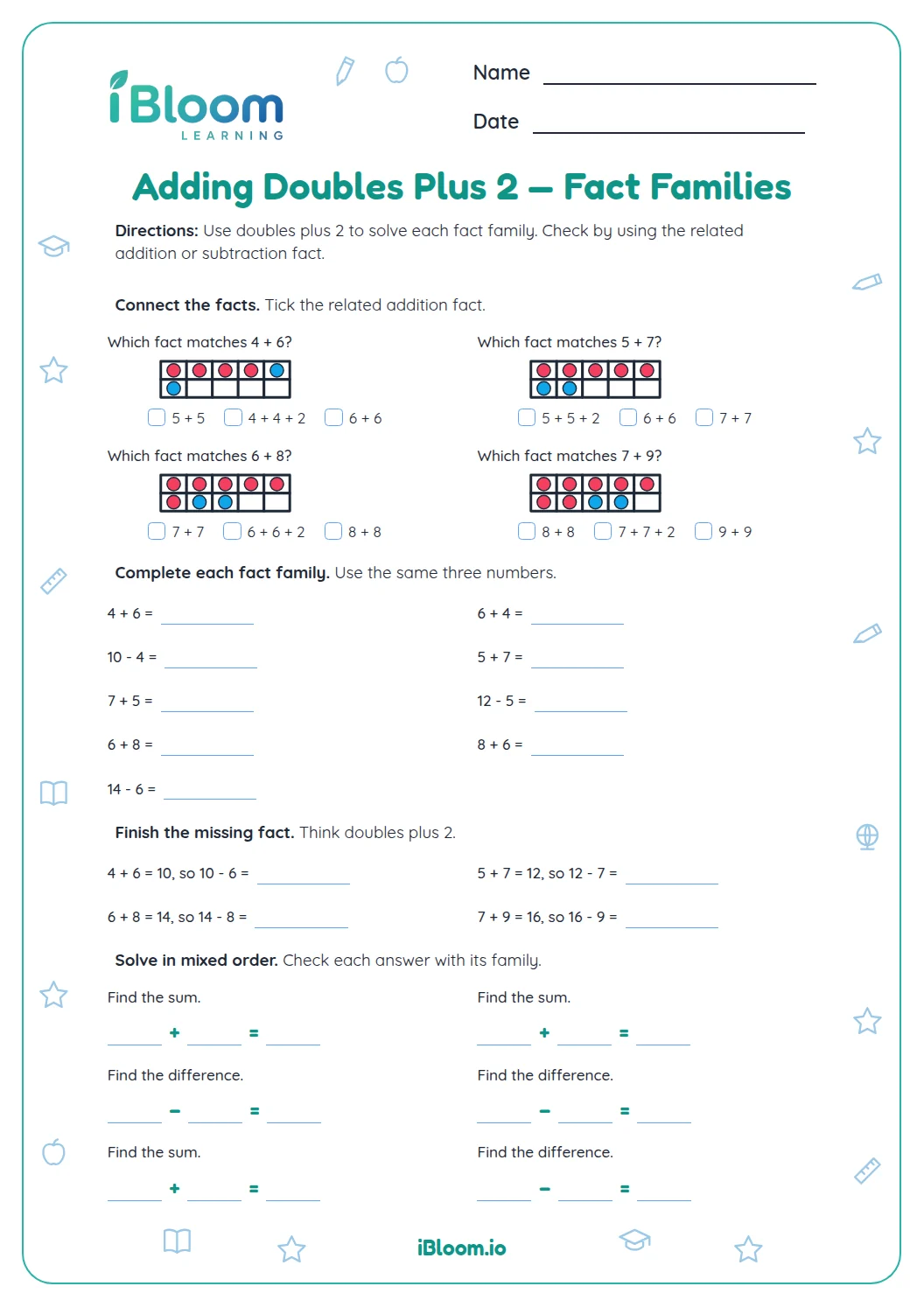
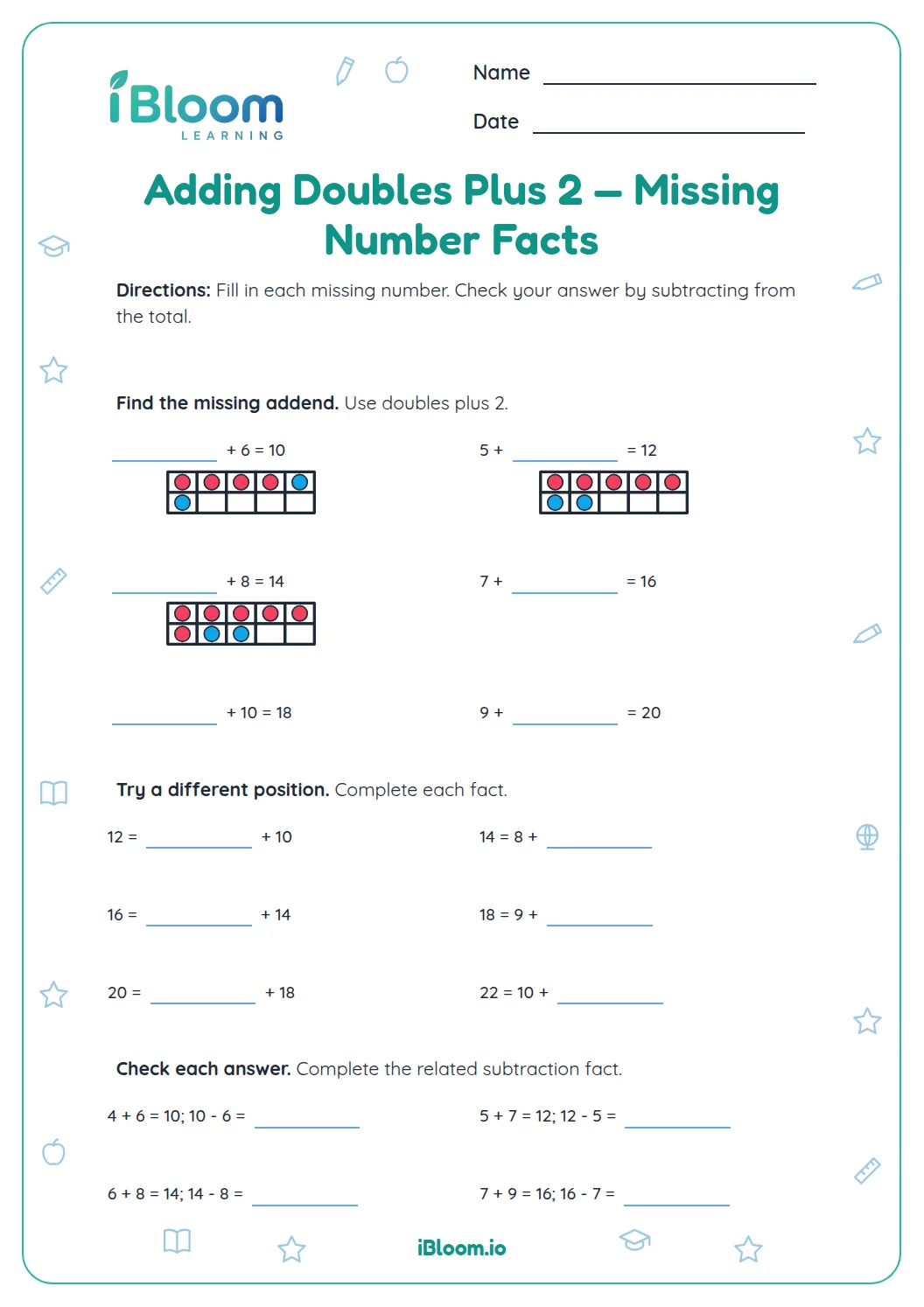
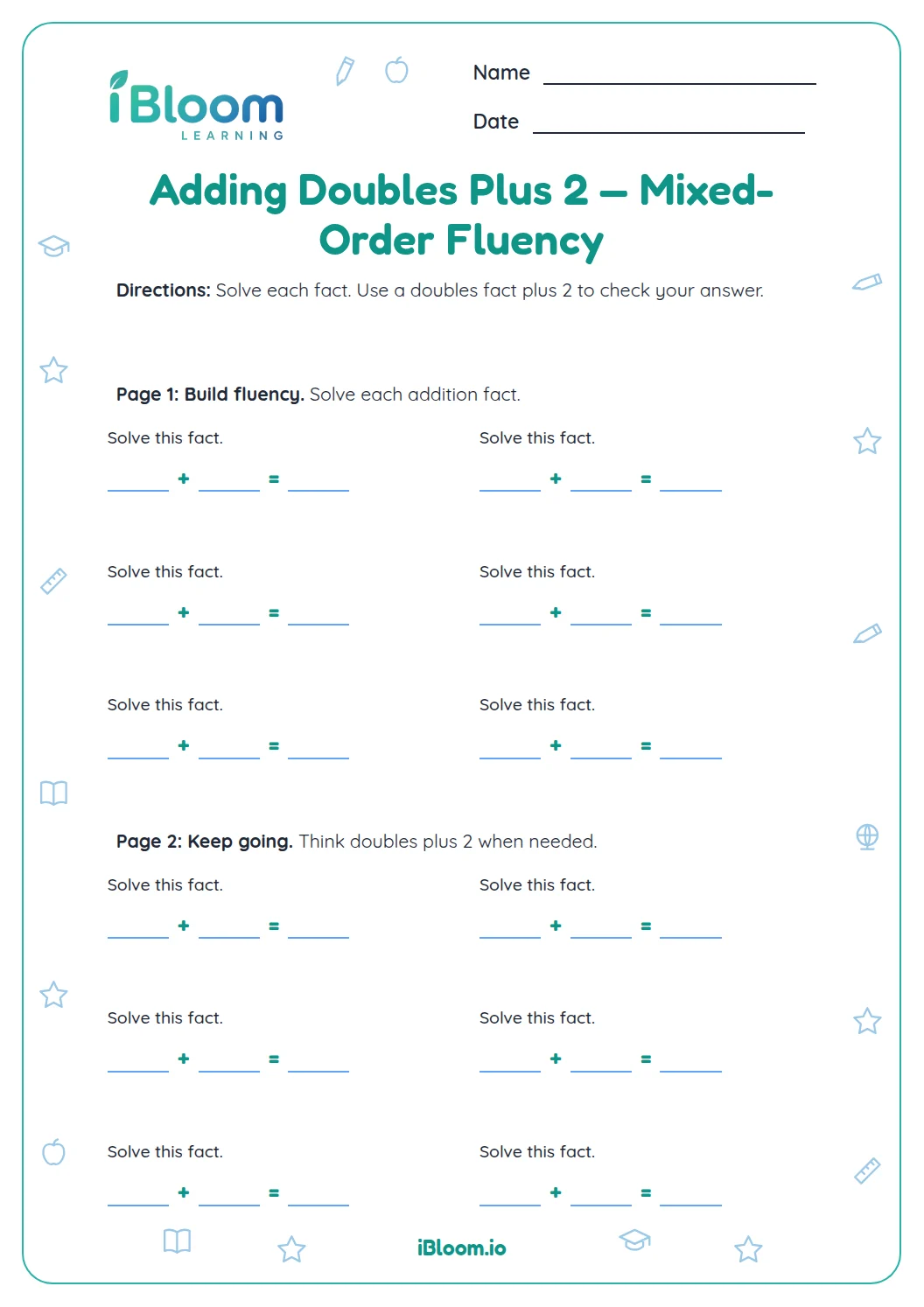
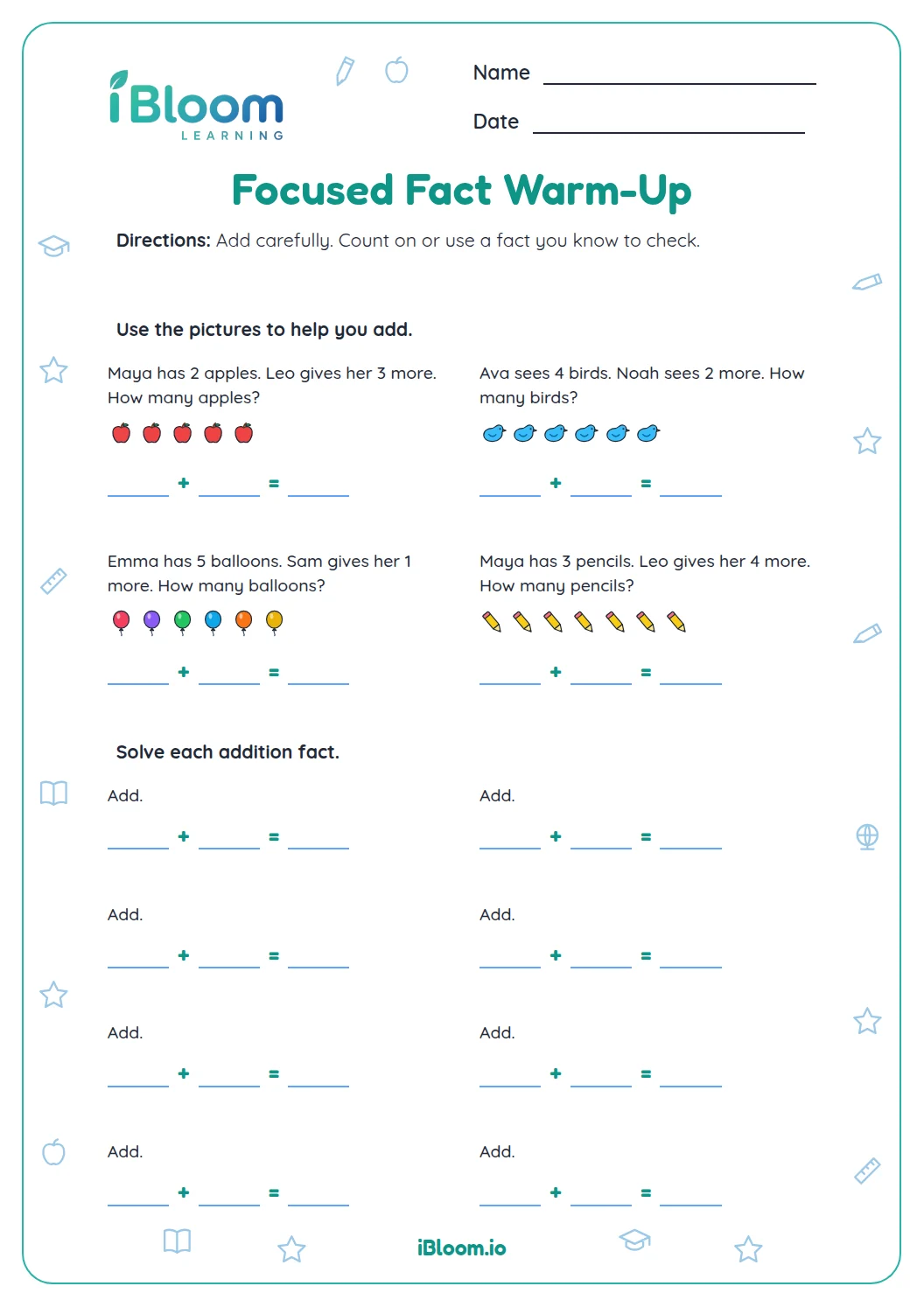
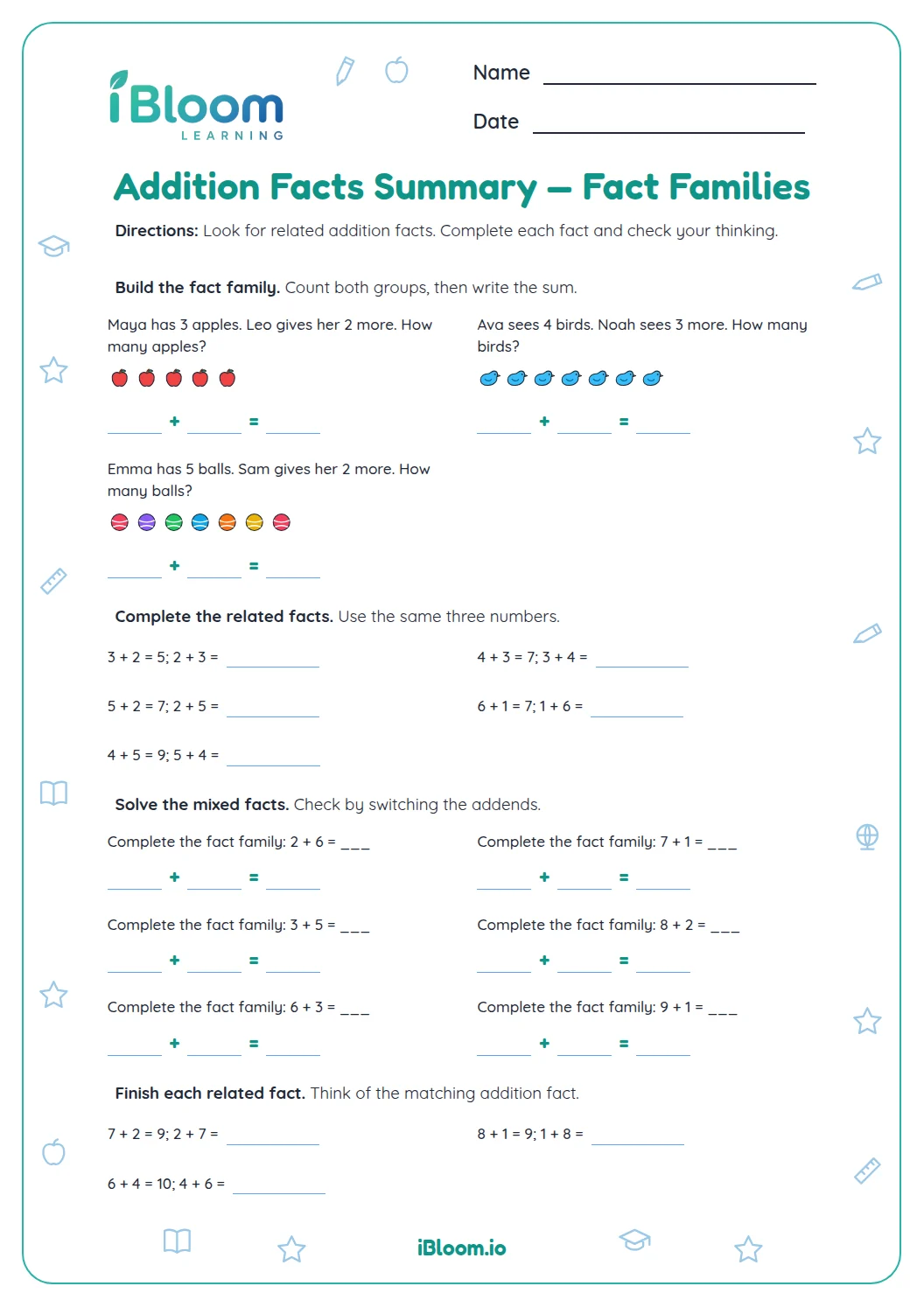
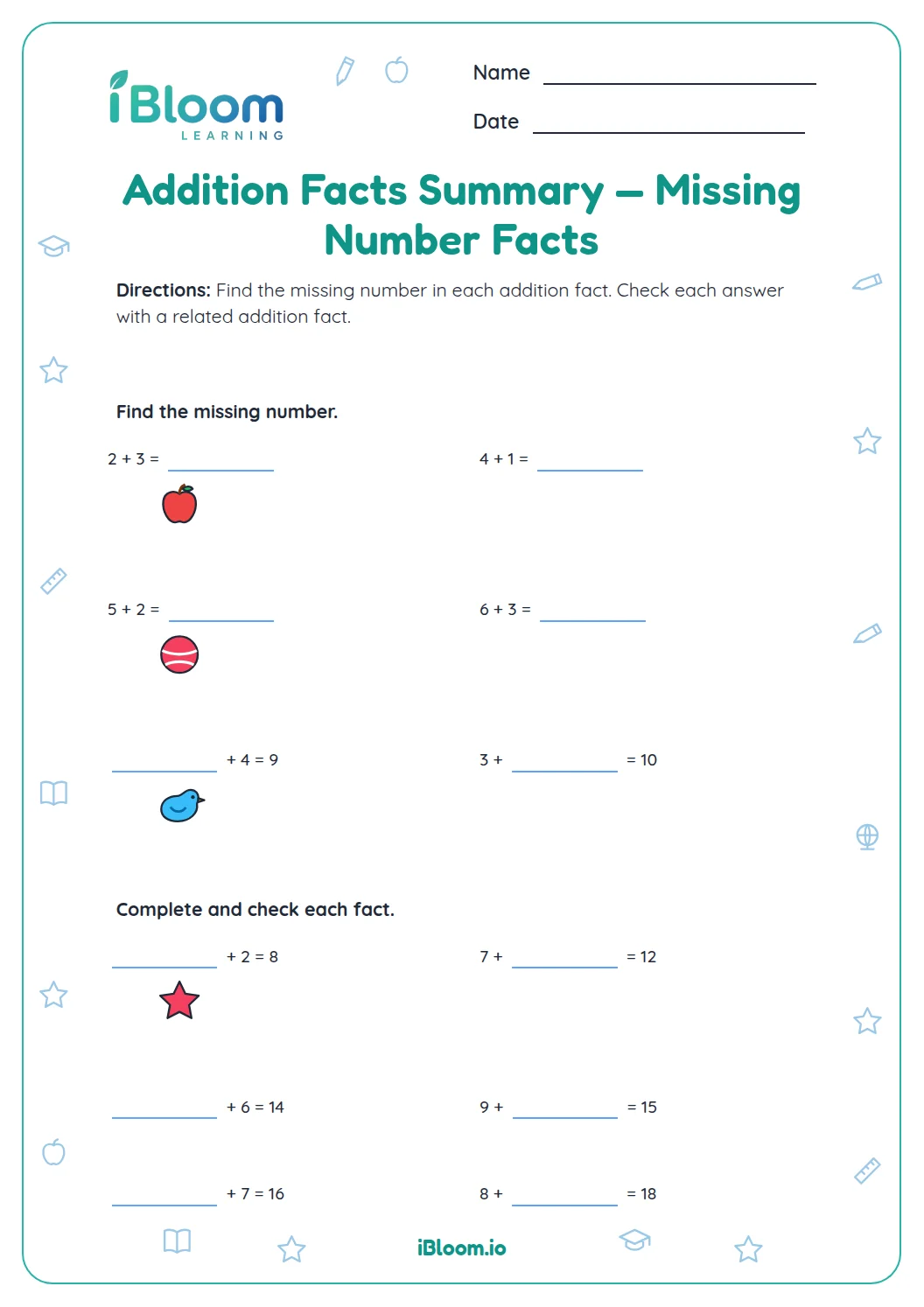
This Grade 1 worksheet practices neighboring addends such as 6 + 7, then uses the same numbers in related addition and subtraction facts. Students complete missing values and identify complete fact families; a separate answer key supports checking.
Aligned to 1.OA.C.6
How does a double help with a nearby fact?
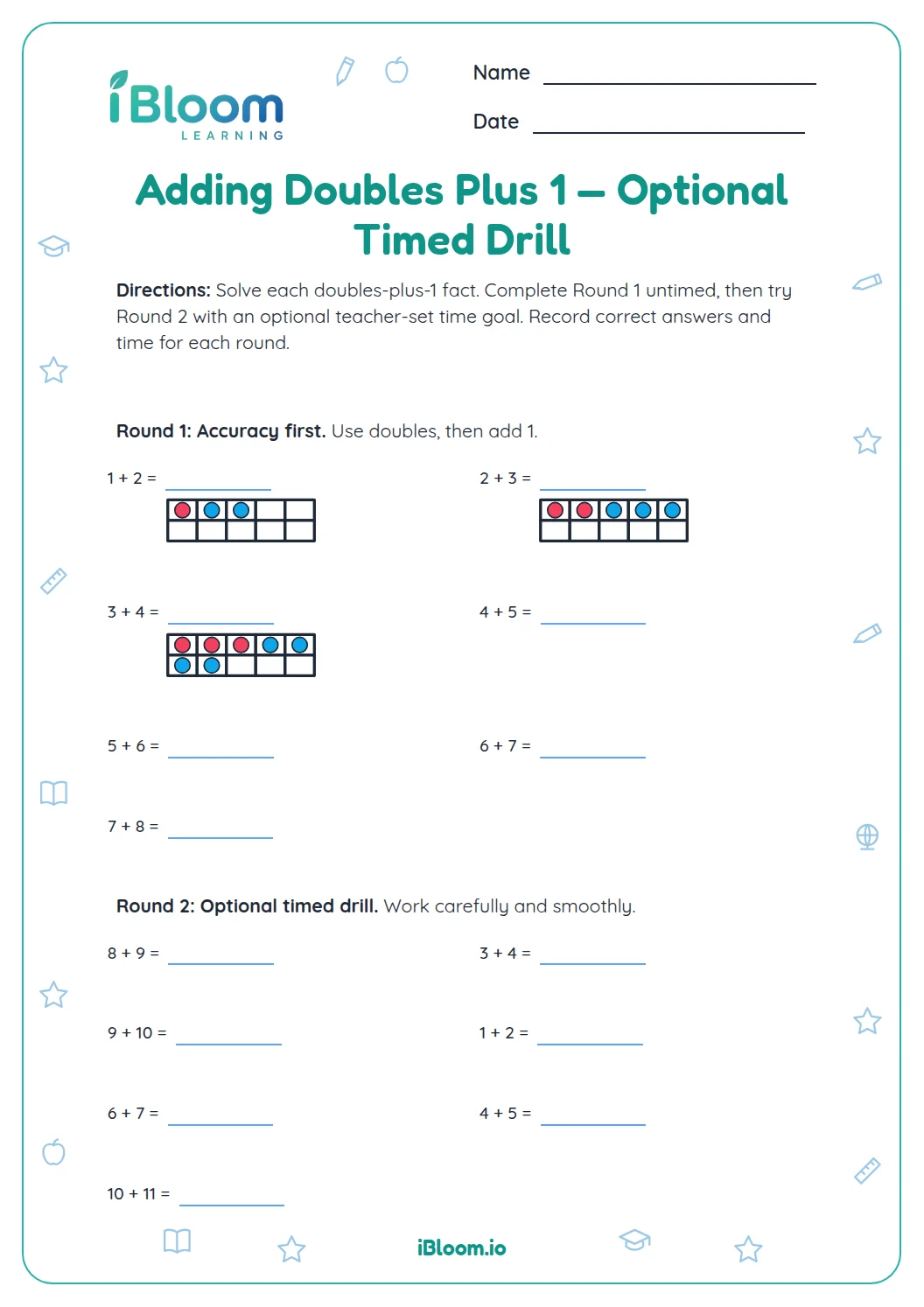
For addends one apart, double the smaller addend and add one. For 6 + 7, use 6 + 6 = 12, then add one to get 13.
The first part practices eight neighboring sums. The second part connects each sum to two addition facts and two subtraction facts.
- 16 + 7
- 26 + 6 = 12
- 312 + 1 = 13
How do three numbers make a fact family?
Two parts and their total make four related equations. Reverse the addends for the second addition fact; subtract each part from the total for the two subtraction facts.
How can subtraction check an addition fact?
If 6 + 7 = 13, check by subtracting either part from 13. The results should be the other addend. This relationship helps students catch a missing or mismatched number.
How to use this worksheet
- 1Find the addends that differ by one.
- 2Double the smaller addend.
- 3Add one more to find the sum.
- 4Use the total and each addend to make related subtraction facts.
- 5Check that all four equations use the same three numbers.
Common mistakes and quick fixes
The mistake
Doubling the larger addend and adding one.
The fix
Double the smaller addend, which is one less than the larger.
The mistake
Changing the total in a subtraction fact.
The fix
Use the addition sum as the whole, then subtract one part.
The mistake
Writing only one order of the addition fact.
The fix
Switch the addends to make the second addition equation.
Common Core alignment
This worksheet gives focused practice with the following Common Core skills.
Use known addition and subtraction facts to complete related facts.
On this sheet: Use known addition and subtraction facts to complete related facts.
Show the official wordingHide the official wording
Add and subtract within 20, demonstrating fluency for addition and subtraction within 10. Use strategies such as counting on; making ten (e.g., 8 + 6 = 8 + 2 + 4 = 10 + 4 = 14); decomposing a number leading to a ten (e.g., 13 - 4 = 13 - 3 - 1 = 10 - 1 = 9); using the relationship between addition and subtraction (e.g., knowing that 8 + 4 = 12, one knows 12 - 8 = 4); and creating equivalent but easier or known sums (e.g., adding 6 + 7 by creating the known equivalent 6 + 6 + 1 = 12 + 1 = 13).
What to practice next
Make more practice
Further reading
Questions parents and teachers ask
What does doubles plus one mean?
When the addends differ by one, double the smaller addend and add one more. For 6 + 7, 6 + 6 = 12, then 12 + 1 = 13. The first eight questions practice sums built from neighboring addends. This helps when checking the examples and answers on the page.
What is a fact family?
A fact family uses two parts and their whole to make related addition and subtraction equations. With 6, 7, and 13, the facts include 6 + 7 = 13, 7 + 6 = 13, 13 − 6 = 7, and 13 − 7 = 6.
How many problems are on the worksheet?
There are 18 questions: ten addition sums using neighboring addends and eight prompts to complete a fact family. The answer key gives each sum and the missing family facts so an adult can check the work and review the related equations.
Can a child use a different strategy?
Yes. A child may also count on or use another correct strategy, though the page highlights doubles plus one. For each family, use the same two addends and total in both addition equations and the related subtraction facts. This helps when checking the examples and answers on the page.
What should students check in a fact family?
Check that the two addends make the total, then subtract each addend from that total. The answer should be the other addend. Reversing the two addends gives the second addition fact, so all four equations use the same two parts and total.