

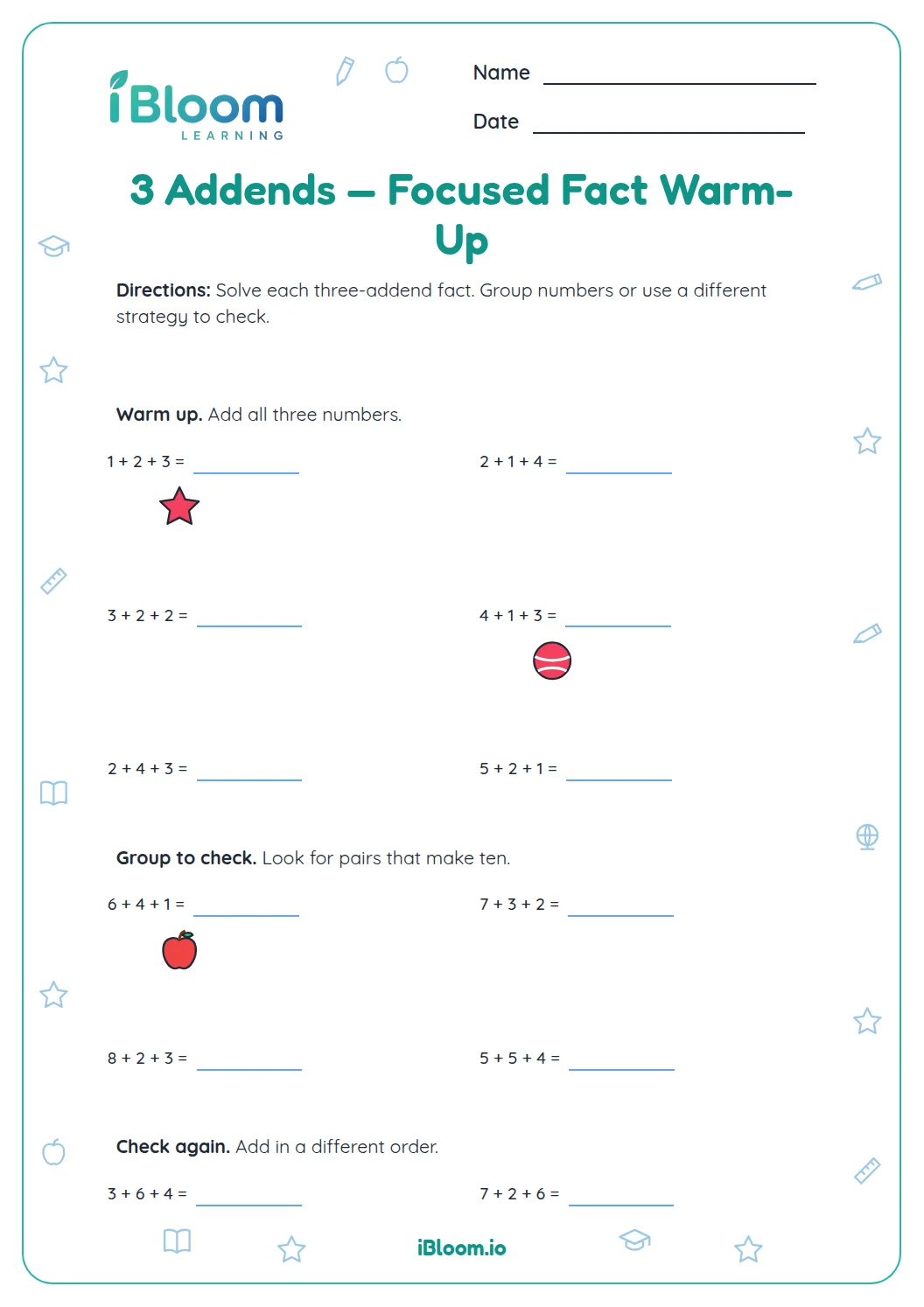
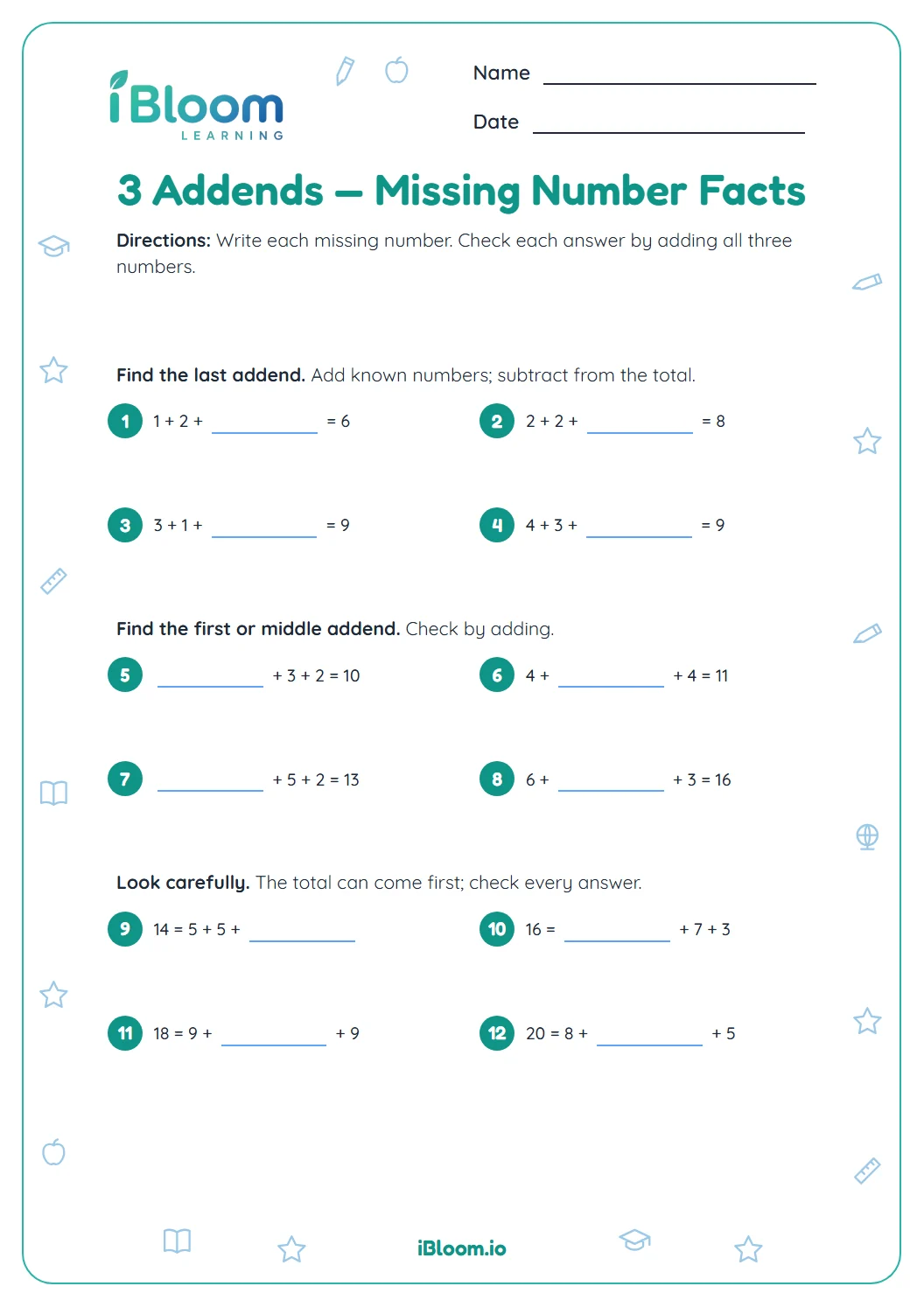
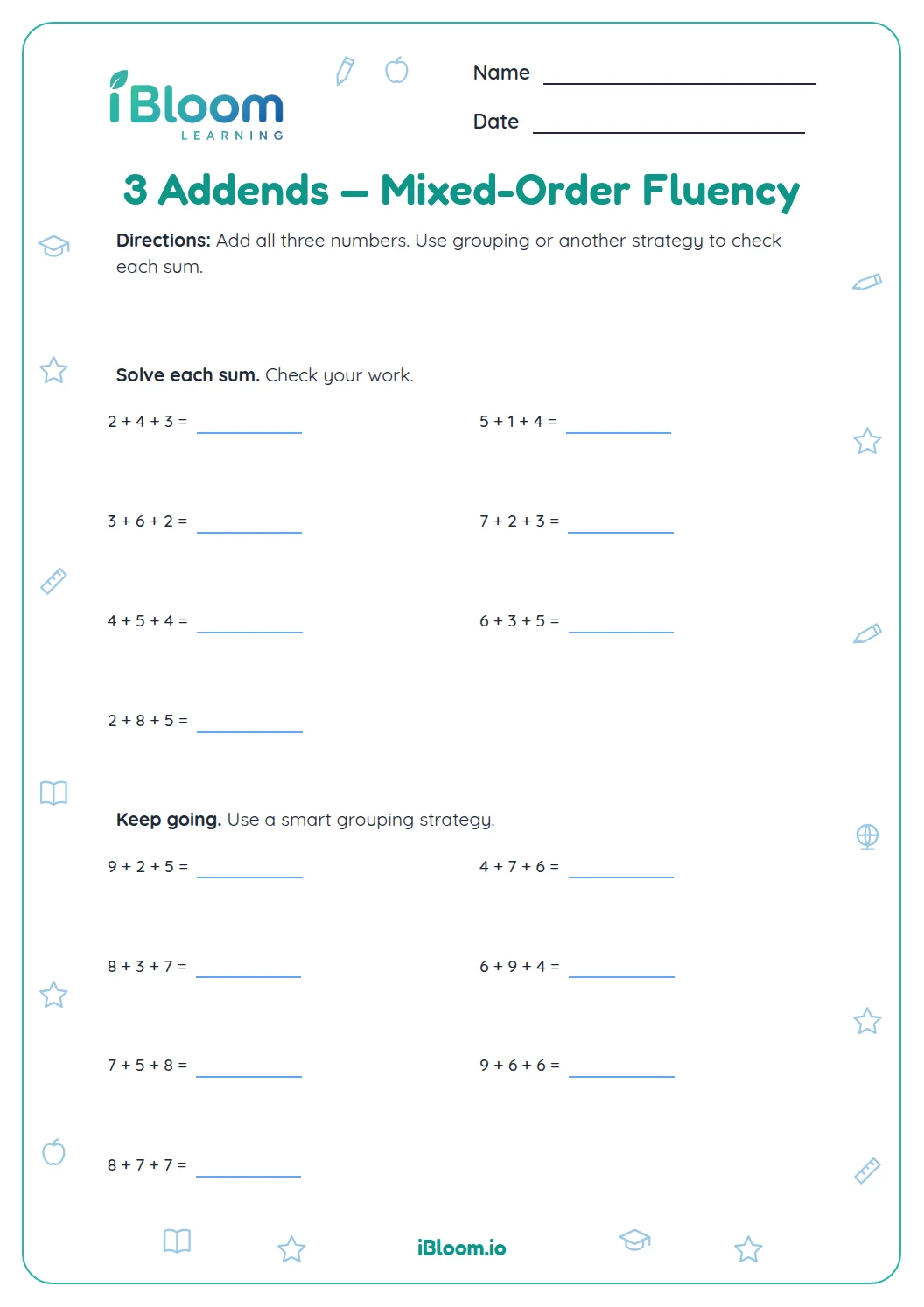
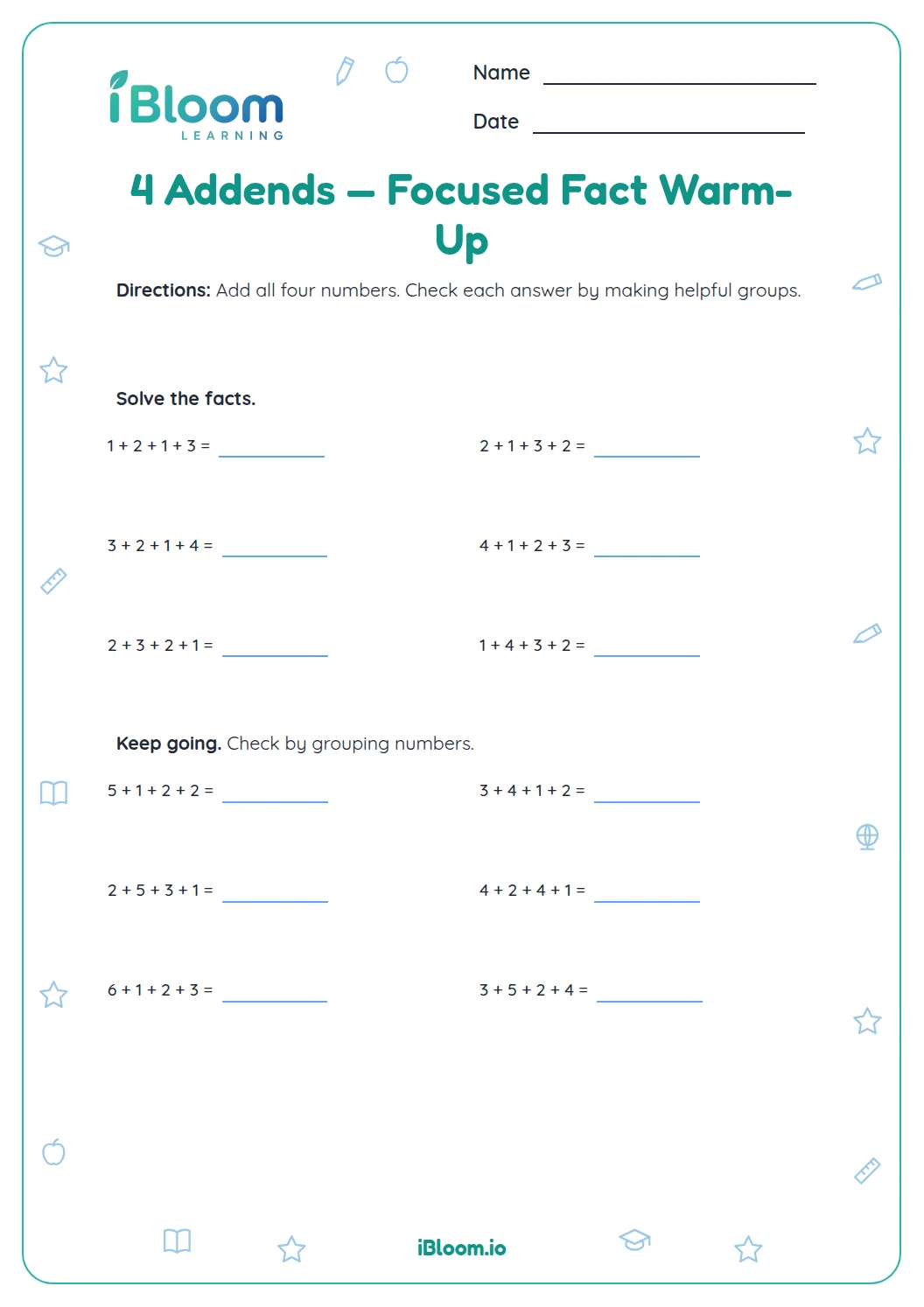

About this worksheet
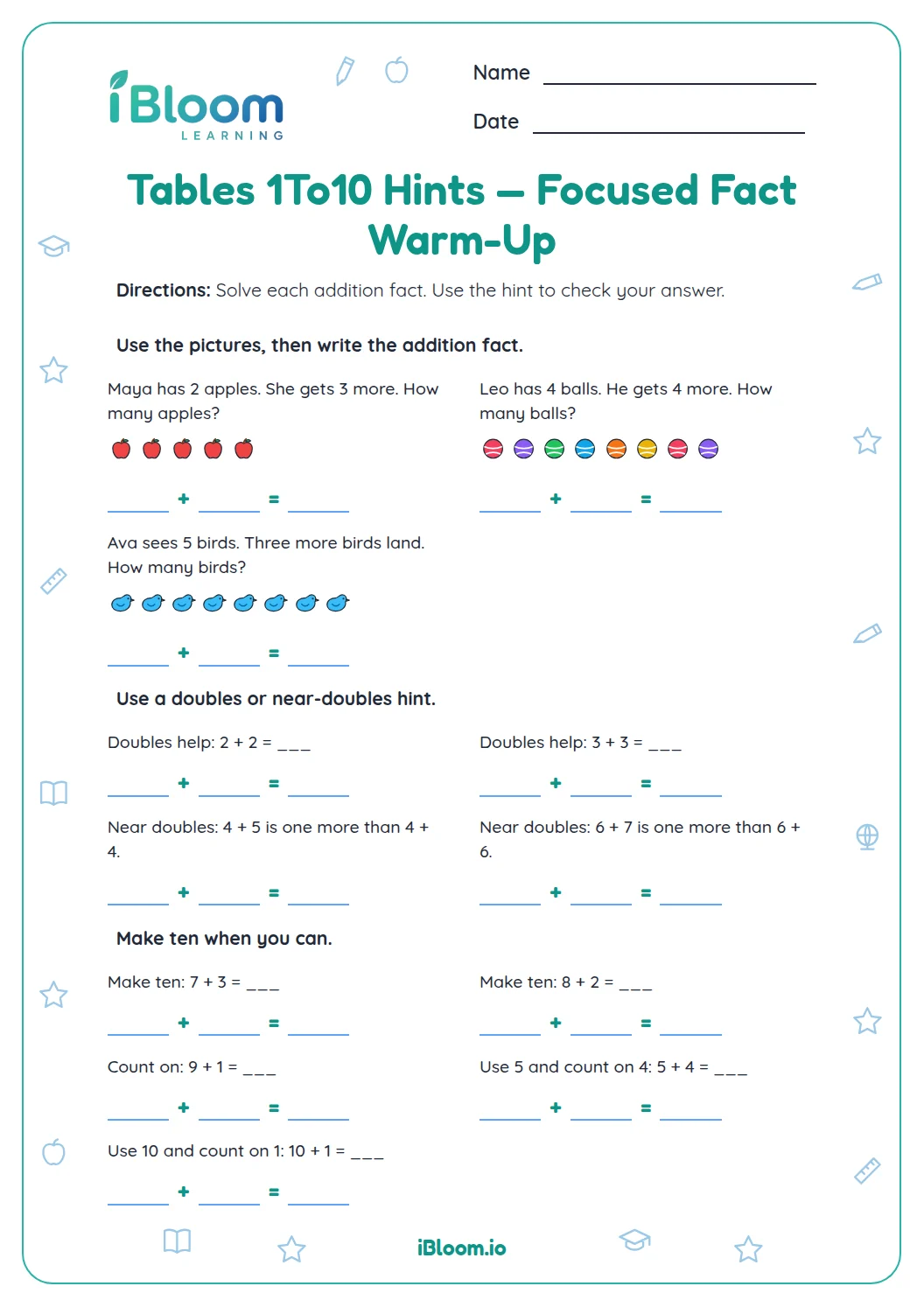
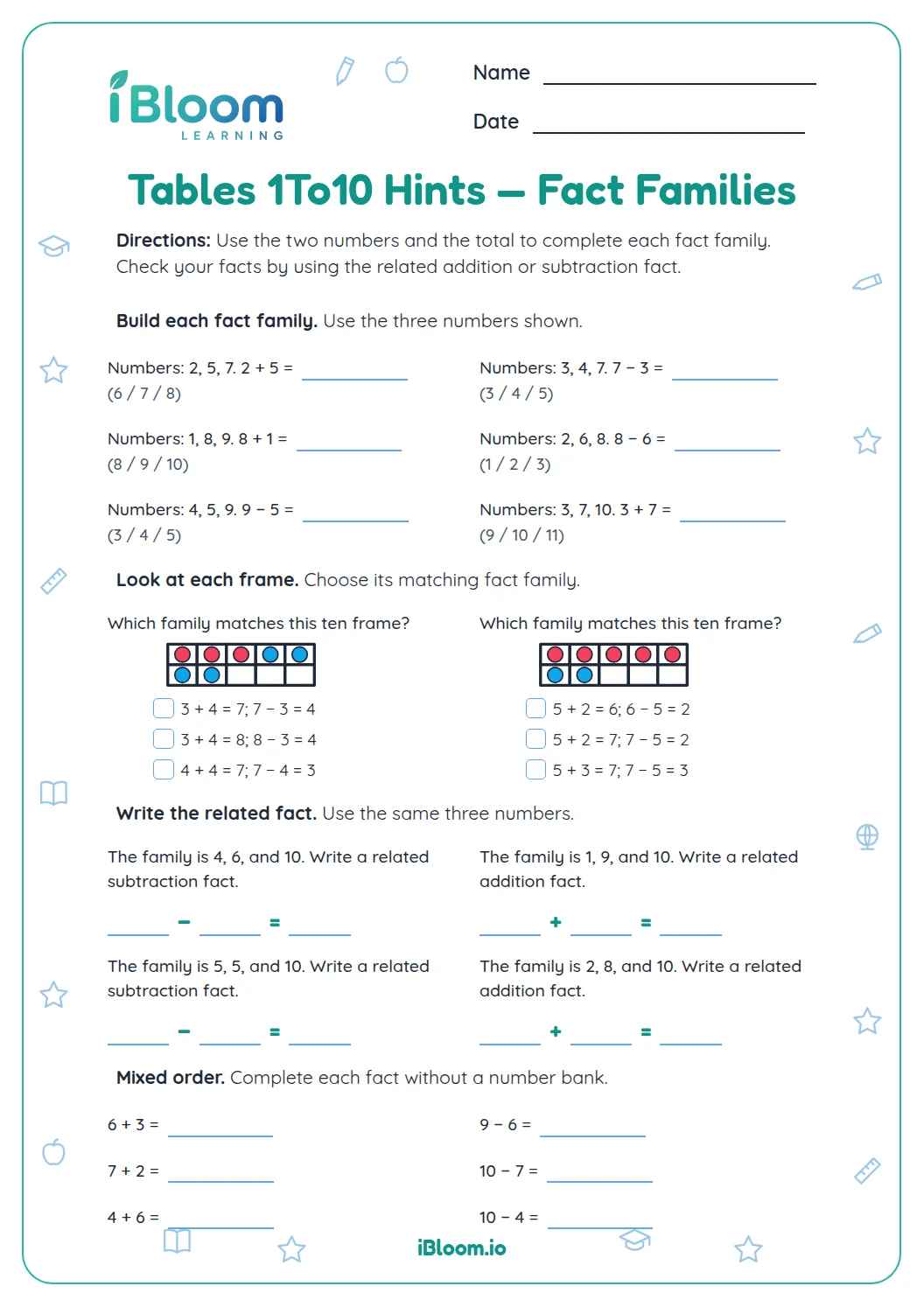
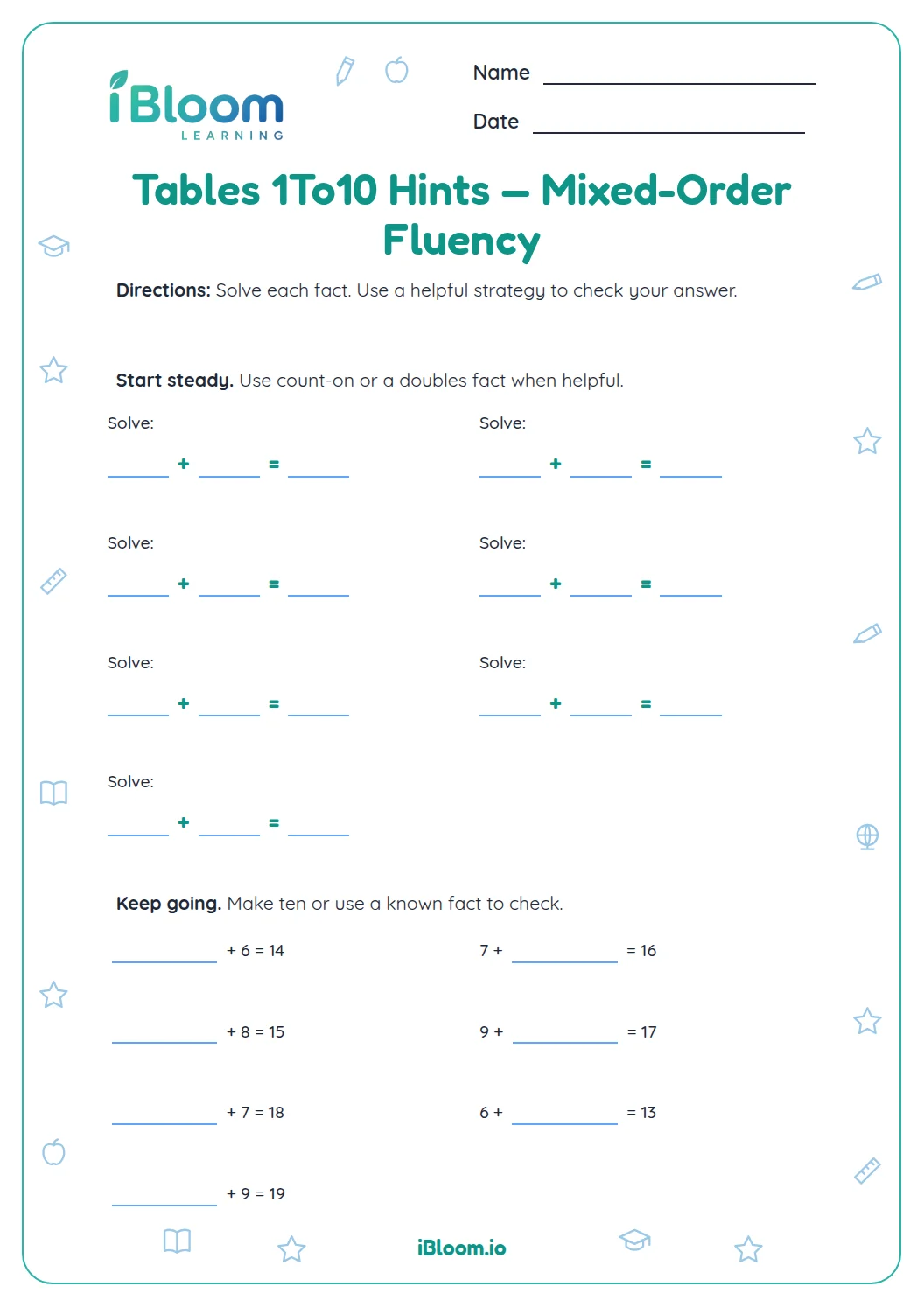
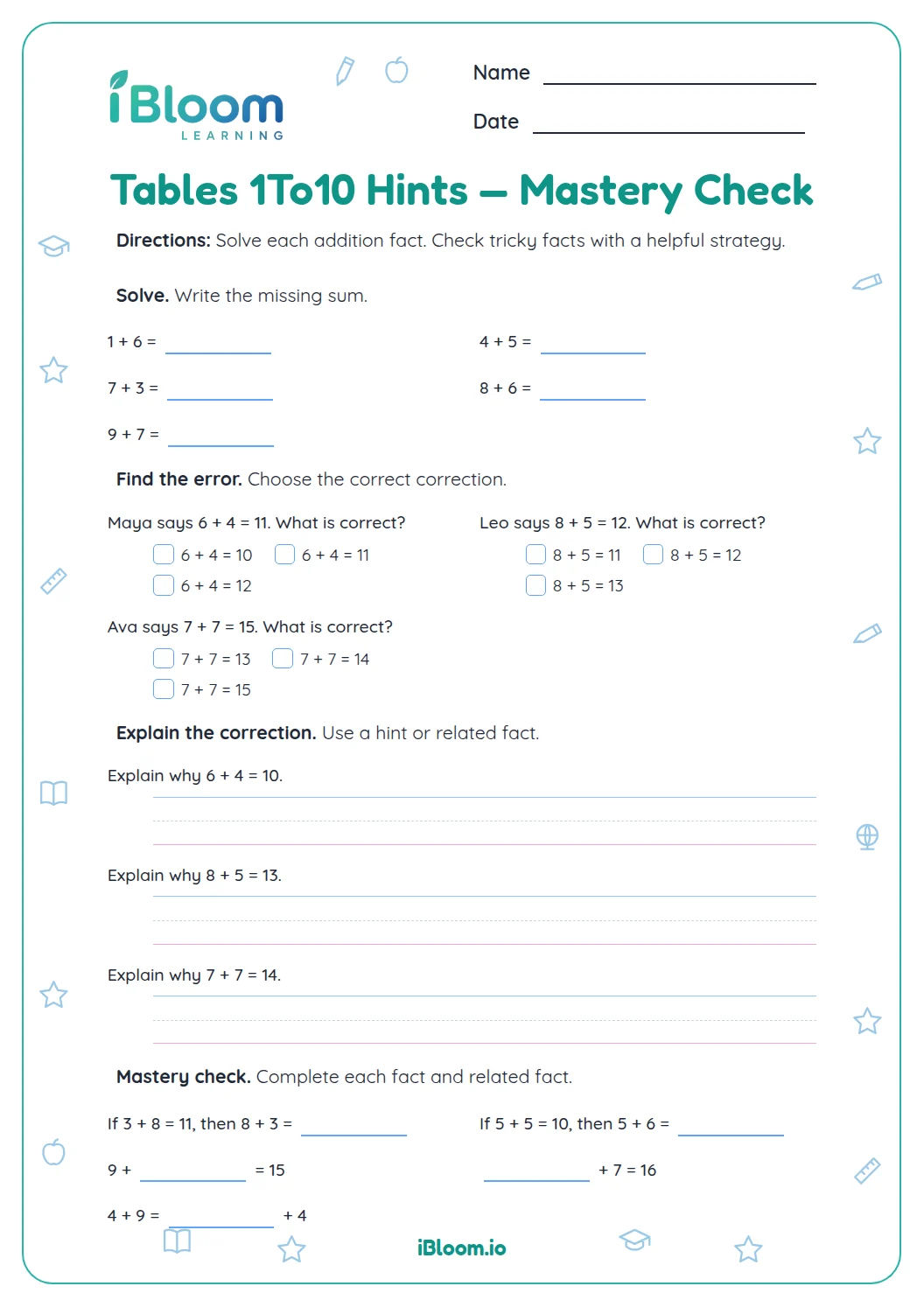
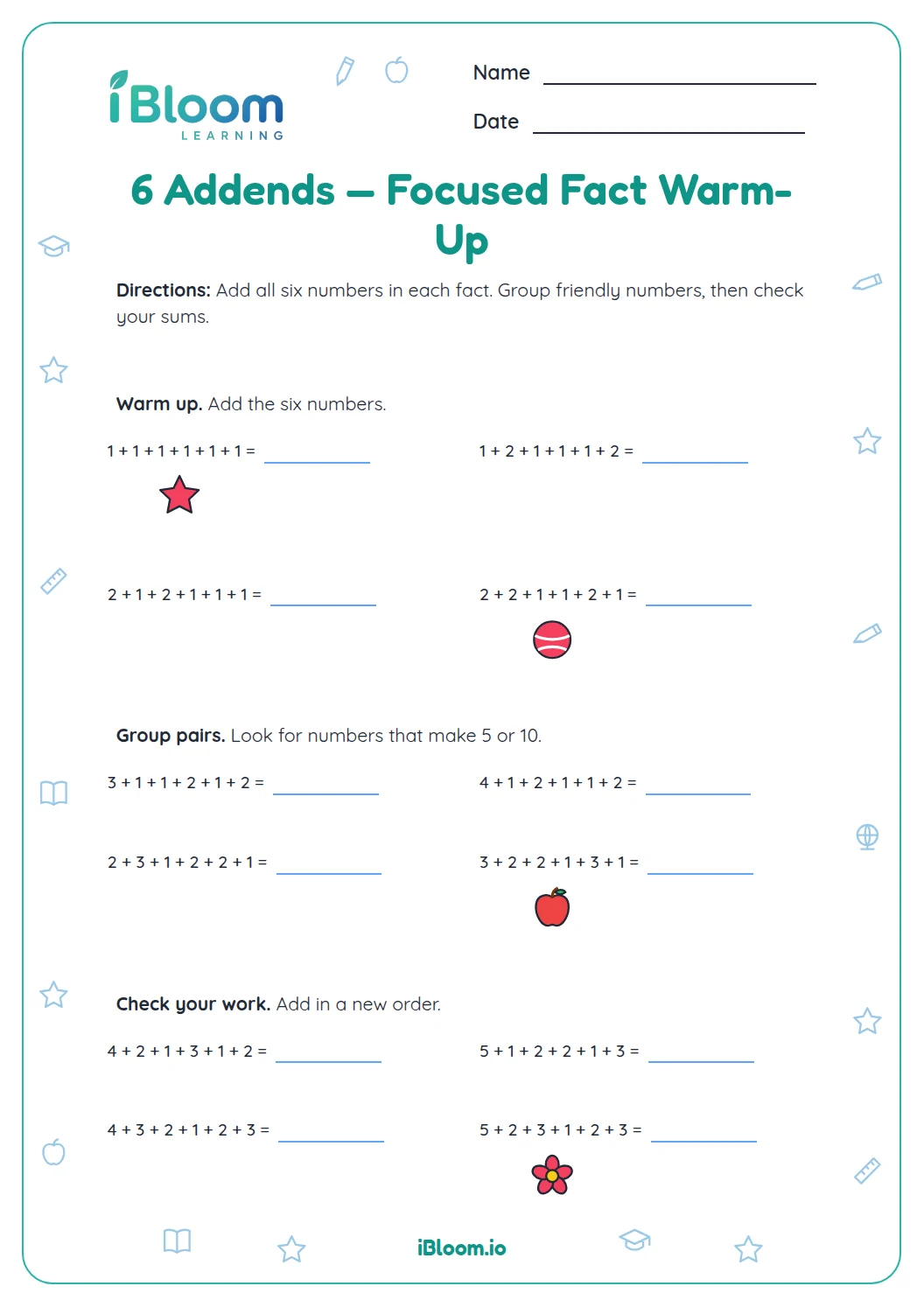
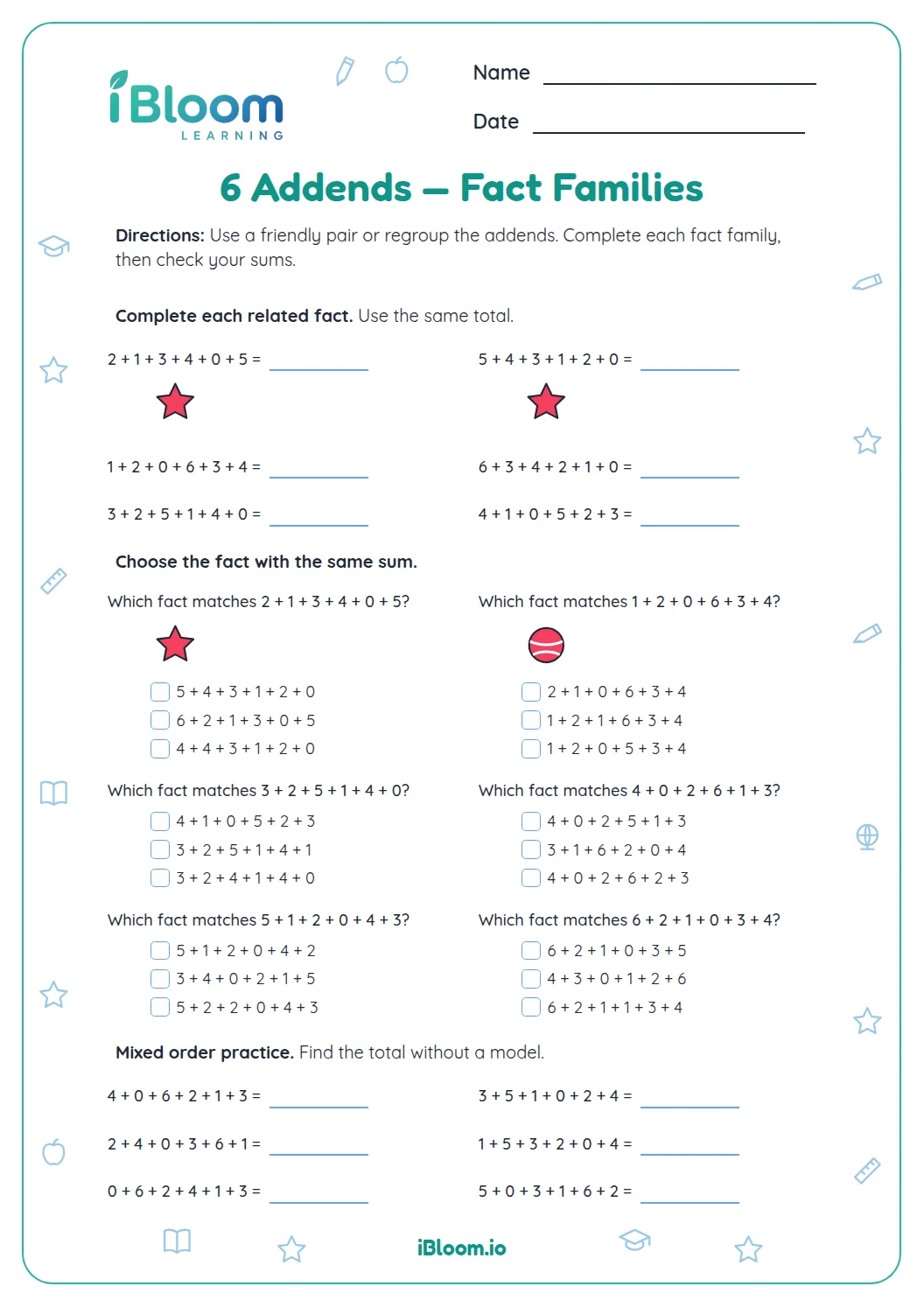
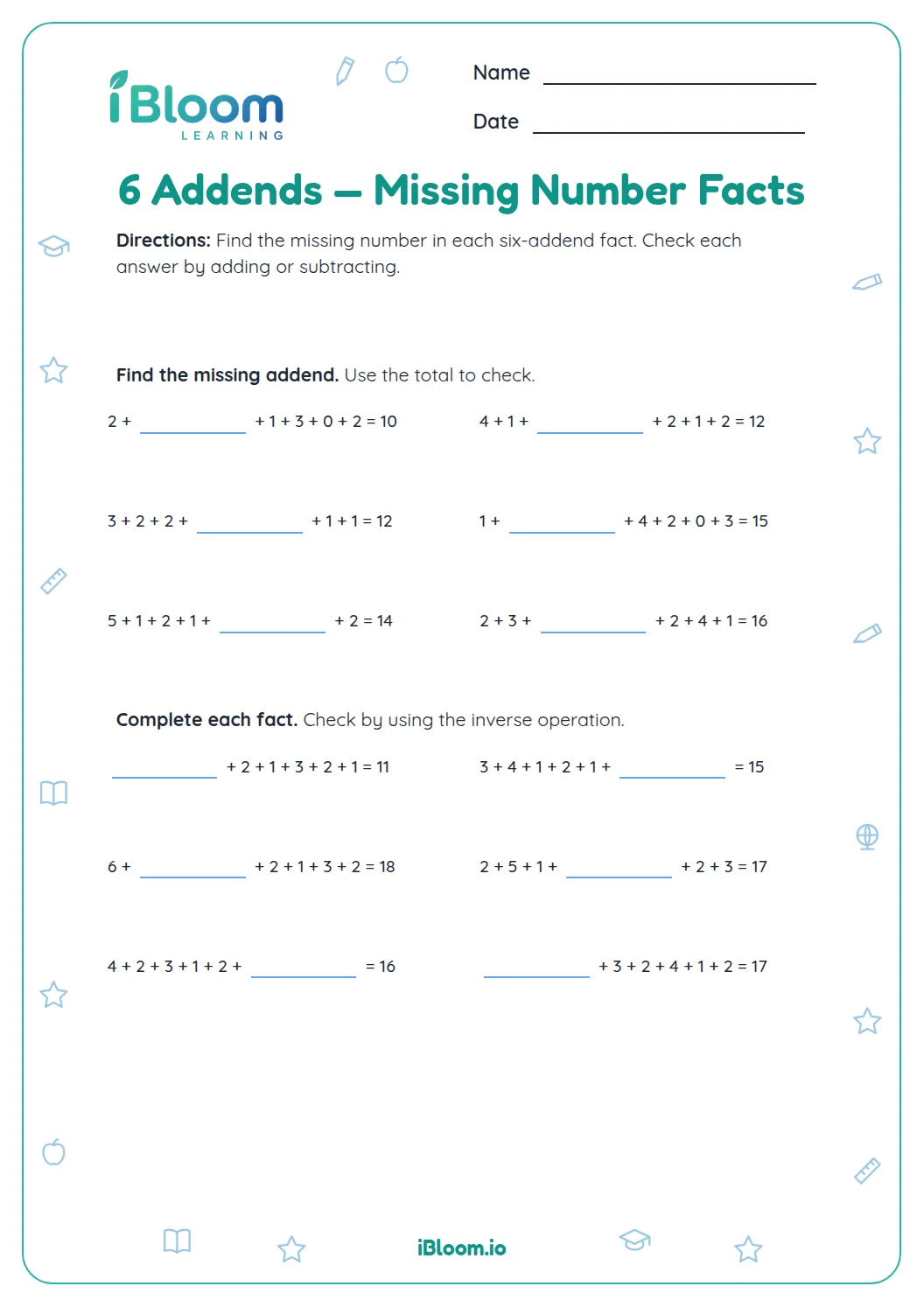
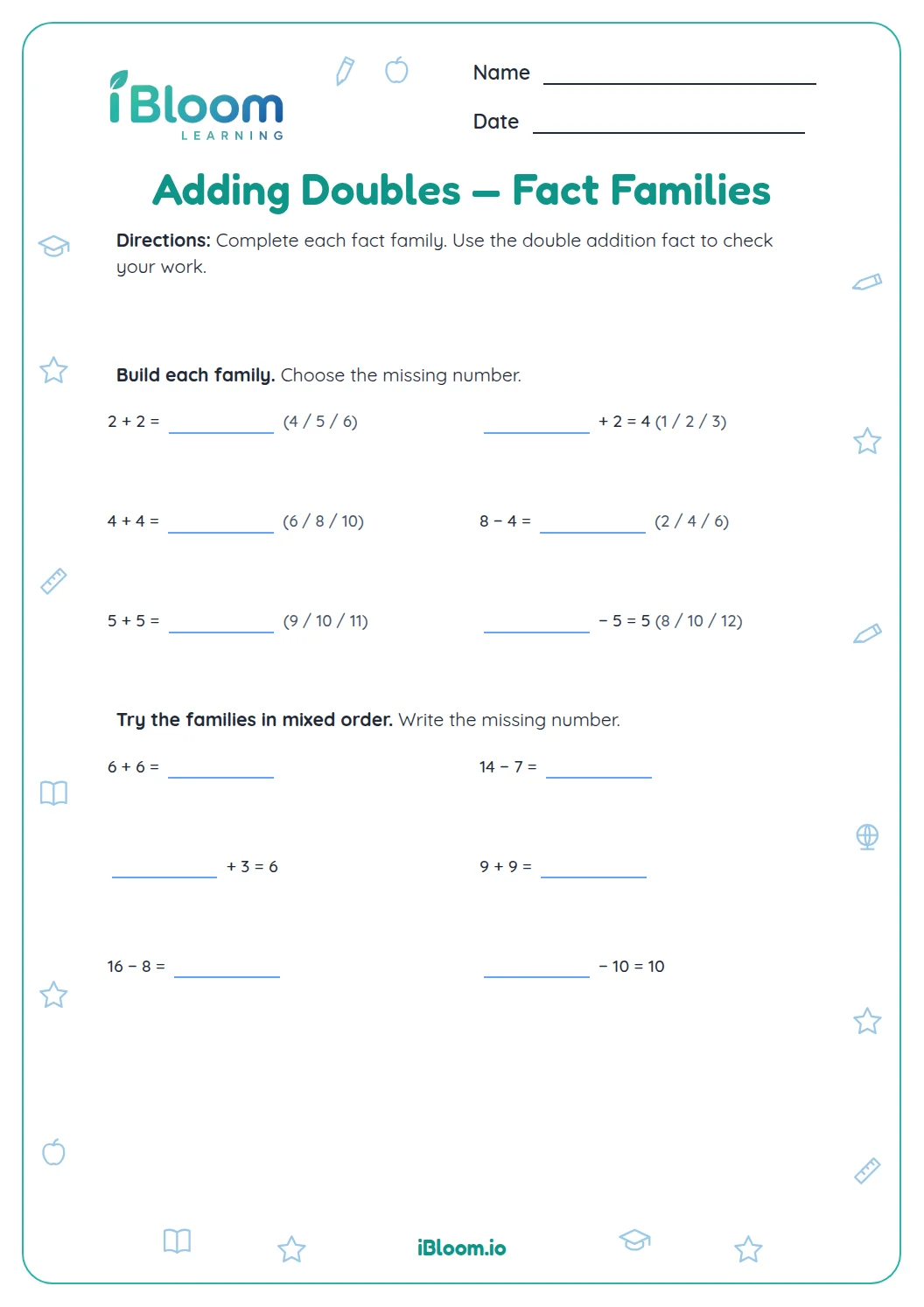
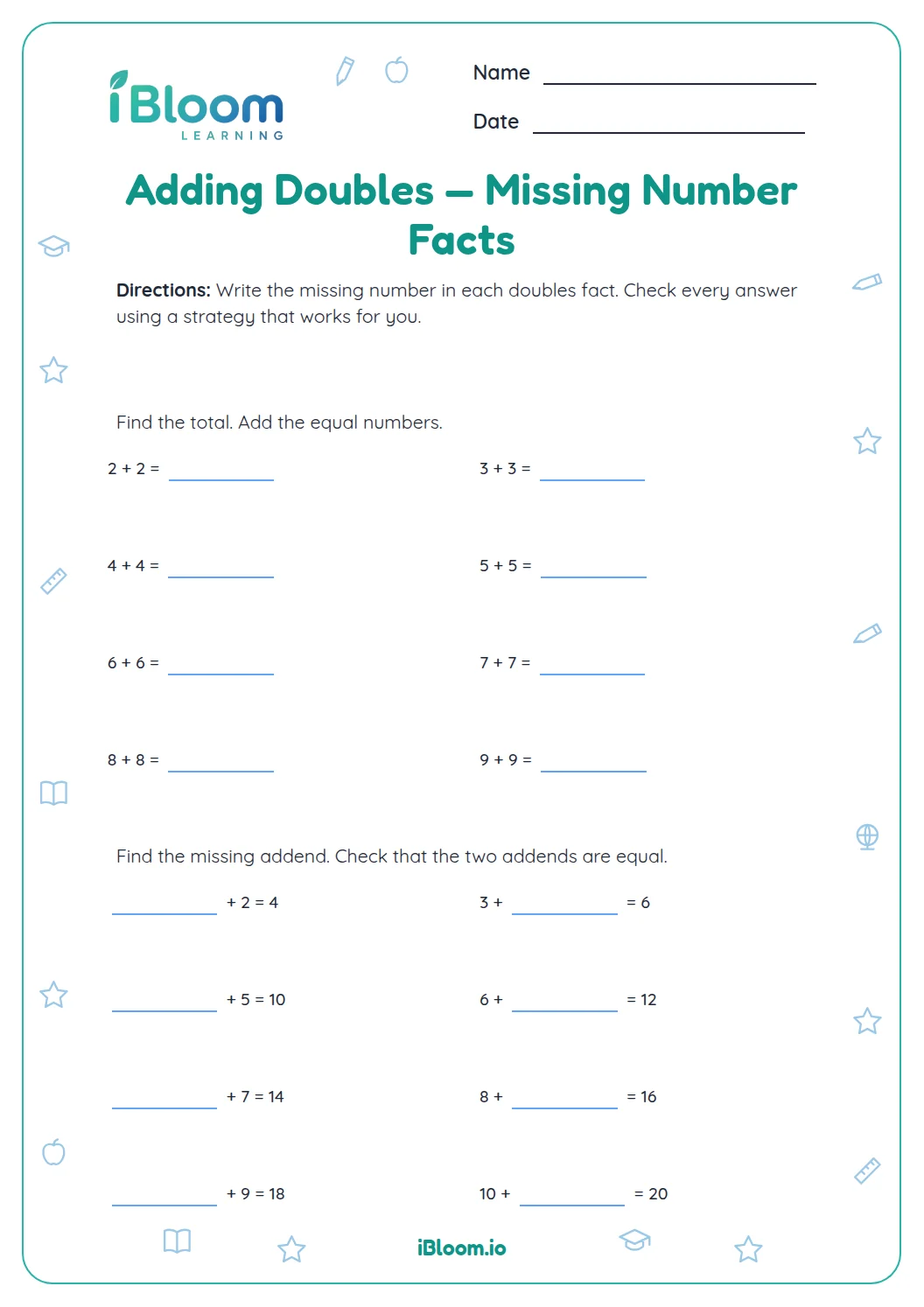
This printable addition drill reviews facts with addends from 1 to 10. Children solve 18 mixed equations, including doubles and combinations that make ten, then record accuracy and optional time. The optional timing note keeps the focus on accurate, steady practice. A separate answer key makes checking quick. The facts align with CCSS 1.OA.C.6, adding within 20 with strategies such as counting on and making ten.
Aligned to 1.OA.C.6
What strategies help with addition facts?
Children can count on from the larger number, use a known double, or make ten and add what remains. These strategies build accurate recall while the facts become familiar.
- 13 + 8
- 2Think: 8 + 2 = 10, with 1 more
- 33 + 8 = 11
How should the optional timing work?
Accuracy comes first. Let the child complete the page at a comfortable pace. If timing is motivating, time a repeat attempt and compare it with the child’s own earlier result. There is no required speed target.
Which facts appear?
The 18 equations use addends from 1 through 10. The mix includes make-ten pairs, doubles, and other combinations, with sums no greater than 12.
How to use this worksheet
- 1Solve one fact at a time and write the sum in the blank.
- 2Use a strategy such as counting on, a double, or making ten.
- 3Check uncertain sums with counters or a quick number bond.
- 4Finish the full set before checking the key.
- 5Try optional timing only if it feels helpful; record accuracy too.
Mistakes to watch for
The mistake
Adding the two addends in the wrong order is not the issue, but skipping a count can change the total.
The fix
Start at the larger addend and count on the smaller number of steps.
The mistake
Saying the starting number as the first count when counting on.
The fix
For 5 + 6, start at 6 and say 7, 8, 9, 10, 11, 12 for six steps.
The mistake
Rushing because a timer is present.
The fix
Accuracy is the goal. Pause the timer or work untimed until the facts feel secure.
Common Core alignment
This worksheet practices the following Common Core skills.
Add within 20 using counting, known facts, and making-ten strategies.
On this sheet: The drill practices addition facts within 20 with sums no greater than 11.
Show the official wordingHide the official wording
Add and subtract within 20, demonstrating fluency for addition and subtraction within 10. Use strategies such as counting on; making ten (e.g., 8 + 6 = 8 + 2 + 4 = 10 + 4 = 14); decomposing a number leading to a ten (e.g., 13 - 4 = 13 - 3 - 1 = 10 - 1 = 9); using the relationship between addition and subtraction (e.g., knowing that 8 + 4 = 12, one knows 12 - 8 = 4); and creating equivalent but easier or known sums (e.g., adding 6 + 7 by creating the known equivalent 6 + 6 + 1 = 12 + 1 = 13).
What to practice next
Make more practice
Further reading
Questions parents and teachers ask
Are the timing and speed required?
No. Timing is optional. Children can first solve the facts carefully at a comfortable pace. If timing helps motivate a repeat try, track accuracy as well as time and compare the child with their own earlier work. Let your child explain the strategy before checking the final sum.
What addition facts are included?
The 18 equations use addends from 1 through 10 and sums no greater than 12; a final prompt provides room to record the score and optional time. The mix includes pairs that make ten, doubles, and other combinations, giving a short review without repeating the same equation. Let your child explain the strategy before checking the final sum.
What strategies can help with a hard fact?
Try counting on from the larger addend, recalling a double, or making ten. For 8 + 3, take 2 from 3 to make 10 with 8, then add the remaining 1 to get 11. Counters can help make that strategy visible.
How long should the drill take?
About ten minutes is a reasonable estimate for the page, but children may work at their own pace. The timing option can be used for a later repeat if the child is comfortable. Accuracy and understanding matter more than finishing quickly.
Is an answer key provided?
Yes. A separate answer-key page shows the sum for each equation. After finishing, children can mark any missed facts and practice those again with counters, a number bond, or a make-ten strategy. Let your child explain the strategy before checking the final sum.