





About this worksheet
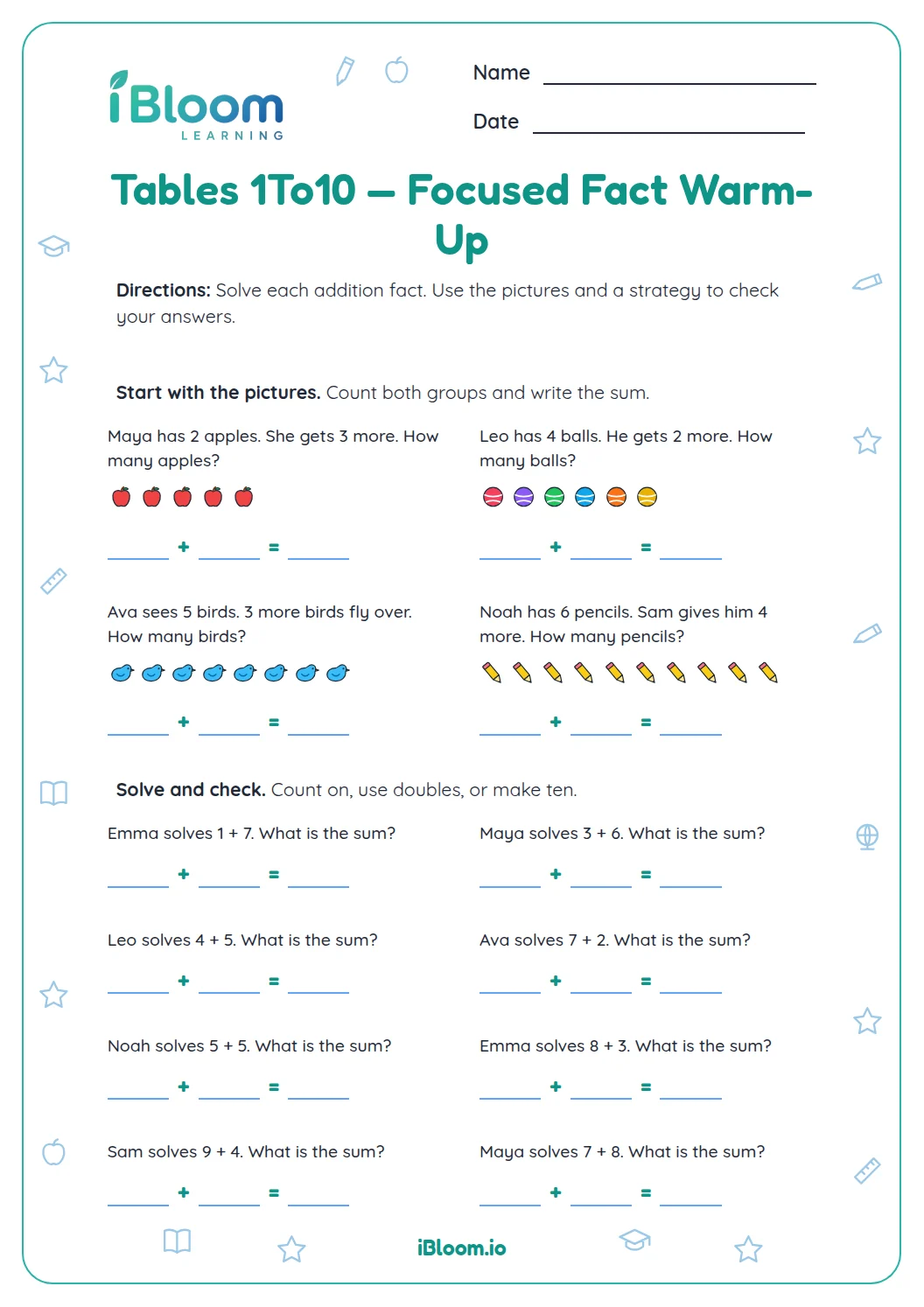
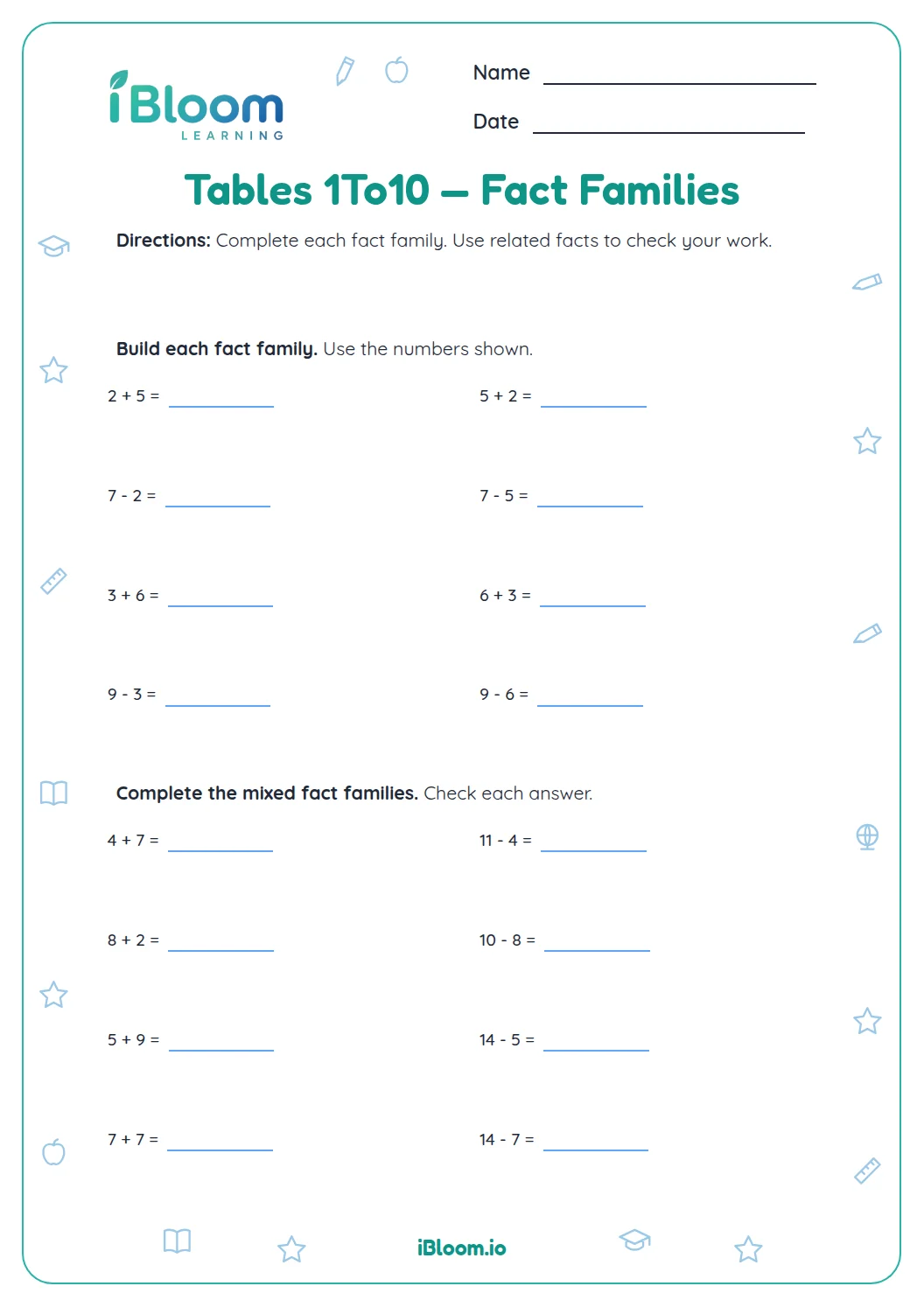
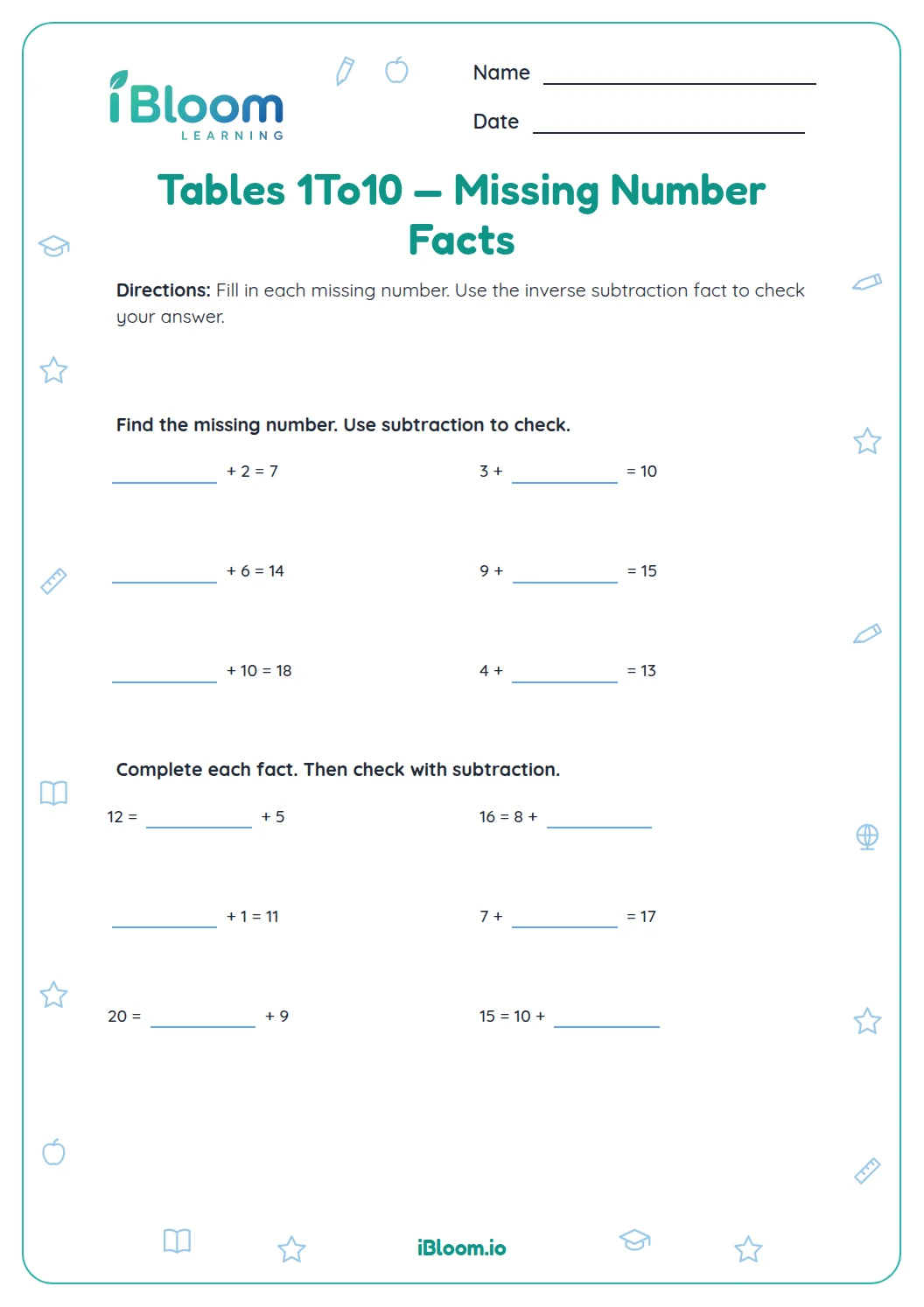
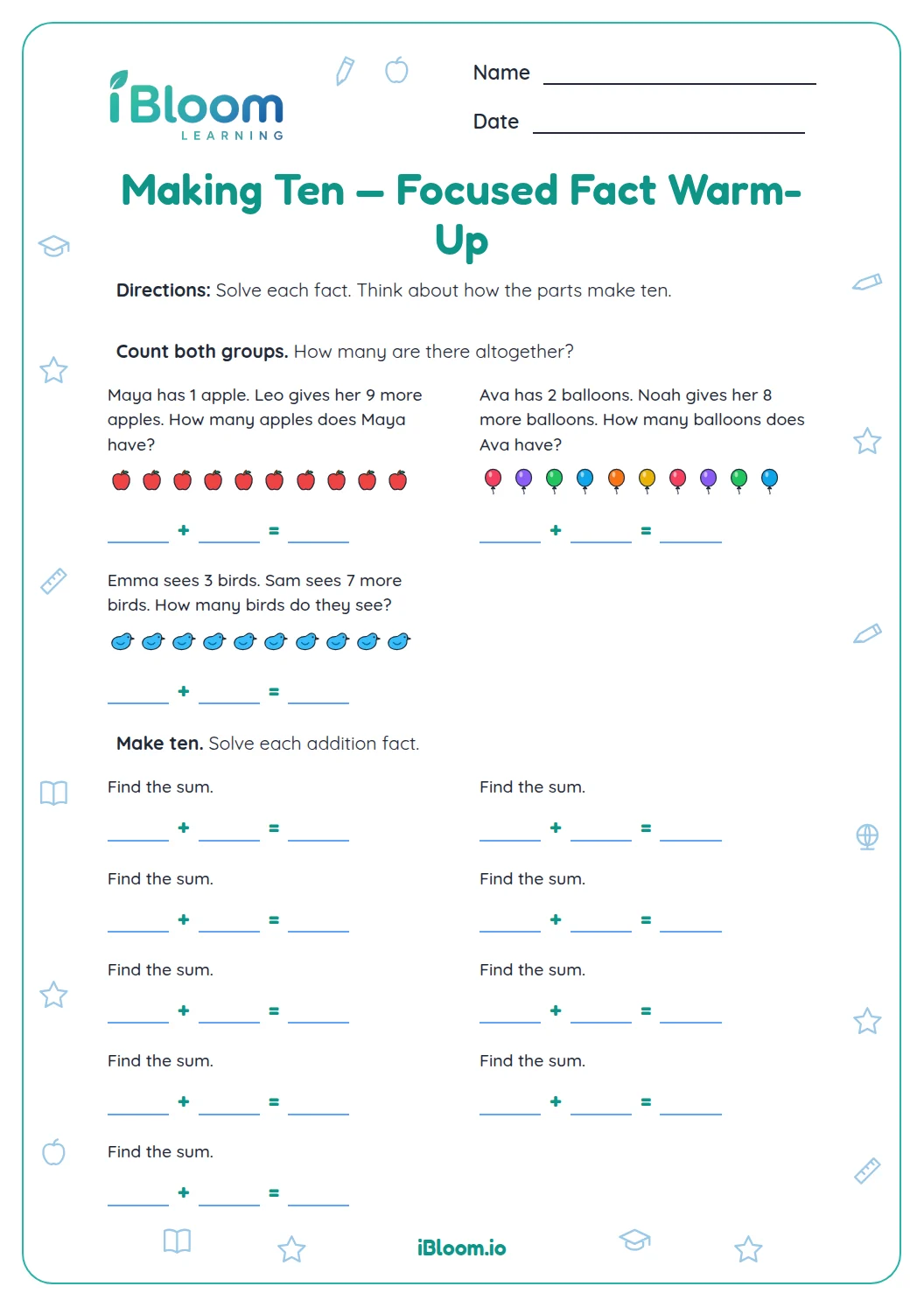
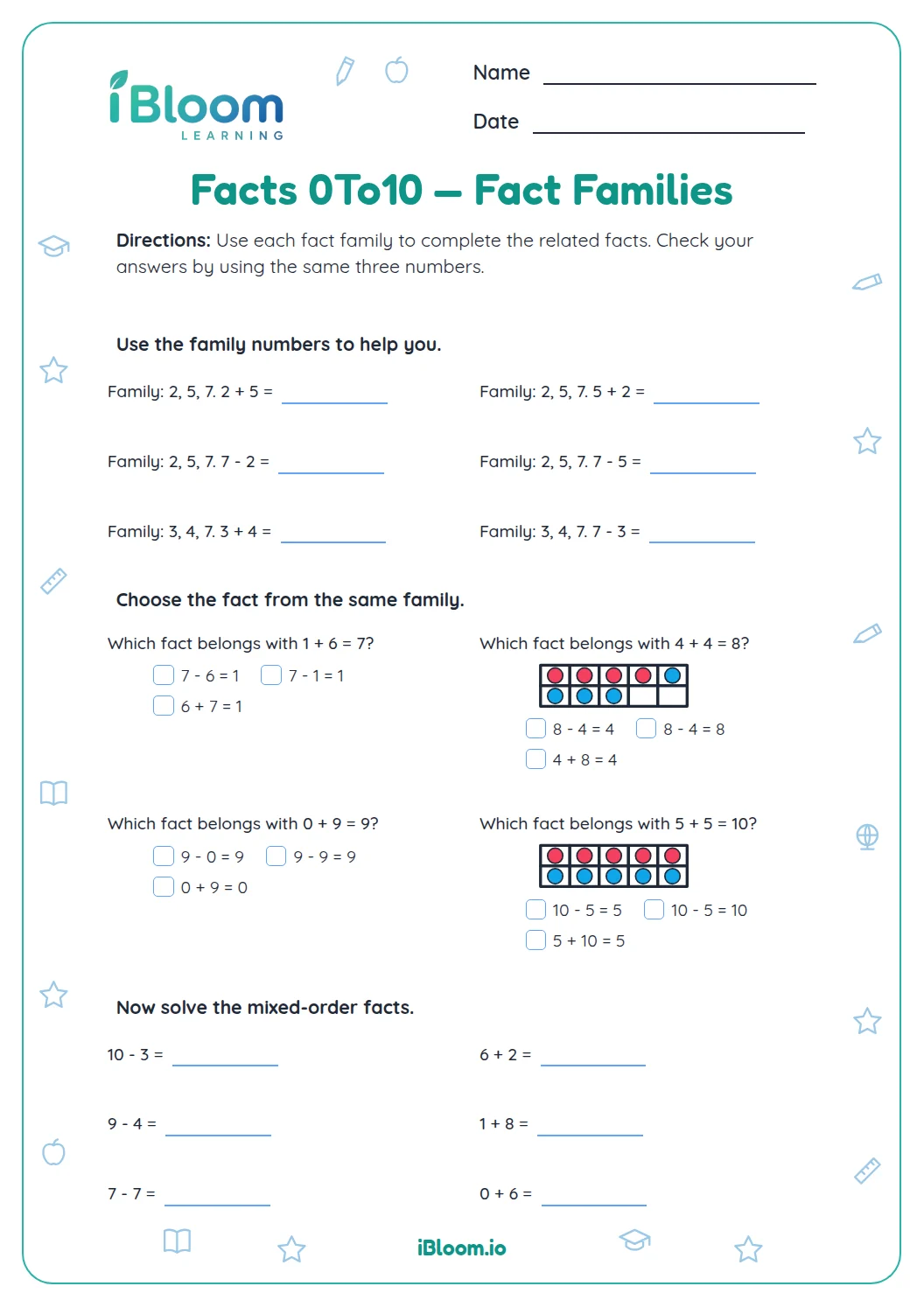
This printable Grade 2 addition drill has 20 mixed facts with addends from 0 to 10 and sums no greater than 19. Four short parts include quick recall, doubles and near doubles, make-ten combinations, and a final check. The timed repeat is optional: students can solve once carefully, check the separate key, then repeat to notice their own progress. The questions practice fluency within 20 as described in Common Core 2.OA.B.2.
Aligned to 2.OA.B.2
Which addition facts are included?
The 20 problems mix facts with zero and ten, doubles, near doubles, and pairs that can be rearranged to make ten. All sums stay within 20.
How can a known fact help?
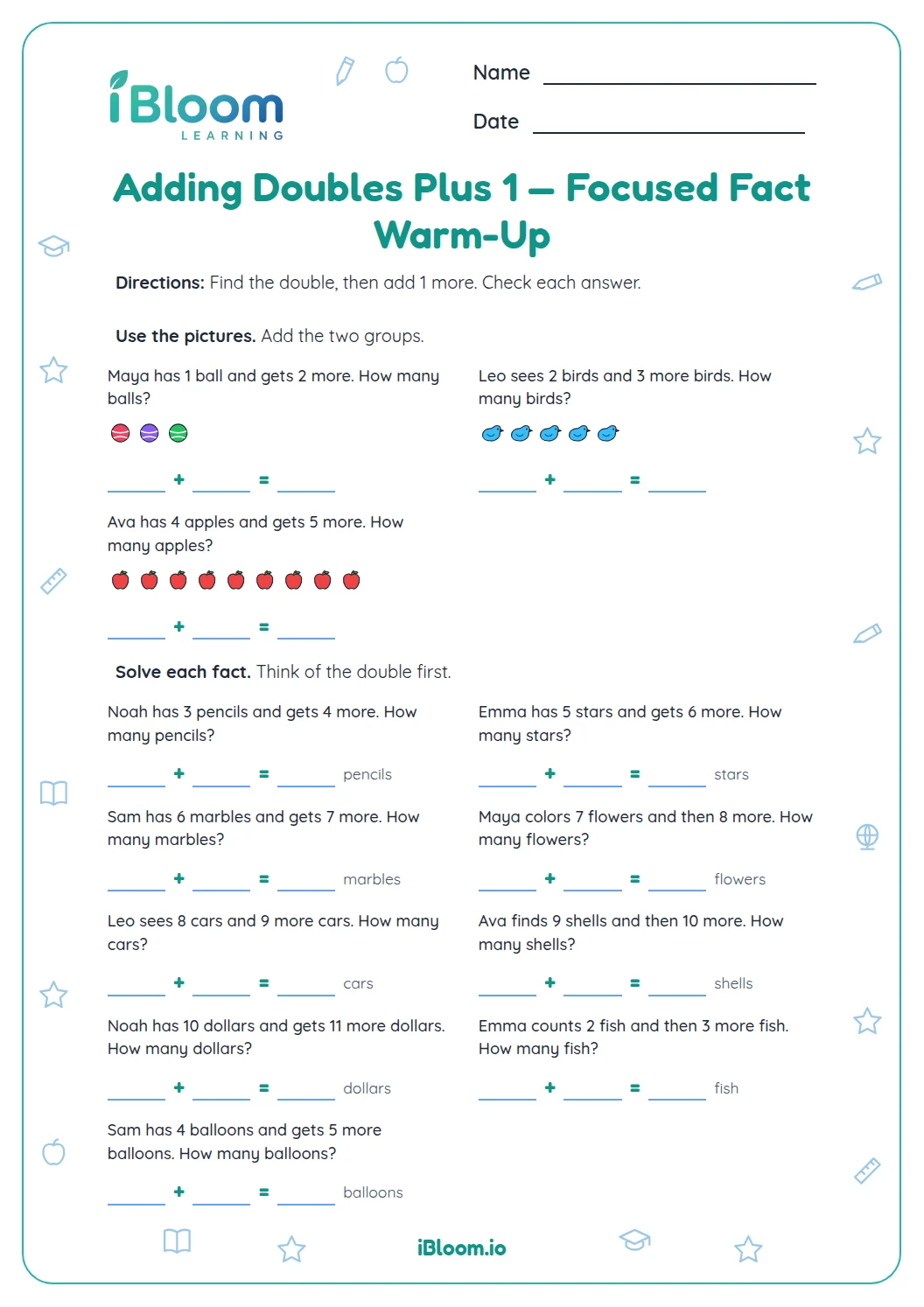
Use a nearby double or make ten. For 7 + 6, use 7 + 7 = 14 and subtract 1 to get 13.
- 17 + 6 = 13
- 2Think 7 + 7 = 14, then subtract 1.
When should students try the optional timer?
First solve carefully without a timer. After checking the answers, students who want to can repeat the page and note how long it takes. Compare correct answers as well as time so speed does not replace accuracy.
How to use this worksheet
- 1Let the student try the facts once without a timer.
- 2Mark any facts that needed counting.
- 3Use a known neighbor fact to reason through those sums.
- 4Check the answer key and correct missed facts.
- 5Repeat the drill later; add a timer only if it feels helpful.
Common mistakes and quick fixes
The mistake
Rushing and copying an addend as the sum.
The fix
Pause to check whether the answer is larger than either addend.
The mistake
Adding the smaller addend twice by mistake.
The fix
Point to each addend once while counting on.
The mistake
Treating a timer as a score that matters more than accuracy.
The fix
Use time only to compare the student with their own earlier attempt.
Common Core alignment
This practice builds fluency with addition facts within 20.
Build fluency with addition facts whose sums are within 20.
On this sheet: All 20 questions ask students to solve addition facts with sums within 20.
Show the official wordingHide the official wording
Fluently add and subtract within 20 using mental strategies. By end of Grade 2, know from memory all sums of two one-digit numbers.
What to practice next
Make more practice
Further reading
Questions parents and teachers ask
What facts are on this addition page?
The worksheet has 20 mixed addition facts with addends from 0 through 10. It includes doubles such as 9 + 9, near doubles such as 7 + 6, facts with zero or ten, and combinations that can be solved by making ten. Every sum is within 20.
Is the timed round required?
No. Students can complete the worksheet without timing. The optional repeat is most useful after careful practice and checking, when the learner wants to see whether recall feels quicker. Keep correct answers as the goal; a fast incorrect answer does not show fluency.
What is one way to solve 7 + 6?
Think of the nearby double: 7 + 7 = 14. Since 6 is one less than 7, 7 + 6 is one less than 14, or 13. The worksheet includes this near-double fact so students can connect it to a fact they already know.
Does this page include an answer key?
Yes. The separate key lists the sum for each of the 20 facts. Students can solve all four groups first, then check the answers and correct any missed sums. For a second round, they can cover the key and try the same facts again.
What grade is this drill for?
The practice is labeled Grade 2 and focuses on addition within 20. It can also serve as review for a learner who is building recall of one-digit addition facts. The groups move from quick facts to doubles, make-ten combinations, and a final review.
How long should the drill take?
Allow about 5 to 10 minutes for an untimed attempt, with extra time if the student writes out strategies or checks each fact. A second timed try is optional and should come after accurate work, not in place of learning the sums.