
About this worksheet
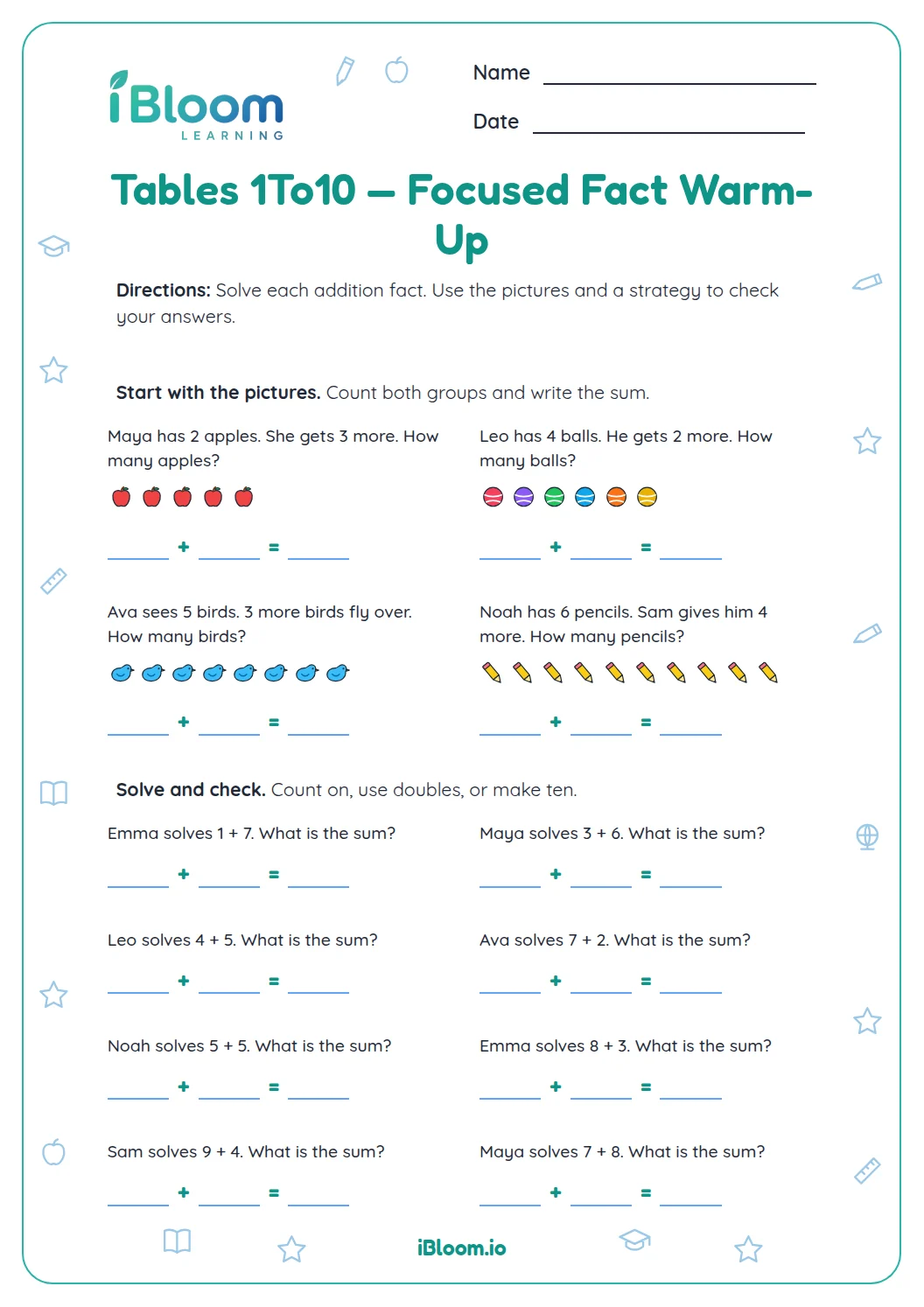
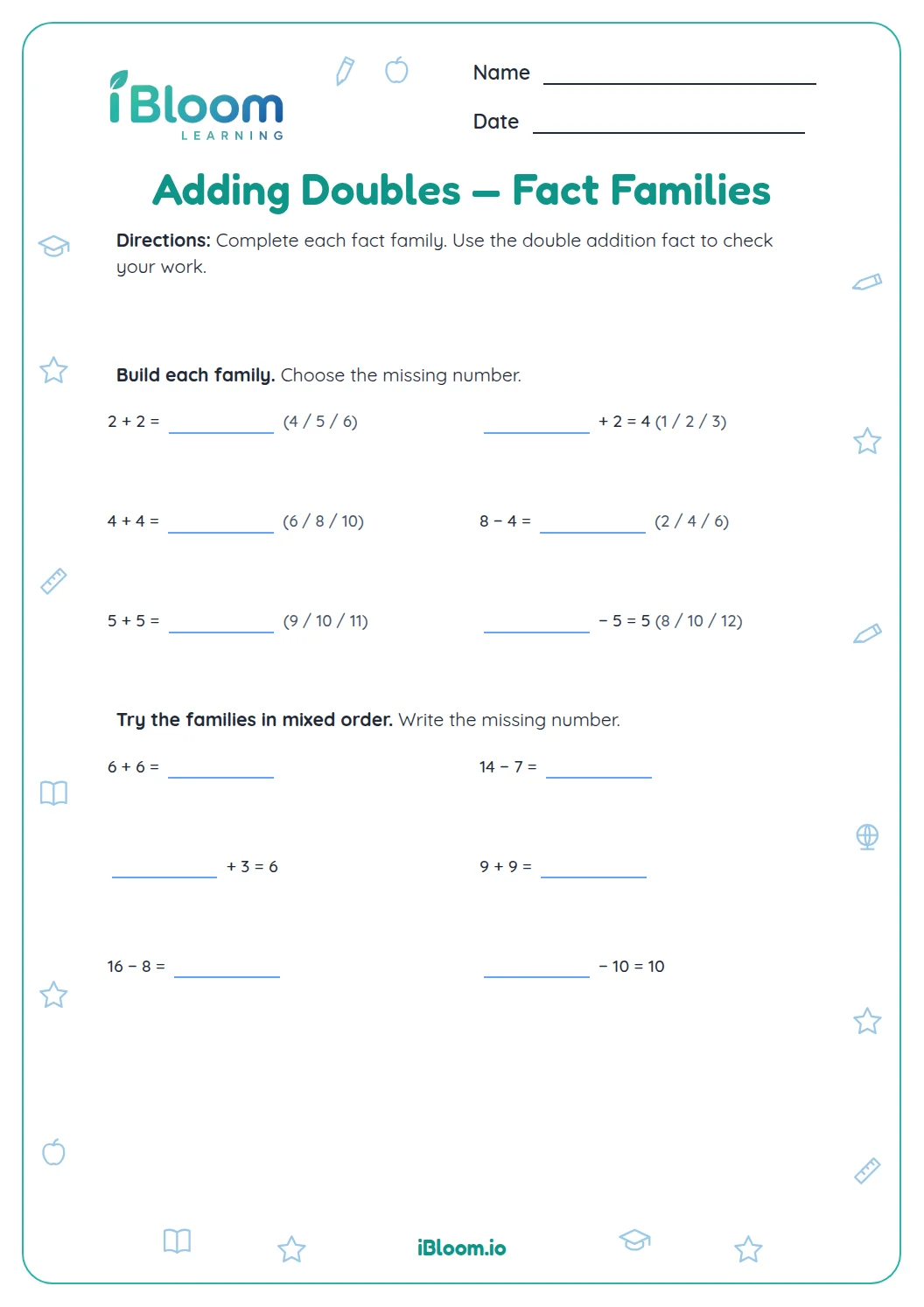
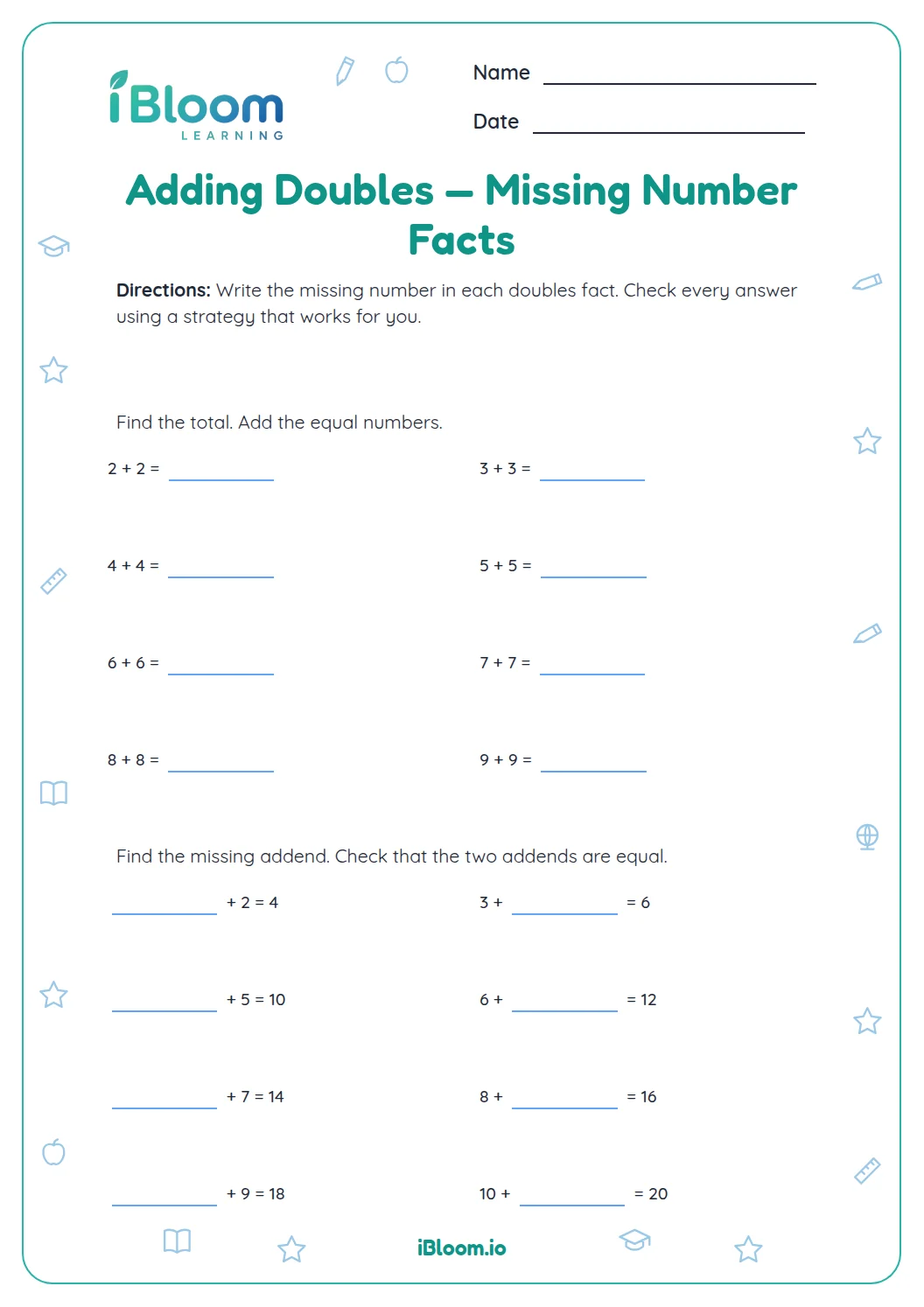
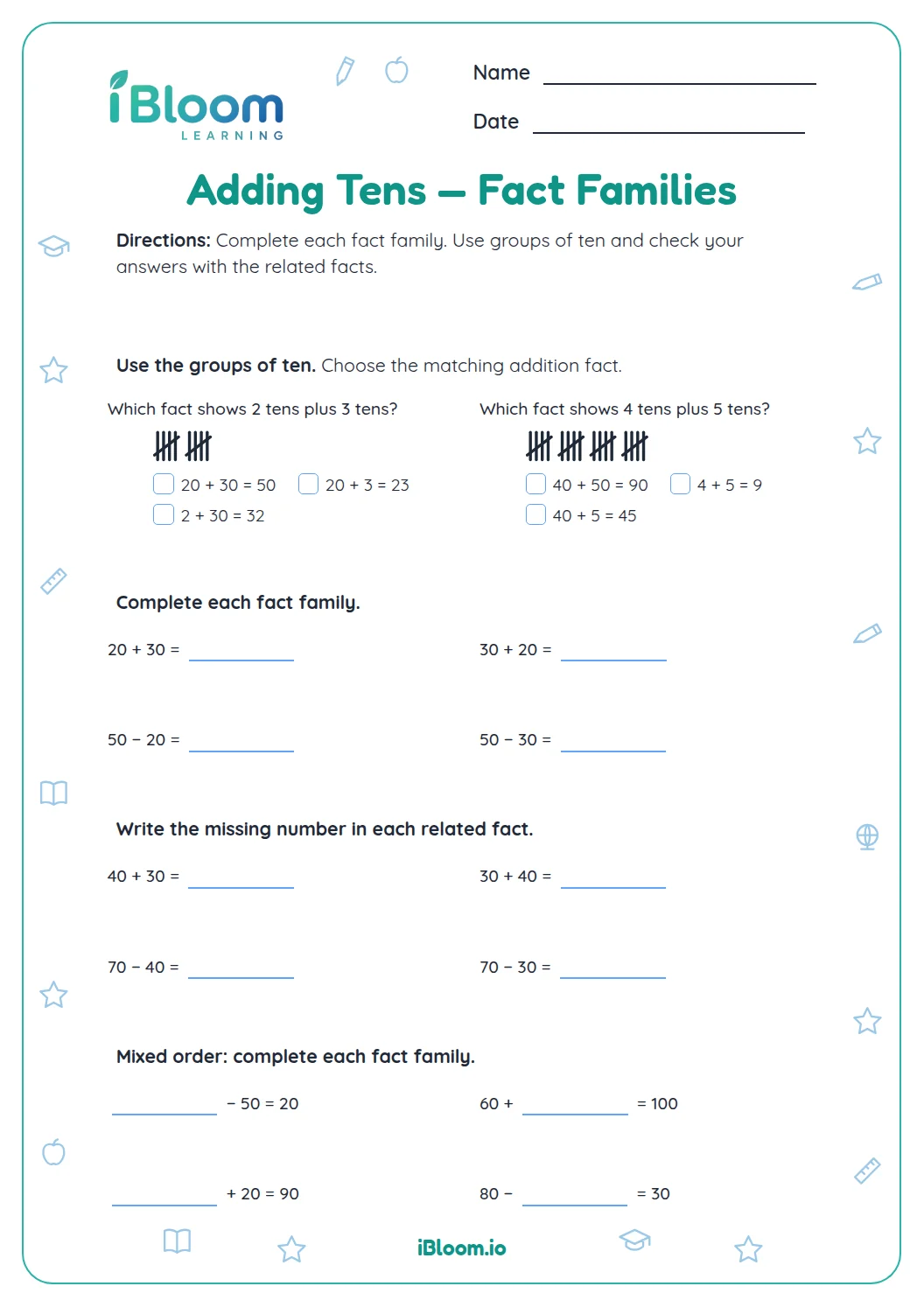
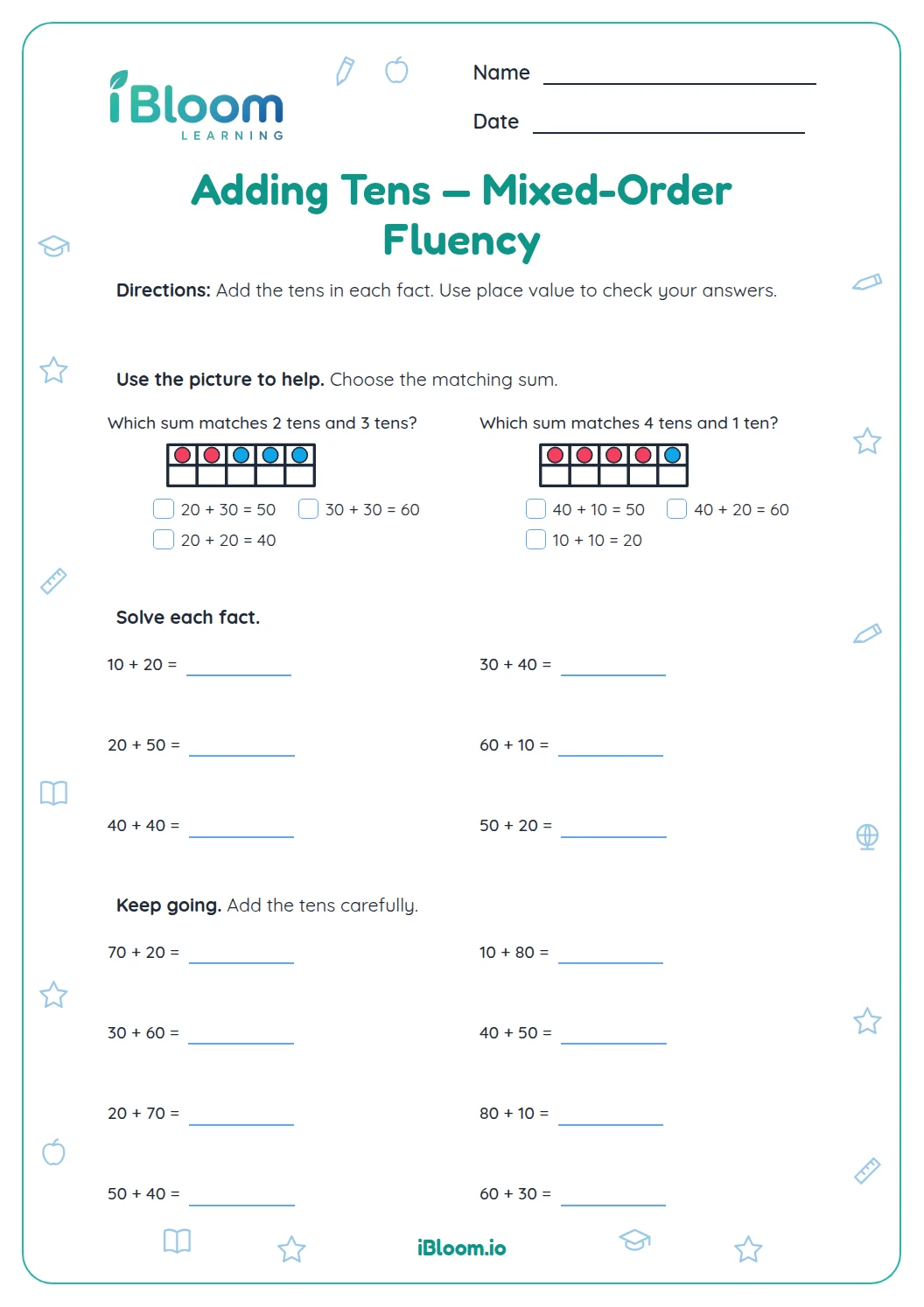
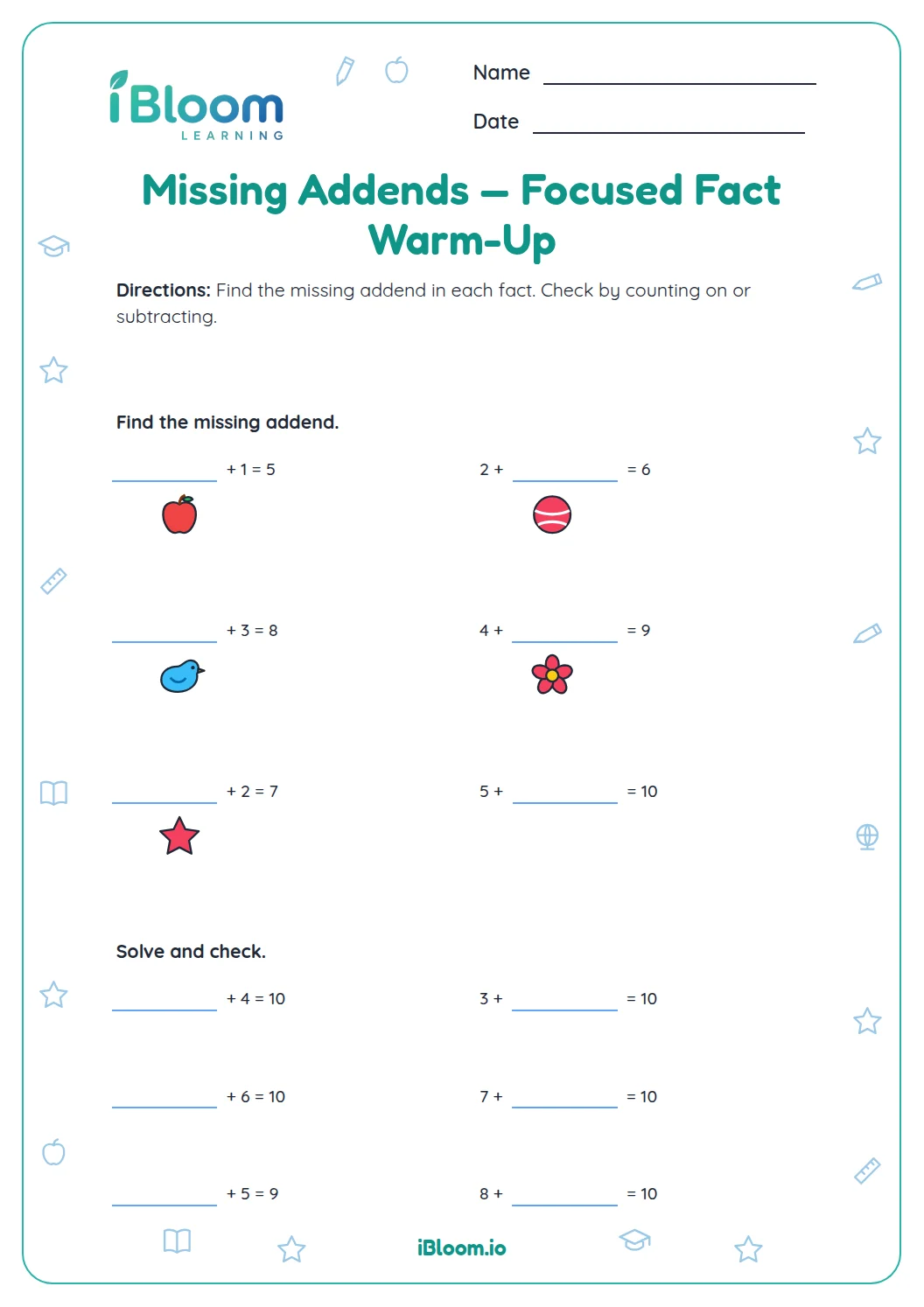
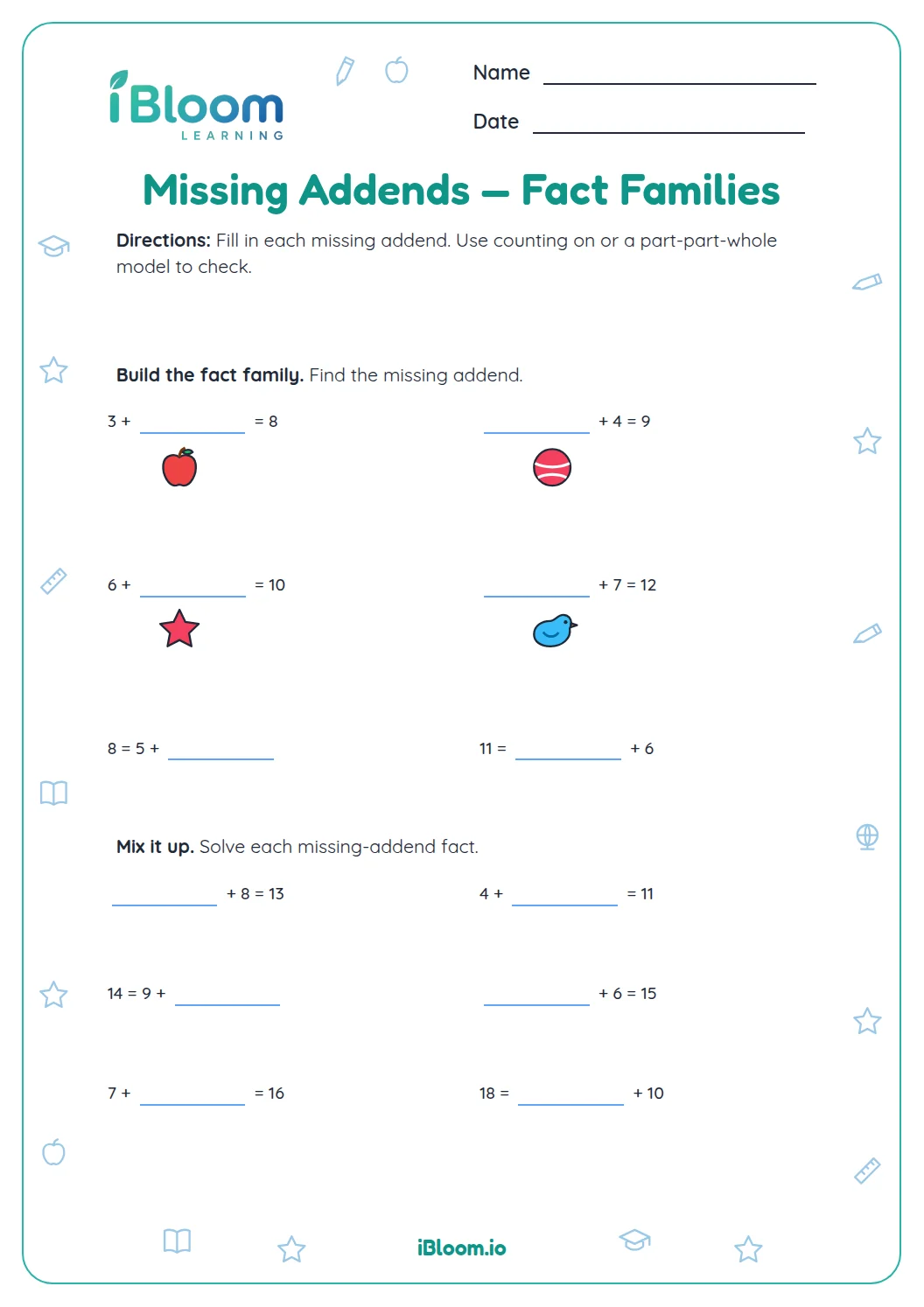
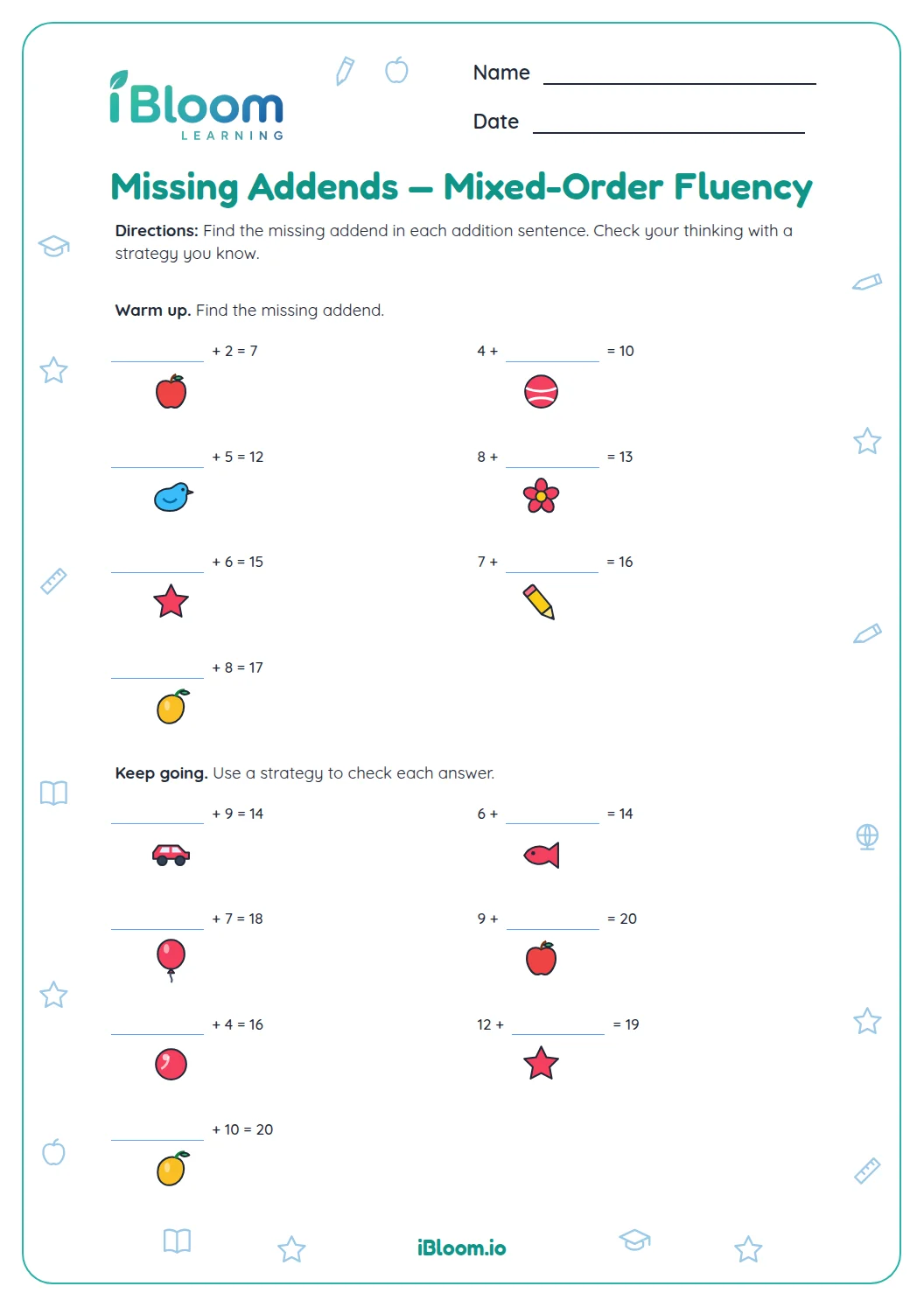
This Grade 2 printable gives students 16 addition facts with addends through 10 and sums within 20. The mixed set includes doubles, adding ten, and other combinations, followed by a separate answer key.
What does this page help students practice?
Students solve 16 addition facts with addends through 10 and sums no greater than 20. Doubles, adding-ten facts, and other combinations appear in mixed order so learners recall facts rather than follow a repeated sequence.
The separate answer key makes it easy to check each sum after completing the page.
How can a learner check one sum?
For 1 + 7, start with the larger addend, 7, and count on one. The sum is 8. Check by reversing the order: 7 + 1 also equals 8.
- 11 + 7 = ___
- 2Use the complete sentence or equation to check the response.
How to use this worksheet
- 1Read the addition sign and both addends.
- 2Solve each fact using a strategy you know.
- 3Write one sum in each blank.
- 4Check all sixteen sums with the key.
Common mistakes and quick fixes
The mistake
Adding only one addend to itself when the numbers differ.
The fix
Say both addends aloud and combine both amounts.
The mistake
Counting the starting number again when counting on.
The fix
Start at the larger addend, then count forward by the other addend.
The mistake
Switching the operation sign in a hurry.
The fix
Point to the plus sign before solving each equation.
What to practice next
Make more practice
Questions parents and teachers ask
How many addition facts are included?
There are 16 addition equations in mixed order. The facts include doubles, adding ten, and other combinations with addends through 10. The answer key lists each sum so a student or adult can check the page after finishing. Ask the learner to point to the words in the item that support the answer and explain the choice aloud.
Is this an addition-only worksheet?
Yes. Every printed problem uses addition, and every sum is within 20. The mix lets students practice recalling facts without following a single counting sequence. After the page, ask the learner to explain a fact with a known strategy. Ask the learner to point to the words in the item that support the answer and explain the choice aloud.
How should a student check a sum?
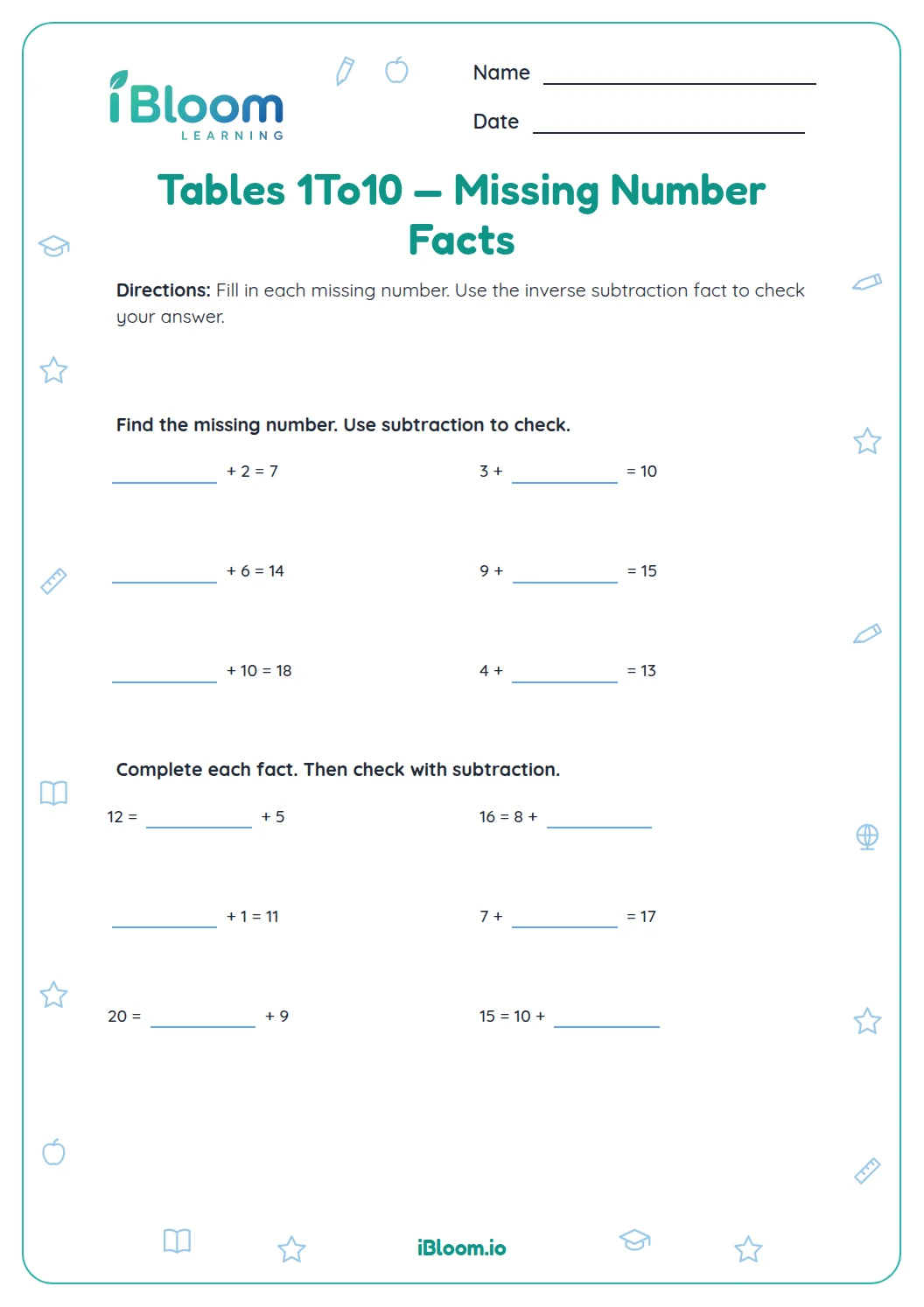
Read the two addends again and combine them. A student can count on, make a ten or use a known double, then compare the result with the key. Explaining the chosen strategy can make a missed fact easier to remember.
Can the addends be switched?
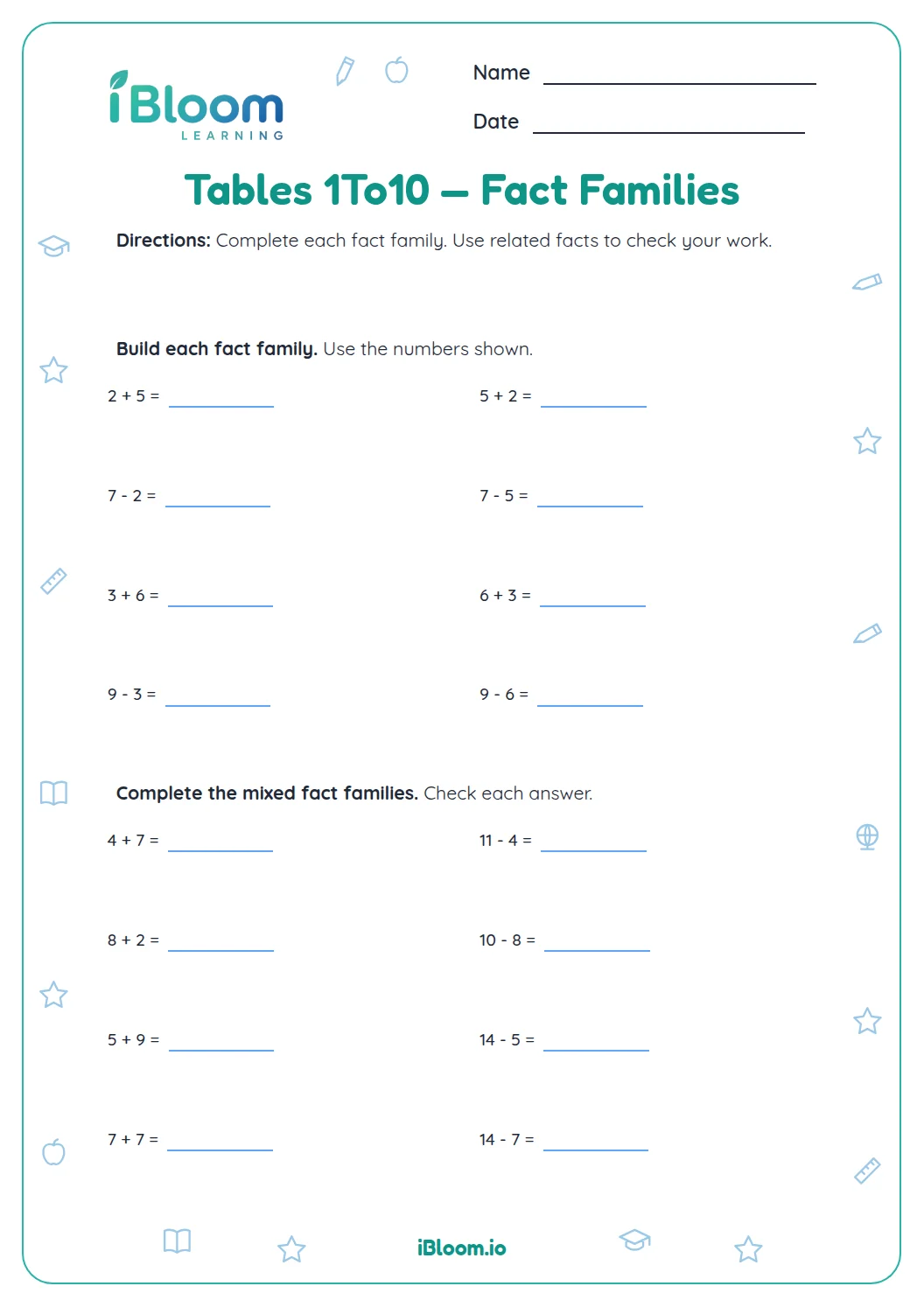
Addition is commutative, so switching the addends keeps the same sum. The worksheet prints each fact in one order, but a student may use either order to reason. For example, 1 + 7 has the same sum as 7 + 1.