



About this worksheet
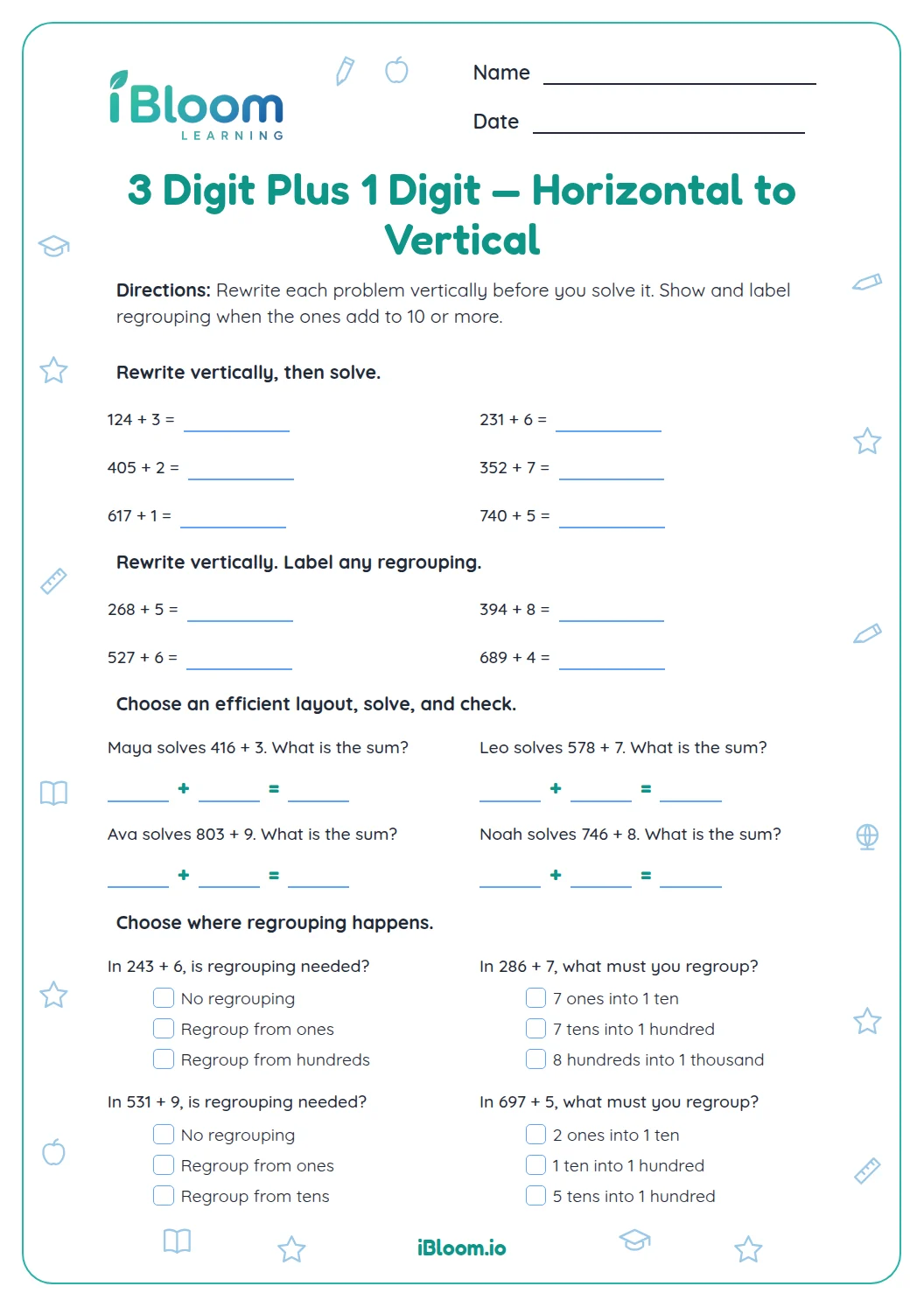
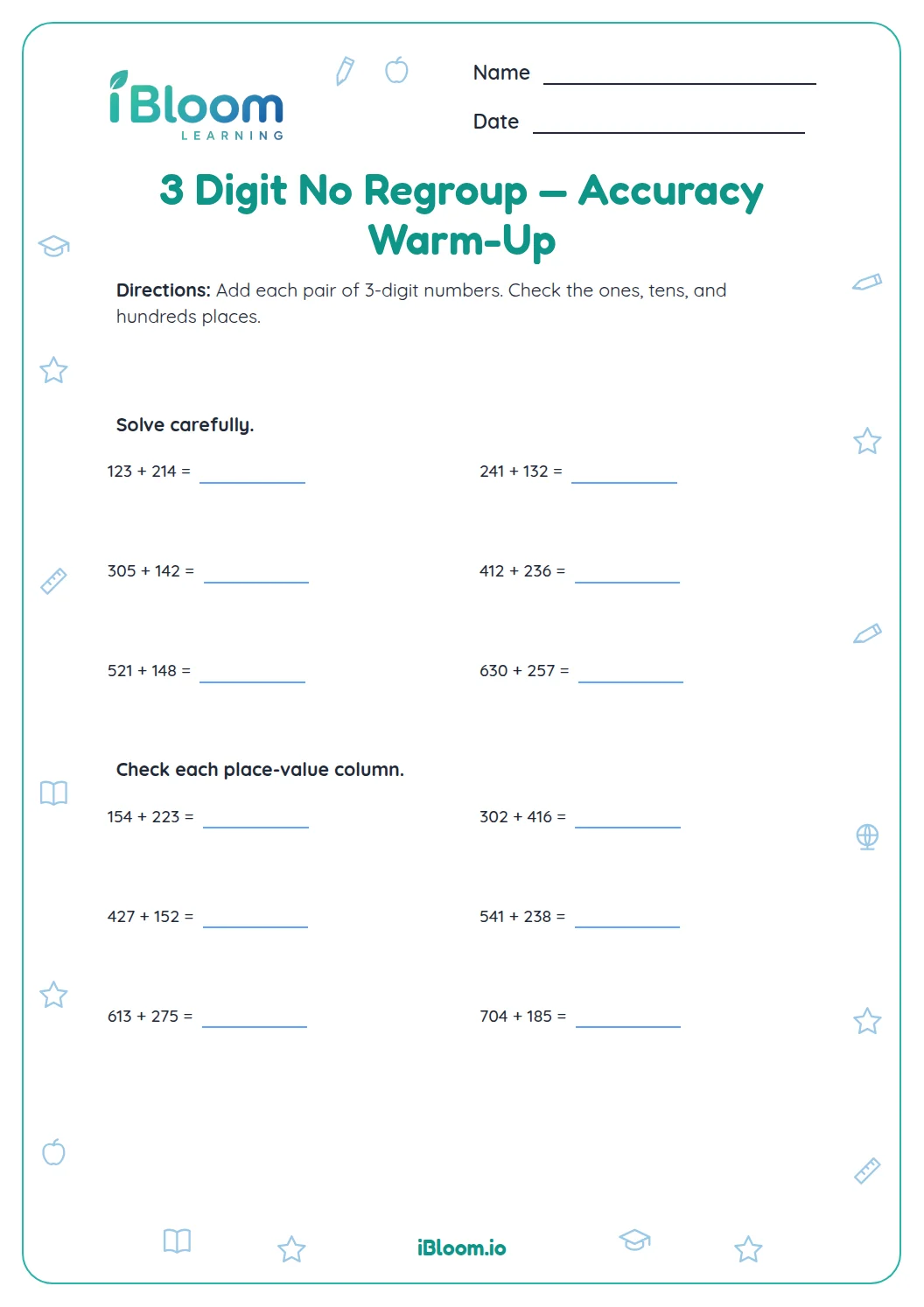
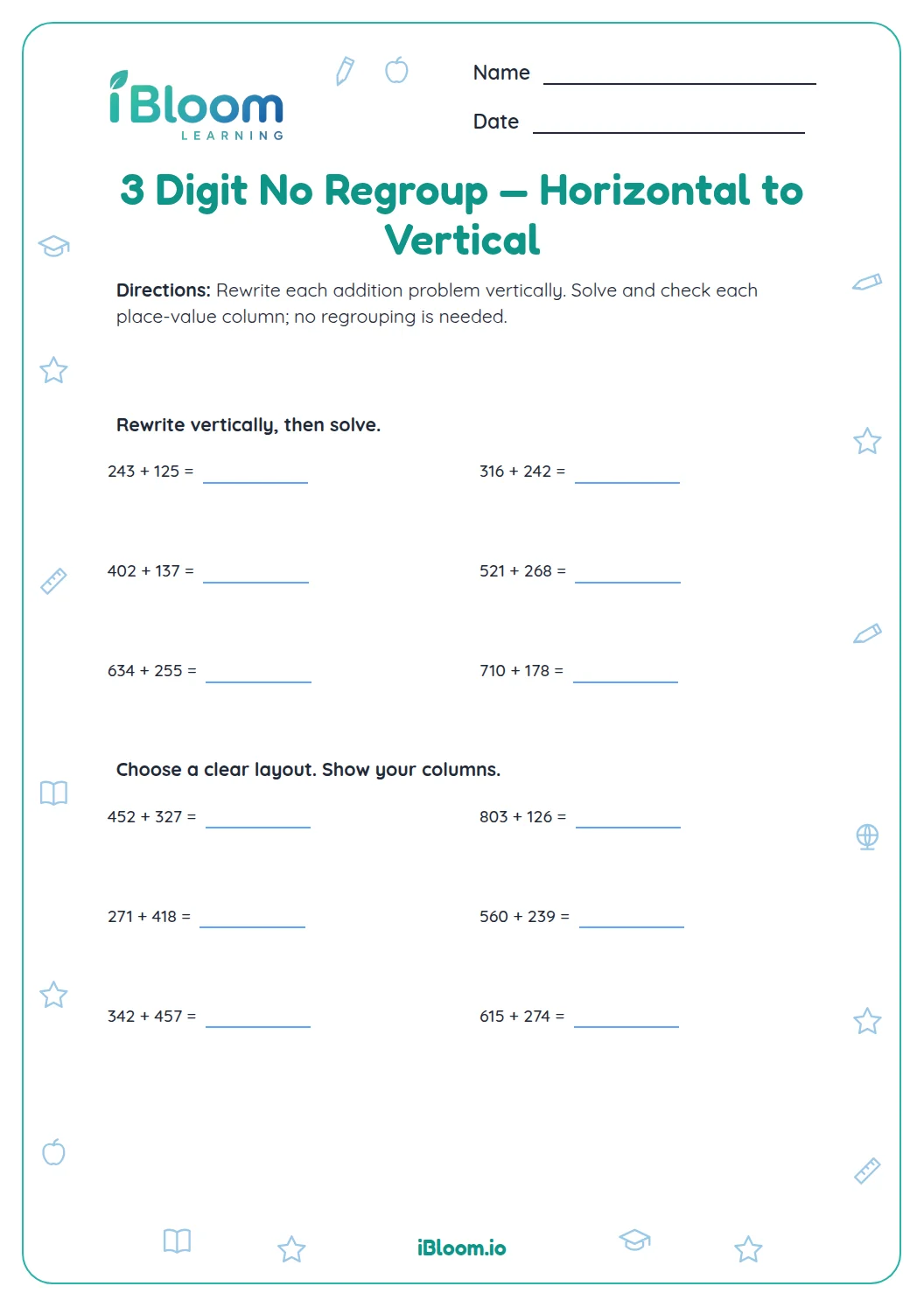
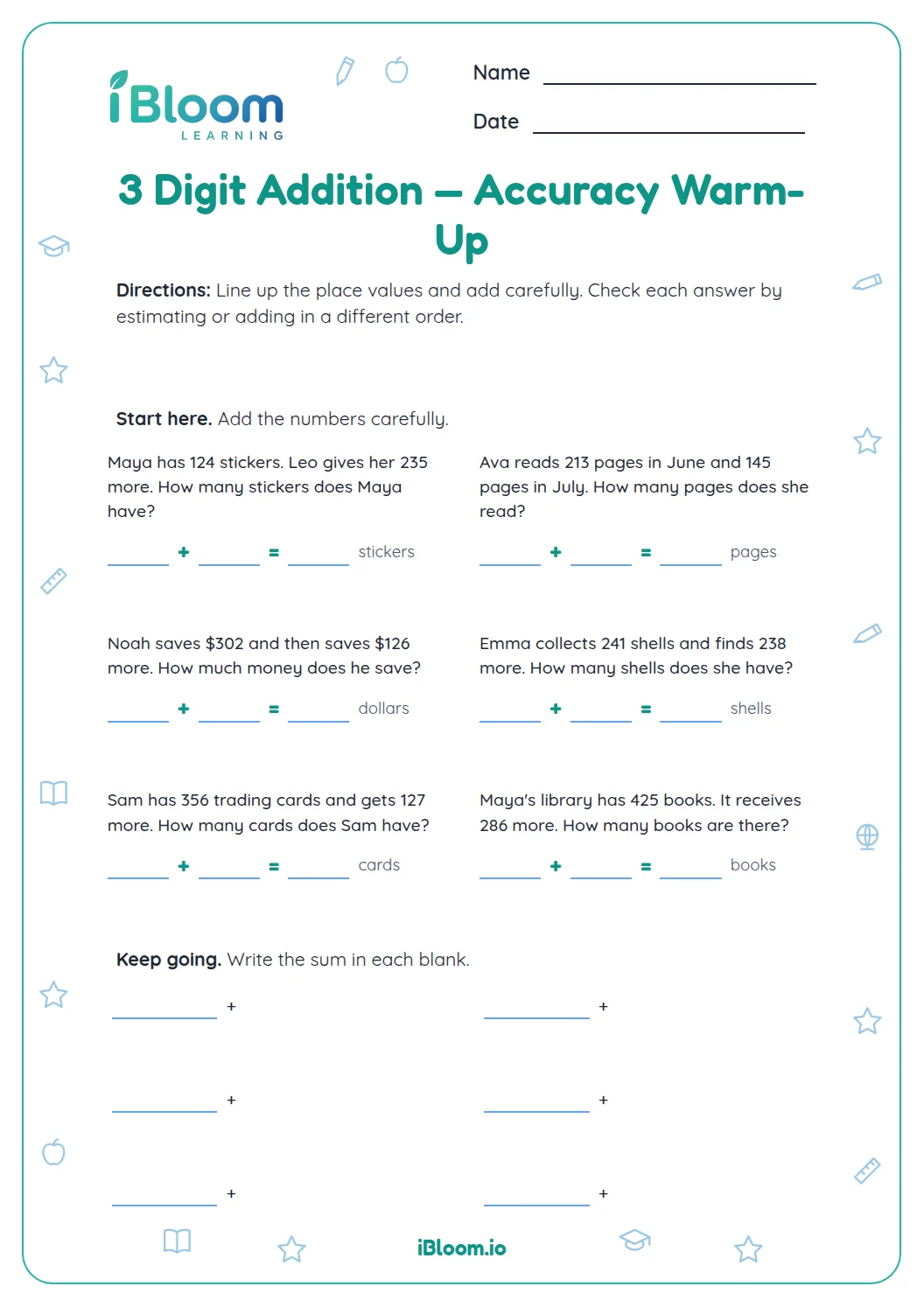
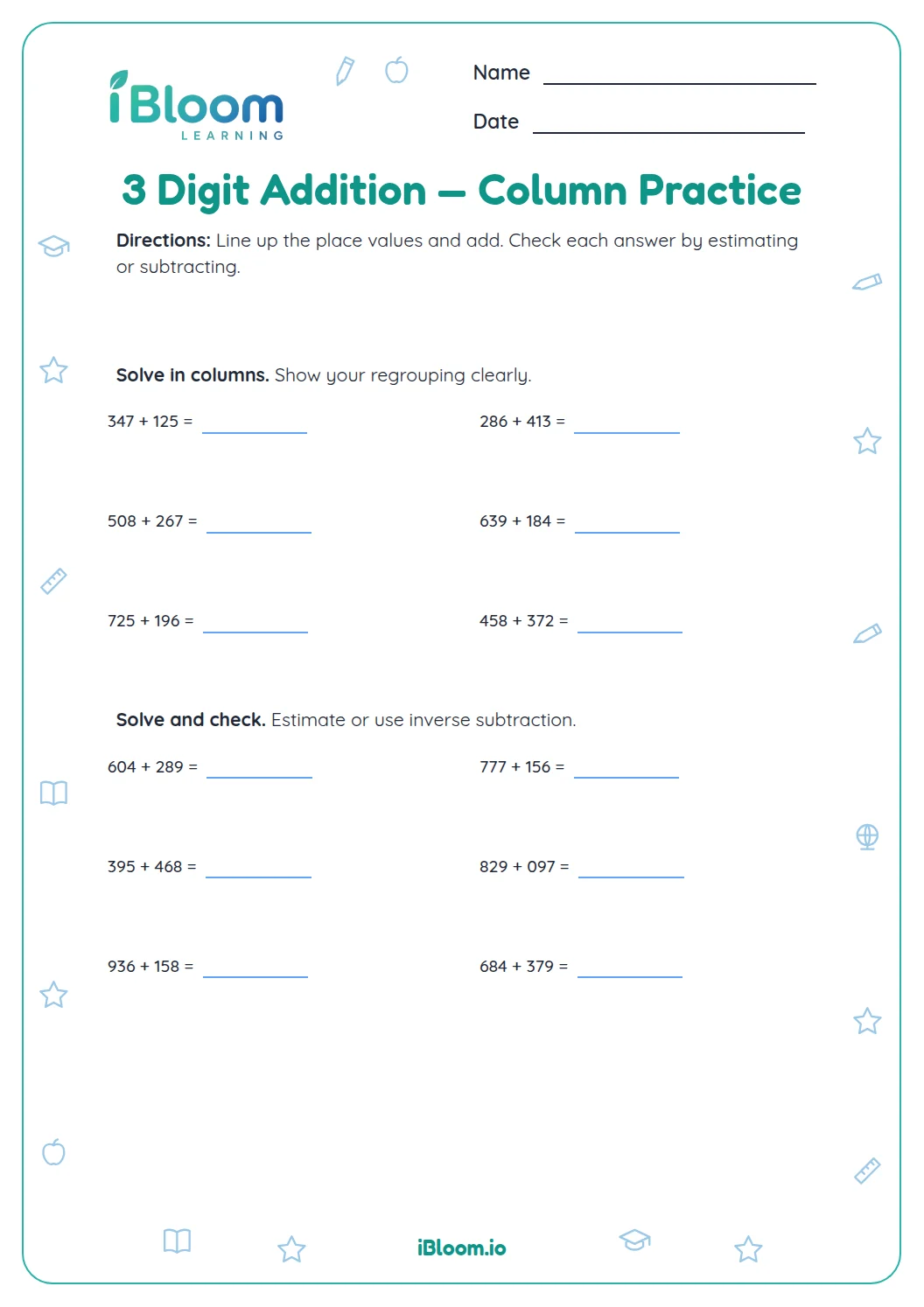
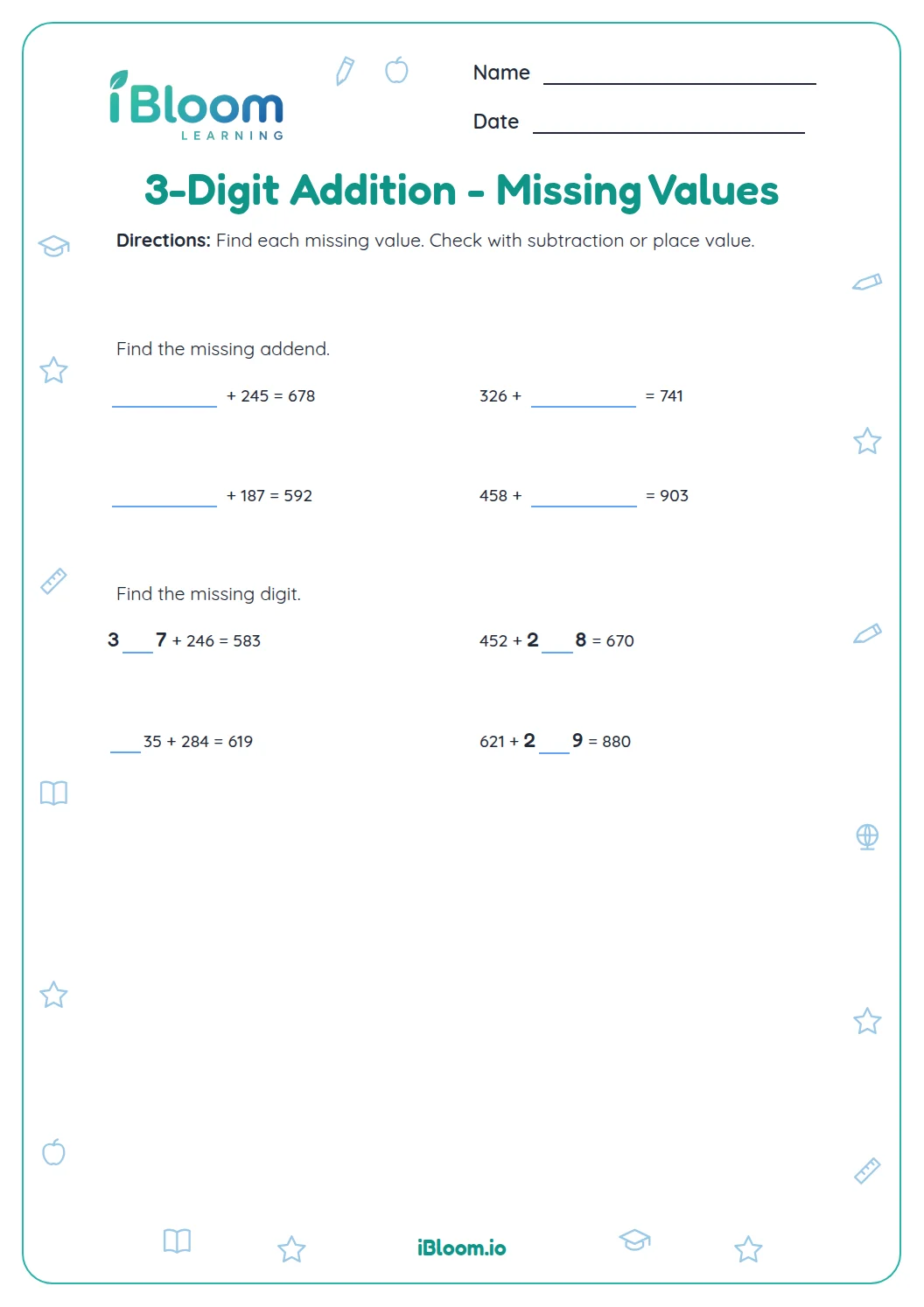
This free printable addition warm-up is designed for Grades 3–4 students practicing three-digit plus one-digit sums. Eight questions add without regrouping; eight require composing a ten from the ones. Students can focus on accuracy and use the separate key to check each answer. The calculations connect to Common Core 3.NBT.A.2, which addresses addition and subtraction within 1,000 using place value and algorithms.
Aligned to 3.NBT.A.2
What does this addition warm-up practice?
Students solve 16 sums with a three-digit number and a one-digit addend. The first group keeps the ones sum below ten. The second group crosses ten in the ones place, so students compose one ten and add it to the tens.
Each item is a quick number sentence with space for the answer. The page emphasizes accurate computation; timing is optional.
- Questions 1–8: add without regrouping
- Questions 9–16: add and regroup one ten
- Every problem has one three-digit addend and one one-digit addend
How do you add a one-digit number to a three-digit number?
Keep the hundreds and tens unchanged unless the ones make a new ten. Add the ones first. If the ones total is ten or more, write the ones digit in the answer and add one ten to the tens place.
- 1498 + 6: 8 ones + 6 ones = 14 ones.
- 2Write 4 ones and regroup 1 ten: 490 + 10 + 4 = 504.
What helps students avoid small addition errors?
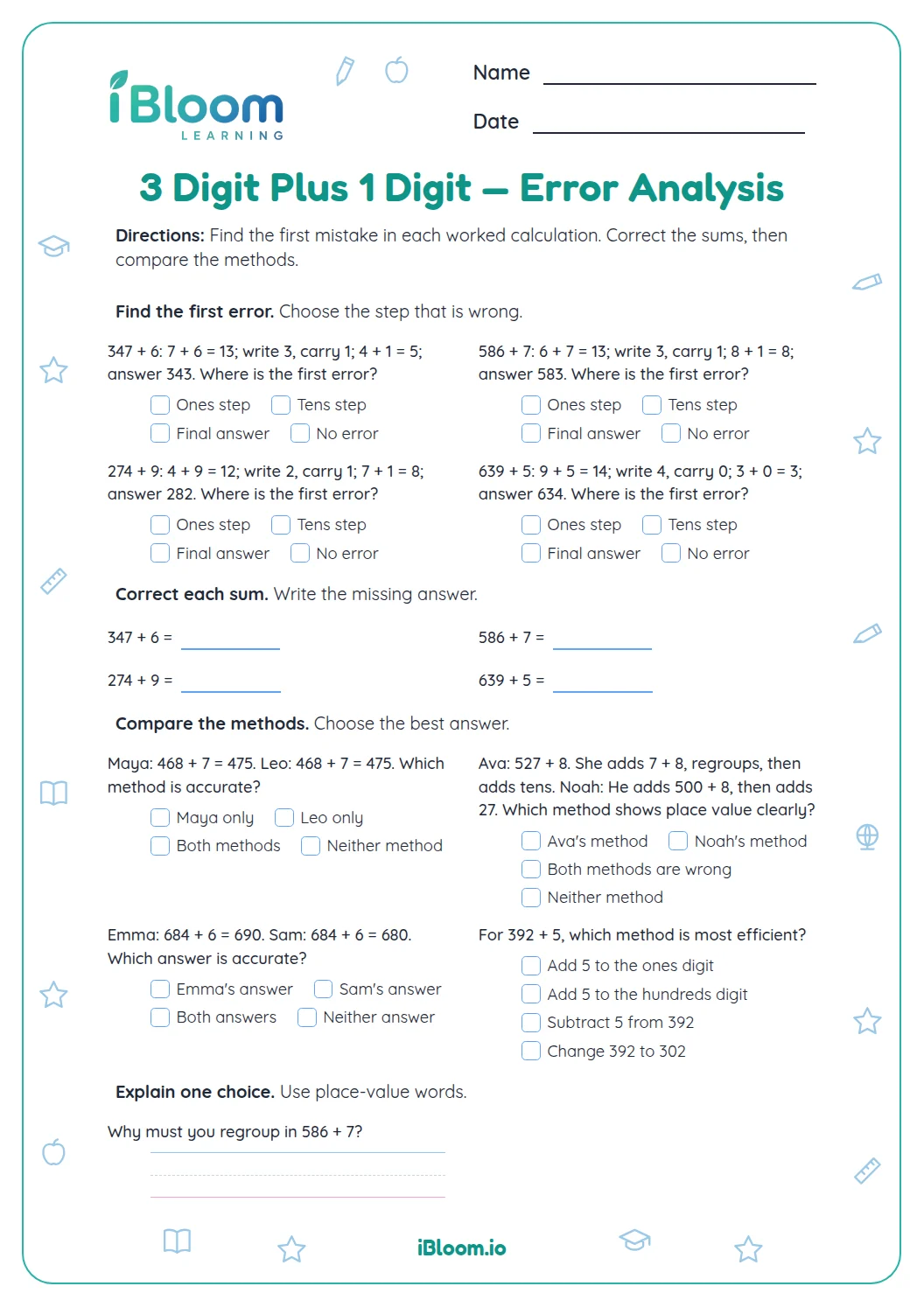
Read the operation sign before calculating. In a regrouping problem, check both the ones digit and the extra ten. After writing the sum, estimate whether it is just above or below the three-digit addend by the amount of the one-digit addend.
Should students race through the warm-up?
Accuracy comes first. A timer can be used as an optional way to notice progress, but students should have time to check their work. A student who spots an error should correct it and name the place value where it happened.
How to use this worksheet
- 1Complete the first group without a timer and check that the ones total stays below ten.
- 2In the second group, add the ones first and record any new ten.
- 3Keep the hundreds and tens in their place-value columns.
- 4Check each answer by estimating how far it should be above the three-digit addend.
- 5Use the answer key after finishing, then correct any missed regrouping.
Common mistakes and quick fixes
The mistake
Adding the one-digit number to the tens instead of the ones.
The fix
Line up by place value: the one-digit addend belongs in the ones place.
The mistake
Writing 14 in the ones place for 498 + 6.
The fix
Regroup 10 ones as 1 ten; write 4 ones and add the ten.
The mistake
Forgetting that a regrouped ten changes the tens digit.
The fix
After adding the ones, carry the extra ten into the tens total.
Common Core alignment
The calculations build fluency with addition within 1,000 using place-value strategies.
Add within 1,000 using place value strategies and algorithms.
On this sheet: All 16 problems add a one-digit number to a three-digit number, with and without composing a ten.
Show the official wordingHide the official wording
Fluently add and subtract within 1000 using strategies and algorithms based on place value, properties of operations, and/or the relationship between addition and subtraction.
What to practice next
Make more practice
Further reading
Questions parents and teachers ask
What is a three-digit plus one-digit addition problem?
It combines a number from 100 to 999 with a number from 1 to 9. For example, 498 + 6 is a three-digit plus one-digit sum. The ones may stay below ten or create a new ten that must be added to the tens place.
What does regrouping mean in these problems?
When the ones add to ten or more, trade ten ones for one ten. In 498 + 6, the ones total 14, so write 4 ones and add one ten to the 9 tens. The result is 504. Check the tens place too.
Are any questions timed?
The worksheet is an accuracy warm-up, so timing is optional. First let students solve and check the 16 sums carefully. If a teacher or parent uses a timer later, compare the student’s own attempts rather than treating speed as more important than correct place-value work.
How can I check a sum quickly?
Add the one-digit number to the three-digit number and check whether the result is slightly larger by that amount. For regrouping items, check that the new ten was included. The answer key lists all 16 sums for a final comparison.
What should students do if their answer is off by one?
Look first at the ones column. A result off by one may mean the ones were added incorrectly or that a ten was not regrouped. Recalculate the ones, record any new ten, then add the tens and hundreds again to confirm the full sum.