


About this worksheet
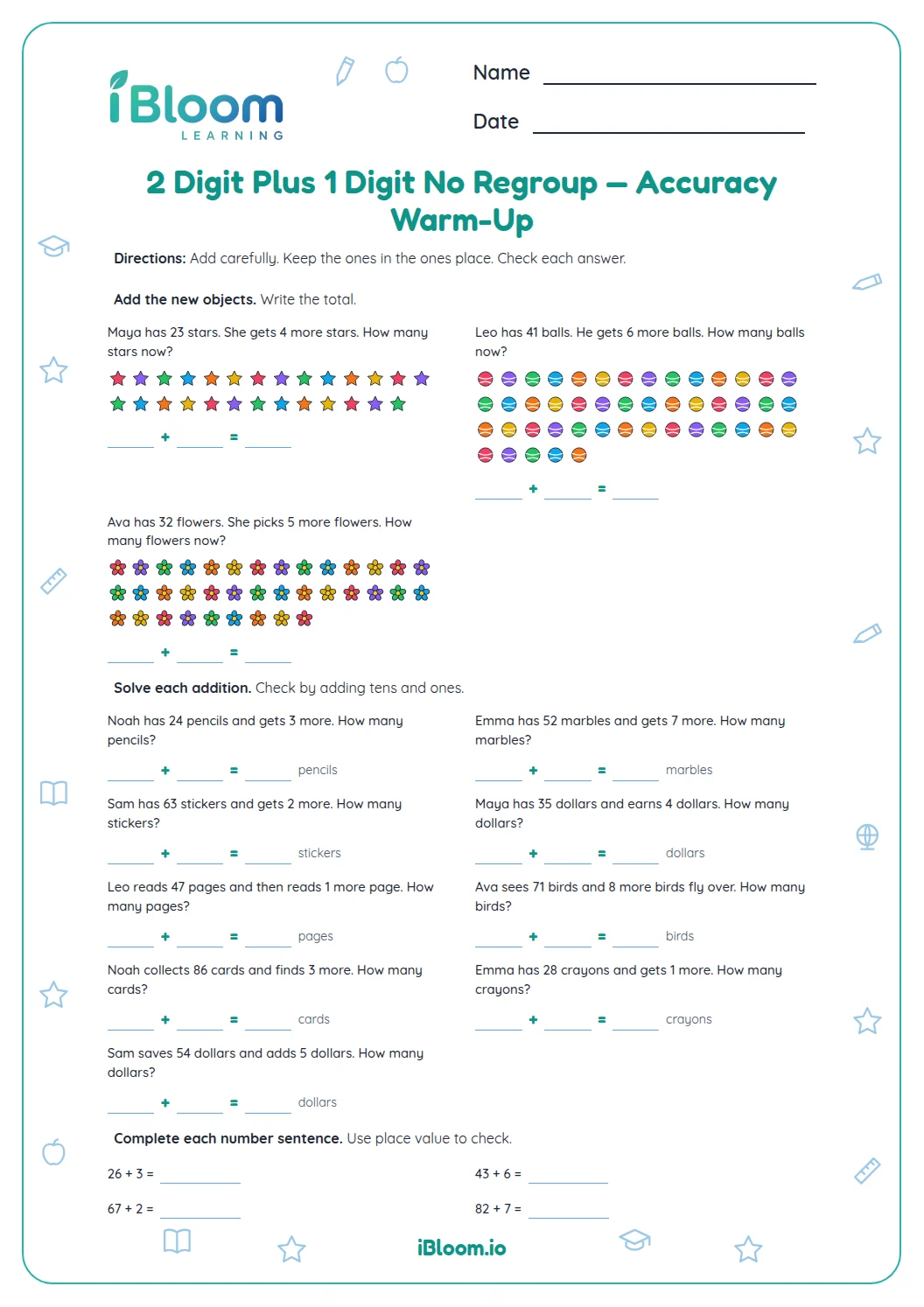
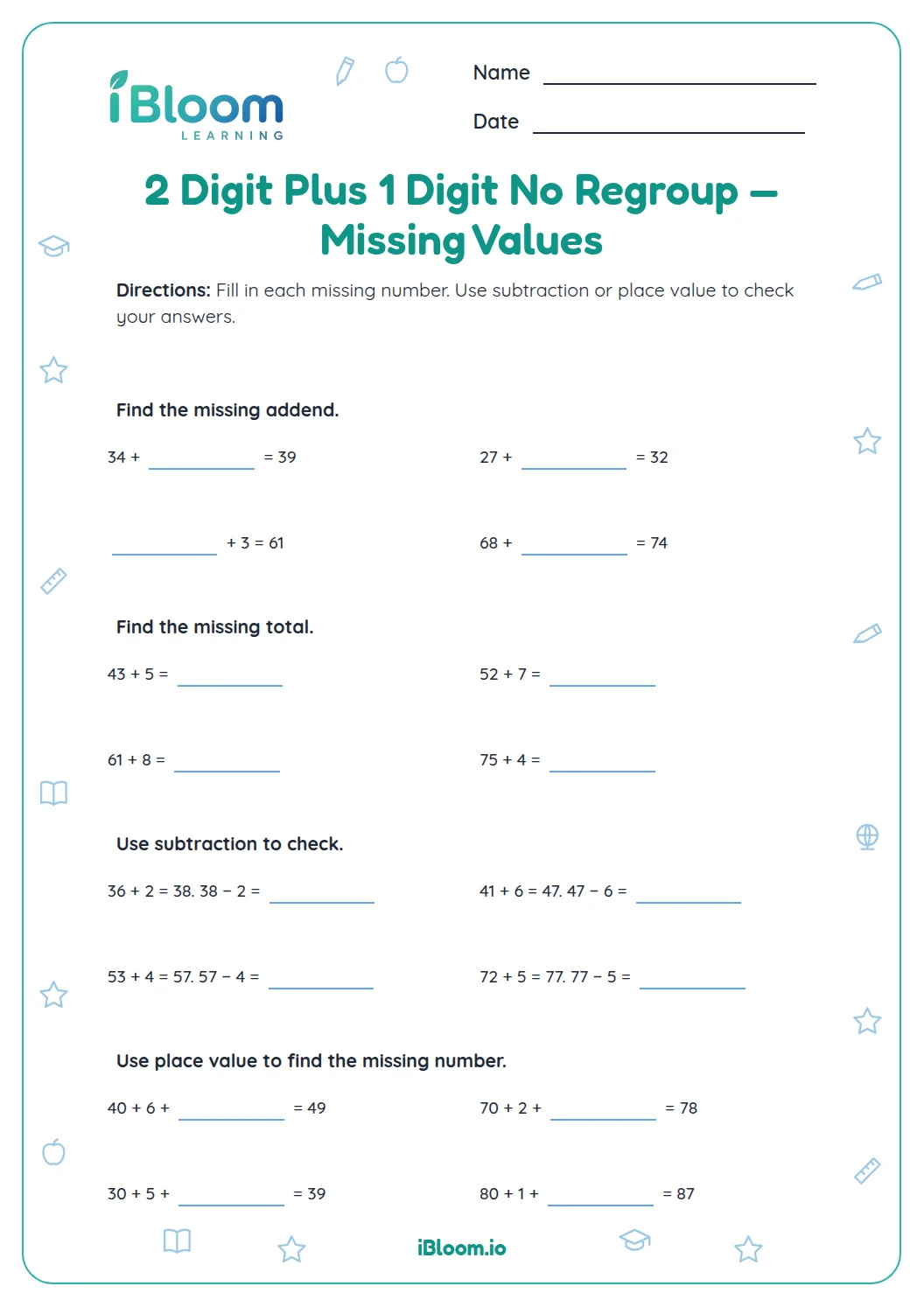
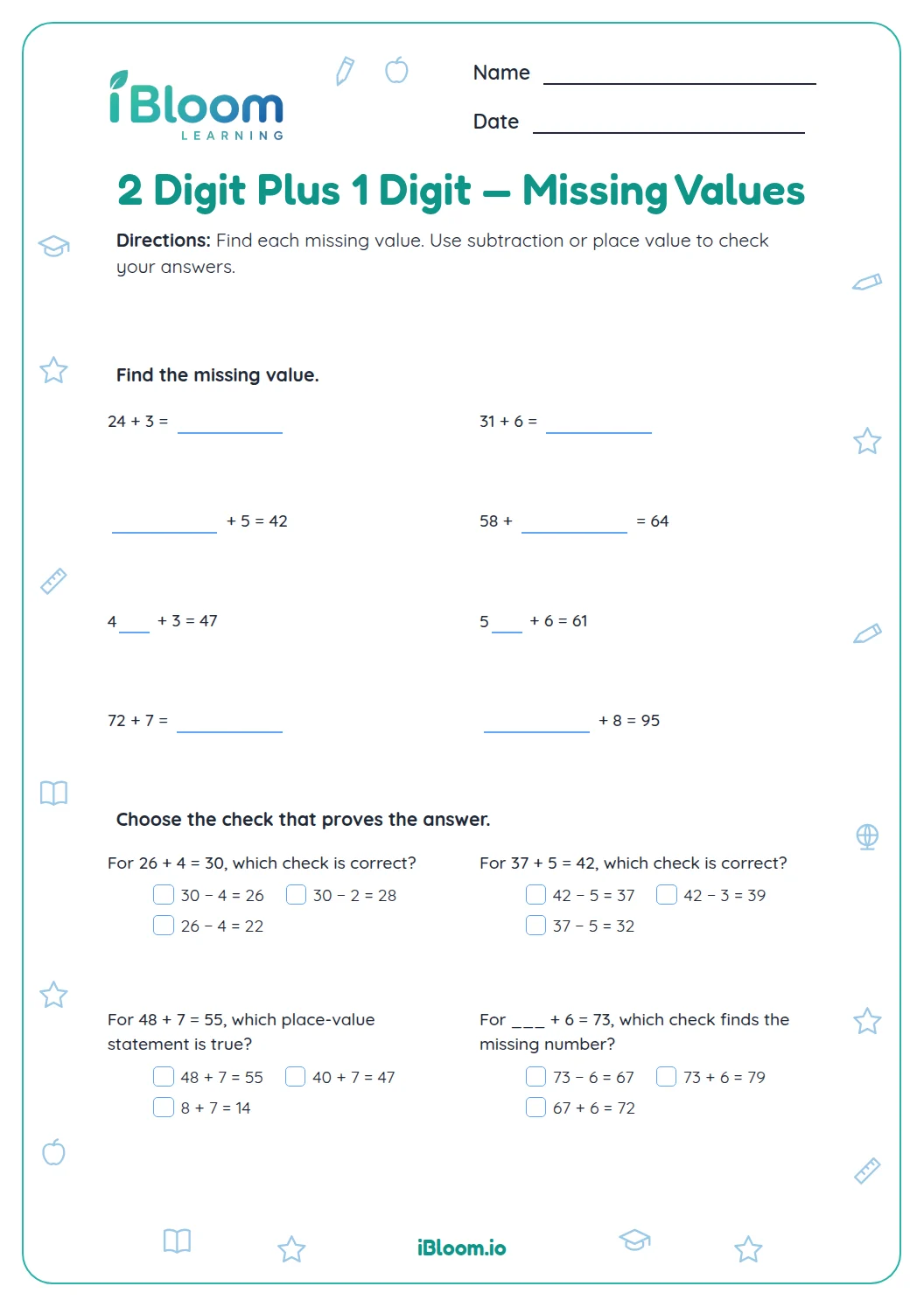
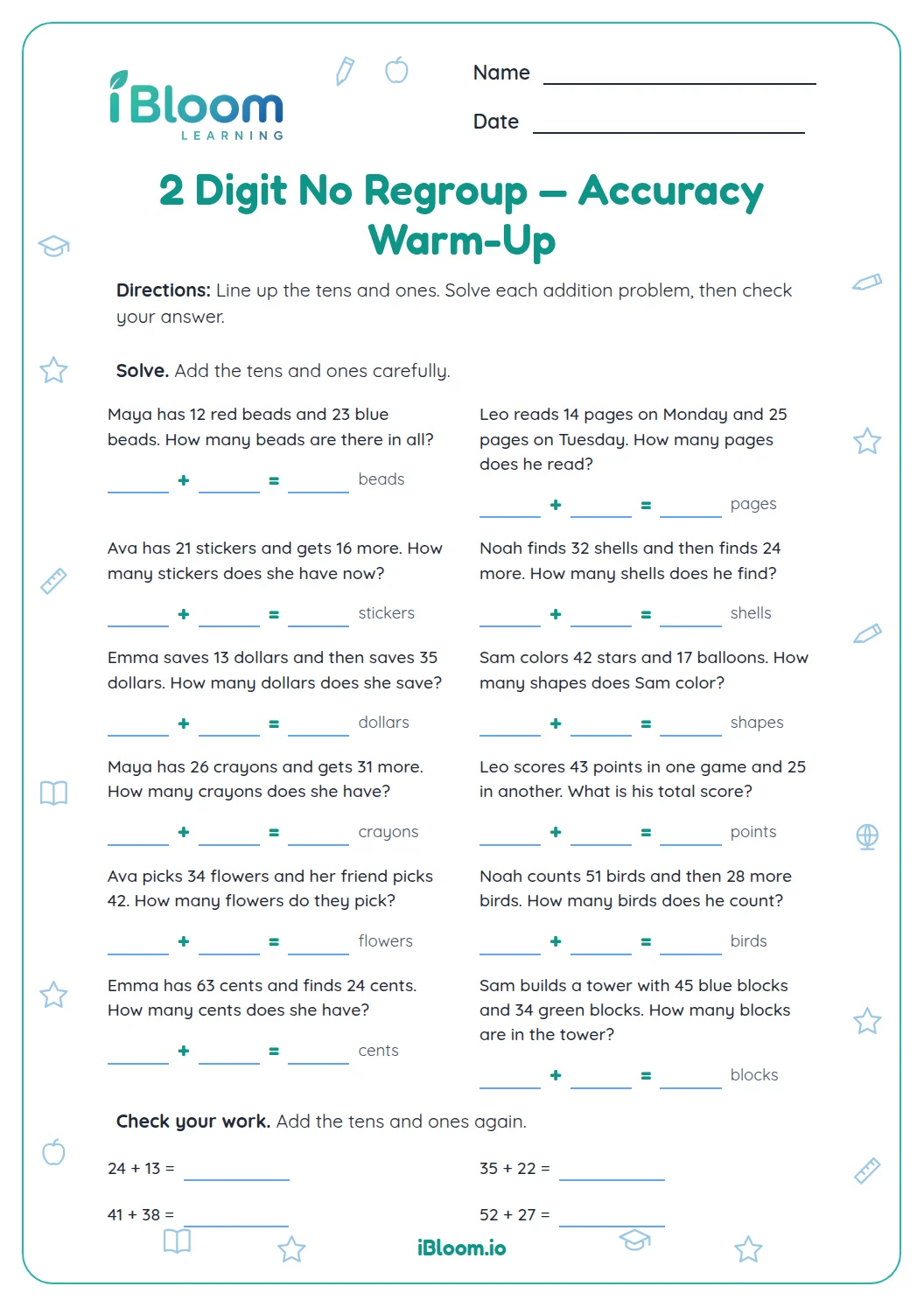
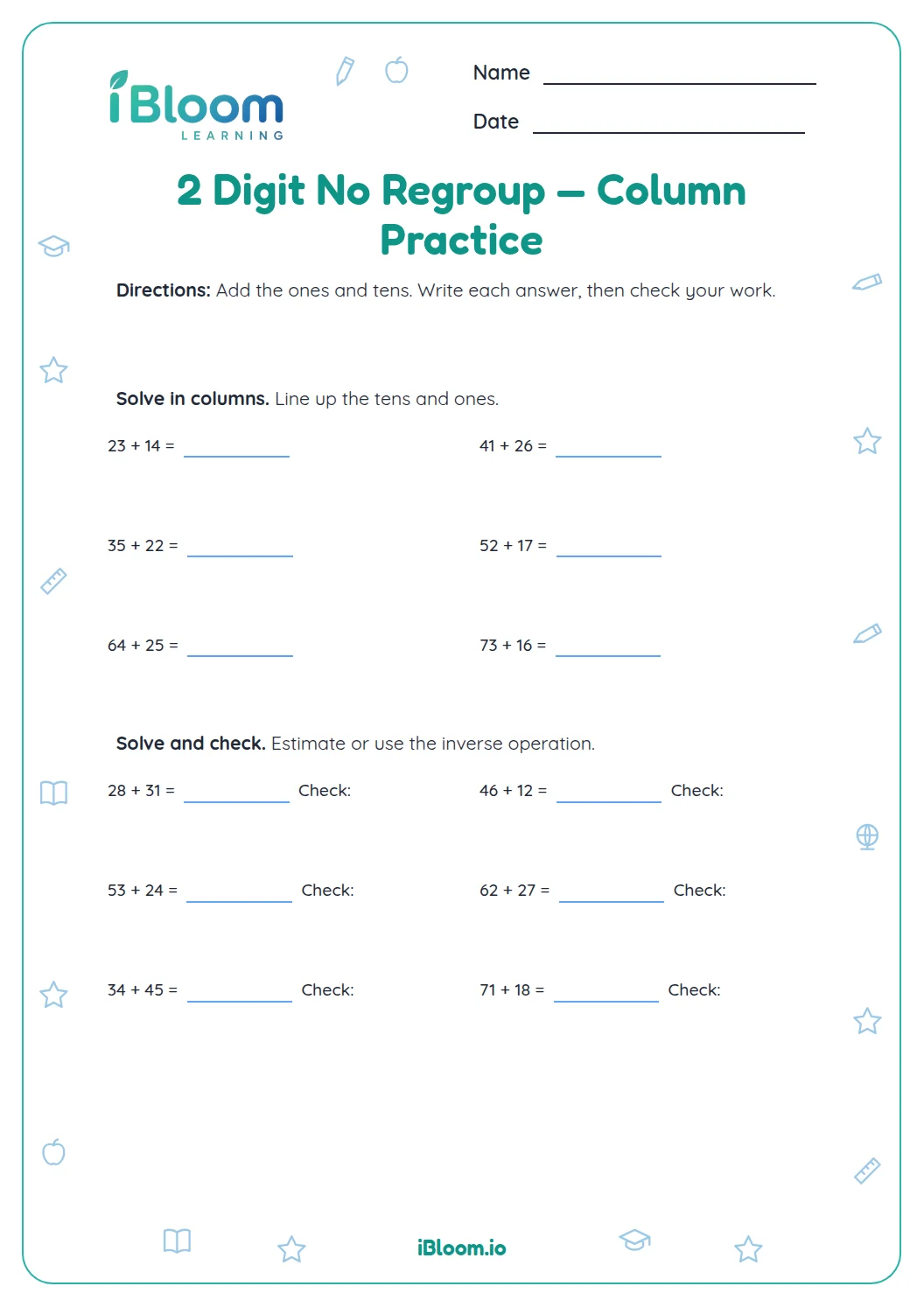
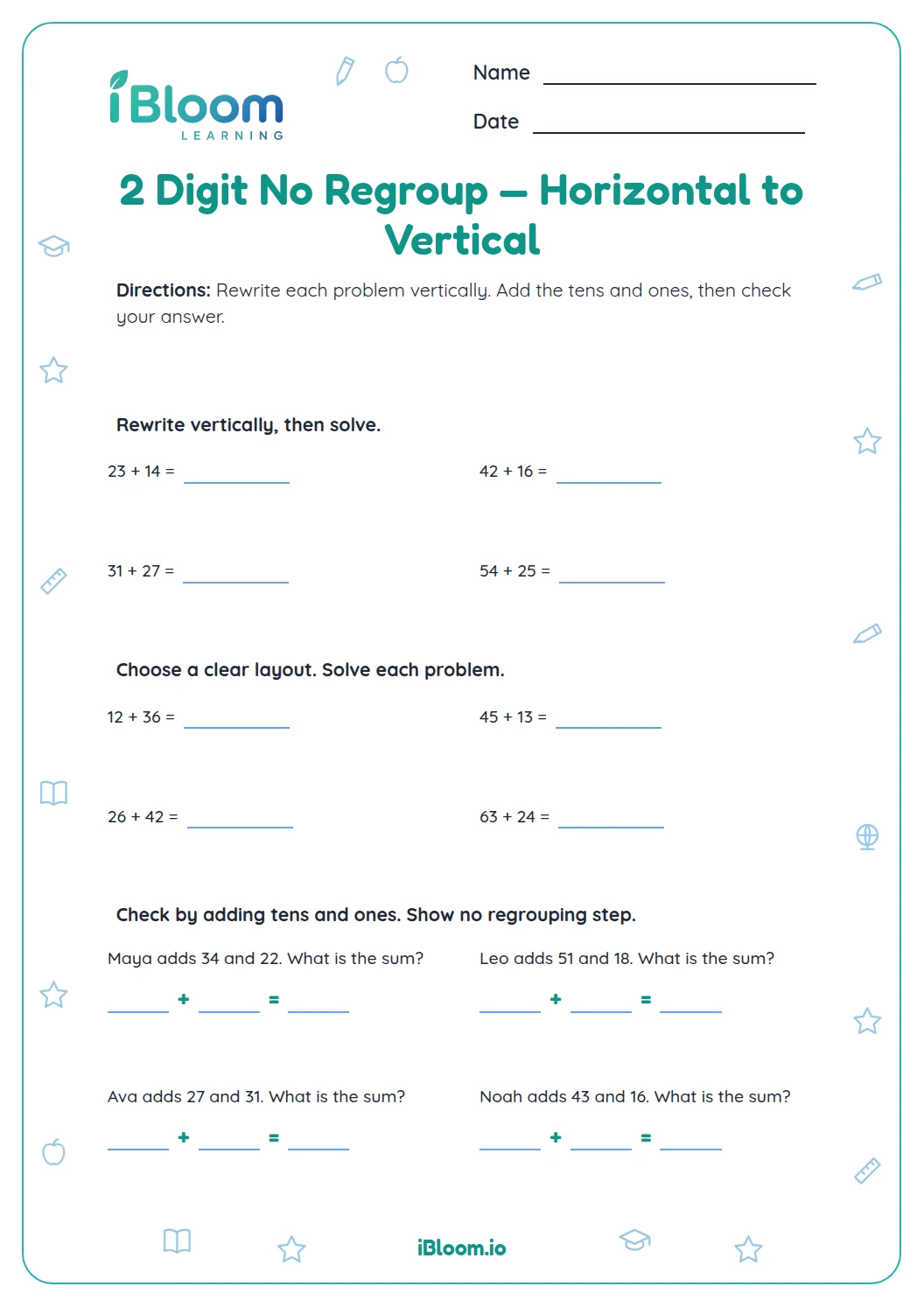
This free Grade 2 addition worksheet keeps the no-regrouping skill from the earlier warm-up and adds short stories like its original sheet. Part A has ten horizontal sums; Part B has six one-step situations about stickers, pages, shells, and other countable items. Every ones-digit total stays below ten, so the tens digit does not change. The practice supports CCSS 2.NBT.B.5. The separate answer key lists each total with its unit for the story problems.
Aligned to 2.NBT.B.5
What stays the same in each horizontal sum?
The ones add to fewer than ten, so no new ten is made. The tens digit stays the same while the ones digit changes.
How can you solve 42 + 5?
Add the ones: 2 + 5 = 7. Keep the 4 tens, so 42 + 5 = 47. The story problems use the same addition, then ask students to name what the total counts.
What should the answer include in a story problem?
Write the total and the matching item, such as 28 stickers. Check that the story asks for the combined amount rather than how many more one group has.
How to use this worksheet
- 1Solve the ten number sentences in Part A.
- 2Add the ones digits and check whether they make a new ten.
- 3For each story in Part B, identify the starting amount and how many more.
- 4Add the two amounts and label the total with the story item.
- 5Check a story sum by subtracting the amount that was added.
Common mistakes and quick fixes
The mistake
Adding the one-digit number to the tens digit.
The fix
Add it to the ones digit, then keep the tens digit.
The mistake
Changing the tens digit even though no new ten is formed.
The fix
Check that the ones total is less than 10.
The mistake
Writing a number without its story unit.
The fix
Finish with the item counted, such as “28 stickers.”
Common Core alignment
The listed standard describes the reading, writing, or math work students practice on this page.
Add within 100 using place-value strategies.
On this sheet: Each horizontal item adds a one-digit number without regrouping to a two-digit number.
Show the official wordingHide the official wording
Fluently add and subtract within 100 using strategies based on place value, properties of operations, and/or the relationship between addition and subtraction.
What to practice next
Make more practice
Further reading
Questions parents and teachers ask
How many problems are on this worksheet?
There are sixteen problems in two parts. The first ten are horizontal number sentences; the next six are short addition stories that ask students to find a total and name what it counts. The story items have space for an equation and answer.
What does “without regrouping” mean here?
The ones digits add to fewer than ten, so students do not trade ten ones for one ten. For example, 42 + 5 gives 7 ones, and the 4 tens stay unchanged in the answer 47. This is true for every sum on the page.
What is one example from the story section?
Maya has 25 stickers and gets 3 more. Add 5 ones and 3 ones to get 8 ones, keep the 2 tens, and write 28 stickers as the total. This response names both the number and what it counts.
Should students show an equation for each story?
Yes. The story questions provide working space for an addition equation and an answer. Writing both amounts in the equation can help students check that they added the starting group and the new items, then label the total with the correct unit.
What should the answer key include for a story?
The key gives the total with the item name, such as “28 stickers.” Matching the unit to the story makes it clear what the number counts and helps distinguish pages from beads, books, or other objects. The sum is the same skill as Part A.