



About this worksheet
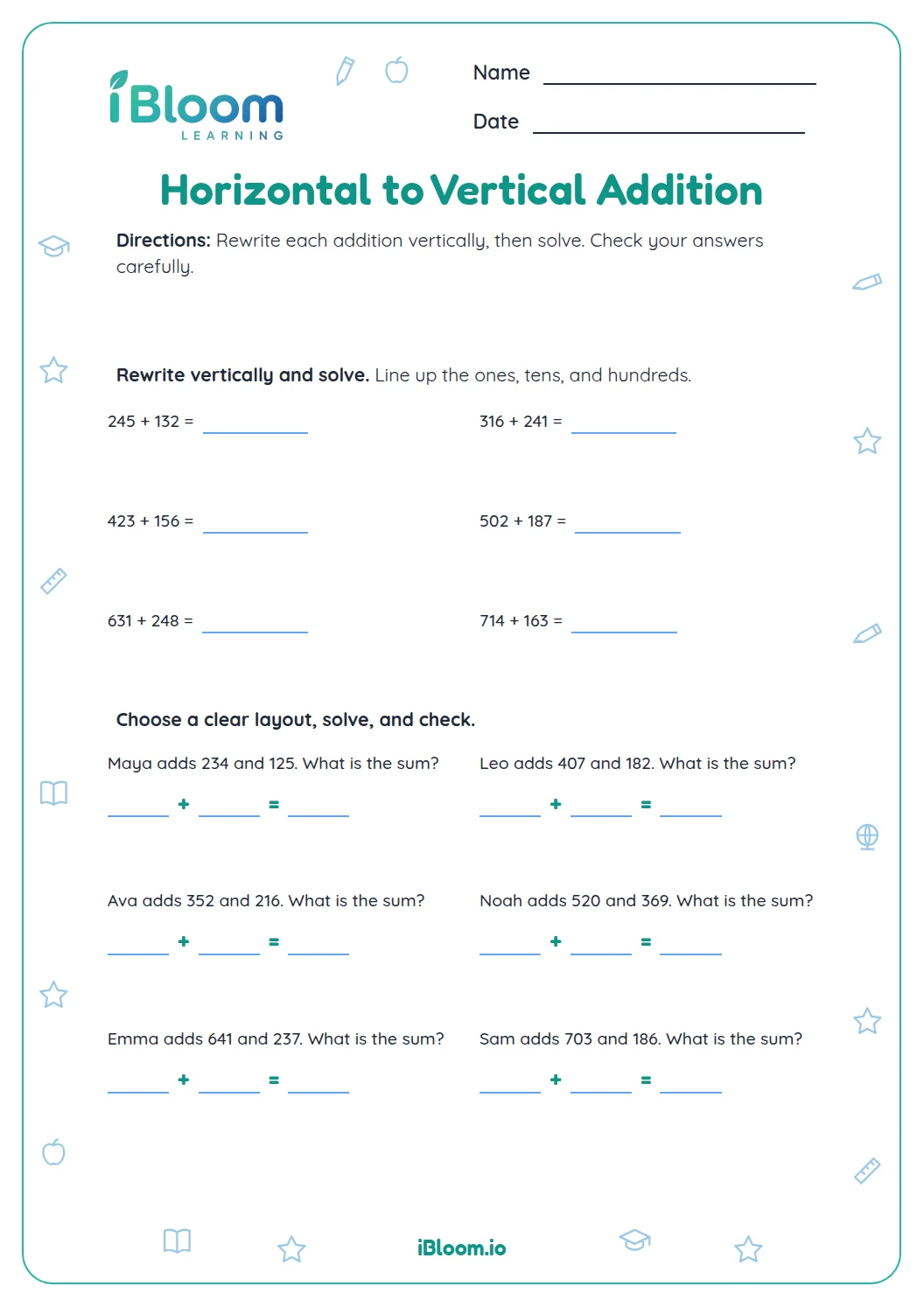
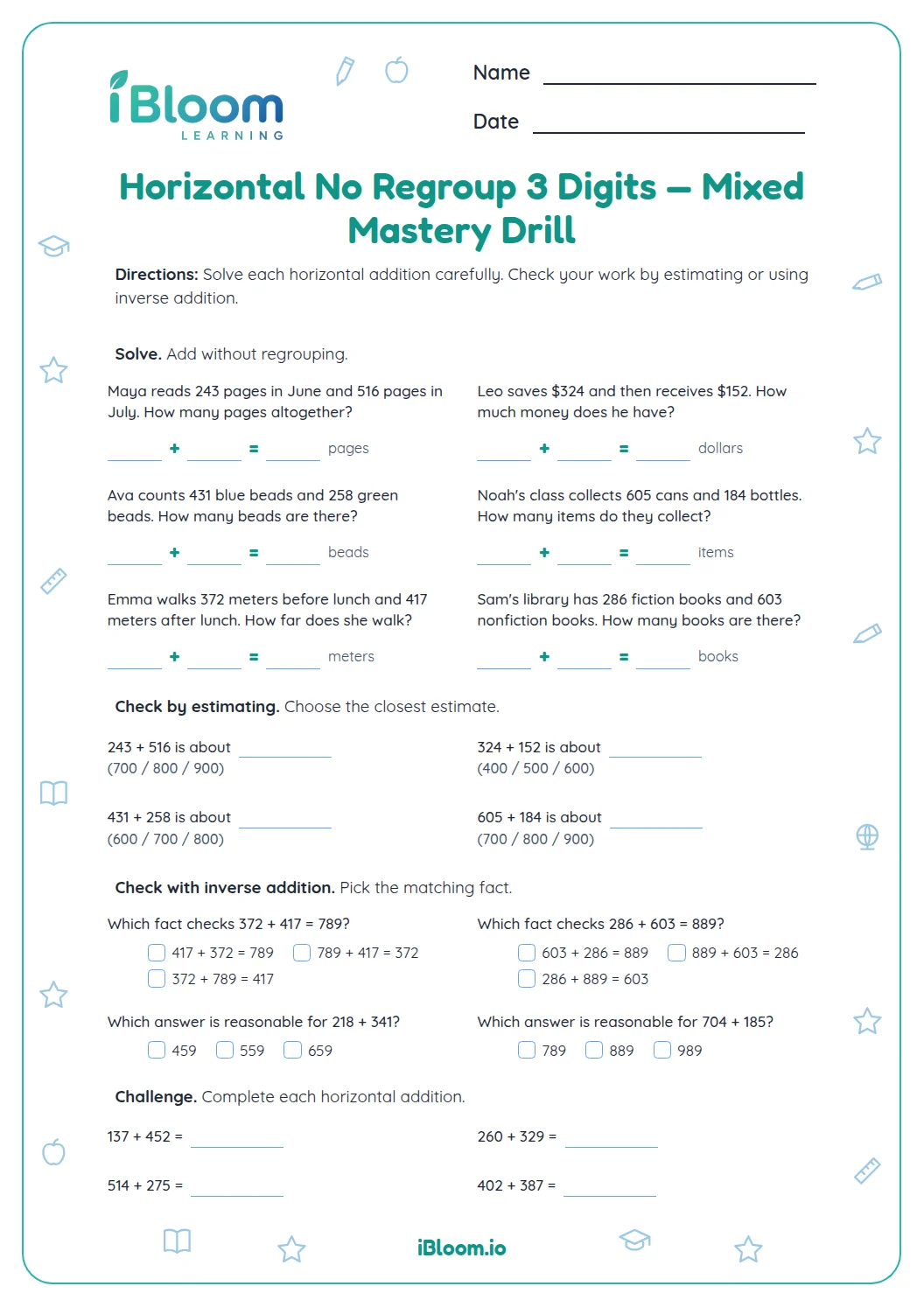
This free printable drill practices horizontal three-digit addition without regrouping. It contains 20 questions in four parts: direct sums, sums to check by switching addends, missing-addend equations, and short word problems. Each place-value column can be added without composing a new ten. A separate answer key is included.
Aligned to 3.NBT.A.2
How can I add without regrouping?
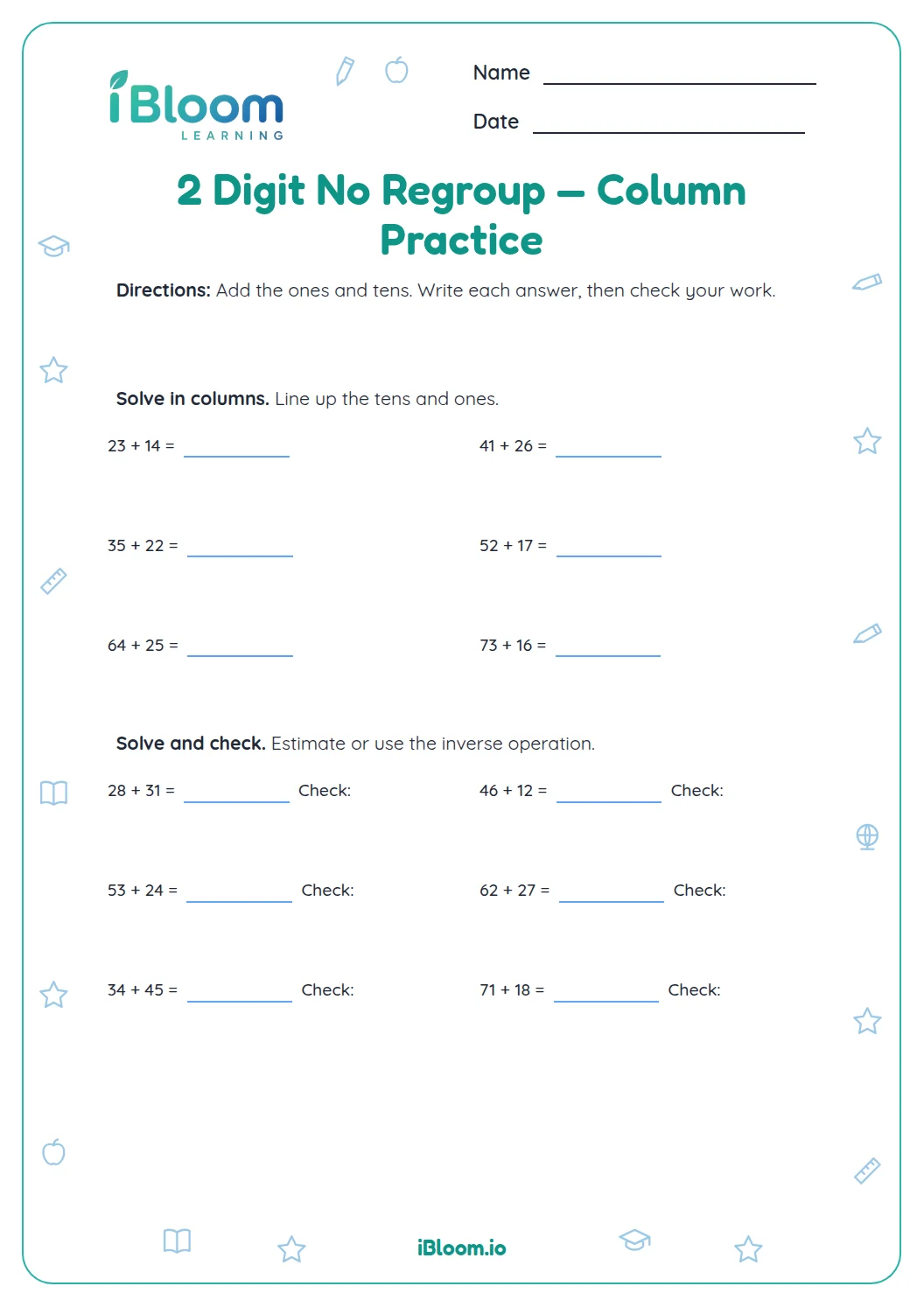
Add matching place values: in 124 + 235, combine 4 + 5 ones, 2 + 3 tens, and 1 + 2 hundreds. The digits in each column total less than 10, so no new ten is made.
- 1124 + 235
- 24 + 5 = 9 ones
- 32 + 3 = 5 tens
- 41 + 2 = 3 hundreds
- 5Sum = 359
How can I check an addition answer?
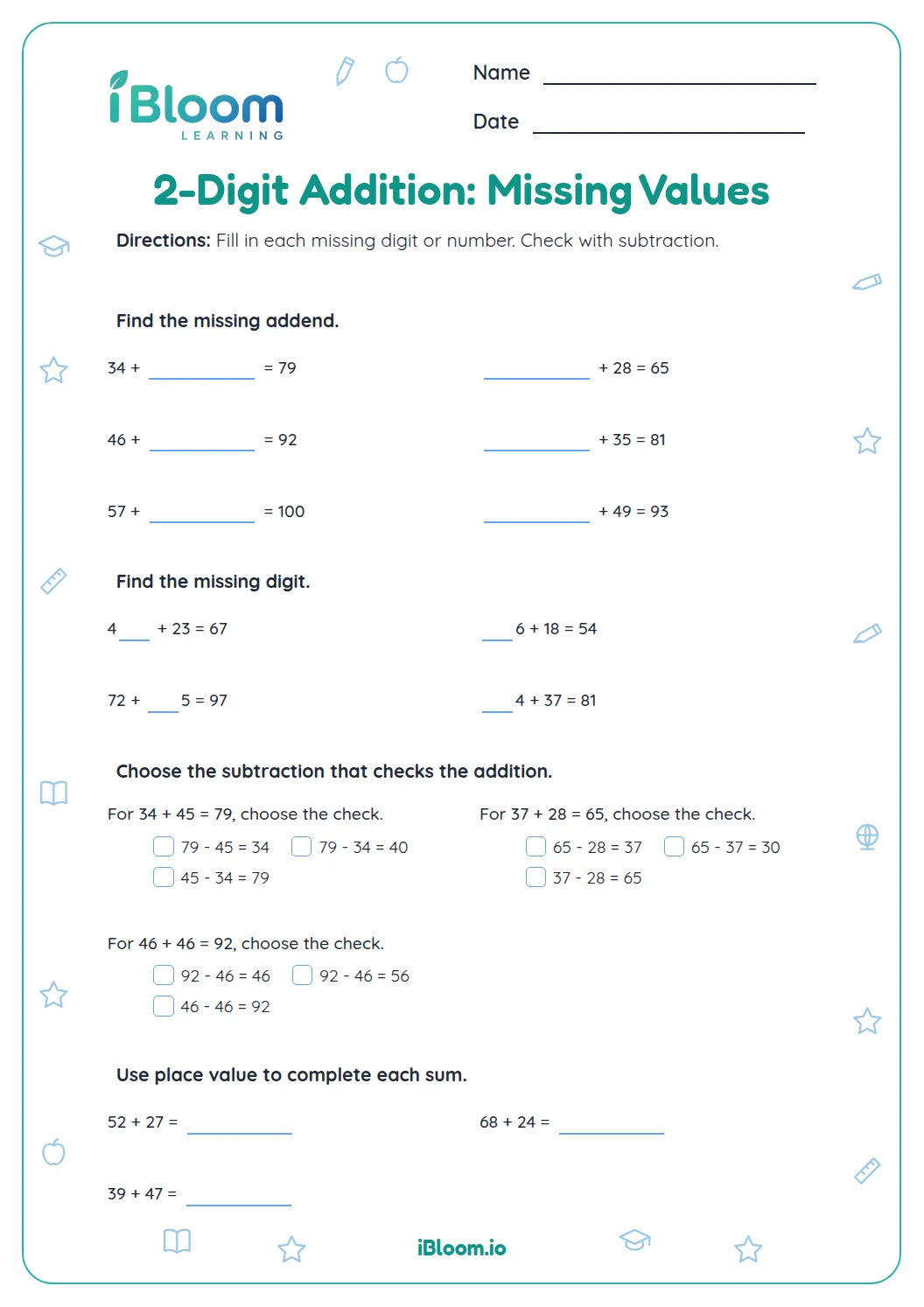
Addition can be checked by switching the addends because the total stays the same. You can also subtract one addend from the sum to see whether the other addend remains.
How do I find an unknown addend?
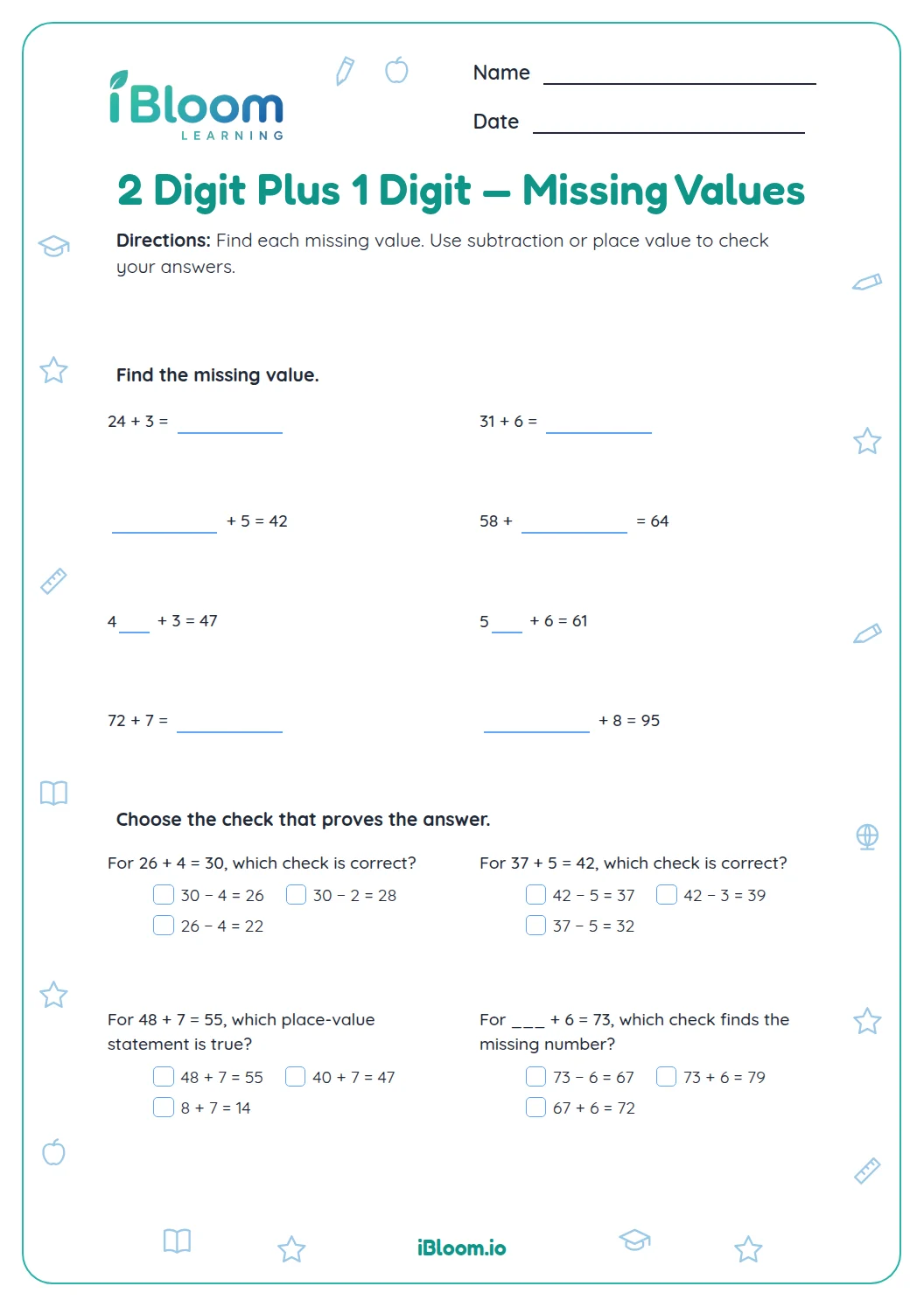
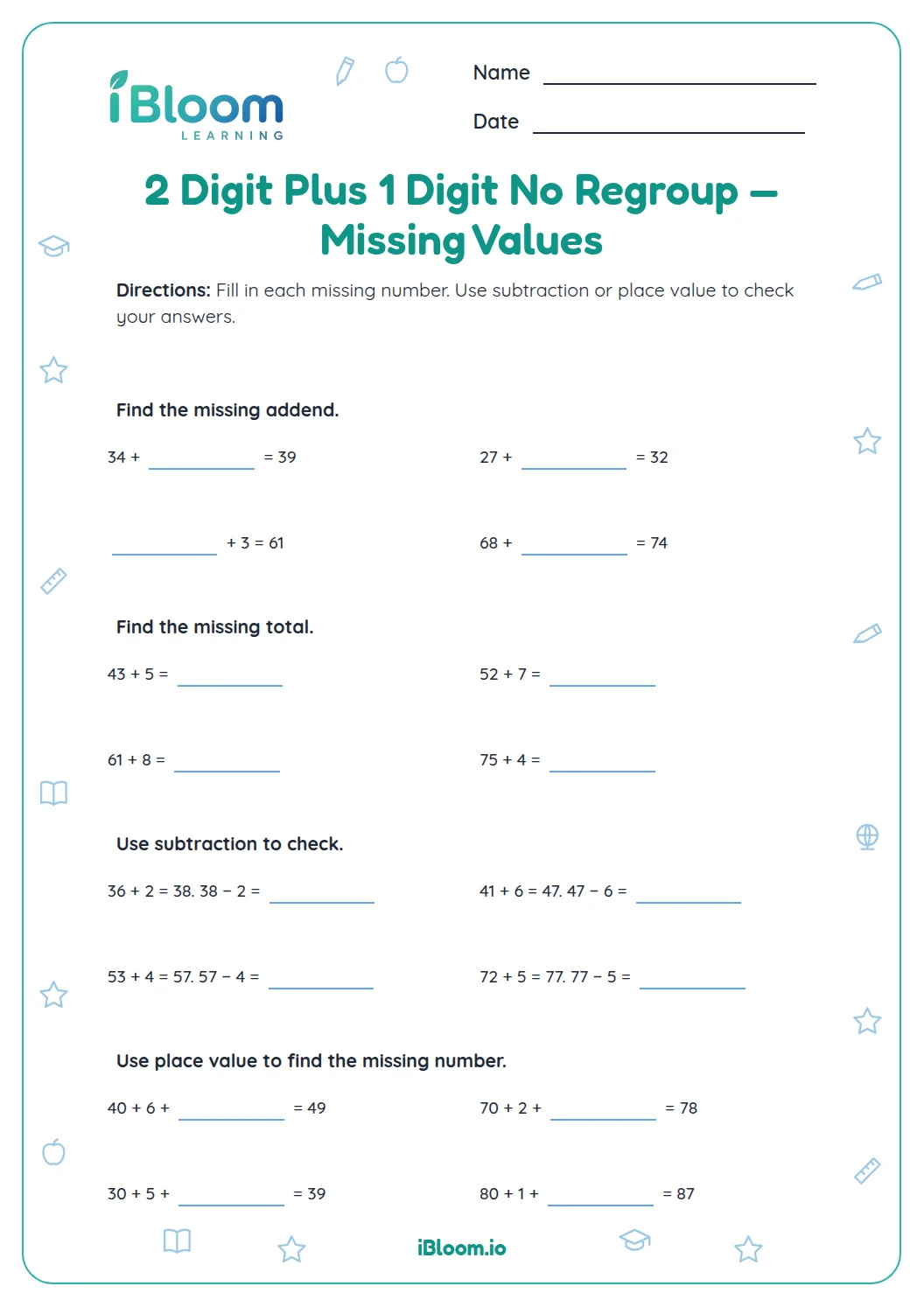
In ___ + 214 = 638, subtract 214 from 638 to find the missing addend: 638 − 214 = 424. Check by adding 424 + 214.
How to work through the sheet
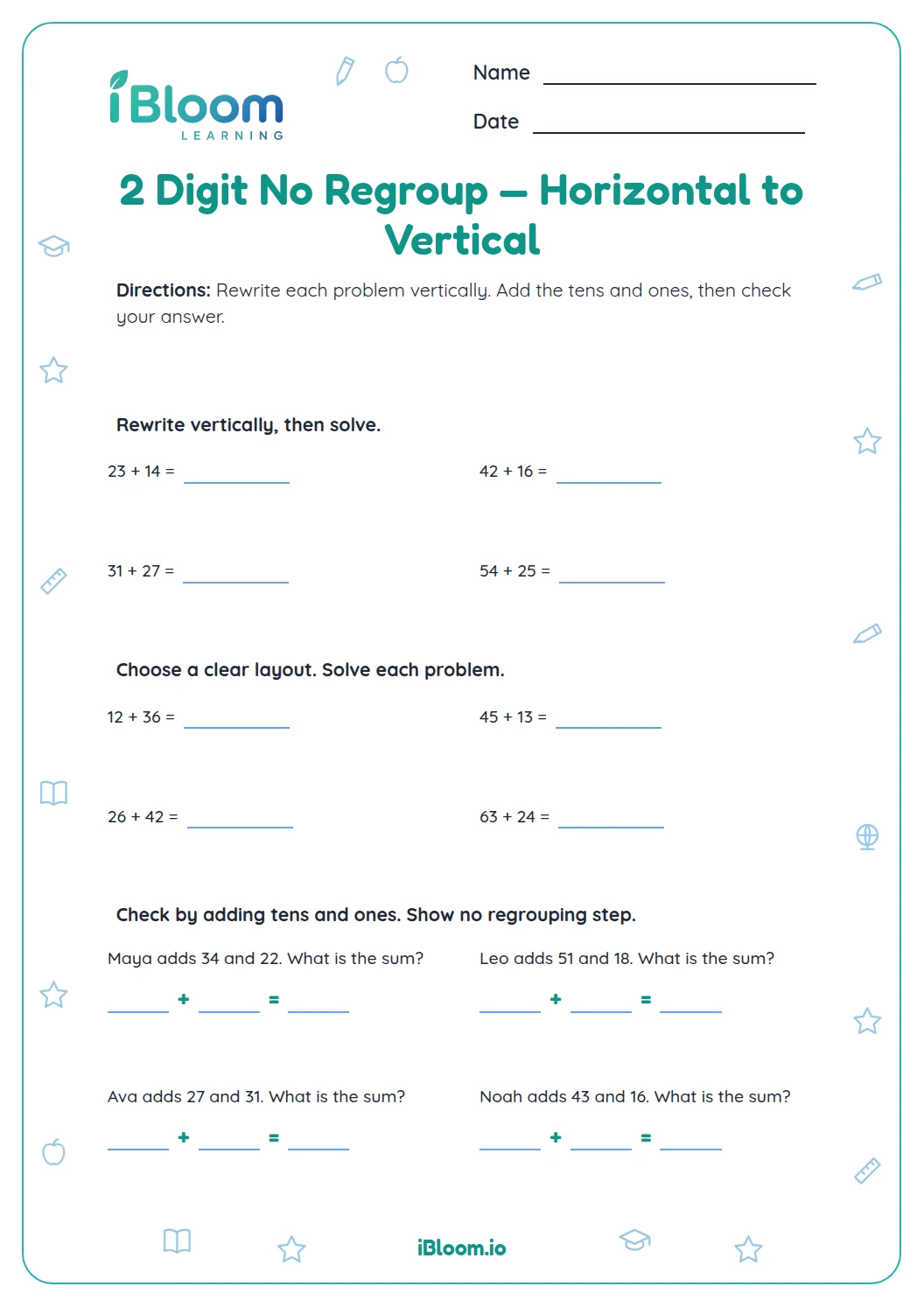
- 1Line up digits by place value.
- 2Add the ones column.
- 3Add tens and hundreds.
- 4Check no column reaches ten.
- 5Use reversed addends or subtraction to check.
Common slips and fixes
The mistake
Adding digits from different columns.
The fix
Keep ones, tens, and hundreds aligned.
The mistake
Copying a digit incorrectly.
The fix
Reread each addend before calculating.
The mistake
Subtracting in the wrong direction.
The fix
Subtract the known addend from the total.
Common Core alignment
This page practices the listed skills through the worksheet activities.
Add within 1,000 using place value.
On this sheet: Each sum is within 1,000 and needs no regrouping.
Show the official wordingHide the official wording
Fluently add and subtract within 1000 using strategies and algorithms based on place value, properties of operations, and/or the relationship between addition and subtraction.
What to practice next
Make more practice
Further reading
Questions parents and teachers ask
What does “without regrouping” mean?
Each pair of digits in the same place-value column adds to less than 10, so no ten needs to be traded for a digit in the next column. For example, 124 + 235 has 4 + 5 ones and 2 + 3 tens.
How many questions are on this sheet?
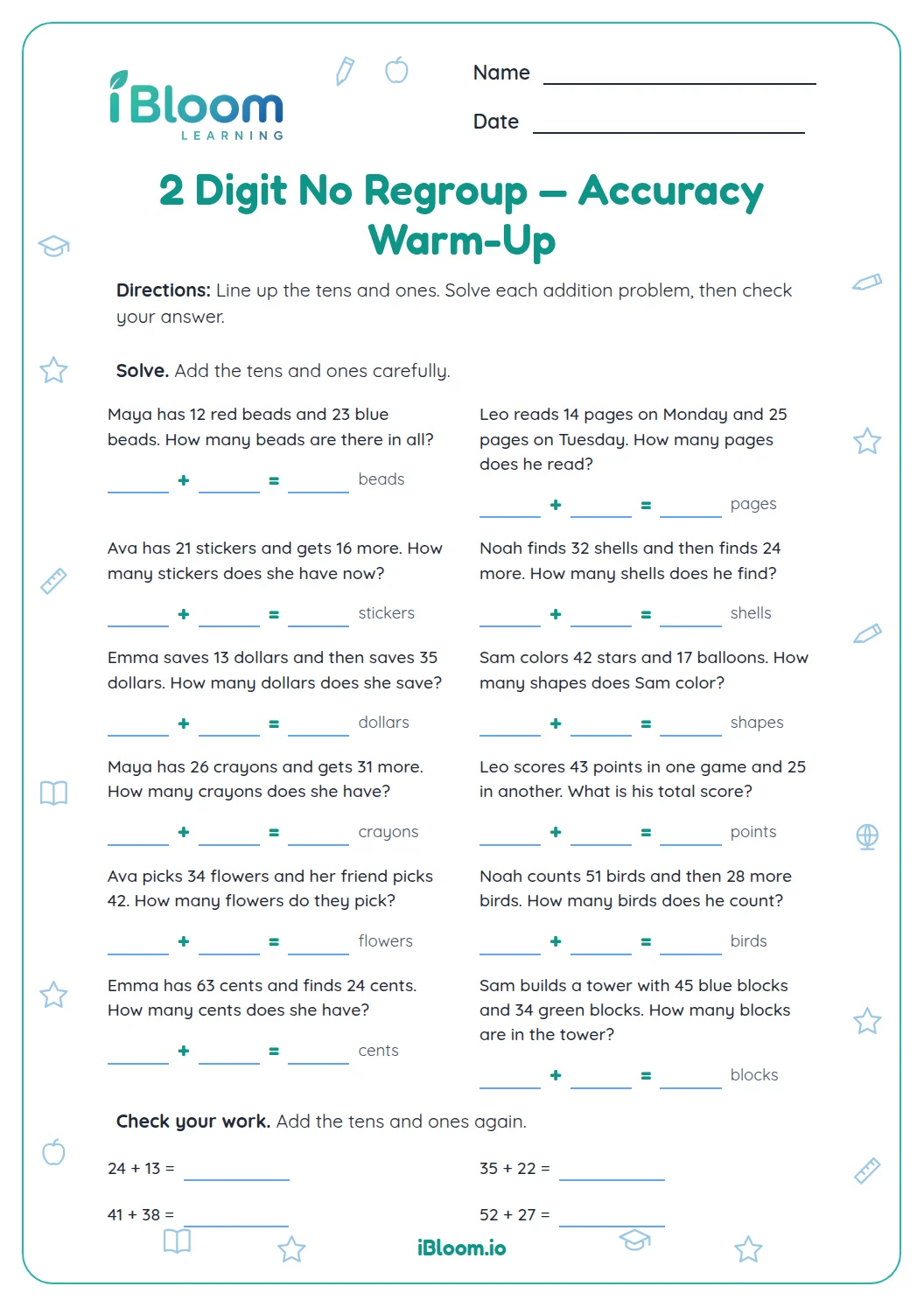
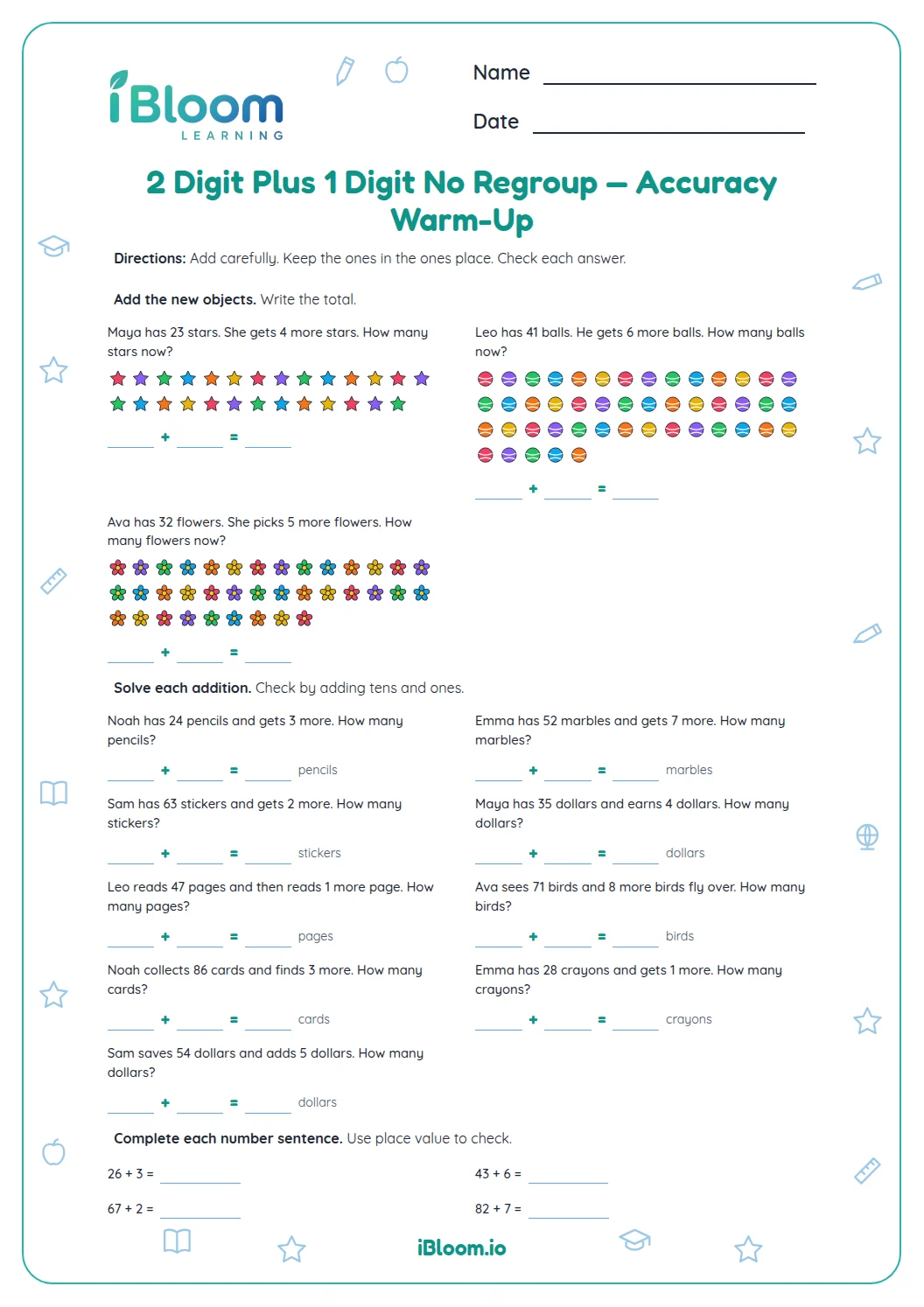
There are 20 questions: 11 addition equations, 5 missing-addend equations, and 4 short word problems. The two-page worksheet is followed by a two-page key with answers in the same order. The page moves from direct sums to missing addends and short application problems.
How can I check a three-digit sum?
Switch the addends and add again, or subtract one addend from the total. For 124 + 235 = 359, check 359 − 235 = 124. The worksheet includes repeated addition facts that make this inverse check useful. The page moves from direct sums to missing addends and short application problems.
How do I find a missing addend?
Subtract the known addend from the total. For ___ + 214 = 638, calculate 638 − 214 = 424, then check that 424 + 214 = 638. Five questions practice finding an unknown addend. The page moves from direct sums to missing addends and short application problems.
Can students solve the equations horizontally?
Yes. The equations are printed horizontally, but students can write the digits in vertical columns to keep hundreds, tens, and ones aligned. The word problems provide space to write an equation and show the calculation. The page moves from direct sums to missing addends and short application problems.
What is in the answer key?
The key gives each sum or missing addend and the total for each short story problem. For word problems, it also includes a unit such as tiles or cans, so students can check that they answered the question asked. The page moves from direct sums to missing addends and short application problems.