
About this worksheet
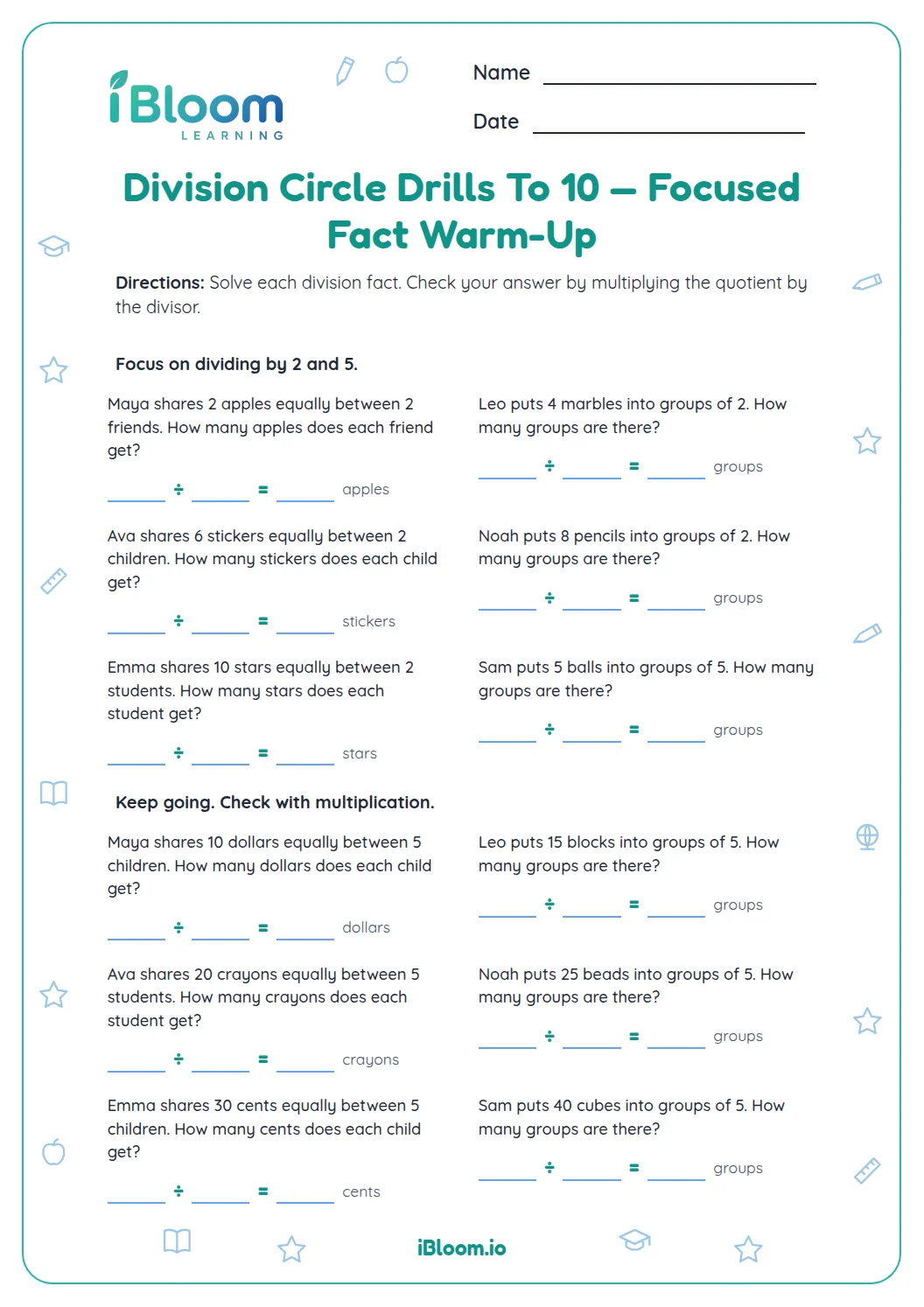
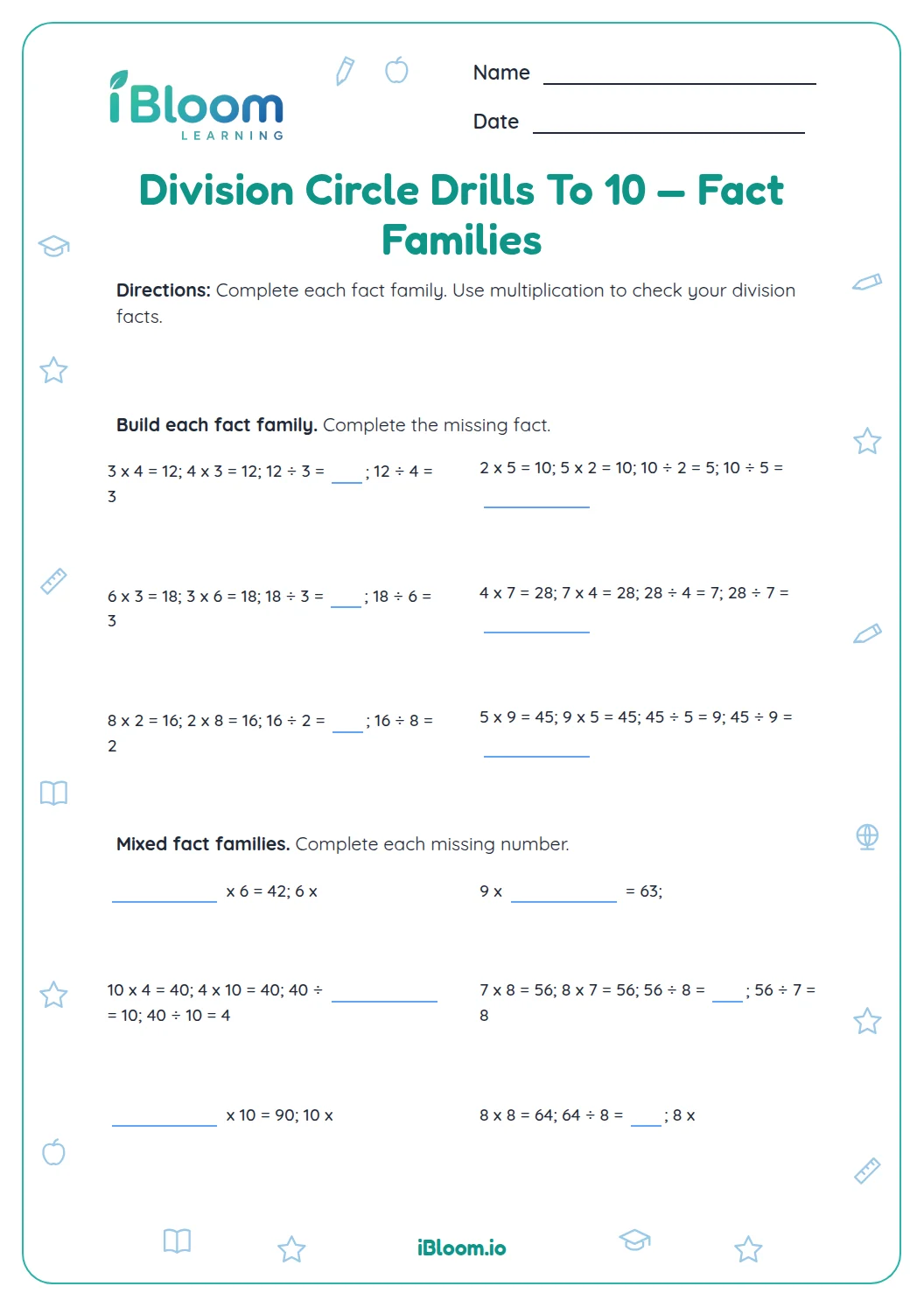
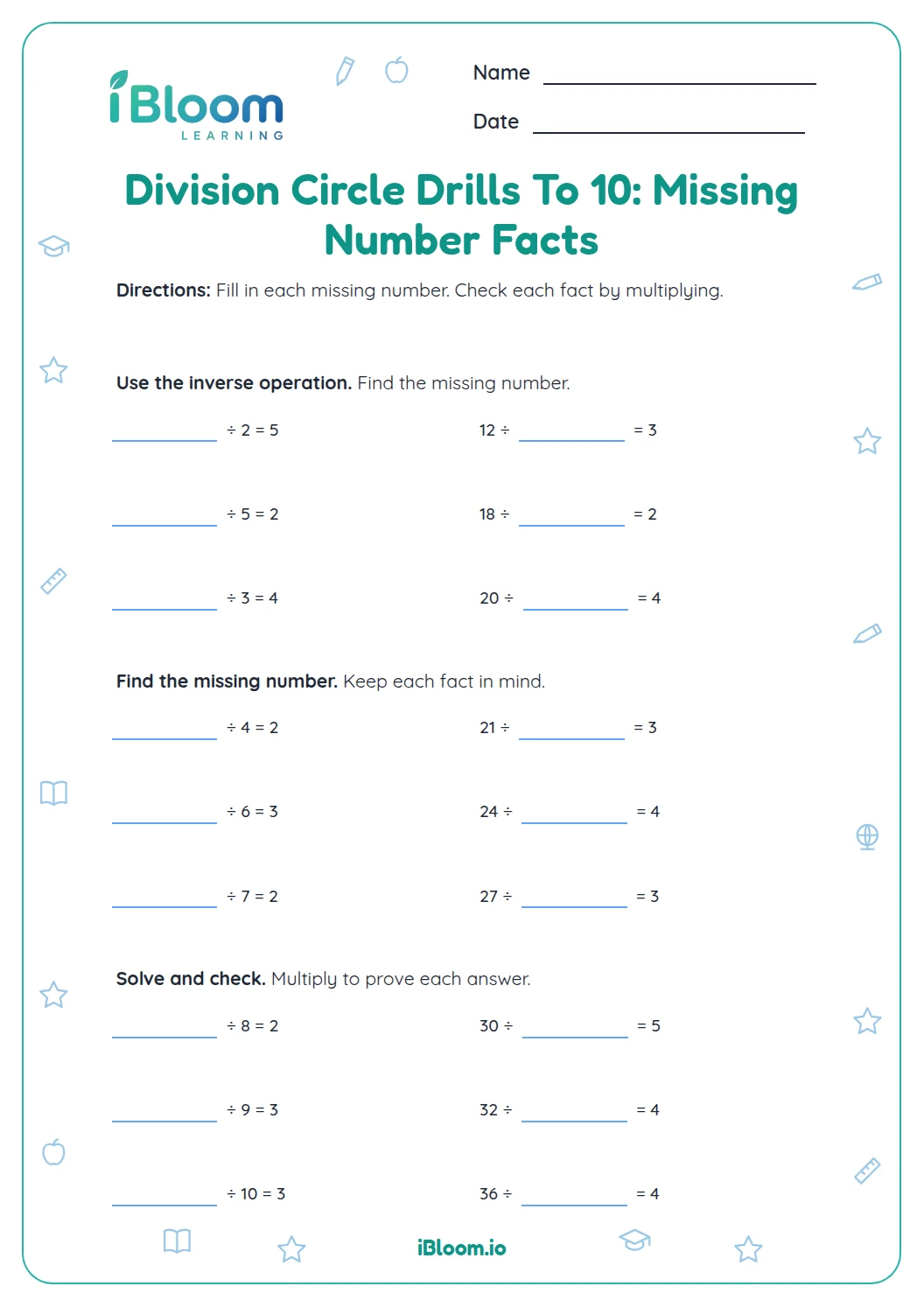
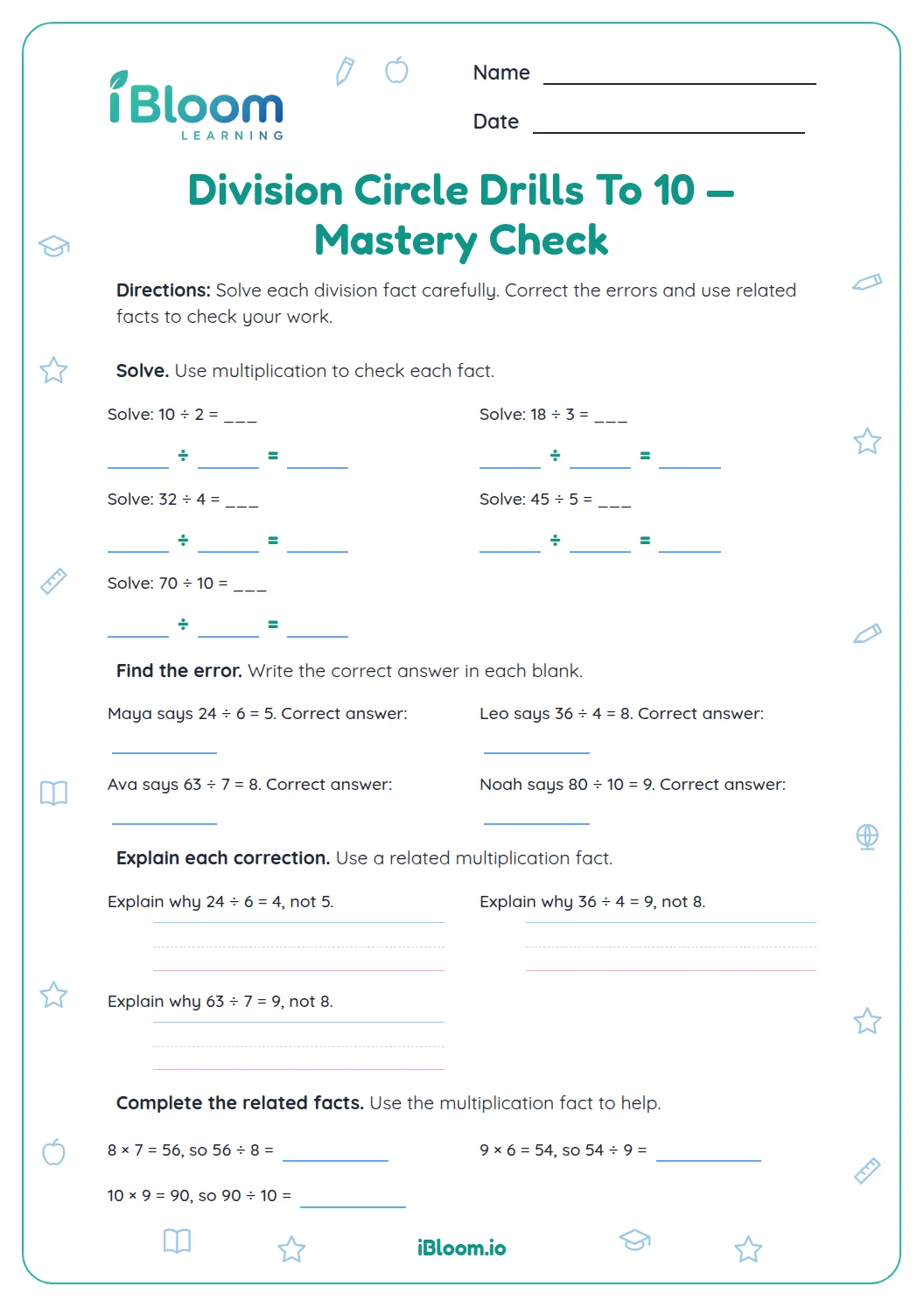
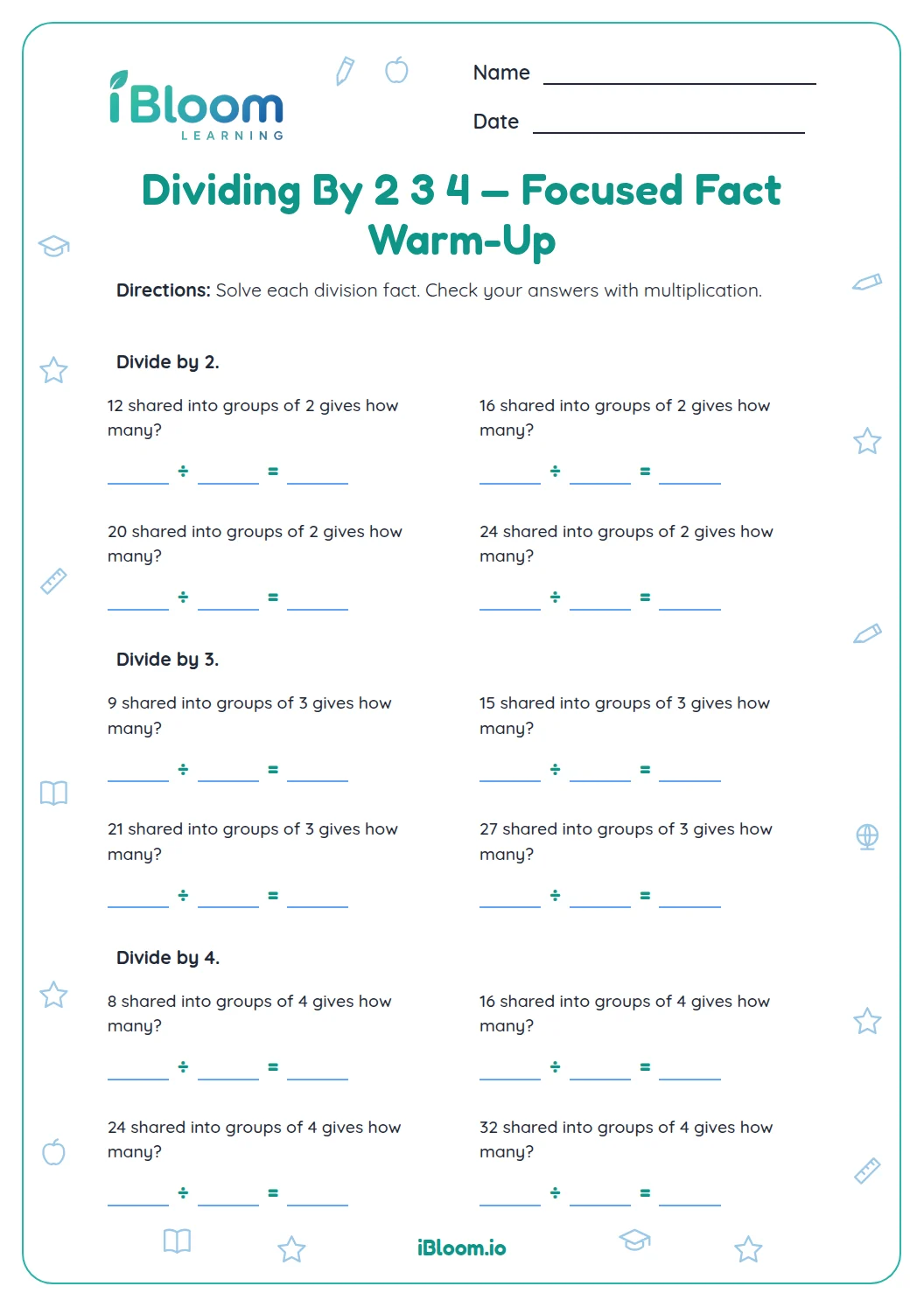
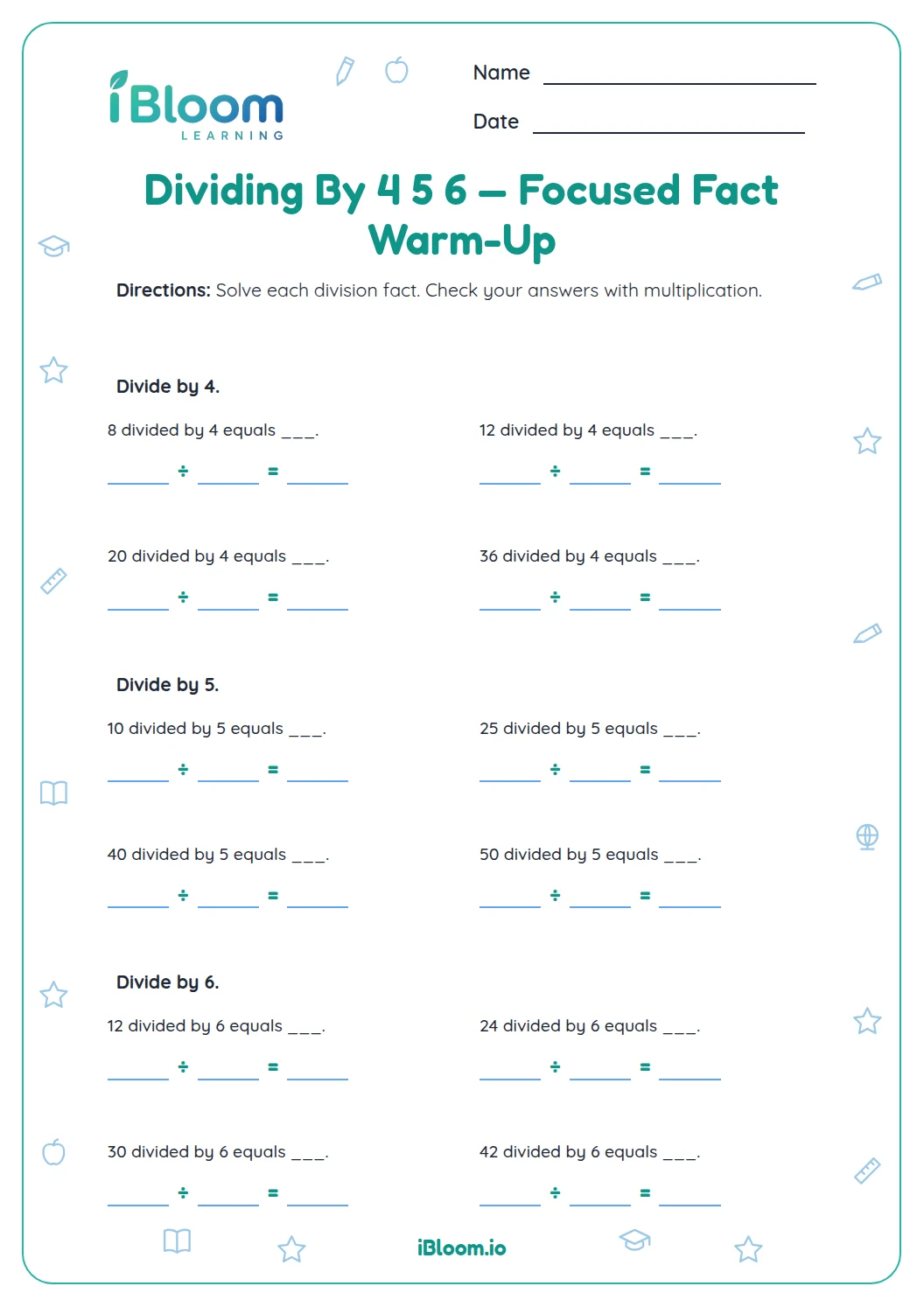
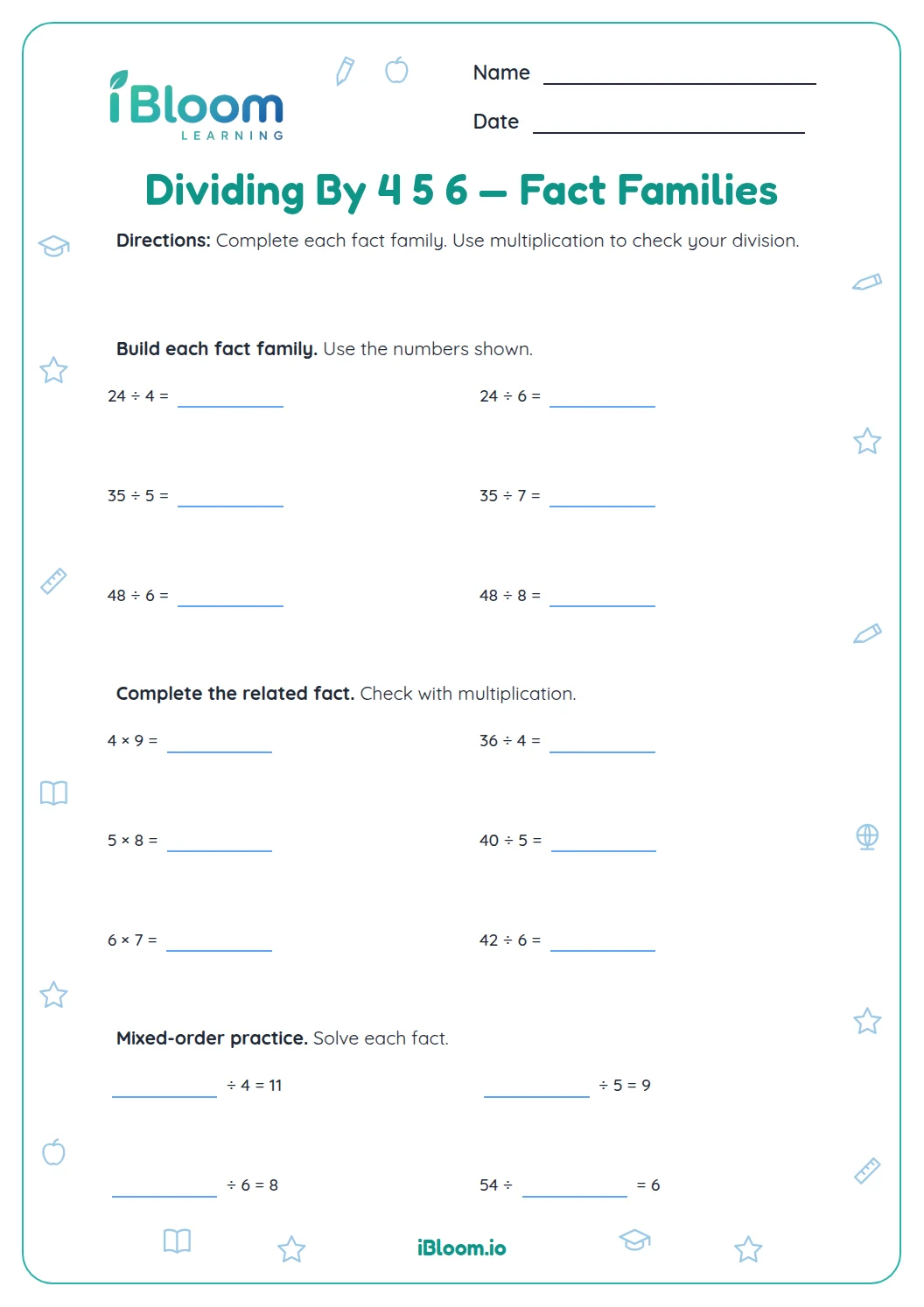
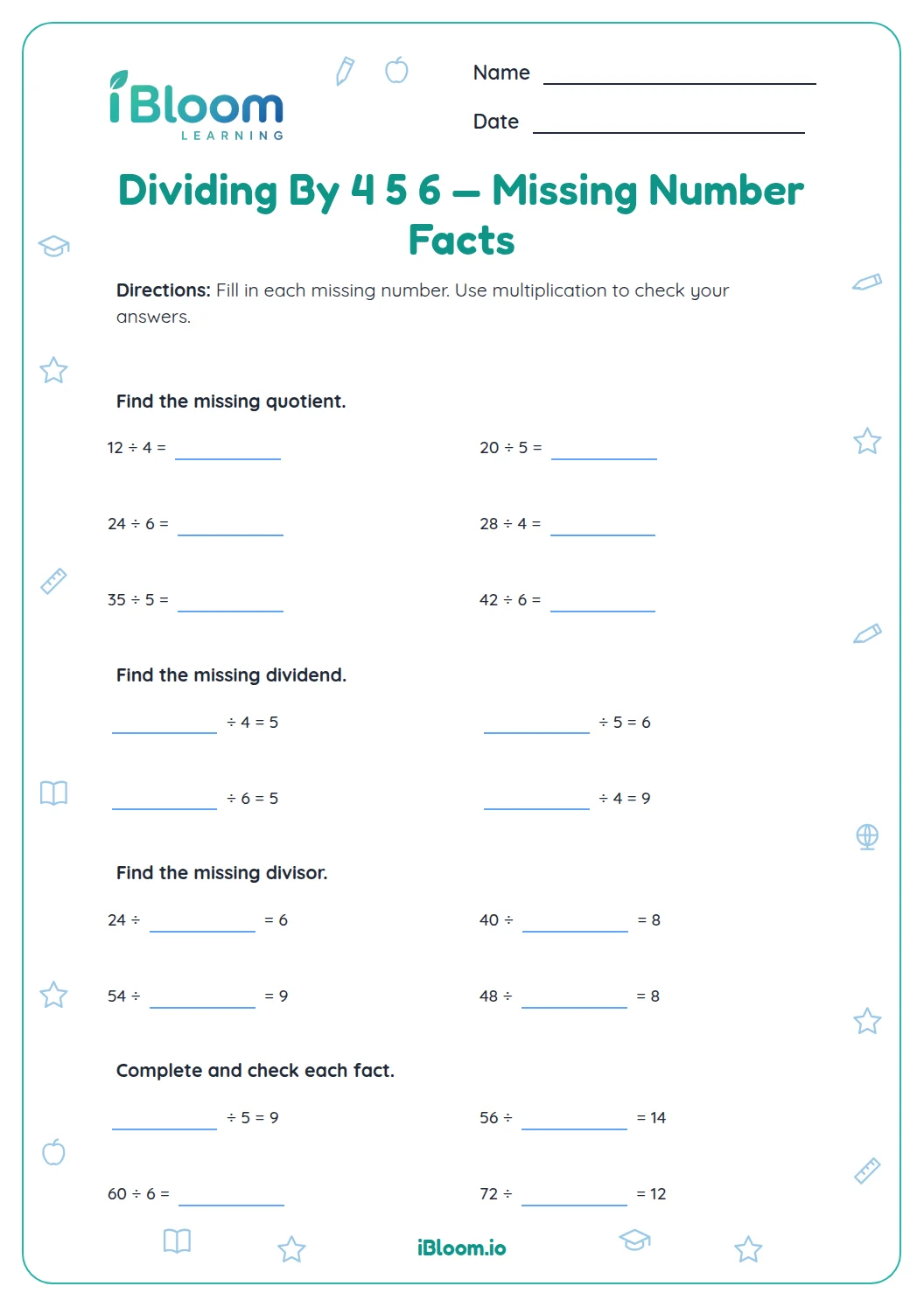
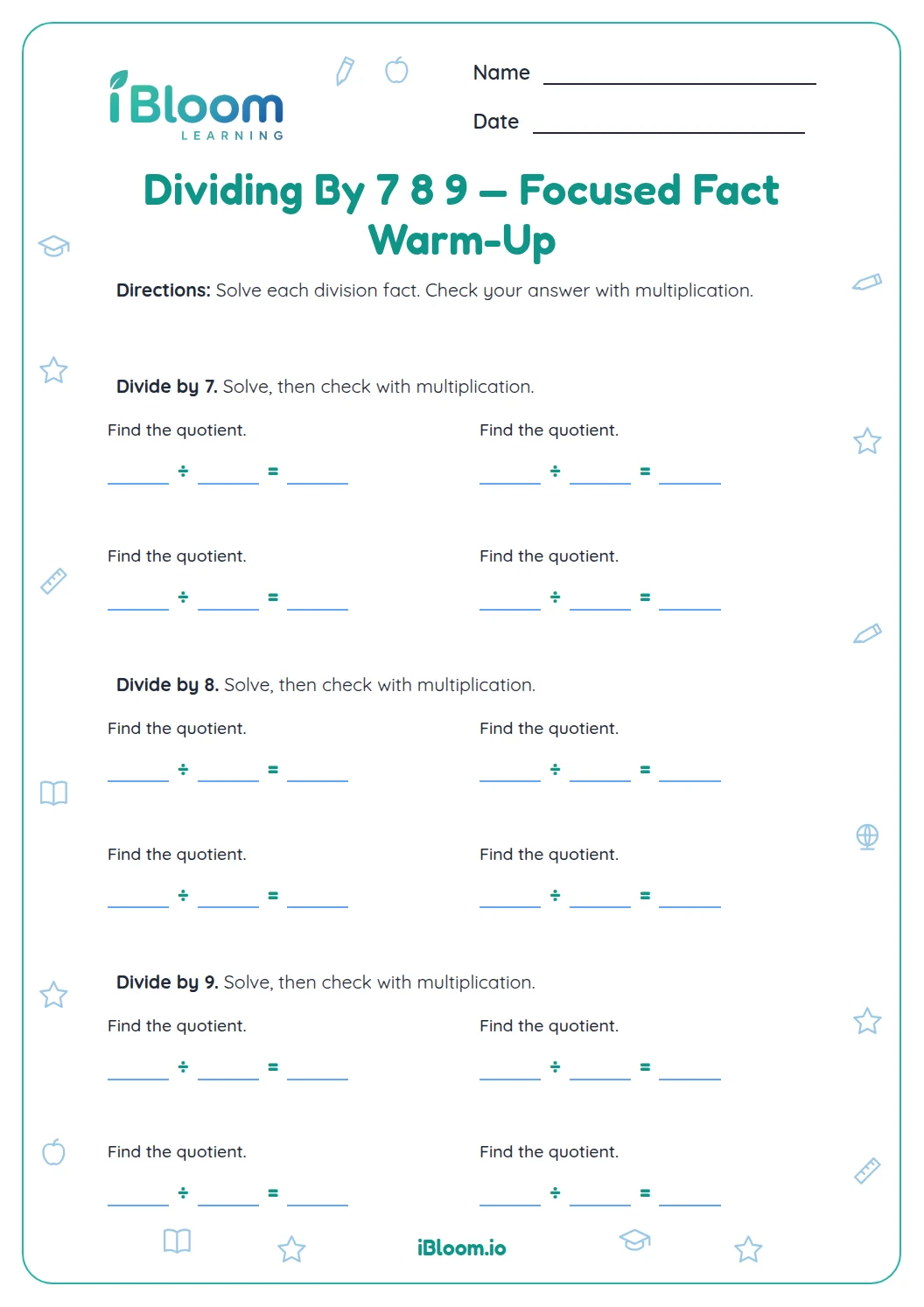
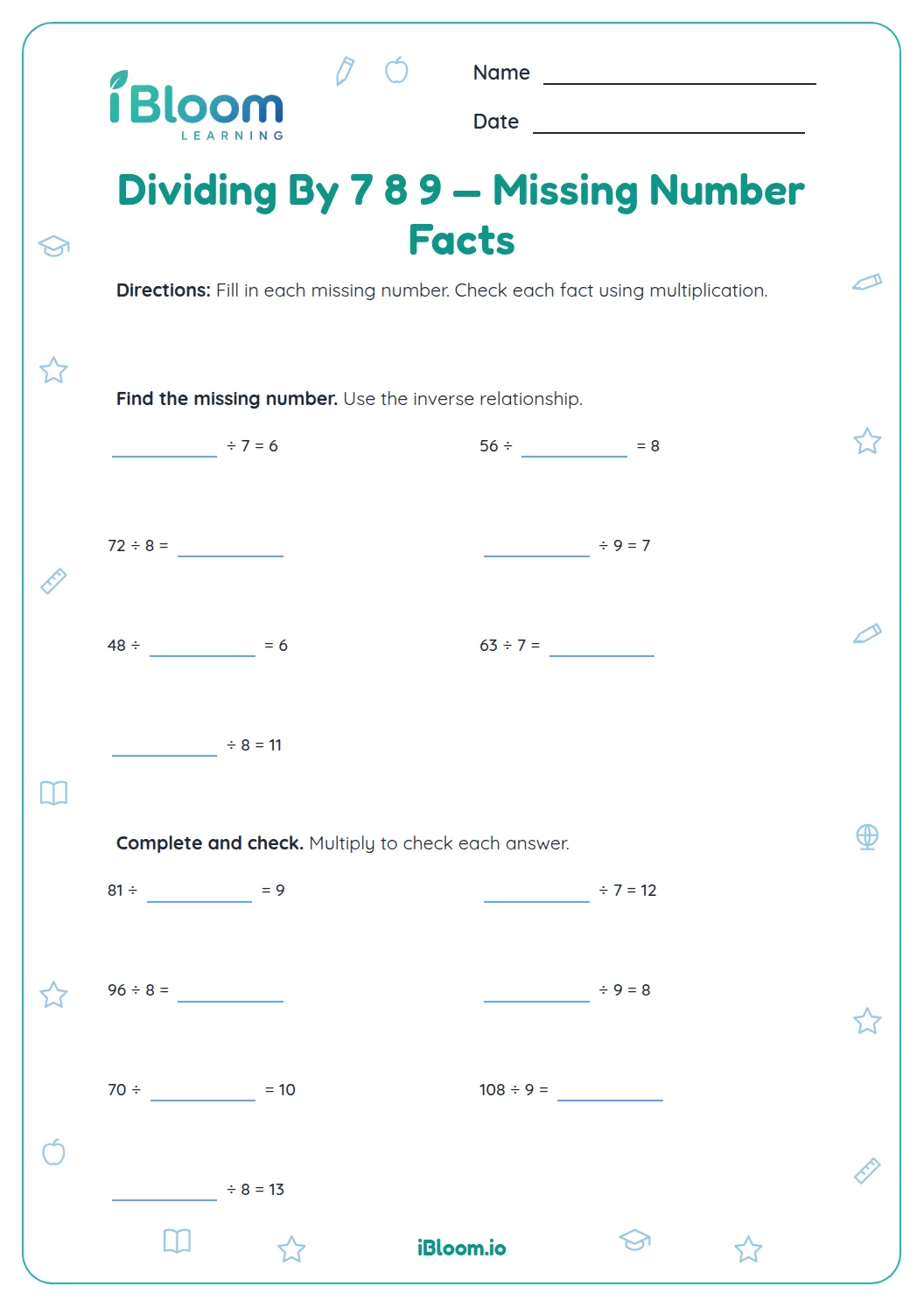
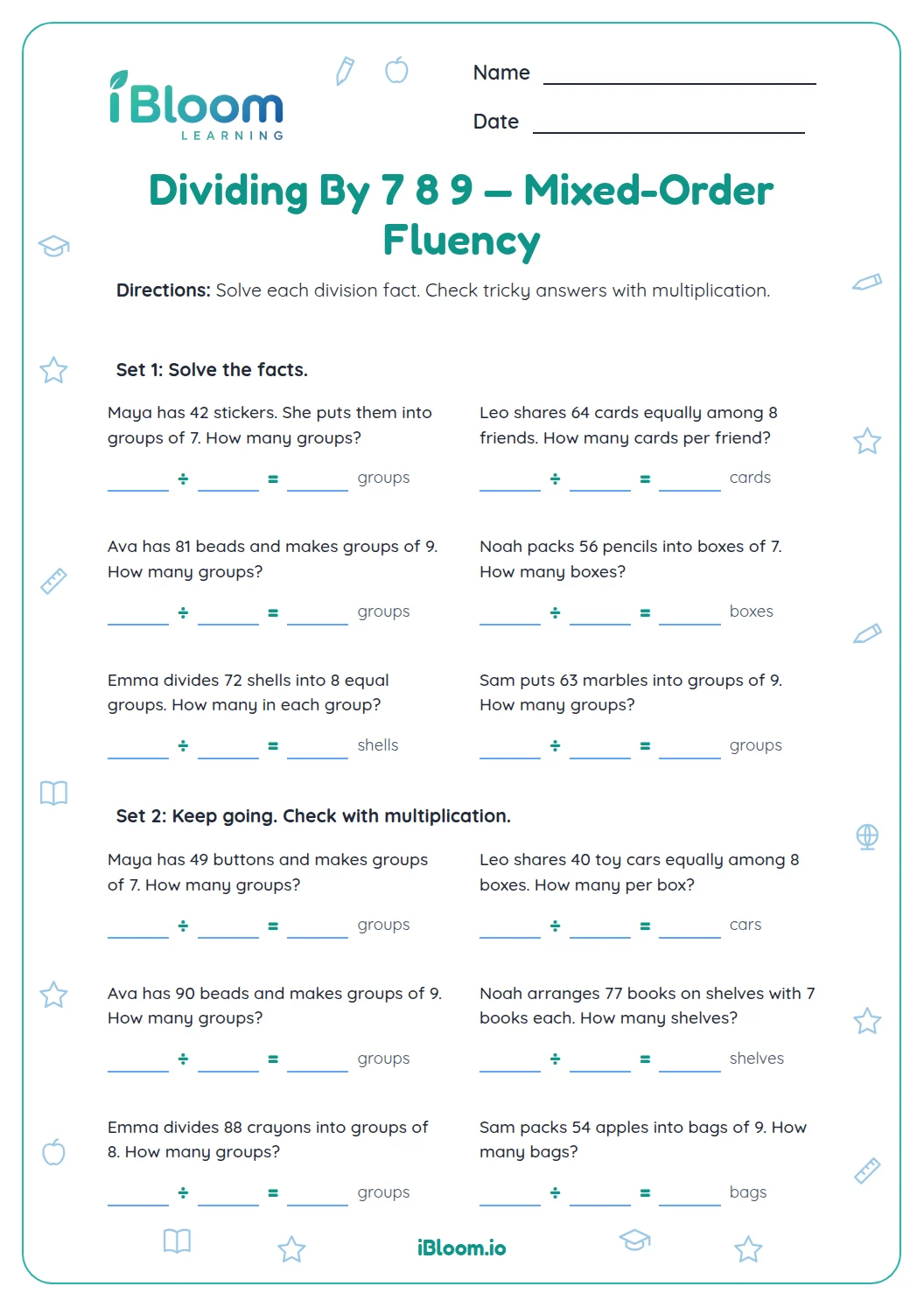
This Grade 3 printable gives students 16 mixed-order division facts and two equal-sharing problems to solve and check with multiplication. The two parts use a varied set of divisors through 10, with dividends through 100. A separate answer key lists each quotient. The facts practice CCSS 3.OA.C.7.
Aligned to 3.OA.C.7
How do the circle drills work?
The old sheet uses direct division equations, so this replacement keeps that familiar routine. Students solve each fact and can check the quotient by multiplying.
What comes after the circles?
For example, 30 ÷ 5 = 6 because 5 × 6 = 30. Use the same inverse-operation check for each item.
How to use this worksheet
- 1Read the center number in a circle.
- 2Divide each outer number by the center.
- 3Write the quotients in order.
- 4Solve the 14 equations.
- 5Check each answer with multiplication.
Division checks
The mistake
Using the outer number as the divisor.
The fix
Read the center number first.
The mistake
Reversing the quotient and divisor.
The fix
Check that divisor × quotient equals the dividend.
The mistake
Skipping a circle value.
The fix
Move around the circle in order and check each spot.
Common Core alignment
Students solve division facts within 100 and check them with multiplication.
On this sheet:
Show the official wordingHide the official wording
Fluently multiply and divide within 100, using strategies such as the relationship between multiplication and division (e.g., knowing that 8 × 5 = 40, one knows 40 ÷ 5 = 8) or properties of operations.
What to practice next
Make more practice
Further reading
Questions parents and teachers ask
How many questions are on the worksheet?
There are 18 mixed-order division questions in three parts: 16 equations and two equal-sharing stories. The dividends range through 100, and the divisors range through 10. Students write each quotient and can use multiplication to check it. The separate answer key lists all results.
What does “through 10” mean here?
The facts use divisors up to 10, including 2, 3, 4, 5, 6, 7, 8, 9, and 10. Each equation has a whole-number quotient. The mixed order gives students practice recalling different facts across both parts. This gives the student a clear way to practice the skill and review the work with an adult or independently.
How can students check a division answer?
Multiply the divisor by the quotient and see whether the product equals the dividend. For example, 30 ÷ 5 = 6 checks because 5 × 6 = 30. Students can use this inverse-operation check for every equation on the worksheet.
Can this be used for a short fluency session?
Yes. Students can solve one part at a time, checking each quotient with multiplication before moving on. The worksheet has 16 equations, so it can also fit a focused practice session followed by a quick review with the key. This gives the student a clear way to practice the skill and review the work with an adult or independently.
What is included with the printable?
The printable includes a page of division practice and a separate answer key. The key lists the quotient for every fact and story problem, so students or adults can check answers after completing the work. It can be used for independent review or together.