


About this worksheet
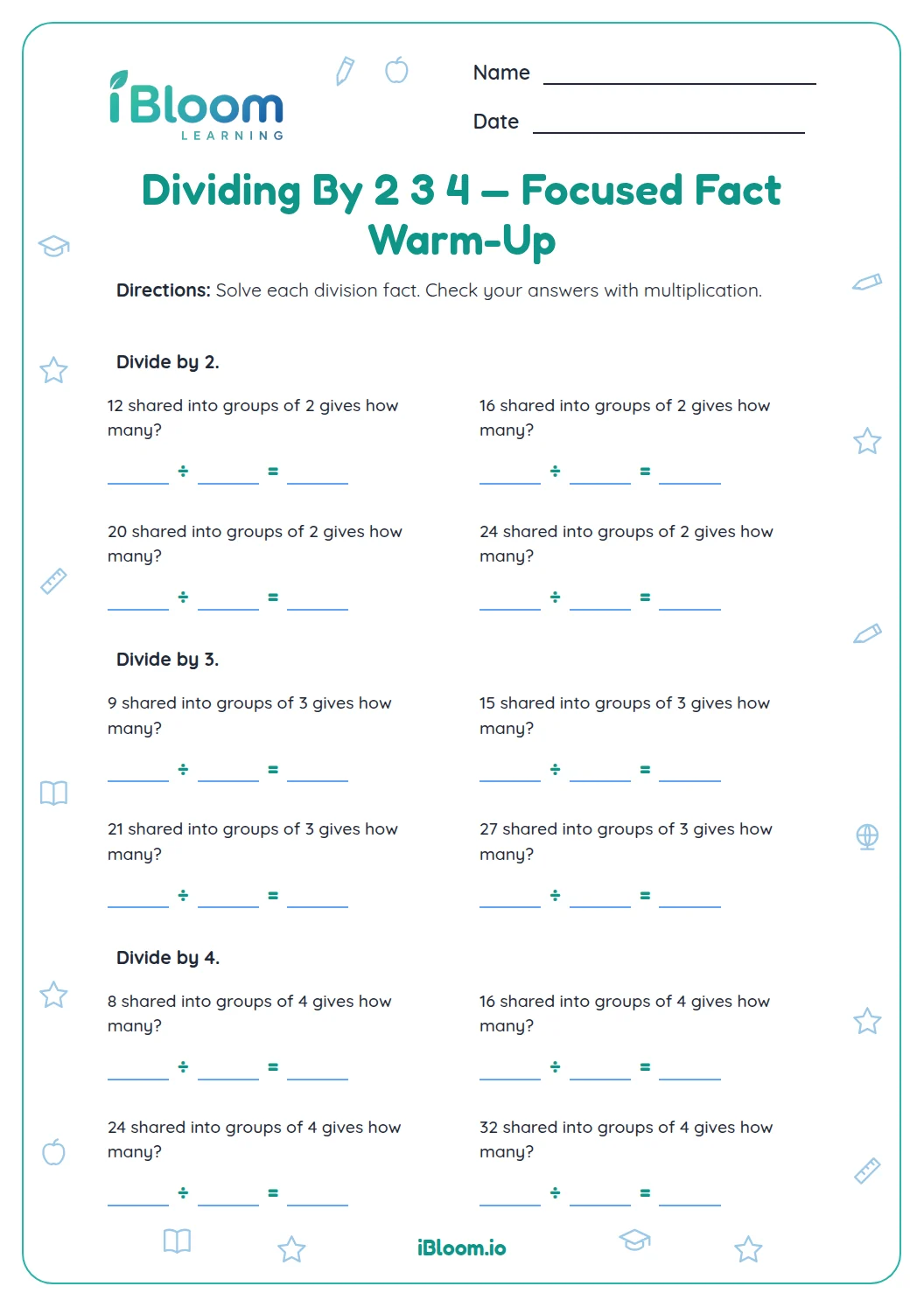
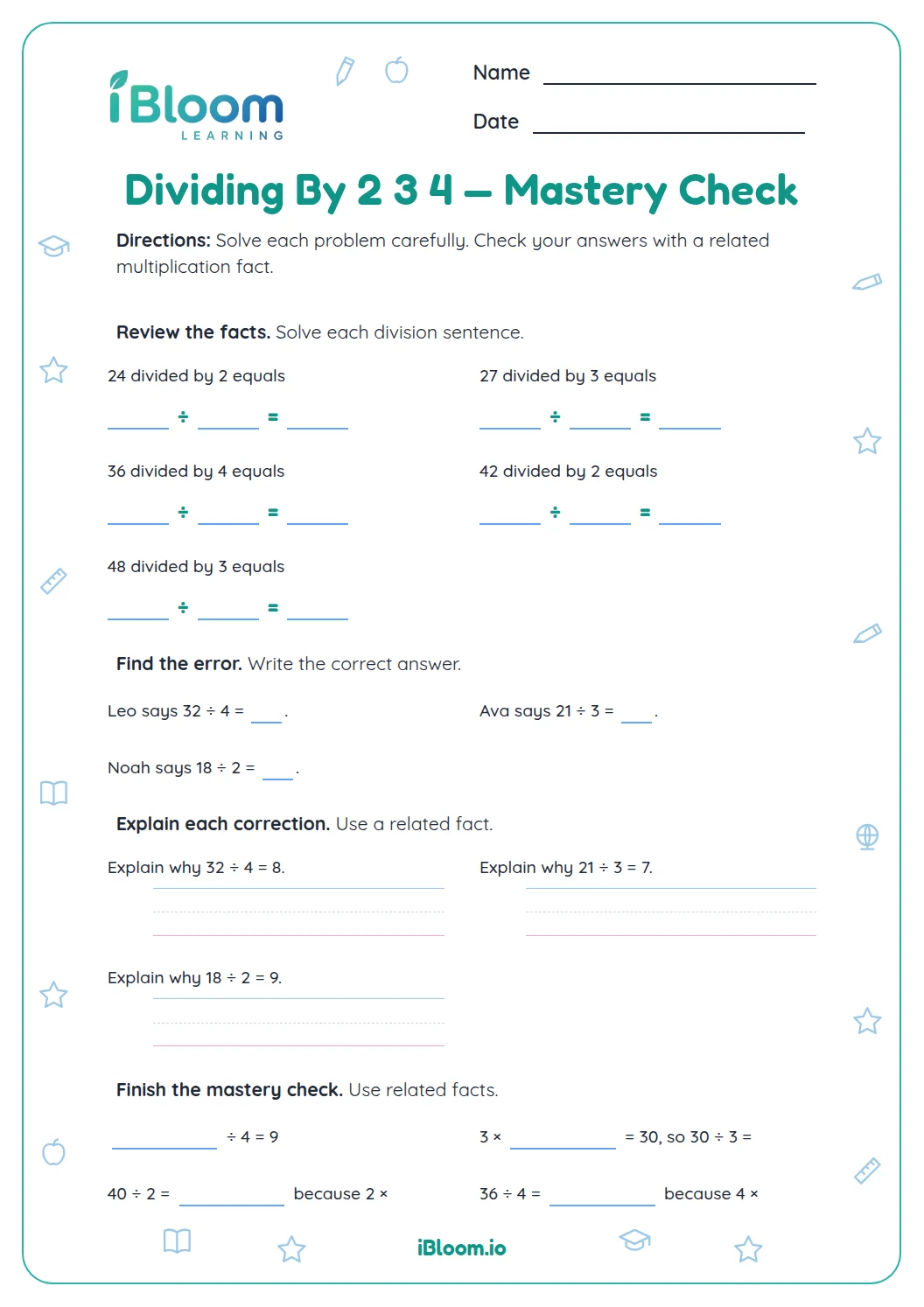
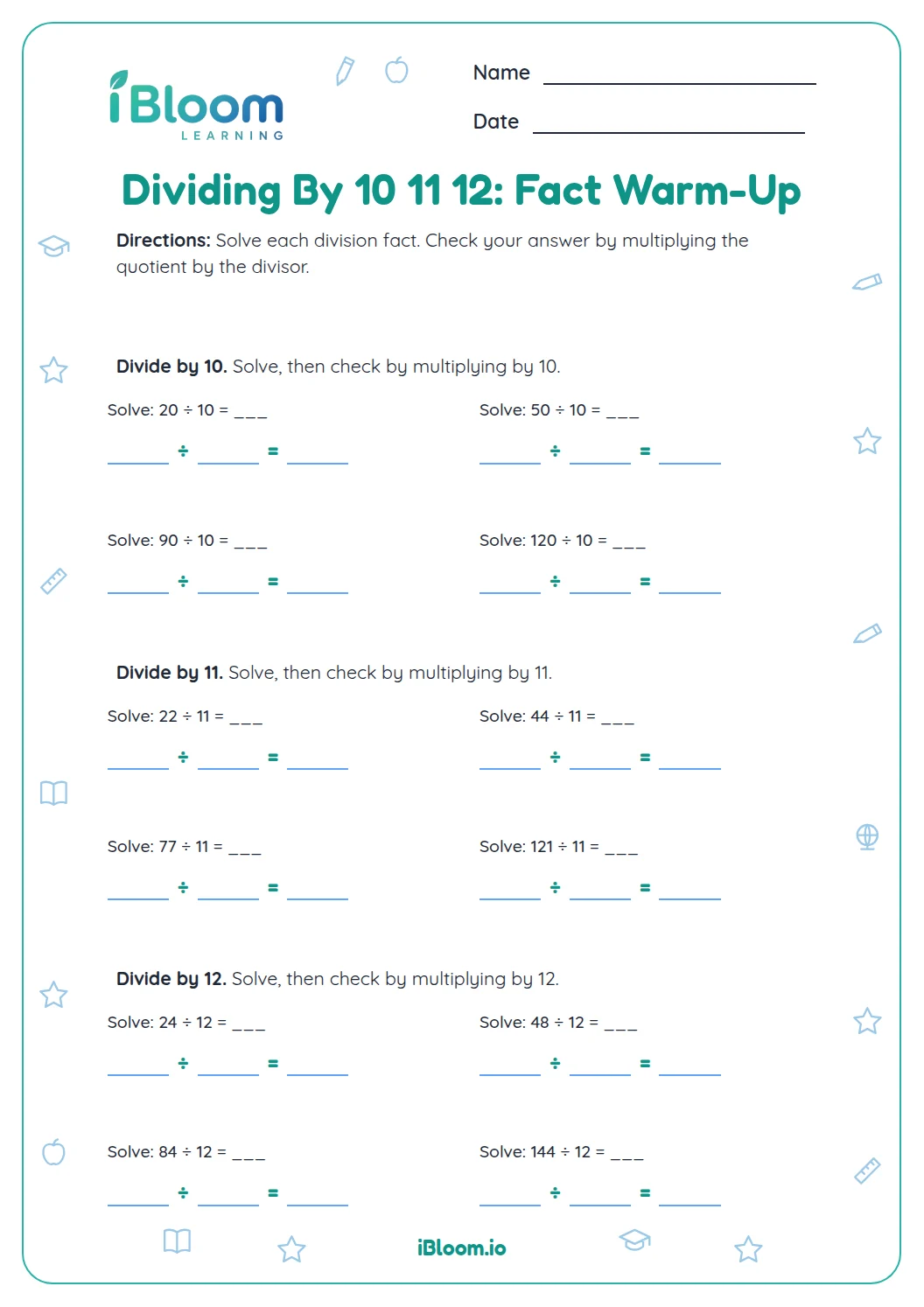
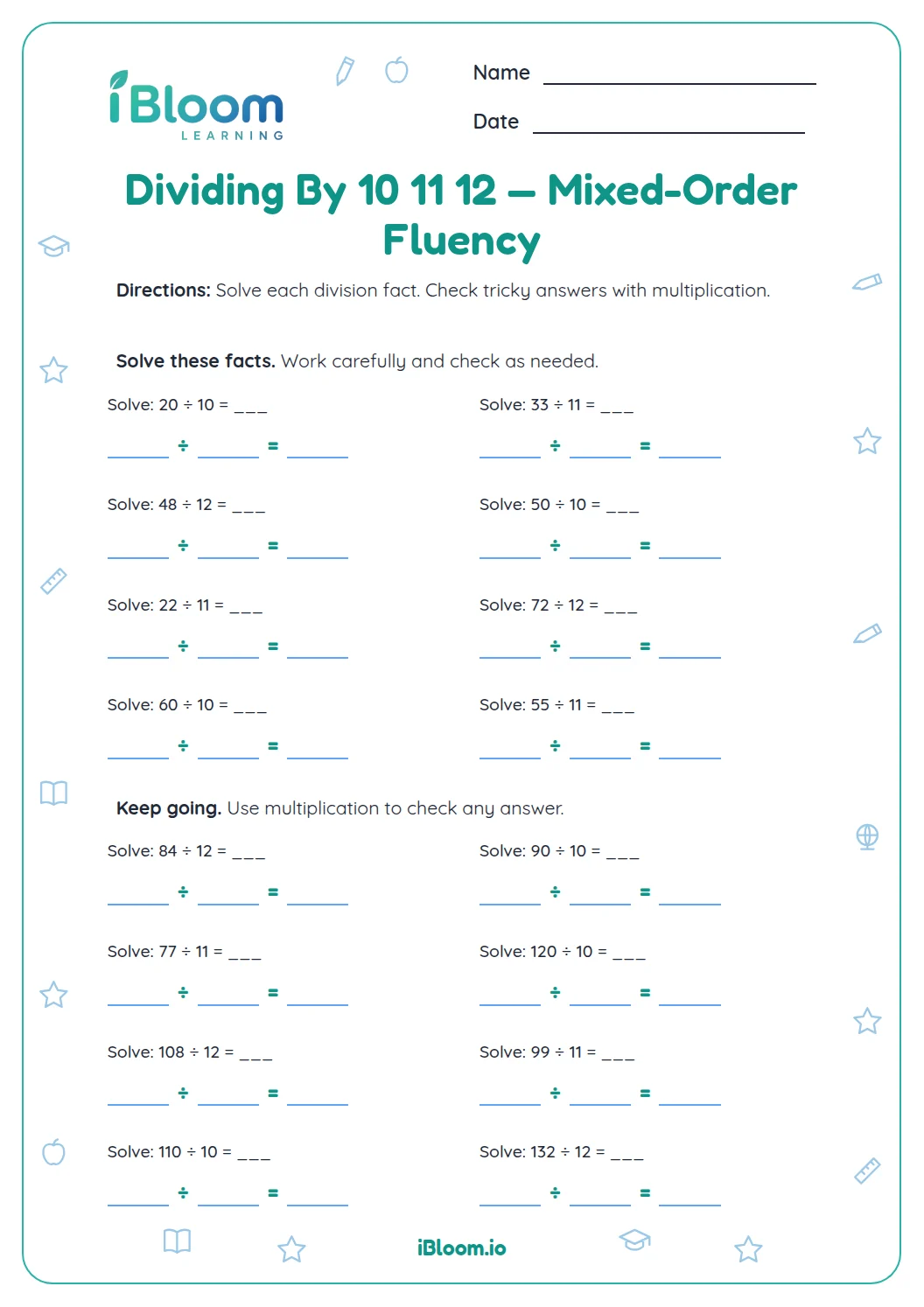
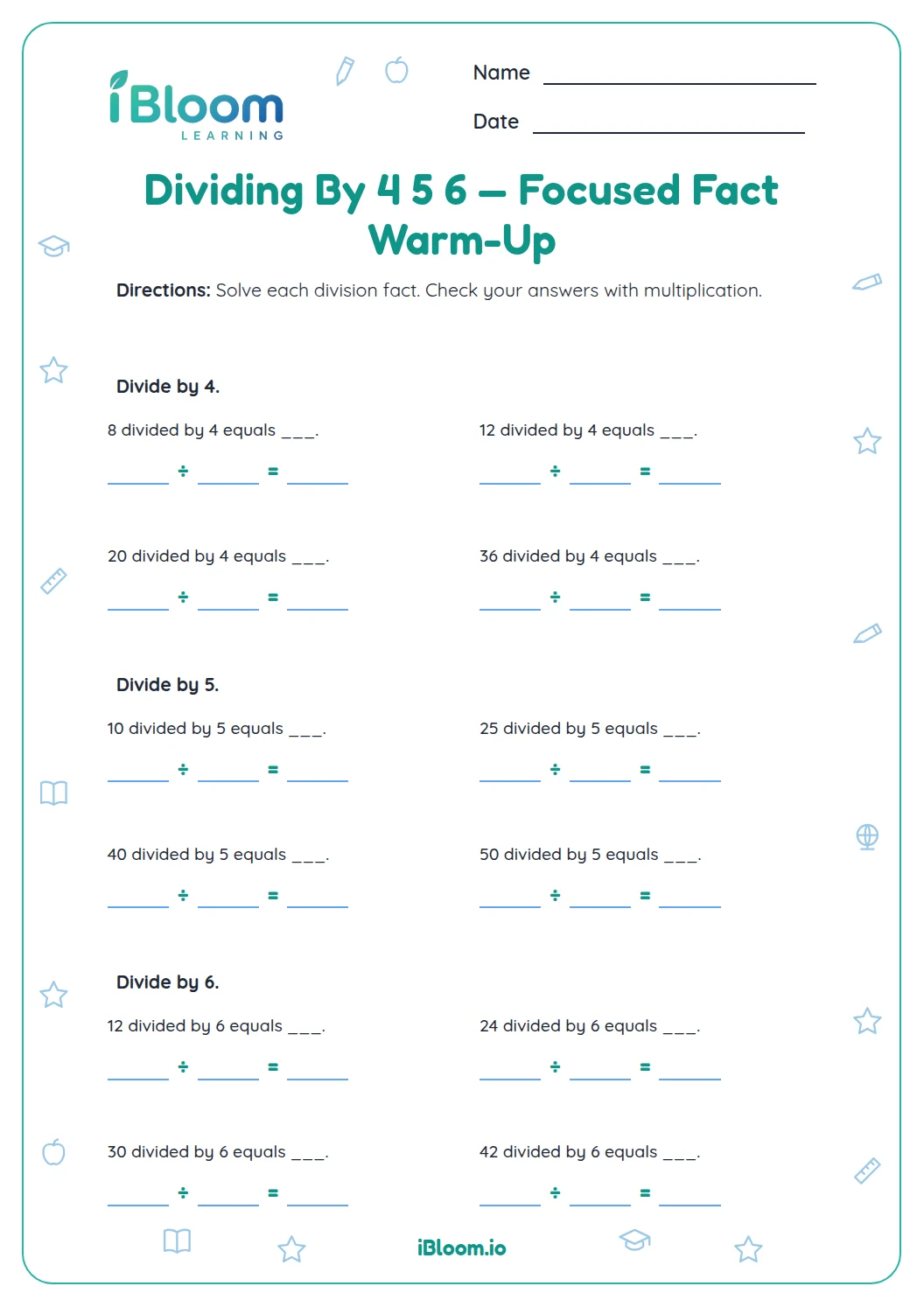
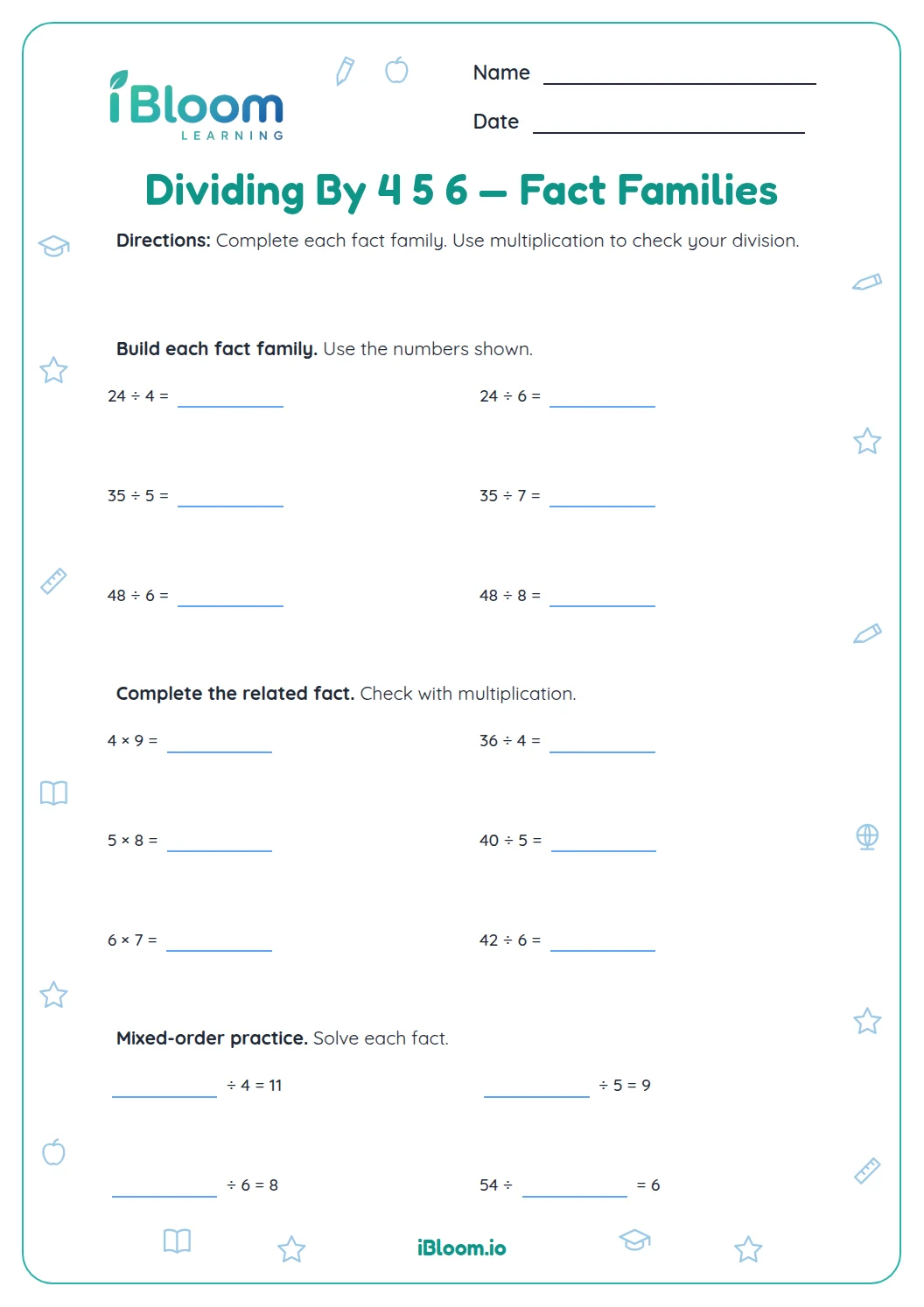
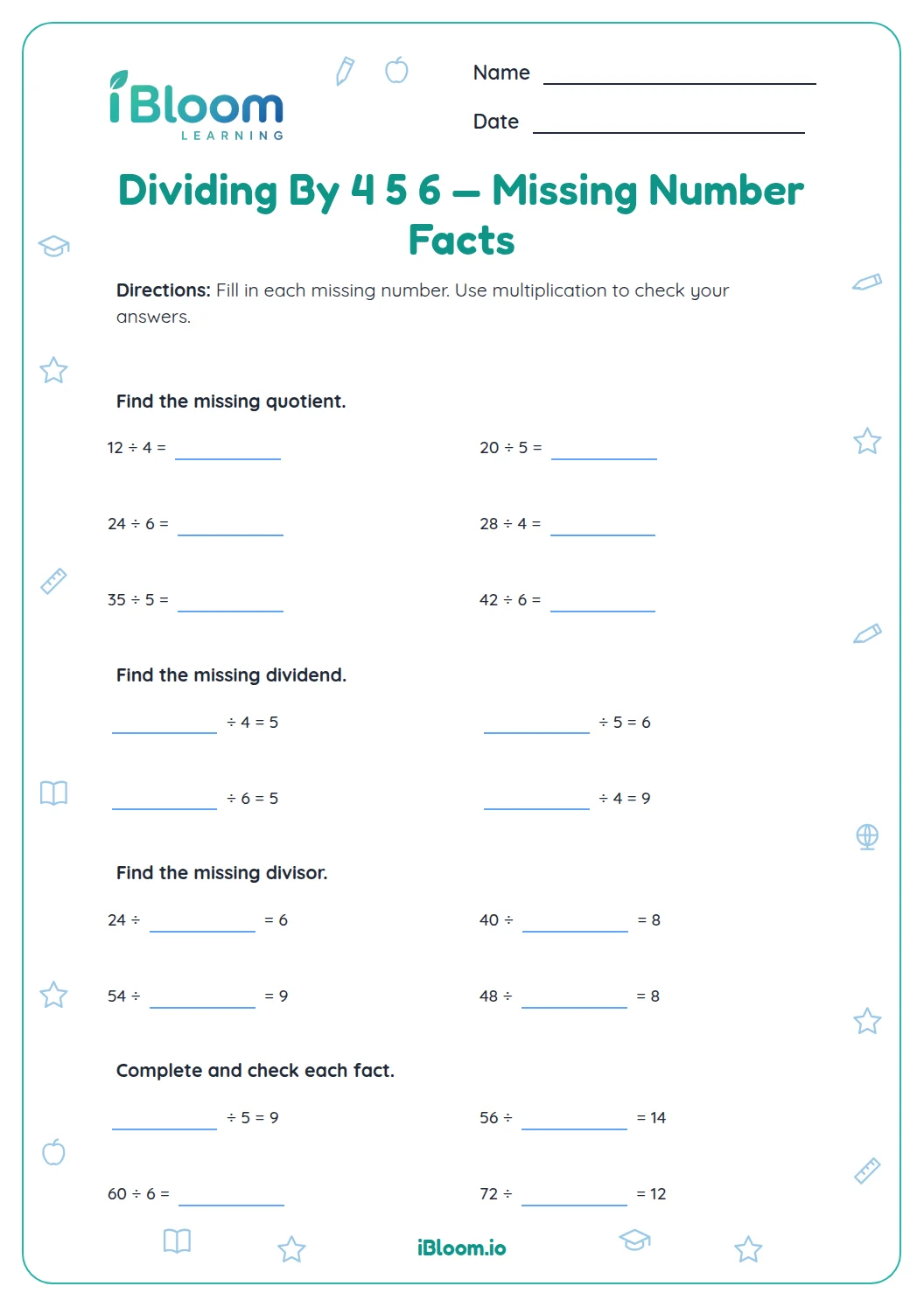
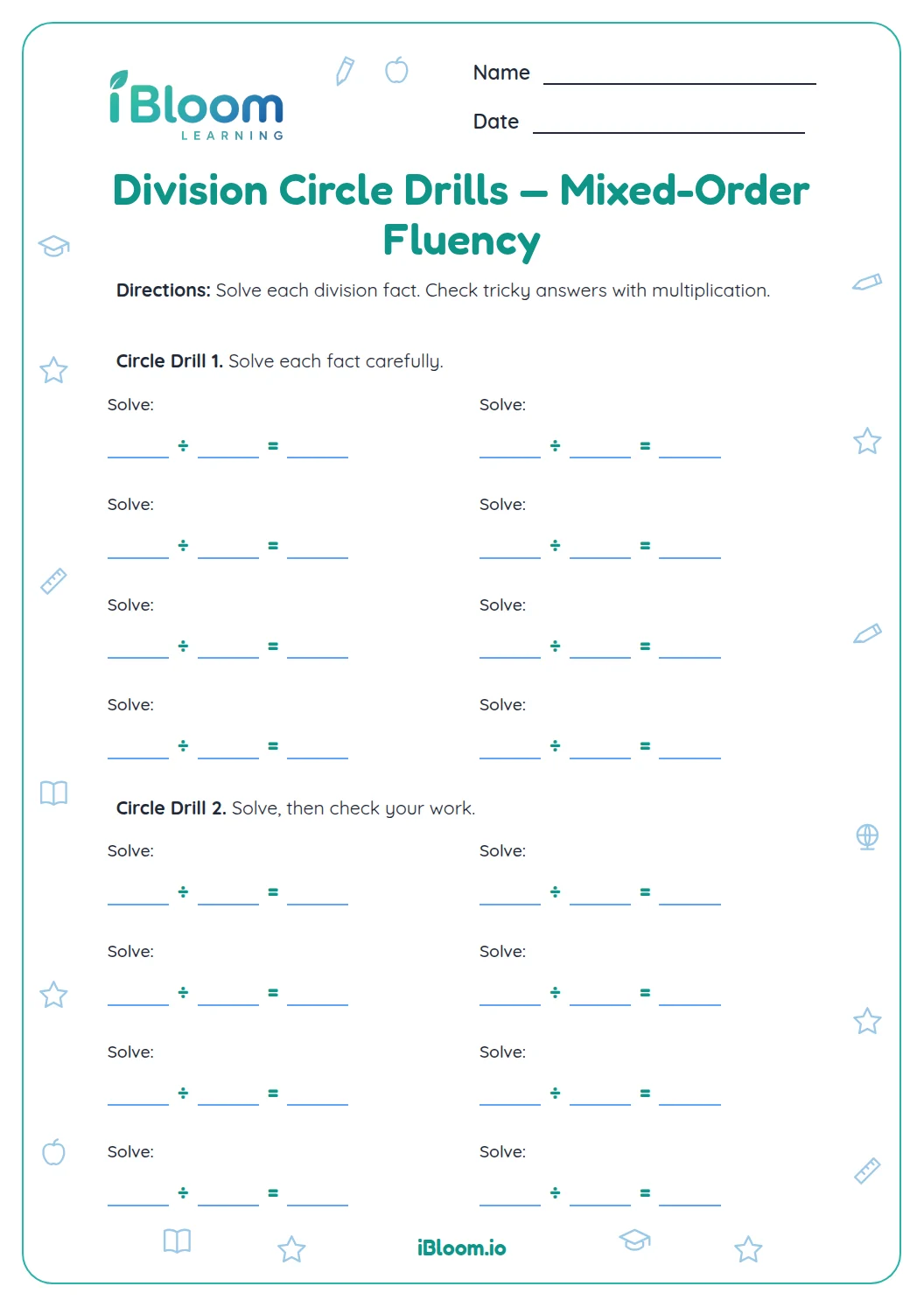
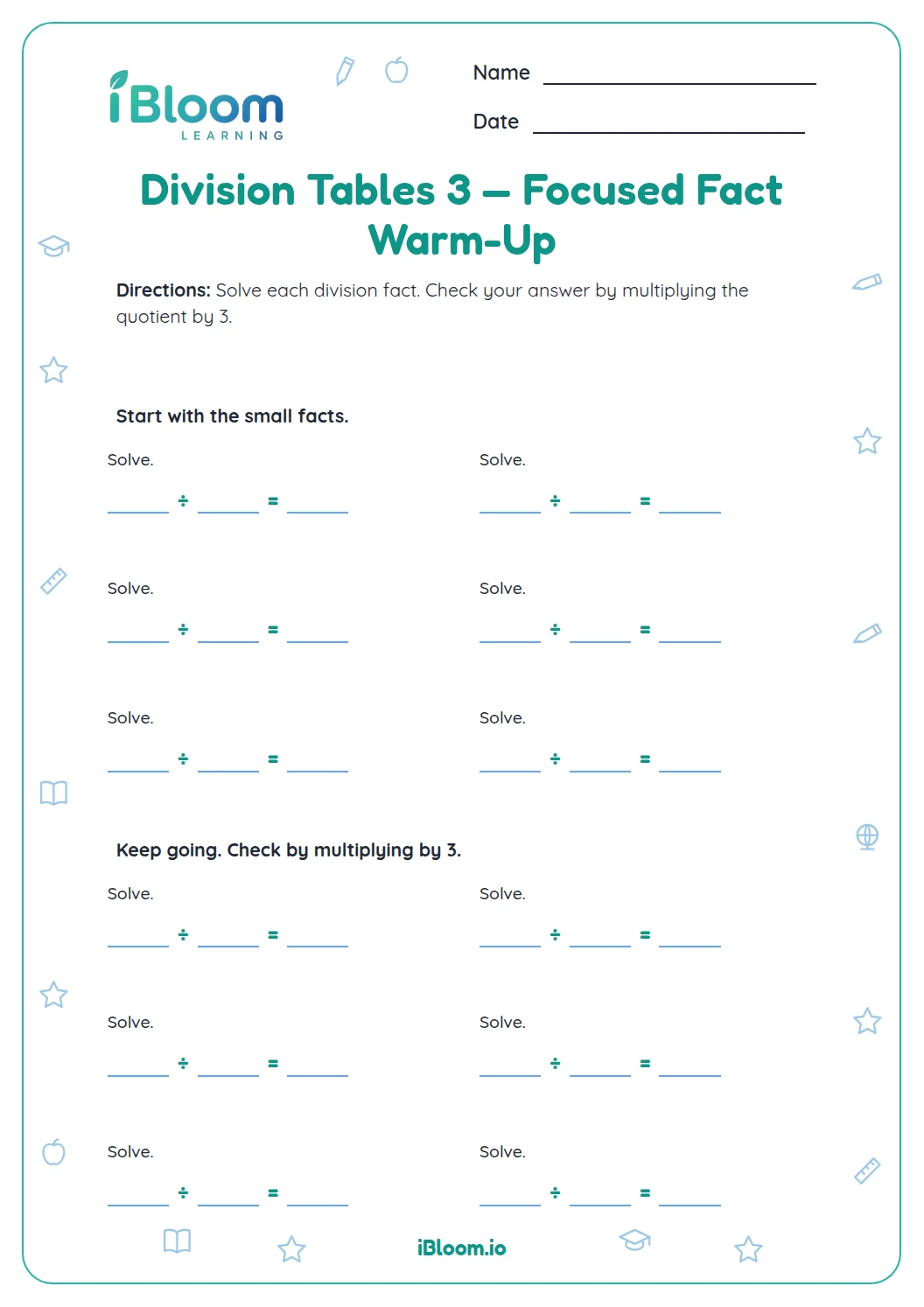
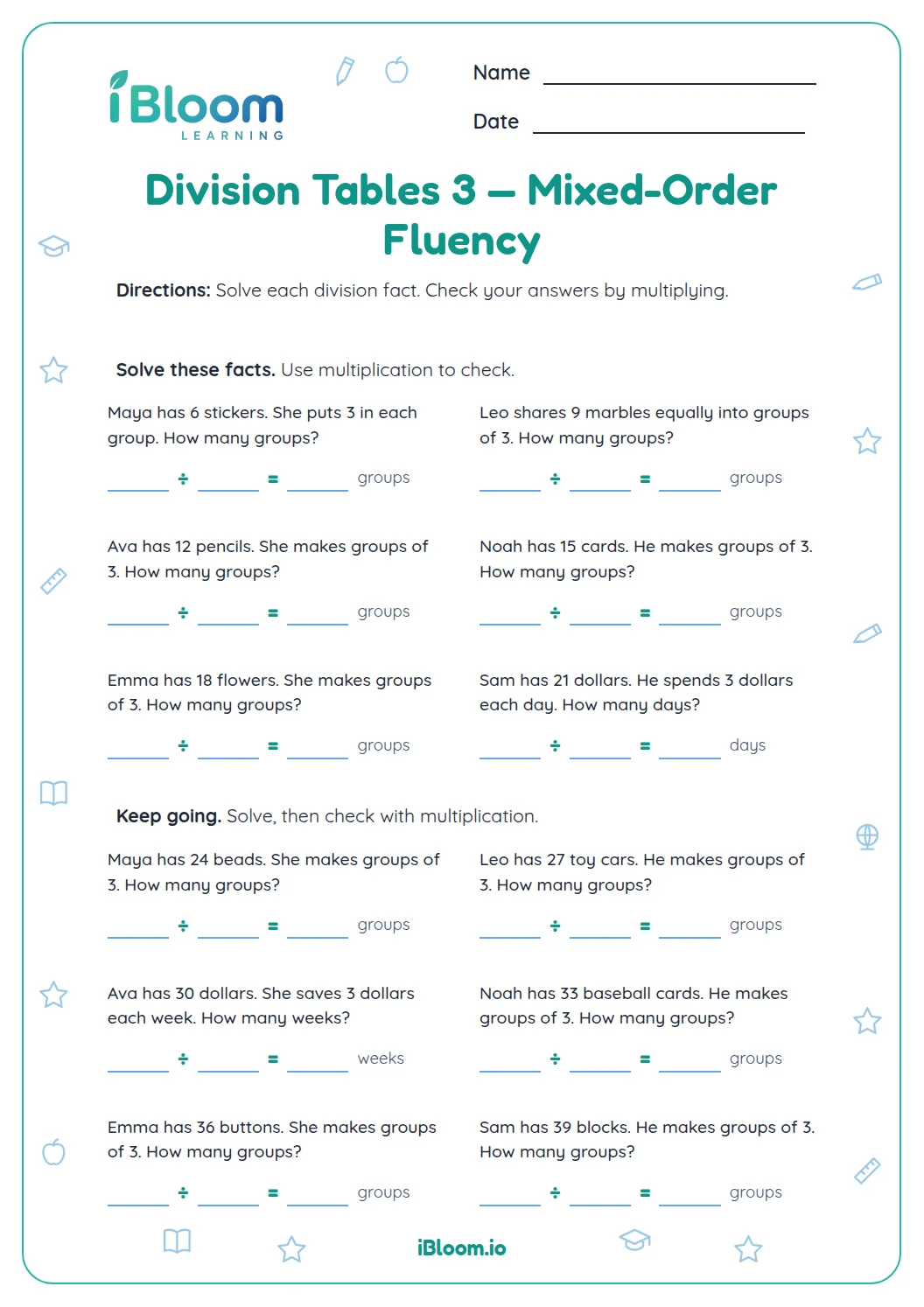
This free printable math worksheet helps Grades 3–4 students connect division facts with multiplication. Part A practices quotients when dividing by 2, 3, or 4. Part B gives eight new division facts and a multiplication check for each quotient. There are 16 questions across two worksheet pages, with a separate answer key. The practice aligns with Common Core 3.OA.6: understand division as an unknown-factor problem.
Aligned to 3.OA.6
How are division and multiplication related?
Division can be solved by asking a multiplication question. For 12 ÷ 2, think “2 times what equals 12?” The missing factor is 6, so 12 ÷ 2 = 6.
How do multiplication checks confirm division?
Multiply the quotient by the divisor to check the division fact.
- 112 ÷ 2 = 6
- 2Check: 6 × 2 = 12
- 3The quotient is the missing factor.
- 4Answer: 6
What does each part practice?
Part A asks for quotients in facts with divisors 2, 3, and 4. Part B gives eight different division facts and a multiplication equation that checks each quotient.
How can students check their answers?
Multiply the quotient by the divisor. If the product equals the dividend, the division fact is correct. Part B prints a multiplication check beside each new quotient.
How to use this division worksheet
- 1Read the dividend and divisor carefully.
- 2Ask what number times the divisor gives the dividend.
- 3Write that number as the quotient.
- 4In Part B, find each quotient and compare it with the printed multiplication check.
- 5Multiply the quotient by the divisor; the product should equal the dividend.
- 6Use the separate key to review and correct any facts.
Common division fact mistakes
The mistake
Reversing the dividend and divisor.
The fix
Read the division sentence in order: the dividend is divided by the divisor.
The mistake
Using the divisor as the quotient without checking.
The fix
Multiply the proposed quotient by the divisor and see whether the product is the dividend.
The mistake
Mixing up the quotient and divisor.
The fix
Multiply your quotient by the divisor; the product should equal the dividend.
Common Core alignment
The questions practice division facts by connecting each quotient to a missing multiplication factor.
Find quotients by identifying the missing factor in multiplication.
On this sheet: Students use multiplication facts to find quotients and complete related equations.
Show the official wordingHide the official wording
Understand division as an unknown-factor problem.
What to practice next
Make more practice
Further reading
Questions parents and teachers ask
What is a division fact family?
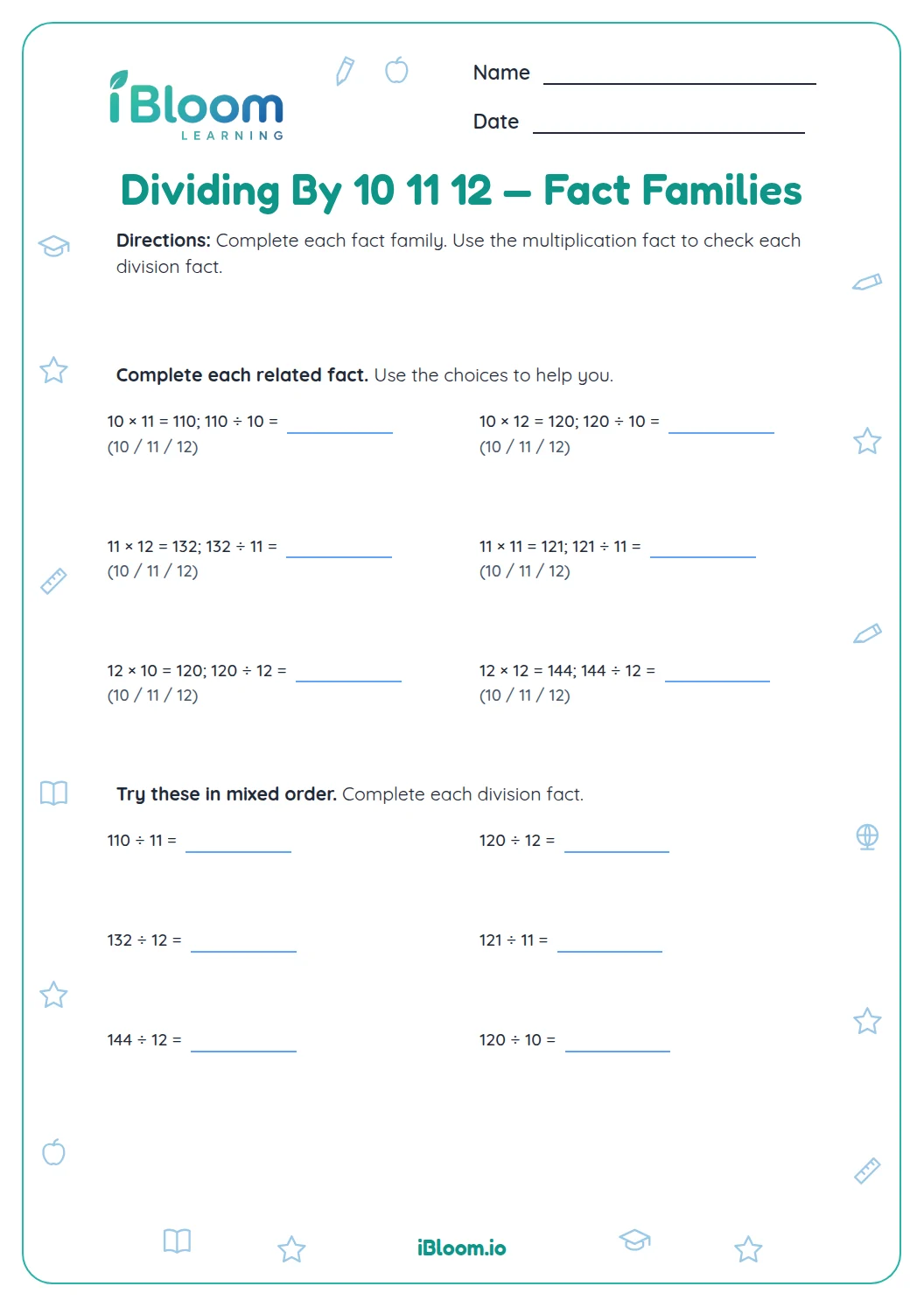
A fact family uses the same numbers in related multiplication and division equations. For example, 6 × 2 = 12 and 12 ÷ 2 = 6 use the same three numbers. Part B gives each quotient question a multiplication check, so students can connect the operations while solving.
Which divisors are practiced?
The eight Part A questions use divisors 2, 3, and 4. Part B uses eight different facts with the same divisors and prints a multiplication check beside each one. The mix gives students practice finding quotients and verifying them with multiplication.
How can a child check a quotient?
Multiply the quotient by the divisor. For example, if 20 ÷ 4 = 5, check that 5 × 4 = 20. When the product matches the dividend, the quotient is correct. The separate answer key helps the student check the related equations.
How many questions and pages are included?
There are 16 questions across two worksheet pages, with a separate two-page answer key. Eight questions ask for quotients, and eight different division facts include multiplication checks. Students can use the check to confirm each quotient before reviewing the key.
Is this worksheet for Grade 3 or Grade 4?
Part A contains eight division facts using divisors 2, 3, and 4. Part B adds eight different facts with multiplication checks. Students can solve the quotient first, then confirm that multiplying it by the divisor returns the dividend.