





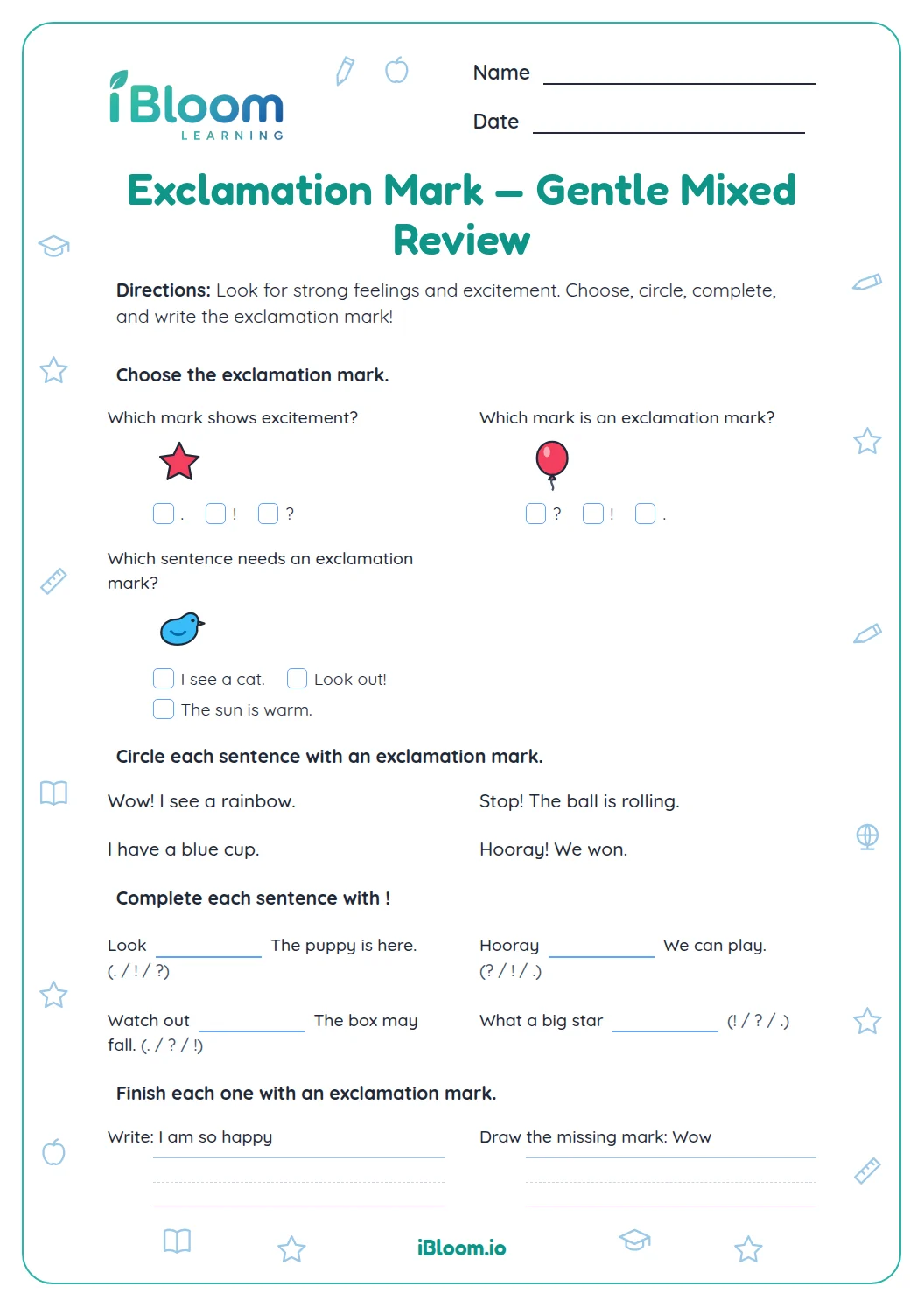


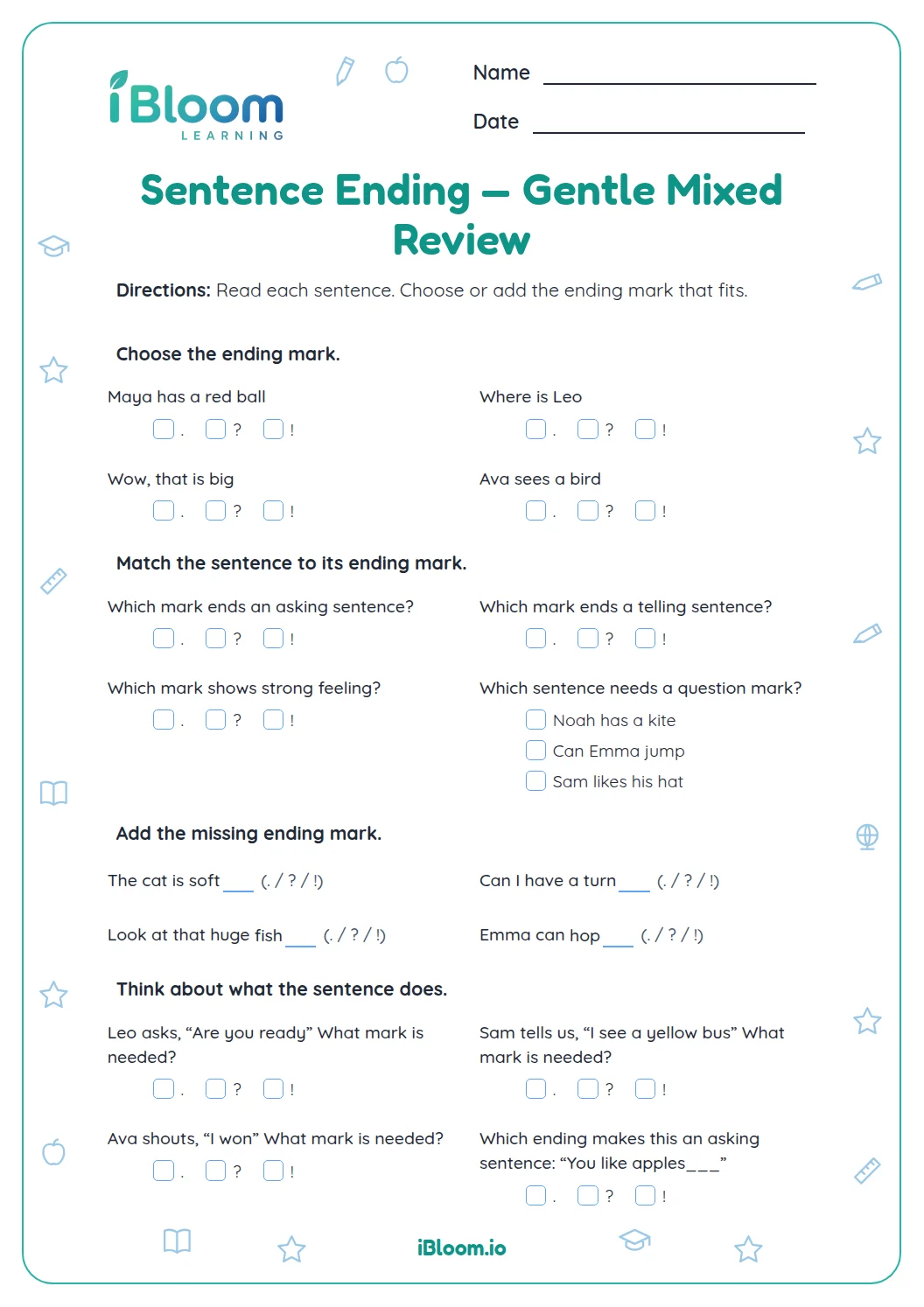
About this worksheet
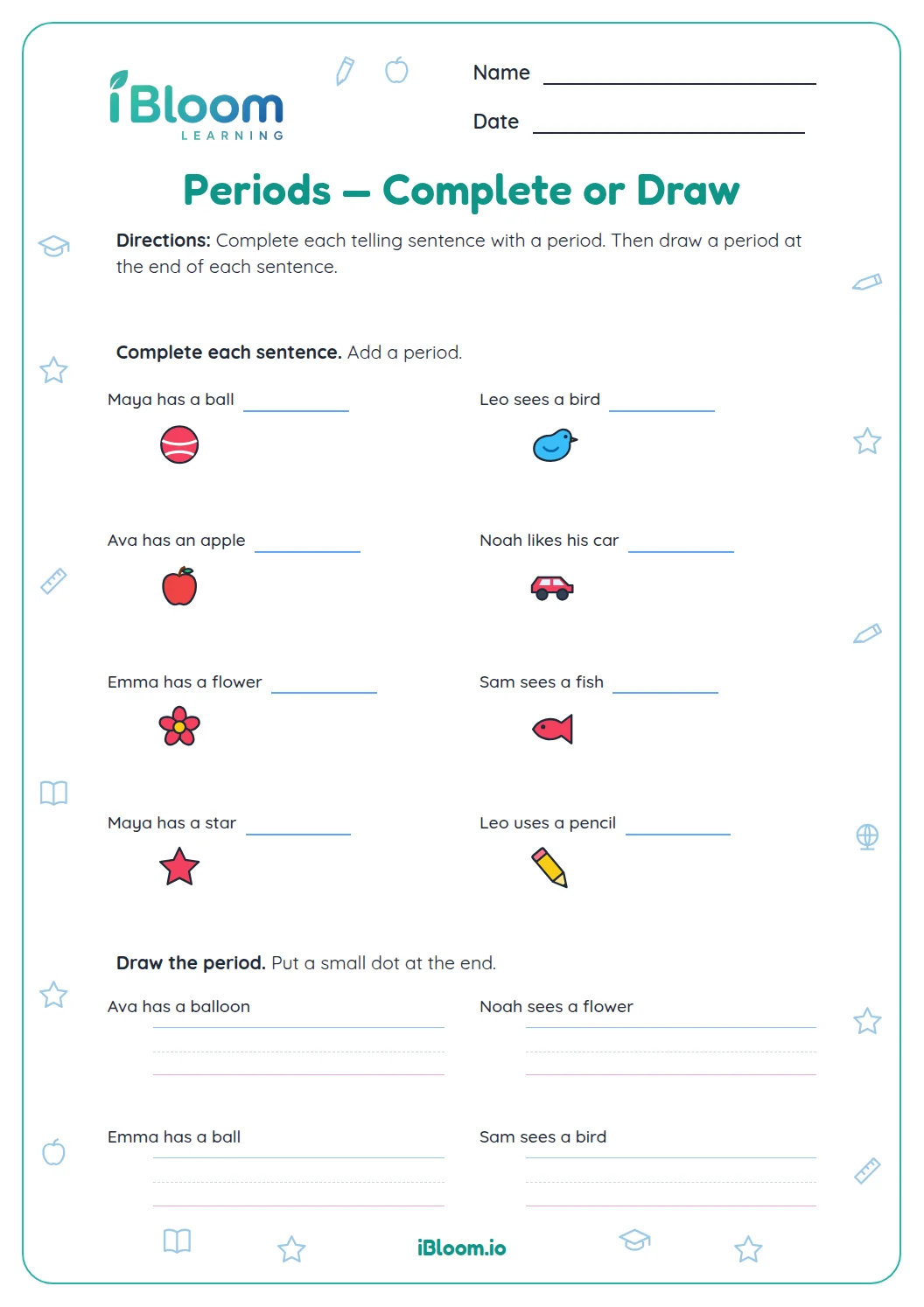
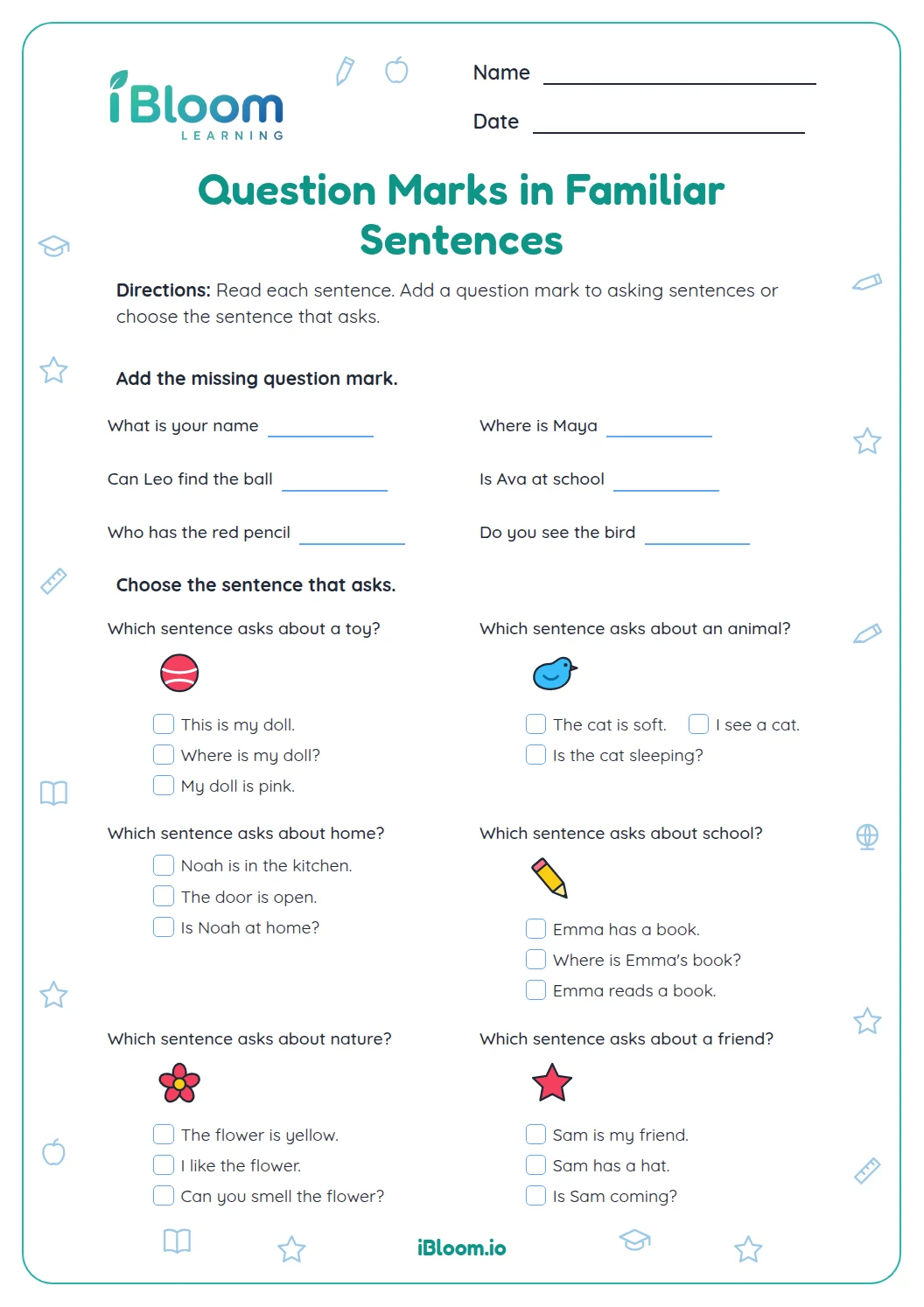
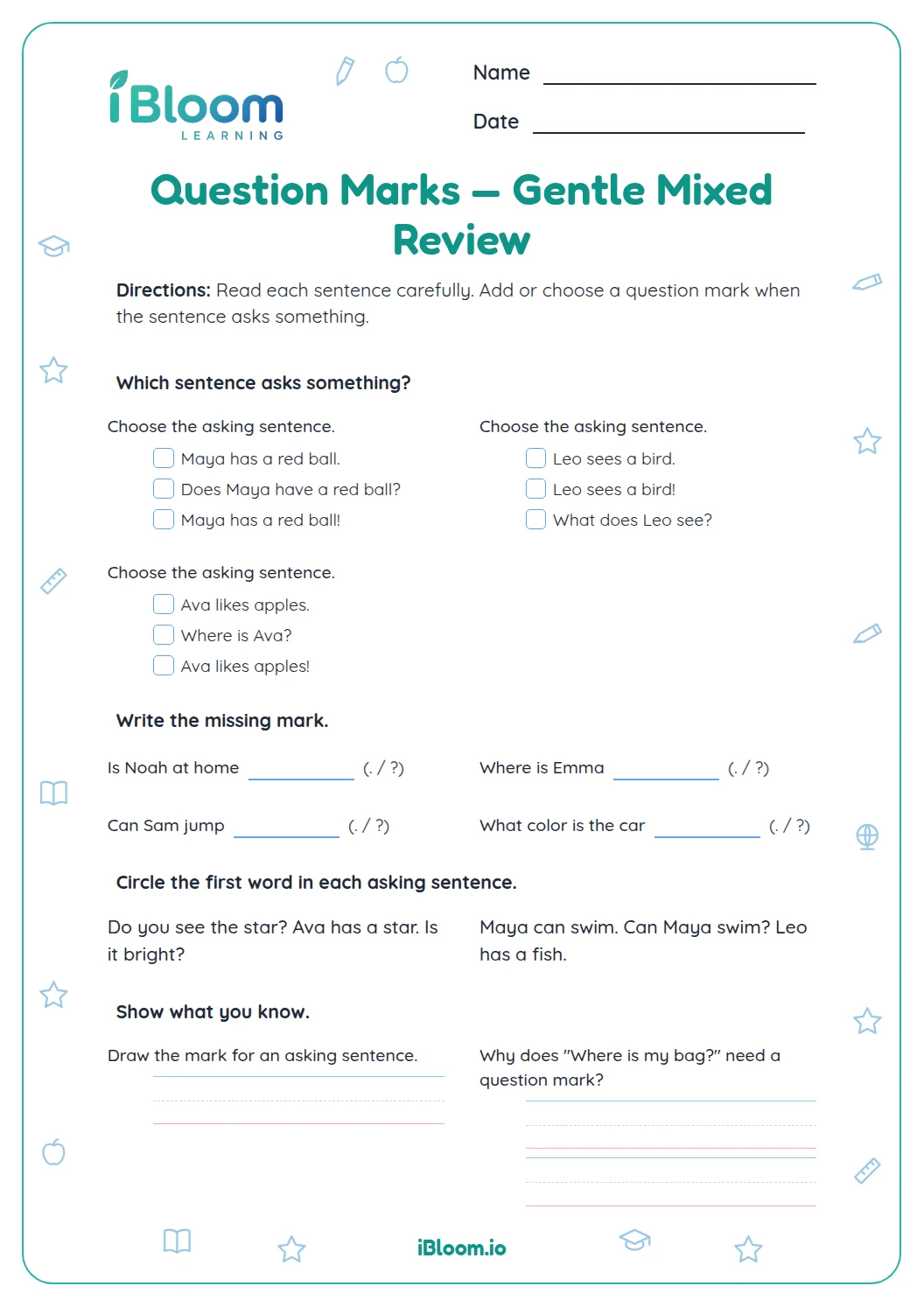
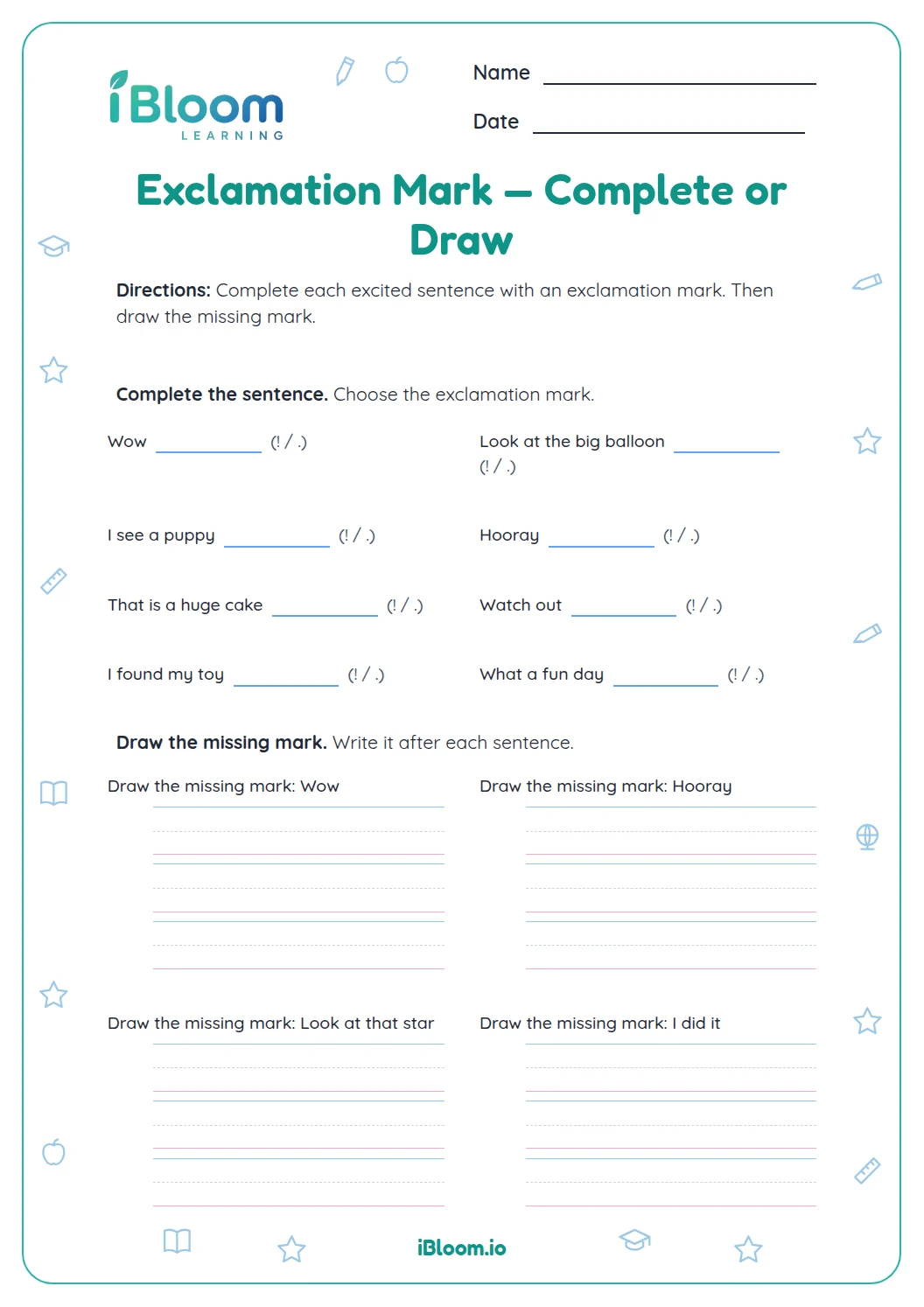
This printable helps preschool and kindergarten learners connect a sentence’s meaning to its ending mark. In Part A, children read short sentences and write a period, question mark, or exclamation mark. Part B gives another set of familiar statements, questions, and excited exclamations. The worksheet practices Common Core L.K.2.b by recognizing and naming end punctuation.
Aligned to L.K.2.b
What does each ending mark tell a reader?
A period closes a telling sentence. A question mark shows that the speaker asks something. An exclamation mark can show strong feeling or excitement.
- 1“Mia has a red ball.” tells something.
- 2“Is Leo at school?” asks something.
- 3“Look at that bright bird!” shows excitement.
How does reading aloud help?
Read the words with a natural voice. A question rises as the speaker asks; an exclamation sounds excited. The sentence meaning, not just one word, guides the choice.
What changes in Part B?
Part B adds more familiar sentences, including statements about everyday things and questions about play. Read the whole sentence, then write its ending mark.
How to use this worksheet
- 1Read all the words in the sentence.
- 2Ask whether it tells, asks, or shows strong feeling.
- 3Write the matching punctuation mark in the blank.
- 4Read the sentence again with the mark in place.
Common mistakes and quick fixes
The mistake
Using a question mark whenever a sentence begins with “what.”
The fix
Check whether the sentence asks something; “What a big flower!” expresses excitement.
The mistake
Using an exclamation mark for every sentence about something fun.
The fix
Use it when the speaker shows strong feeling, not just because the topic is enjoyable.
The mistake
Choosing a mark before reading the whole sentence.
The fix
Read every word first so the sentence meaning is clear.
Common Core alignment
This printable practices the listed Common Core skills through short, grade-level tasks.
Use end punctuation for statements, questions, and exclamations.
On this sheet: Children write a period, question mark, or exclamation mark to match sentence meaning.
Show the official wordingHide the official wording
Recognize and name end punctuation.
What to practice next
Make more practice
Further reading
Questions parents and teachers ask
Which mark ends a telling sentence?
A period usually ends a telling sentence. For example, “Mia has a red ball” gives information, so children write a period. Reading the sentence aloud can help distinguish a statement from a question. Ask the learner to explain whether the sentence tells something, asks something, or expresses a strong feeling.
When should a sentence end with a question mark?
Use a question mark when the speaker asks something, such as “Is Leo at school?” or “Are you ready to play?” The sentence meaning guides the choice, even if it does not begin with a question word. Ask the learner to explain whether the sentence tells something, asks something, or expresses a strong feeling.
What does an exclamation mark show?
An exclamation mark can show strong feeling or excitement. “Look at that bright bird!” and “Hooray, we are going home!” have an excited voice. Children should write it when the sentence conveys that feeling. Ask the learner to explain whether the sentence tells something, asks something, or expresses a strong feeling.
How many sentences are included?
There are 16 sentences in two parts. Each sentence has one writing space for the final punctuation mark, and the answer key supplies the correct mark. Ask the learner to explain whether the sentence tells something, asks something, or expresses a strong feeling.
How can I help a child who is unsure?
Read the sentence naturally and ask whether it tells something, asks something, or expresses strong feeling. Then read it again with the written mark to hear whether the ending fits. Ask the learner to explain whether the sentence tells something, asks something, or expresses a strong feeling.