


About this worksheet
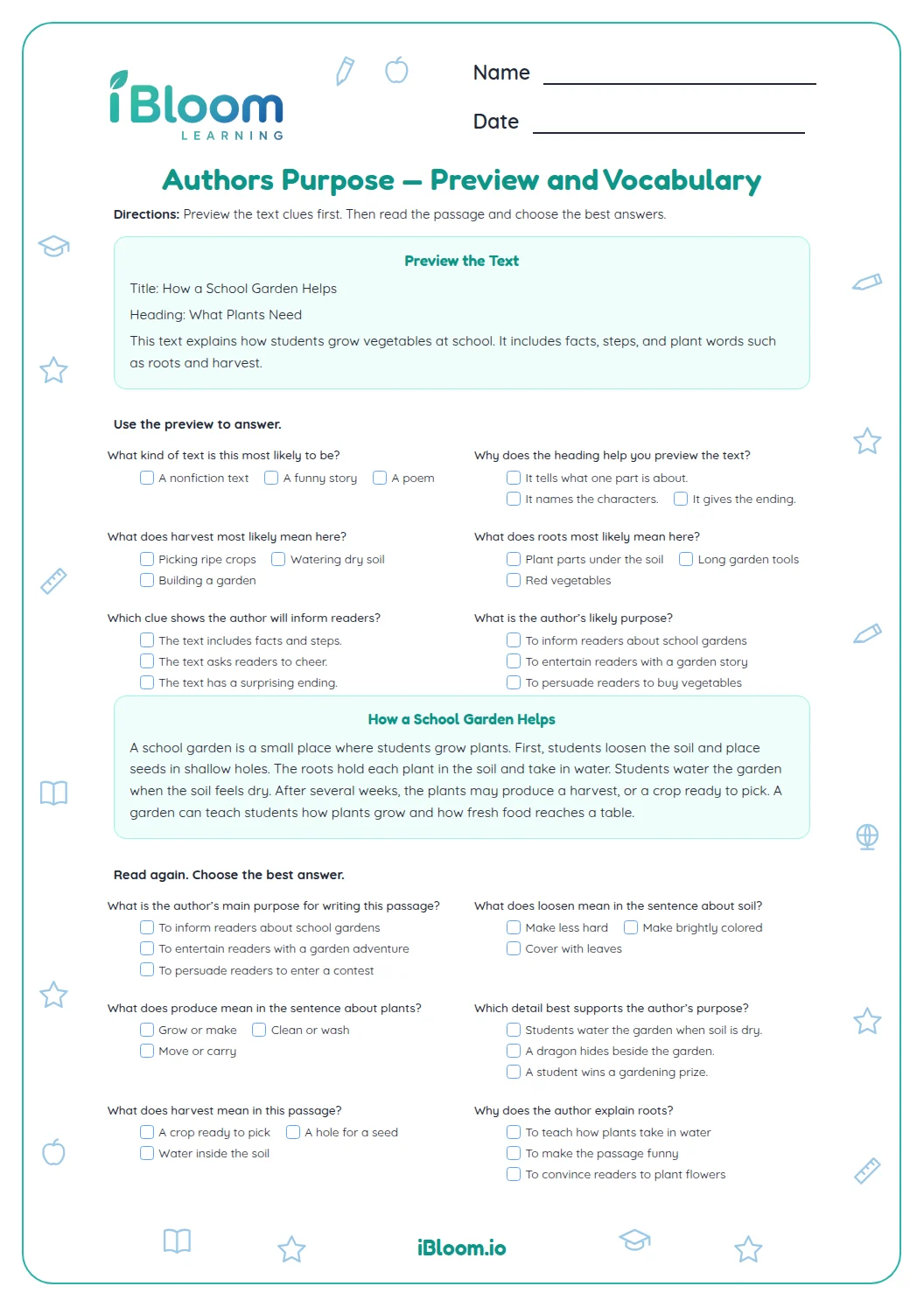
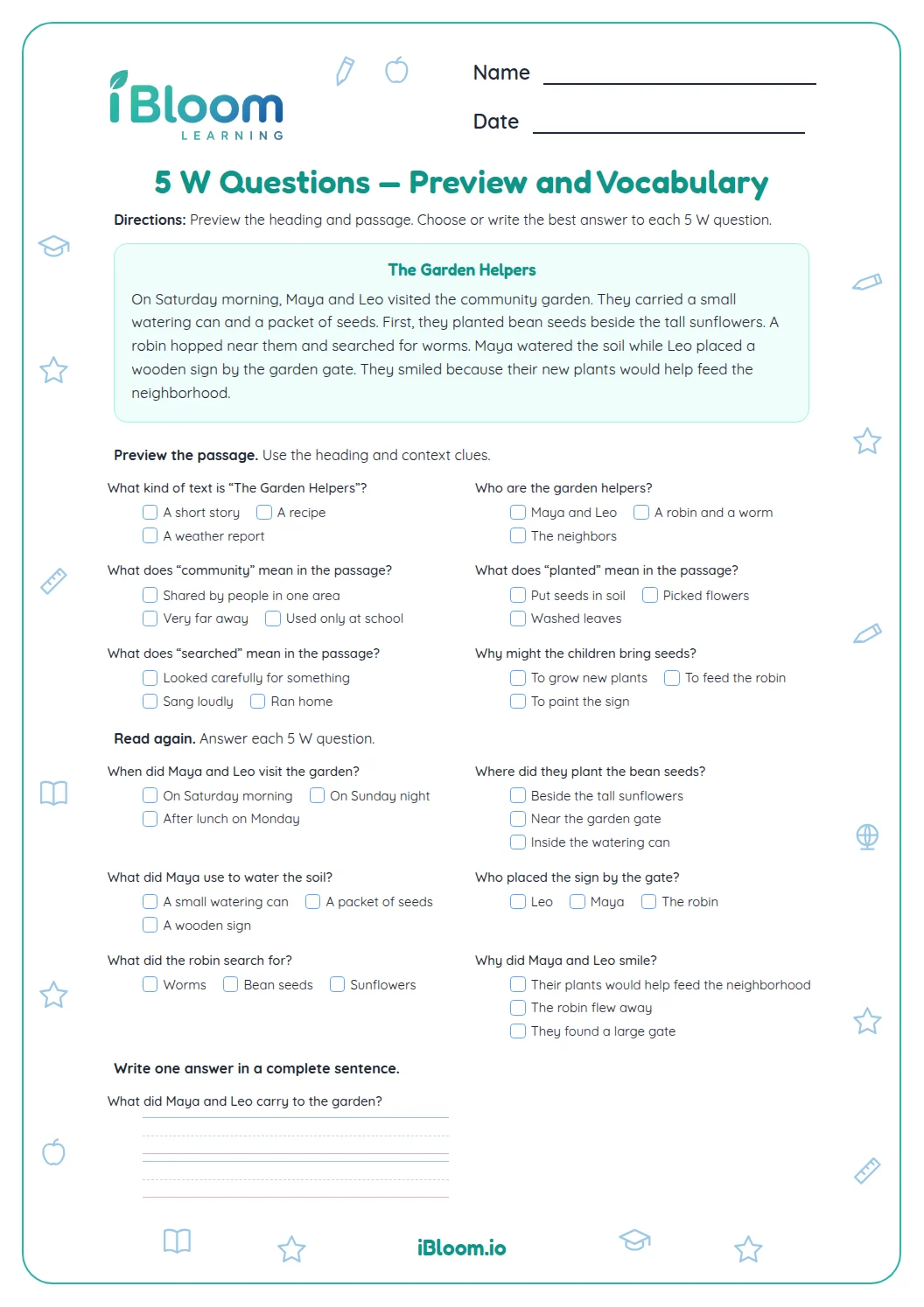
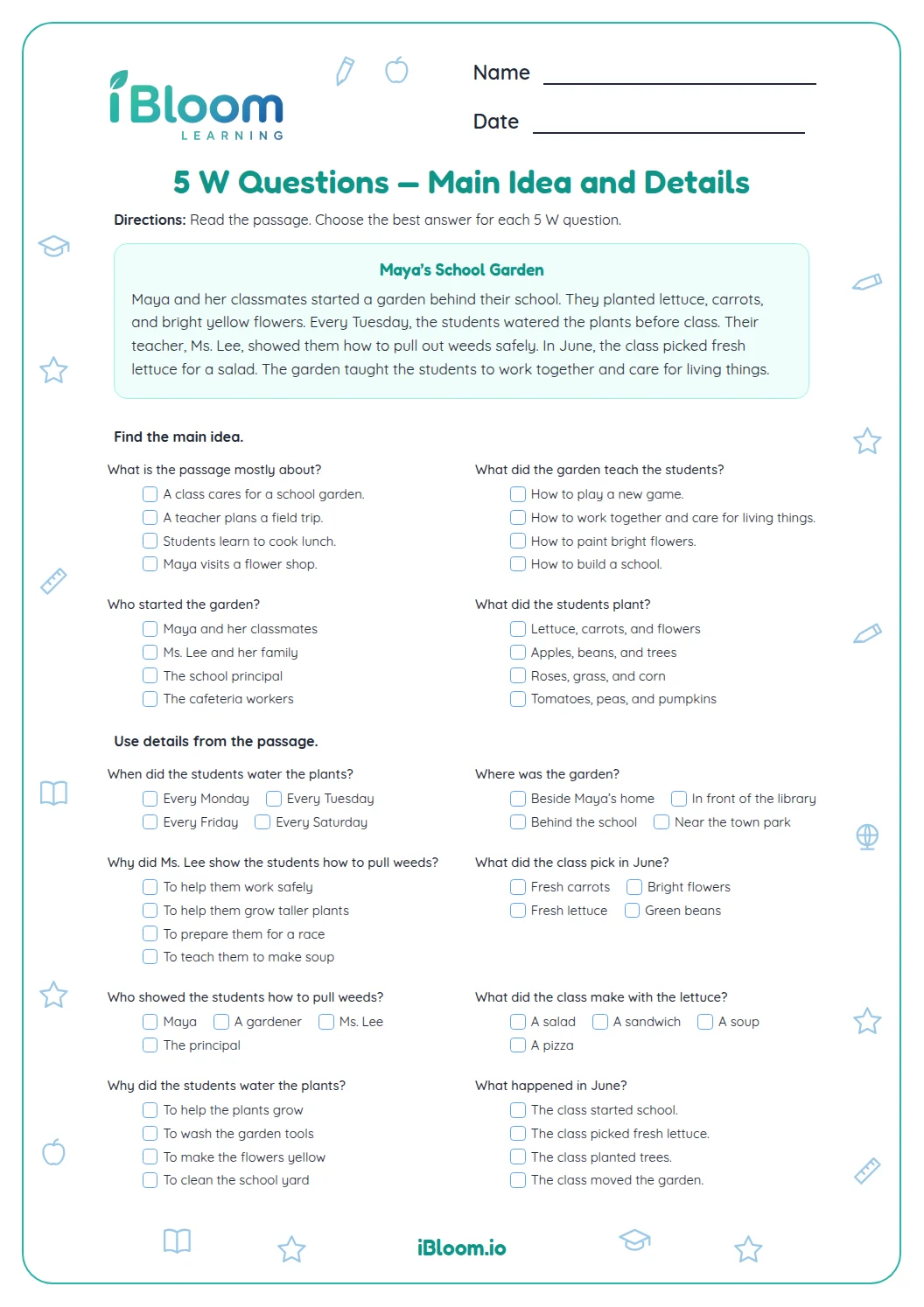
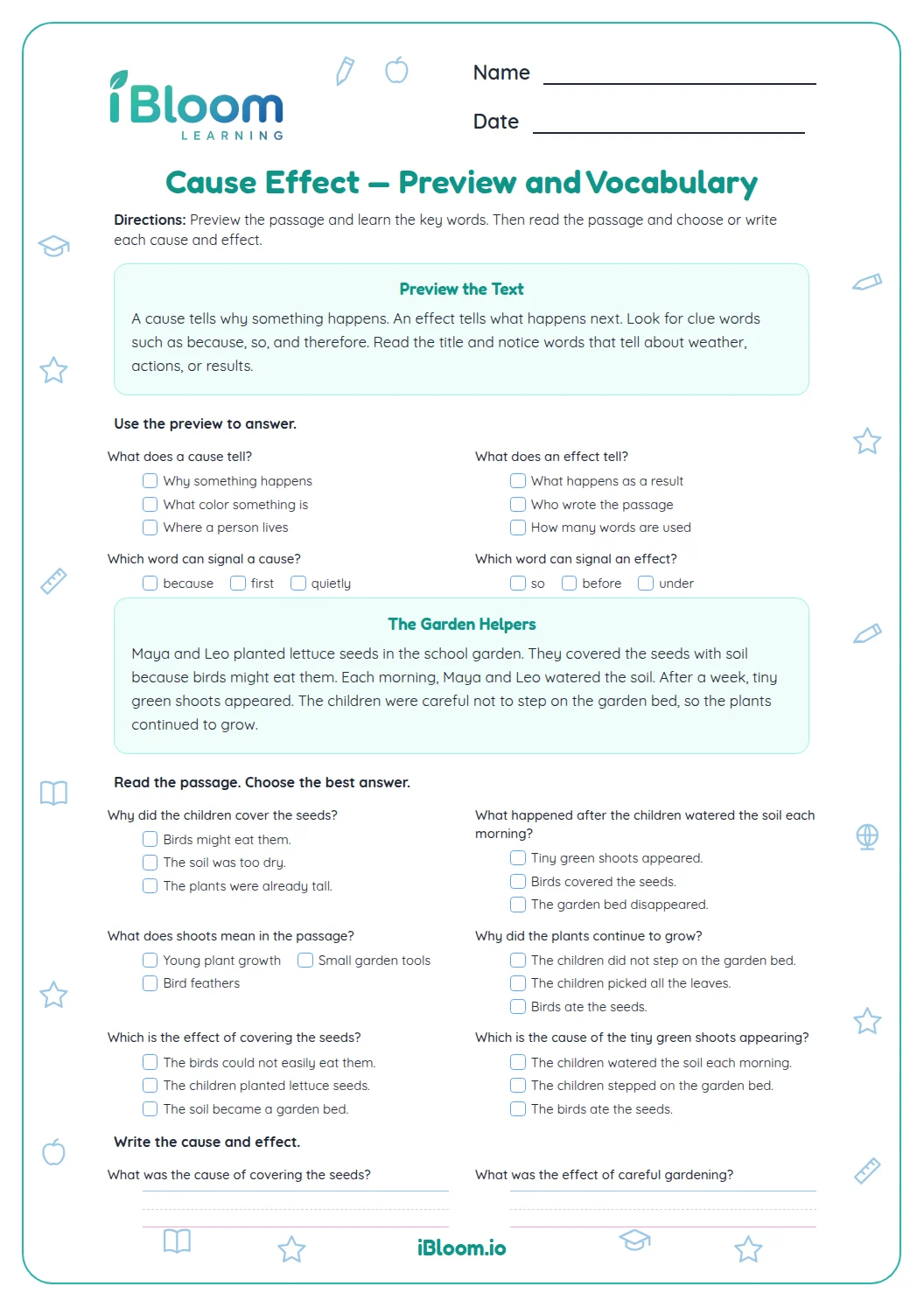
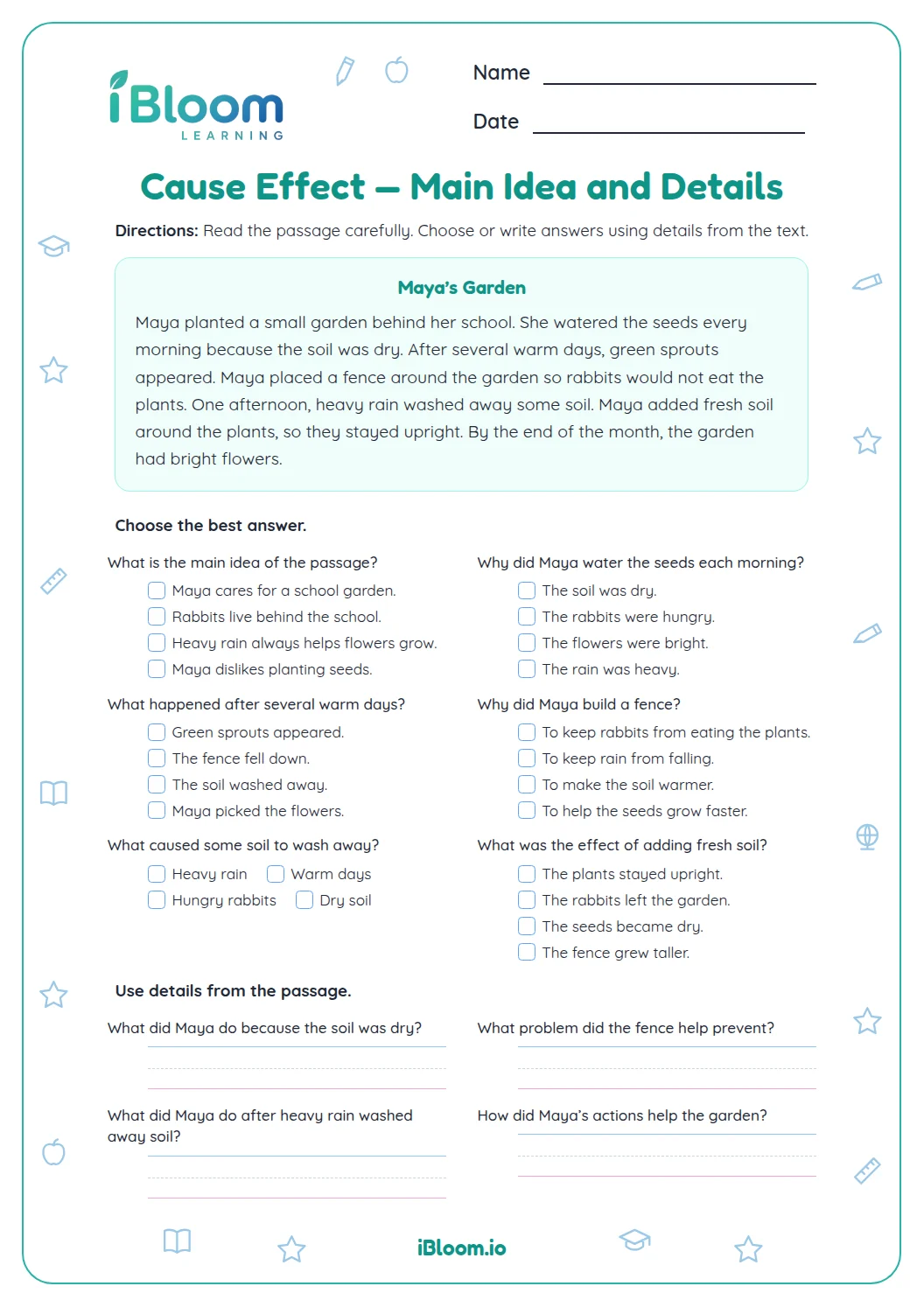
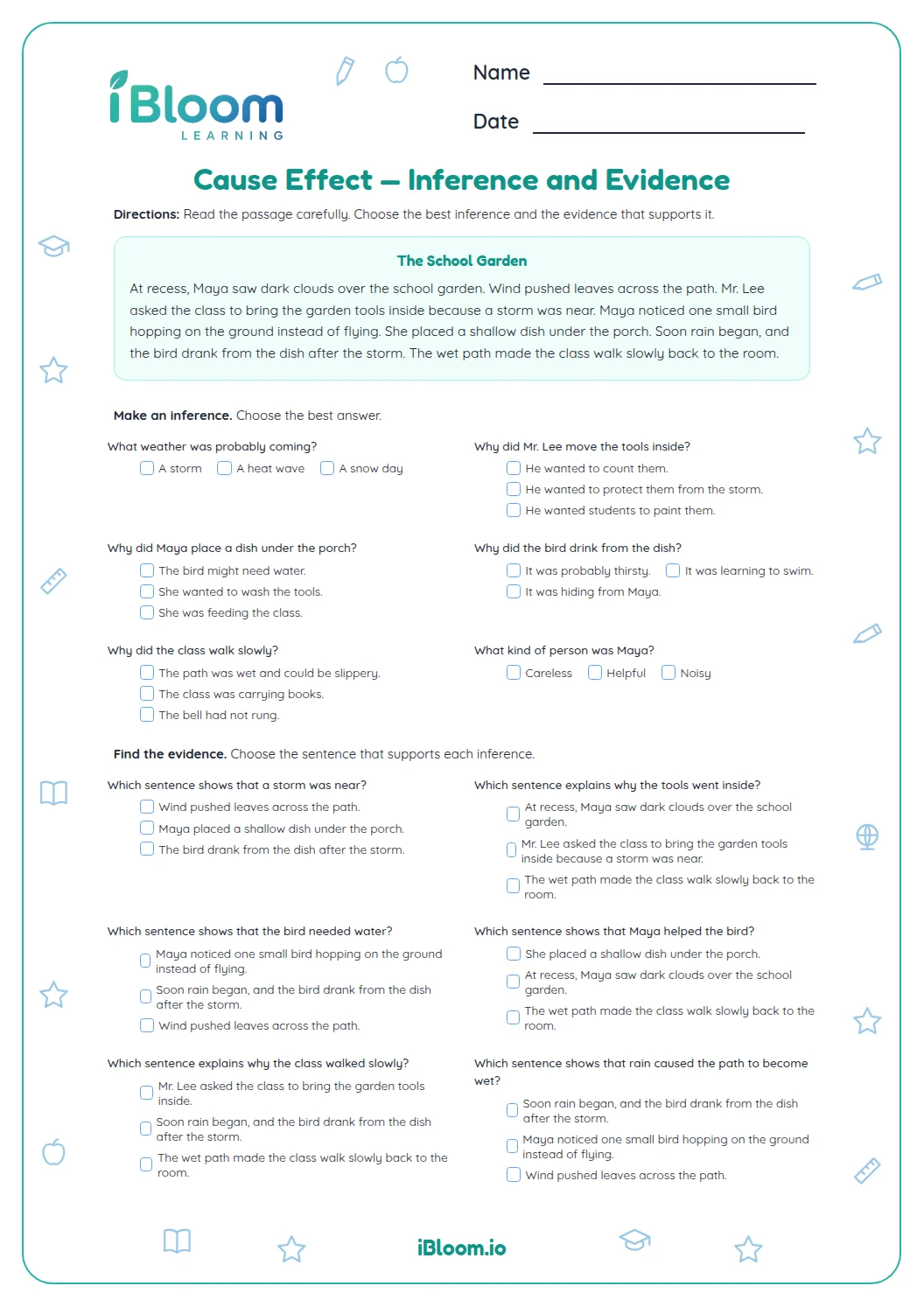
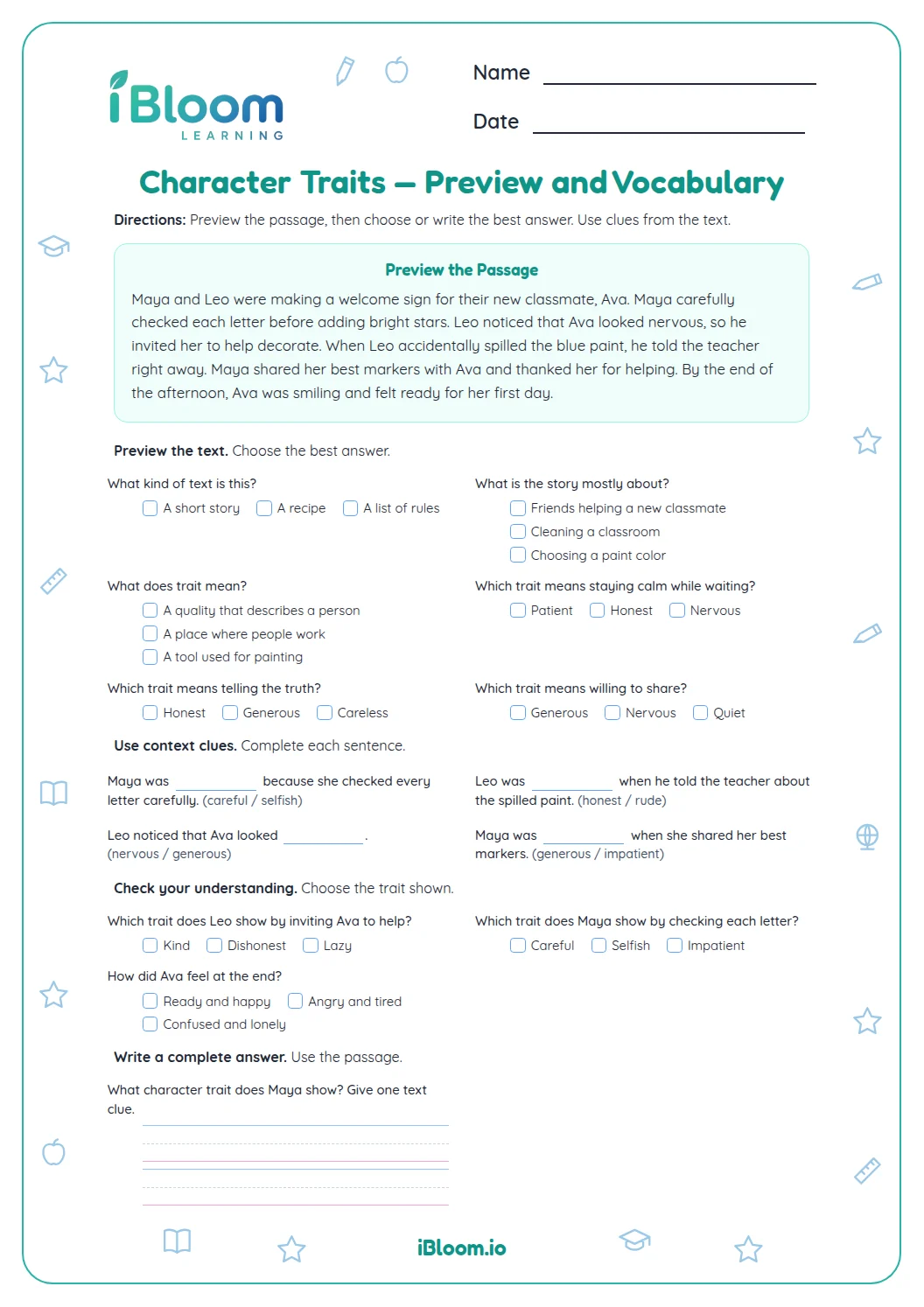
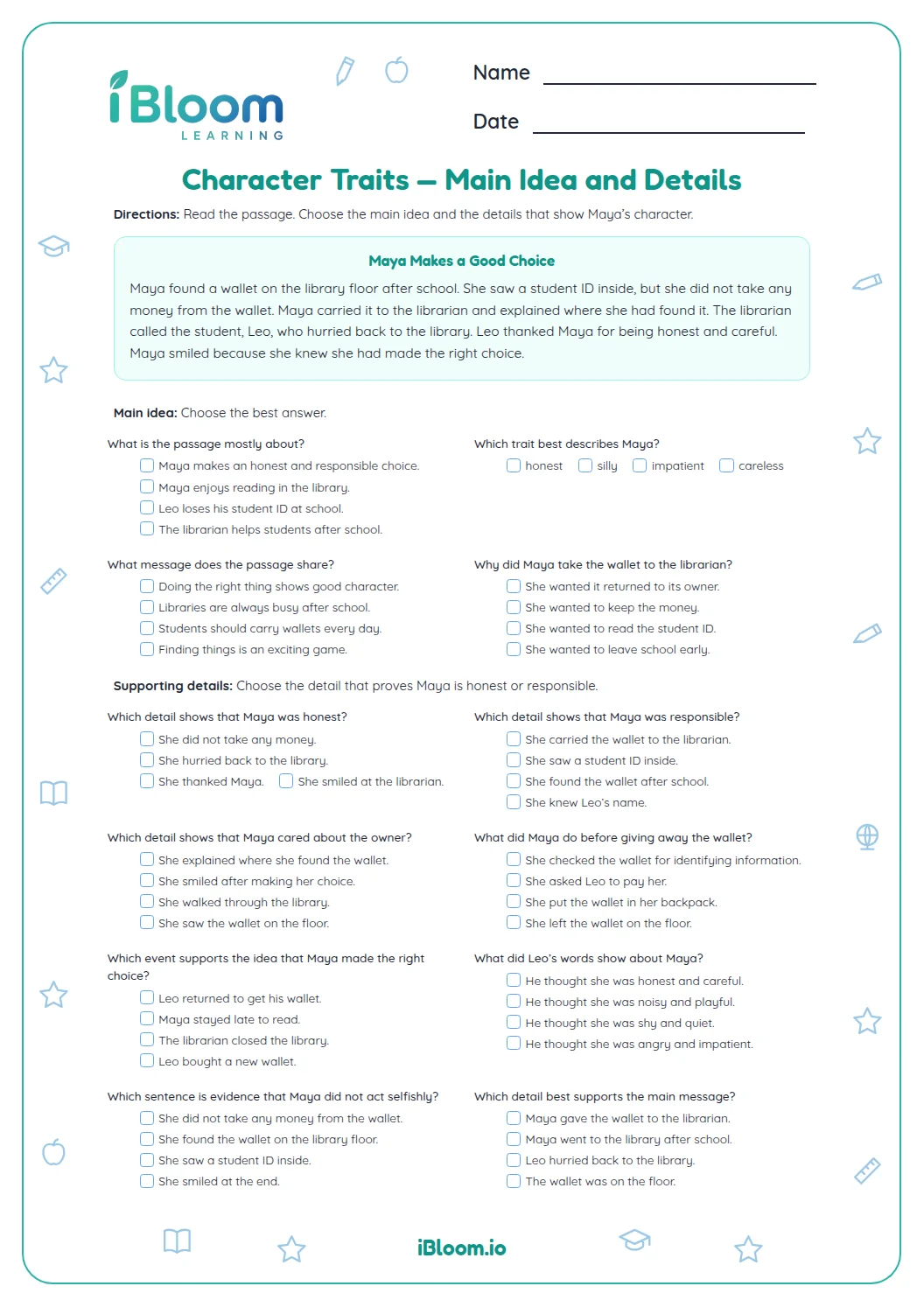
This Grade 3 reading worksheet pairs an original informational passage, “A Rain Garden at School,” with 12 questions. Students identify why the author wrote the passage, consider how details and a possible diagram support the explanation, and answer questions about sequence, evidence, and inference. The passage follows a class as it addresses a puddle problem by planting a rain garden. A separate answer key is included.
What happens in “A Rain Garden at School”?
A class learns how rain gardens absorb water, asks permission, measures a sunny patch, and plants flowers. Later, the students see the garden hold rainwater and share what they learned. Questions refer to events and details in both paragraphs.
- Part A is the passage
- Part B: six purpose and detail questions
- Part C: six evidence, sequence, and inference questions
How do details reveal an author’s purpose?
An informational author may explain a topic by giving a problem, describing what people did, and sharing results. In this passage, the puddle problem and the garden’s effect help explain why the project mattered.
- 1The question asks which detail supports the idea that the garden helped.
- 2The passage says the garden held the water while it soaked into the soil; that result directly supports the idea.
How can readers support an answer?
Return to the passage and find the sentence that answers the question. For an inference, combine a stated clue with a reasonable idea. For sequence, look for words such as “first” and “then.”
Read, locate, and answer
- 1Read both paragraphs once for the main topic.
- 2For purpose questions, ask what the author wants readers to learn.
- 3Reread the sentence connected to each detail question.
- 4For sequence, use the order words and events in the passage.
- 5For an inference, state the clue that supports your idea.
Common reading slips
The mistake
Choosing a detail that appears in the passage but does not answer the question.
The fix
Match the clue to the exact idea named in the question.
The mistake
Treating an inference as a fact stated word for word.
The fix
Name the passage clue and explain what it suggests.
The mistake
Mixing up the order of measuring and planting.
The fix
Find the sequence words in the first paragraph and retell the events in order.
What to practice next
Make more practice
Questions parents and teachers ask
What is the passage about?
“A Rain Garden at School” tells how Ms. Lee’s class responds to a puddle near the school doors. The students learn about rain gardens, plant one, observe what happens after rain, and share a plan for expanding it. The questions use details from the passage.
How many questions are included?
There are 12 questions after the passage. Six focus on purpose and details, and six ask about evidence, sequence, and inference. The passage and questions take three worksheet pages, with the answer key on its own page. Ask the student to point to the matching question or passage detail as they explain the choice.
How can students answer an inference question?
Students should connect a clue in the passage to a reasonable conclusion. For example, the map for expanding the garden next year suggests the students are thinking ahead. Encourage the child to point to the clue before stating the inference.
Does the worksheet only ask about author’s purpose?
No. It includes questions about the author’s purpose and details, plus sequence, evidence, and an inference. All questions refer to the same rain-garden passage, so students can return to the text as they work. Ask the student to point to the matching question or passage detail as they explain the choice.
How should I check the answers?
Use the separate key after the student finishes. For short responses, accept wording that gives the same supported idea as the key. If an answer is unclear, ask the student to show the sentence or event that supports it. Ask the student to point to the matching question or passage detail as they explain the choice.