



About this worksheet
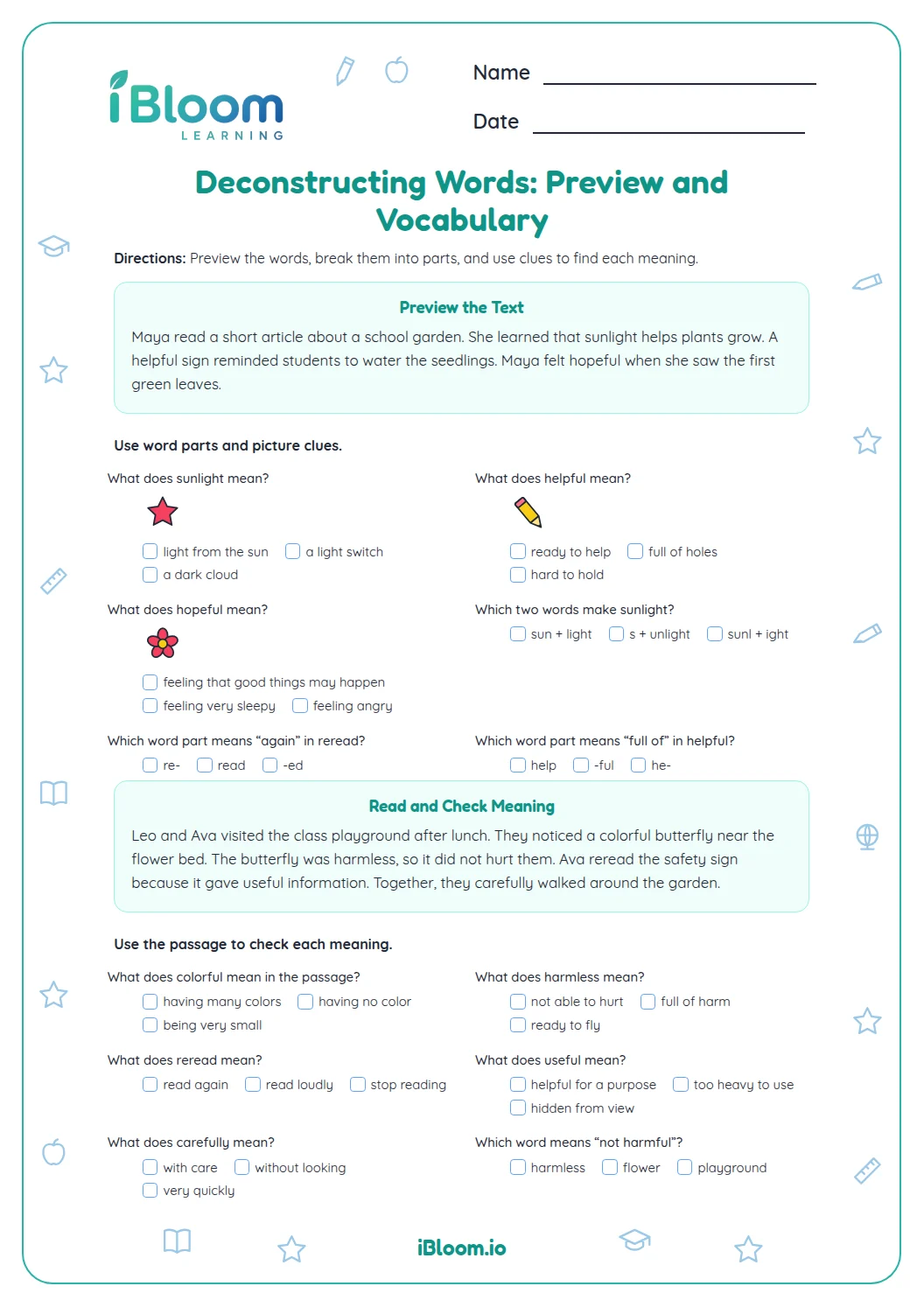
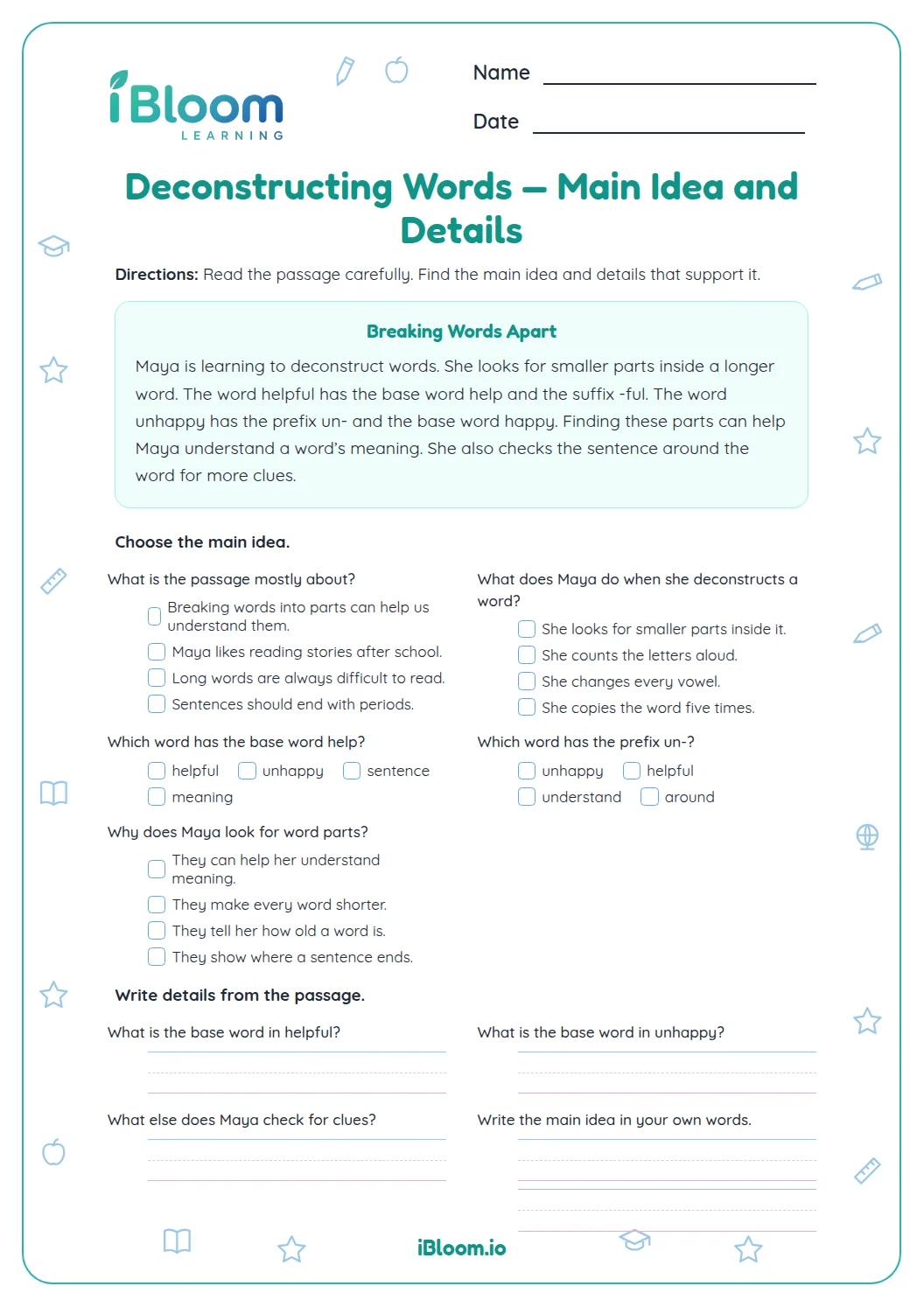
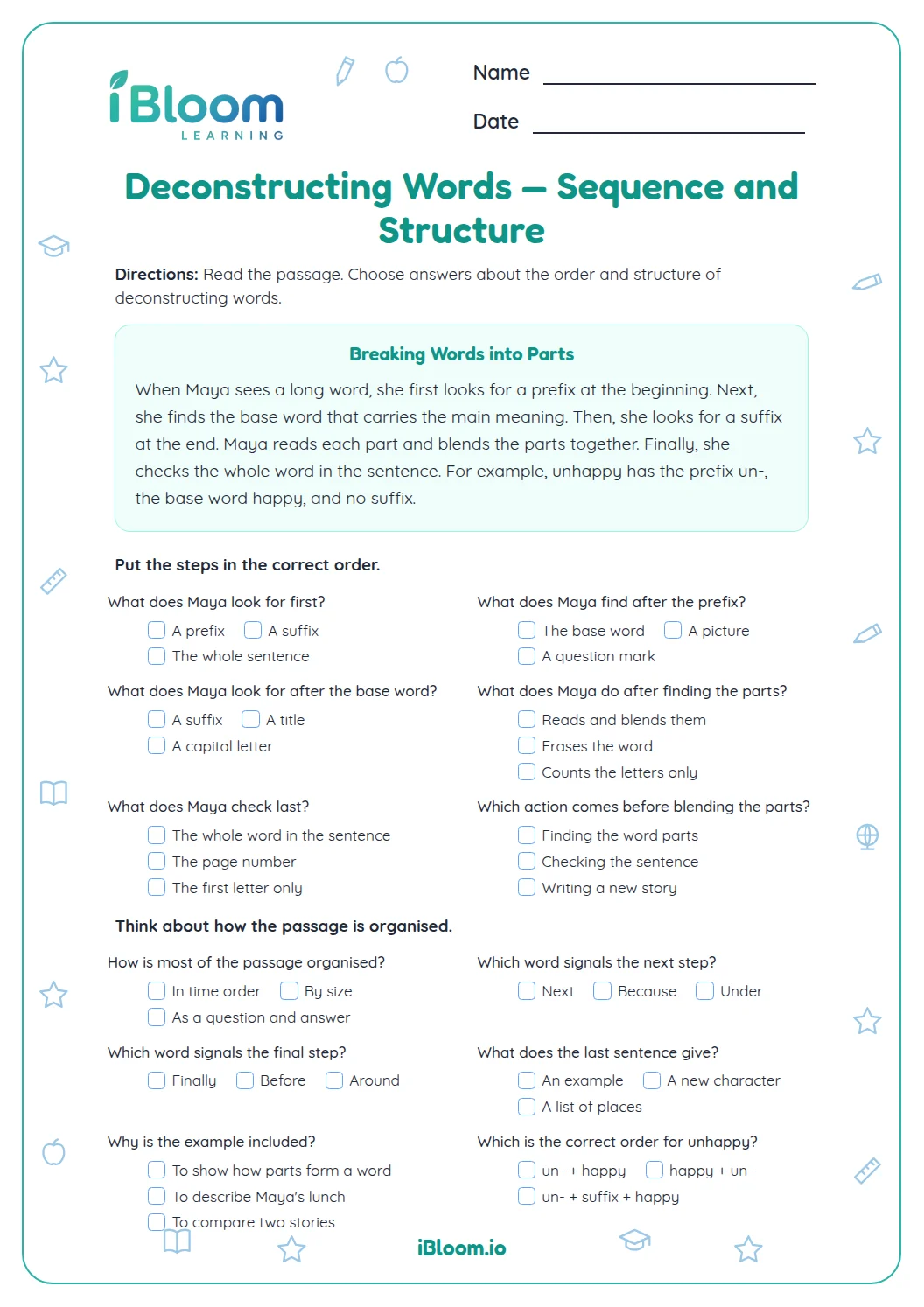
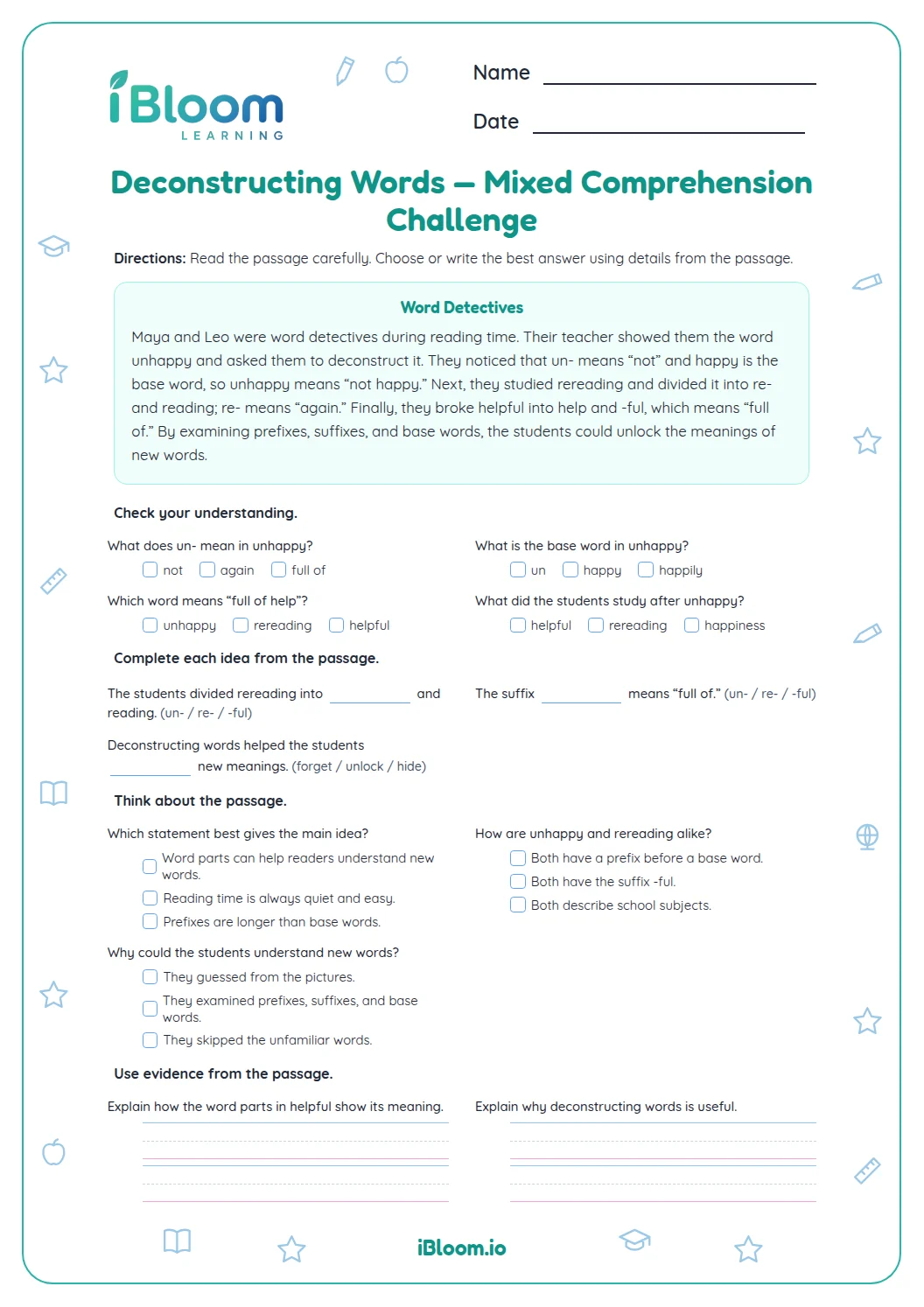
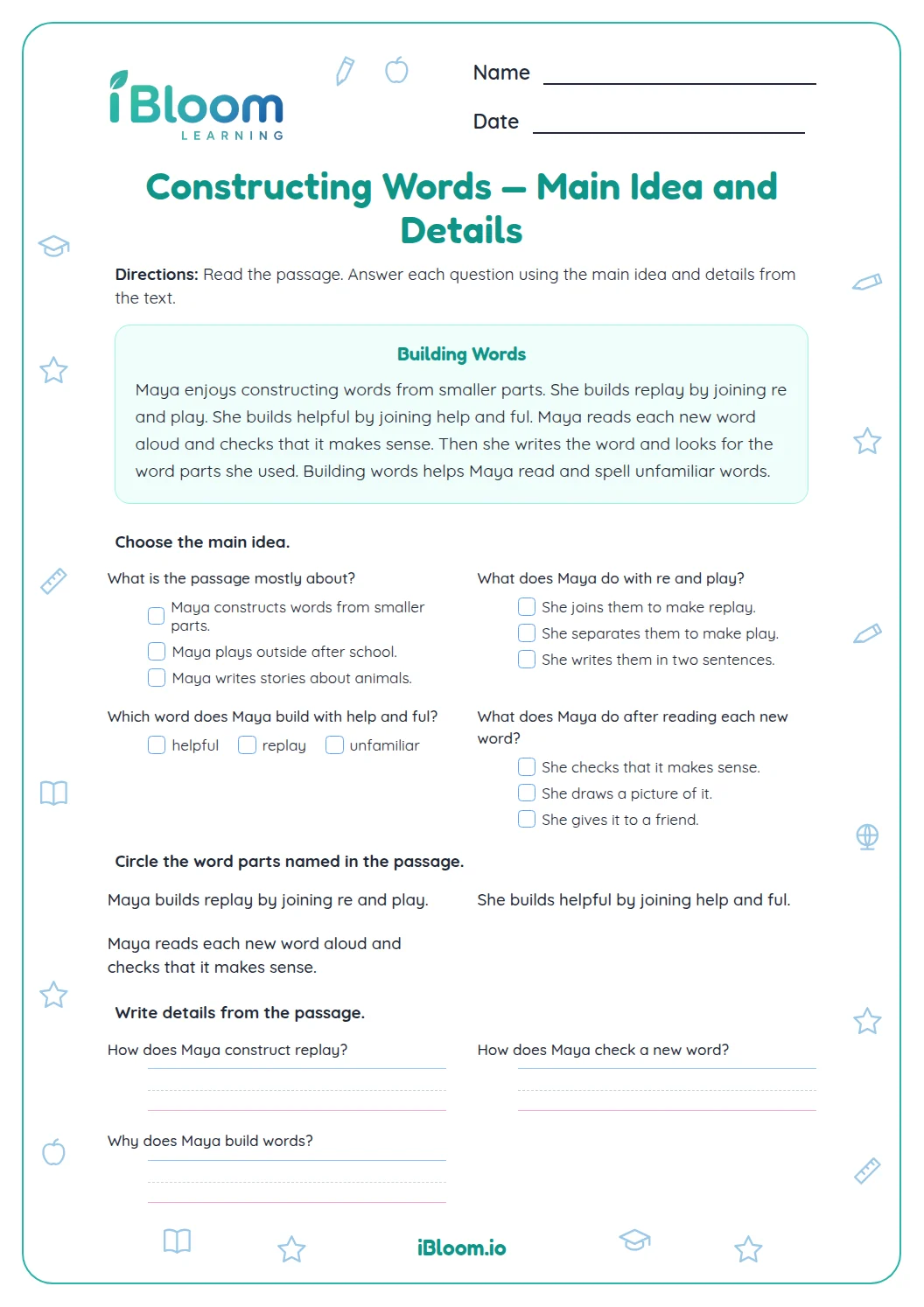
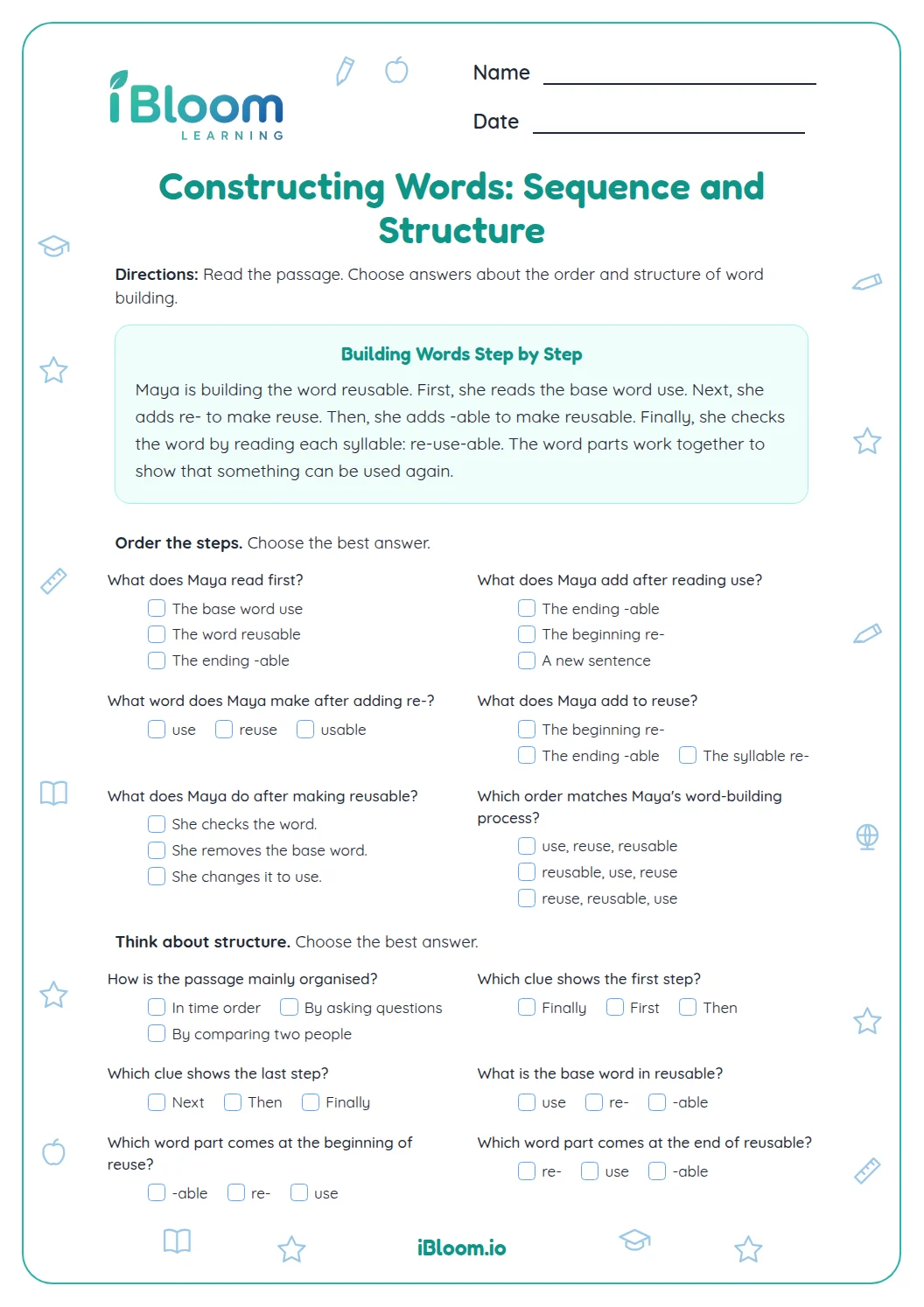
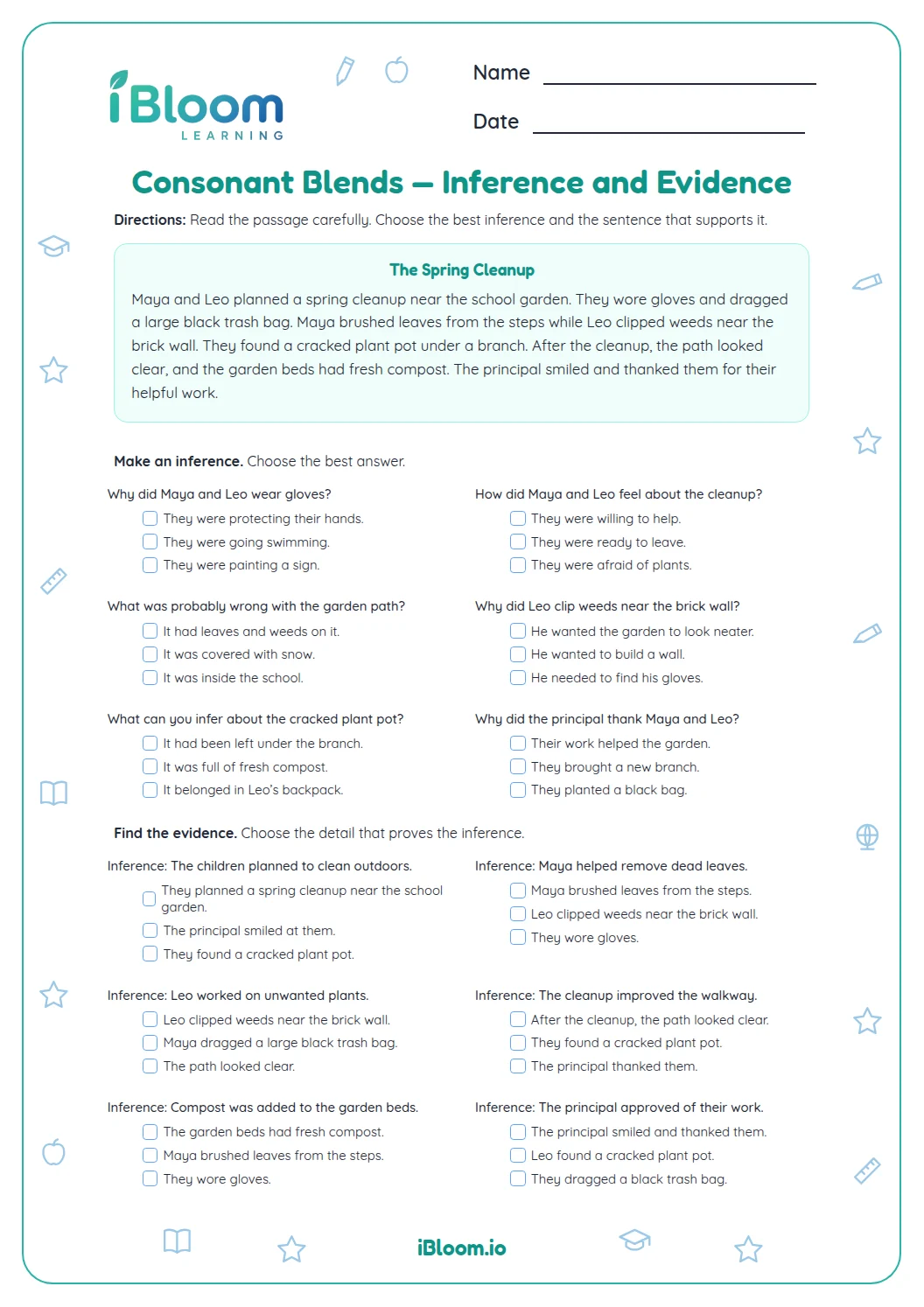
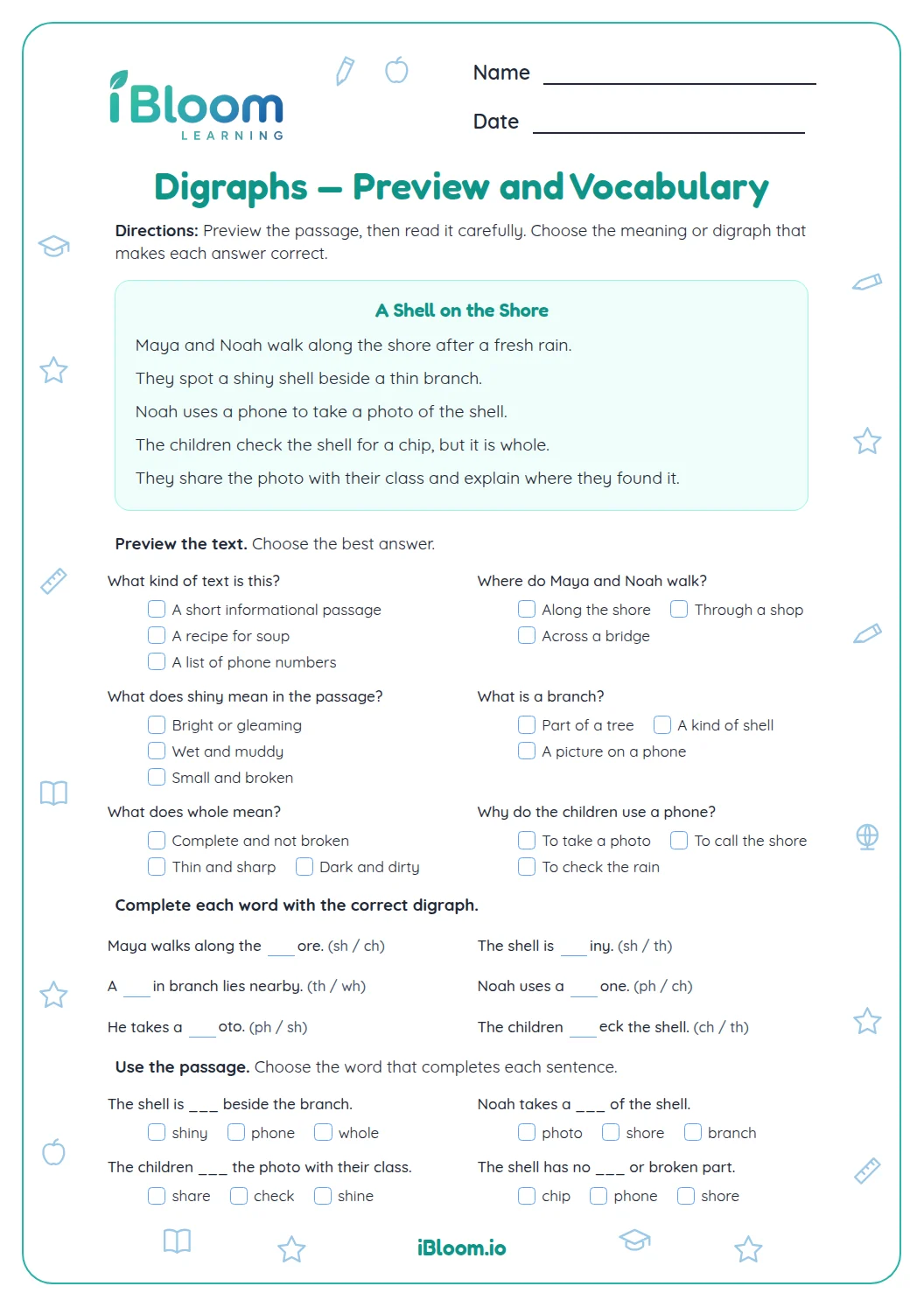
This Grade 3 printable pairs a passage about Maya’s word wall with 15 questions on deconstructing words. Children identify prefixes and suffixes, locate base words, explain changes in meaning, and use passage details in written responses. The activities practice CCSS L.3.4.b and RL.3.1, with a separate answer key and sample responses.
Aligned to L.3.4.b and RL.3.1
What do prefixes and suffixes add to a word?
A prefix comes before a base word, and a suffix comes after it. The prefix re- means again; the suffix -ful means full of. In the passage, reread combines re- and read, while helpful combines help and -ful.
Question 1 asks for the base word in reread. Remove the prefix re- and the base word read remains.
- 1reread
- 2Prefix: re- (again)
- 3Base word: read
How can a word part change meaning?
The prefix un- can mean not, so unhappy means not happy. The suffix -less means without, so careless means without care. Look at the known base word first, then use the affix clue to explain the full word.
How does the passage support written answers?
Maya’s word wall gives examples and definitions to use as evidence. For a written response, name the word part and connect it to the meaning. The key provides sample wording for answers that can vary.
How to deconstruct a word
- 1Read the whole word in its passage sentence.
- 2Look before the base word for a prefix.
- 3Find the base word that remains.
- 4Look after it for a suffix.
- 5Use the part meaning and passage clue to explain the word.
Common mistakes and quick fixes
The mistake
Treating an affix as the base word.
The fix
Remove the prefix or suffix, then read the meaningful word that remains.
The mistake
Mixing up a prefix and suffix.
The fix
A prefix starts the word; a suffix ends it.
The mistake
Giving a word-part label without its meaning.
The fix
Explain how the affix changes the base word, such as re- meaning again.
Common Core alignment
This worksheet practices word-part meaning and using passage details to explain an answer.
Use common prefixes and suffixes as clues to the meaning of a word.
On this sheet: Children identify affixes, base words, and how those word parts affect meaning. L.3.4.b
Show the official wordingHide the official wording
Determine the meaning of the new word formed when a known affix is added to a known word (e.g., agreeable/disagreeable, comfortable/uncomfortable, care/careless, heat/preheat).
Answer questions about a story using details stated in the text.
On this sheet: Written responses use examples and explanations from the story.
Show the official wordingHide the official wording
Ask and answer questions to demonstrate understanding of a text, referring explicitly to the text as the basis for the answers.
What to practice next
Further reading
Questions parents and teachers ask
What is a base word?
A base word is the central word part that can stand on its own. In reread, read is the base word and re- is the prefix. The passage gives several examples so children can separate each part and explain how it contributes to meaning.
How does a prefix change a word?
A prefix appears at the beginning of a base word and adds meaning. In unhappy, un- means not, so unhappy means not happy. Children use the passage examples to name the prefix and describe the changed meaning. The story gives an example and its meaning together.
What does the suffix “-ful” mean?
The suffix -ful means full of. Helpful means full of help, and hopeful means full of hope. The worksheet asks children to notice where -ful appears and connect the suffix to a familiar base word. Try applying the same suffix to another familiar base word.
How are prefixes and suffixes different?
A prefix comes before the base word; a suffix comes after it. In replay, re- is a prefix. In careless, -less is a suffix. Looking at where the word part appears helps children label it accurately. Notice whether the affix appears before or after the base word.
What kind of written answers does the sheet ask for?
Several prompts ask children to explain a word meaning or describe how a word part helps. A few invite an original example. The answer key gives sample responses, and other clear answers with the same meaning are appropriate. A different clear explanation using a passage word is also acceptable.
How should a child use the answer key?
After completing the questions, use the separate key to check the word parts and compare written responses with the samples. Ask the learner to point to the prefix, base word, or suffix that supports each answer. The answer key accepts another accurate explanation from the story.