
About this worksheet
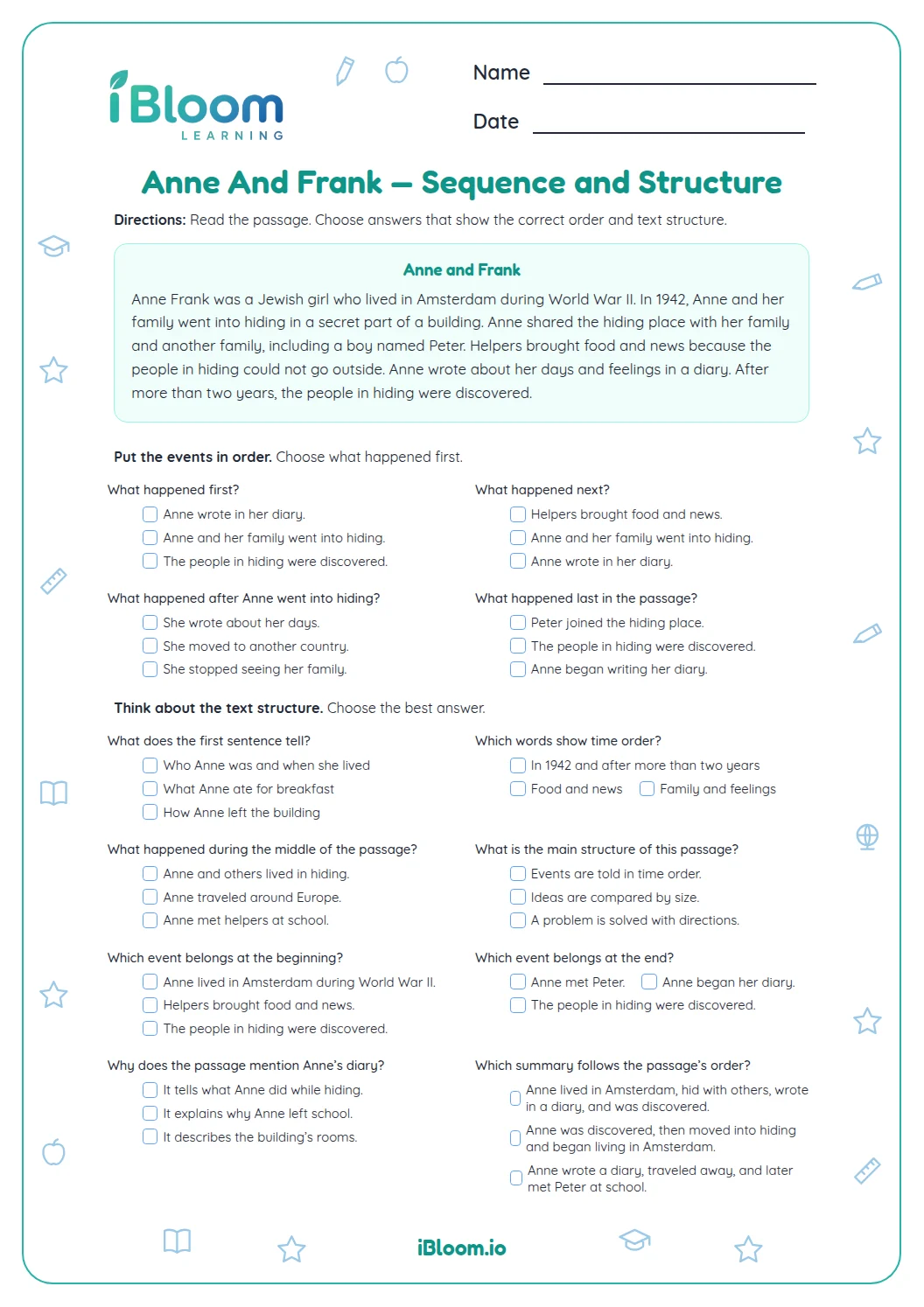
This Grade 3 reading worksheet uses an imagined scene about Anne and her brother Frank in Amsterdam during World War II. The scene details and dialogue are fictional, not historical quotations. Anne writes in her diary, and Frank helps with schoolwork and listens when she feels worried. Ten multiple-choice questions and five short answers ask students to infer from character actions and point to details in the story. The work practices referring explicitly to a text when answering questions, in line with Common Core RL.3.1. A separate key gives concise answers for checking.
Aligned to RL.3.1
What happens in Anne and Frank?
The passage is an imagined scene, not a historical account of a documented morning. Anne writes in a diary, and her brother Frank helps with schoolwork and listens to her. One morning, she describes a patch of sunlight, writes about it, and feels calmer.
The questions move from inferences and stated details to brief explanations supported by the story. Students should reread the sentence or action that helps them answer.
How can a student connect evidence to an inference?
Name an idea about a character or event, then identify the action or words that support it. A useful detail does more than come from the same paragraph; it helps explain why the inference makes sense.
- 1Inference: Frank listens with care. Evidence: he sets his schoolbook aside and listens without interrupting.
What belongs in a short written answer?
A brief answer can state an inference and include one story detail. For example, a student can say Frank is considerate because he listens while Anne talks. The answer key gives concise models; accurate answers in a student’s own words are also appropriate.
How to use this worksheet
- 1Read the story once for the setting and events.
- 2For each inference choice, check which option fits the story clues.
- 3For detail questions, locate the sentence that states the answer.
- 4In the final five items, write a brief idea and connect it to a story detail.
- 5Use the key to check the evidence, not just the exact wording.
Common mistakes and quick fixes
The mistake
Repeating a detail without saying what it suggests.
The fix
Name the inference, then explain how the character’s action supports it.
The mistake
Choosing an idea that could be true but is not supported by the story.
The fix
Find an action or line that points to the idea before selecting it.
The mistake
Using an event from the wrong part of the story.
The fix
Reread the paragraph and check when the event happens.
Common Core alignment
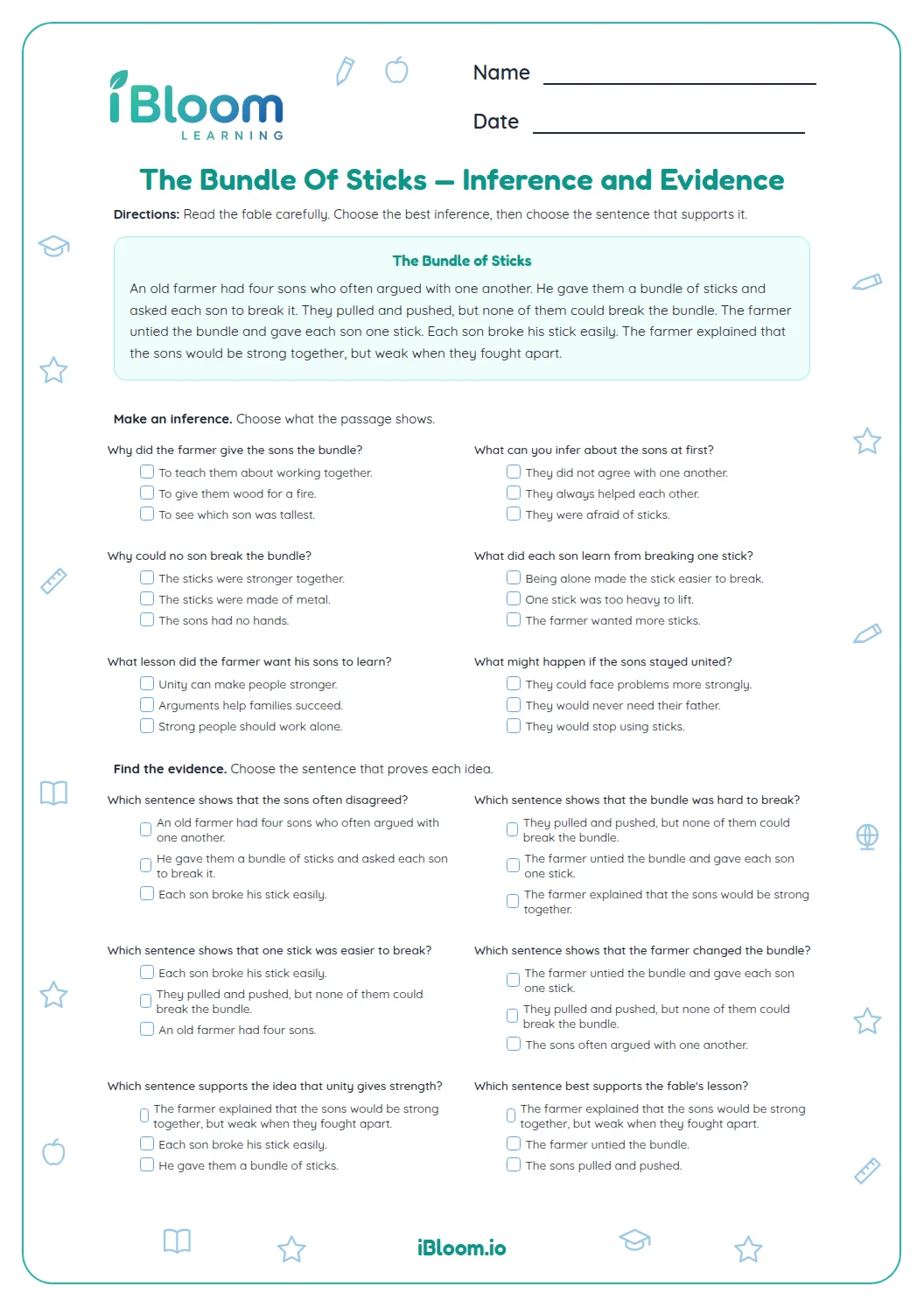
This page asks students to answer questions about a fable and use the text as evidence.
Answer story questions with details stated in the fable as evidence.
On this sheet: Students infer from a fable and point to story details.
Show the official wordingHide the official wording
Ask and answer questions to demonstrate understanding of a text, referring explicitly to the text as the basis for the answers.
What to practice next
Make more practice
Further reading
Questions parents and teachers ask
What is the fable about?
Anne and her brother Frank live with their family in Amsterdam during World War II. Their family hides in a quiet space behind a business. Anne writes in a diary, and Frank helps with schoolwork and listens when she feels worried. Students use those events to make inferences.
What does inference mean here?
An inference is an idea a reader reaches by combining story clues with what the reader knows. Frank sets aside his schoolbook and listens without interrupting, which supports the idea that he is considerate. Students should point to the action or words that led to each answer.
How many questions ask students to write?
Five final questions use answer lines and ask students to explain an idea with story details. Ten multiple-choice items build toward those short responses. The key gives concise answers; another response is also correct when it fits the story and points to relevant evidence.
Should students quote the story exactly?
Students may quote exact words or accurately restate a detail. Evidence should come from Anne and Frank’s actions or dialogue and support the inference. Frank’s choice to listen while Anne talks, for example, supports an idea about how he treats his sister.
How is an inference question different from a detail question?
A detail question asks for information stated directly, such as what Anne brings with her. An inference question asks students to combine clues to reach an idea, such as what Frank’s listening suggests. Both kinds appear so students practice noticing the difference.
What can students read next?
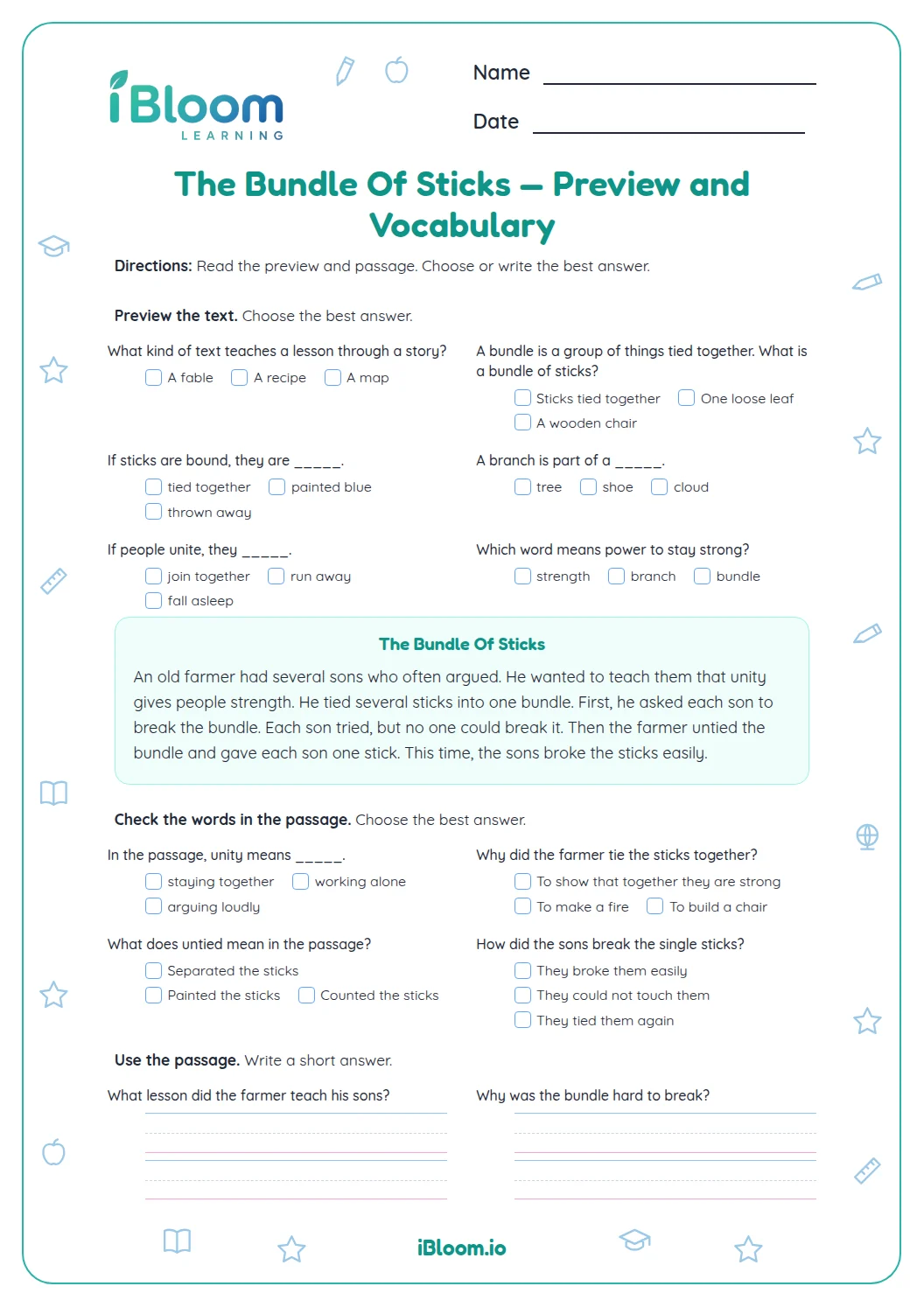
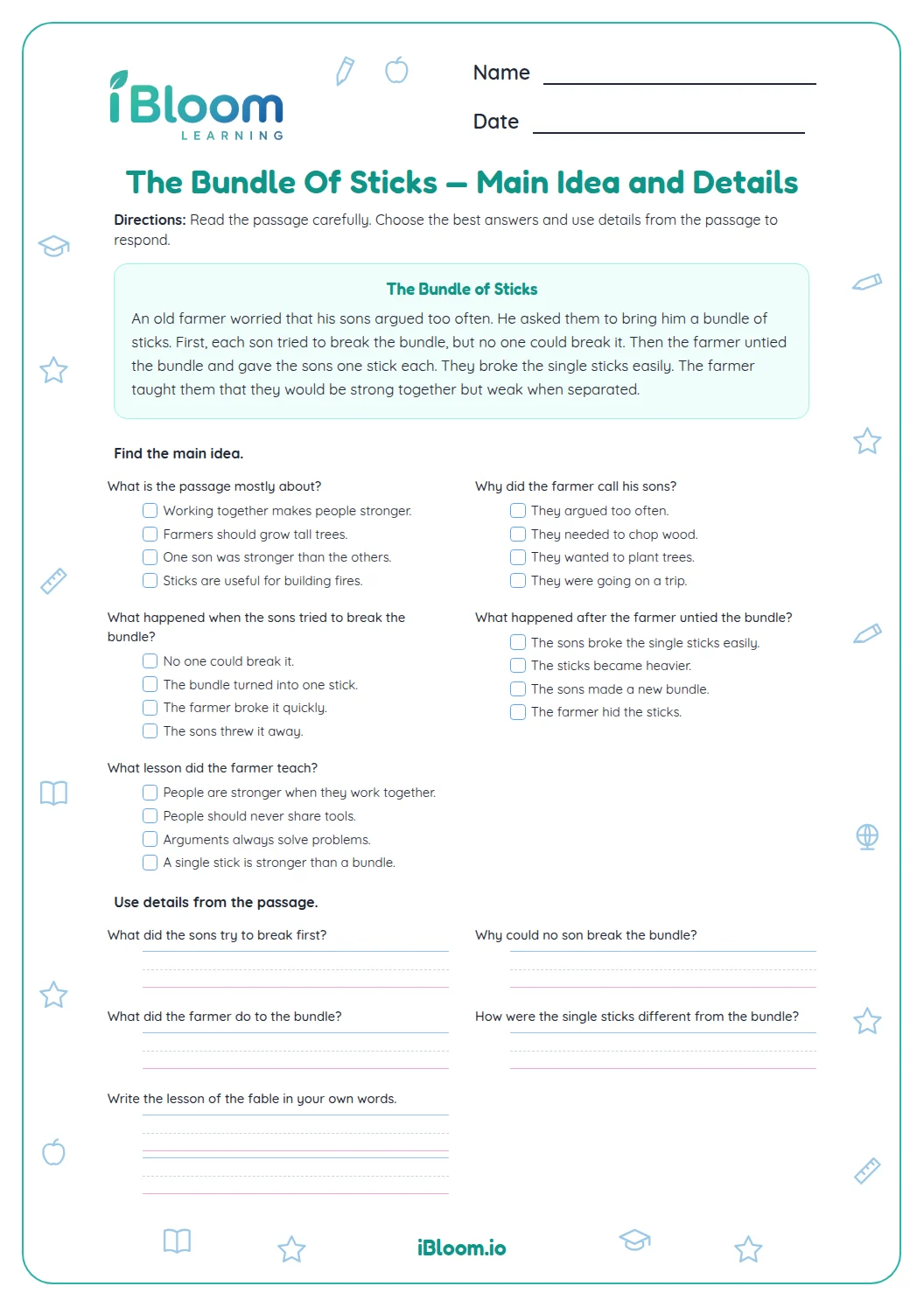
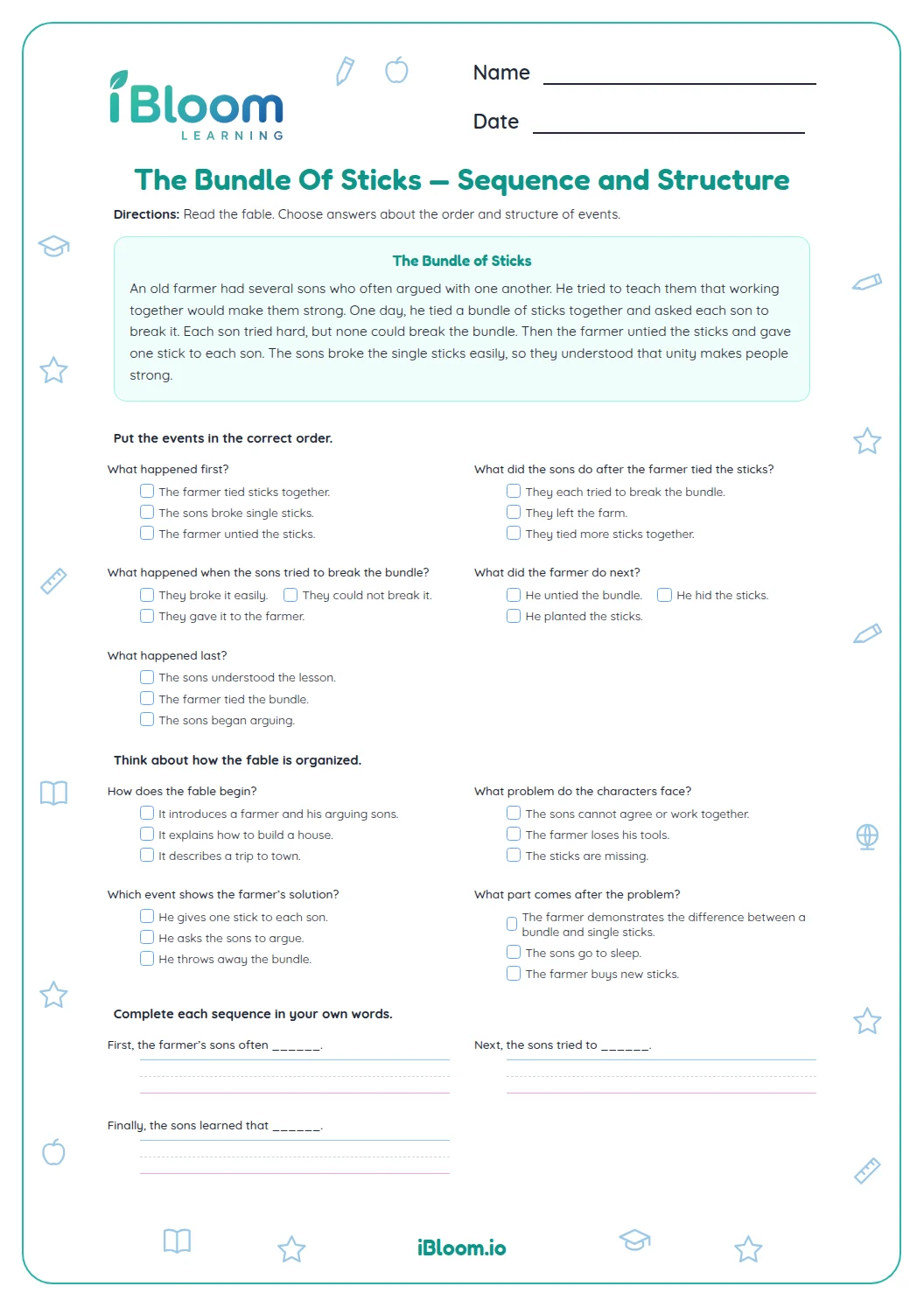
Another story gives students a fresh set of characters and clues to interpret. The linked fable pages provide additional Grade 3 reading practice, while The Bundle of Sticks can also prompt a discussion about how actions connect to a lesson.