
About this worksheet
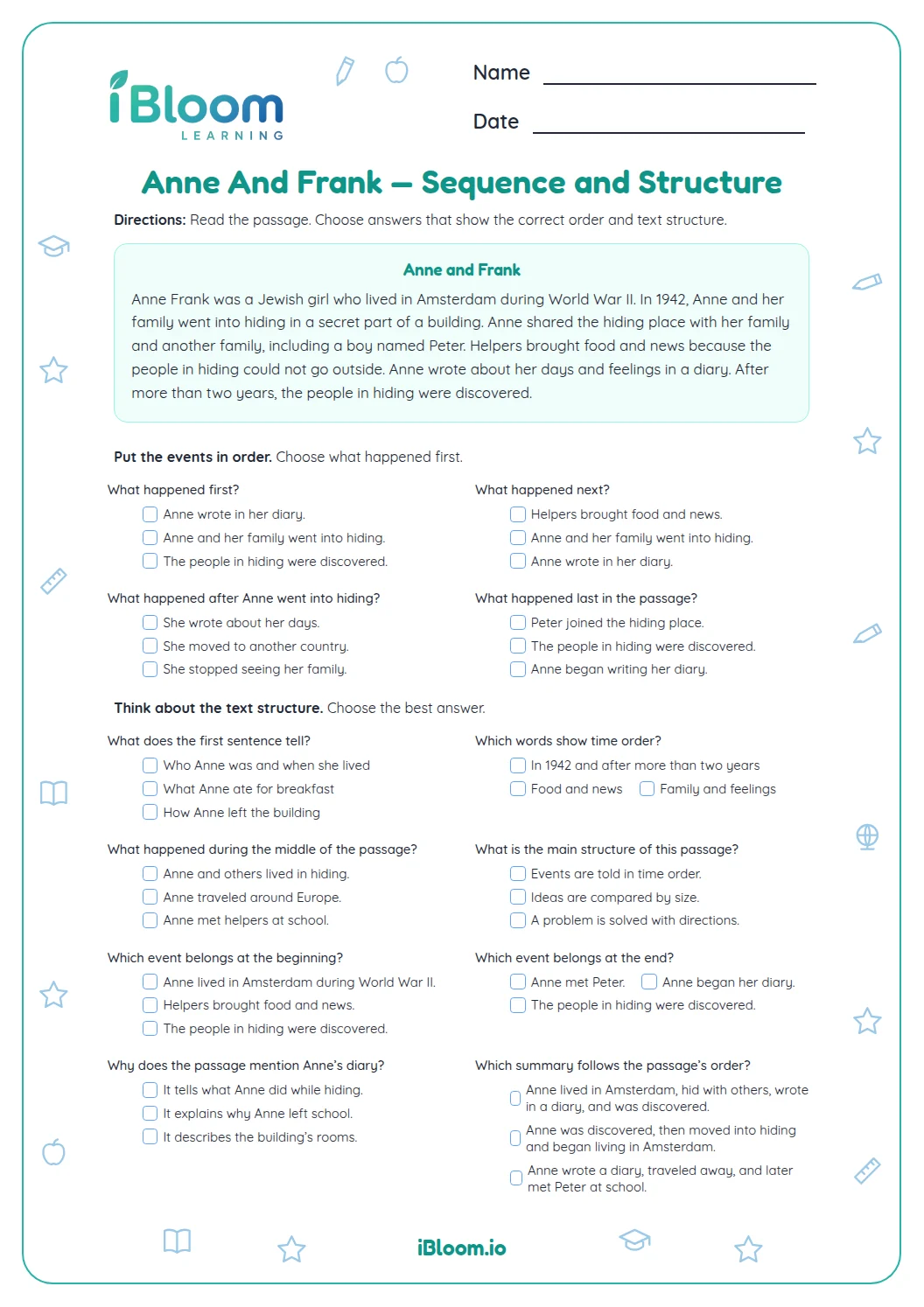
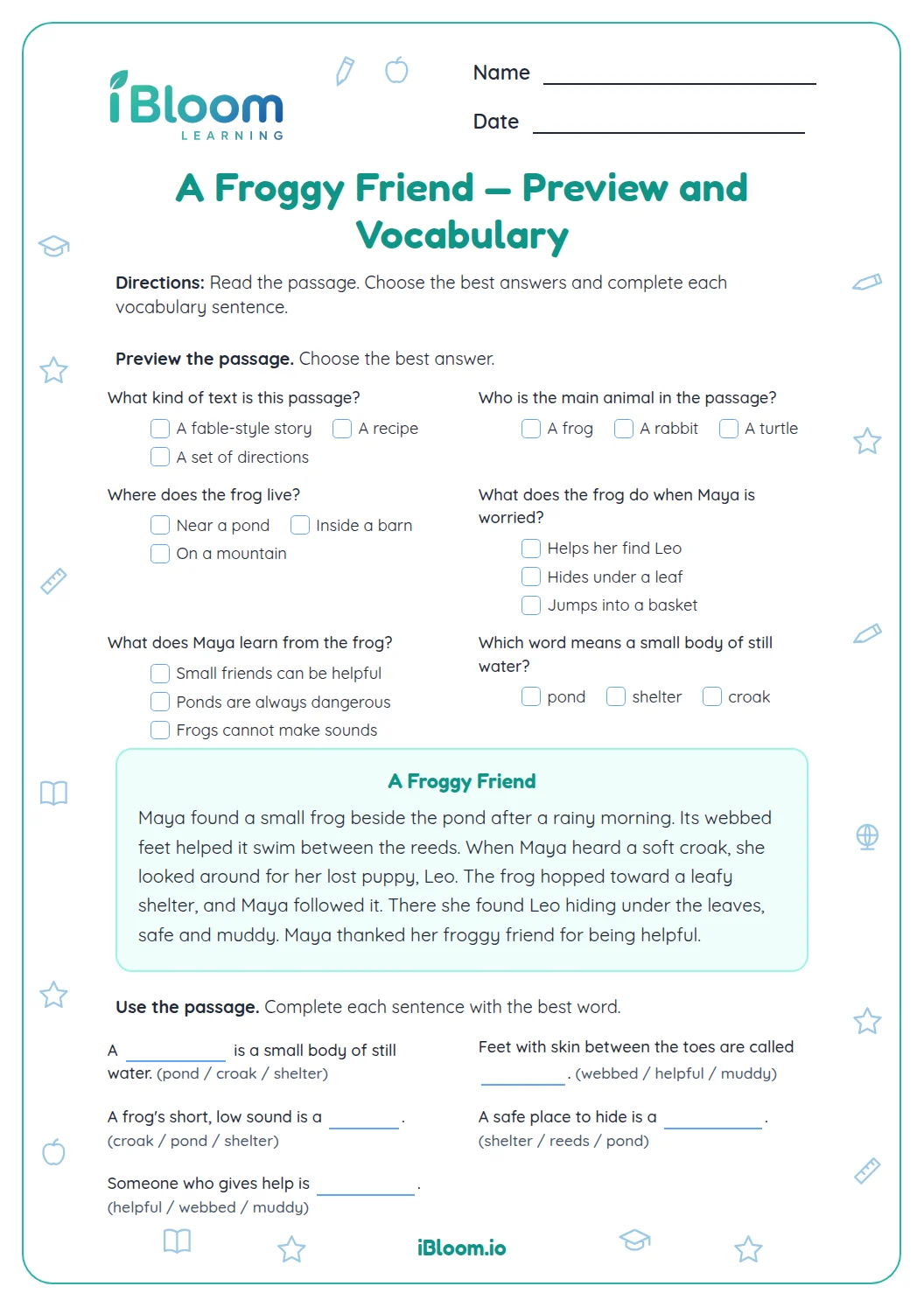
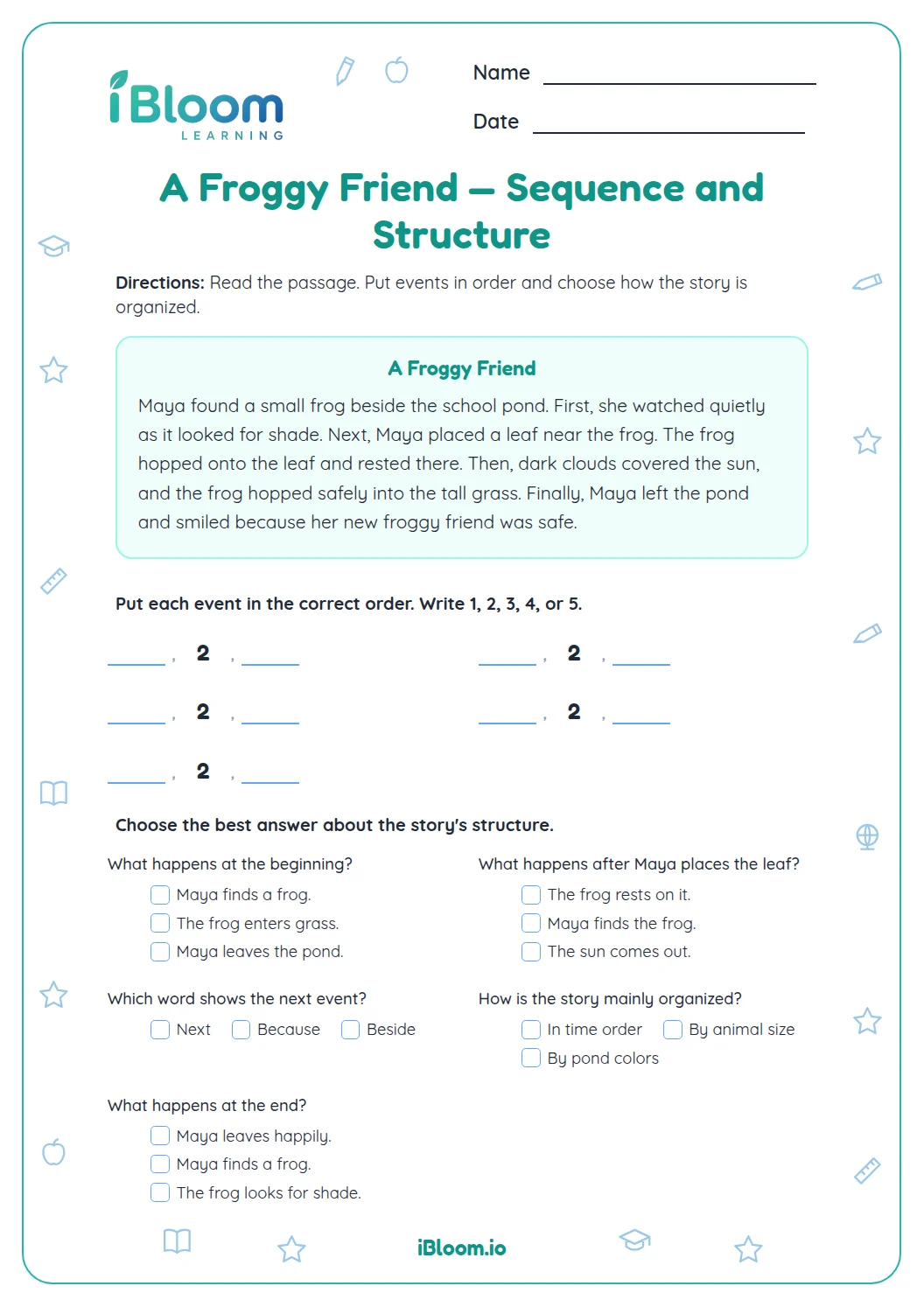
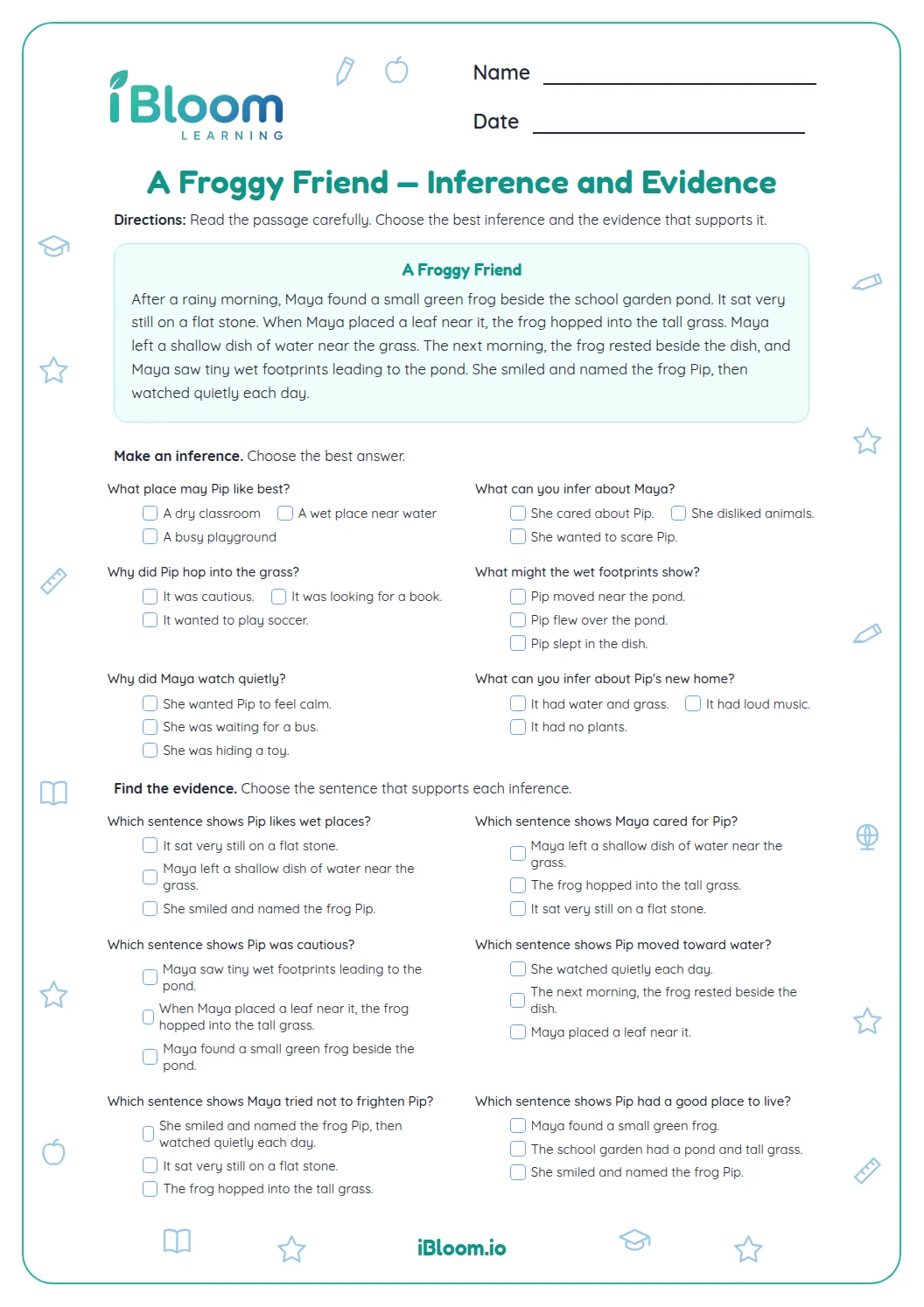
This Grade 3 reading worksheet pairs an original informational passage about Anne Frank with questions about details, sequence, vocabulary, and inference. Children return to the text to support their answers and explain how Anne’s diary helps readers learn about her life in hiding. The passage uses direct language to discuss the Holocaust with care.
Aligned to RI.3.1
What does the worksheet ask readers to do?
Part B checks details and the passage’s main idea. Part C asks readers to use context. Part D asks readers to sequence events, explain vocabulary, and answer with passage details.
- Part B: 6 multiple-choice questions
- Part C: 2 short completions
- Part D: 6 text-based responses
How can a reader support an answer?
Answer the question directly, then point to a passage detail that supports it. A strong response uses information from the text rather than adding an unsupported guess.
How to use the worksheet
- 1Read once to understand who is in the passage and where they are.
- 2Return to the text to find details for the first questions.
- 3Use the order of events in the passage for the sequence item.
- 4For written responses, answer directly and include a relevant detail.
Common mix-ups
The mistake
Confusing who hid in the annex. Reread the sentence that names the other people there.
The fix
The mistake
Treating an inference as a stated fact. Point to the words that support the inference.
The fix
The mistake
Retelling the whole passage instead of answering the question asked. Begin with a direct answer.
The fix
Curriculum alignment
The questions ask readers to answer from a text and refer to relevant details.
Answer questions and support responses with details from the passage.
On this sheet: Questions ask students to return to the informational passage for details and evidence.
Show the official wordingHide the official wording
Ask and answer questions to demonstrate understanding of a text, referring explicitly to the text as the basis for the answers.
What to practice next
Make more practice
Further reading
Questions parents and teachers ask
Who was Anne Frank?
Anne Frank was a Jewish girl who lived in Amsterdam during World War II. She wrote in a diary while her family and others hid in a secret annex. This worksheet introduces those details in a short passage and asks children to return to the text for answers.
Is this passage appropriate for Grade 3?
The passage uses direct, age-conscious language and focuses on Anne’s diary, daily life in hiding, and what readers can learn from her words. Adults may want to read it with children and answer questions that come up about the Holocaust.
What comprehension skills does the page practice?
Children answer detail and main-idea questions, use a word in context, sequence events, and support responses with passage evidence. The final questions ask for short written answers rather than a long essay, so the work stays focused on the text.
How long does this worksheet take?
Allow about 25 minutes for reading the passage and completing 14 questions. Children may need more time for the written responses. They can reread the passage as often as needed to locate details and confirm their understanding. An adult can read the passage aloud.
What does the answer key include?
The key gives the intended choices, sequence, and short-answer ideas. Written responses are examples; a different answer can be correct when it responds to the question and uses accurate information from the passage. The examples show one concise way to respond.