


About this worksheet
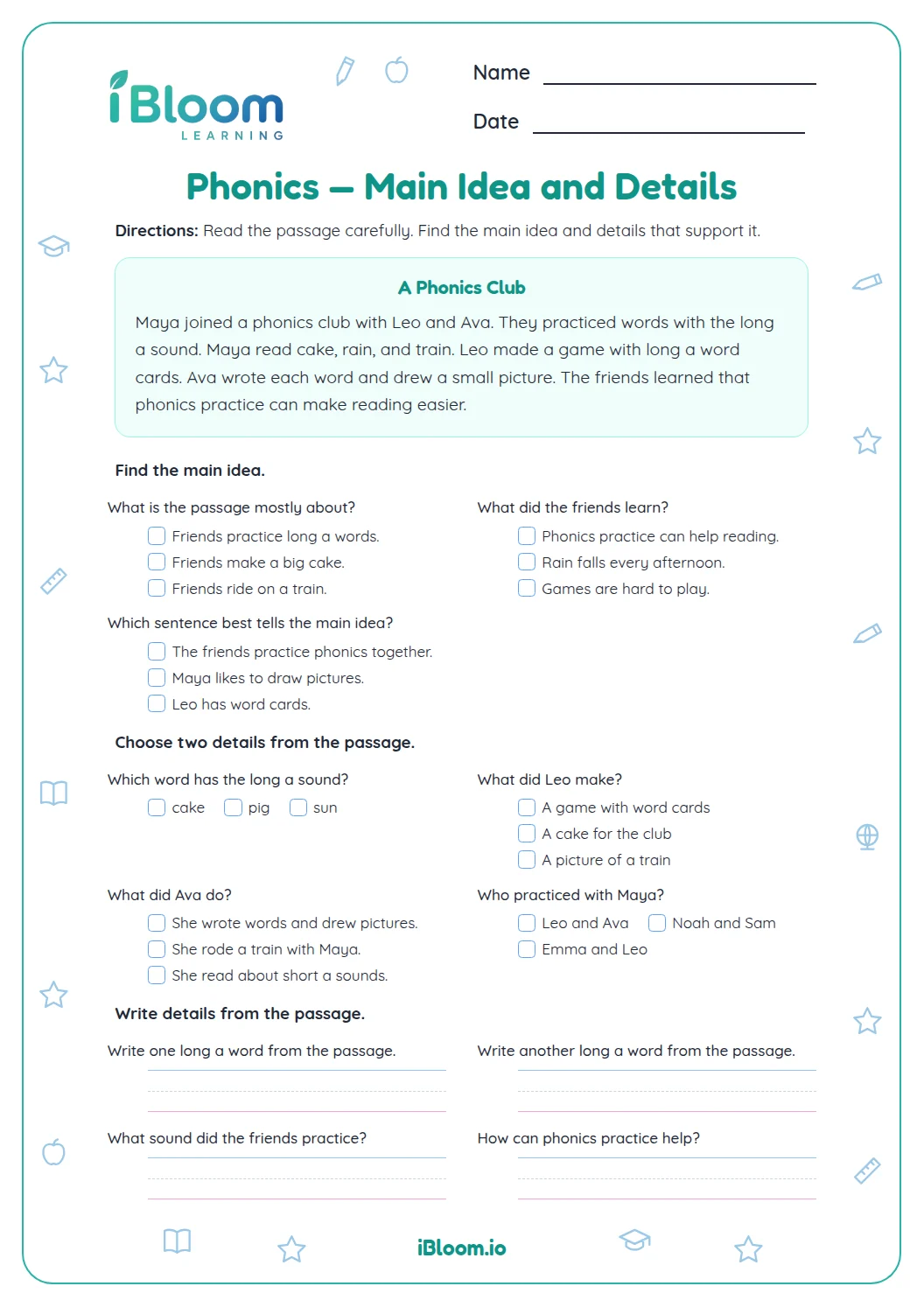
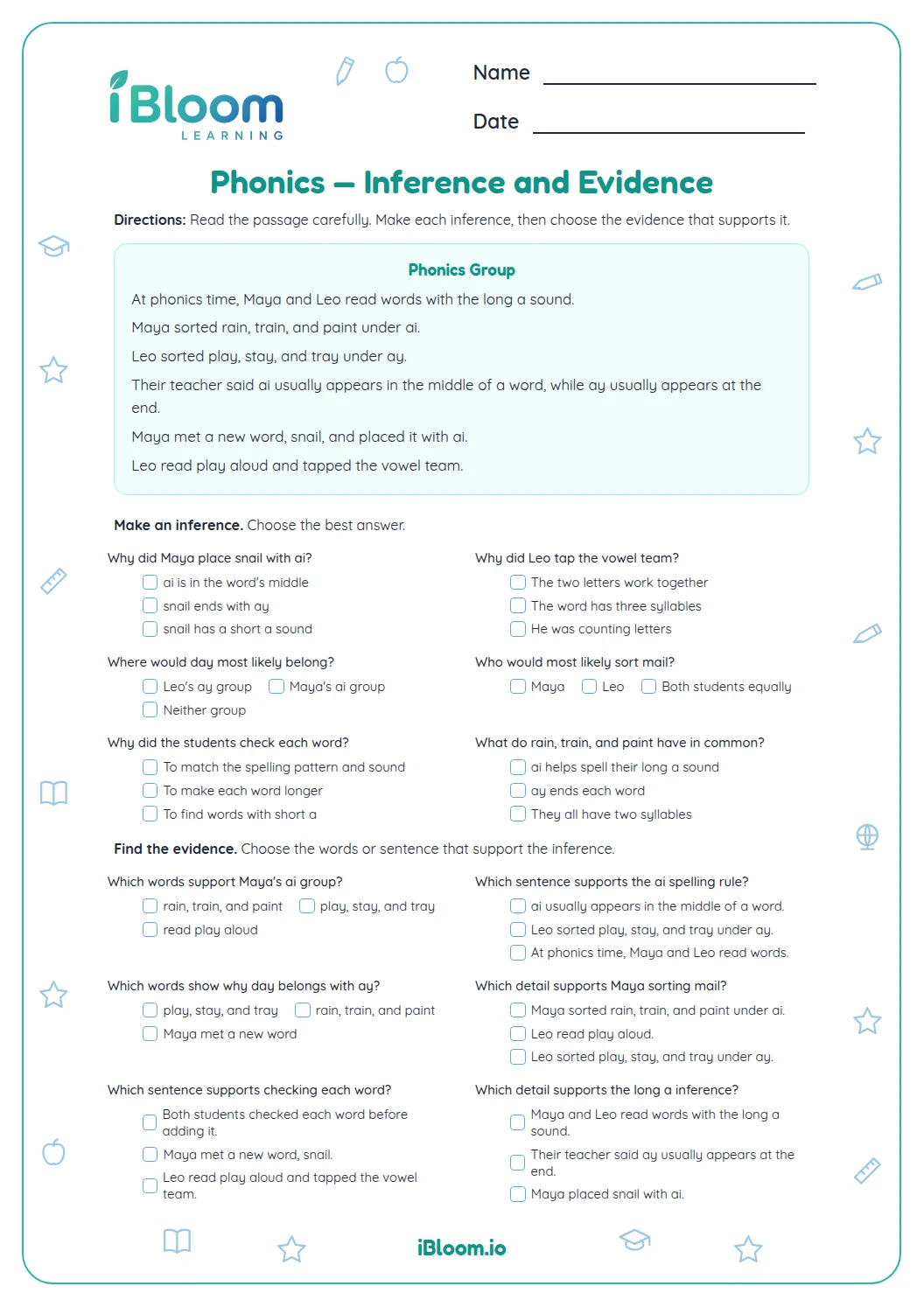
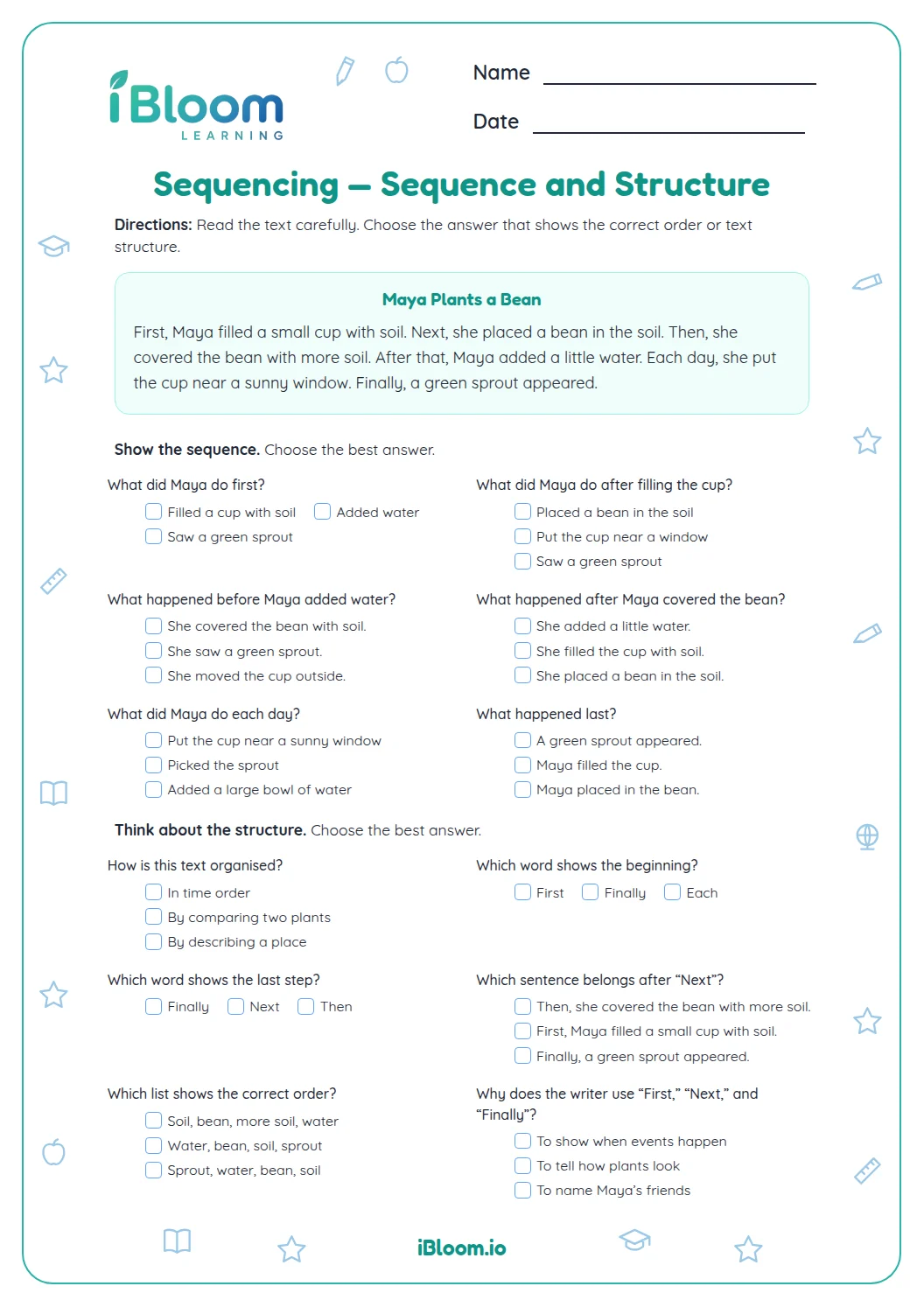
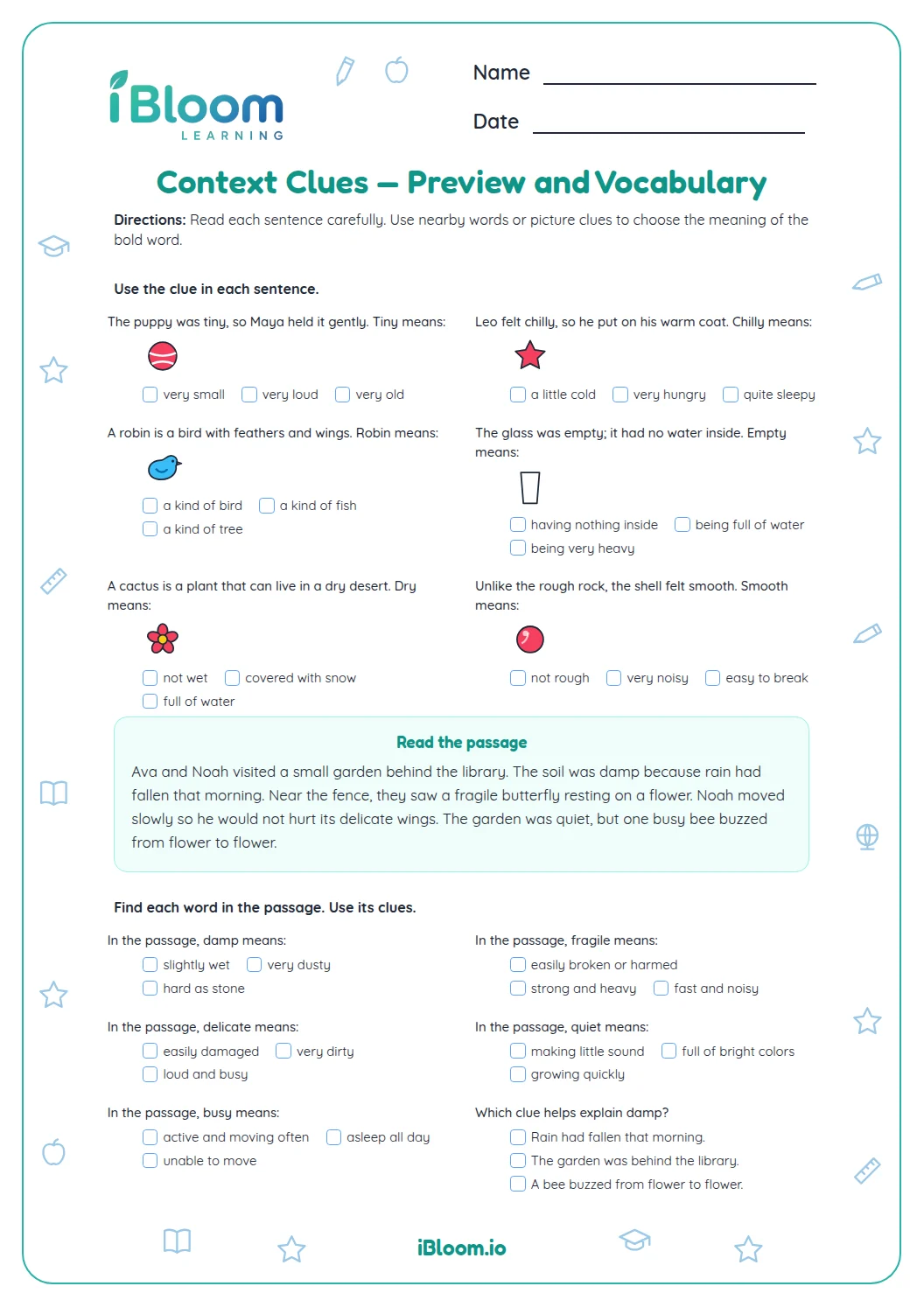
This free Grade 3 printable combines phonics clues with comprehension of an original story about Bryn and Chase building a small bridge. Students identify words with target spelling patterns, use a context clue, recall events, summarize, and infer from details. The passage and 15 questions give readers practice connecting word reading with meaning.
Aligned to 3.RF.3 and 3.RL.1
How does the practice build?
Work through the parts in order. Each group uses the same core skill in a different way, and the answer key gives a quick check after the student has tried each item.
- Read the part direction first.
- Use the passage, model, or sentence clues.
- Check answers after finishing each part.
How can you check one answer?
For example, q2 asks which passage word has long a spelled “ai.” “Sailed” contains the spelling pattern ai and appears when the bark boat moves under the bridge.
How to use this worksheet
- 1Read the story once for its events and characters.
- 2Look carefully at the spelling clue named in each phonics question.
- 3Return to the passage to support detail and inference answers.
- 4For a summary, include the main action and how the problem changes.
- 5Check the key after answering all 15 questions.
Phonics and reading checks
The mistake
Choosing a word with the target letters but the wrong sound.
The fix
Say the word aloud and listen for the requested sound.
The mistake
Using a detail that is true but does not answer the question.
The fix
Match the passage detail directly to the question.
The mistake
Making an inference without a story clue.
The fix
Name the passage detail that supports the idea.
Curriculum alignment
This worksheet gives students practice with the skills named in the standards below.
Students use spelling patterns to read words such as “sailed.”
On this sheet: Students identify the /ch/ sound and the ai spelling pattern in passage words.
Show the official wordingHide the official wording
Know and apply grade-level phonics and word analysis skills in decoding words.
Students answer questions using explicit details from the story.
On this sheet: Students return to the passage for details that support their answers.
Show the official wordingHide the official wording
Ask and answer questions to demonstrate understanding of a text, referring explicitly to the text as the basis for the answers.
What to practice next
Make more practice
Further reading
Questions parents and teachers ask
What story do students read?
“The Bridge of Bright Ideas” follows brothers Bryn and Chase as they build and test a small bridge for leaves and tiny boats. The passage includes the phonics words and story details used in the questions. Ask the student to point to the matching clue before checking the answer key.
Which phonics patterns appear?
Students identify the /ch/ sound in “Chase” and the long a spelling ai in “sailed.” They also use a context clue for “narrow” and notice how spelling and sound work together in words. Ask the student to point to the matching clue before checking the answer key.
How many questions are on the worksheet?
The worksheet has 15 questions after the passage and uses three worksheet pages, including the reading passage. A separate answer-key page shows the multiple-choice answers. Ask the student to point to the matching clue before checking the answer key.
How should students answer the inference questions?
Ask students to reread the relevant lines and connect a clue to their answer. For example, the passage says the bridge is only for leaves and tiny boats, which explains why Scout is not asked to cross. Ask the student to point to the matching clue before checking the answer key.
Can the answer key accept another response?
The multiple-choice questions have one keyed answer each. Questions asking readers to interpret a detail have answer choices grounded in the passage, so students should be able to point to the line that supports their selection. Ask the student to point to the matching clue before checking the answer key.