






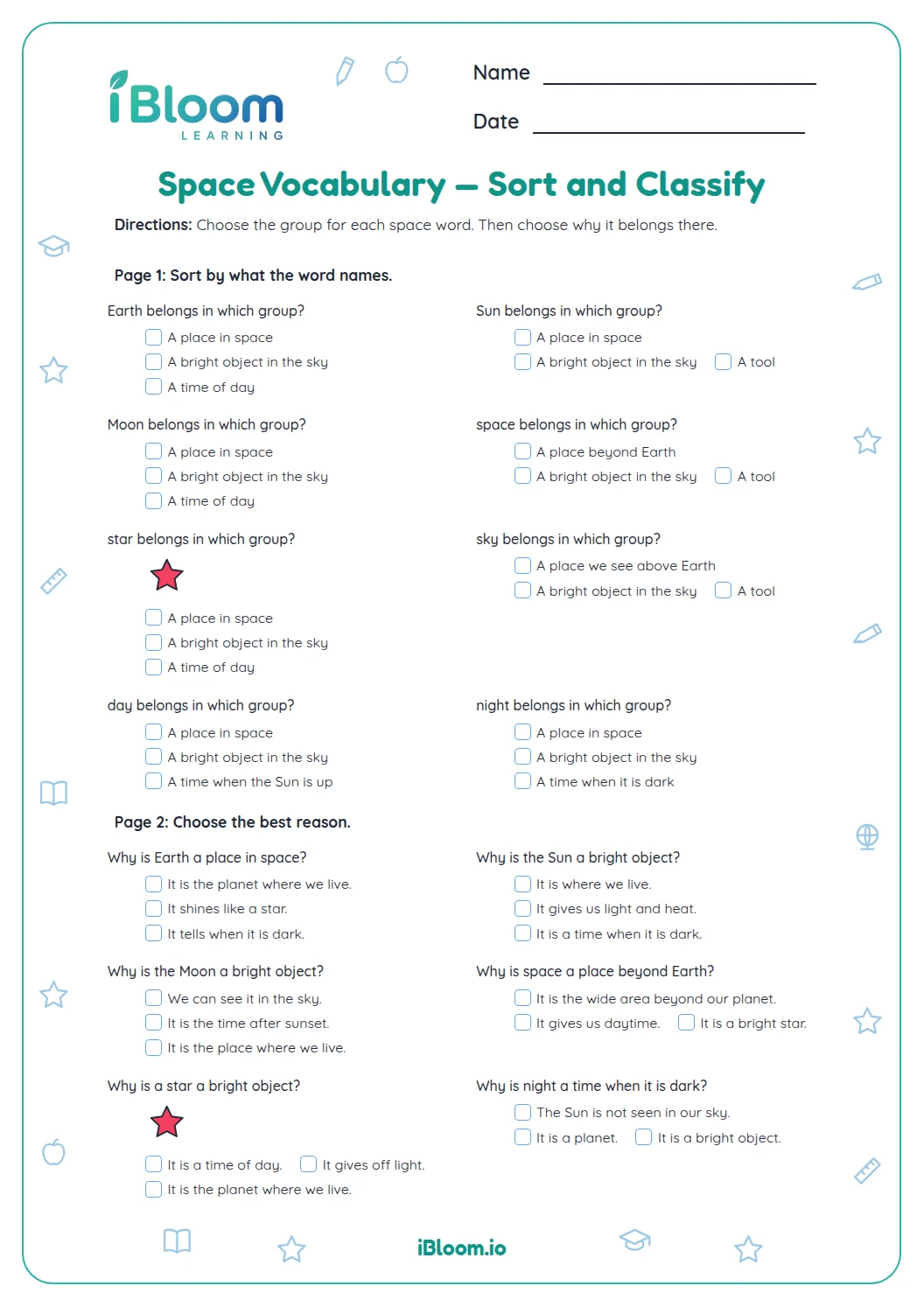

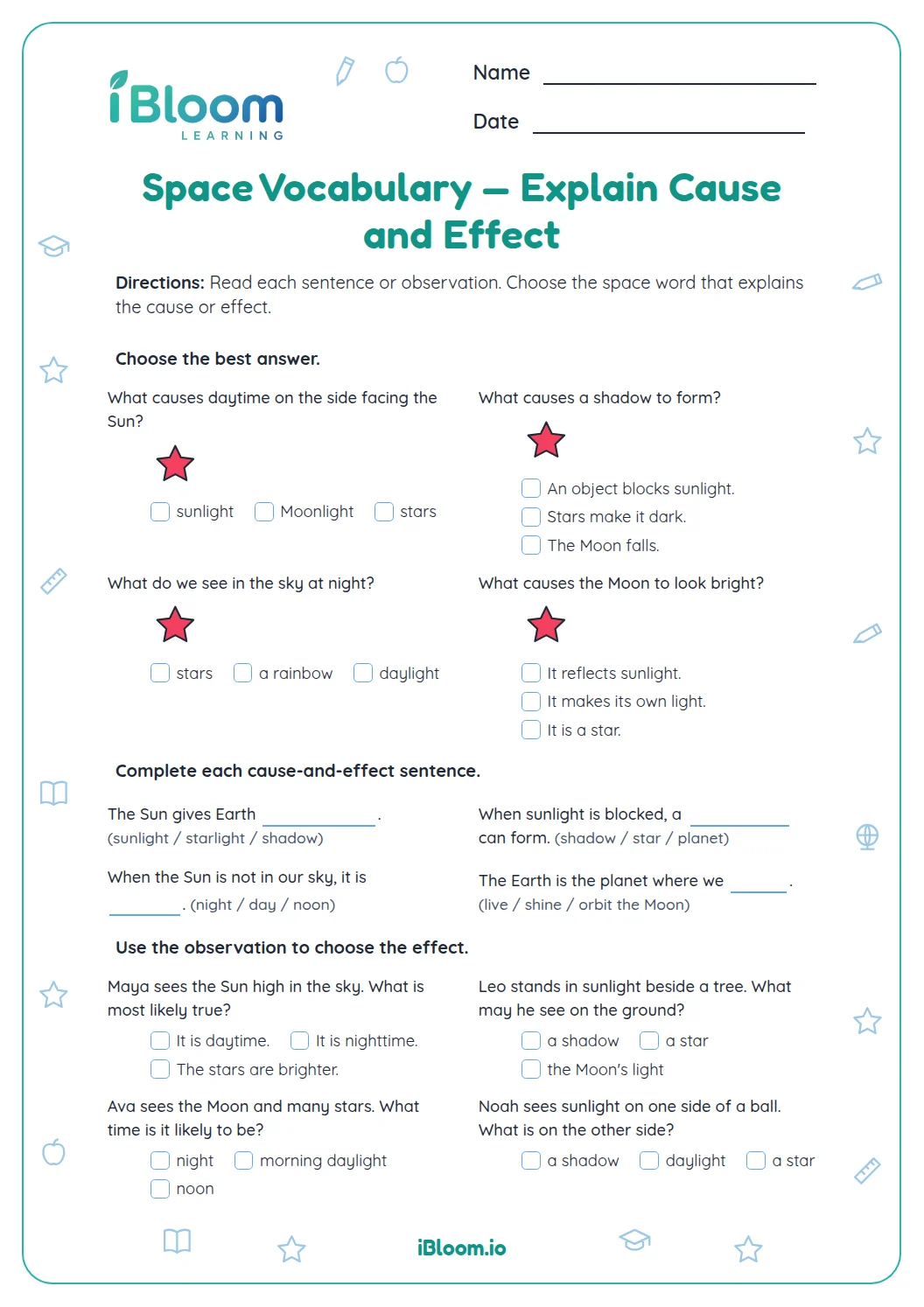


About this worksheet
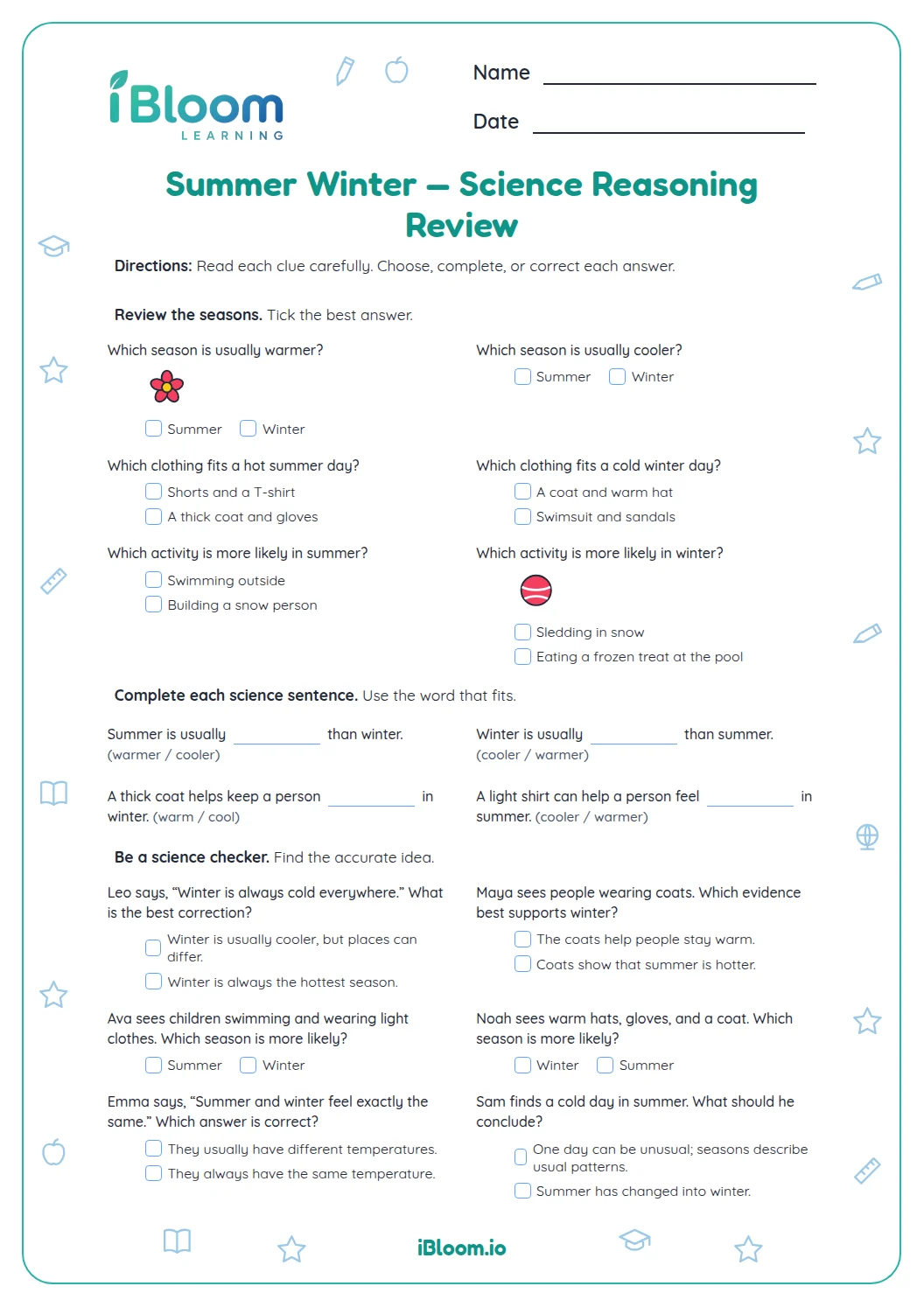
This Grade 1 science page builds cause-and-effect reasoning about summer and winter. Students answer 14 questions about seasonal warmth, colder air, daylight, clothing, and what may happen to water or ice. The parts move from choosing a cause or effect to completing statements and applying seasonal clues in everyday situations. A separate answer key gives the correct choices and a sample response.
Aligned to 1-ESS1-2
What seasonal causes and effects appear here?
Students connect warmer summer weather with more direct sunlight, colder winter air with coats or freezing water, and seasonal daylight with time of year. Part A asks about causes and effects; Part B applies those ideas to short seasonal situations.
The examples use familiar observations from outdoors and daily routines.
Why is winter daylight usually less than summer daylight?
The seasonal pattern is that winter has less daylight than summer. The worksheet asks students to compare those times of year, then use the same idea when choosing which season usually has longer daylight.
This is a relative comparison; no hour counts are needed.
- 1In winter, daylight is usually ___ than in summer.
- 2Choose “less” to complete the seasonal comparison.
How can a student tell a cause from an effect?
A cause helps explain why something happens; an effect is what happens as a result. Cold air can be a cause, and wearing a coat is an effect. For a puddle, very cold air can lead to freezing.
Ask “what made it happen?” for a cause and “what happened next?” for an effect.
How to use this worksheet
- 1Read the whole seasonal situation.
- 2Decide whether it asks why something happens or what happens next.
- 3Use the warm, cold, or daylight clue to choose an answer.
- 4Reread the answer with the prompt to check the cause-and-effect link.
Common mistakes and quick fixes
The mistake
Saying winter has more daylight than summer.
The fix
Compare the seasons directly: winter usually has less daylight.
The mistake
Mixing up a cause and an effect in the clothing examples.
The fix
Cold air is the cause; needing warm clothing is the effect.
The mistake
Choosing that a puddle freezes in warm air.
The fix
Check the temperature clue: water may freeze when the air is cold.
Curriculum alignment
This page gives students focused practice with a standard that connects to the skill.
Observe seasonal patterns and relate daylight to time of year.
On this sheet: Students compare daylight in summer and winter while reasoning about seasonal observations.
Show the official wordingHide the official wording
Make observations at different times of year to relate the amount of daylight to the time of year.
What to practice next
Make more practice
Further reading
Questions parents and teachers ask
Which season usually has less daylight?
Winter usually has less daylight than summer. Question 6 asks students to complete that comparison, and question 13 asks them to identify the season with less daylight. The key marks “winter” for both. Notice the seasonal clue before choosing a cause or effect.
Why might someone wear a coat in winter?
Winter air is colder, so a person may wear a coat to stay warm. The worksheet uses this everyday example to distinguish the cause, cold air, from the effect, needing warm clothing. This comparison names the season, not a number of hours.
Can cold air cause water to freeze?
Yes. A puddle may freeze when the air is very cold. Students use the temperature clue in question 9 to connect a cause with a likely effect. Ask what happened first and what result followed. Naming both parts makes the connection easier to explain.
Why are summer days often warmer?
Summer places can receive more direct sunlight, and summer days usually have more daylight. These seasonal patterns help explain why it can be warmer in summer. Question 1 asks students to connect stronger sunlight with warmer conditions. The two clues work together across the seasons.
What is included in the answer key?
The key gives the correct choice for all 14 questions, including the seasonal daylight comparisons, clothing examples, and freezing water. Review a missed response by asking which clue in the prompt supports the answer. Use the prompt clue to explain why the answer fits.