Free printable practice
Seeds Practice Activities
Printable Grade 1 science activities that help children identify seeds, understand what seeds need, and describe how seeds grow into plants.
Free printable worksheet PDFs
Preview every available page, then download the free worksheet PDF for home, homeschool, tutoring, or classroom practice.
Preview the exact activity before downloading it.
 Seeds — Sort and ClassifyPrintable Grade 1 science activities that help children identify seeds, understand what seeds need, and describe how seeds grow into plants. This sort and classify worksheet provides a distinct, age-appropriate way to practise the same lesson.Grade 1Free PDF preview
 Seeds — Label and ModelPrintable Grade 1 science activities that help children identify seeds, understand what seeds need, and describe how seeds grow into plants. This label and model worksheet provides a distinct, age-appropriate way to practise the same lesson.Grade 1Free PDF preview
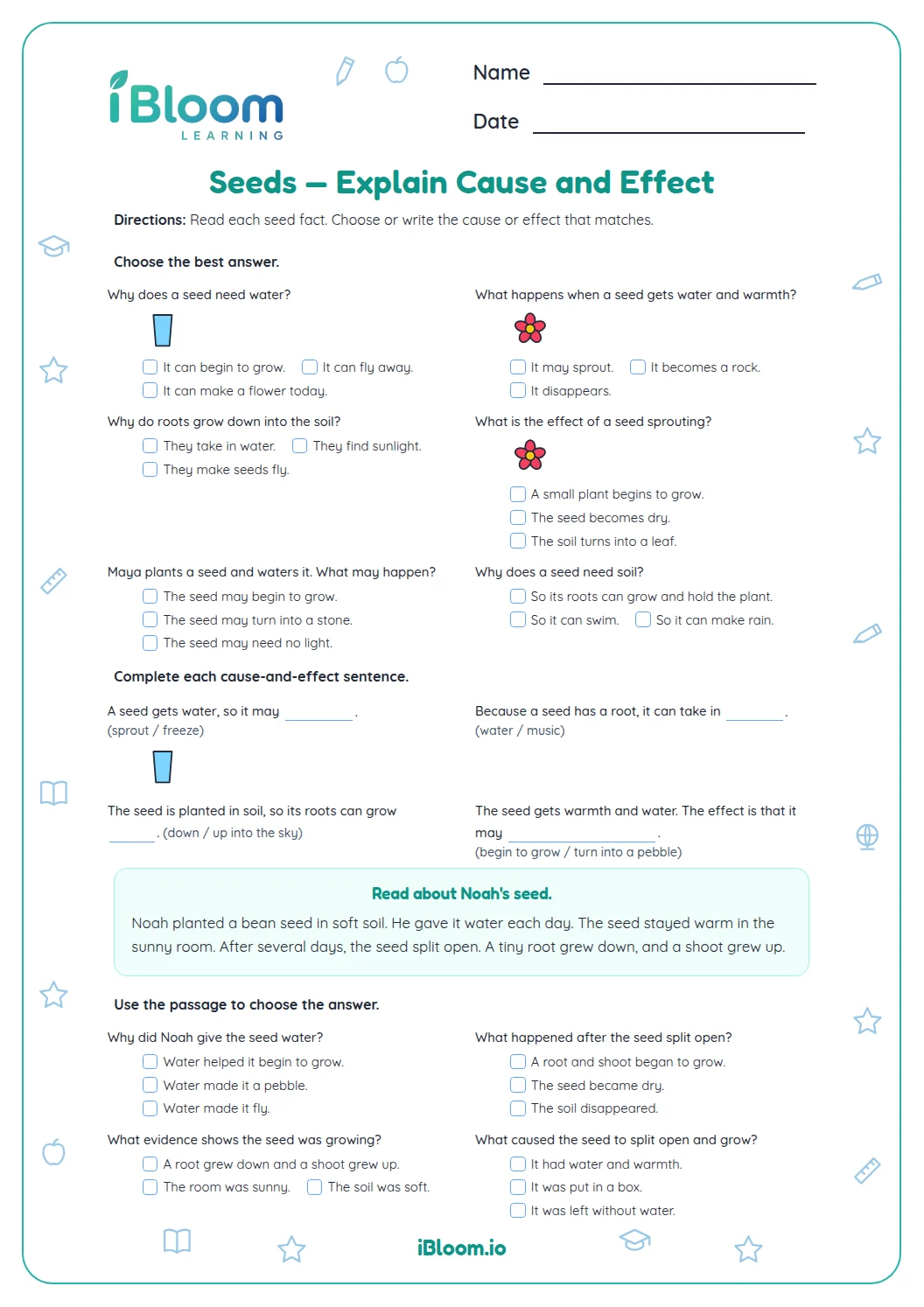 Seeds — Explain Cause and EffectPrintable Grade 1 science activities that help children identify seeds, understand what seeds need, and describe how seeds grow into plants. This explain cause and effect worksheet provides a distinct, age-appropriate way to practise the same lesson.Grade 1Free PDF preview
 Seeds — Apply Science IdeasPrintable Grade 1 science activities that help children identify seeds, understand what seeds need, and describe how seeds grow into plants. This apply science ideas worksheet provides a distinct, age-appropriate way to practise the same lesson.Grade 1Free PDF preview
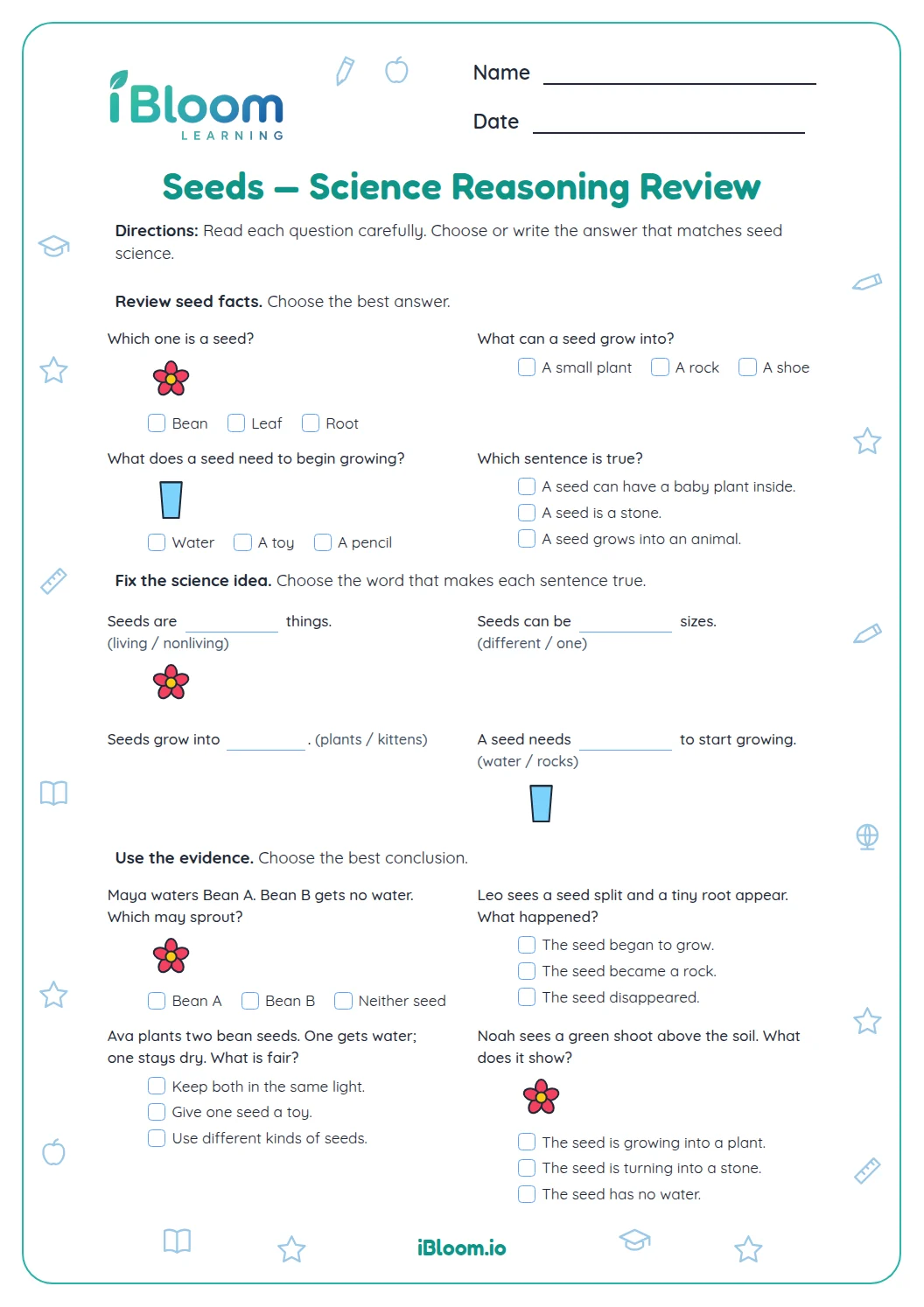 Seeds — Science Reasoning ReviewPrintable Grade 1 science activities that help children identify seeds, understand what seeds need, and describe how seeds grow into plants. This science reasoning review worksheet provides a distinct, age-appropriate way to practise the same lesson.Grade 1Free PDF preview
Practice that builds confidence
What children learn about seeds
These Grade 1 science worksheets focus on seeds within the Plants unit. Children practise noticing that many plants begin as seeds, comparing seed shapes and sizes, and connecting seeds to the young plants they can become.
The printable activities include simple picture tasks, matching, sequencing, labelling, sorting, and observation prompts. They support clear science vocabulary while keeping the work concrete for early elementary learners.
Children explore seeds as living plant parts that can grow when conditions are right. The worksheets build everyday understanding of ideas such as seed, plant, root, shoot, seedling, soil, water, and sunlight. Activities may ask learners to find seeds in pictures, match a seed to a plant, or describe what a seed needs to start growing.
Skill progression in the printables
The collection moves from observation to explanation. Children first identify seeds and compare what they look like. They then sort examples, sequence simple growth stages, and use words or drawings to show change over time. This progression helps first graders move beyond “a seed is small” toward “a seed can grow into a new plant.”
A simple parent routine
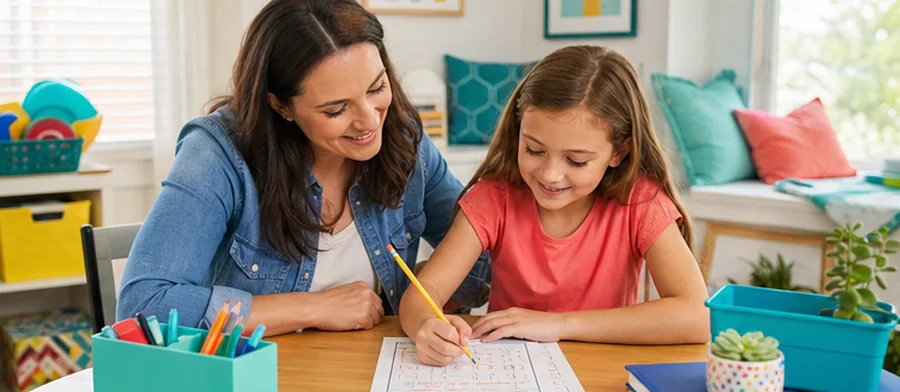
At home, choose one page and connect it to a real object: an apple seed, bean, sunflower seed, or packet of garden seeds. Ask, “What do you notice?” before naming parts or giving answers. After the worksheet, have your child draw a seed before and after sprouting, or tell one sentence about what it needs. Keep the focus on careful looking and using science words.
Classroom uses for teachers
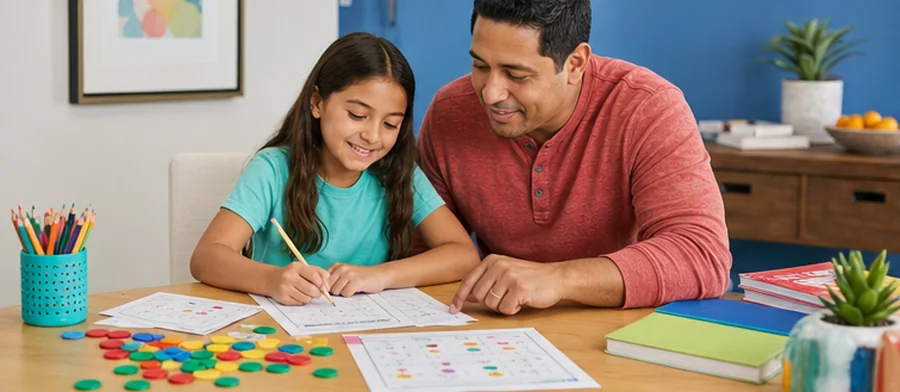
Teachers can use these pages during a Plants lesson, in science centers, as follow-up to a seed observation tray, or as evidence of understanding after a read-aloud about plant growth. Matching and sorting pages work well for independent practice, while sequencing pages support small-group discussion using words like first, next, then, and last.
Common errors to watch for
Some children think all seeds look the same, or that a seed is not alive because it is dry and still. Others may confuse the fruit with the seed, such as calling the whole apple a seed. Encourage them to look closely, compare examples, and explain their thinking: “Where is the seed? What might it grow into?”
Free printable PDF download
Use this grade 1 seeds worksheet page to preview the activity, print it, or download it as a PDF for quick practice. It works well for homework, homeschool lessons, tutoring, morning work, revision, and classroom centers.
Answers and answer key support
After the child completes the worksheet independently, parents and teachers can use the answer support or answer key information to check the work, review mistakes, and choose the next practice step.
Why iBloom worksheets help
iBloom worksheets keep Grade 1 seed science visual, manageable, and vocabulary-rich. A child-friendly strategy is: look, name, tell. Look closely at the picture, name the seed or plant part, then tell what happens next. This routine helps children answer with evidence instead of guessing.
Helpful answers
Frequently asked questions
What should a Grade 1 child understand about seeds?
A first grader should understand that many plants begin as seeds, seeds can look different, and seeds need the right conditions, such as water and a place to grow, before they can become seedlings.
Do these seed worksheets require real planting?
No. The worksheets can be completed on their own with pictures and prompts. They also pair well with a simple bean or sunflower seed observation if you want to add a hands-on activity.
Which science words are useful for this topic?
Helpful words include seed, plant, soil, water, sunlight, root, shoot, sprout, seedling, grow, and observe. Children do not need advanced plant anatomy for this Grade 1 level.
How can I help a child who confuses fruits and seeds?
Use a familiar example, such as an apple or orange. Show that the fruit is the larger part we eat and the seeds are found inside. Then ask the child to point to the part that could grow into a new plant.
Can these worksheets be used in science centers?
Yes. Sorting, matching, and sequencing pages are especially useful for centers. Add real seed samples, magnifiers, or picture cards to encourage observation and discussion.
Is this grade 1 seeds worksheet free?
Yes. You can preview it for free and use the printable worksheet for home or classroom practice.
Can I download this grade 1 seeds worksheet as a PDF?
Yes. Use the worksheet download option to save a printable PDF, or print the worksheet directly from the page.
Does this grade 1 seeds worksheet include answers or an answer key?
When the activity has fixed answers, iBloom includes answer support so parents and teachers can check the completed worksheet.