Free printable practice
Life Cycle Practice Activities
Grade 1 science worksheets introduce plant life cycles through sequencing, observation, and simple vocabulary about how plants grow.
Free printable worksheet PDFs
Preview every available page, then download the free worksheet PDF for home, homeschool, tutoring, or classroom practice.
Preview the exact activity before downloading it.
 Life Cycle — Sort and ClassifyGrade 1 science worksheets introduce plant life cycles through sequencing, observation, and simple vocabulary about how plants grow. This sort and classify worksheet provides a distinct, age-appropriate way to practise the same lesson.Grade 1Free PDF preview4 pages
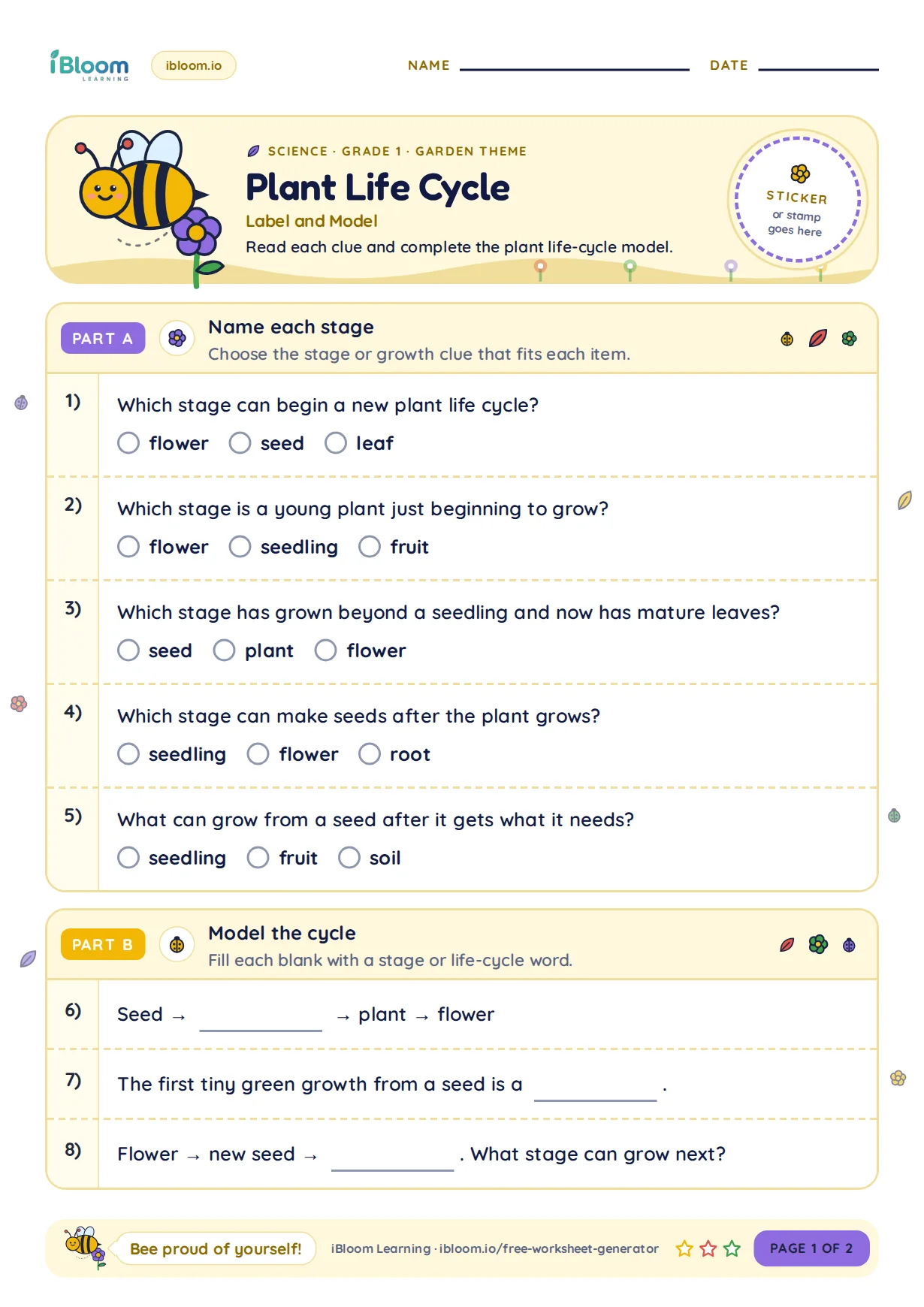 Life Cycle — Label and ModelGrade 1 science worksheets introduce plant life cycles through sequencing, observation, and simple vocabulary about how plants grow. This label and model worksheet provides a distinct, age-appropriate way to practise the same lesson.Grade 1Free PDF preview
 Life Cycle — Explain Cause and EffectGrade 1 science worksheets introduce plant life cycles through sequencing, observation, and simple vocabulary about how plants grow. This explain cause and effect worksheet provides a distinct, age-appropriate way to practise the same lesson.Grade 1Free PDF preview
 Life Cycle — Apply Science IdeasGrade 1 science worksheets introduce plant life cycles through sequencing, observation, and simple vocabulary about how plants grow. This apply science ideas worksheet provides a distinct, age-appropriate way to practise the same lesson.Grade 1Free PDF preview4 pages
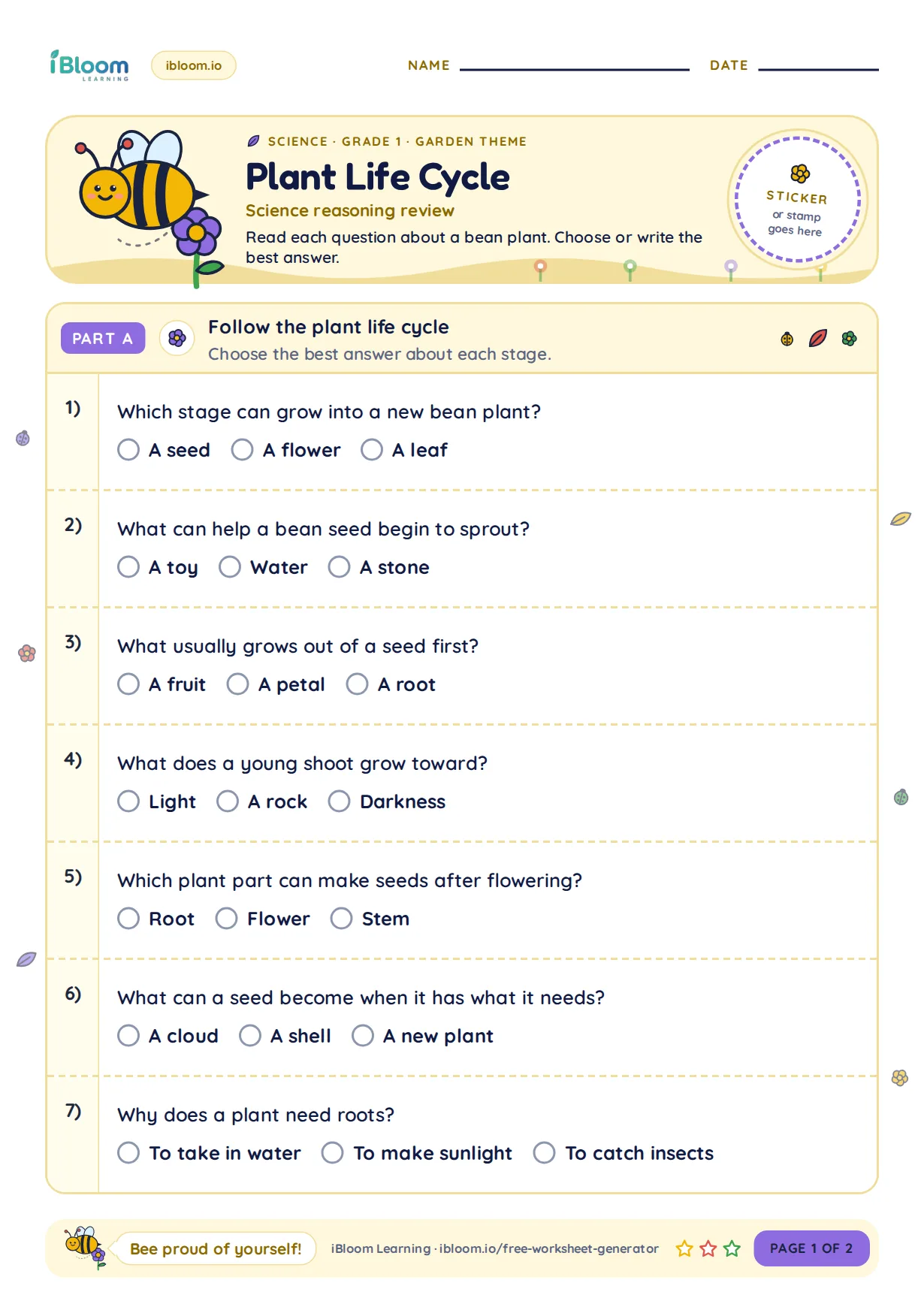 Life Cycle — Science Reasoning ReviewGrade 1 science worksheets introduce plant life cycles through sequencing, observation, and simple vocabulary about how plants grow. This science reasoning review worksheet provides a distinct, age-appropriate way to practise the same lesson.Grade 1Free PDF preview
Practice that builds confidence
What a life cycle shows
These Grade 1 science worksheets help children learn that plants grow and change in a predictable order. Students practise identifying stages such as seed, sprout, young plant, and adult plant, while building vocabulary for the Plants unit.
The printable activities include simple sequencing tasks, picture-based questions, labeling, and observation prompts. They support young learners as they connect classroom science to real plants they may see at home, in a garden, or outdoors.
A plant life cycle explains how a plant begins, grows, makes new seeds, and starts the pattern again. In Grade 1, children focus on the big idea that living things change over time. They do not need complicated details; they need clear stages and repeated visual examples.

Important plant stages
The worksheets may show a seed, a sprout, a seedling or young plant, and a grown plant. Children practise putting these stages in order and using words such as grow, roots, stem, leaves, flower, and seed. Picture clues help them see what changes from one stage to the next.
Learning through observation
A strong routine at home is to plant a bean or other fast-growing seed in a clear cup or small pot. Ask your child to draw what they see every few days and describe one change: the root got longer, the stem came up, or leaves appeared. Then connect the observation to the worksheet sequence.
Classroom uses for teachers
Teachers can use these pages after a read-aloud, during a plants science center, as a follow-up to planting seeds, or as a quick check for sequencing understanding. Students can cut and order pictures, match words to drawings, or explain the life cycle orally to a partner.

Common mix-ups to watch for
Young learners may place the flower first because it is the most colorful, or they may think a seed is not alive because it looks still. They may also confuse roots and stems. Use real pictures, simple diagrams, and gestures: roots go down, stems grow up, leaves catch light.
Free printable PDF download
Use this grade 1 plant life cycle worksheet page to preview the activity, print it, or download it as a PDF for quick practice. It works well for homework, homeschool lessons, tutoring, morning work, revision, and classroom centers.
Answers and answer key support
After the child completes the worksheet independently, parents and teachers can use the answer support or answer key information to check the work, review mistakes, and choose the next practice step.
Why iBloom worksheets help
The activities use age-appropriate visuals and repeated sequencing so children can see the cycle clearly. A child-friendly strategy is: look at the pictures, find the seed, follow what grows next, and tell the plant story from beginning to end.
Helpful answers
Frequently asked questions
What plant life cycle stages are suitable for Grade 1?
Grade 1 students usually focus on simple stages: seed, sprout, young plant, adult plant, and sometimes flower or new seeds.
Do children need to know detailed plant reproduction?
No. These worksheets keep the concept age-appropriate by focusing on how a plant begins as a seed, grows, and can make more seeds.
How can I make plant life cycles more hands-on?
Plant a seed in a cup or pot and let your child draw its changes. Then compare the real plant to the worksheet pictures.
Why is sequencing important in this topic?
Sequencing helps children understand that plant growth happens in an order, not all at once.
What vocabulary should my child practise?
Useful words include seed, sprout, roots, stem, leaves, flower, grow, and life cycle.
Is this grade 1 plant life cycle worksheet free?
Yes. You can preview it for free and use the printable worksheet for home or classroom practice.
Can I download this grade 1 plant life cycle worksheet as a PDF?
Yes. Use the worksheet download option to save a printable PDF, or print the worksheet directly from the page.
Does this grade 1 plant life cycle worksheet include answers or an answer key?
When the activity has fixed answers, iBloom includes answer support so parents and teachers can check the completed worksheet.