Free printable practice
Adaptations Practice Activities
Printable Grade 1 science activities help children connect plant parts and special features to how plants live in different habitats.
Free printable worksheet PDFs
Preview every available page, then download the free worksheet PDF for home, homeschool, tutoring, or classroom practice.
Preview the exact activity before downloading it.
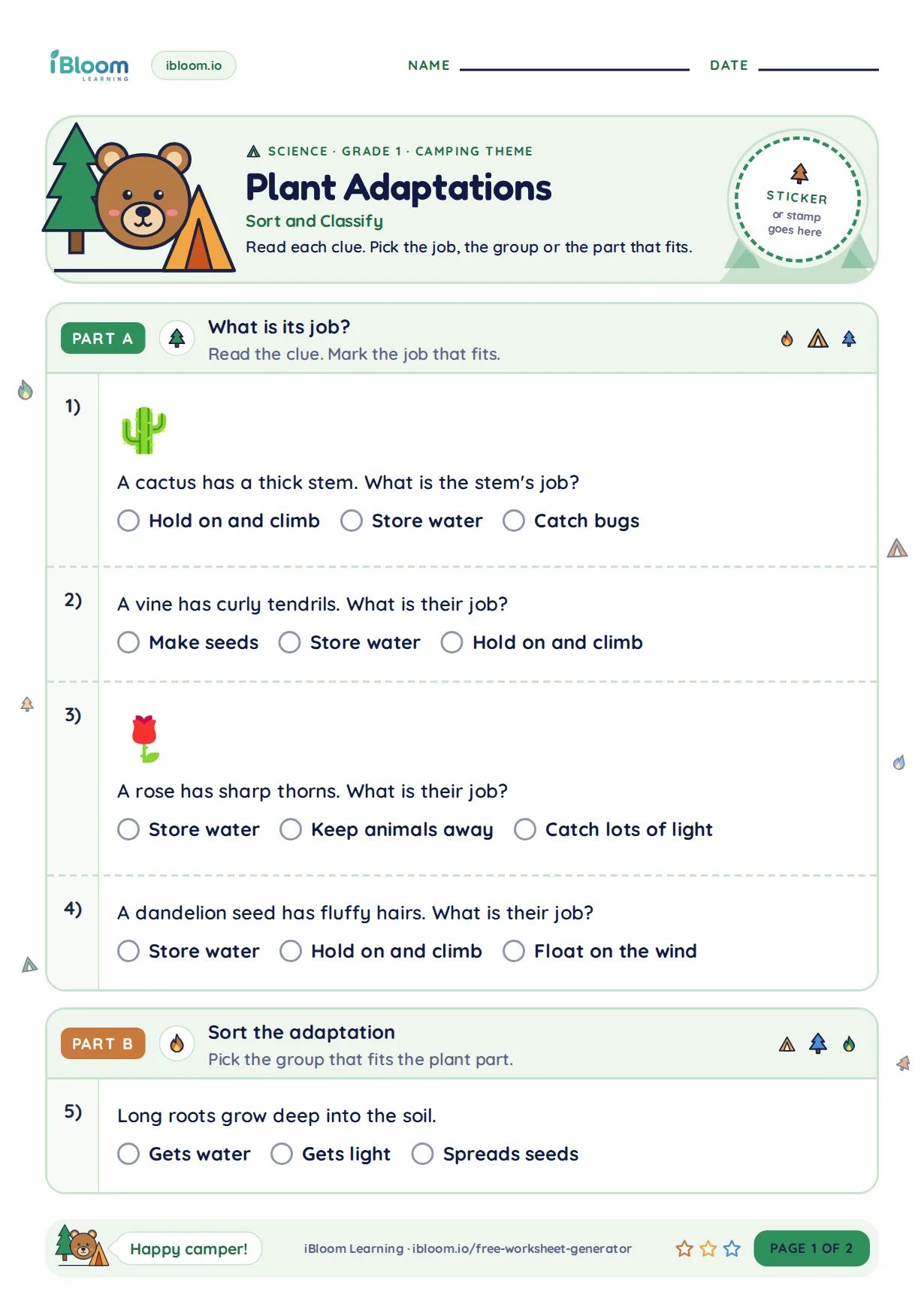 Adaptations — Sort and ClassifyPrintable Grade 1 science activities help children connect plant parts and special features to how plants live in different habitats. This sort and classify worksheet provides a distinct, age-appropriate way to practise the same lesson.Grade 1Free PDF preview4 pages
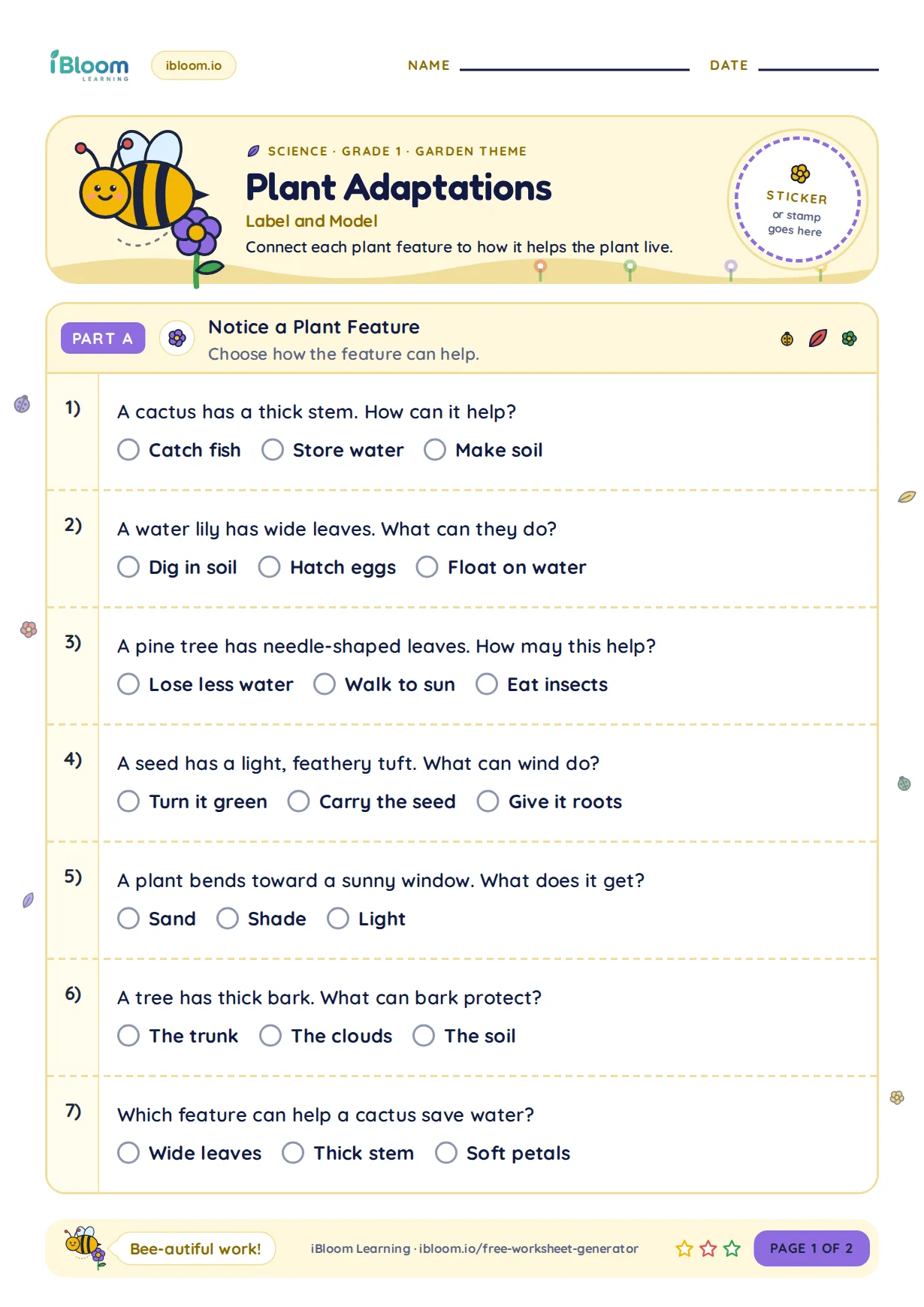 Adaptations — Label and ModelPrintable Grade 1 science activities help children connect plant parts and special features to how plants live in different habitats. This label and model worksheet provides a distinct, age-appropriate way to practise the same lesson.Grade 1Free PDF preview6 pages
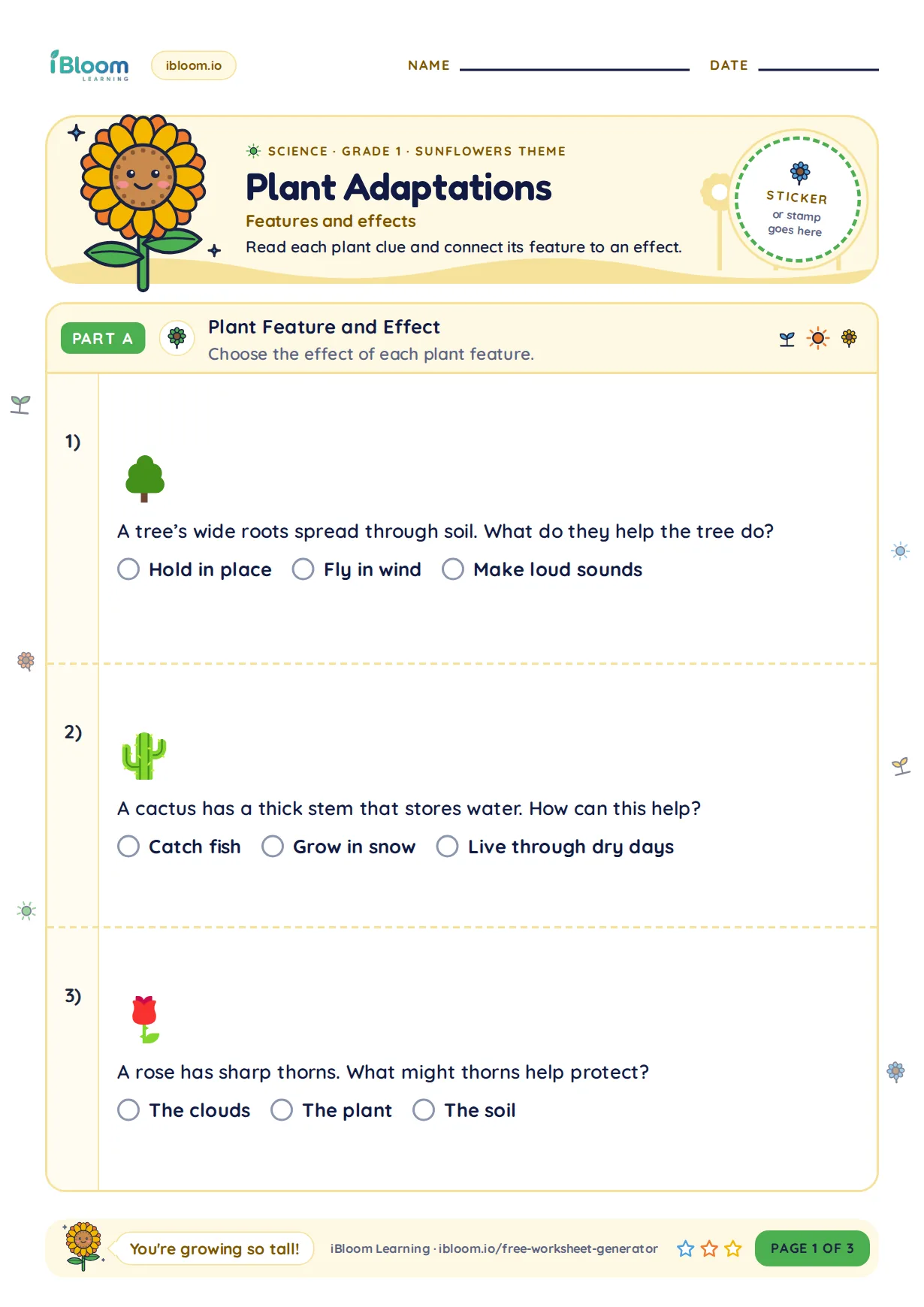 Adaptations — Explain Cause and EffectPrintable Grade 1 science activities help children connect plant parts and special features to how plants live in different habitats. This explain cause and effect worksheet provides a distinct, age-appropriate way to practise the same lesson.Grade 1Free PDF preview
 Adaptations — Apply Science IdeasPrintable Grade 1 science activities help children connect plant parts and special features to how plants live in different habitats. This apply science ideas worksheet provides a distinct, age-appropriate way to practise the same lesson.Grade 1Free PDF preview6 pages
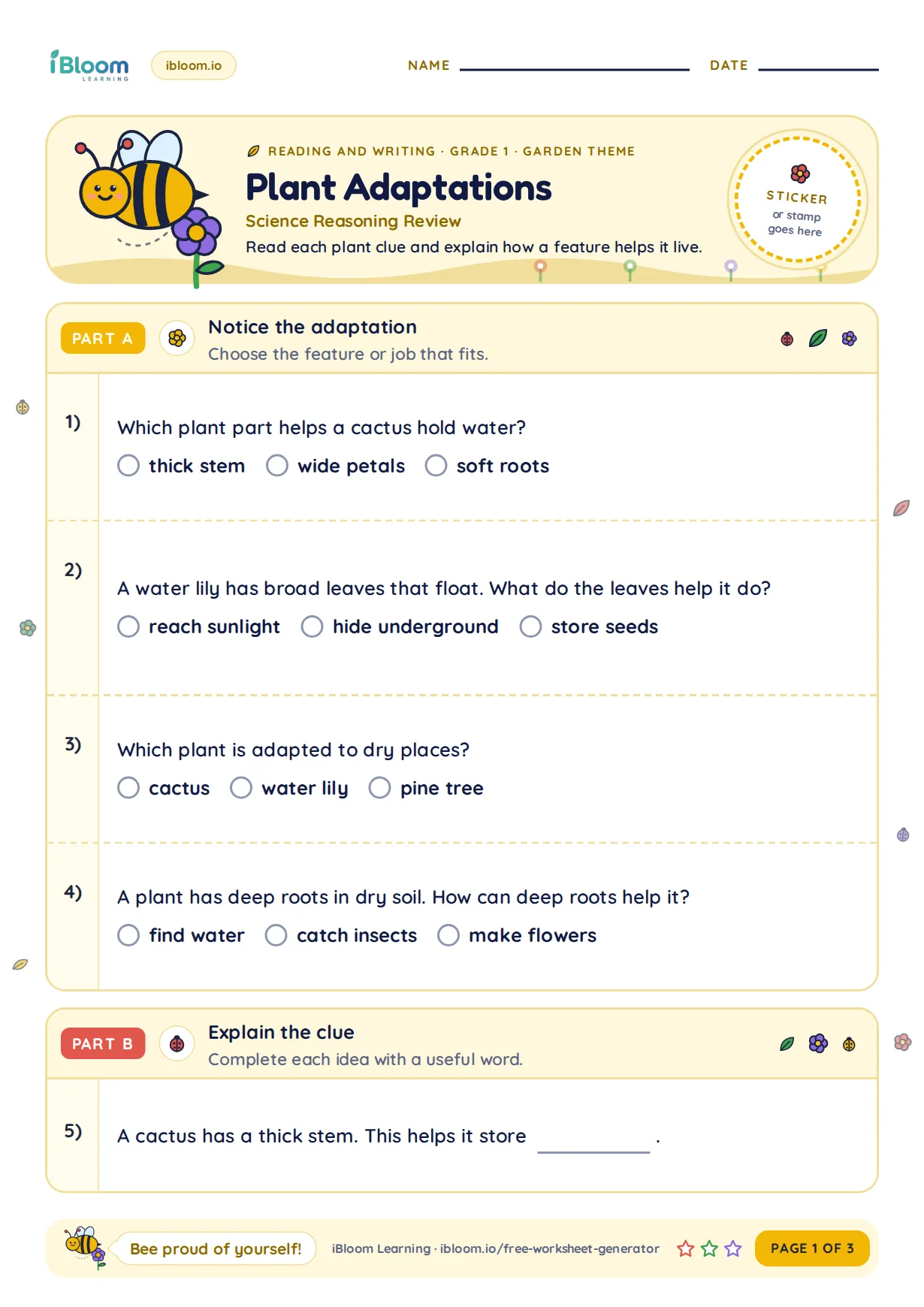 Adaptations — Science Reasoning ReviewPrintable Grade 1 science activities help children connect plant parts and special features to how plants live in different habitats. This science reasoning review worksheet provides a distinct, age-appropriate way to practise the same lesson.Grade 1Free PDF preview
Practice that builds confidence
What adaptation means in Grade 1
These Grade 1 science worksheets help children see that plant features have jobs. Students practise simple adaptation ideas: roots take in water, stems hold plants up, leaves catch sunlight, and features such as spines, thick stems, or floating leaves help plants live in their habitats.
The printables include picture matching, sorting, labeling, drawing, and short response prompts. Children connect plant parts to needs, compare plants from different places, and explain how a feature helps a plant survive.
An adaptation is presented as a plant part or feature that helps a plant live where it grows. The language stays concrete: cactus spines protect the plant, a thick stem can store water, a vine climbs toward light, and broad water-plant leaves can float. Children observe and explain, rather than memorize definitions.

How the practice builds
Activities begin with roots, stems, leaves, flowers, and seeds and the jobs they do. Then children compare plants in dry, wet, sunny, or shady places. Later pages ask them to match a feature to a need, complete a sentence, or draw a plant with a helpful part.
Parent routine
Choose a real plant, photo, or outdoor plant. Ask, “What do you notice?” and “How might that help it?” Point to one part at a time, then complete a worksheet together. Finish by having your child invent a plant for a desert or pond and label the feature that helps it survive.

Classroom uses
Teachers can use these printables in a Grade 1 plants unit, science centers, partner talks, or after a nature walk. Matching cards encourage children to justify choices aloud. Sentence frames such as “The ___ helps the plant ___” support early writing and vocabulary like habitat, protect, store, float, sunlight, and survive.

Common errors to watch for
Children may think adaptations are choices a plant makes. Rephrase: plants do not decide; the feature is part of how they grow. They may also name the plant instead of the function. Prompt for “spines help protect it” or “wide leaves help it get sunlight,” not only “cactus” or “lily pad.”
Free printable PDF download
Use this grade 1 plant adaptations worksheet page to preview the activity, print it, or download it as a PDF for quick practice. It works well for homework, homeschool lessons, tutoring, morning work, revision, and classroom centers.
Answers and answer key support
After the child completes the worksheet independently, parents and teachers can use the answer support or answer key information to check the work, review mistakes, and choose the next practice step.
Why iBloom worksheets help
iBloom pages move from noticing to explaining with large visuals, simple directions, and repeated practice formats. Sorting, labeling, circling, drawing, and short writing help the idea stick. Teach this child-friendly strategy: look at the plant, name the part, ask “What job does it do?” then say, “It helps the plant because…”
Helpful answers
Frequently asked questions
What should a Grade 1 student learn about plant adaptations?
A first grader should understand that plant features help plants live where they grow. For example, roots help take in water, leaves help plants get sunlight, and spines or thick stems can help some plants survive in dry places.
Do these worksheets include animal adaptations too?
No. This collection is focused on plants in the Grade 1 Plants unit. The activities look at plant parts, plant habitats, and special plant features that help plants survive.
What plant adaptation examples are suitable for this age?
Useful Grade 1 examples include cactus spines for protection, thick cactus stems for storing water, broad floating leaves on water plants, and vines that climb toward sunlight.
How can I use these worksheets after a nature walk?
Ask children to choose one plant they saw, name a visible part, and tell what job it might do. Then use a matching, labeling, or drawing worksheet to connect that observation to the idea of adaptation.
What vocabulary should I review before the activities?
Review simple science words such as roots, stem, leaves, flower, seeds, habitat, survive, protect, store, float, and sunlight. Picture examples make these words easier for early readers to use correctly.
Is this grade 1 plant adaptations worksheet free?
Yes. You can preview it for free and use the printable worksheet for home or classroom practice.
Can I download this grade 1 plant adaptations worksheet as a PDF?
Yes. Use the worksheet download option to save a printable PDF, or print the worksheet directly from the page.
Does this grade 1 plant adaptations worksheet include answers or an answer key?
When the activity has fixed answers, iBloom includes answer support so parents and teachers can check the completed worksheet.