Free printable practice
Plant Needs Practice Activities
Grade 1 science worksheets that help children identify the basic needs of plants through sorting, labeling, matching, and observation activities.
Free printable worksheet PDFs
Preview every available page, then download the free worksheet PDF for home, homeschool, tutoring, or classroom practice.
Preview the exact activity before downloading it.
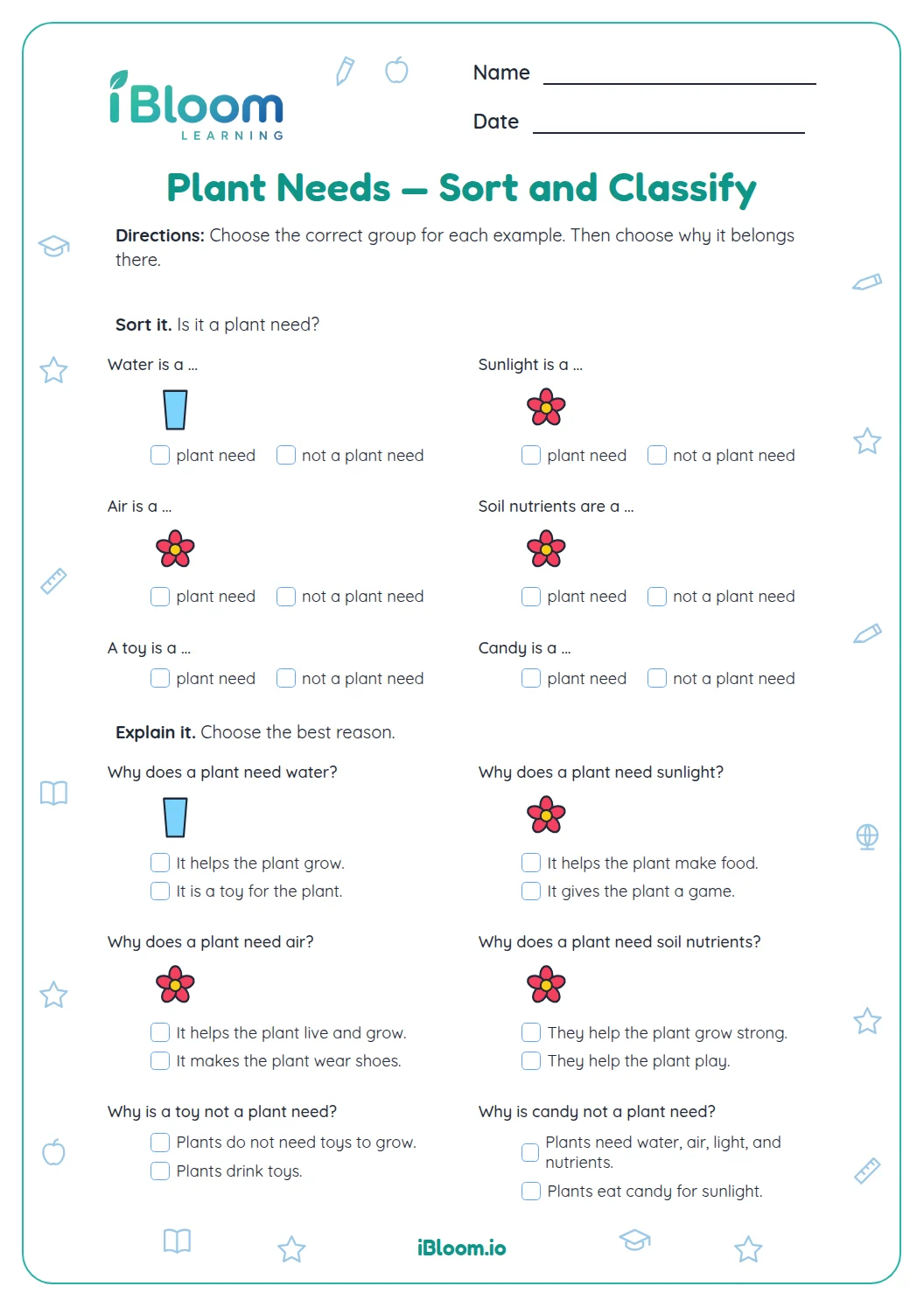 Plant Needs — Sort and ClassifyGrade 1 science worksheets that help children identify the basic needs of plants through sorting, labeling, matching, and observation activities. This sort and classify worksheet provides a distinct, age-appropriate way to practise the same lesson.Grade 1Free PDF preview
 Plant Needs — Label and ModelGrade 1 science worksheets that help children identify the basic needs of plants through sorting, labeling, matching, and observation activities. This label and model worksheet provides a distinct, age-appropriate way to practise the same lesson.Grade 1Free PDF preview
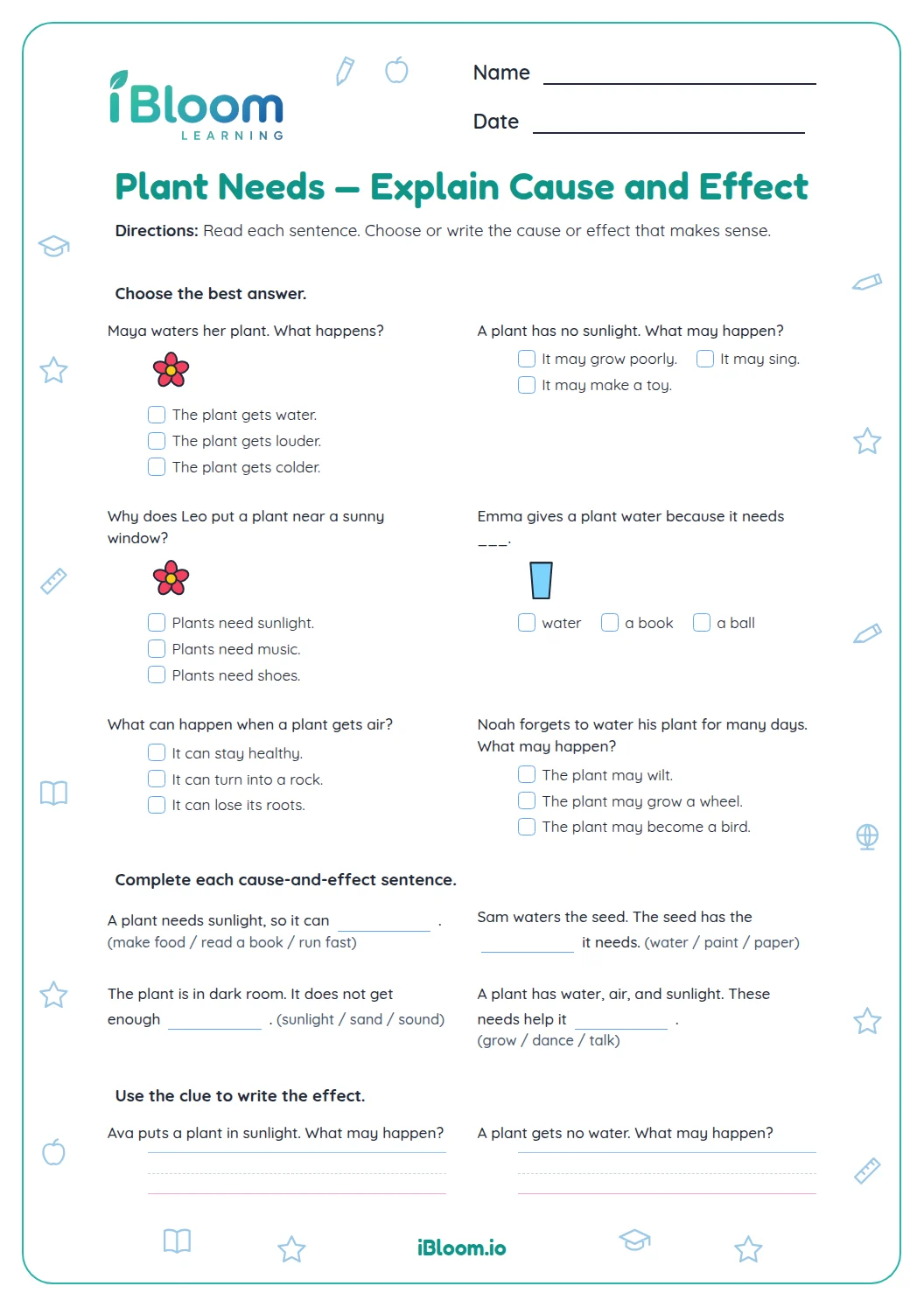 Plant Needs — Explain Cause and EffectGrade 1 science worksheets that help children identify the basic needs of plants through sorting, labeling, matching, and observation activities. This explain cause and effect worksheet provides a distinct, age-appropriate way to practise the same lesson.Grade 1Free PDF preview
 Plant Needs — Apply Science IdeasGrade 1 science worksheets that help children identify the basic needs of plants through sorting, labeling, matching, and observation activities. This apply science ideas worksheet provides a distinct, age-appropriate way to practise the same lesson.Grade 1Free PDF preview4 pages
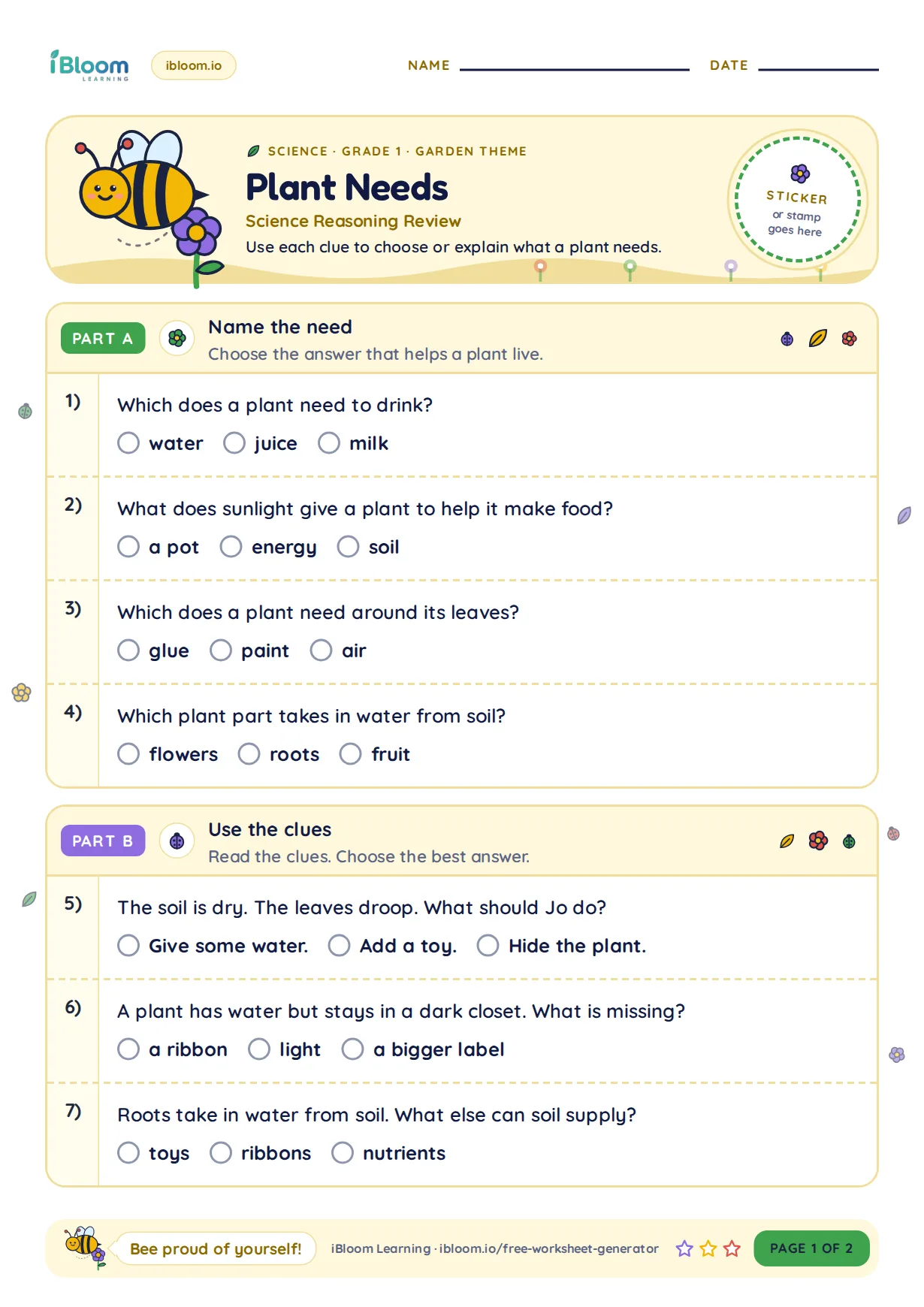 Plant Needs — Science Reasoning ReviewGrade 1 science worksheets that help children identify the basic needs of plants through sorting, labeling, matching, and observation activities. This science reasoning review worksheet provides a distinct, age-appropriate way to practise the same lesson.Grade 1Free PDF preview
Practice that builds confidence
What children learn about plant needs
These Grade 1 plant needs practice activities help children understand that plants are living things with basic needs: sunlight, water, air, space, and a place to grow. Students practise noticing what helps a plant stay healthy and explaining why each need matters.
The printable worksheets include simple picture-based tasks such as matching, circling, sorting, labeling, and drawing. They are designed for early readers and work well alongside a classroom plant, a seed-growing activity, or a short nature walk.
First graders begin by naming the things a plant needs to live and grow. They connect sunlight with energy, water with healthy stems and leaves, air with living processes, and space with room for roots and leaves. Soil is treated as a place that holds roots, water, and nutrients, not as something plants “eat.”

How the practice builds understanding
The activities move from recognition to explanation. Children may identify a watering can, sun, soil, and air in pictures, then decide whether a plant shown in shade, dry soil, or a crowded pot is getting what it needs. Later tasks ask them to complete simple sentences or draw a plant in a good growing place, which helps them use science vocabulary with confidence.
A simple parent routine
Choose one real plant at home or outside. Ask, “What does this plant have today?” Let your child check for light, soil or another growing place, space, and whether the soil looks dry or damp. After completing one worksheet, have them draw the plant and say one sentence such as, “This plant needs water because the soil is dry.” Repeat the observation after a few days so the idea connects to real change.

Classroom uses for teachers
Use these pages during a Grade 1 plants unit, at science centers, after a read-aloud about seeds, or before starting a class plant observation journal. They also work as quick checks: students can sort plant needs and non-needs, label a healthy plant scene, or explain why one plant picture looks healthier than another.

Common errors to watch for
Some children say plants need “food” and mean soil or water. Gently explain that plants make their own food using sunlight, air, and water. Others may think more water is always better, so include the idea that plants need the right amount. Watch for confusion between wants and needs, such as a flowerpot color, decorations, or a person talking to the plant.
Free printable PDF download
Use this grade 1 plant needs worksheet page to preview the activity, print it, or download it as a PDF for quick practice. It works well for homework, homeschool lessons, tutoring, morning work, revision, and classroom centers.
Answers and answer key support
After the child completes the worksheet independently, parents and teachers can use the answer support or answer key information to check the work, review mistakes, and choose the next practice step.
Why iBloom worksheets help
The pages use clear visuals, repeated vocabulary, and small reasoning steps so children do more than memorize a list. A child-friendly strategy is: “Look for light, water, air, space, and a growing place.” Saying this checklist while pointing to a picture helps students decide whether a plant has what it needs.
Helpful answers
Frequently asked questions
What plant needs are covered in these Grade 1 worksheets?
The worksheets focus on the basic needs young children can observe and name: sunlight, water, air, space, and a place to grow such as soil.
Are these activities suitable for children who are still developing reading skills?
Yes. The tasks use clear pictures, simple directions, and familiar science words, so early readers can complete much of the work with light adult support.
How can I use these worksheets with a real plant?
Have your child look at a houseplant, garden plant, or classroom plant before or after the worksheet. Ask them to point out light, water, air, space, and the growing place, then draw or describe what they noticed.
Do the worksheets teach that soil is plant food?
No. The activities support the Grade 1 idea that soil gives roots a place to grow and helps hold water and nutrients, while plants make their own food using sunlight, air, and water.
Can teachers use these pages in science centers?
Yes. They work well as independent or partner center tasks, quick checks after a lesson, or follow-up pages for seed planting and plant observation activities.
Is this grade 1 plant needs worksheet free?
Yes. You can preview it for free and use the printable worksheet for home or classroom practice.
Can I download this grade 1 plant needs worksheet as a PDF?
Yes. Use the worksheet download option to save a printable PDF, or print the worksheet directly from the page.
Does this grade 1 plant needs worksheet include answers or an answer key?
When the activity has fixed answers, iBloom includes answer support so parents and teachers can check the completed worksheet.