







About this worksheet
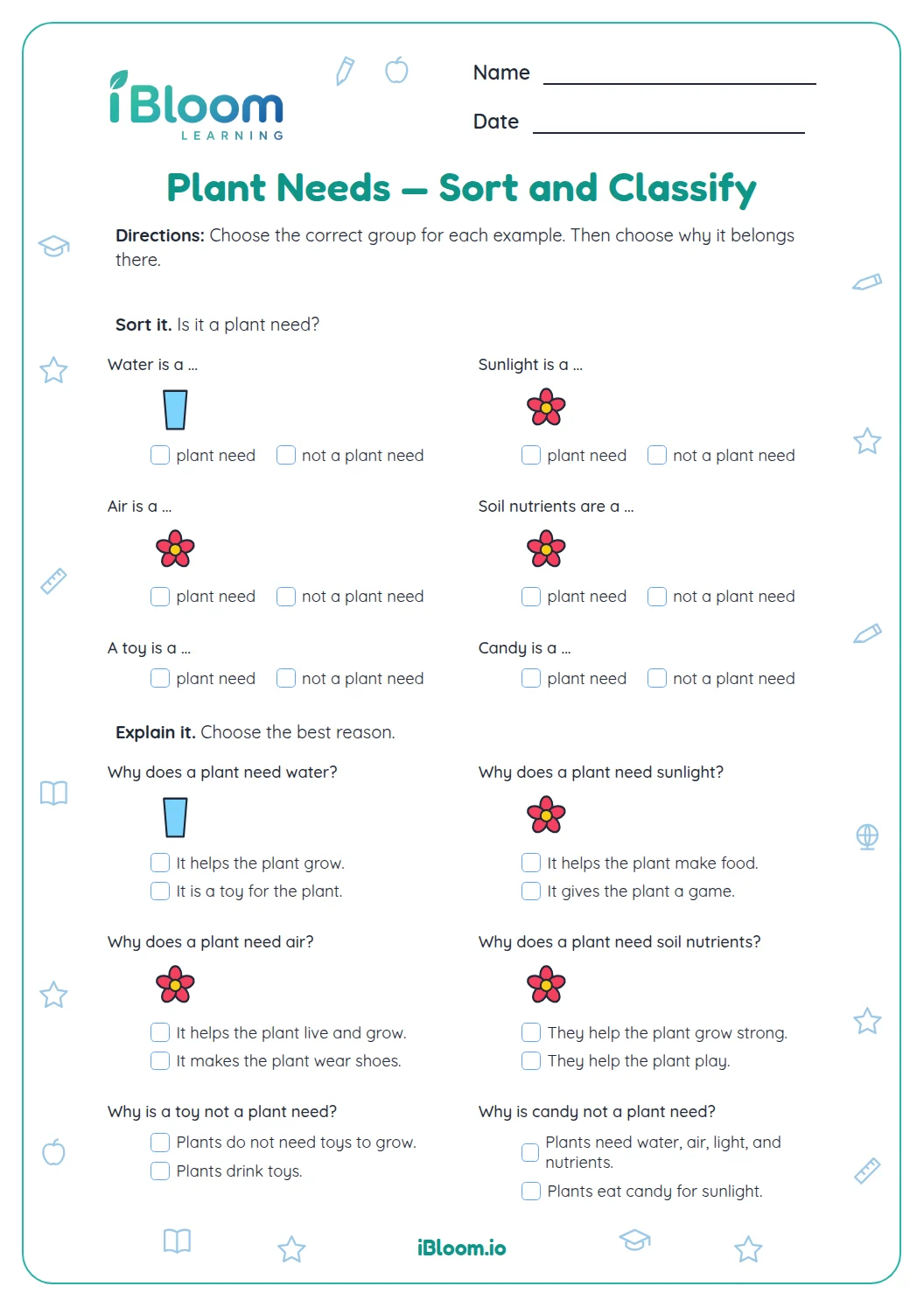
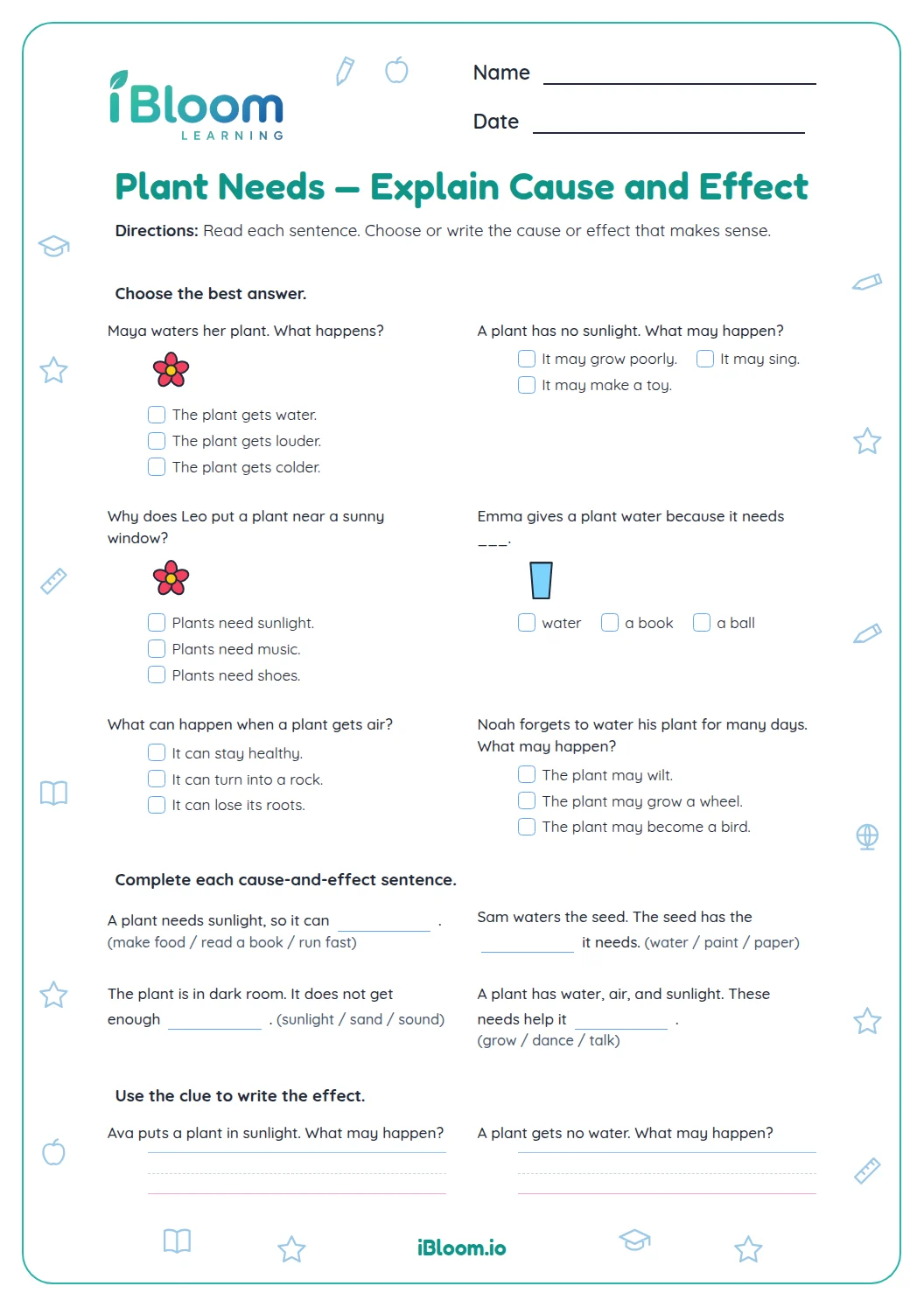
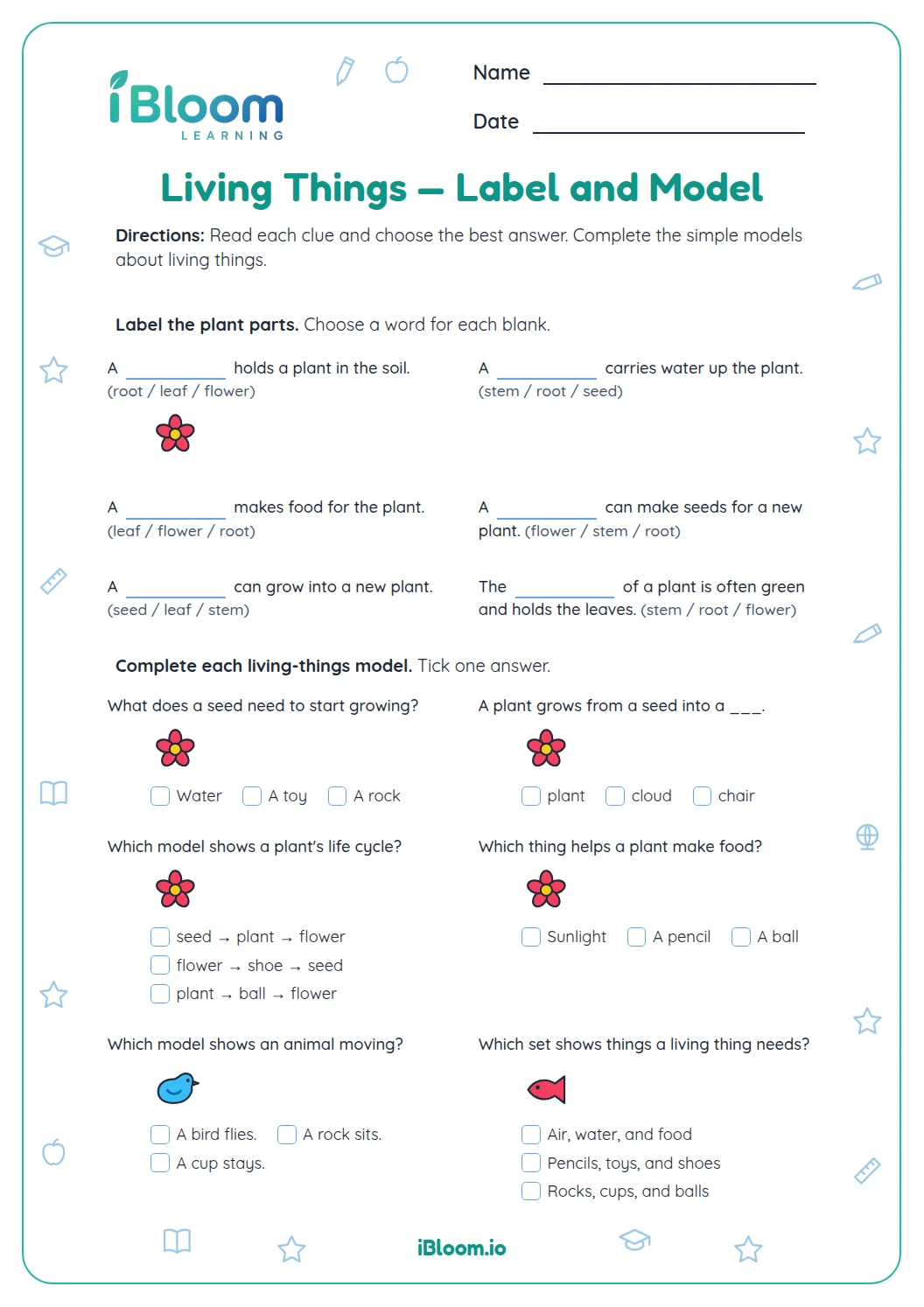
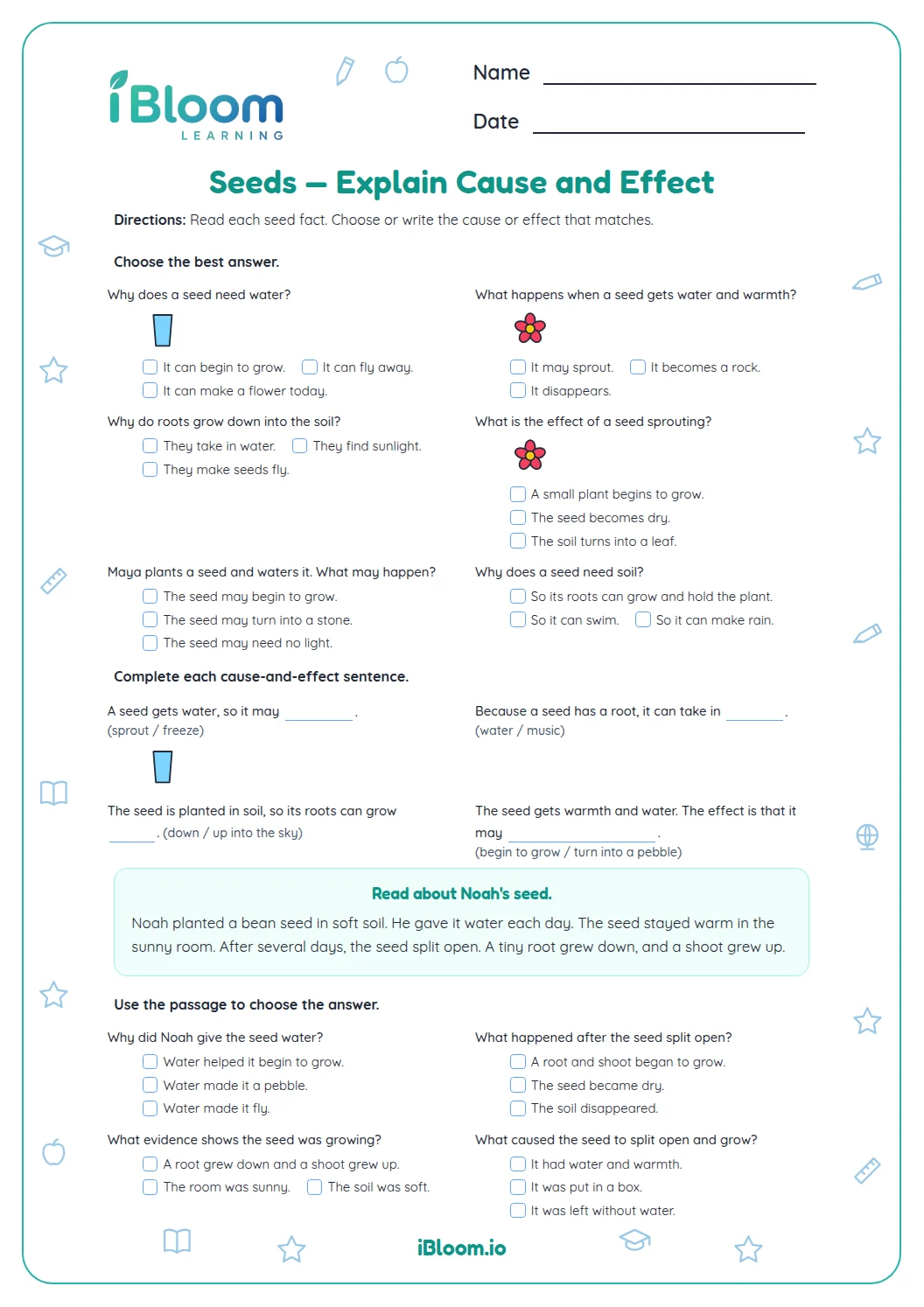
This free printable Grade 1 science worksheet turns plant needs into small reasoning problems. Children review water, light, air and roots, then use clues about soil, growth and crowded seedlings to reason about plant care. Part A has four choices about needs and roots. Part B has six choices about plant care and evidence. Part C asks for two short explanations. The observation questions practice NGSS K-LS1-1 by connecting patterns of growth with water and light. A separate answer key gives the choices and sample explanations, so adults can check both the answer and the reason.
Aligned to K-LS1-1
What does a growing plant need?
Growing green plants need water, light, air and nutrients, as well as enough room to grow. Sunlight supplies energy for making food. Roots take in water and nutrients from soil. Question 10 asks children to make room for crowded seedlings by moving some to new pots.
Use a real houseplant for a brief introduction. Point to its leaves and the place where it gets light, and feel whether its soil is dry. Children can then connect the printed situations to something they have seen.
How do children use an observation as evidence?
An observation tells what someone notices. In question 5, the soil is dry and the leaves droop. Together, these clues support giving the plant some water. Ask children to name the clue before they select the action.
Question 8 compares watered bean plants with bean plants that received no water. The children choose the statement supported by those observations. This moves the task from naming a need to using evidence.
- 1The soil is dry. The leaves droop.
- 2Dry soil is the clue about water.
- 3Choose: Give some water.
What counts as a good explanation in Part C?
A good answer links a need to a change in the plant. For question 11, a child can say that moving the plant into light helps because plants need light to grow. For question 12, children name water and cite the clue: watered beans and peas grew while unwatered ones wilted.
The key provides sample sentences. Accept a shorter answer that gives the same science idea, and invite children to explain it aloud before writing.
How to use this worksheet
- 1Name water, light and air while looking at a real plant.
- 2Read Part A aloud if needed and let the child choose each answer.
- 3In Part B, underline the observation that helps with each choice.
- 4Ask the child to say each Part C explanation before writing it.
- 5Use the key to check the choices and the meaning of the explanations.
Mistakes to notice and fix
The mistake
Choosing a pretty pot as something a plant must have.
The fix
Separate a container from a need: a plant needs water, light and air whether it grows in a pot or outside.
The mistake
Giving more water when the problem says the plant has water but no light.
The fix
Return to the clues. Identify the missing need before choosing a care action.
The mistake
Saying only “it grows” in an explanation.
The fix
Add the need and a reason: “It grows better because it now gets light.”
Curriculum alignment
Use observations of growth and wilting to identify plants’ needs for water and light.
On this sheet: Children use observations of beans, peas and potted plants to explain needs for water and light.
Show the official wordingHide the official wording
Use observations to describe patterns of what plants and animals (including humans) need to survive.
What to practice next
Make more practice
Further reading
Questions parents and teachers ask
Can I read this science worksheet aloud?
Yes, an adult can read every question and choice aloud. The child still chooses the answer and explains the plant need. For the final two questions, let the child say a reason first, then help write the same idea in a short sentence.
Does this sheet teach that every plant must grow in soil?
The sheet uses soil as a source of nutrients and a familiar place for roots to grow. Question 7 asks what soil can supply besides water. Growing green plants also need light and air; question 10 adds a care decision about giving crowded roots more room.
What does the bean plant comparison tell children?
It gives evidence that the bean plants need water. In question 8, watered beans grew while beans without water wilted. Ask children to connect the different watering conditions with the different results, then choose the statement that matches those observations.
How should I check the two written answers?
Check the science idea rather than requiring the exact sample wording. Question 11 should connect moving into light with the plant needing light. Question 12 should name water and use the growth or wilting observation as evidence. Accept a short sentence that makes that connection clearly.
How can we follow up with a real plant?
Observe one plant over several days and record changes in its leaves and soil. Let the child help check light and watering with an adult. Compare those observations with the worksheet clues, and ask which plant need each clue helps the child think about.