








About this worksheet
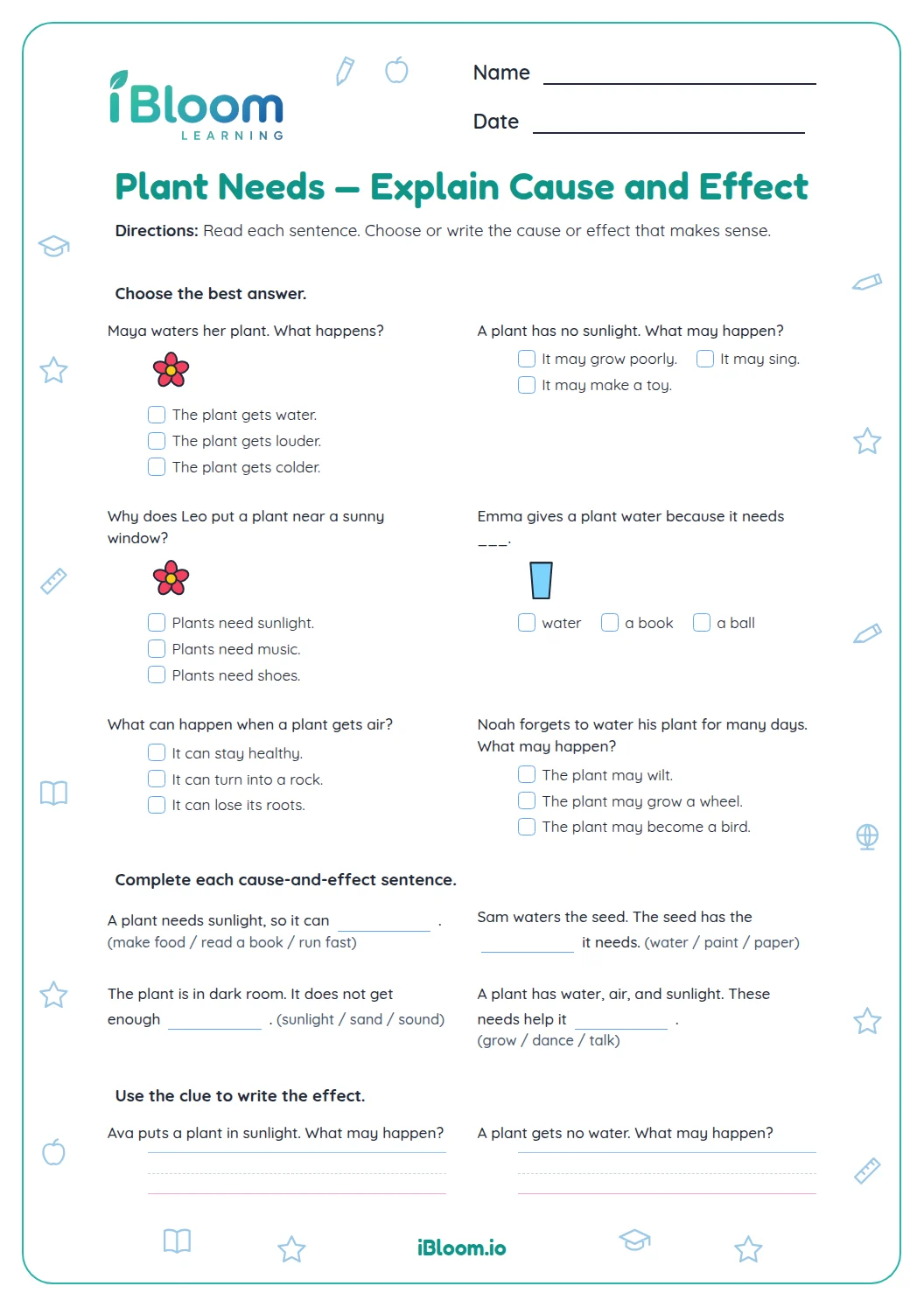
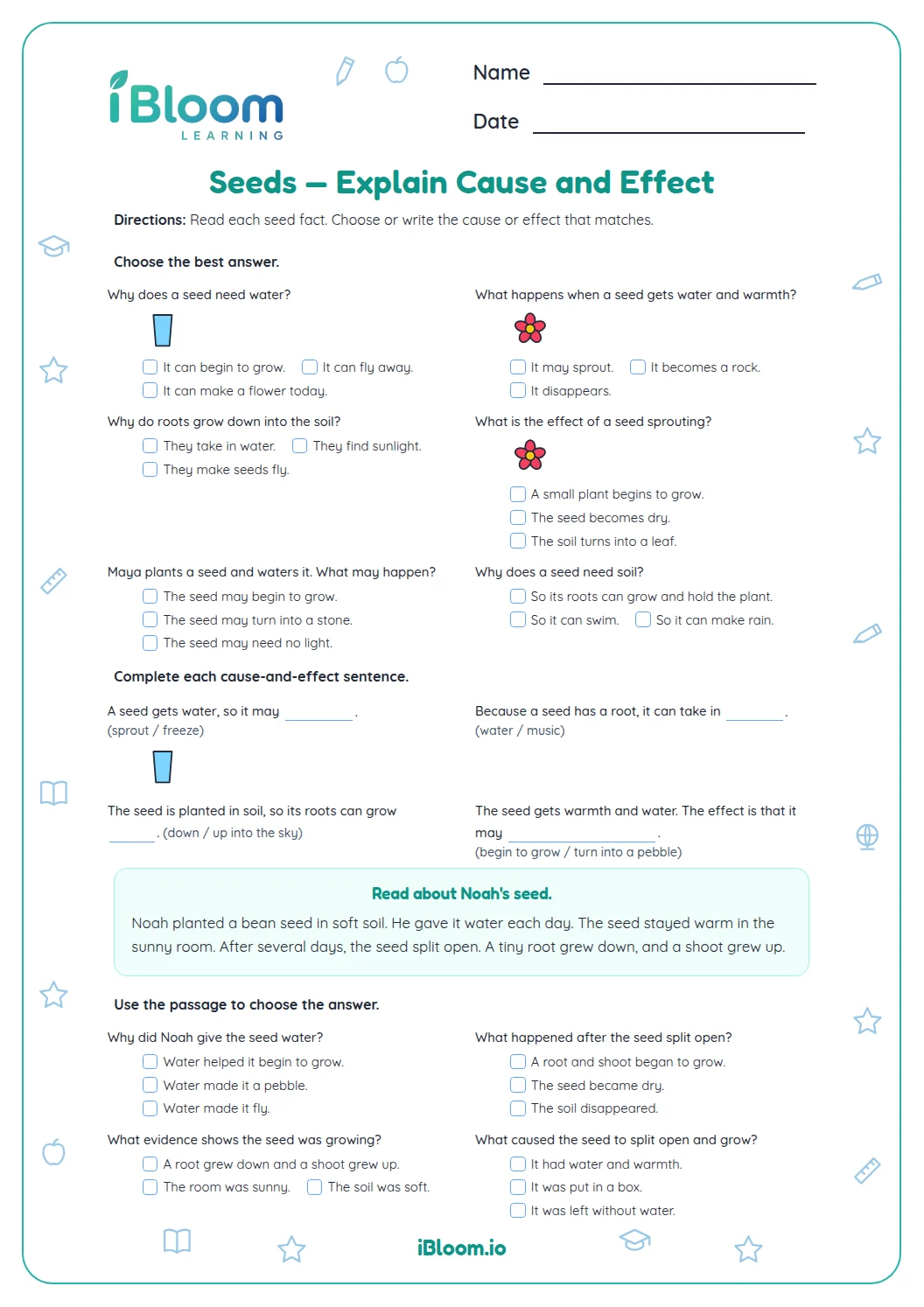
This Grade 1 science worksheet asks learners to connect plant conditions with likely results. Across 16 questions, children use familiar clues about light, water, seeds, roots, and growth to identify causes and effects, make predictions, and explain a connection in a short response. A separate key gives model answers; sensible predictions that fit the prompt can be accepted.
What does this plant worksheet practice?
Learners identify which plant condition caused a change and predict what may happen next. The short situations keep the focus on cause-and-effect reasoning about plant needs.
How can a child find the cause?
Ask what happened first and what changed afterward. For a prediction, connect a stated condition—such as little light or dry soil—to a likely plant response.
How should written predictions be checked?
The answer key gives one reasonable model. Accept another short answer when it responds to the situation and describes a sensible plant result.
- 1A plant is in a dark closet for many days. What change may happen?
- 2It may become weak because it does not get light.
How to use the page
- 1Read the directions and finish one part at a time.
- 2Read each full prompt and mark the detail that guides your answer.
- 3For written items, use a complete thought that answers the exact question.
- 4Compare your work with the answer key and revise any response that misses a clue.
Common mistakes and quick fixes
The mistake
Naming the result as the cause.
The fix
Ask which event happened first.
The mistake
Predicting a change unrelated to the plant condition.
The fix
Use the light, water, or other clue in the prompt.
The mistake
Giving only a plant fact without answering the question.
The fix
State the likely result or the event that led to it.
What to practice next
Make more practice
Questions parents and teachers ask
How many questions are on the worksheet?
The sheet has 16 questions across three worksheet pages, followed by a three-page answer key. Learners answer multiple-choice items and write predictions about plant changes. Each part builds skill with a different kind of cause-and-effect prompt, from choices to short explanations.
What plant ideas does it use?
Plan for about 20 minutes to read the situations, answer the questions, and check the key. The page can also be completed in shorter sittings, one part at a time. Written predictions may take extra time, especially when discussed aloud.
How do I check a written prediction?
Compare the response with its situation. The key offers a model, but another short answer is acceptable when it connects the stated cause to a sensible plant effect. Ask the learner to point to the clue that supports the prediction.
Can a child complete it independently?
A child who can read the prompts may work independently. An adult can read items aloud and ask the learner to identify the condition and likely change before writing a response. Reviewing one example together can make the task clear.
How long does it take?
Plan for about 20 minutes to read the situations, answer the questions, and check the key. The page can also be completed in shorter sittings, one part at a time. Written predictions may take extra time, especially when discussed aloud.