









About this worksheet
This free printable gives Grade 1 learners practice naming and ordering the stages in a plant life cycle. Children match short clues to stages, complete a seed-to-flower model, and reason about how seeds begin the cycle again. A few questions connect growth to water and sunlight, an observable pattern in what plants need. The sheet has 16 questions across three parts, with an answer key on a separate page.
Aligned to K-LS1-1
What are the stages in a plant life cycle?
A plant life cycle shows how one generation leads to another. In this sheet, children work with the sequence seed, seedling, plant, and flower. A seed can sprout into a seedling; as it grows, it becomes a larger plant. A flower can make seeds that may grow into new plants.
Real plants vary, and not every plant has the same kind of flower or seed. The model here uses a simple sequence to make the repeating pattern easy to name.
How do children complete the cycle model?
Read the stages already named, then use the clue and the order of growth to fill the blank. The key is to follow the plant from a seed through young growth to a flowering plant, then connect new seeds back to the start.
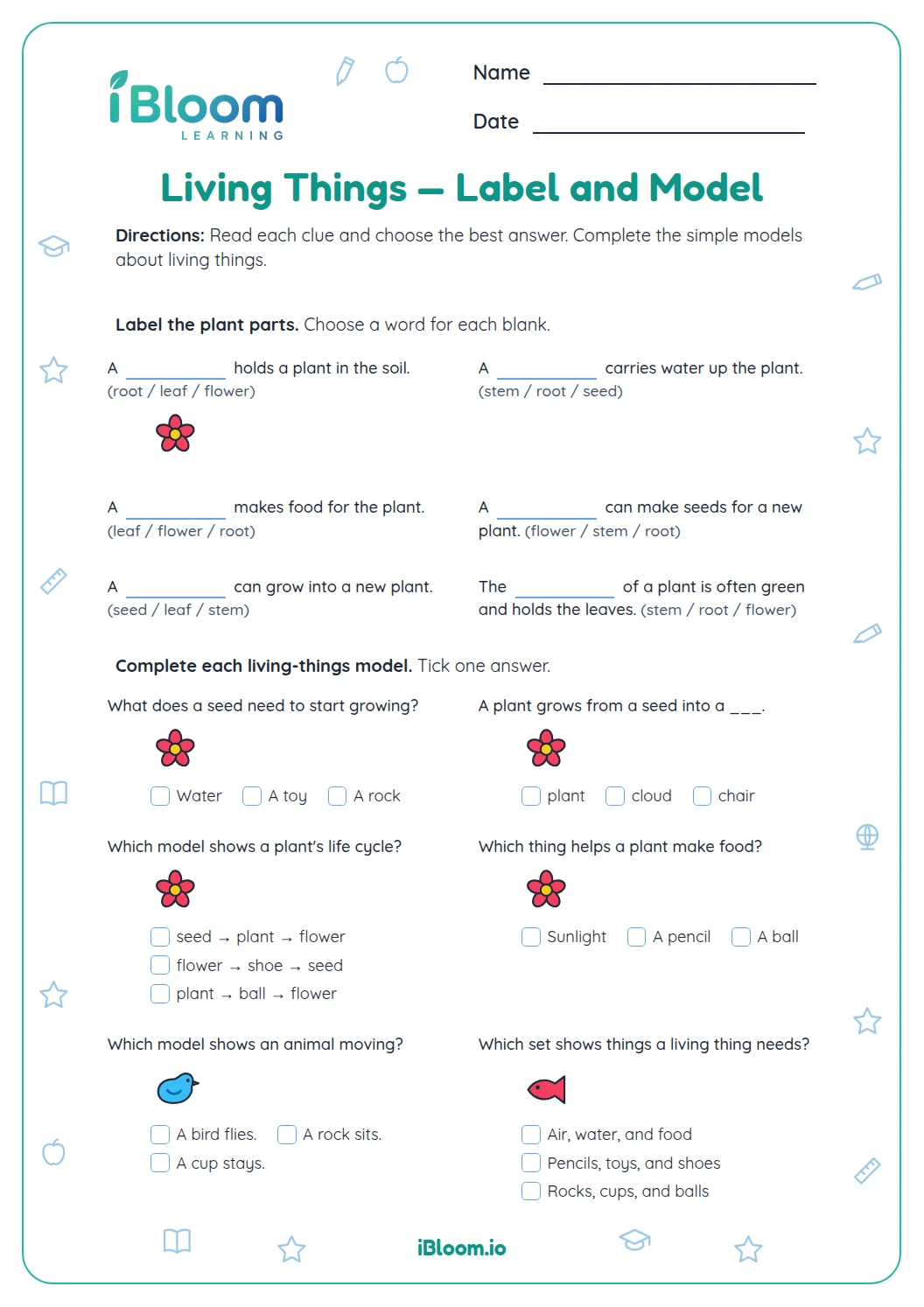
- 1Seed → ___ → plant → flower
- 2A seed grows into a young plant first.
- 3Answer: seedling
How do seeds start the cycle again?
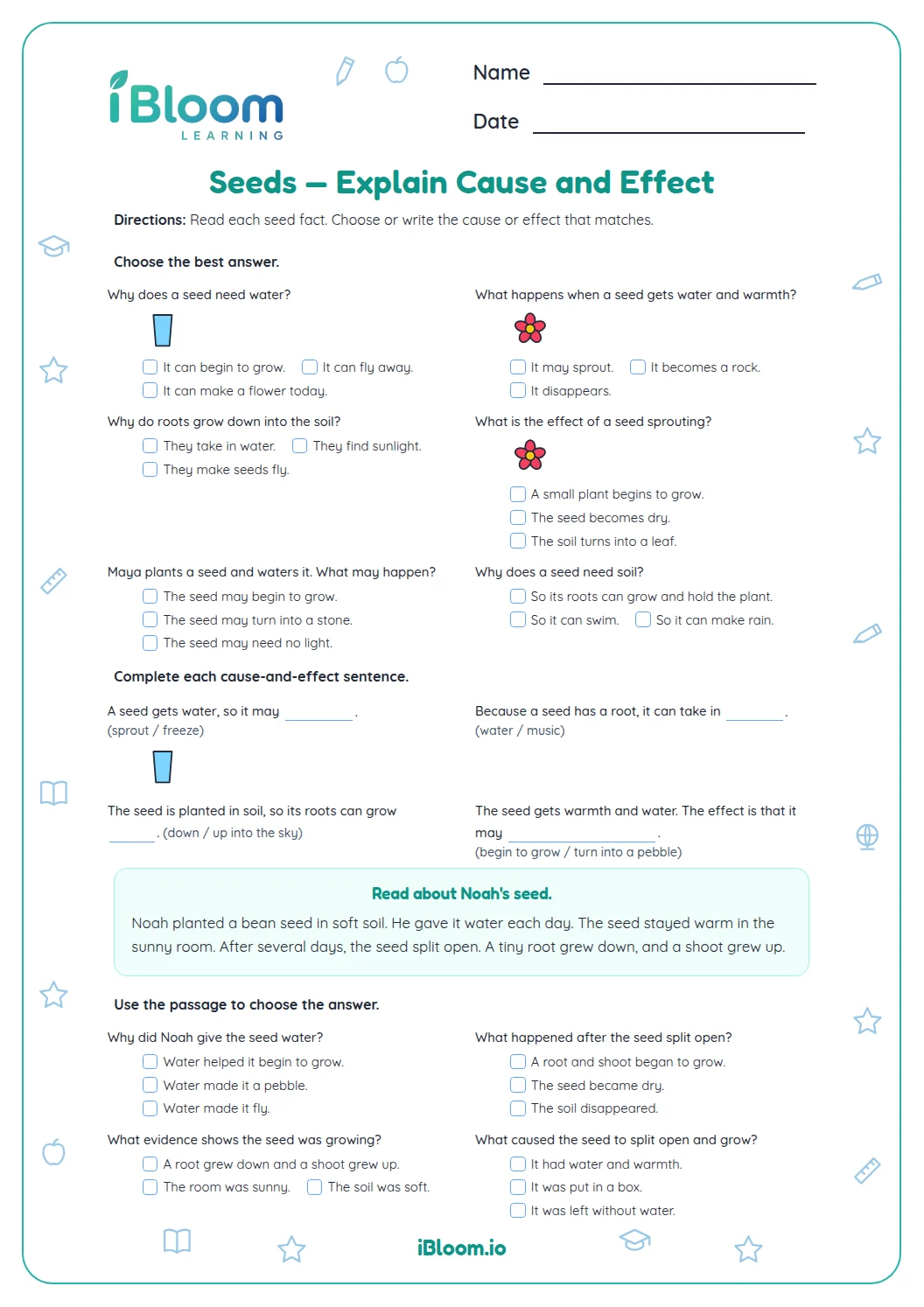
A flower may make seeds. When a seed has suitable conditions, including water, it can begin to grow into a seedling. That young plant grows into a plant that may later make flowers and seeds. The word cycle describes a pattern that can repeat.
How can I use this worksheet with my child?
Ask your child to say the stage names aloud while reading each clue. For the model, point to each word in order and ask what happens next. When you reach a seed question, connect the answer to something observable, such as watering a seed and placing it where it gets light.
How to work through the plant life-cycle sheet
- 1Review the four stage names: seed, seedling, plant, and flower.
- 2Read each Part A clue and match it to the stage that fits.
- 3For Part B, follow the order of growth before filling a blank.
- 4Say the full sequence aloud, then explain how seeds can begin it again.
- 5Use Part C to connect seed growth with water and sunlight.
- 6Check the separate key and revisit any stage that was out of order.
Common plant life-cycle mix-ups
The mistake
Calling a seedling a seed.
The fix
A seedling is the young plant that begins growing from a seed; it has started to sprout.
The mistake
Putting the flower before the seedling.
The fix
Follow the plant as it grows: seed, seedling, larger plant, then flower.
The mistake
Thinking the cycle ends when a flower appears.
The fix
A flower can make seeds, and those seeds can grow into new plants, repeating the cycle.
Next Generation Science Standards alignment
This sheet connects plant growth with observable patterns in what plants need to survive.
Connect observations about water and light to what plants need to survive.
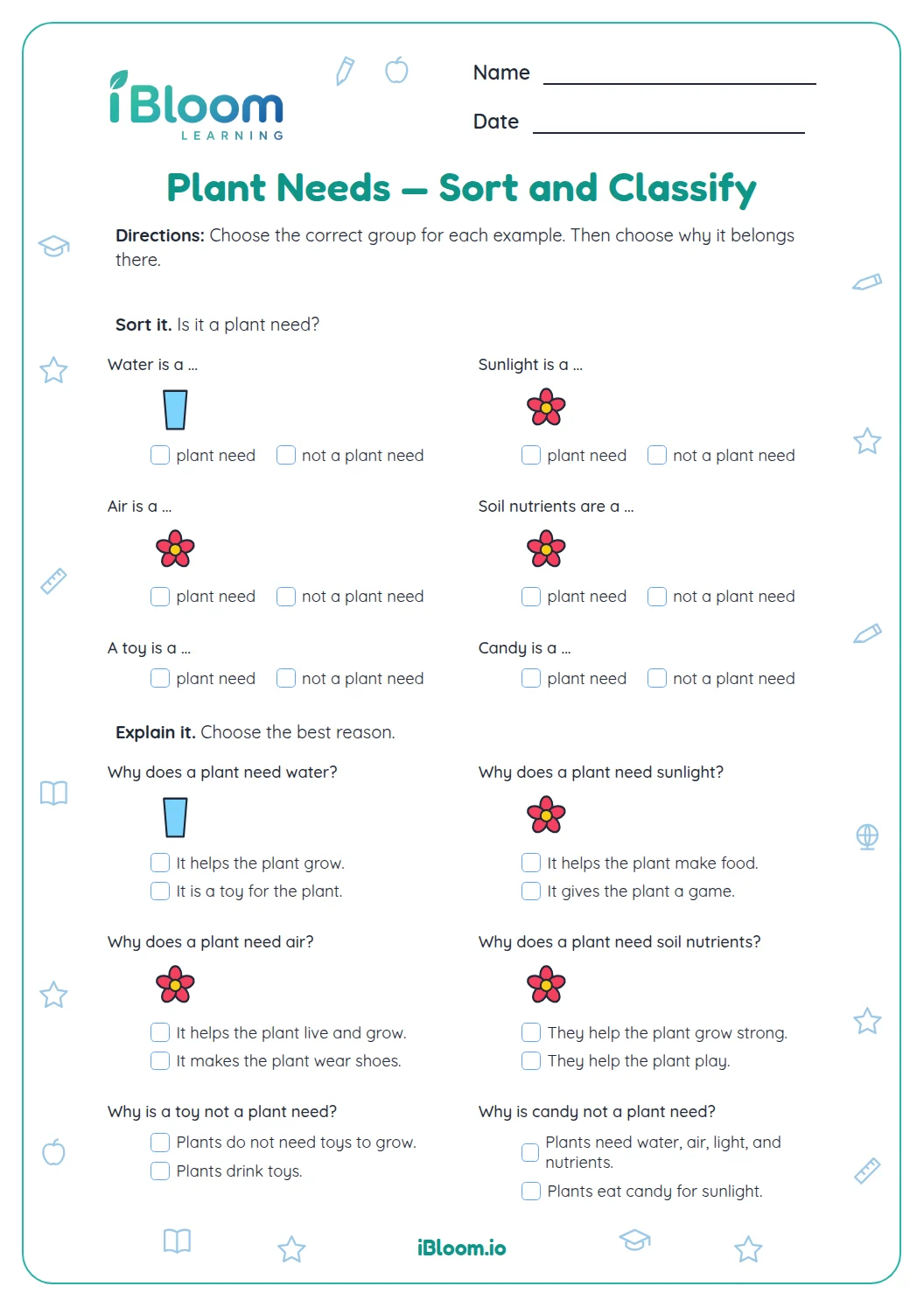
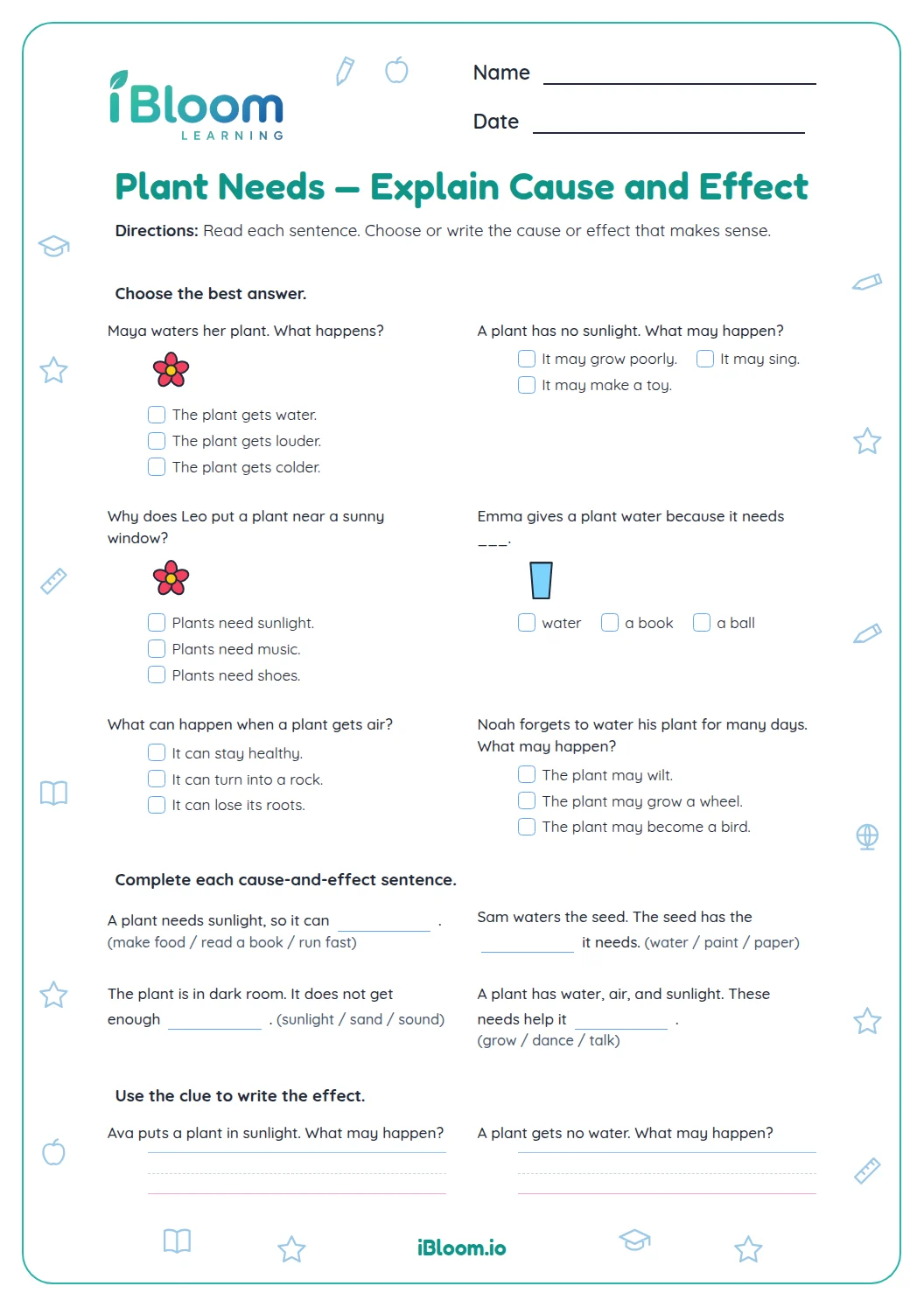
On this sheet: Part C asks children to recognize water and sunlight as needs for a growing plant and relates seed growth to those conditions.
Show the official wordingHide the official wording
Use observations to describe patterns of what plants and animals (including humans) need to survive.
What to practice next
Make more practice
Further reading
Questions parents and teachers ask
What are the plant life-cycle stages on this worksheet?
The model uses seed, seedling, plant, and flower. A seed can sprout into a seedling, grow into a plant, and produce a flower. The flower may make seeds, which can begin the sequence again. Children practice naming the stages and placing them in order.
What is the difference between a seed and a seedling?
A seed is the starting structure from which a new plant can grow. A seedling is the young plant after it has begun to sprout. On this sheet, seed comes before seedling, and the seedling grows into a larger plant.
Does every plant life cycle look exactly the same?
No. Plants differ in how they grow and reproduce, and the model on this page is a simple example. It focuses on the useful pattern of a seed growing into a plant that can make seeds. You can compare the model with a plant growing nearby.
What does a seed need to start growing?
Water is needed for a seed to begin growing, and a young plant needs light as it grows. Part C asks children to connect water and sunlight with plant growth. Conditions differ among seeds, so follow the directions for the particular seed you are observing.
How should my child use the stage clues?
The written clue tells children which life-cycle stage or growth idea to identify. Encourage your child to read it first, then use the stage words and growth order. For the model, have your child say each stage aloud while following the arrows from seed to flower and back to a new seed.
Is the answer key included?
Yes. The answer key is provided on separate pages and lists the expected response for all 16 questions. Some prompts ask for an explanation in a choice, while the model questions expect the stage name or ordered sequence shown in the key.