Free printable practice
Plants Practice Activities
Printable Grade 1 plant science activities on plant parts, seeds, life cycles, needs, adaptations, and sorting living things.
Explore Plants
Free printable worksheet PDFs
Preview every available page, then download the free worksheet PDF for home, homeschool, tutoring, or classroom practice.
Preview the exact activity before downloading it.
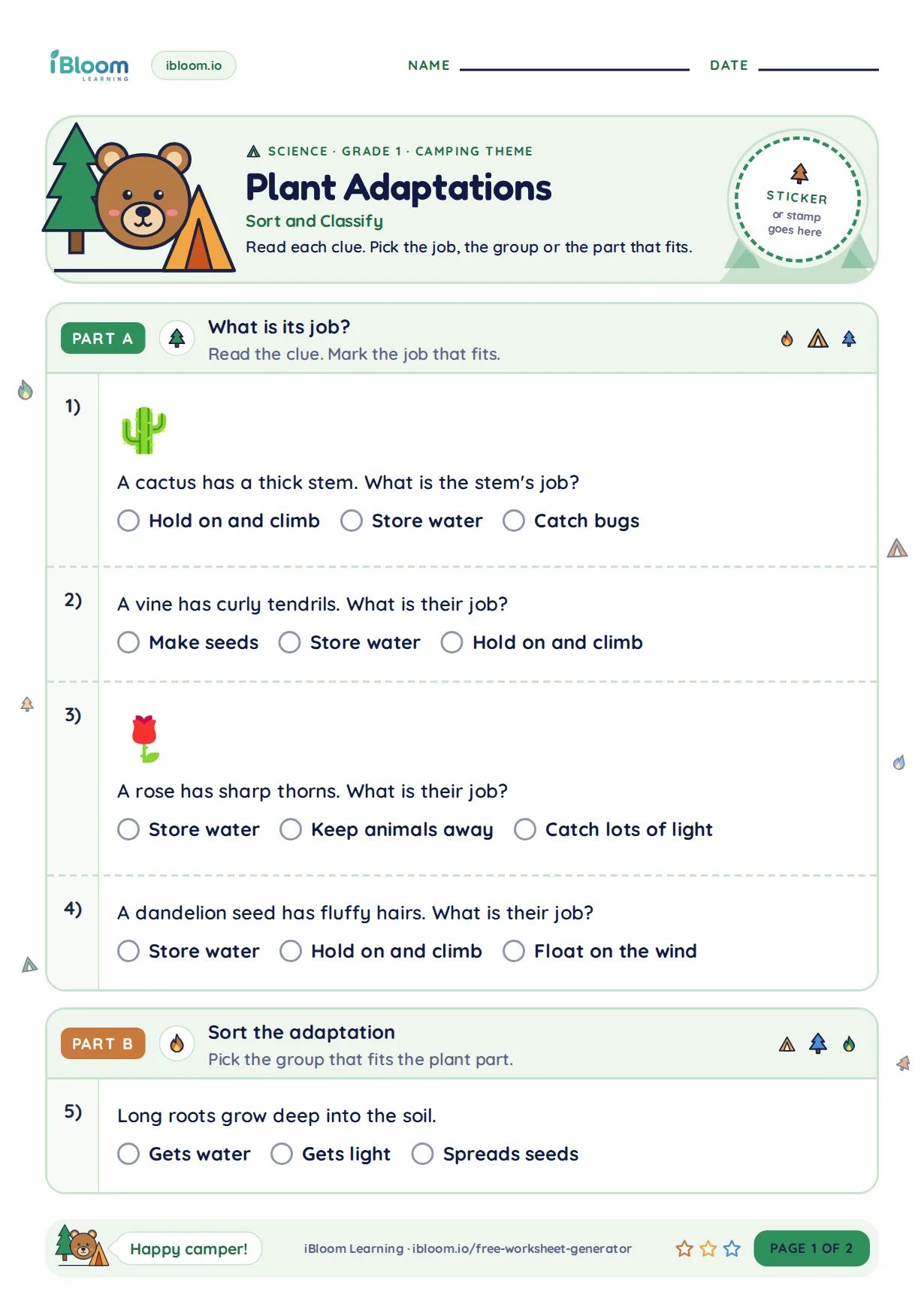 Adaptations — Sort and ClassifyPrintable Grade 1 science activities help children connect plant parts and special features to how plants live in different habitats. This sort and classify worksheet provides a distinct, age-appropriate way to practise the same lesson.Grade 1Free PDF preview
 Life Cycle — Sort and ClassifyGrade 1 science worksheets introduce plant life cycles through sequencing, observation, and simple vocabulary about how plants grow. This sort and classify worksheet provides a distinct, age-appropriate way to practise the same lesson.Grade 1Free PDF preview
 Living Things — Sort and ClassifyGrade 1 students distinguish living from non-living things by observing growth, movement, and basic needs. This sort and classify worksheet provides a distinct, age-appropriate way to practise the same lesson.Grade 1Free PDF preview4 pages
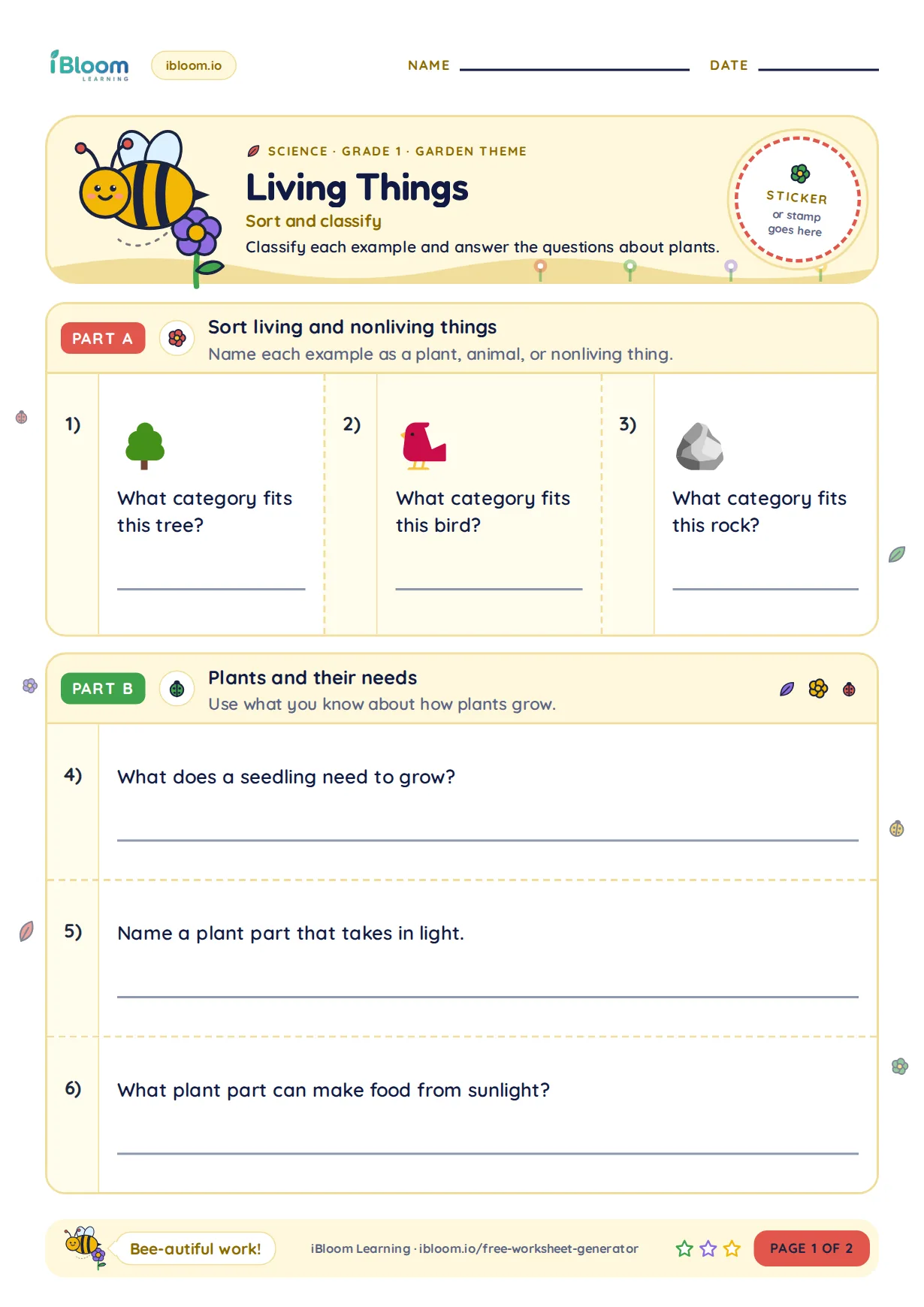 Plant Animal Thing — Sort and ClassifyExplore plant animal thing practice activities within Plants Practice Activities, organised so children, families, and elementary teachers can move from broad learning areas to focused printable practice. This sort and classify worksheet provides a distinct, age-appropriate way to practise the same lesson.Grade 1Free PDF preview
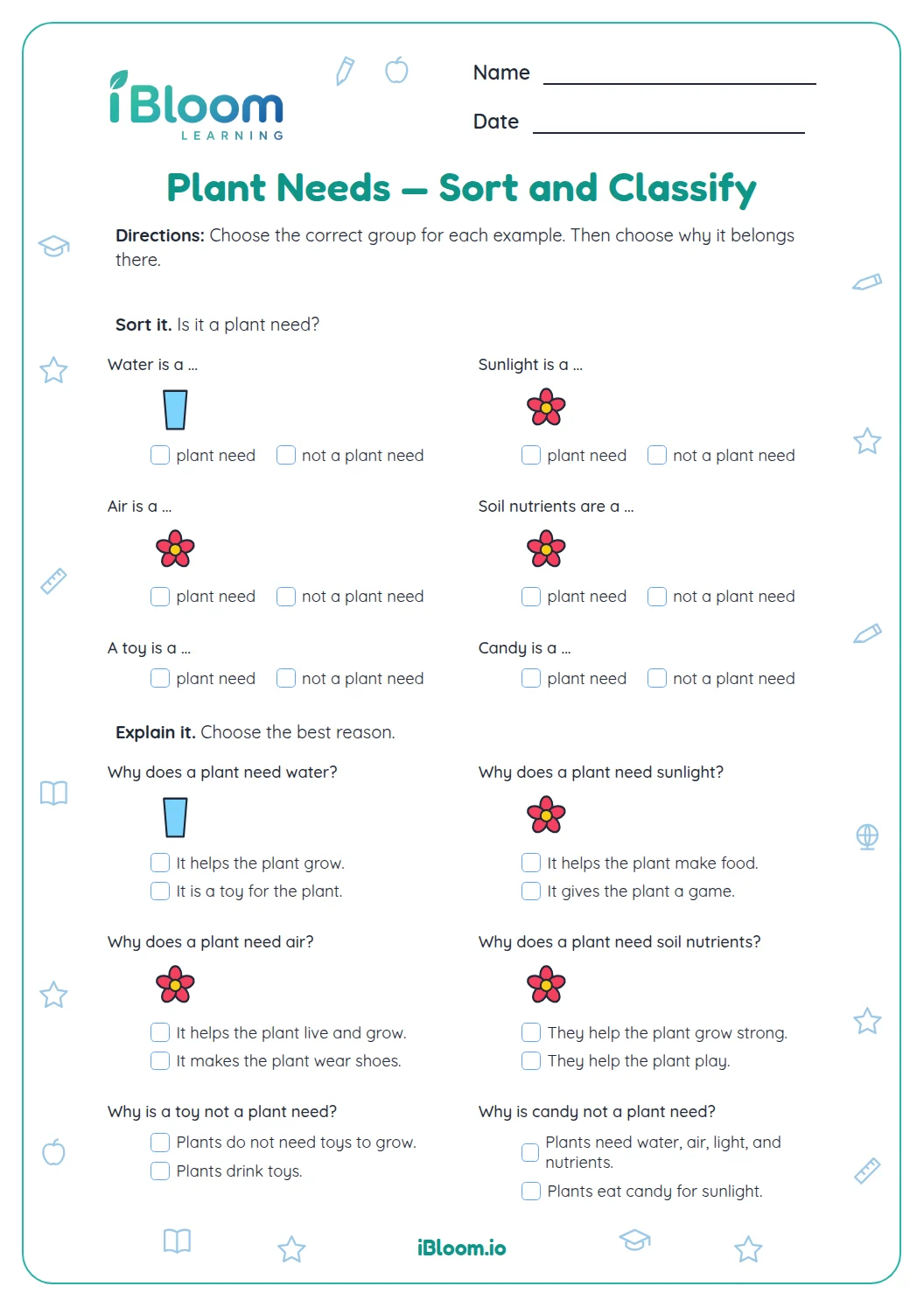 Plant Needs — Sort and ClassifyGrade 1 science worksheets that help children identify the basic needs of plants through sorting, labeling, matching, and observation activities. This sort and classify worksheet provides a distinct, age-appropriate way to practise the same lesson.Grade 1Free PDF preview
 Plant Parts — Sort and ClassifyExplore plant parts practice activities within Plants Practice Activities, organised so children, families, and elementary teachers can move from broad learning areas to focused printable practice. This sort and classify worksheet provides a distinct, age-appropriate way to practise the same lesson.Grade 1Free PDF preview
 Seeds — Sort and ClassifyPrintable Grade 1 science activities that help children identify seeds, understand what seeds need, and describe how seeds grow into plants. This sort and classify worksheet provides a distinct, age-appropriate way to practise the same lesson.Grade 1Free PDF preview
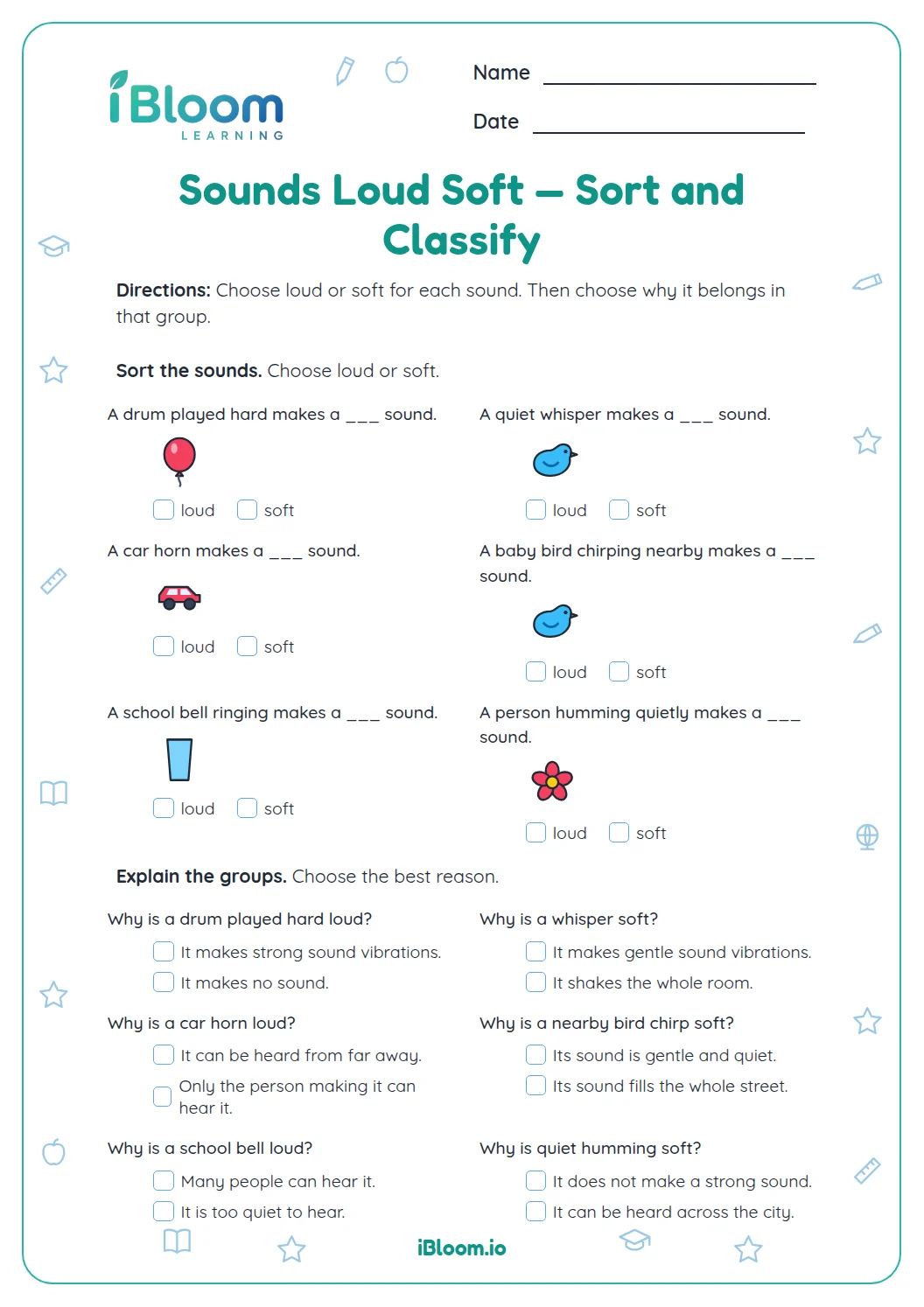 Sounds Loud Soft — Sort and ClassifyGrade 1 science worksheets help children compare loud and soft sounds using everyday examples, careful listening, and simple observation vocabulary. This sort and classify worksheet provides a distinct, age-appropriate way to practise the same lesson.Grade 1Free PDF preview4 pages
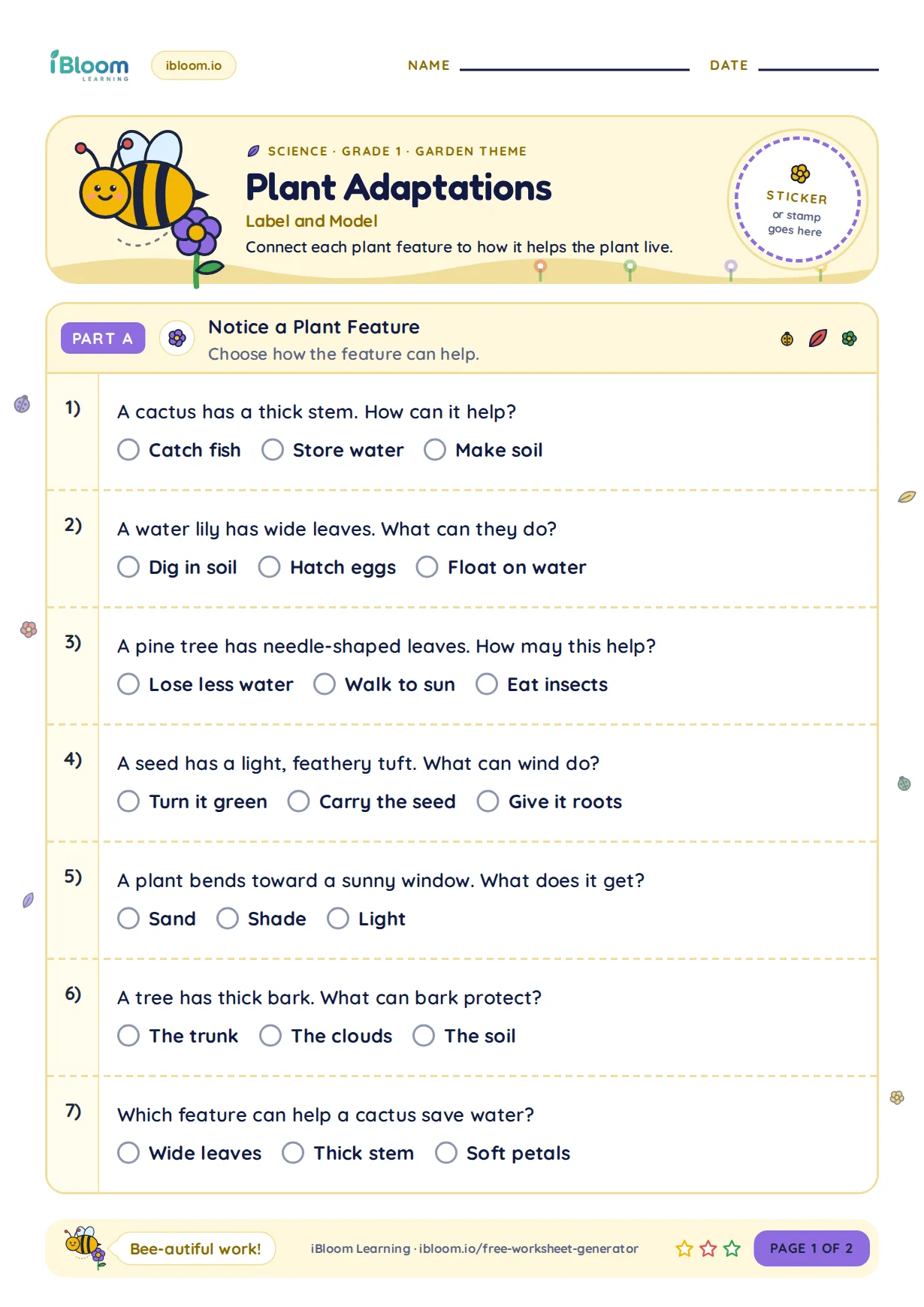 Adaptations — Label and ModelPrintable Grade 1 science activities help children connect plant parts and special features to how plants live in different habitats. This label and model worksheet provides a distinct, age-appropriate way to practise the same lesson.Grade 1Free PDF preview4 pages
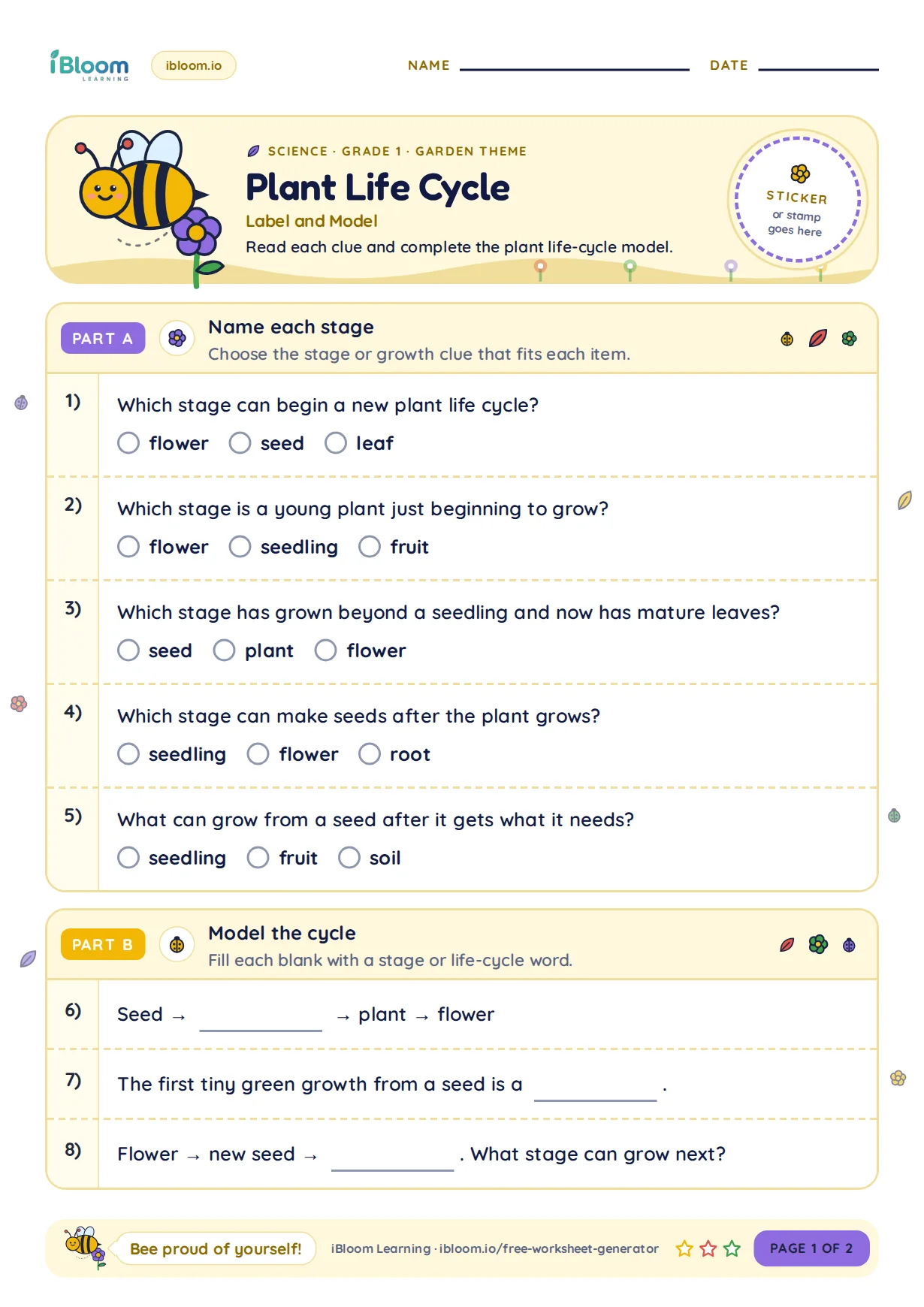 Life Cycle — Label and ModelGrade 1 science worksheets introduce plant life cycles through sequencing, observation, and simple vocabulary about how plants grow. This label and model worksheet provides a distinct, age-appropriate way to practise the same lesson.Grade 1Free PDF preview
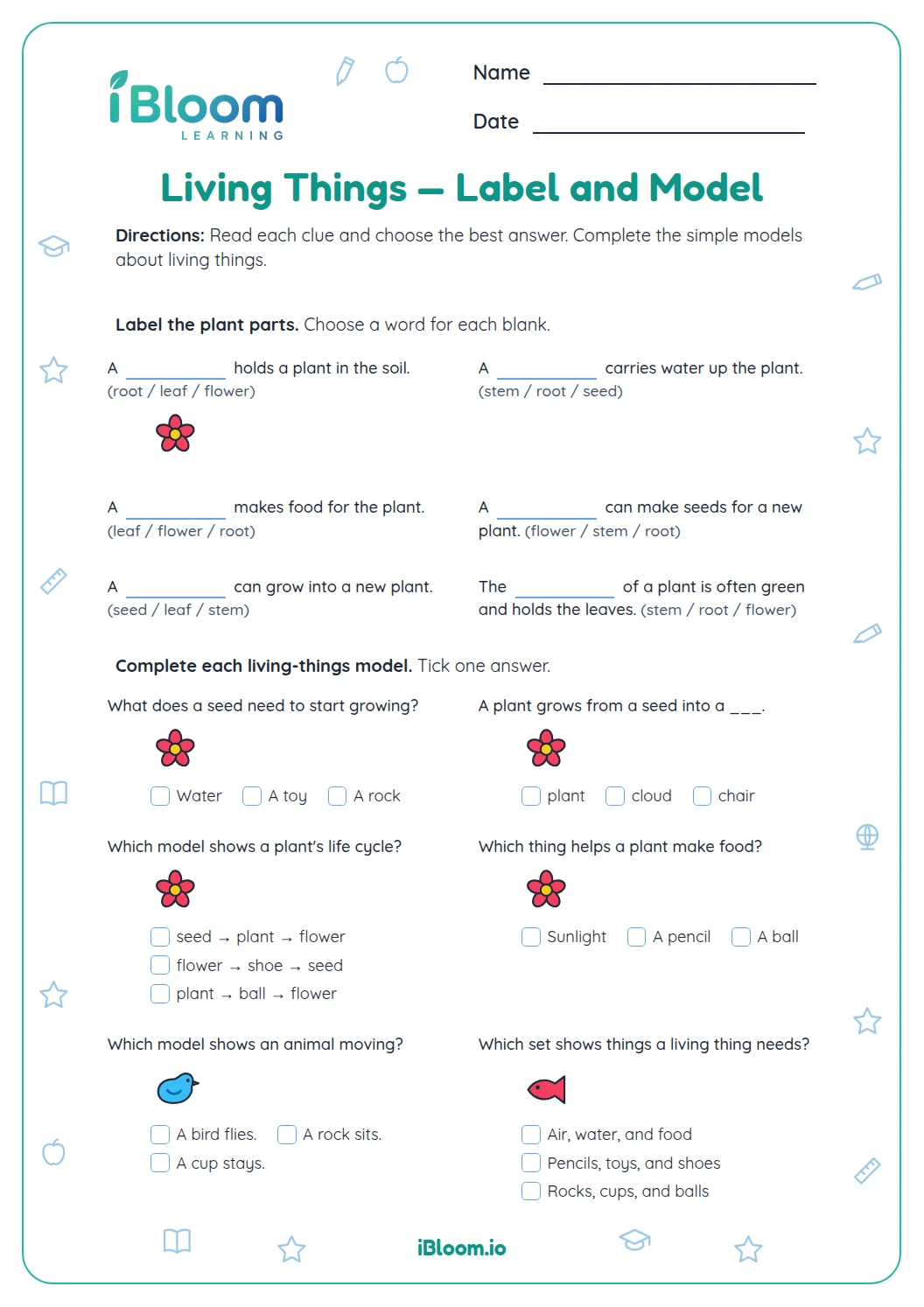 Living Things — Label and ModelGrade 1 students distinguish living from non-living things by observing growth, movement, and basic needs. This label and model worksheet provides a distinct, age-appropriate way to practise the same lesson.Grade 1Free PDF preview
 Plant Animal Thing — Label and ModelExplore plant animal thing practice activities within Plants Practice Activities, organised so children, families, and elementary teachers can move from broad learning areas to focused printable practice. This label and model worksheet provides a distinct, age-appropriate way to practise the same lesson.Grade 1Free PDF preview
 Plant Needs — Label and ModelGrade 1 science worksheets that help children identify the basic needs of plants through sorting, labeling, matching, and observation activities. This label and model worksheet provides a distinct, age-appropriate way to practise the same lesson.Grade 1Free PDF preview4 pages
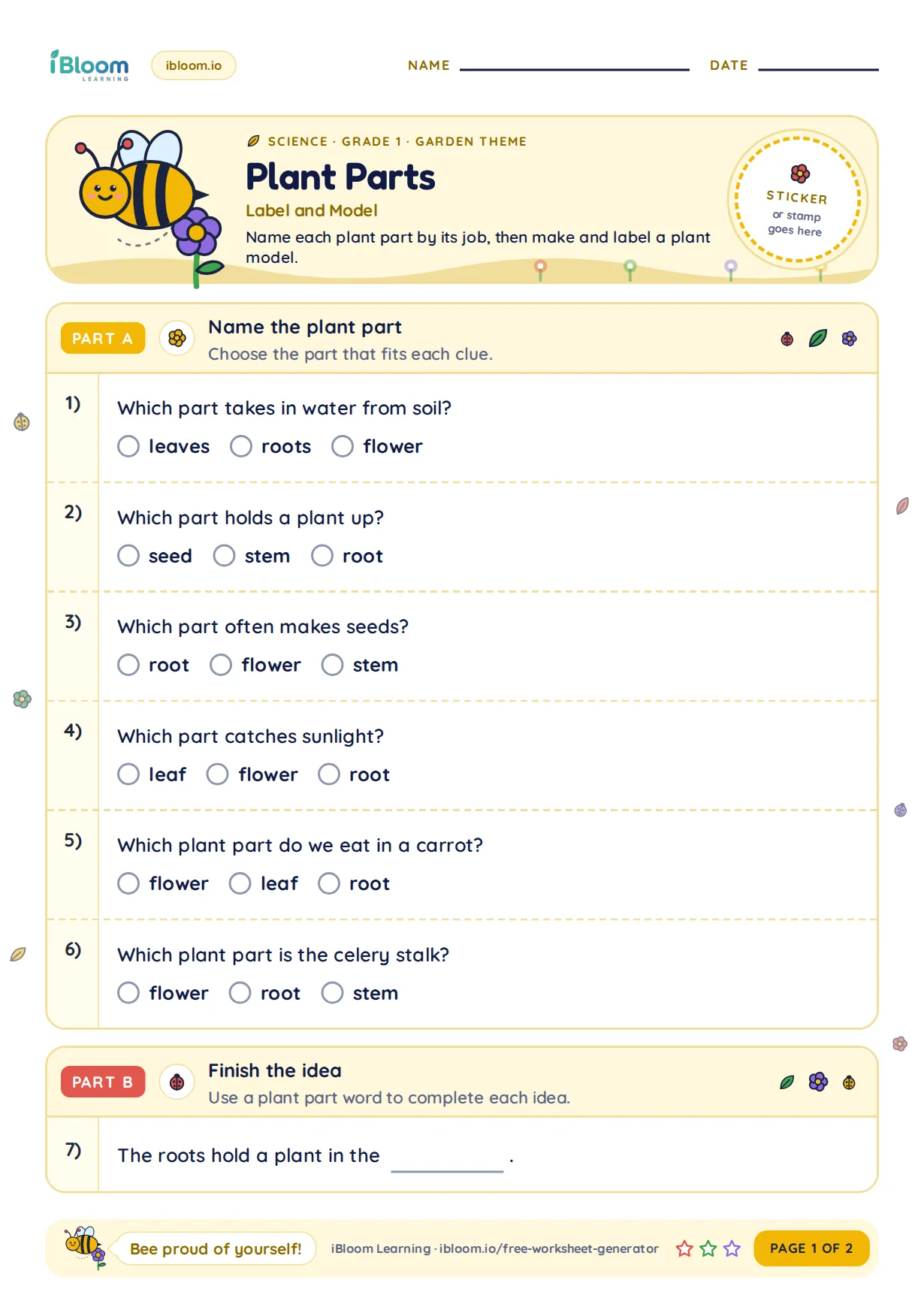 Plant Parts — Label and ModelExplore plant parts practice activities within Plants Practice Activities, organised so children, families, and elementary teachers can move from broad learning areas to focused printable practice. This label and model worksheet provides a distinct, age-appropriate way to practise the same lesson.Grade 1Free PDF preview
 Seeds — Label and ModelPrintable Grade 1 science activities that help children identify seeds, understand what seeds need, and describe how seeds grow into plants. This label and model worksheet provides a distinct, age-appropriate way to practise the same lesson.Grade 1Free PDF preview4 pages
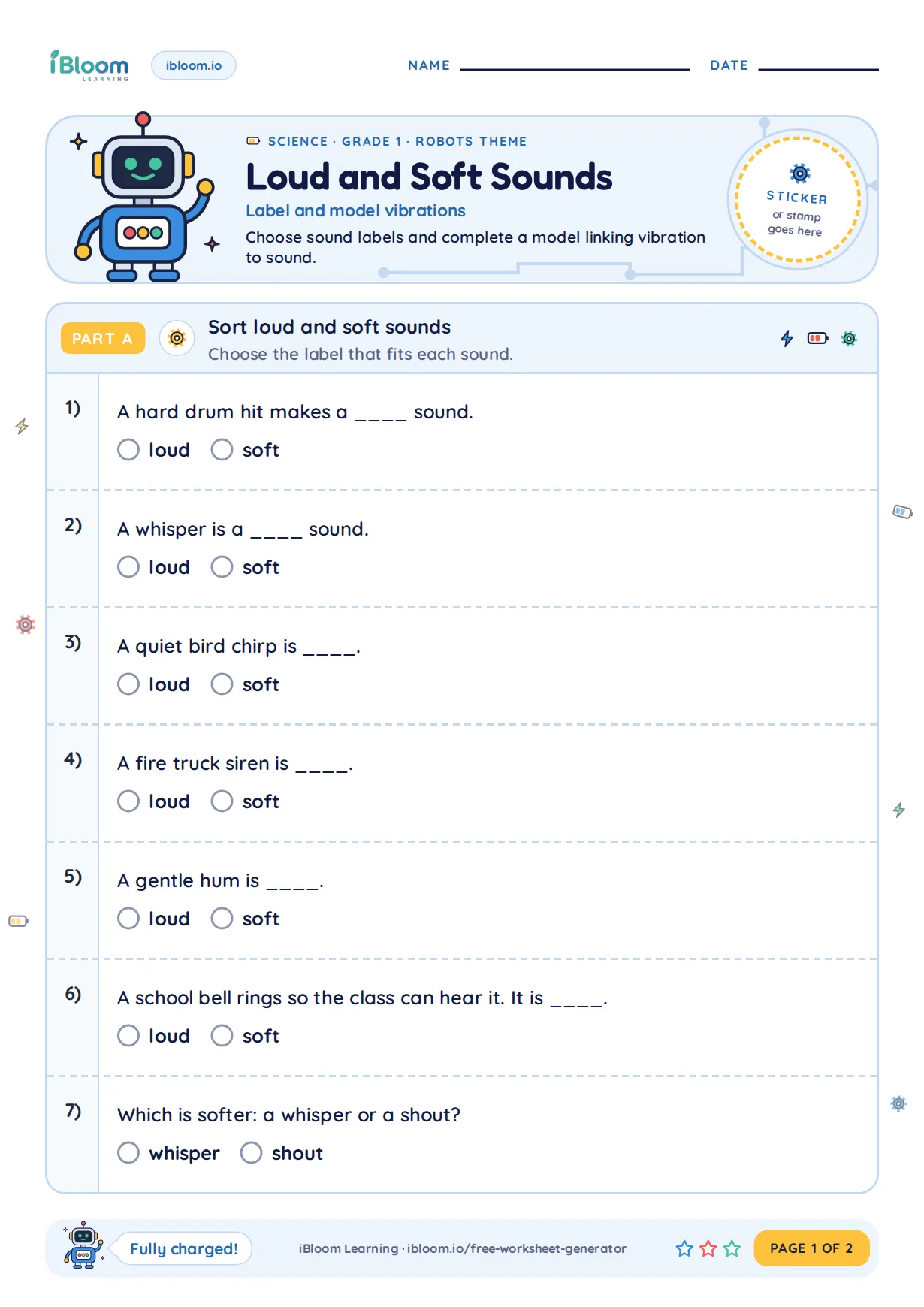 Sounds Loud Soft — Label and ModelGrade 1 science worksheets help children compare loud and soft sounds using everyday examples, careful listening, and simple observation vocabulary. This label and model worksheet provides a distinct, age-appropriate way to practise the same lesson.Grade 1Free PDF preview6 pages
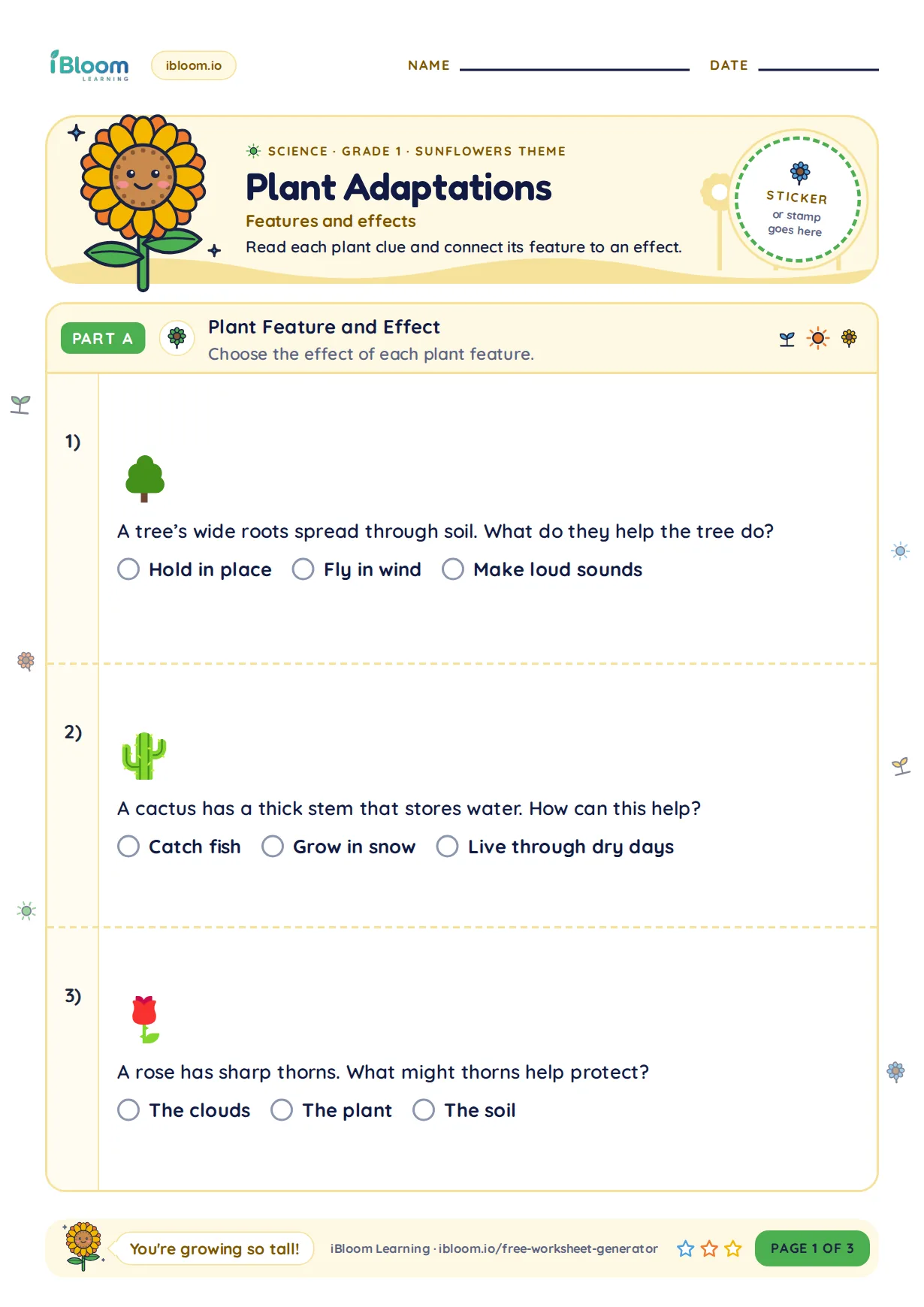 Adaptations — Explain Cause and EffectPrintable Grade 1 science activities help children connect plant parts and special features to how plants live in different habitats. This explain cause and effect worksheet provides a distinct, age-appropriate way to practise the same lesson.Grade 1Free PDF preview
 Life Cycle — Explain Cause and EffectGrade 1 science worksheets introduce plant life cycles through sequencing, observation, and simple vocabulary about how plants grow. This explain cause and effect worksheet provides a distinct, age-appropriate way to practise the same lesson.Grade 1Free PDF preview6 pages
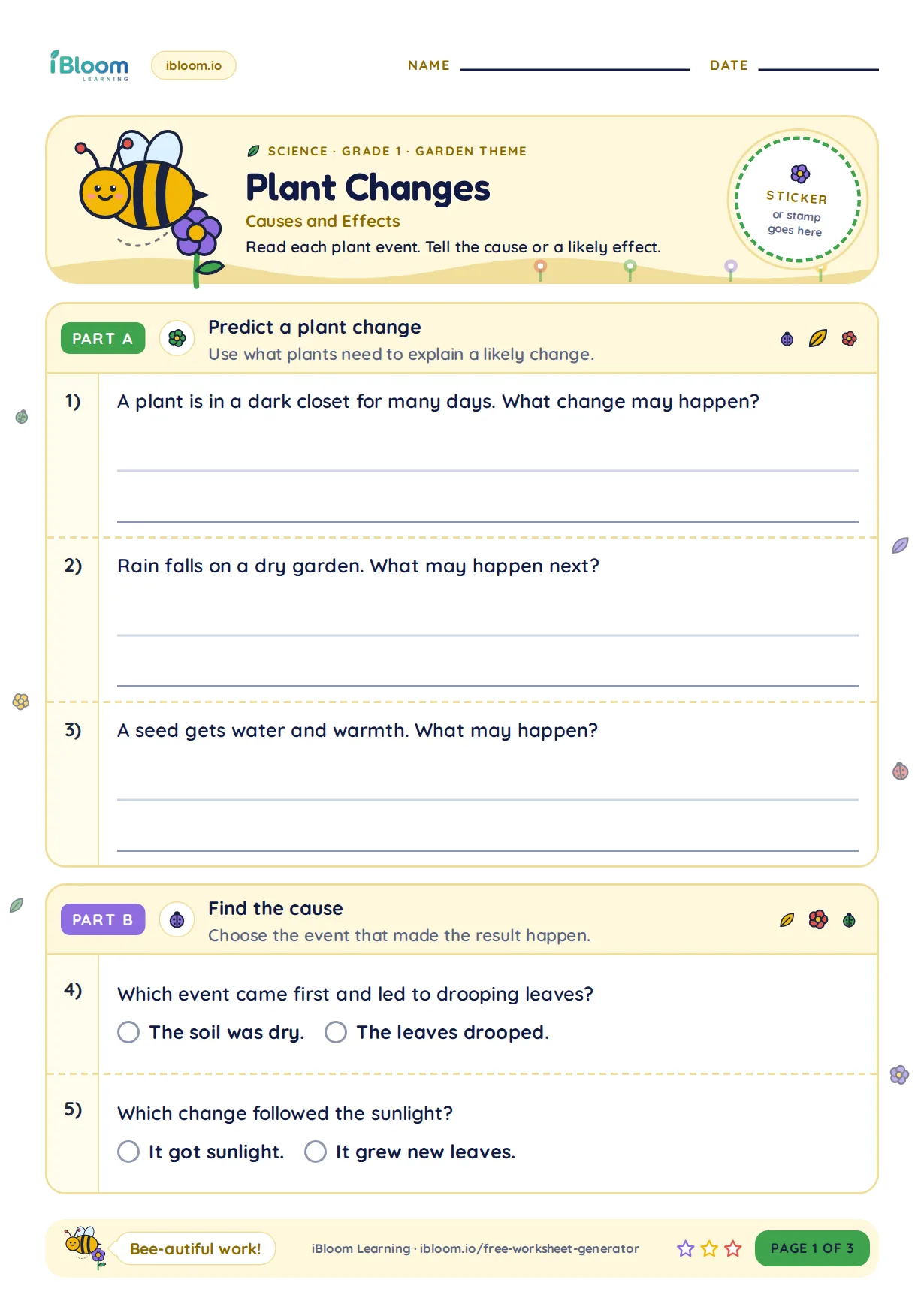 Living Things — Explain Cause and EffectGrade 1 students distinguish living from non-living things by observing growth, movement, and basic needs. This explain cause and effect worksheet provides a distinct, age-appropriate way to practise the same lesson.Grade 1Free PDF preview4 pages
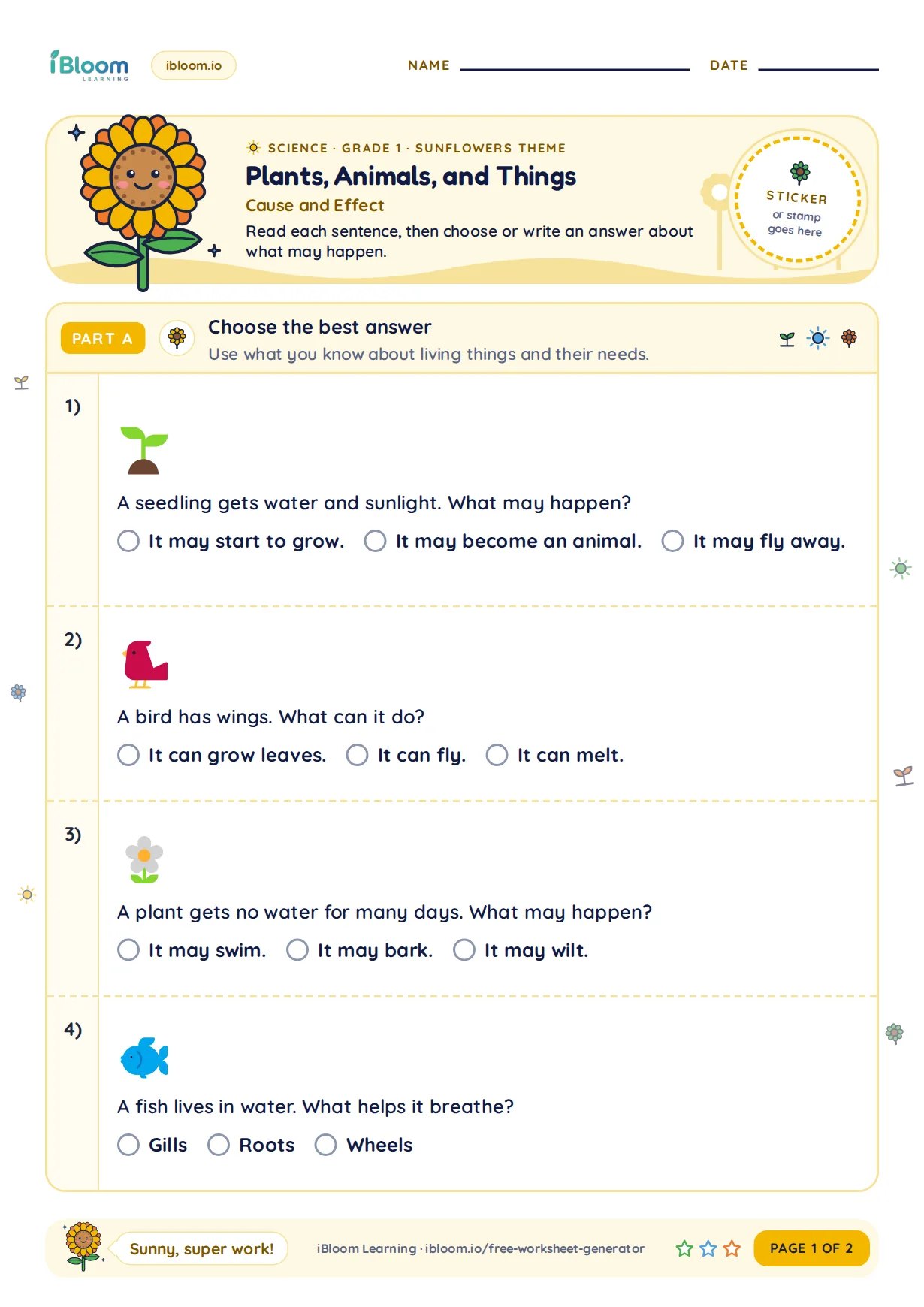 Plant Animal Thing — Explain Cause and EffectExplore plant animal thing practice activities within Plants Practice Activities, organised so children, families, and elementary teachers can move from broad learning areas to focused printable practice. This explain cause and effect worksheet provides a distinct, age-appropriate way to practise the same lesson.Grade 1Free PDF preview
Practice that builds confidence
What children learn about plants
These Grade 1 science worksheets help children explore plants as living things. Students practise naming plant parts, identifying what plants need, noticing seeds, and following simple plant life cycle changes from seed to mature plant.
The printable activities include labeling, matching, sorting, sequencing, observation-style questions, and picture-based reviews. Children also compare plants, animals, and nonliving things, with connected practice on adaptations and science vocabulary.
This collection builds a clear first-grade understanding of plants. Children identify roots, stems, leaves, flowers, fruits, and seeds, then connect each part to a simple job. They practise the idea that plants are living things because they grow, need resources, and change over time.

From seeds to life cycles
Worksheets move from concrete pictures to simple sequencing. A child may place seed, sprout, young plant, and adult plant in order, or match a seed to the plant it can become. The goal is not memorizing long definitions, but seeing that plants follow a pattern of growth and that seeds are part of that pattern.
Needs, adaptations, and sorting
Children review plant needs such as water, light, air, and space. Adaptation pages introduce the idea that plant features help them live in different places, using age-appropriate comparisons rather than advanced biology. Sorting tasks ask students to tell whether a picture is a plant, animal, or thing, strengthening the difference between living and nonliving. A small connected review may use observation words such as loud and soft when children classify details from pictures or classroom science experiences.
A simple routine for parents
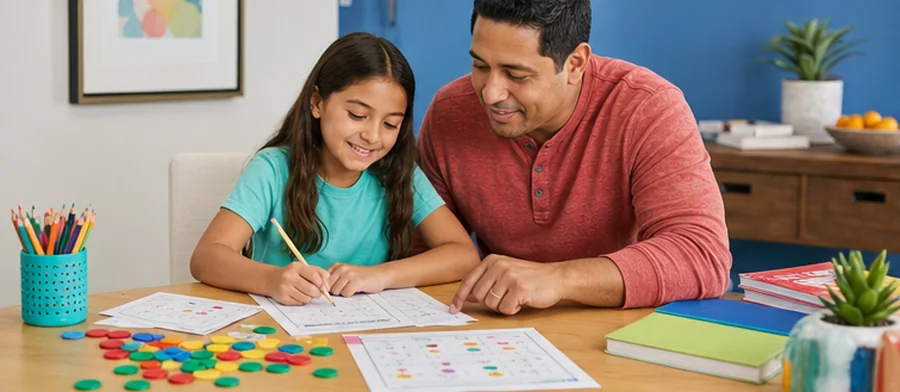
At home, choose one worksheet and one real plant, seed, fruit, or leaf. Ask: “What part do you see?” “What does this plant need?” and “What might happen next?” Let your child point, label, and explain in a sentence before writing. If possible, plant a bean or watch a houseplant for a few days and use the worksheets to record what changes.
Classroom uses for teachers
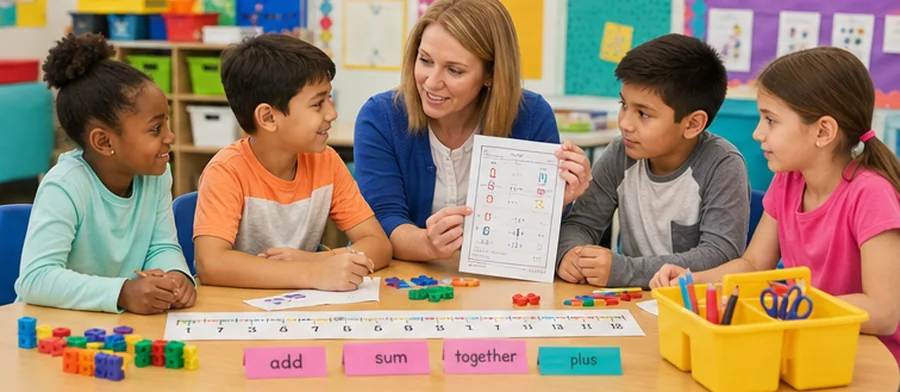
Teachers can use these printables in science centers, morning work, small-group review, or after a plant observation lesson. The matching and labeling sheets support early readers, while sequencing and compare-and-sort pages encourage discussion. They also work well as quick checks before moving from plant parts to life cycles or from living things to habitats.
Free printable PDF download
Use this grade 1 plants worksheet page to preview the activity, print it, or download it as a PDF for quick practice. It works well for homework, homeschool lessons, tutoring, morning work, revision, and classroom centers.
Answers and answer key support
After the child completes the worksheet independently, parents and teachers can use the answer support or answer key information to check the work, review mistakes, and choose the next practice step.
Why iBloom worksheets help
The pages progress from pictures children recognize to more careful science thinking. Common errors include calling every green object a plant, mixing up roots and stems, or thinking plants only need water. Teach the child-friendly strategy: “Look, name the part, tell its job, then decide what the plant needs.” This keeps answers grounded in evidence from the picture or real plant.
Helpful answers
Frequently asked questions
What plant topics are covered in these Grade 1 worksheets?
They cover living things, plant parts, seeds, simple life cycles, plant needs, basic adaptations, and sorting plants, animals, and nonliving things.
Are these worksheets suitable before children can read fluently?
Yes. Many activities use pictures, matching, labeling, and sorting so early readers can show science understanding with limited text support.
How can I teach plant parts at home with these pages?
Use a real plant or a picture. Ask your child to point to the roots, stem, leaves, flower, fruit, or seed, then complete the matching or labeling worksheet.
Do the life cycle worksheets include complex plant science?
No. They focus on simple Grade 1 sequencing, such as seed, sprout, young plant, and adult plant, using clear pictures and basic vocabulary.
What mistakes should I watch for when my child works on plant needs?
Children may say plants only need water or may forget light, air, and space. Encourage them to name more than one need and explain why the plant uses it.
Is this grade 1 plants worksheet free?
Yes. You can preview it for free and use the printable worksheet for home or classroom practice.
Can I download this grade 1 plants worksheet as a PDF?
Yes. Use the worksheet download option to save a printable PDF, or print the worksheet directly from the page.
Does this grade 1 plants worksheet include answers or an answer key?
When the activity has fixed answers, iBloom includes answer support so parents and teachers can check the completed worksheet.