Free printable practice
Quick Slow Change Practice Activities
Grade 2 earth science worksheets help children sort fast and slow changes to land, such as earthquakes, landslides, erosion, and weathering.
Free printable worksheet PDFs
Preview every available page, then download the free worksheet PDF for home, homeschool, tutoring, or classroom practice.
Preview the exact activity before downloading it.
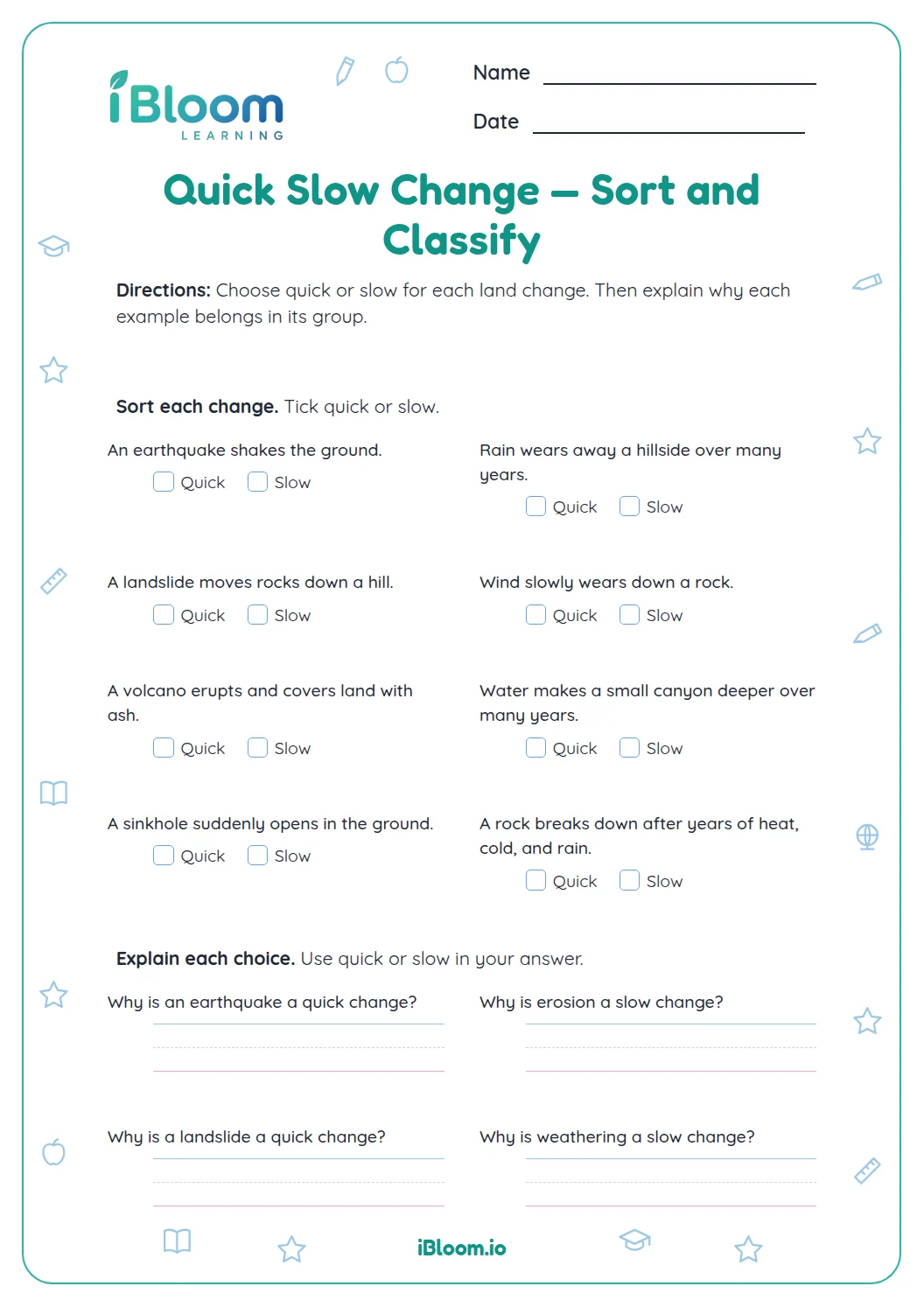 Quick Slow Change — Sort and ClassifyGrade 2 earth science worksheets help children sort fast and slow changes to land, such as earthquakes, landslides, erosion, and weathering. This sort and classify worksheet provides a distinct, age-appropriate way to practise the same lesson.Grade 2Free PDF preview
 Quick Slow Change — Label and ModelGrade 2 earth science worksheets help children sort fast and slow changes to land, such as earthquakes, landslides, erosion, and weathering. This label and model worksheet provides a distinct, age-appropriate way to practise the same lesson.Grade 2Free PDF preview
 Quick Slow Change — Explain Cause and EffectGrade 2 earth science worksheets help children sort fast and slow changes to land, such as earthquakes, landslides, erosion, and weathering. This explain cause and effect worksheet provides a distinct, age-appropriate way to practise the same lesson.Grade 2Free PDF preview
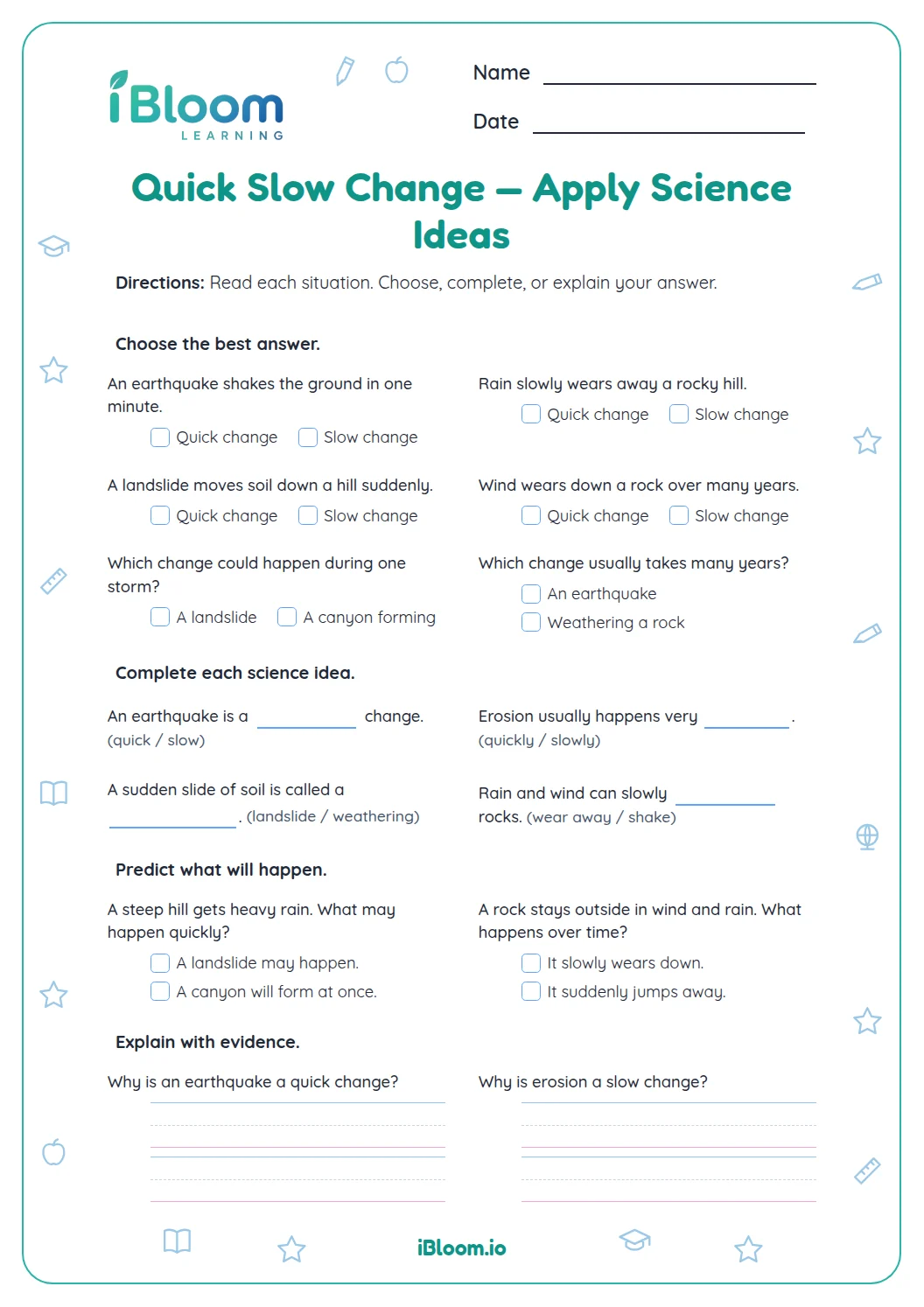 Quick Slow Change — Apply Science IdeasGrade 2 earth science worksheets help children sort fast and slow changes to land, such as earthquakes, landslides, erosion, and weathering. This apply science ideas worksheet provides a distinct, age-appropriate way to practise the same lesson.Grade 2Free PDF preview
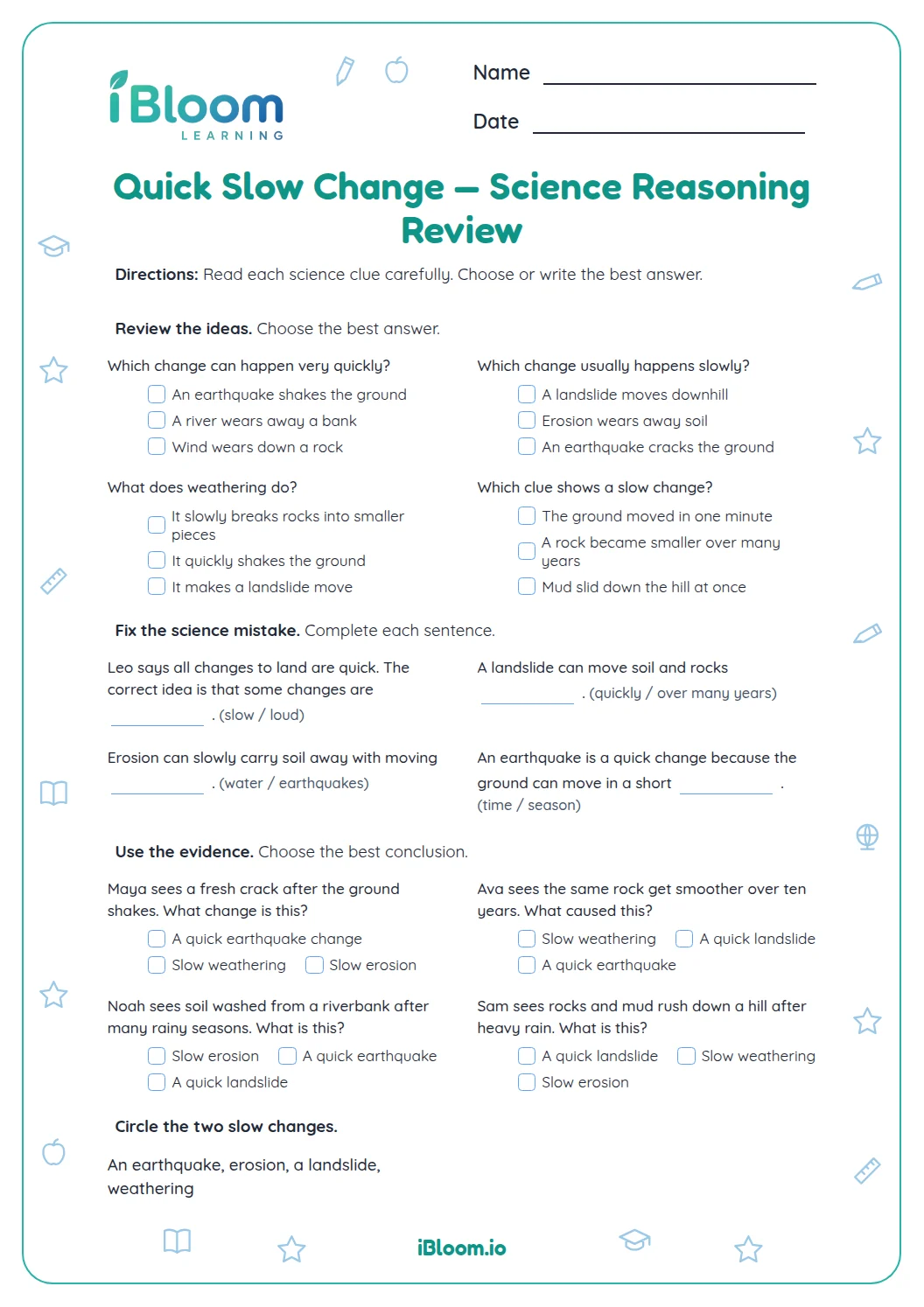 Quick Slow Change — Science Reasoning ReviewGrade 2 earth science worksheets help children sort fast and slow changes to land, such as earthquakes, landslides, erosion, and weathering. This science reasoning review worksheet provides a distinct, age-appropriate way to practise the same lesson.Grade 2Free PDF preview
Practice that builds confidence
What children learn about Earth changes
These Grade 2 earth science worksheets help children notice that Earth’s surface can change quickly or slowly. Students practise comparing events such as earthquakes, volcanic eruptions, landslides, weathering, and erosion, then decide whether each change happens suddenly or over a long period.
The printable activities include picture sorts, short reading prompts, matching tasks, cause-and-effect questions, and simple explanations using landform vocabulary. Children build science language while learning to use clues like speed, evidence, and process to describe how land changes.
Second graders begin with a simple but important idea: land does not always stay the same. Some changes happen quickly, such as a landslide moving soil down a hill or an earthquake cracking the ground. Other changes happen slowly, such as wind wearing away rock or water carrying small pieces of soil over time. The worksheets help children connect each example to the words quick, slow, change, land, weathering, erosion, and surface.

How the practice progresses
Activities move from observing pictures to explaining thinking. A child may first circle whether a scene shows a quick or slow change, then match a cause to its effect, and later write a sentence such as, “A river can slowly change the shape of land by carrying soil away.” This progression supports Grade 2 learners who are ready to compare examples but still need clear visuals and familiar language.
A simple parent routine
At home, choose one page and talk through the first two items together. Ask, “Did this happen all at once, or did it need many days, months, or years?” Then have your child underline the clue that helped them decide. After the worksheet, look outside for safe examples: cracks in dry soil, a pile of sand moved by rain, or a rock with a worn edge. Keep the focus on describing evidence, not memorizing a list.

Classroom uses for teachers
Teachers can use these printables in earth science centers, small-group review, morning work, or a notebook lesson after a demonstration with water and soil. The sorting pages work well for partner talk because students must justify their choices. Short response items can also be used as quick checks to see whether children understand the difference between an event and the land change it causes.

Common errors to watch for
Many students think “big” always means quick and “small” always means slow. A small crack from an earthquake may happen quickly, while a large canyon may form slowly. Children may also confuse weather with weathering, so it helps to repeat that weathering means rocks break into smaller pieces. If a child is unsure, have them ask, “Is the change sudden, or does it build up little by little?”
Free printable PDF download
Use this grade 2 quick slow change worksheet page to preview the activity, print it, or download it as a PDF for quick practice. It works well for homework, homeschool lessons, tutoring, morning work, revision, and classroom centers.
Answers and answer key support
After the child completes the worksheet independently, parents and teachers can use the answer support or answer key information to check the work, review mistakes, and choose the next practice step.
Why iBloom worksheets help
The pages combine images, vocabulary, and brief explanations so children can reason like young scientists. A useful strategy is: look for the cause, think about the time, then name the change. Saying, “I see moving water, so the land may change slowly by erosion,” gives children a clear path from observation to explanation.
Helpful answers
Frequently asked questions
What does “quick change” mean in Grade 2 earth science?
A quick change is a change to land that happens suddenly or in a short time, such as an earthquake shaking the ground or a landslide moving soil and rocks downhill.
What are examples of slow changes to land?
Slow changes include weathering, where rocks break apart over time, and erosion, where wind or water slowly moves soil, sand, or rock pieces from one place to another.
How can my child tell if an Earth change is quick or slow?
Ask your child to look for time clues. If the land changes suddenly, it is usually quick. If the change builds up little by little through water, wind, ice, or plant roots, it is usually slow.
Do these worksheets teach weathering and erosion together?
Yes. The activities introduce weathering and erosion as slow processes and help children separate them from sudden events like earthquakes, volcanic eruptions, and landslides.
How can teachers use these quick and slow change worksheets in class?
Teachers can use them for earth science centers, partner sorting, science notebook practice, small-group reteaching, or quick checks after a lesson on how Earth’s surface changes.
Is this grade 2 quick slow change worksheet free?
Yes. You can preview it for free and use the printable worksheet for home or classroom practice.
Can I download this grade 2 quick slow change worksheet as a PDF?
Yes. Use the worksheet download option to save a printable PDF, or print the worksheet directly from the page.
Does this grade 2 quick slow change worksheet include answers or an answer key?
When the activity has fixed answers, iBloom includes answer support so parents and teachers can check the completed worksheet.