Free printable practice
Water Properties Practice Activities
Printable Grade 2 science activities help children observe, describe, and compare everyday properties of water.
Free printable worksheet PDFs
Preview every available page, then download the free worksheet PDF for home, homeschool, tutoring, or classroom practice.
Preview the exact activity before downloading it.
 Water Properties — Sort and ClassifyPrintable Grade 2 science activities help children observe, describe, and compare everyday properties of water. This sort and classify worksheet provides a distinct, age-appropriate way to practise the same lesson.Grade 2Free PDF preview4 pages
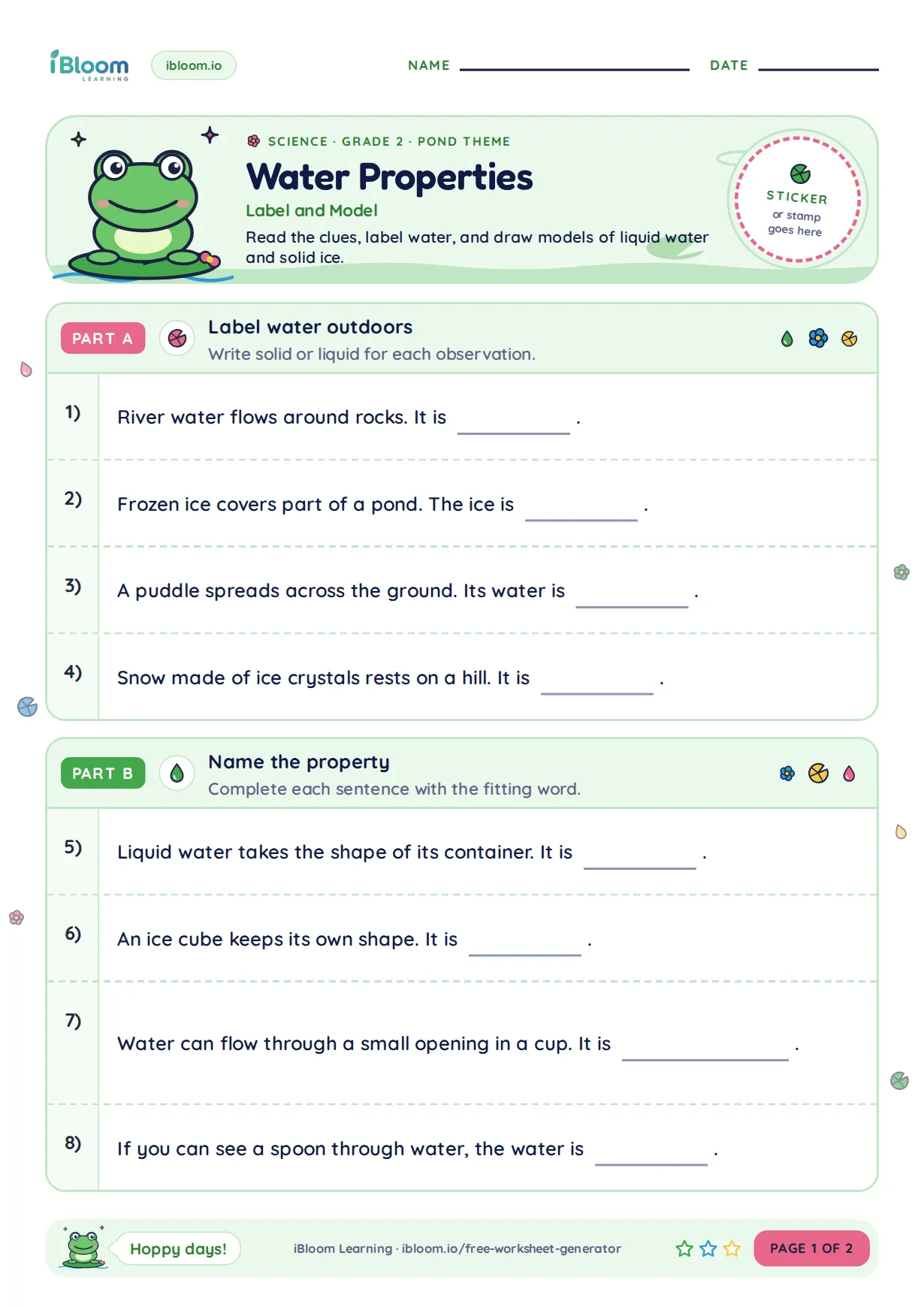 Water Properties — Label and ModelPrintable Grade 2 science activities help children observe, describe, and compare everyday properties of water. This label and model worksheet provides a distinct, age-appropriate way to practise the same lesson.Grade 2Free PDF preview
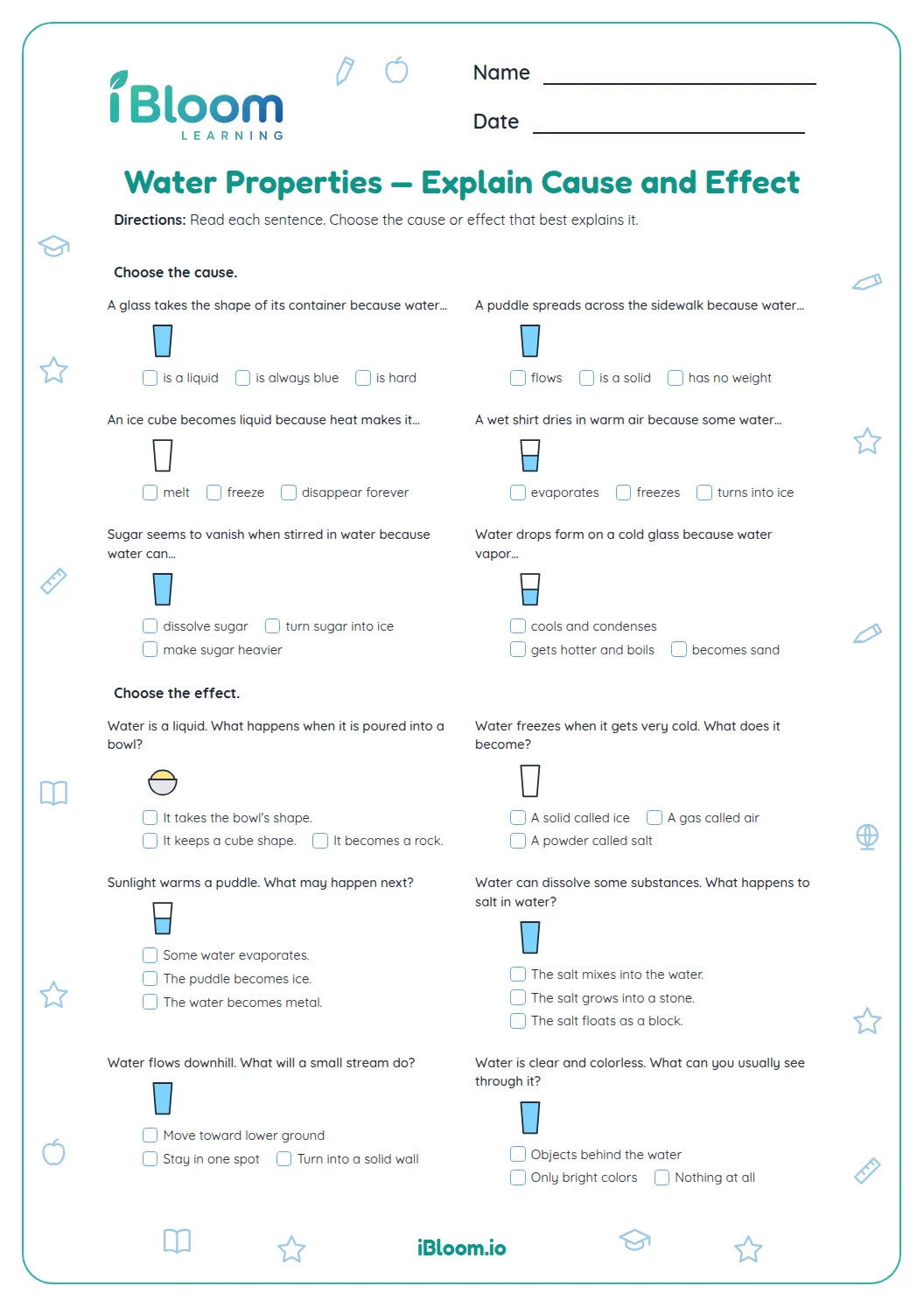 Water Properties — Explain Cause and EffectPrintable Grade 2 science activities help children observe, describe, and compare everyday properties of water. This explain cause and effect worksheet provides a distinct, age-appropriate way to practise the same lesson.Grade 2Free PDF preview
 Water Properties — Apply Science IdeasPrintable Grade 2 science activities help children observe, describe, and compare everyday properties of water. This apply science ideas worksheet provides a distinct, age-appropriate way to practise the same lesson.Grade 2Free PDF preview6 pages
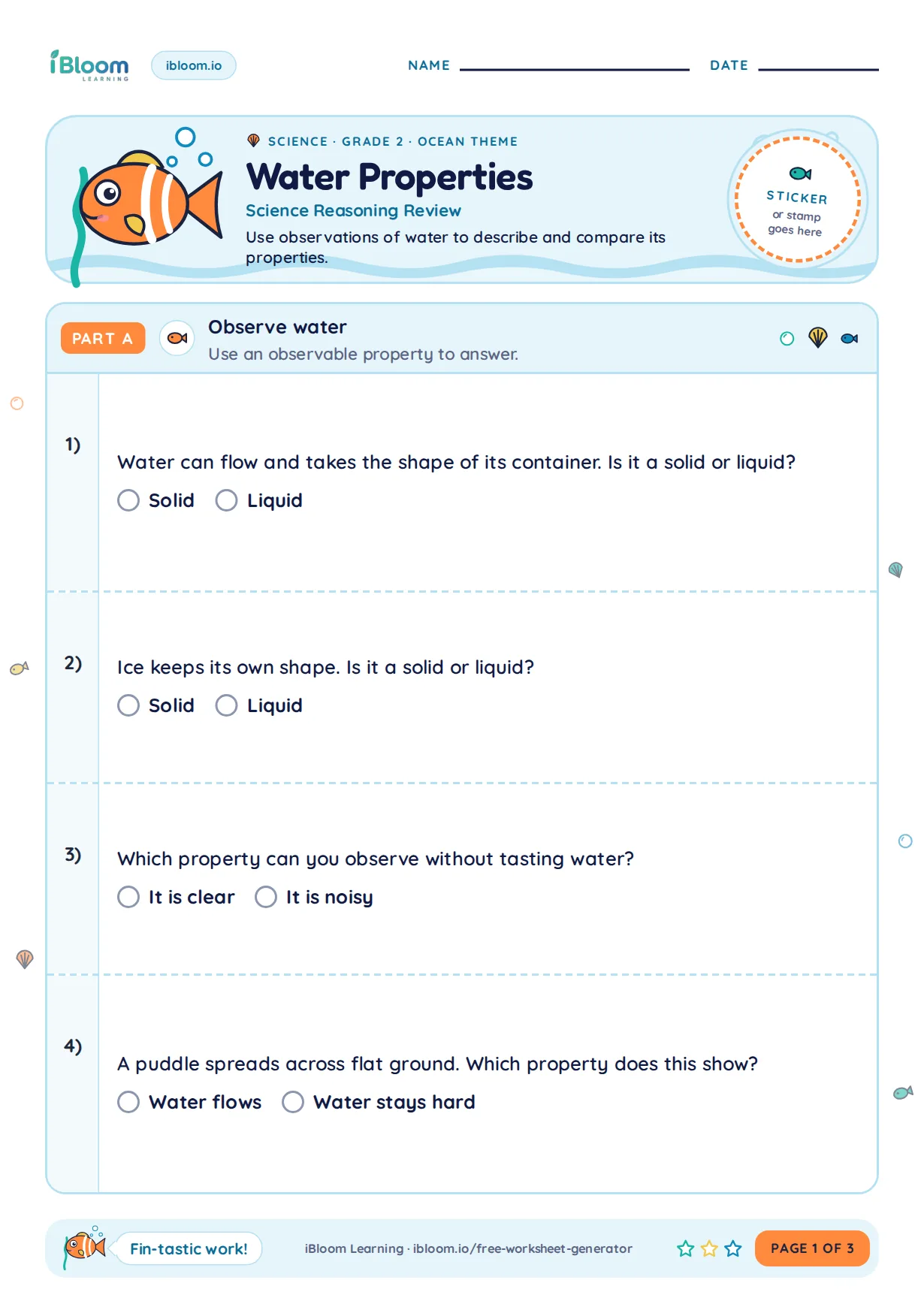 Water Properties — Science Reasoning ReviewPrintable Grade 2 science activities help children observe, describe, and compare everyday properties of water. This science reasoning review worksheet provides a distinct, age-appropriate way to practise the same lesson.Grade 2Free PDF preview
Practice that builds confidence
Building the idea of a property
These Grade 2 water properties worksheets help children notice what water is like through simple, observable science: it flows, takes the shape of its container, can be clear, can soak into some materials, and can change when heated or cooled.
The printable activities include picture-based questions, observation charts, sorting tasks, vocabulary practice, and short explanations. Children practise using evidence from familiar situations such as cups, puddles, ice, rain, towels, and containers.
Children begin by describing water with words they can observe: clear, wet, liquid, flowing, freezing, melting, soaking, floating, sinking, and dissolving. The worksheets encourage them to look at what water does rather than guess from memory. A cup, tray, bottle, sponge, or ice cube becomes evidence for a simple science statement.
Progression through the activities
The practice moves from recognition to explanation. Early pages may ask children to circle where water is shown or match a picture to a word. Later tasks ask them to compare water in different containers, complete an observation table, choose whether a material absorbs water, or explain why a puddle spreads out. This supports Grade 2 learners as they connect everyday experiences to Earth science vocabulary.
A concrete parent routine
At home, place a small amount of water in two safe containers, such as a cup and a shallow plate. Ask: “Did the water keep its own shape?” “Where did it move?” “What changed when we wiped it with a towel?” Then have your child complete one worksheet and point to the part of the activity that matches the observation. Keep the focus on seeing, saying, and drawing evidence.
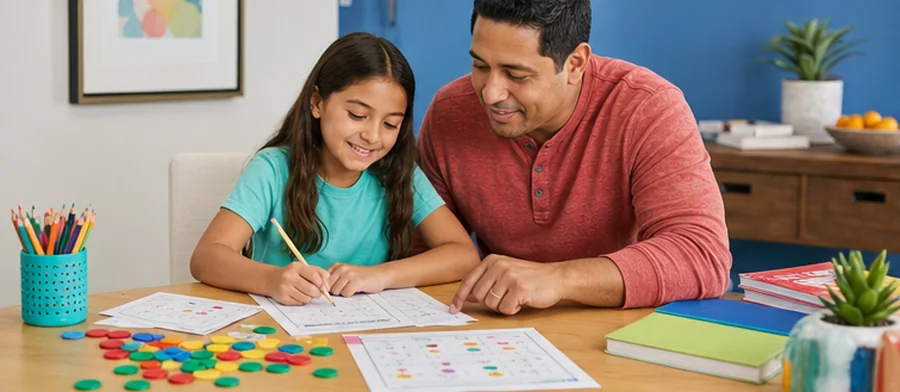
Classroom uses for teachers
Teachers can use these printables after a water exploration, in science centers, as a small-group review, or as a quick check for understanding. They also work well with a word wall because students need repeated exposure to terms such as liquid, container, absorb, transparent, freeze, melt, and dissolve. Students can discuss answers with a partner before writing a sentence.
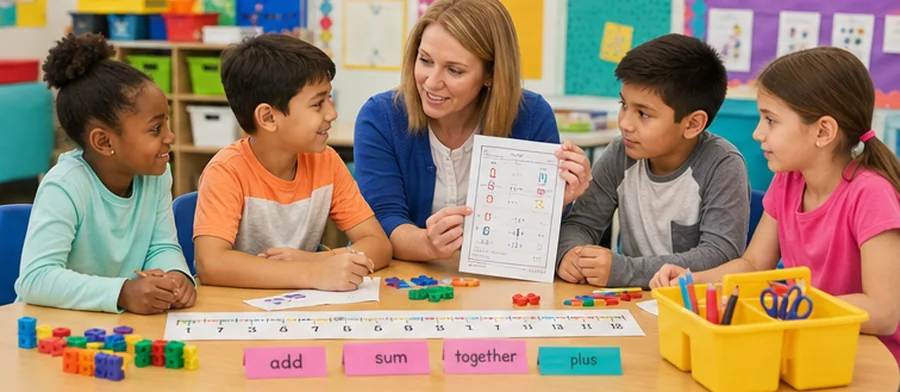
Common errors to watch for
Some children say water “has no shape,” when a better Grade 2 explanation is that liquid water takes the shape of its container. Others may think anything placed in water disappears; help them separate dissolving from sinking or mixing. If a child calls ice “not water,” compare ice and liquid water as the same substance in different forms.
Free printable PDF download
Use this grade 2 water properties worksheet page to preview the activity, print it, or download it as a PDF for quick practice. It works well for homework, homeschool lessons, tutoring, morning work, revision, and classroom centers.
Answers and answer key support
After the child completes the worksheet independently, parents and teachers can use the answer support or answer key information to check the work, review mistakes, and choose the next practice step.
Why iBloom worksheets help
The iBloom activities use familiar images and short prompts so children can reason from what they know. A helpful child-friendly strategy is: look, name, explain. Look at the water, name the property, then explain it in one sentence, such as “The water spread out because it is a liquid.”
Helpful answers
Frequently asked questions
What water properties do these Grade 2 worksheets cover?
They focus on observable properties such as water being a liquid, flowing, taking the shape of its container, soaking into some materials, freezing, melting, and sometimes dissolving materials.
Do children need to do an experiment before using the worksheets?
No, but a simple observation with a cup of water, a plate, a towel, or an ice cube can make the worksheet questions easier to understand and more meaningful.
How can I help my child explain that water has shape?
Show water in two different containers and ask your child to compare it. Guide them to say, “Water takes the shape of its container,” rather than “Water has no shape.”
Are these activities suitable for science centers?
Yes. Teachers can use them in centers after a hands-on water station, as vocabulary review, or as a written follow-up to partner discussions.
What vocabulary should Grade 2 students practise with this topic?
Useful words include liquid, flow, container, absorb, transparent, freeze, melt, dissolve, observe, compare, and property.
Is this grade 2 water properties worksheet free?
Yes. You can preview it for free and use the printable worksheet for home or classroom practice.
Can I download this grade 2 water properties worksheet as a PDF?
Yes. Use the worksheet download option to save a printable PDF, or print the worksheet directly from the page.
Does this grade 2 water properties worksheet include answers or an answer key?
When the activity has fixed answers, iBloom includes answer support so parents and teachers can check the completed worksheet.